How to Use 2 Headphones on a PC: The Ultimate Guide
Learn how to use two headphones on one PC with splitters, Bluetooth multipoint adapters, Stereo Mix, Voicemeeter, or USB devices for shared audio.
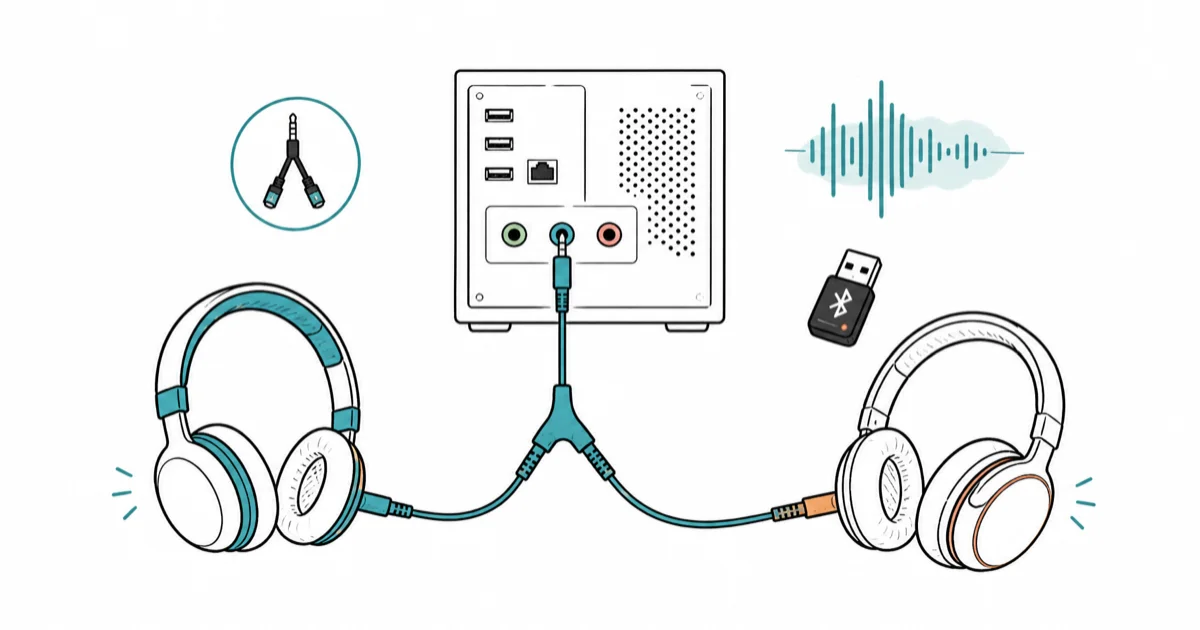
Quick AnswerUse a 3.5mm headphone splitter plugged into your PC's audio jack to connect two headphones instantly, or use Windows Stereo Mix to output to two devices.
Plugging two headphones into one PC is a common need: co-watching a film, sharing a tutorial, or listening with a partner without disturbing the room. Most desktops and laptops still ship with a single 3.5mm output, so the trick is to split, mirror, or route the audio with the tools you already own.
There are five reliable methods on Windows 11 — a $12 passive splitter, Stereo Mix on onboard Realtek audio, Voicemeeter Banana, the Avantree Orbit Bluetooth adapter, and Virtual Audio Cable. Each has its own trade-offs in cost, latency, and per-device volume control.
- A 3.5mm headphone splitter costs $10-15 and requires no software, but it provides no individual volume control and may slightly reduce audio quality.
- Windows Stereo Mix lets you route audio to a second output device, but it may require updating audio drivers if the option does not appear in your recording tab.
- Voicemeeter is a free virtual audio mixer that assigns headphones to separate A1 and A2 outputs with independent volume sliders for full per-device control.
- Most built-in Bluetooth adapters only support one audio device at a time; the Avantree Orbit adapter supports two Bluetooth headphones simultaneously.
- Virtual Audio Cable creates virtual audio devices for complex routing but has a steep learning curve and may introduce slight audio lag.
#1. Using a Headphone Splitter: The Simple Hardware Solution
One of the easiest and most straightforward methods to use two headphones on a PC is by utilizing a headphone splitter.
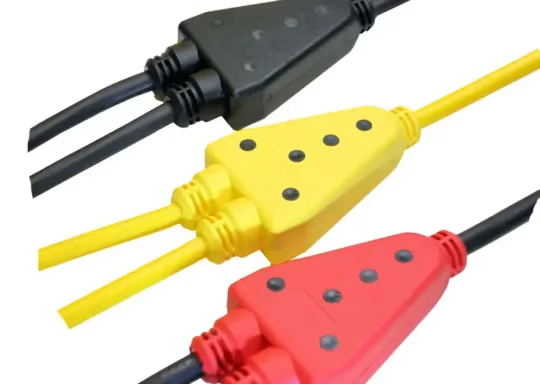
#What is a Headphone Splitter?
A headphone splitter is a small, Y-shaped device that plugs into your PC’s 3.5mm audio jack and splits the signal into two or more outputs. This lets you connect multiple headphones to a single audio source without any drivers or software.
#Types of Splitters
- Y-Splitters: These basic splitters divide the audio into two outputs.
- Multi-Splitters: More advanced models can split the audio into three or more outputs.
As an Amazon Associate, fone.tips earns from qualifying purchases. Some links on this page are affiliate links.
#How to Use a Splitter
- Plug the single end of the splitter into your PC’s headphone jack.
- Connect your headphones to the available ports on the splitter.
- Adjust your PC’s volume so both headphones receive a usable level.
#Pros and Cons
Pros:
- Simple and easy to use
- No software installation required
- Inexpensive (typically $10-15)
- Works with any wired headphones with a 3.5mm jack
Cons:
- Limited to wired headphones
- May slightly reduce audio quality
- No individual volume control for each headphone
A simple $12 Y-splitter delivers identical audio to both pairs with no perceptible lag because it splits one analog signal, though the master volume slider drives both jacks together.
#2. How Do You Set Up Stereo Mix in Windows?
For users who prefer a software-based solution, or need to mix wired and wireless headphones, Windows sound settings expose a route called Stereo Mix that mirrors playback to a second device.
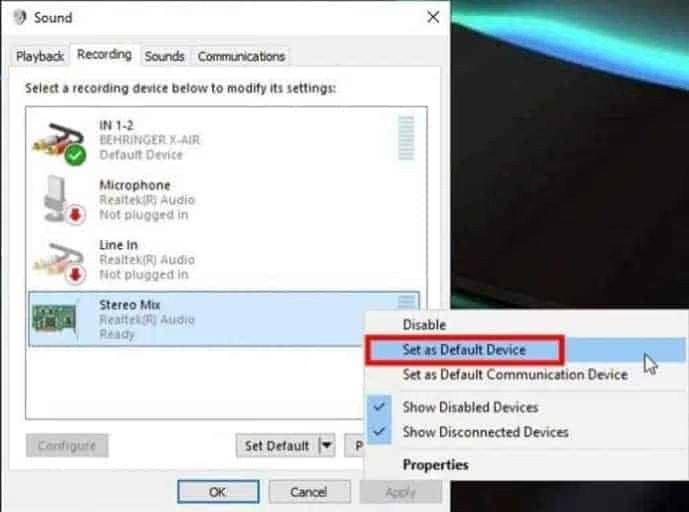
#Step-by-Step Guide for Windows 10/11
- Connect both sets of headphones to your PC (via 3.5mm jack, USB, or Bluetooth).
- Right-click the speaker icon in your taskbar and select “Open Sound settings.”
- Under “Output,” select your primary headphones as the output device.
- Scroll down and click on “Sound Control Panel” under “Related Settings.”
- In the Sound Control Panel, go to the “Recording” tab.
- Right-click in the blank space and ensure “Show Disabled Devices” is checked.
- Right-click on “Stereo Mix” and select “Enable.”
- Right-click “Stereo Mix” again and choose “Properties.”
- Go to the “Listen” tab and check “Listen to this device.”
- In the dropdown menu, select your secondary headphones.
- Click “Apply” and then “OK” to save the changes.
#Using Stereo Mix
Stereo Mix is a Windows recording input that captures the system audio mix so it can be routed elsewhere. According to Microsoft’s Windows sound and audio troubleshooting documentation, this input is supplied by the audio driver rather than Windows itself, which is why availability depends on the sound chipset and current driver version.
#Troubleshooting Common Issues
- If Stereo Mix is not visible, you may need to update your audio drivers.
- Some audio cards don’t support Stereo Mix. In this case, consider third-party software solutions.
- Audio lag may occur with this method. Adjusting buffer settings in your sound card’s control panel can help minimize this issue.
#3. Utilizing Audio Mixing Software: The Professional Solution
For users seeking more control and flexibility, audio mixing software provides a powerful solution for managing multiple audio outputs.
#Overview of Voicemeeter
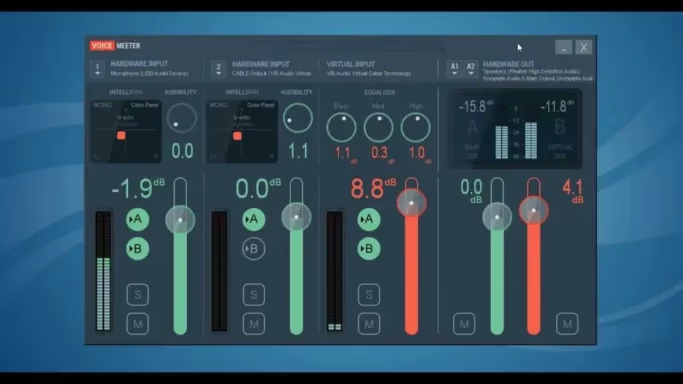
Voicemeeter is a popular virtual audio mixer that routes audio from various sources to different outputs. It’s particularly useful for streamers, podcasters, and anyone needing advanced audio management.
#Setting up Voicemeeter for Dual Headphones
- Download and install Voicemeeter from the official website.
- Open Voicemeeter and familiarize yourself with the interface.
- In Windows sound settings, set Voicemeeter as your default playback device.
- In Voicemeeter, assign your first headphone to A1 and the second to A2.
- Click the A1 and A2 buttons in the main section to enable output to both headphones.
- Use the sliders to adjust individual volumes for each headphone.
VB-Audio’s Voicemeeter Banana documentation states that the Banana edition provides 3 hardware outputs labeled A1, A2, and A3, so a single session can map up to three separate physical devices. With a USB headset on A1 and a 3.5mm pair on A2, both outputs stay in sync once Voicemeeter is set as the default playback device.
#Alternative Software Options
- Audio Router: A simpler alternative to Voicemeeter, allowing you to route audio on a per-application basis.
- CheVolume: Offers similar functionality to Audio Router with a user-friendly interface.
These tools give fine-grained control over every audio source on your PC.
#4. Can You Pair Two Bluetooth Headphones to a PC?
Connecting multiple Bluetooth headphones to a PC can be tricky because of how most internal Bluetooth radios are wired.
#Bluetooth Limitations on PCs
Most built-in PC Bluetooth radios pair to one audio sink at a time. That’s a function of how the standard A2DP audio profile is implemented in adapter firmware rather than a Windows-imposed limit.
#Using Bluetooth Adapters
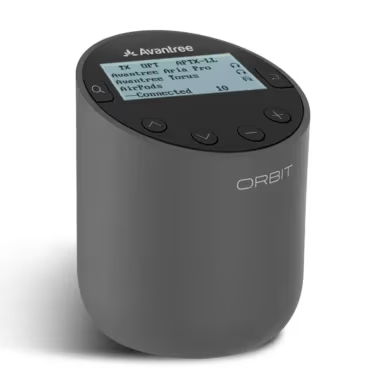
To get around this limit, use a Bluetooth adapter that supports multipoint audio output. The Avantree Orbit is a USB-attached transmitter that pairs with two Bluetooth headphones at the same time. Avantree’s product documentation confirms that the Orbit broadcasts a single audio stream to two paired headphones simultaneously over its dual-link transmitter.
#Software Solutions for Bluetooth Audio
While not a perfect solution, some software can help manage multiple Bluetooth audio connections:
- Bluetooth Audio Receiver: This app allows you to use your Android phone as a Bluetooth receiver, which you can then connect to your PC via an aux cable.
- TaoTronics Bluetooth 5.0 Transmitter: This device transmits audio to two Bluetooth headphones simultaneously when connected to your PC’s audio jack.
On a budget? See the best Bluetooth headphones under $100 guide.
#5. Virtual Audio Cable Method
Virtual Audio Cable (VAC) is a powerful tool that creates virtual audio devices, allowing you to route audio between applications and devices with great flexibility.
#What is Virtual Audio Cable?
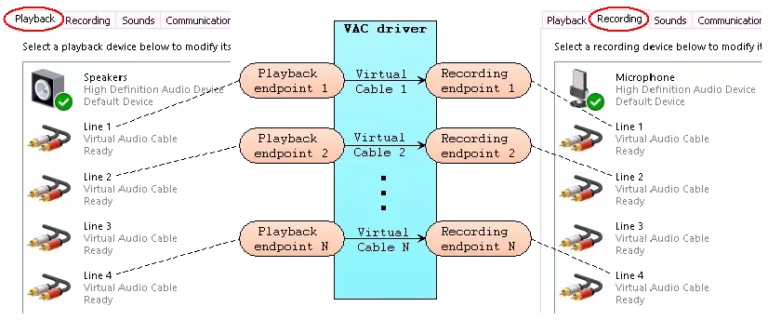
Virtual Audio Cable is a Windows audio driver that creates virtual audio devices. These devices can be used as inputs or outputs, letting you route audio in complex ways.
#Step-by-Step Setup Guide
- Download and install Virtual Audio Cable.
- Open Windows sound settings and set “Line 1” (a virtual device created by VAC) as your default playback and recording device.
- Open two instances of the Audio Repeater tool (included with VAC).
- In the first instance:
- Set “Wave in” to your PC’s default audio device
- Set “Wave out” to “Line 1”
- In the second instance:
- Set “Wave in” to “Line 1”
- Set “Wave out” to your second headphone device
- Click “Start” on both Audio Repeater windows.
#Pros and Cons
Pros:
- Extremely flexible audio routing
- Can manage multiple audio devices and applications
- High-quality audio transmission
Cons:
- Steep learning curve
- May introduce slight audio lag
- Paid software (though a trial version is available)
#6. USB Headphone Solutions
USB headphones add another path.
#Using Multiple USB Audio Devices
Plug both USB headsets into separate ports, ideally on different host controllers if your motherboard exposes them. Windows enumerates each one as an independent output endpoint in the Sound panel, where you can pick which one each application sends audio to, and SoundSwitch can flip the system default with a hotkey if you swap pairs often during a shared session.
#Software for Managing USB Audio
- SoundSwitch: Allows you to quickly switch between audio devices using a hotkey.
- AudioSwitch: Similar to SoundSwitch, providing an easy way to manage multiple audio outputs.
#Potential Limitations
- Older laptops may struggle with more than two USB audio devices at once.
- A single USB controller can become saturated. Spread devices across different host controllers when you can.
#7. Troubleshooting and Tips
Even with the right setup, you may hit issues. Drift between the two pairs and one headset refusing to enumerate after a driver update are the two most common problems in dual-headphone setups on Windows 11.
#Dealing with Audio Lag
- Use high-quality splitters or adapters to minimize signal degradation.
- When using software solutions, adjust buffer sizes to balance latency and audio quality.
- Ensure your PC’s drivers are up to date, particularly audio and Bluetooth drivers.
#Maintaining Sound Quality
- Use high-quality headphones and cables to keep the audio path clean.
- When using splitters, be aware that they may slightly reduce audio quality due to power sharing.
- For software solutions, experiment with audio quality settings to find the best balance between quality and performance.
#Solving Common Connectivity Issues
- If a headphone isn’t recognized, try unplugging and replugging it, or restart your PC.
- For Bluetooth devices, make sure they’re in pairing mode and that your PC’s Bluetooth radio is enabled.
- If using USB headphones, try different USB ports if one isn’t working.
#8. Choosing the Right Headphones
When setting up a dual headphone system, it’s worth picking the right pair for each viewer. A few practical factors shape the choice.
#Comfort for Extended Use
If you wear glasses, look for headphones designed to be comfortable with eyewear. Our guide on the best headphones for glasses wearers helps you find a pair that won’t pinch your temples during a long shared session, which matters more than spec-sheet comfort scores when two people are listening for an hour or more.
#Size Matters
For larger heads, see headphones suitable for big heads.
#Gaming and Voice Changing
If you’re into gaming or streaming, you might want a headset with built-in voice changing for parties or co-op play, especially when both listeners on the splitter are in the same voice chat. Our article on voice changer gaming headsets covers options that work well in dual-headphone setups where two people share one machine.
#Aesthetic Appeal
Prefer classic design? Vintage headphones add character without giving up sound quality.
#Bottom Line
For most living-room or quick-share use cases, a $12 Y-splitter is the right call: zero setup, zero latency, no software to maintain. If you need per-headphone volume control or one wired plus one wireless pair, install Voicemeeter Banana and route each output to A1 and A2 — the whole setup takes under five minutes from download to a working dual-headset session.
Reach for the Avantree Orbit only when both pairs need to be Bluetooth and untethered, and save Virtual Audio Cable for setups that also involve recording, streaming, or per-application routing on top of dual playback.
#Frequently Asked Questions
Can you use two Bluetooth headphones on a PC at the same time?
Not natively on most PCs. A multipoint Bluetooth adapter such as the Avantree Orbit, or routing through Voicemeeter, will pair two headsets at once.
Will a 3.5mm splitter reduce audio quality?
A decent splitter has a negligible impact on quality at normal listening volumes. Cheap splitters can introduce slight signal loss, but the difference is rarely audible with typical consumer headphones on the same source.
Can I control each headphone’s volume independently with a splitter?
No. A passive splitter shares one analog signal across both jacks, and the master volume slider drives both at once. For independent volume control, route each headphone through software like Voicemeeter, use a separate USB DAC per pair, or pick up a small headphone amplifier with two outputs and per-channel gain knobs that lets each listener set their own level without touching the PC.
Is it possible to connect more than two headphones?
Yes. Multi-output splitters or Voicemeeter Potato can drive five or more parallel outputs.
Do these methods work on Mac?
Yes. macOS handles dual outputs through the built-in Audio MIDI Setup utility, which supports a multi-output device that mirrors playback to two interfaces. Hardware splitters work the same on Mac since they sit before any software layer.
Why doesn’t Stereo Mix appear in my recording tab?
Stereo Mix is supplied by the audio driver, not Windows itself. According to Microsoft’s Windows audio guidance, Realtek and many older codecs include it, while newer Intel SST drivers and certain DisplayPort audio chipsets omit the device. Updating or rolling back the audio driver in Device Manager usually makes the entry reappear in the Recording tab, and a clean reinstall from your chipset vendor’s site is the next step if a driver swap doesn’t help.
Does using two headphones cause audio lag between the pairs?
Wired splitters introduce no measurable lag because both pairs share the same analog signal. Software methods like Stereo Mix or Voicemeeter can add a few milliseconds of buffering that you may notice during fast-paced video playback, though it stays imperceptible during music.

macOS 27 Compatible Macs: Every Supported Model (2026)
macOS 27 Golden Gate runs only on Apple Silicon Macs. Here is the full list of supported M-series models and the four Intel Macs that lose support.

macOS 27 Golden Gate: Every Major New Feature Confirmed
macOS 27 Golden Gate goes Apple Silicon only, adds a Gemini-powered Siri, refines Liquid Glass, and rebuilds Spotlight. Here is every confirmed change.
macOS 27 Liquid Glass: Every Readability Fix Explained
macOS 27 Golden Gate refines Liquid Glass with an intensity slider, better contrast, cleaner window corners, and edge-to-edge sidebars to fix readability.
macOS 27 Performance: What Golden Gate Makes Faster
macOS 27 Golden Gate speeds up AirDrop, network file browsing, Safari, and Spotlight, with core system improvements on the Apple Silicon-only release.