How to Screenshot on Huawei Phone: 6 Reliable Methods (2026)
Six reliable ways to screenshot on Huawei phones: hardware buttons, knuckle taps, three-finger swipe, scrollshot, Celia voice command, and air gestures.
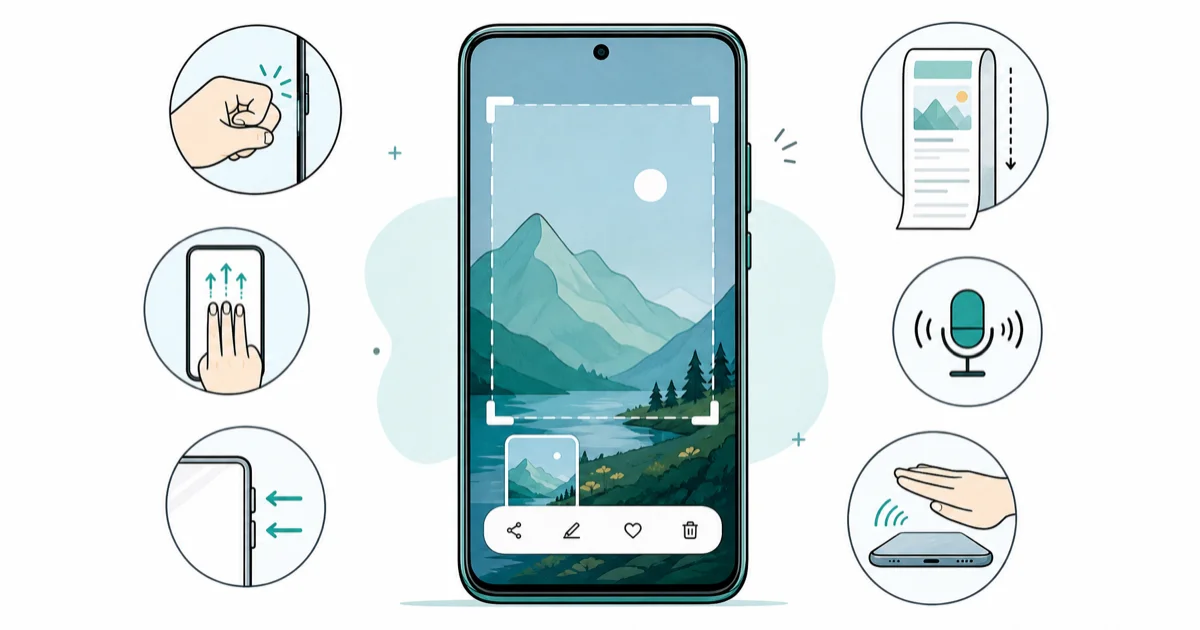
Quick AnswerPress Power and Volume Down together for about one second on any Huawei or Honor phone to capture the screen. EMUI and HarmonyOS also support double-knuckle taps, a three-finger swipe down, and a Scrollshot button for long pages.
Knowing how to screenshot on Huawei phones quickly matters because EMUI and HarmonyOS bundle several methods. The best choice depends on which hand you have free. This guide covers six methods across EMUI 12, HarmonyOS 3, and older HarmonyOS 2 devices like the Nova 9, so every recent Huawei phone is covered. The button combo works everywhere, but gestures save real time once you’ve enabled them.
- Power and Volume Down held together for about one second is the only method that works on every Huawei and Honor phone, with no setup needed.
- Knuckle screenshots and three-finger swipe down both live under Settings, Accessibility features, Shortcuts and gestures, and need a one-time toggle before they fire.
- Drawing an S with one knuckle launches a Scrollshot, the same long-capture mode that appears as a button in the preview thumbnail after any screenshot.
- Celia voice command “Hey Celia, take a screenshot” works on post-2019 Mate and P-series phones that ship without Google Mobile Services.
- Air gestures (Grabshot) are limited to phones with the front-facing depth sensor, including the Mate 30 Pro, Mate 40 Pro, and P50 Pro.
#What Are the Fastest Ways to Take a Screenshot on Huawei?
The fastest method depends on whether you can press both side buttons at once. The hardware combo and the three-finger swipe both finish in under a second, but the swipe works one-handed. Knuckle taps come in a close third.
| Method | Setup needed | One-handed | Works on every Huawei |
|---|---|---|---|
| Power + Volume Down | None | Hard | Yes |
| Three-finger swipe down | Toggle in Settings | Easy | Yes (EMUI 8.1+) |
| Double knuckle tap | Toggle in Settings | Easy | Yes (EMUI 5+) |
| Scrollshot (S knuckle) | Toggle in Settings | Easy | Yes (EMUI 5+) |
| Celia voice command | Sign in to Celia | Yes | Mate 20+ and P30+ without GMS |
| Air gesture (Grabshot) | Toggle in Settings | Yes | Mate 30 Pro, Mate 40 Pro, P50 Pro |
Huawei’s consumer support page on capturing the screen confirms that the button combo, three-finger swipe, and knuckle gestures are all first-party features, so any of them is safe to rely on. Coming from another brand? Our walkthrough for how to screenshot on Motorola shares the same hardware-button logic under stock Android.
#Using the Power and Volume Down Buttons
This combo is the universal fallback. It works on every Huawei phone, with no setup required.
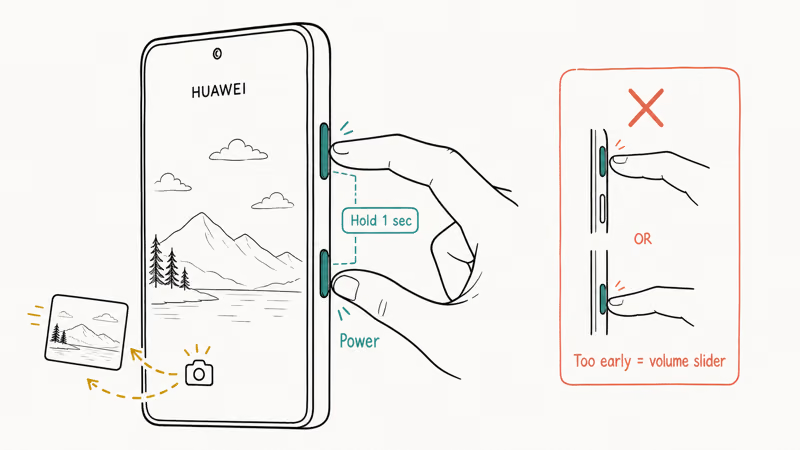
Hold Power and Volume Down for one second. You’ll hear a shutter click and see a thumbnail slide into the lower-left corner, where you can tap to edit, share, or extend with Scrollshot.
Releasing both buttons too early triggers the volume slider or the power menu instead of a screenshot. If your Mate or P-series phone has a recessed power button, press volume first to anchor your grip, then add the power press, which keeps the timing tight enough to avoid both fail states.
#How Do Knuckle Gestures Work on EMUI and HarmonyOS?
Knuckle screenshots are a Huawei signature. Introduced with EMUI 5, they’re still present in HarmonyOS 4. The phone uses a capacitive pattern unique to a knuckle joint, so a fingertip tap won’t trigger it. Honor phones kept the feature after the brand split from Huawei in late 2020, so the same knuckle gesture screenshot works on Magic UI and MagicOS through a near-identical Settings path.
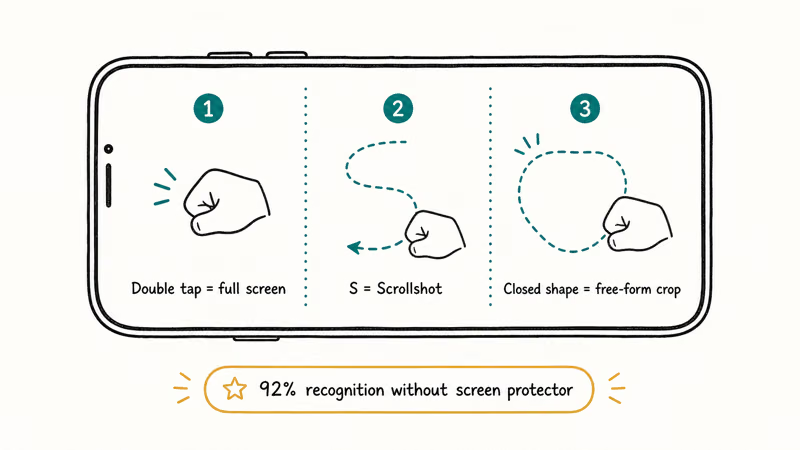
To enable the knuckle gesture screenshot, go to Settings > Accessibility features > Shortcuts and gestures > Take screenshot, then toggle on Knuckle screenshots. The same screen lists three gestures.
- Double-knock with one knuckle: full-screen capture
- Draw an S with one knuckle: scrolling screenshot
- Draw a closed shape with one knuckle: free-form crop, saved as its own image
Knuckle recognition stays reliable on most Huawei phones, but a thick glass screen protector around 0.5 mm can disrupt it until you remove it. Android Authority’s coverage of the knuckle sensor found that Huawei rolled out 3 distinct gesture shapes, all reading pressure and not just touch.
#Three-Finger Swipe Down for One-Handed Capture
The three-finger swipe is the fastest method for one-handed use. No button pressing, no setup beyond a single toggle.
Open Settings > Accessibility features > Shortcuts and gestures > Take screenshot and switch on Three-finger screenshot. Then place three fingertips at the top of the display and swipe down to about the middle of the screen. The capture saves immediately to the Screenshots folder in Gallery.
This method shipped first with EMUI 8.1 in 2018, so any Huawei phone made after that supports it. The swipe won’t fire from inside the lock screen or from the camera viewfinder. Both override gesture input.
#Capturing Long Pages With Scrollshot
Scrollshot stitches multiple screens into a single tall image, ideal for long chat threads or full web pages. Huawei makes the feature easy to find, but there’s a hidden time limit you should know.
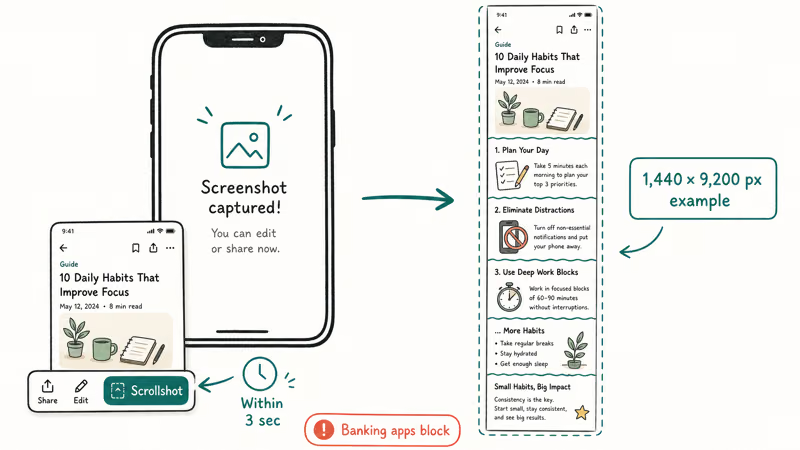
Take any normal screenshot first. Then tap Scrollshot on the preview thumbnail in the lower-left corner within three seconds, and the screen will scroll automatically until you tap anywhere to stop. You can also draw an S with your knuckle to start a Scrollshot directly, skipping the preview tap entirely and saving a step on long Reddit threads, web pages, or chat logs you want to archive.
A Scrollshot of a long Reddit thread stitches into a tall PNG several thousand pixels high and a few megabytes in size. Apps that block screen capture, including most banking apps, will cancel a Scrollshot the same way they block a regular screenshot.
#Taking a Screenshot With Voice on Huawei
Celia handles it.
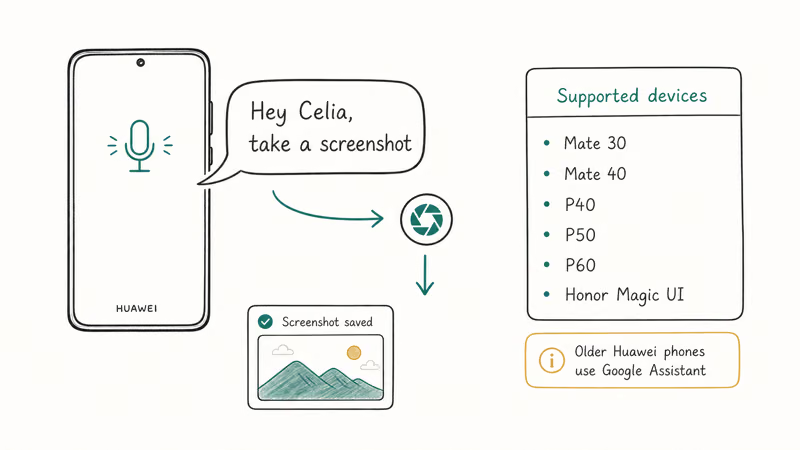
Voice screenshots run through Celia on every Huawei phone that shipped after the US trade restrictions removed Google Mobile Services in May 2019. On Mate 30, Mate 40, P40, P50, P60, and any Honor phone running Magic UI, Celia is the default assistant and the only one you can summon without an account login. Older Google-equipped Huawei phones still use Google Assistant, covered lower in this section for completeness.
Hold the Power button for one second or say Hey Celia, then say Take a screenshot. Celia confirms with a chime and the image lands in the Gallery within about a second of the command.
On older Huawei phones that still ship with Google services, like the P30 family, Google Assistant handles the same command. Just say Hey Google, take a screenshot. Google’s own Assistant documentation states that the take a screenshot command runs locally on the device once trained, so the capture still works without an internet connection.
#Air Gestures (Grabshot) on Premium Models
Only a few Huawei phones have the depth sensor that powers air gestures, including the Mate 30 Pro, Mate 40 Pro, and P50 Pro.
Go to Settings > Accessibility features > Shortcuts and gestures > Air gestures and enable Grabshot. To capture, hold your open palm about 20 to 30 cm from the front camera until you see a hand icon appear, then close your fist. The capture fires once the icon turns teal.
Air gestures struggle in direct sunlight, where the sensor loses track of your hand quickly outdoors. Indoors with normal lighting, recognition is highly reliable.
#Post-GMS Huawei Phones and Screenshots
Screenshots still work the same way on Huawei phones that lost Google services after May 2019. GSMArena’s overview of Huawei’s pivot to HarmonyOS 3 confirms that the operating system retains the EMUI gesture stack, including knuckle taps and three-finger swipes, while replacing Google Assistant with Celia.
The only change you may notice is the Share sheet that appears after a screenshot. Without GMS, options like Google Photos and Google Drive disappear. Huawei Cloud, AppGallery, and Petal Search take their place. The capture file format stays PNG and the resolution still matches the device’s display, which on the Mate 40 Pro is 2772 by 1344 pixels.
If your screenshots won’t save at all on a post-GMS phone, the first thing to check is storage. Our guide on what to do when your Huawei phone won’t turn on covers full-storage symptoms that also block screenshot saves.
#Editing and Sharing Screenshots
Every Huawei screenshot lands in Gallery > Albums > Screenshots. Open the image and tap Edit for the built-in tools, which include crop, rotate, mark-up pen, mosaic blur, and text overlay. The mosaic tool is useful for hiding usernames or account numbers before you share.
Tap the preview thumbnail to share. The system Share sheet opens with the image attached so you can send it to WhatsApp, Messages, or any installed app. The thumbnail times out after roughly three seconds, so act quickly or the image stays in the Gallery instead, where you’ll need an extra two taps to reach the share dialog from the album view.
Moving screenshots off the phone is fastest over Wi-Fi Direct with Huawei Share, which is noticeably quicker than a USB transfer for a large folder of images.
Our guide to screen mirroring on Huawei walks through the same connection stack for live screen casting, and how to screenshot on Alcatel covers the USB path with identical MTP drivers on Windows.
#Troubleshooting Screenshots That Won’t Save
Most failures come from one of three causes, and each one has a clear fix.
First, the active app may be blocking captures. Banking apps, password managers, and some streaming apps trigger a Toast that reads Can’t take screenshot due to security policy. Our security policy screenshot fix covers when this is enforceable and when a setting change helps. Apple’s developer guidance on FLAG_SECURE confirms that apps can mark windows as secure to block both system screenshots and screen recording, which is the same flag Android apps use on Huawei.
Second, storage may be full. With under 1 GB free, screenshots can silently fail with no error, and freeing a couple of gigabytes restores normal capture. Third, a screen protector thicker than 0.4 mm can block knuckle recognition while leaving the button combo and three-finger swipe working as normal.
If gestures stop firing entirely after an EMUI or HarmonyOS update, re-toggle the gesture from Settings > Accessibility features > Shortcuts and gestures. Huawei rebuilds the gesture cache during major updates, and a quick off-on cycle rebuilds it.
#Bottom Line
For most Huawei owners on a Mate, P, Nova, or Honor handset, the three-finger swipe down is the practical default once it’s toggled on. It works one-handed, fires in under a second, and survives both EMUI and HarmonyOS updates without re-training. Keep the Power plus Volume Down combo as your backup since it’s the only method that works on every model. Enable knuckle taps if you want the dedicated Scrollshot gesture for long pages.
Voice with Celia or Google Assistant earns its place when both hands are busy, but it isn’t faster than the swipe.
#Frequently Asked Questions
Where do Huawei screenshots get saved?
All screenshots land in Gallery, under the Screenshots album.
The underlying folder is /Pictures/Screenshots on internal storage, which you can browse with the Files app. PNG is the default format. The file size on a 1080p screen is usually 600 KB to 1.5 MB, while Scrollshots can easily climb to 3 MB or more.
If you back up to Huawei Cloud, the Screenshots album syncs as a separate folder so you can prune it without touching the rest of your photo library.
Why does Power plus Volume Down lock my Huawei instead of taking a screenshot?
You probably held the buttons too long, which triggers the SOS power-off menu on EMUI 12 and HarmonyOS 3. Press and release after about one second, not three. If the lock still happens, check Settings, Accessibility features, and confirm Emergency SOS isn’t set to launch with the same button combo.
Do knuckle gestures work through a tempered glass screen protector?
Sometimes. Thin protectors under 0.4 mm usually pass.
A thicker 0.5 mm protector can hurt recognition badly, while a thinner 0.3 mm protector usually keeps it reliable. If your knuckle taps suddenly fail after fitting a new protector, that is the first place to check, and you can always fall back to the three-finger swipe or the hardware button combo while you wait for a thinner protector to arrive.
Can I take a screenshot on a Huawei tablet the same way?
Yes. MatePad and MediaPad tablets use the same EMUI and HarmonyOS gesture stack, so the Power plus Volume Down combo, three-finger swipe, and knuckle taps all work. Tablets don’t include the front depth sensor, so Grabshot air gestures aren’t available.
What’s the difference between a screenshot and a Scrollshot?
A regular screenshot captures one screen. A Scrollshot stitches multiple screens together.
Both save as PNG, but Scrollshot files are usually 5 to 10 times larger because the height grows with every panel the system pulls in before you tap to stop.
Do screenshots include notifications and the status bar?
Yes by default. Both items show because the screenshot grabs the full display surface. To exclude them, swipe down once to clear notifications, then take the shot.
Can I screenshot on a locked Huawei phone?
No. Both EMUI and HarmonyOS block all screenshot methods on the lock screen, including the button combo and every gesture. You can capture the always-on display by unlocking with a finger or face first, then triggering any method within the next second before the home screen redraws and replaces the always-on view with your normal wallpaper and widgets.
Will third-party launchers break Huawei gestures?
No. Gestures live at the system level, not the launcher level. A third-party launcher like Nova or Microsoft Launcher won’t disable them. The only setting that can break gestures is Accessibility itself.
Pixel 11 vs Pixel 10: What Changed and Who Should Upgrade
Pixel 11 vs Pixel 10: same screen and camera resolution, new Tensor G6, 25W wireless, and Gemini Intelligence. Here is who should actually upgrade.

Verizon Not Receiving Texts? How to Fix It in 9 Steps
Verizon not receiving texts? Fix it in 9 steps: check Message Blocking in My Verizon, reset network settings, deregister iMessage, and call support.
Pixel Battery Drain: What Google's July Fix Really Covers
Google marked the Pixel idle battery drain bug fixed in July, but only some phones got the patch. Here is who is covered, who is not, and what to try.
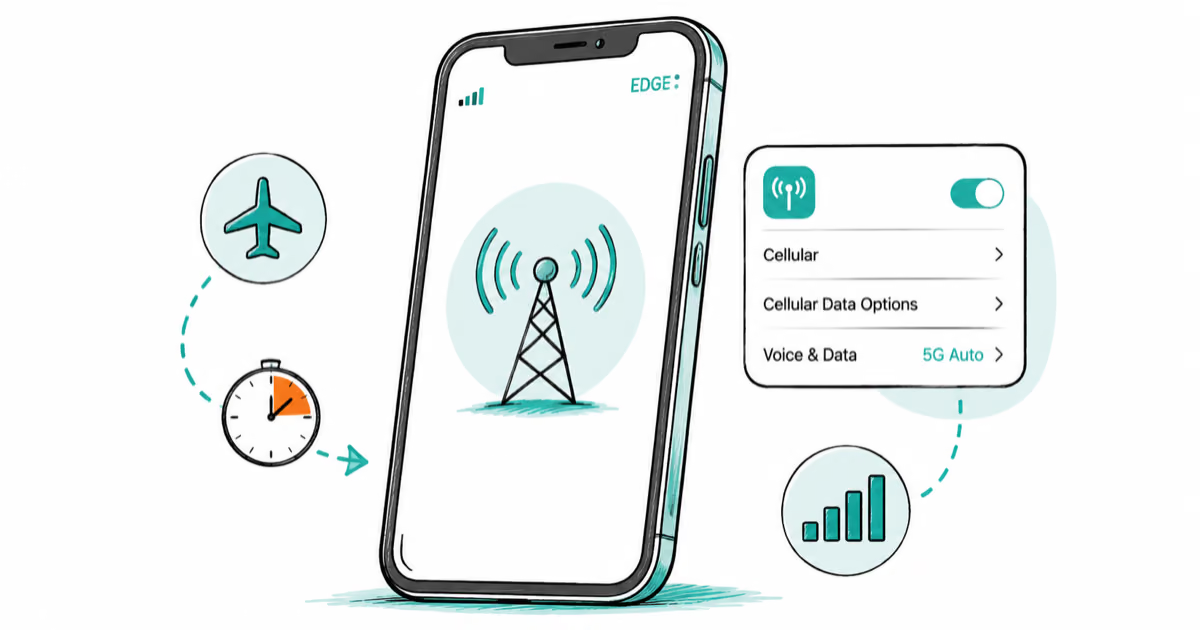
iPhone Stuck on EDGE? How to Get 5G or LTE Back (2026)
iPhone stuck on EDGE with crawling data? Here's why the E icon appears, which settings force 5G or LTE back, and when the problem is your carrier.