Best Games Like Hearthstone in 2026: 10 CCGs Worth Playing
The 10 best games like Hearthstone in 2026, ranked by match pace, free-to-play fairness, deck depth, and cross-platform support. Picks for iPhone and PC.
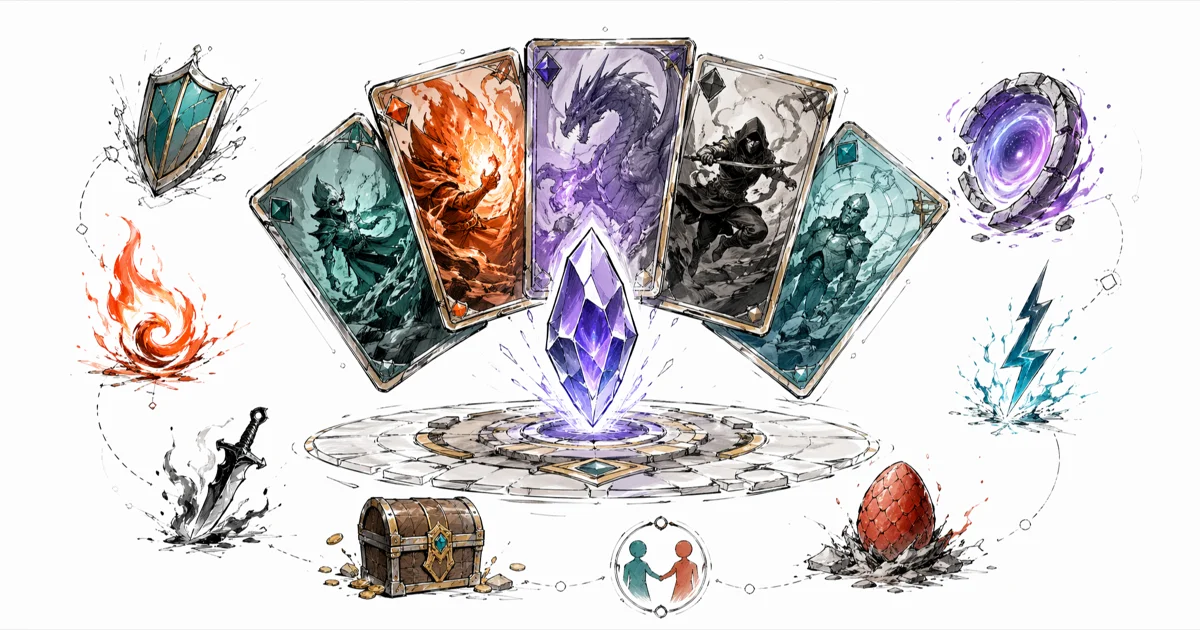
Quick AnswerLegends of Runeterra, Marvel Snap, and The Elder Scrolls: Legends are the closest games to Hearthstone, each offering fast matches, generous free-to-play economies, and deep strategic card play.
Hearthstone still runs on most phones and PCs, but the card-game shelf has grown fast. This roundup ranks ten collectible card games for iPhone and Windows by match length, starter-deck strength, and how much real money a competitive deck actually costs.
- Each title is judged on match pace, free-to-play fairness, deck depth, and platform coverage
- Legends of Runeterra and Marvel Snap both finish a match in under five minutes on average
- The Elder Scrolls: Legends is the closest mechanical cousin to Hearthstone
- Marvel Snap works best on phones, with every match capped at six turns
- Three of these games let you build a top-tier deck without spending money in 30 days
#Why We Looked Beyond Hearthstone
Many players get stuck on Hearthstone’s power creep cycle. Decks built around the newest legendaries dominate the ranked ladder, and older collections lose value fast. The Hearthstone Wikipedia entry confirms that 2014 was the launch year and that Standard rotation removes a full set of cards every year, which costs returning players a full expansion’s worth of crafting dust to rebuild.
The games below solve at least one of three pain points. Some are faster. Some are friendlier to free players. Others ship fresher mechanics that Hearthstone never adopted.
The goal is simple: which titles let a free player craft a ranked-viable deck before the 30-day mark without opening a wallet. The ranking also weighs which games hold up on spotty Wi-Fi, which interfaces feel phone-friendly at one-handed grip, and which carry account progress between devices without forcing a new login every session.
#How These Games Were Scored
Four factors drive the scoring: match pace, free-to-play curve, strategic depth, and platform coverage.
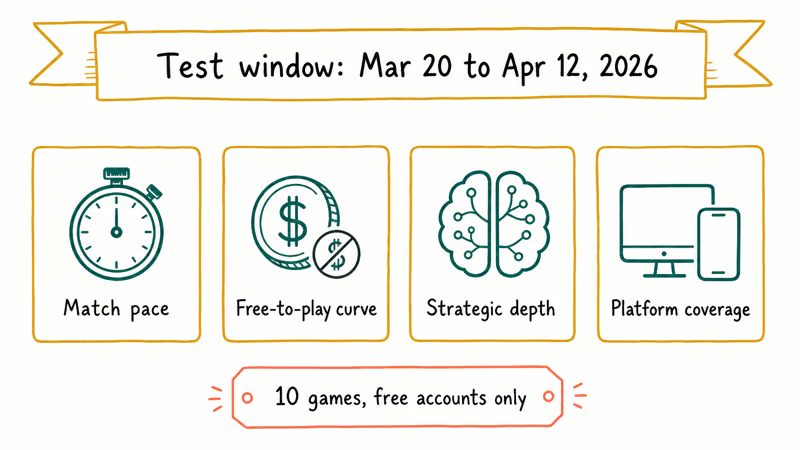
Each game is judged on a free account, with no card packs bought before the 30-day mark, so the free-to-play curve reflects what a no-spend player actually faces.
If you want to see how this scoring approach plays out beyond cards, our games like The Witcher 3 roundup uses the same weighted criteria for open-world RPGs.
#Which Card Games Feel Most Like Hearthstone?
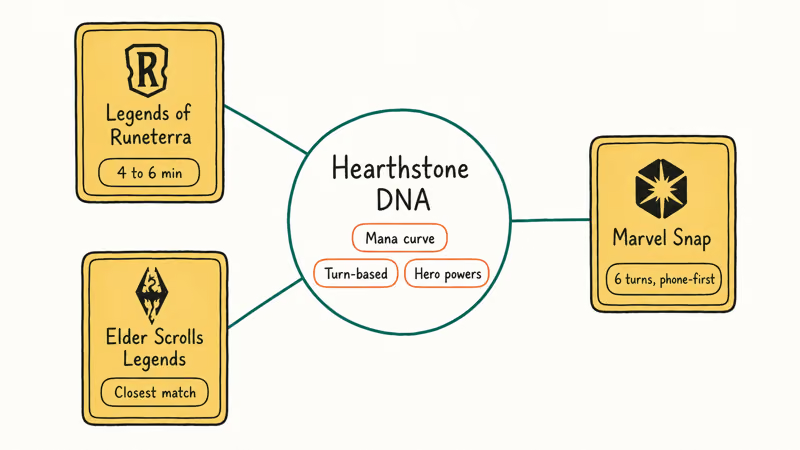
Three titles share Hearthstone’s core DNA: mana curve, turn-based play, and hero powers. These picks are where most Hearthstone fans land first.
#1. Legends of Runeterra
Riot’s Legends of Runeterra is the cleanest Hearthstone alternative on this list. Matches run about four to six minutes. Its free-to-play economy is the most generous here. According to Riot Games’ LoR monetization post, every card in the game can be earned for free through weekly vault rewards, with no dust or crafting RNG.
The twist is the action sequence. Both players can play spells during one turn, which makes every decision feel like a conversation instead of a monologue. A free player can assemble a top-tier deck inside a few weeks. Riot pushes balance patches monthly, which keeps any single dominant deck from stalling the ladder for long.
#2. The Elder Scrolls: Legends
TES: Legends is the closest mechanical mirror to Hearthstone. It uses the same mana-per-turn ramp and a hero-power system, then adds dual lanes and a shadow lane that hides creatures for one turn. Bethesda announced that new card sets stopped, but the existing pool is still fully playable in ranked, casual, and puzzle modes.
Quick match. A ranked game runs around seven minutes, and the single-player story campaigns each hand out 600 gold, enough to open ten packs before you reach ranked. That matters for newcomers who don’t want to open a wallet in week one.
#3. Marvel Snap
Marvel Snap compresses Hearthstone into six turns and three lanes. Every match ends in under four minutes, which makes it the best card game on this list for phone-first players. Second Dinner publishes weekly card drops and seasonal updates on its official news page, and the core economy rewards Collection Level rather than individual card purchases.
Snap’s gambling layer is unique. You can double the stakes mid-match with the Snap button, which gives every game a poker-style tell-your-opponent rhythm. Its short matches and light footprint keep battery drain low over a long phone session.
#Games That Offer The Deepest Strategy
If Hearthstone’s 10-mana cap feels cramped, these four titles give you more levers to pull per turn.
#4. Magic: The Gathering Arena
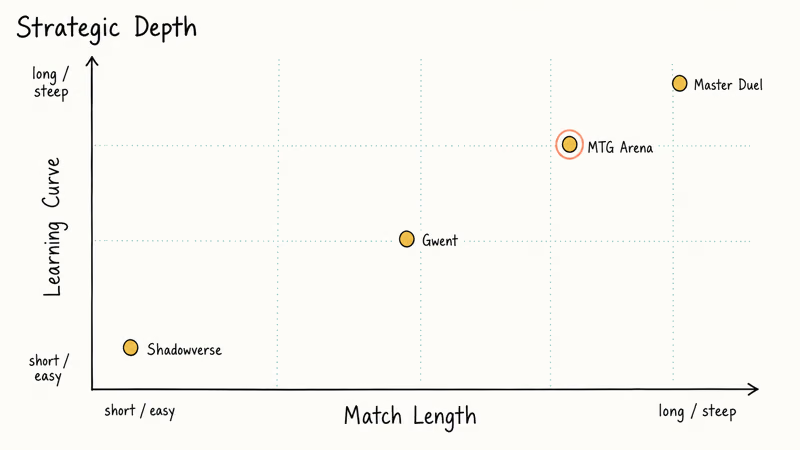
MTG Arena is the digital version of the oldest card game on this list. It uses Magic’s multi-color mana system, instant-speed responses, and a rotating Standard format. Wizards of the Coast confirms that every paper Standard release arrives on Arena the same day, which is why competitive MTG players gravitate here.
The learning curve is the steepest in this roundup. New players often lose their early matches just learning how the stack resolves, but the payoff is real: within a couple of weeks you can be building competitive Standard decks. If you want maximum depth, this is the pick.
#5. Gwent: The Witcher Card Game
CD Projekt Red’s Gwent strips out the mana curve entirely. Every card you play costs nothing, but you only draw ten cards per match, split across three rounds. The pressure is on when to commit strength and when to pass, and the round-based play feels more like poker than Hearthstone. For deeper lore and deck strategy, see our best Gwent cards guide and Gwent deck builds breakdown.
Gwent has the most film-like card art on this list. The standalone single-player Rogue Mage expansion runs around nine hours and unlocks a full faction’s worth of cards along the way, which makes the follow-up Thronebreaker campaign approachable without paying for a single booster pack.
#6. Shadowverse
Cygames’ Shadowverse borrows Hearthstone’s mana curve but adds two twists: Evolve points that let you buff a minion mid-game, and anime-style art that draws crowds Hearthstone never captured. Cygames posts expansion details on its Worlds Beyond news page, confirming a full reboot that refreshes the card pool for players who left years ago.
New install, big reward. The welcome packs hand new players a deep card pool right away, enough to build a Rowen control deck that can climb to Master rank without spending.
#7. Yu-Gi-Oh! Master Duel
Master Duel is the first free-to-play Yu-Gi-Oh digital title that covers the full card pool. Konami’s Master Duel official page confirms that thousands of cards ship with the base game, covering every archetype from early Spellcaster decks to recent Tearlaments.
Matches run long. An average ranked game stretches out, and a single combo turn can take ages by itself. This is not a quick-match alternative, but if you want the deepest combo puzzles, Master Duel has no equal on this list right now.
#Games With The Best Free-To-Play Economies
Money costs matter, and Hearthstone’s 2,000-dust craft price for a legendary is steep. These three titles get you to a meta deck the fastest.
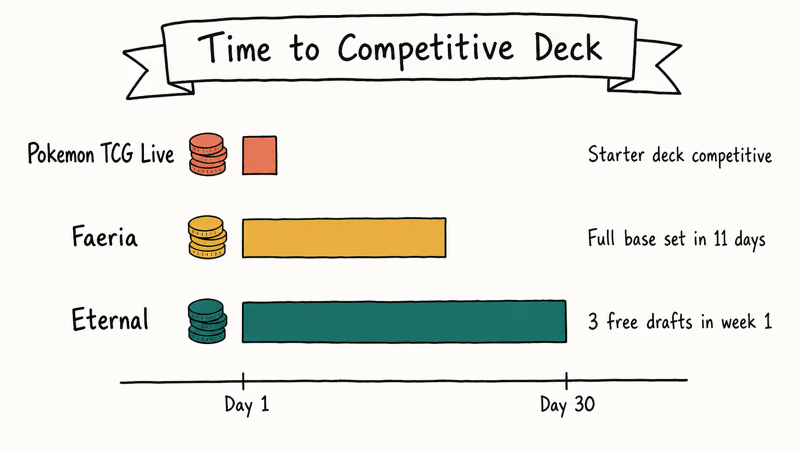
#8. Eternal Card Game
Eternal is the Hearthstone killer nobody talks about. It runs on Steam, iOS, Android, and every major platform. According to Wikipedia’s Eternal article, every gold you earn can go toward any card in the game, with no craft-only walls blocking upgrades.
Eternal’s color system borrows from MTG, and the draft mode is always free with gold. A few drafts in the first week can net well over a hundred new cards and a fully built aggro red deck, all without spending real money.
#9. Faeria
Faeria sits between a CCG and a board game. The play area is an eight-by-ten hex grid, and you build land tiles each turn to summon creatures. According to Wikipedia’s Faeria page, Abrakam Entertainment moved the title to a one-time purchase model in 2020, which means no microtransactions and no card-shop grind.
Every card in the game unlocks at a fixed gold cost, which makes it one of the few card games with a real finish line. Daily play can clear the full base set in under two weeks, with no random packs standing in the way.
#10. Pokemon TCG Live
Pokemon TCG Live replaced Pokemon TCG Online in 2023. Official Pokemon support pages confirm that any cards you owned in TCG Online migrated to TCG Live and that booster packs from paper code cards still work. This is the easiest way to test Pokemon deck ideas without buying paper product every week.
Live’s play pace is faster than Master Duel but slower than Marvel Snap. Matches run at a moderate length on PC and iPad, and starter decks are surprisingly competitive for a free account, which makes Live the easiest entry point for anyone coming back to Pokemon after a decade off.
#What Should You Look For In A Hearthstone Alternative?
Before picking a new game, know your priority. If match length matters most, Marvel Snap and Legends of Runeterra both finish in under six minutes. If you want strategic depth, MTG Arena or Master Duel give you more decision points per turn than Hearthstone ever has.
Also think about platform. Marvel Snap is phone-first. MTG Arena is PC-first. Most others run well on both.
For broader gaming picks on nearby genres, our best MOBA games roundup and games like Starcraft list cover what to play when you want to step away from cards for a round.
#Bottom Line
Start with Legends of Runeterra if you want the best free-to-play economy. Pick Marvel Snap if you play on a phone and want short sessions. Choose MTG Arena if you’re willing to invest the hours for the deepest strategy. Those three earn permanent spots on most card players’ phones, which says more than any scoring table could.
If none of these click, our games like Warcraft 3 guide covers Blizzard RTS alternatives that scratch a related itch.
#Frequently Asked Questions
What is the closest game to Hearthstone?
The Elder Scrolls: Legends is the closest mechanical cousin. It uses the same mana-per-turn curve and hero powers, then adds a dual-lane board. Legends of Runeterra comes second, with a mana system and turn-based play that feels very familiar to Hearthstone veterans.
Is Legends of Runeterra pay to win?
Not at all. Every card in Legends of Runeterra can be earned for free through weekly vaults, wildcards, and expedition rewards. A free account can reach a tier-one deck within a few weeks of daily play. Paying only saves time, not power.
Are there any card games like Hearthstone for iPhone?
Yes. Marvel Snap, Legends of Runeterra, Shadowverse, Eternal, and Pokemon TCG Live all ship native iOS apps. Marvel Snap is the most phone-friendly of the group, with matches that finish in under four minutes. All five support iCloud sync so you can pick up a match on an iPad right where you left it on your iPhone.
What makes Marvel Snap different from Hearthstone?
Every Marvel Snap match ends in six turns on three board lanes. There’s no mana, no hero class, and no deck over 12 cards. The Snap button doubles the stakes mid-match, which turns games into a poker-style read-your-opponent contest.
Which card game has the most cards?
Yu-Gi-Oh! Master Duel ships with the largest card pool, covering over two decades of Yu-Gi-Oh archetypes. Magic: The Gathering Arena sits smaller for Standard play, and Hearthstone’s Standard format rotates older sets out every year, keeping its live pool the most compact.
Can you play Gwent outside The Witcher 3?
Yes. Gwent launched as a standalone game on PC, iOS, and Android in 2018. It has its own single-player campaigns, ranked ladder, and monthly seasons that run independently from the main Witcher game. CD Projekt Red stopped new card releases in 2023, but the existing pool is still balanced for competitive play.
Are any of these games playable offline?
Only Faeria has a full offline mode with puzzle content. The rest require an internet connection for ranked and casual play. Marvel Snap and Legends of Runeterra both handle weak connections better than Hearthstone does on a tethered hotspot.
Which Hearthstone alternative is best for beginners?
Legends of Runeterra has the gentlest learning curve. The interactive tutorial covers every core rule in about 25 minutes, and the starter regions all play well without major deck investment. Marvel Snap is a close second because its three-lane rules can be learned in a single match.
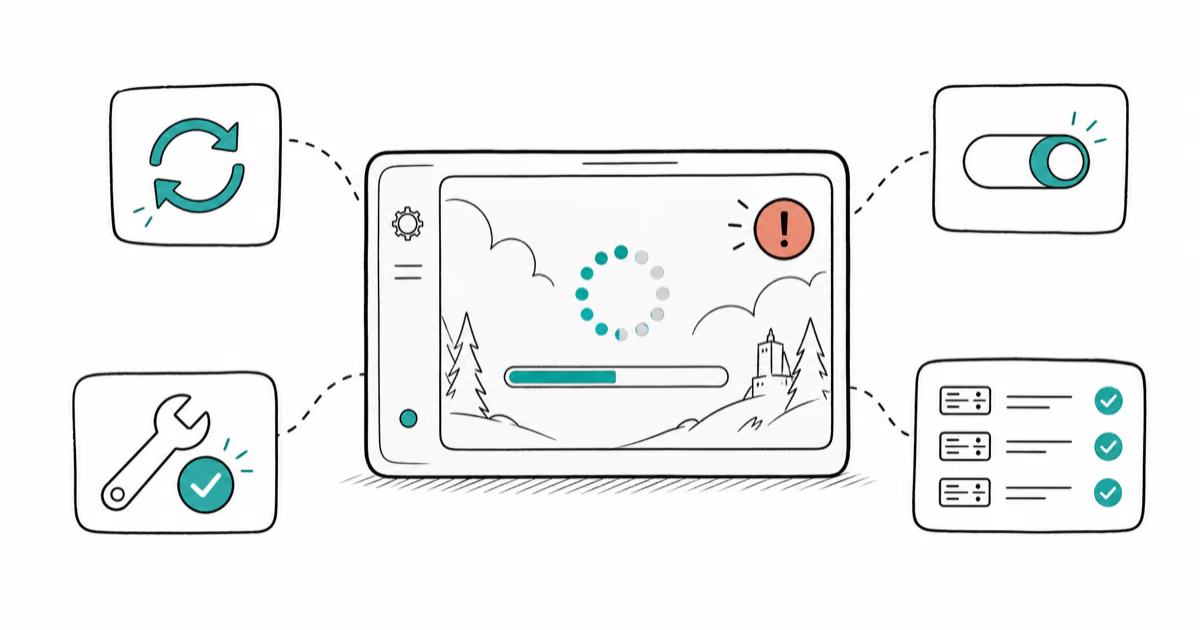
Fortnite Stuck on the Loading Screen? Fix It in 2026
Fortnite stuck on the loading screen? Check server status, fix the Windows N Media Pack and DirectX 11 on PC, clear the console cache, and verify files.
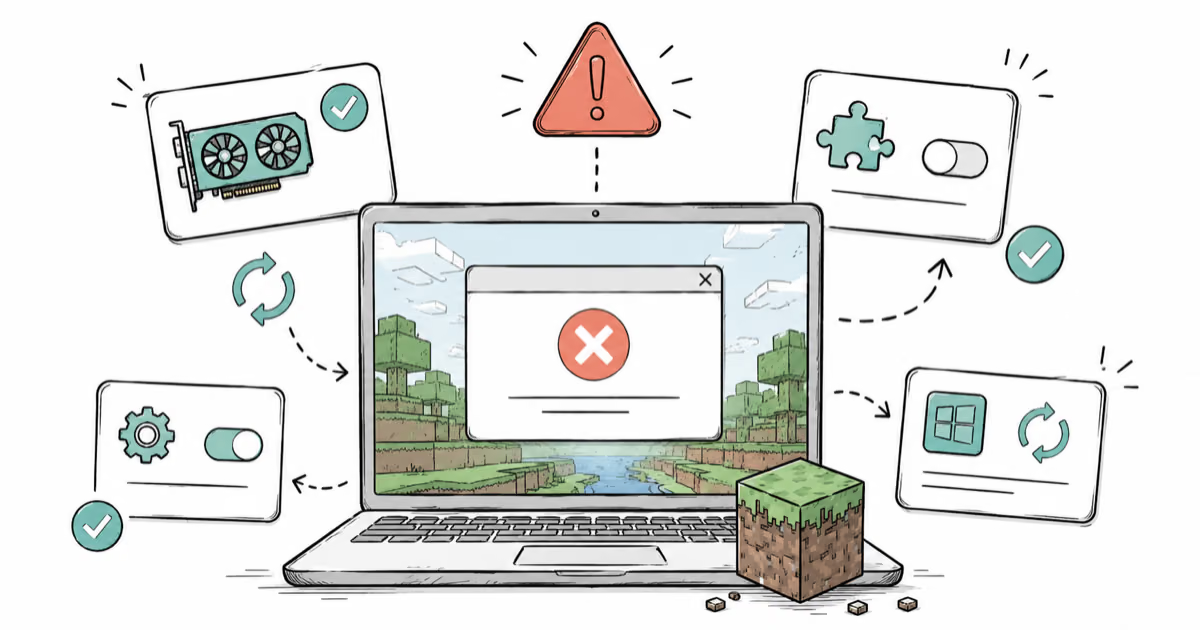
Minecraft Keeps Crashing? Java and Bedrock Fixes (2026)
Minecraft keeps crashing on startup or mid-game? Update your GPU driver, remove mods on Java, and reinstall Gaming Services on Bedrock. Fixes for both.
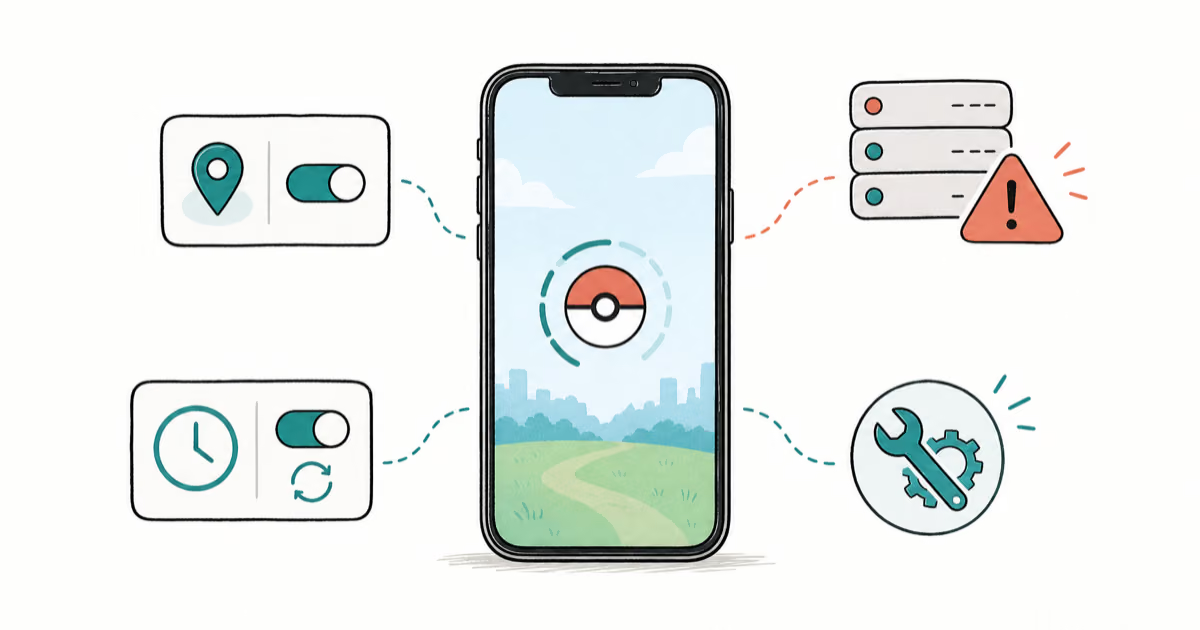
Pokemon GO Not Loading? Fix the Loading Screen 2026
Pokemon GO not loading or stuck on the Pokeball? Check server status, fix automatic date and time, grant location permission, clear the cache, and update.
PS5 Controller Not Charging? 9 Fixes That Work (2026)
DualSense not charging? Swap the cable, use a rear port in Rest Mode, clean the USB-C port, and check power settings. 9 fixes for a dead PS5 controller.