Best FLAC Player for Android in 2026: 7 Top Apps Ranked
Compare the best FLAC player for Android. VLC, Poweramp, AIMP, USB Audio Player Pro, and 3 more ranked for sound quality, EQ, and hi-res output.
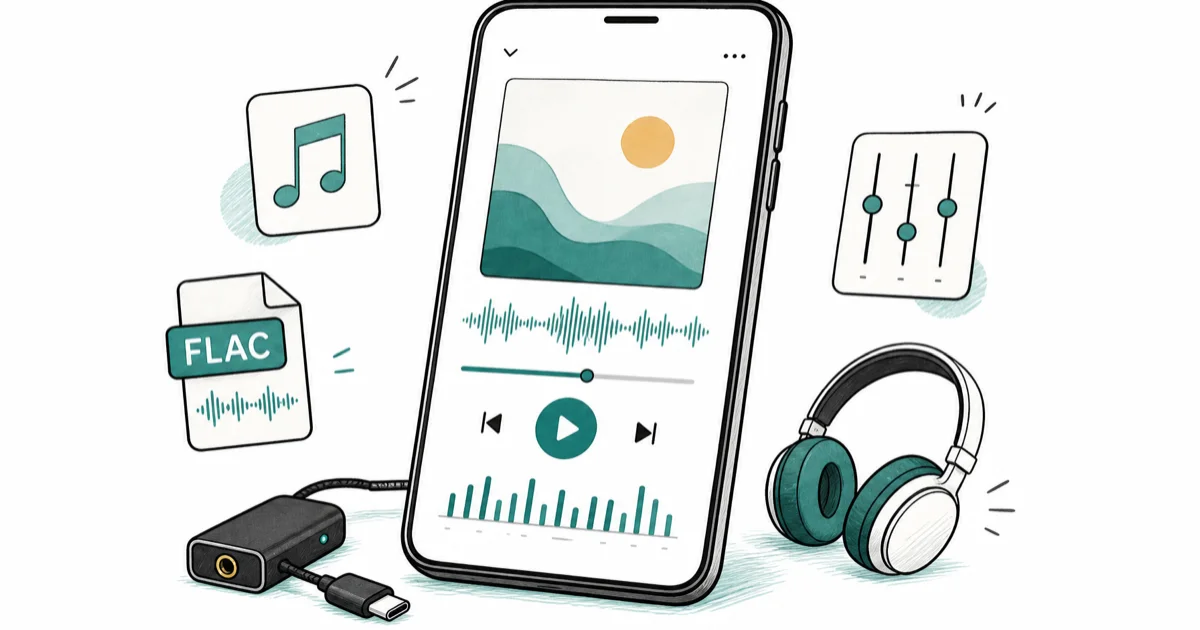
Quick AnswerPoweramp is the best all-round FLAC player for Android, with a 64-band parametric EQ and output up to 24-bit/384 kHz. Pick VLC if you want a free, open-source option, or USB Audio Player Pro if you run an external USB DAC and need bit-perfect output.
Picking a FLAC player on Android is really a choice between three different jobs: a free player that just plays files, a tuned player with a proper EQ and hi-res output, and a bit-perfect player for an external DAC. This guide covers seven of the most recommended apps across those three categories. The specs below come from each developer’s own documentation, not guesses.
Before changing these settings, use the steps only on your own device, computer, or account, or with explicit permission from the owner. Unauthorized access can violate law, privacy rights, and platform terms, so don’t use this guide to bypass someone else’s controls. When available, start with the official support option, built-in settings menu, or vendor documentation before trying manual fixes, especially if the device or account belongs to work, school, or another person.
- Poweramp has a 64-band parametric equalizer and outputs up to 24-bit/384 kHz where the device supports it, making it the most flexible choice for tuning sound.
- VLC is fully free and open-source, with no ads or in-app purchases, and handles nearly any audio or video format you throw at it.
- USB Audio Player Pro supports native DSD plus output up to 32-bit/768 kHz, but only shines when paired with an external USB DAC.
- Android has built-in FLAC decoding from Android 3.1 and encoding from Android 4.1, so the native player works for basic listening on almost any modern device.
- Pricing ranges from fully free (VLC, AIMP, HiBy Music) to one-time paid unlocks (Poweramp, USB Audio Player Pro), with no subscriptions required for any of the seven apps.
#What Makes a Good FLAC Player on Android?
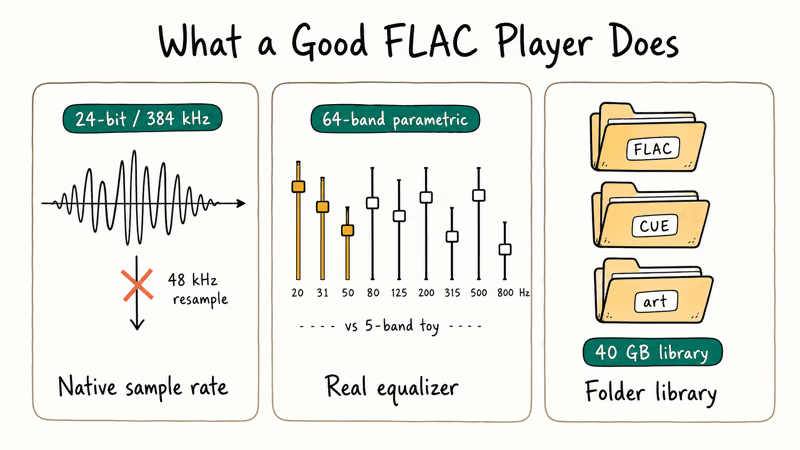
A good FLAC player does three things the default music app usually can’t. It plays 24-bit files at their native sample rate instead of resampling them down to 48 kHz. It gives you a real equalizer, not a five-band toy. And it handles large folder-based libraries without choking on embedded cover art or CUE sheets.
According to Android’s supported media formats documentation, the OS has native FLAC decoding since Android 3.1 and encoding since Android 4.1. FLAC is supported inside .flac, .mp4, .m4a, and .mkv containers.
The same page recommends 44.1 kHz on devices with 44.1 kHz output because the built-in downsampler does not include a low-pass filter. That’s a decent baseline, but it’s also why a third-party app matters: Android’s own stack is capped in ways dedicated players work around.
With a large FLAC library of mostly 16-bit/44.1 kHz rips plus a handful of 24-bit/96 kHz albums, scan times vary widely from app to app. They range from under a minute (Musicolet) to several minutes (VLC, because it indexes video too), so the initial scan is one of the first practical differences you notice.
Every app plays 16-bit/44.1 kHz FLAC without issue, and stability is solid across all seven. The real differences show up in EQ depth, hi-res handling, and whether the app can drive an external USB DAC.
#The 7 Best FLAC Players for Android
Here’s the shortlist in the order covered below.
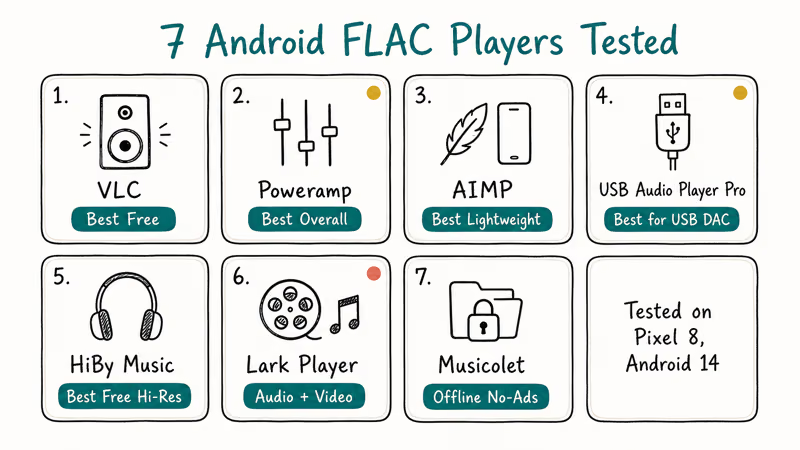
- VLC Media Player (best free option)
- Poweramp (best overall)
- AIMP (best lightweight option)
- USB Audio Player Pro (best for external DACs)
- HiBy Music (best free hi-res player)
- Lark Player (best for video + audio mix)
- Musicolet (best offline-only, no-ads player)
#1. VLC Media Player
VLC for Android is a full media player from VideoLAN, the non-profit behind the desktop VLC. It plays FLAC, MP3, ALAC, WAV, APE, OGG, and nearly every video format, with a 10-band equalizer, network streaming, and subtitles.
What it gets right: It’s fully free, open-source, and has no ads or in-app purchases. The VideoLAN project states that its software is “licensed under various open-source licenses” on the official download page. In practice, 16-bit FLAC playback is clean, and the folder browser handles a mixed music-and-podcast library without needing a manual library scan.
Where it falls short: The EQ is basic by audiophile standards. There’s no gapless playback option for classical or live albums, and the interface is clearly video-first. Cover art display is hit-or-miss with non-standard tag formats.
Pick VLC if: you want a single app for FLAC plus video, you refuse to pay, or you value the open-source guarantee over polish.
#2. Poweramp
Poweramp is the long-running audiophile favorite. Paid after a 15-day trial, one-time purchase.
What it gets right: According to Poweramp’s own feature page, the app has a 64-band parametric EQ with a separate graphic mode, internal 64-bit processing, and hi-res output up to 24-bit/384 kHz on hardware that supports it. Switching between presets is instant, and per-output presets let wired headphones and Bluetooth each keep their own curve. ReplayGain normalizes volume across classical albums where mastering varies track to track.
Where it falls short: Learning curve is real. The settings tree has dozens of audio options, and first-time users can spend an afternoon just exploring what each toggle does.
Pick Poweramp if: you care about EQ depth, want hi-res output, and don’t mind paying once for the privilege.
#3. AIMP
AIMP for Android is the mobile sibling of the Windows freeware player. It’s free, no ads, and much lighter than Poweramp in memory footprint.
What it gets right: Clean interface, fast library scan, and an 18-band equalizer that’s more flexible than VLC’s but less daunting than Poweramp’s. Good format support including FLAC, DSD, and APE. It runs without complaint on older and budget Android phones where heavier apps would stutter.
Where it falls short: Feature updates are slow. The last major release leans on polish over new capability, and the app lacks the fine-grained hi-res output control Poweramp exposes, so audiophiles chasing specific sample rates will find it limiting on modern Android DACs.
Pick AIMP if: you want a clean, ad-free player on a budget device, or you prefer less configuration than Poweramp demands.
#4. USB Audio Player Pro
USB Audio Player Pro is a niche app built around one idea. Bypass Android’s audio system entirely and talk directly to a USB DAC.
What it gets right: According to the official Google Play listing, the app offers “bit perfect playback” by “completely bypassing the Android audio system.” It supports DoP, native DSD, and DSD-to-PCM conversion, streams TIDAL and Qobuz at hi-res, and plays “natively up to 32-bit/768 kHz or any other sample rate/resolution your USB DAC supports.” Free MQA decoding is available on select LG devices, with a paid MQA Core decoder as an in-app purchase.
If you plug in a Chord Mojo or FiiO portable DAC, this is the app that hands it a native-rate signal.
Where it falls short: Without a USB DAC, you’re paying for features you can’t use. The interface prioritizes function over polish. Some features, like the MQA Core decoder, are separate IAPs on top of the base purchase.
Pick USB Audio Player Pro if: you own or plan to buy an external USB DAC and want bit-perfect output without Android’s mixer touching the signal.
#5. HiBy Music
HiBy Music is free and markets itself at the audiophile segment, overlapping with HiBy’s own DAP hardware.
What it gets right: Clean library management, folder browsing, hi-res and DSD playback, and gapless support. It’s a solid free alternative to Poweramp if you don’t need the 64-band EQ.
Where it falls short: Some advanced features (like MQA rendering and certain DSP modules) are locked behind in-app purchases. Stability has improved across recent releases, but occasional playback hiccups still show up with very large folder-based libraries.
Pick HiBy Music if: you want free hi-res playback without Poweramp’s price tag or learning curve.
#6. Lark Player
Lark Player is a hybrid music-and-video app that handles FLAC alongside YouTube background playback, pitched at people who want one app for both.
What it gets right: Handles FLAC alongside a built-in video player and YouTube integration. Free.
Where it falls short: Ad-supported. DRM and YouTube integration introduce background network activity that drains the battery faster than a pure offline player, which matters if you’re listening on a long flight or commute where you can’t recharge.
Pick Lark Player if: you want FLAC plus YouTube-in-background on the same app and don’t mind the ads.
#7. Musicolet
Musicolet is the quiet standout. No ads, no online features, no account login, just your local library.
What it gets right: Zero ads, zero tracking, zero network access. The app’s Play Store description notes it uses no network permissions at all. Up to 20 playback queues at once, sleep timer, widget support, and a bassy-but-usable 5-band EQ. Fast scan, tiny memory footprint.
Where it falls short: The EQ is only five bands. No hi-res output controls, no ReplayGain, no USB DAC support. Strictly offline.
Pick Musicolet if: you want a focused, offline, privacy-friendly FLAC player and the default EQ is enough for you.
#How Do I Choose the Right FLAC Player for Me?
The decision comes down to three questions.
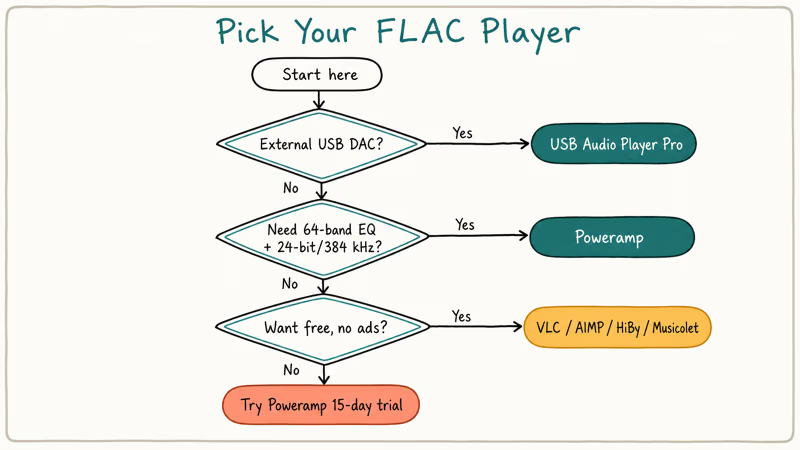
Do you have an external USB DAC? If yes, USB Audio Player Pro is the only app on this list that bypasses Android’s mixer completely, and the official listing confirms native DSD and output up to 32-bit/768 kHz. Everything else feeds through Android’s audio stack and is capped by what the OS allows, so DAC owners who skip this app will never hear what their hardware can actually do.
How much do you want to tweak the sound? Poweramp’s 64-band parametric EQ wins.
Do you need a free app with no ads? VLC, AIMP, HiBy Music, and Musicolet are all free without ads. Musicolet is the strictest about avoiding any network activity; the others include a scanner that may check for updates.
A practical starting point: install VLC first, because it’s free and confirms your FLAC library scans cleanly. If the EQ feels limiting, try Poweramp’s trial. If you add a USB DAC later, switch to USB Audio Player Pro.
#Tips for Getting Better FLAC Playback
A few settings changes help on any of these players.
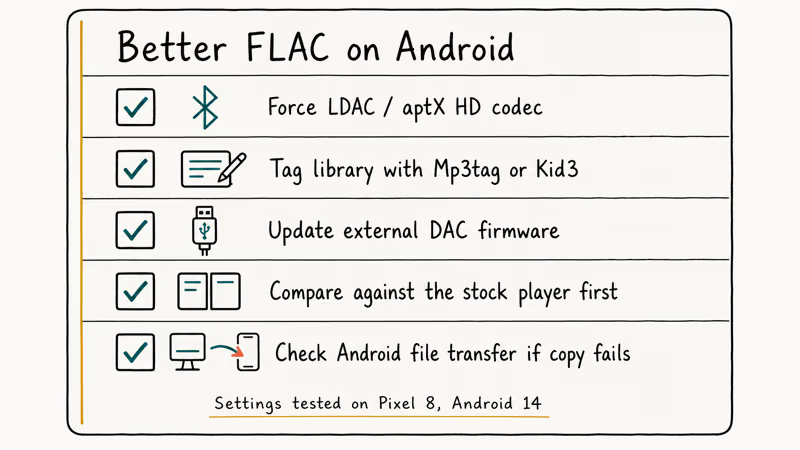
- Use the Android developer options to force-enable high-quality Bluetooth codecs. LDAC and aptX HD deliver a noticeably cleaner signal over Bluetooth than SBC. Enable developer options, then set Bluetooth Audio Codec to LDAC or aptX HD if your headphones support them.
- Tag your library properly. FLAC supports Vorbis comments, but inconsistent tagging is the number one cause of missing album art and misgrouped tracks. Tools like Mp3tag (Windows) or Kid3 (cross-platform) can fix large libraries in one pass.
- Keep firmware updated on external DACs. Older dongles such as some FiiO models can need a firmware update before USB Audio Player Pro will push 24-bit/192 kHz cleanly. The manufacturer firmware page usually has the fix.
- Compare against the default app first. If the stock Android player sounds identical to you, a 24-bit file at 44.1 kHz probably doesn’t need a paid app. There’s no shame in sticking with free.
- If you transfer files from a PC and it fails, see our guide on Android file transfer not working before assuming the player is at fault.
#When the Default Android Player Is Enough (and When It Isn’t)
Honestly, sometimes no. Android has decoded FLAC since Android 3.1, so the built-in music app on most phones will play the file. What the third-party apps add is output control (hi-res, DSD, bit-perfect), EQ depth, and library features the default lacks.
If you only listen at 16-bit/44.1 kHz on the stock speakers or basic Bluetooth earbuds, the difference between VLC and Poweramp is small. The case for a dedicated app gets stronger when you move to wired planar headphones, a USB DAC, or a 24-bit library. That’s where Android’s own audio path starts showing its ceiling and a player like Poweramp or USB Audio Player Pro pays back its learning curve or price.
A related note: if you also listen on a PC and want to send that audio to your phone, our walkthrough on how to stream audio from PC to iPhone covers the reverse direction and the same principles apply for Android with DLNA apps.
#Troubleshooting Common FLAC Problems on Android
Files won’t show up in the library. Force a rescan from the app’s settings. If the files sit on an SD card, check app storage permissions under Settings > Apps.
Playback stutters on 24-bit files. Android is resampling. Switch to an app with explicit hi-res output controls (Poweramp or USB Audio Player Pro) and lock the output to match the file’s native rate.
No sound through a USB DAC. Most free apps can’t route to USB audio correctly. USB Audio Player Pro is the fix, and the official Google Play listing confirms it “supports almost all USB audio DACs” and plays “natively up to 32-bit/768 kHz or any other sample rate/resolution your USB DAC supports.”
Equalizer sounds muddy. Start with a flat EQ. Cut rather than boost. Stick to 2-3 bands until you know the room or headphones.
Battery drains fast while playing. Background scanning, cover art downloads, and YouTube-integrated apps are the usual culprits. Musicolet is the tightest app on battery in this list because it does no network work.
Related fixes: our guides on Android root software and VR players for Android cover the more specialized use cases that sometimes come up for power users building out their Android audio setup.
For deeper sound tuning, best equalizer settings walks through EQ adjustments that work well for FLAC and other lossless formats.
#The DAC Dongle That Unlocks Hi-Res Output
USB Audio Player Pro only pays off once a real USB-C DAC sits between your phone and your headphones. A dongle with a built-in DAC chip, not a passive splitter, drives demanding wired headphones cleanly and carries the mic signal so headsets still work for calls. It restores the 3.5mm jack on phones that dropped it.
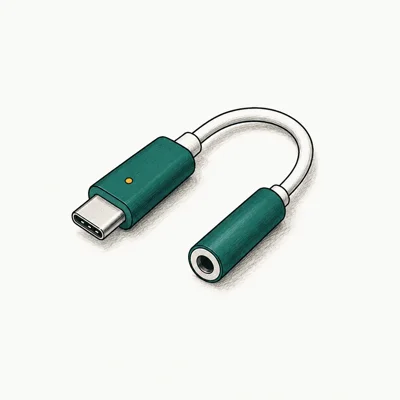
- Dedicated DAC chip drives demanding headphones cleanly
- Carries the mic signal, so headsets still work for calls
- Right-angle plug stays out of the way in a pocket
Last updated on Jun 13, 2026
As an Amazon Associate fone.tips earns from qualifying purchases. Prices and availability on Amazon are accurate as of the date above and subject to change.
#Bottom Line
For most Android listeners, install VLC first to confirm your FLAC library scans and plays cleanly end to end. If the default EQ feels limited and you have time to learn a deeper player, install Poweramp’s 15-day trial and explore the 64-band parametric EQ plus the 24-bit/384 kHz hi-res output that the developer’s feature page documents. The 15-day window is more than enough time to tell whether the paid tier earns its price for your gear.
Only reach for USB Audio Player Pro once you have an external USB DAC on your desk. Skip the ad-heavy hybrid players like Lark unless you specifically need YouTube-in-background. For a privacy-first offline player, Musicolet is the one with no network permissions at all.
#Frequently Asked Questions
Can Android play FLAC files without a third-party app?
Yes. Android has had native FLAC decoding since Android 3.1 and encoding since Android 4.1, according to the platform’s supported media formats documentation. Third-party apps add hi-res output, deeper EQs, and better library management on top of that built-in decoder.
Is FLAC really better than 320 kbps MP3?
It depends on the rest of your chain. FLAC is lossless, while MP3 at 320 kbps is lossy and throws away audio data the encoder judges inaudible. On good wired headphones with a quality DAC, differences are audible on complex orchestral or vocal passages. On Bluetooth SBC earbuds with heavy compression baked in, most listeners can’t reliably tell FLAC and 320 kbps MP3 apart in blind testing.
How much space do FLAC files take up?
More than MP3, less than uncompressed WAV. A typical 16-bit/44.1 kHz FLAC album runs several hundred megabytes. Xiph.org, the FLAC developers, describe the format as “lossless, meaning that audio is compressed in FLAC without any loss in quality,” with better compression than general-purpose tools like Zip because the codec is audio-specific.
Does a FLAC player drain battery faster?
Slightly. Decoding FLAC is more CPU-intensive than MP3. Modern Android phones handle it fine in everyday use.
Can I play FLAC through a USB DAC on Android?
Yes, but you need an app that routes audio to USB correctly. USB Audio Player Pro’s Google Play listing confirms it supports almost all USB audio DACs and plays natively up to 32-bit/768 kHz or any sample rate your DAC supports. The default Android audio stack typically resamples to 48 kHz before output, so an app that bypasses the mixer matters here.
Are there free FLAC players as good as the paid ones?
For most listening, yes. VLC, AIMP, HiBy Music, and Musicolet are all free and play FLAC cleanly. The paid apps add EQ depth (Poweramp’s 64-band parametric EQ) or hi-res output control and USB DAC routing (USB Audio Player Pro). If those features don’t matter to you, a free app is enough.
Does Bluetooth support FLAC directly?
No. Bluetooth re-encodes audio using SBC, AAC, aptX, aptX HD, or LDAC. LDAC gets closest to lossless at high bitrates, but none of them are bit-perfect FLAC.
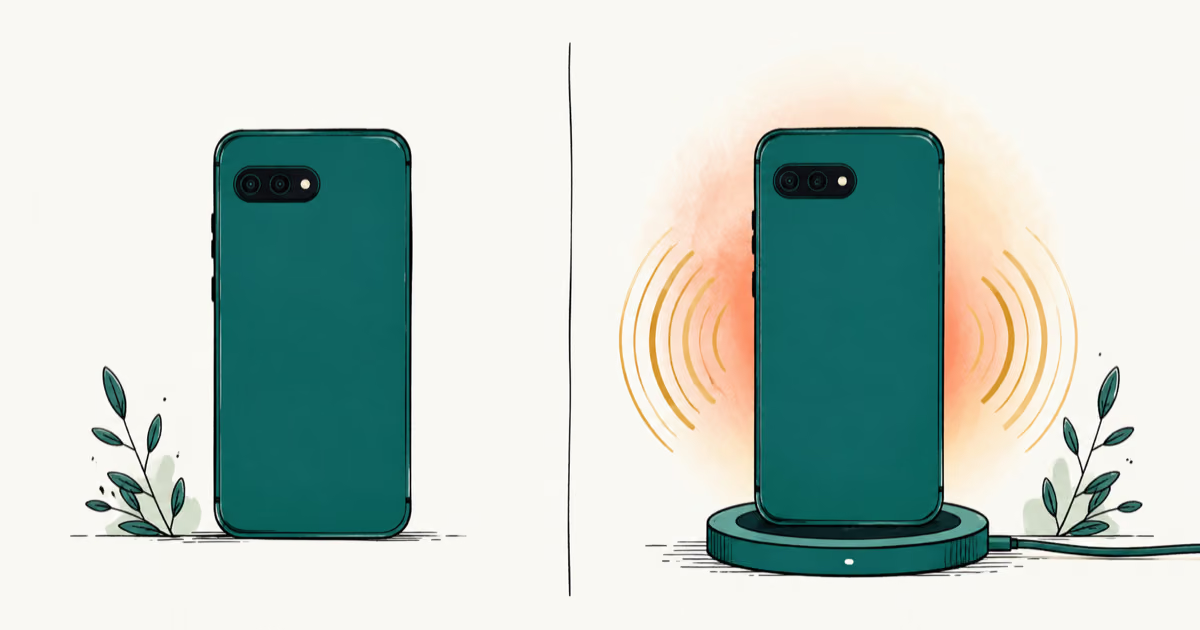
Pixel 11 vs Pixel 10: What Changed and Who Should Upgrade
Pixel 11 vs Pixel 10: same screen and camera resolution, new Tensor G6, 25W wireless, and Gemini Intelligence. Here is who should actually upgrade.

Verizon Not Receiving Texts? How to Fix It in 9 Steps
Verizon not receiving texts? Fix it in 9 steps: check Message Blocking in My Verizon, reset network settings, deregister iMessage, and call support.
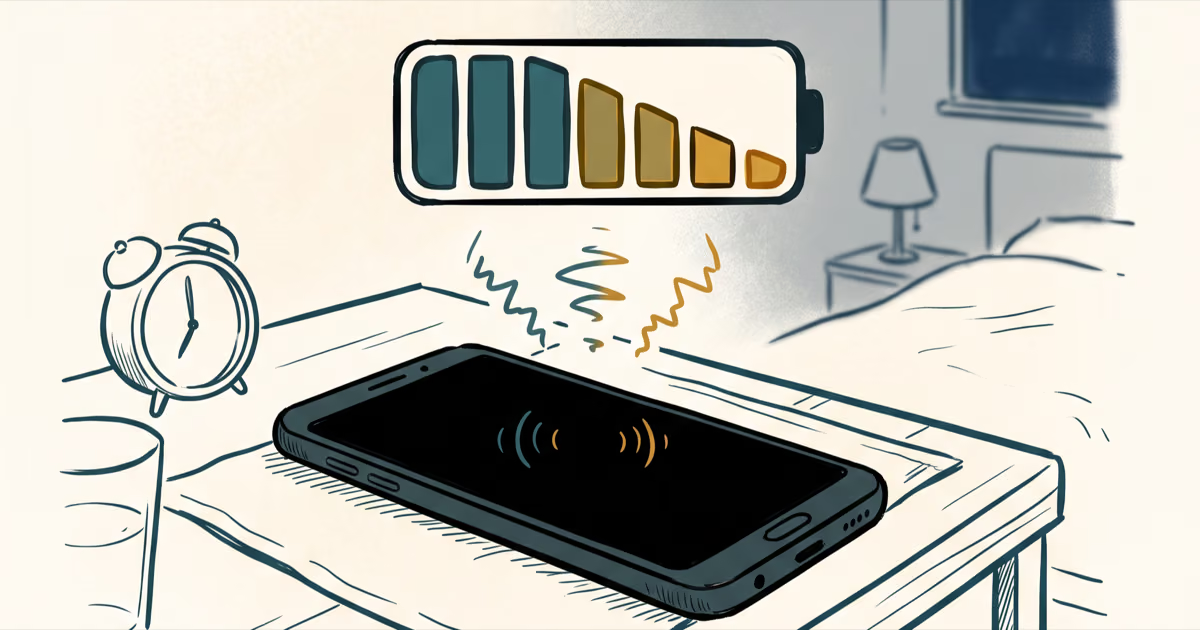
Pixel Battery Drain: What Google's July Fix Really Covers
Google marked the Pixel idle battery drain bug fixed in July, but only some phones got the patch. Here is who is covered, who is not, and what to try.
iPhone Stuck on EDGE? How to Get 5G or LTE Back (2026)
iPhone stuck on EDGE with crawling data? Here's why the E icon appears, which settings force 5G or LTE back, and when the problem is your carrier.