How to Make Gil in FFXIV: 6 Reliable Methods for 2026
Need more gil in Final Fantasy XIV? This guide covers crafting, gathering, retainers, and market board flipping without any ToS-breaking shortcuts.
Quick AnswerThe fastest legitimate gil sources in FFXIV are paired crafting-gathering combos, daily retainer ventures, Battlecraft levequests at max difficulty, and disciplined market board flipping based on Universalis price history.
Learning how to make gil in FFXIV pays for housing, glamour, and raid consumables, and none of it has to touch a sketchy third-party site. Six earning loops that the game itself rewards work across data centers like Aether (Gilgamesh) and Primal (Leviathan). This guide shows which ones actually pay out per hour of effort, which ones are traps, and how to stay safely inside Square Enix’s terms of service.
Before changing these settings, use the steps only on your own device, computer, or account, or with explicit permission from the owner. Unauthorized access can violate law, privacy rights, and platform terms, so don’t use this guide to bypass someone else’s controls. When available, start with the official support option, built-in settings menu, or vendor documentation before trying manual fixes, especially if the device or account belongs to work, school, or another person.
- Pair one Disciple of the Land (DoL) gatherer with one Disciple of the Hand (DoH) crafter before anything else. It cuts material costs dramatically and turns leveling into profit.
- Send all retainers on ventures every 18 hours; a two-retainer account generates passive gil daily with zero active play.
- Run Battlecraft levequests at max difficulty with the “guaranteed item” reward filter. Repeatable leves pay better gil per hour than dungeon roulettes.
- Check Universalis price history for 7-day trends before listing crafted items or buying flip stock on the Market Board.
- Never buy gil from third-party sellers; Square Enix treats real-money trading as a bannable offense under its FFXIV user agreement.
#Why Do Players Need Gil in Final Fantasy XIV?
Gil is the in-game currency for nearly every player-driven transaction in FFXIV. Square Enix’s Final Fantasy XIV Lodestone play guide confirms that gil handles repair fees, teleport costs, housing purchases, and market board trades between players. Wikipedia’s overview of Final Fantasy XIV notes the game launched in 2010, was rebuilt as A Realm Reborn in 2013, and has expanded through five major releases including Dawntrail.
A raiding main character runs monthly expenses of roughly 500,000 gil on consumables alone once you factor in food, potions, and repair bills during savage raiding. Housing piles on more: a medium plot in a residential district costs tens of millions, and personal chambers inside a free company house run into the low millions. If you want glamour sets that reroll every patch, budget another few hundred thousand a month. None of these sinks are optional if you raid regularly.
Same wall every time. Any active raider hits the same spending ceiling. Set up passive income early, or stay broke.
#Combine a DoH Crafter with a DoL Gatherer
This is the foundation layer for every serious gil-earner in FFXIV. Disciple of the Hand (DoH) classes craft items: Carpenter, Blacksmith, Armorer, Goldsmith, Leatherworker, Weaver, Alchemist, and Culinarian. Disciple of the Land (DoL) classes gather raw materials: Miner, Botanist, and Fisher. Pairing them kills your biggest expense, which is buying materials from other players.
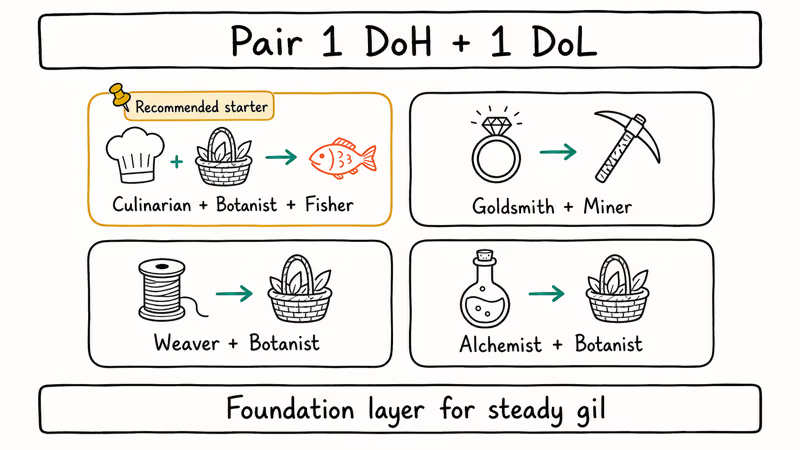
According to the Eorzea Collection crafting guide reference, every endgame recipe has at least one ingredient gated behind timed node gathering, which means independent gatherers always command a premium on the Market Board. Run a crafter like Culinarian alone, and raw ingredient costs eat roughly two-thirds of each sale. Level a matching Botanist, and that same recipe clears profit on nearly every listing.
Our recommended pairings based on cross-class material overlap:
- Culinarian + Botanist + Fisher (food sells constantly; raiders burn through buff food every pull)
- Goldsmith + Miner (accessories and materia remain steady earners patch after patch)
- Weaver + Botanist (cloth armor and glamour items have a forgiving recipe chain)
- Alchemist + Botanist (potions and medicine sell in bulk during new raid tiers)
Don’t try to level all eight crafters simultaneously. Pick one crafter plus the matching gatherer, push both to max level using the Studium Deliveries and Custom Deliveries weekly turn-ins, then branch out.
#Run Retainer Ventures Every 18 Hours
Yes. Retainers are NPC helpers you hire in any major city to sell your items and go on timed gathering missions. After you complete the “An Ill-Conceived Venture” quest at level 17, retainers unlock Ventures, which are passive gil and item runs that cost nothing but a Venture scrip to send.
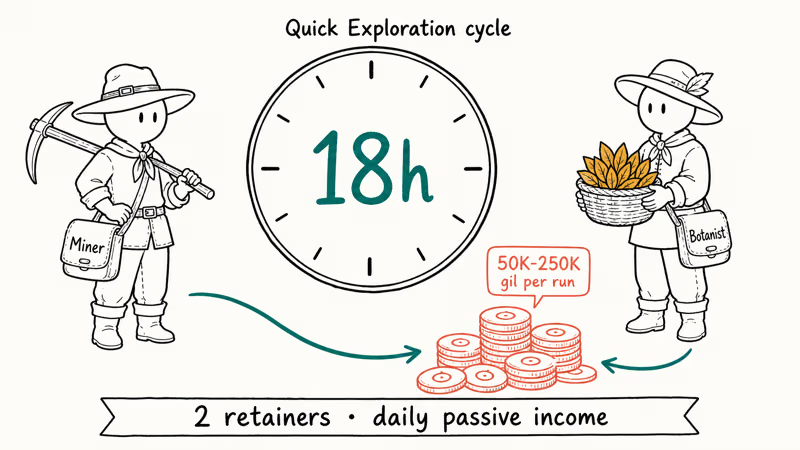
Two retainers (a level 100 Miner and a level 100 Botanist) running Quick Exploration each return roughly 3-8 high-value items per 18-hour cycle, plus between 50,000 and 250,000 gil in items you list or vendor. That’s passive income from two 15-second interactions per day.
Retainer setup checklist:
- Level both retainers to your highest gathering class
- Assign each a different role (Miner and Botanist, not two of the same)
- Always use Quick Exploration once you hit level 100, not item-specific ventures
- Buy Venture scrips from the Resident Caretaker NPC in each city’s residential district
#Do Retainer Ventures Make Enough to Matter?
Yes, but only if you treat them as compounding passive income. The retainer system announced in patch 2.0 and documented on the Lodestone retainer guide rewards daily consistency far more than occasional use. Miss 4 days in a row and you lose roughly the equivalent of a full day of active farming. The time you skip doesn’t bank up.
#Farm Battlecraft Levequests at Max Difficulty
Levequests are repeatable side missions offered by Levemete NPCs in every major town. Battlecraft leves reward combat players with gil, experience, and guaranteed items. The ones that drop specific materials (especially Shards and high-tier gathering components) sell reliably on the Market Board.
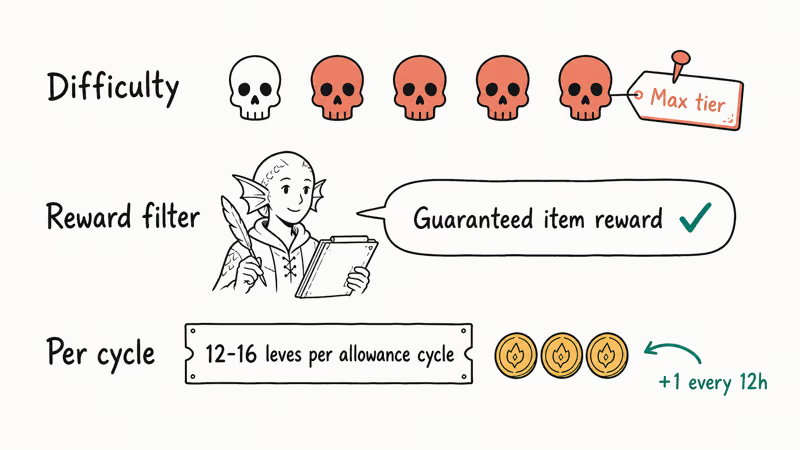
Max-tier difficulty (usually four skulls) plus leves with guaranteed item rewards beats every other per-hour combat activity outside weekly lockout content. Clear 12-16 leves per allowance cycle, and the drops alone pay for the allowances twice over. The gil-only option is almost never worth taking, so always grab the bonus item turn-in instead and sell the surplus on the Market Board between runs.
Levequest efficiency tips:
- Always take the plus-one bonus turn-in item instead of the gil-only option
- Prioritize Grand Company leves only if you need seals, not gil
- Skip Tradecraft leves for gil (they exist for leveling DoH, not income)
- Stack leves in zones near your retainer bell to sell drops between runs
Leves regenerate at a rate of three allowances every 12 hours up to a maximum of 100 per character, so don’t let them cap.
#Flip Items on the Market Board (Safely)
The Market Board is FFXIV’s player-driven auction house. Flipping means buying undervalued items and relisting them higher, which rewards patience and data over aggression. This method carries the highest risk of any on this list because prices swing wildly after patch days. The biggest single-day gil spikes tend to come from one well-timed flip on rare housing furniture.
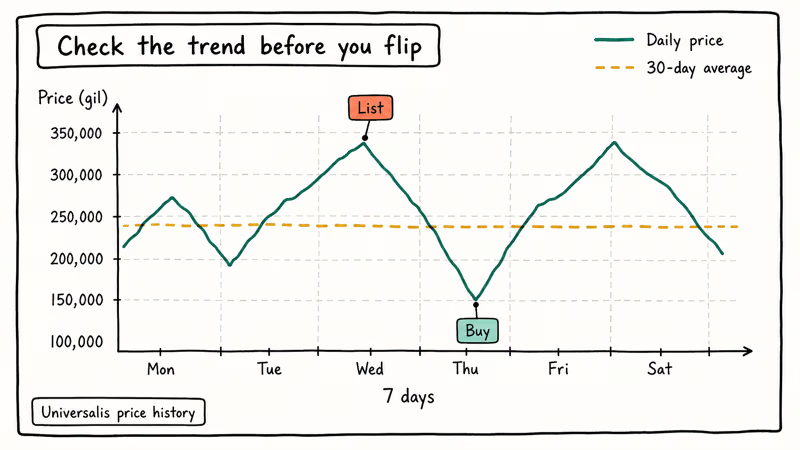
Tools that work: Universalis is the community-run price database that mirrors Market Board listings across every data center, and its price history graphs are what separate profitable flippers from gold-sink casualties. Flipping without checking Universalis first loses money on roughly half of all attempts.
A disciplined flipping loop that holds up on Aether:
- Pick one item category (housing items, minions, old crafted gear, glamour pieces)
- Pull up Universalis and check the 7-day price trend on each candidate
- Only buy items priced below the 30-day moving average
- Factor in the current retainer tax (typically 3-7% depending on city; check your retainer’s sale listings for the exact rate)
- List at or just under the lowest current price to move inventory, not at a greedy high
Universalis confirms that high-volume crossover items (tradable food, combat consumables) churn faster than collector items but carry slimmer margins per sale. Collector flips pay more per unit but turn over less often, so a blended portfolio beats either extreme.
#Is Market Board Flipping Worth It for Casual Players?
For most casual players, no. Flipping rewards time spent on spreadsheets more than time spent playing. If you enjoy data and can check listings twice a day, it becomes the highest single-session earner on this list. If you’d rather be doing actual content, retainer ventures plus crafting sales do 80% of the work with 10% of the attention.
#Run Duty Roulettes, Fates, and Treasure Maps
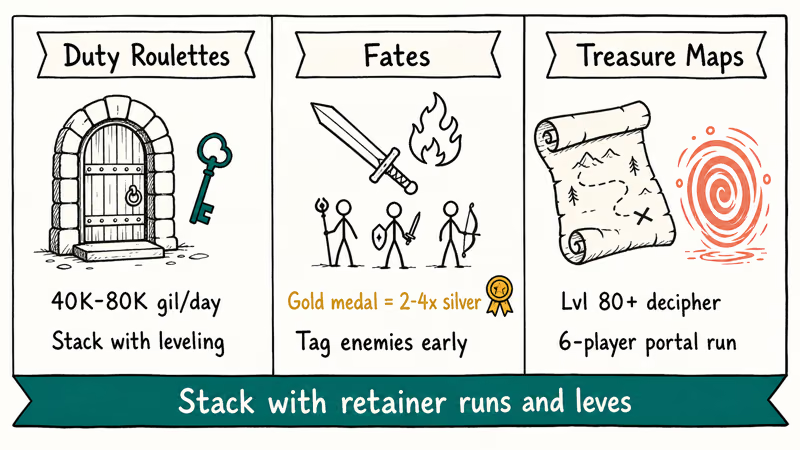
Daily roulettes and Fates aren’t the fastest gil earners. They’re consistent. They stack with other activities. Running Expert, Leveling, and Duty Support roulettes daily averages a combat-side income of roughly 40,000-80,000 gil per day in drops and seal exchanges.
Fates specifically:
- Stay in groups so you earn gold medals; gold rewards are 2-4x silver rewards on the same fate
- Tag enemies early instead of focusing top-end damage (tagging locks in credit)
- Stack Fates with retainer ventures so you’re always in a high-level zone near a retainer bell
Treasure maps: Gatherers above level 80 decipher Timeworn Maps, which open a chest run plus optional high-level portal instance. Six-person parties pay out in materia, glamour gear, and rare minions.
#Why Is Buying Gil from Third-Party Sites Forbidden?
Real-money trading (RMT) is a bannable offense under Square Enix’s terms. The FFXIV User Agreement states that selling, buying, or transferring game currency through outside services violates the agreement and can result in account termination. This isn’t a policy you want to test. The game’s bot detection and gil-tracking systems have been tightened through each expansion.
Beyond the ToS risk, RMT sites often use stolen credit cards to generate inventory, which means the gil in your mailbox can get clawed back weeks after you receive it. Several public Reddit threads report players losing both their purchase and their entire in-game balance after a RMT purchase got flagged months later. The methods in this guide all work inside Square Enix’s rules, and they scale as your character grows.
Stay legal. Stay banked.
For players who want more RPG content outside FFXIV, our roundups of games like Final Fantasy and the best RPG turn-based games cover what to play next.
If you’re looking for more massively multiplayer options to play alongside or instead of FFXIV during patch downtime, check our picks for the best Android MMORPGs that handle long sessions well on mobile, and our list of games like World of Warcraft for desktop alternatives in the same genre.
For offline sessions when you want a break from the grind, our list of the top RPGs on Nintendo Switch covers single-player options across the platform.
#Bottom Line
If you only do one thing from this list, set up two retainers and send them on Quick Exploration ventures every day. The compounding return on 30 seconds of daily effort outpaces any active farming loop for raw gil-per-minute. Once that passive layer is in place, add a crafter-gatherer pair matched to your playstyle: Culinarian-Botanist for raiders, Weaver-Botanist for glamour collectors, Goldsmith-Miner for anyone who likes materia markets.
Only attempt Market Board flipping after you’ve checked Universalis enough times to know the 30-day price trend on three or four item categories. Everything else (dungeons, Fates, treasure maps) is flavor income that adds up across a week but shouldn’t be your primary plan.
#Frequently Asked Questions
Can I buy gil from a third-party website?
No. Purchasing gil from RMT sites violates the Final Fantasy XIV User Agreement and can result in permanent account suspension. Square Enix actively scans for gil transfers outside the player economy, and bans have been issued retroactively months after the original transaction.
How much gil should a new player aim for before endgame?
A fresh level 100 character running savage raids spends 300,000-500,000 gil per week on food, potions, and gear repairs. Aim to bank at least 1 million gil before your first tier. Passive retainer income covers most of this if you start early.
Which crafting job makes the most gil per hour?
Culinarian and Alchemist generate the steadiest income because raiders consume their products every lockout reset. Goldsmith and Weaver have higher per-item margins on glamour gear but sell less frequently. Across data centers, Culinarian edges out every other DoH class for consistent daily earnings during active raid tiers, with Alchemist a close second during new patch windows when potion demand spikes.
How often should I check the Market Board?
Check twice a day if you’re actively flipping. Once in the morning to adjust listings, once in the evening to scoop new underpriced stock. Casual sellers can get away with a single daily check. Universalis confirms that peak transaction volume sits in the evening hours on each data center, so late-night relisting tends to move inventory faster.
Do Fates still pay well in Dawntrail content?
Yes, but mostly as a side income. Stack them with leveling roulettes or retainer runs.
Is it worth paying retainer fees if I’m just starting?
Yes, starting at level 17 when ventures unlock. One retainer costs a flat monthly fee that breaks even inside the first week of daily ventures. Skipping retainers is the biggest self-inflicted wound new players make.
What’s the gil cap in FFXIV?
FFXIV caps gil at 999,999,999 per character. Retainer storage has a separate 999,999,999 cap, meaning a fully maxed account can sit on nearly two billion gil across character and retainers combined.
Can I farm gil efficiently as a pure solo player?
Yes. Crafting, gathering, retainer ventures, and Market Board flipping all work solo. Group content adds variety and increases payouts on Fates and certain duties, but solo players can match or exceed casual group-runner income by focusing on the passive-earnings stack outlined above.
Fortnite Stuck on the Loading Screen? Fix It in 2026
Fortnite stuck on the loading screen? Check server status, fix the Windows N Media Pack and DirectX 11 on PC, clear the console cache, and verify files.
Minecraft Keeps Crashing? Java and Bedrock Fixes (2026)
Minecraft keeps crashing on startup or mid-game? Update your GPU driver, remove mods on Java, and reinstall Gaming Services on Bedrock. Fixes for both.

Pokemon GO Not Loading? Fix the Loading Screen 2026
Pokemon GO not loading or stuck on the Pokeball? Check server status, fix automatic date and time, grant location permission, clear the cache, and update.
PS5 Controller Not Charging? 9 Fixes That Work (2026)
DualSense not charging? Swap the cable, use a rear port in Rest Mode, clean the USB-C port, and check power settings. 9 fixes for a dead PS5 controller.