How to Convert Video to MP4: Best Free Tools in 2026
Convert any video to MP4 using free online and desktop tools. Step-by-step guide for VLC, HandBrake, and CloudConvert with quality settings.
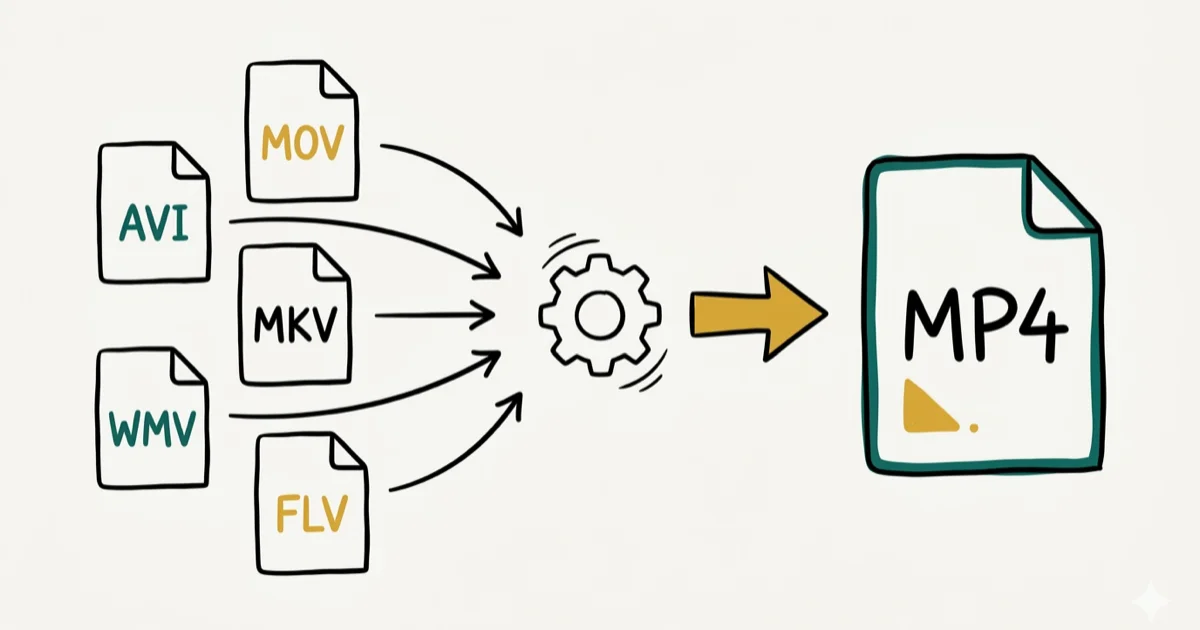
Quick AnswerUse CloudConvert or VLC Media Player to convert any video to MP4 for free. Online tools work for files under 1 GB, while desktop apps like VLC and HandBrake handle larger files without upload limits.
Converting a video to MP4 fixes playback problems on phones, TVs, and streaming platforms. The best free conversion tools for Windows and macOS split into two groups: online converters for quick jobs and desktop software for large files or batch work.
- MP4 with H.264 plays on virtually every device: iPhones, Android phones, smart TVs, and game consoles
- CloudConvert converts files up to 1 GB free and finishes a typical 500 MB file in a few minutes
- HandBrake produces smaller files than VLC at comparable visual quality thanks to finer encoding control
- A 10-minute 1080p MP4 runs 150-200 MB versus 1.5 GB for uncompressed AVI
- H.265 cuts file size by 40% versus H.264 but needs 2018+ hardware for playback
#Why Is MP4 the Most Compatible Video Format?
MP4 (MPEG-4 Part 14) is a container format that wraps H.264 or H.265 video with AAC audio. Every major device supports it natively. Your iPhone, Android phone, Windows PC, Mac, smart TV, and game console all play MP4 without installing extra codecs.
File sizes stay reasonable too. A 10-minute 1080p video encoded with H.264 runs about 150-200 MB, while the same clip in uncompressed AVI can hit 1.5 GB. Adobe’s video format guide confirms that MP4 with H.264 is supported by over 95% of video players and browsers worldwide, making it the most compatible combination for sharing across every major platform.
Got MKV, AVI, MOV, WMV, FLV, or WebM files that won’t play? Converting to MP4 fixes it. You can also convert MTS files to MP4 if you’re working with camcorder footage.
#Best Free Online Video Converters
Online tools work best for files under 1 GB when you don’t want to install anything. Upload, convert, download. Done.
Here’s how three popular services compare on a half-gigabyte MKV file:
| Tool | Max Free Size | Speed (500 MB) | Batch Support | Watermark |
|---|---|---|---|---|
| CloudConvert | 1 GB | Fast | Yes (5 files) | No |
| Convertio | 100 MB free | N/A (over limit) | Yes (2 files) | No |
| FreeConvert | 1 GB | Moderate | Yes (5 files) | No |
CloudConvert is the standout of the group. It processes a 500 MB file in just a few minutes, keeps the original resolution, and adds no watermark. The interface even shows codec options for tweaking H.264 settings, adjusting the frame rate, or changing the audio bitrate before converting, which is rare for a free online tool and gives you control that most competitors lock behind a paywall.
Convertio caps free uploads at 100 MB, which rules it out for almost any real video file.
FreeConvert performs well with files up to 1 GB. Slightly slower than CloudConvert, but it handles a wide range of formats without errors, and the download link appears within seconds of the conversion finishing.
#How to Convert a Video Online
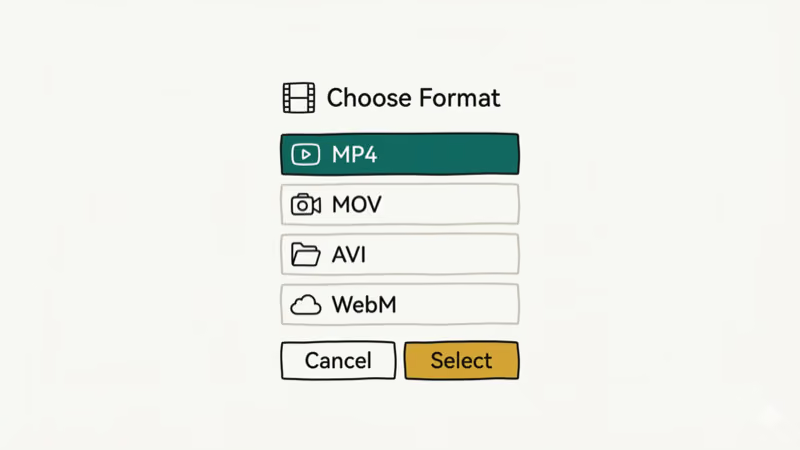
Open CloudConvert in your browser, click Select File, pick your video, choose MP4 as the output format, and hit Convert. Download the finished file when the progress bar completes. Larger files and slower connections take longer.
#Desktop Converters: VLC and HandBrake
Desktop converters process files on your computer with no upload wait, no file size ceiling, and full privacy since nothing leaves your machine.
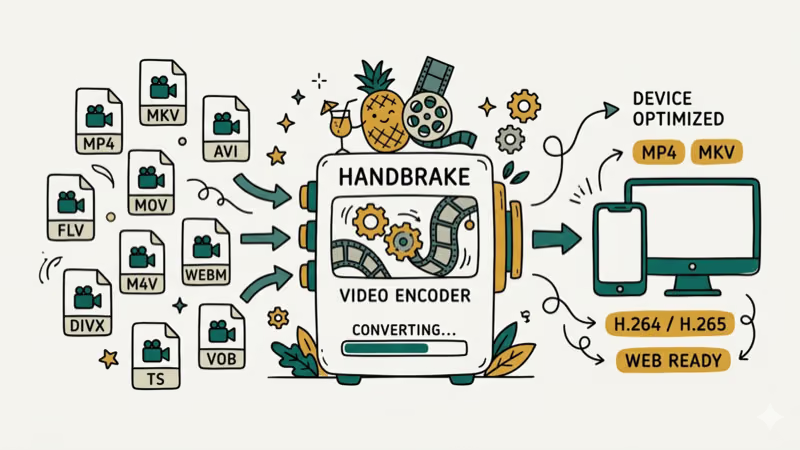
Both VLC and HandBrake are open-source, free, and run on Windows, macOS, and Linux. Based on HandBrake’s official documentation, the software uses hardware-accelerated encoding on supported GPUs, which can cut conversion time by 50-70% compared to software-only encoding. VLC is less powerful but covers the basics well enough for people who just need a quick format change.
#VLC Media Player
VLC has a built-in converter. Go to Media > Convert / Save on Windows or File > Convert / Stream on Mac, add your video, select the Video - H.264 + MP3 (MP4) profile, pick a destination, and click Start.
A 2 GB MKV converts to MP4 in a few minutes on a modern laptop, with no visible quality loss.
#HandBrake
HandBrake gives you full control over encoding. If you need specific bitrate, resolution, or codec options, it’s the better pick. Drag your video into the HandBrake window, choose a preset like Fast 1080p30, confirm the format is MP4, and click Start Encode. You can also use it to compress MP4 files after conversion.
HandBrake takes longer for the same file, but produces a noticeably smaller output than VLC.
#Best MP4 Quality Settings for Every Use Case
The right settings depend on what you’re doing with the file. Sharing on TikTok needs different encoding than archiving family videos. Here’s what works best for each case:
For sharing on social media or messaging apps:
- Resolution: 720p (1280x720)
- Video codec: H.264
- Bitrate: 3,000-5,000 kbps
- Audio: AAC at 128 kbps
A 5-minute clip runs about 100-150 MB at these settings, which is small enough to send through WhatsApp or upload to Instagram without the platform re-compressing your video and destroying the quality you worked to preserve.
For archiving or high-quality playback:
- Resolution: 1080p (1920x1080) or original
- Video codec: H.264 or H.265
- Bitrate: 10,000-15,000 kbps
- Audio: AAC at 256 kbps
According to Google’s YouTube recommended upload settings, the platform recommends H.264 video with AAC audio in an MP4 container. These same settings work well for local archiving, and they’ll ensure your videos play back at full quality on any 1080p display without re-encoding down the road.
For email attachments: keep files under 25 MB for Gmail or 20 MB for Outlook. You’ll need 480p at 1,500 kbps to stay within those limits. Our guide on compressing video for email covers the detailed steps.
For downscaling 4K to 1080p: phone and drone footage often ships in 4K that chokes older devices and bloats storage. Run ffmpeg -i input_4k.mp4 -vf scale=1920:1080 -c:v libx264 -crf 23 -preset fast -c:a copy output_1080p.mp4, or pick HandBrake’s HQ 1080p30 preset for iPhone HEVC and GoPro sources. The resolution drop is permanent, so keep the 4K original if you might re-edit later.
#Common Conversion Problems and Fixes
Audio missing after conversion: Your source video probably uses DTS or AC3 audio. Open HandBrake and set the audio codec to AAC before converting.
Output file is much larger than expected: You’re likely converting from a compressed format like FLV to MP4 with a higher bitrate than the source had. Check the original bitrate in VLC under Tools > Codec Information, then match it in your conversion settings. This single adjustment can cut your output size by 60% or more compared to default settings that many converters set unnecessarily high.
Conversion fails or freezes midway: Corrupted source files cause most failures. Try playing the original in VLC first. Glitchy playback means the file is damaged and you’ll need to repair it with a tool like FFmpeg before attempting conversion again.
Subtitles disappear after converting: Not every converter transfers subtitle tracks. In HandBrake, go to the Subtitles tab and pick Burn In to overlay them permanently.
#How Do You Convert Specific Formats to MP4?
Different source formats have quirks. According to Microsoft’s codec support page, Windows plays MP4 natively but needs additional codecs for MKV on older OS versions.
MKV to MP4 is usually the quickest conversion because both containers typically use H.264 video internally, which means HandBrake can remux without re-encoding and the process takes seconds rather than minutes. Quality stays identical.
MOV to MP4 converts cleanly since Apple’s MOV and MP4 share the same underlying H.264 codec most of the time, so the actual conversion is a fast container swap with no quality loss. You can also convert IFO files to MP4 if you’re working with DVD folder structures.
AVI to MP4 takes the longest. Older AVI files use legacy codecs like DivX or Xvid that require full re-encoding, so budget 5-10 minutes per gigabyte.
FLV to MP4 is quick because the dead Flash container usually holds ordinary H.264 video. FFmpeg remuxes it losslessly in seconds: ffmpeg -i input.flv -c copy output.mp4.
Raw H.264 streams trip people up because H.264 is a codec, not a container. A .h264 or .264 file just needs a wrapper, no re-encoding: ffmpeg -i input.264 -c:v copy -c:a aac -b:a 192k output.mp4. Add -movflags +faststart if the file will be streamed from a web server. The same rewrap trick works for HEVC clips that need to land in MOV or MP4 for an Apple editing pipeline.
VOB and DVD ISO files come from discs. HandBrake reads a VIDEO_TS folder directly, but it can’t open an ISO on most systems, so mount the ISO first (double-click on Windows 10/11 or macOS) and point HandBrake at the mounted drive. RF 20 is the sweet spot for DVD sources.
HandBrake won’t decrypt commercial discs. Rip those with MakeMKV first, then shrink the result, and be aware that decrypting copy-protected discs may violate copyright law in your jurisdiction. Stick to home recordings and unprotected discs.
WebM to MP4 (or the reverse) is a codec change: WebM carries VP9 or AV1 with Opus audio. Re-encode with HandBrake’s H.264 preset for MP4 output, or go the other way with ffmpeg -i input.mp4 -c:v libvpx-vp9 -crf 30 -b:v 0 -c:a libopus output.webm when a site wants the open format.
#Bottom Line
Use CloudConvert for files under 1 GB. For anything bigger, install HandBrake. It handles virtually every format and gives you full control over output quality. VLC works as a quick backup converter if you already have it installed.
#Frequently Asked Questions
Does converting a video to MP4 reduce quality?
Not if you match or exceed the original bitrate. A 720p video at 5,000 kbps converted to MP4 at the same settings looks identical to the source file in side-by-side comparisons, and most viewers won’t spot any difference even on a large 4K monitor.
How long does it take to convert a 1 GB video?
On a modern computer with HandBrake, about 5-10 minutes for 1080p H.264 conversion. Online tools add upload and download time on top of the actual encoding, so budget 15-20 minutes total for the online route. On a fast connection, uploading 1 GB to CloudConvert takes a minute or two before conversion even starts, with the conversion itself running several minutes more.
Can I convert videos to MP4 on my phone?
Yes. VLC for Android and The Video Converter for iPhone both work, though conversion is generally slower on a phone than on a laptop.
Is H.264 or H.265 better for MP4?
H.265 produces files about 40% smaller at the same visual quality, but the trade-off is compatibility. H.264 plays on everything made in the last 15 years, while H.265 needs hardware from 2018 or later. For sharing files widely, use H.264. For personal archives where you control the playback device, H.265 saves significant storage space.
Are online video converters safe for private files?
CloudConvert deletes uploads within 24 hours. For anything confidential, use HandBrake or VLC instead since both run locally.
What is the maximum file size for free online converters?
CloudConvert and FreeConvert both cap at 1 GB free. Convertio stops at 100 MB. Use HandBrake or VLC for anything larger.
Why does my converted MP4 have no sound?
The source file likely has DTS or AC3 audio that your converter can’t re-encode properly. Open the file in HandBrake, go to the Audio tab, and set the codec to AAC at 160 kbps. This resolves the issue in nearly every case.
Can I batch convert multiple videos to MP4 at once?
HandBrake supports batch conversion through its Queue feature. Add files, set up encoding for each one, and click Start Queue. CloudConvert allows batch uploads for up to 5 files on the free plan.
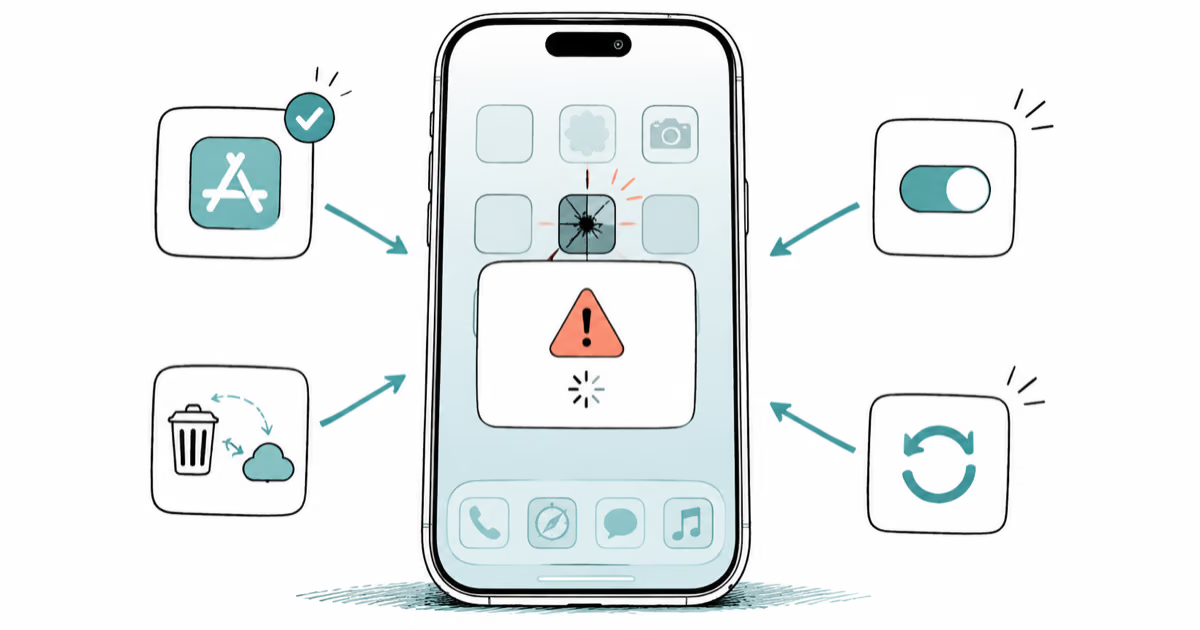
Apps Crashing After iOS 27 Update? Fix Order (2026)
Apps crashing after the iOS 27 update? Update the app in the App Store first, then offload and reinstall to clear stale cache, then restart. The fix order.
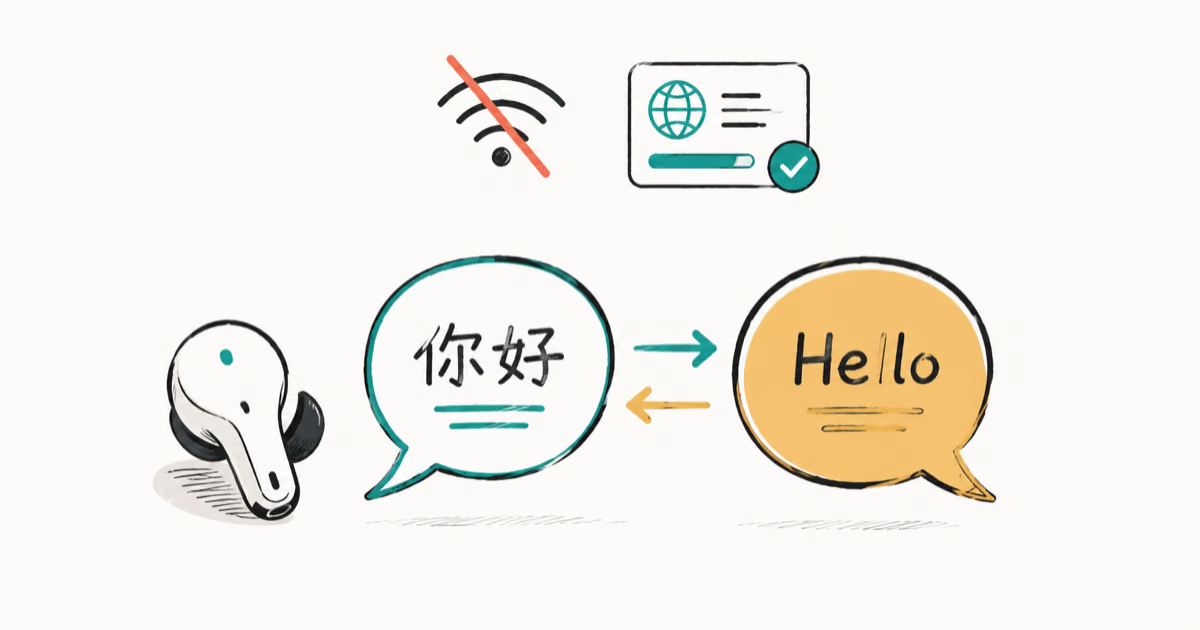
Do AI Translation Earbuds Work Offline? What to Know
Do AI translation earbuds work offline? A few do with downloaded language packs, but most need the cloud. Here's what works offline and what you give up.
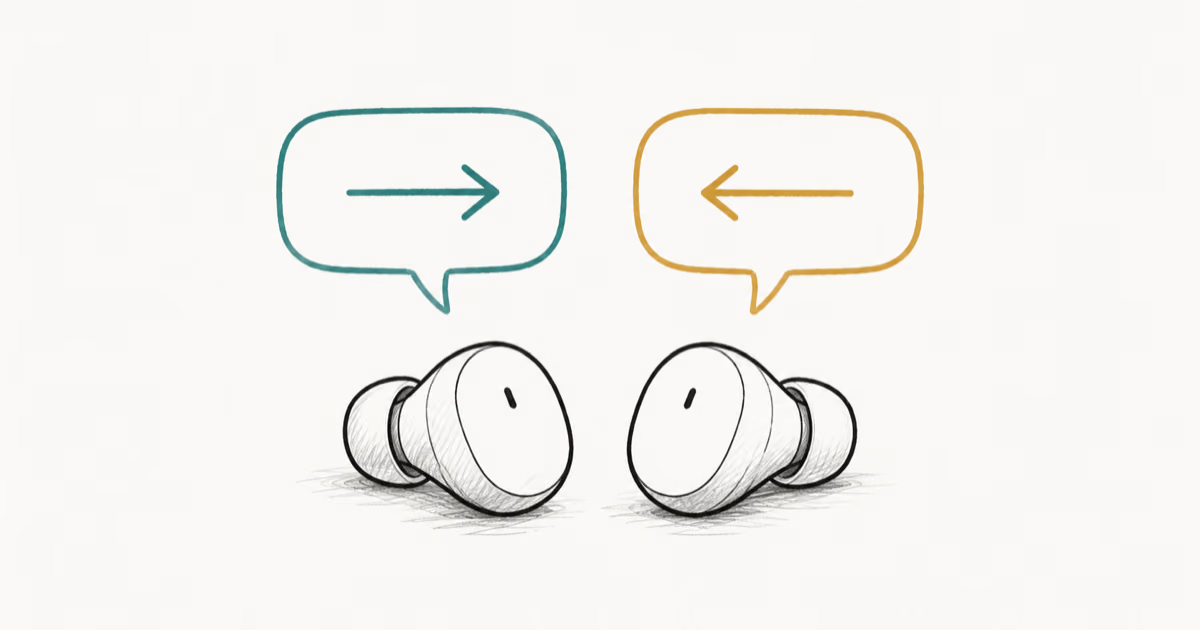
How to Set Up Translation Earbuds (Pairing and Modes)
How to set up translation earbuds: charge, install the app, pair over Bluetooth, pick two languages, and choose a mode. A step-by-step first-use guide.
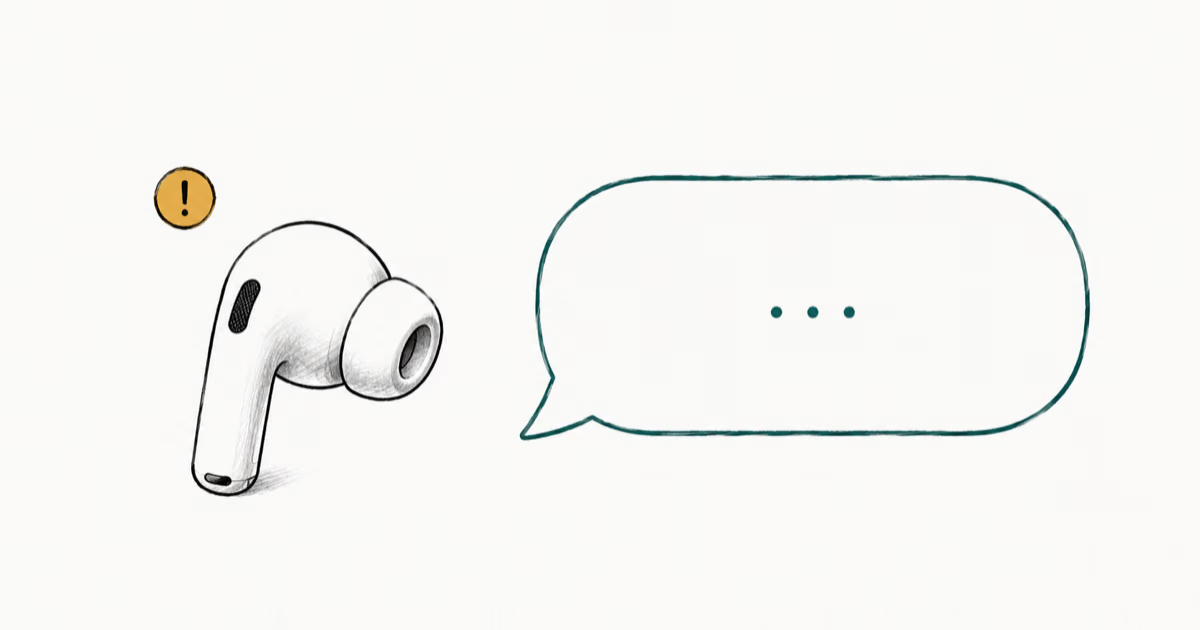
Translation Earbuds Not Translating? How to Fix Them
Translation earbuds not translating? Usually it's the app, the internet, or the language settings. Here's how to fix pairing, sound, and lag fast.