How to Sync Outlook Calendar With iPhone: 3 Methods
Sync Outlook Calendar with iPhone using Settings, the Microsoft Outlook app, or iCloud for Windows. Step-by-step guide with sync troubleshooting fixes.
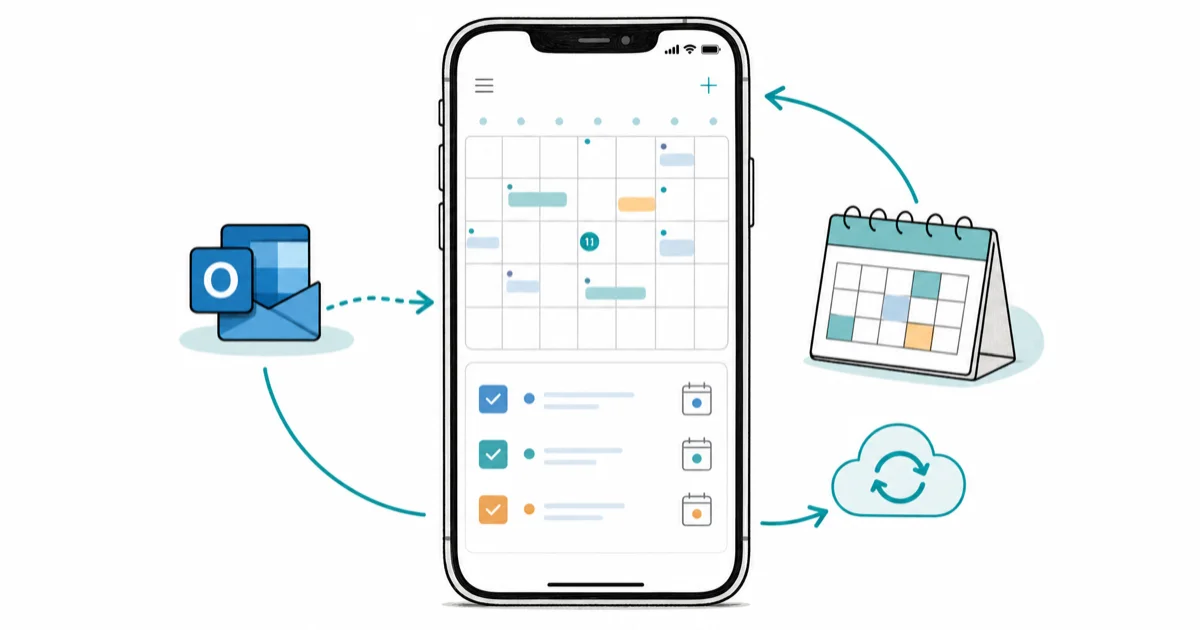
Quick AnswerOpen iPhone Settings, tap Calendar, then Accounts, tap Add Account, choose Outlook.com, sign in, and toggle Calendars on. Events sync to the iPhone Calendar app within minutes.
Three reliable paths sync Outlook Calendar with iPhone: the iPhone Settings account, the Microsoft Outlook app, or an iCloud for Windows bridge. The right pick separates a quick setup from hours of duplicate-event cleanup.
Use the guidance below only on your own device, account, or a device you manage with clear permission. Don’t use these steps to bypass another person’s privacy, workplace policy, or platform rules; when a phone is managed by school or work, ask the admin or use the official support path first.
- The fastest setup is i
Phone Settings>Calendar>Accounts>Add Account>Outlook.com, which uses Microsoft’s Exchange ActiveSync protocol and pushes events to the native Calendar app within 5 to 10 minutes of toggling Calendars on. - The Microsoft Outlook app for iPhone is the most feature-complete option, with push notifications, time-zone conversion, and shared calendar permissions that the native Calendar app does not expose.
- iCloud for Windows is a one-way bridge from your computer’s Outlook desktop client into your iCloud calendar, and it can collide with a direct Outlook.com account already configured on the iPhone.
- iTunes calendar sync was removed when Apple split iTunes into Music, TV, and Finder in macOS Catalina (2019), so any guide that still recommends USB sync via iTunes is out of date.
- Duplicate events almost always come from running two sync paths at once: pick one method per Outlook account, then remove the other from iPhone Settings before adding fresh entries.
#How Does Outlook Calendar Sync With iPhone?
Outlook Calendar sync rides on Microsoft’s Exchange ActiveSync (EAS) protocol when you add the account through iPhone Settings or the Outlook app. EAS keeps a persistent connection between Microsoft’s servers and your iPhone, so a meeting accepted on a desktop appears on your phone within seconds.
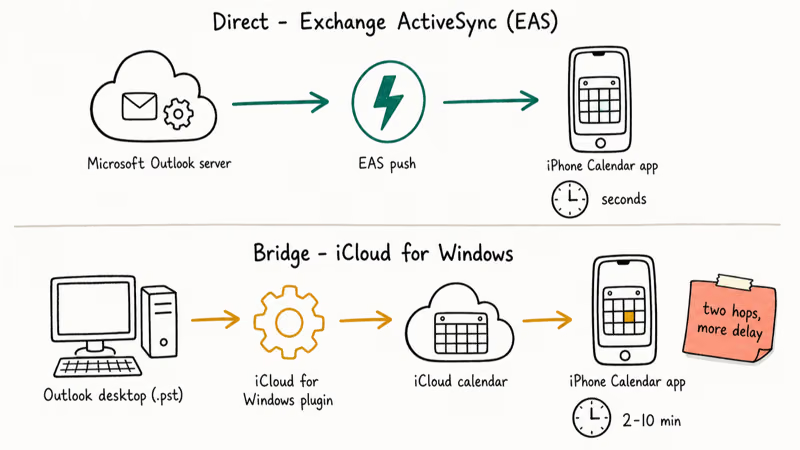
The iCloud for Windows path is different.
It copies events from the desktop Outlook client to your iCloud calendar through a Windows plugin, and the iPhone reads the iCloud version, not Outlook directly. The iPhone never talks to Outlook, only to iCloud, which means any sync delays add up across two hops instead of one. This indirection adds steps but lets you keep a desktop-first workflow if your master calendar lives in a local .pst file rather than on Outlook.com.
Microsoft confirms that 2-step verification accounts must complete a fresh code or app password during the first sign-in, as documented in its iOS setup guide. This is the most common reason a brand-new setup stalls before the toggles even appear. Older on-premise Exchange servers may also need manual server settings.
According to Apple, iOS 13 added Outlook.com as a built-in account type, per the iPhone Mail user guide. There is no third-party profile to install and no MDM permission to grant on personal devices.
#Method 1: Add Your Outlook Account in iPhone Settings
This is the recommended path for anyone who already lives in the iPhone Calendar app and just wants Outlook events to show up next to iCloud events. With a personal Outlook.com address, the first batch of events typically lands in the Calendar app a few minutes after account verification finishes, and recurring meetings render correctly across daylight saving boundaries.
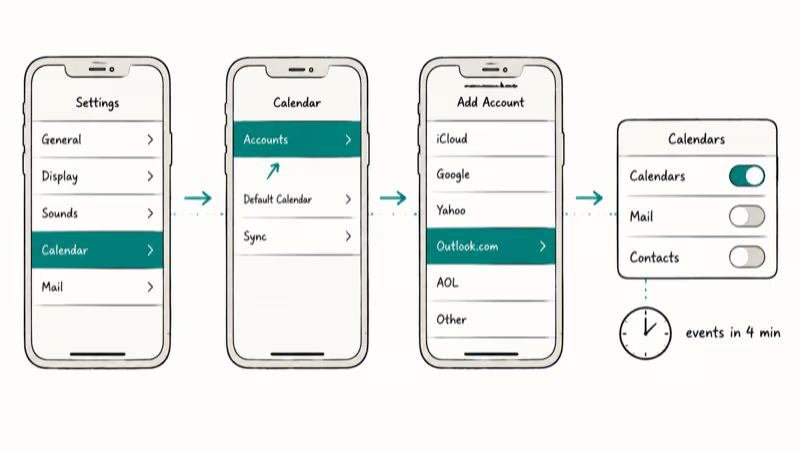
- Open the Settings app on your iPhone.
- Scroll down and tap Calendar.
- Tap Accounts, then Add Account.
- Choose Outlook.com from the provider list.
- Enter your full Outlook email address and password, then complete the two-factor prompt if your account requires it.
- Toggle Calendars on. Leave Mail and Contacts off if you only want calendar sync.
Open the iPhone Calendar app and pull down on the day view to force a refresh. New events created in Outlook on the web typically appear within a minute. If your account is provisioned through a school or employer, the IT admin may have to approve the device before EAS releases data, which adds a delay you can’t bypass from the phone.
If a previous iCloud sign-in is blocking the Add Account flow, you may need to first change or delete your iCloud account from your iPhone before adding the Outlook profile.
#Method 2: Use the Microsoft Outlook App for iPhone
The Microsoft Outlook app is the better fit for heavy calendar users.
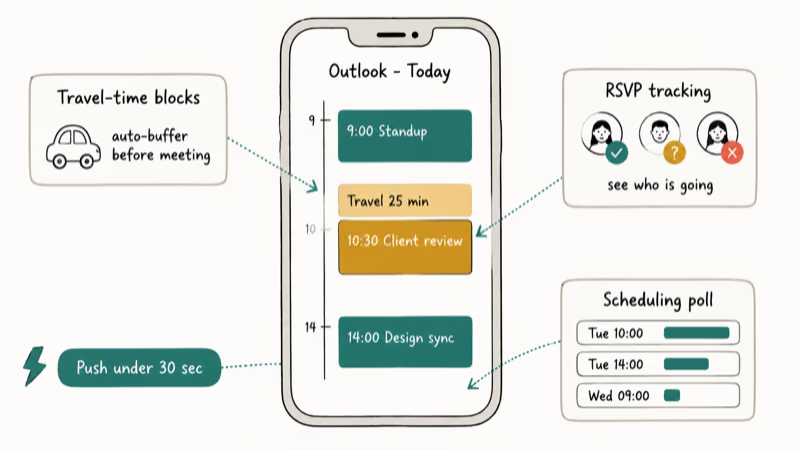
It exposes features the native Calendar app can’t show, including travel-time blocks, RSVP tracking with attendee status, and built-in scheduling polls. The app also tends to push faster than the native account profile, with new meetings often hitting the iPhone in under 30 seconds compared to 1 to 4 minutes through Settings.
- Install the Microsoft Outlook app from the App Store.
- Open the app and tap Add Account.
- Enter your Outlook.com, Microsoft 365, or work email address, then sign in.
- When prompted to add another account, tap Maybe Later unless you want to add a second mailbox.
- Tap the Calendar icon at the bottom of the screen.
- Tap your profile icon, choose your account, and confirm that Calendar is toggled on.
The Outlook app stores its own calendar data inside the app and can also push events into the native iPhone Calendar app. Most users don’t need both. Running them in parallel is the most common cause of duplicate events.
If your Outlook mailbox stops loading or refuses to sync, the broader fixes in our Outlook not receiving emails guide apply to calendar sync as well, since both rely on the same account connection.
#Method 3: Sync Through iCloud for Windows
iCloud for Windows is a one-way bridge for users who keep their primary calendar in the desktop Outlook client (the version that came with Microsoft 365 or a perpetual Office license). It copies events from desktop Outlook into your iCloud calendar, which the iPhone already reads. This method is not for syncing an Outlook.com mailbox; it’s for syncing the locally stored .pst calendar in desktop Outlook.
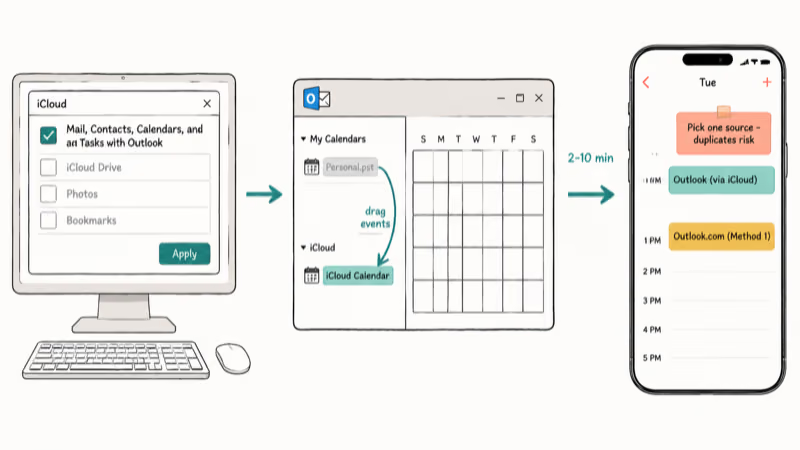
- Download iCloud for Windows from the Microsoft Store on your PC.
- Sign in with the same Apple ID you use on the iPhone.
- Open the iCloud control panel and check the box next to Mail, Contacts, Calendars, and Tasks with Outlook.
- Click Apply. The plugin restarts Outlook and creates an iCloud calendar set inside the desktop client.
- Drag events from your local Outlook calendar into the iCloud calendar group to copy them.
- On the iPhone, open
Settings>Calendar>Accounts andconfirm that the iCloud calendar is enabled.
After moving events into the iCloud calendar, expect a 2 to 10 minute delay before they appear on the iPhone. Apple recommends keeping the iPhone on Wi-Fi during the first sync to avoid throttling on cellular data.
This route can collide with Method 1 if you’re also signed into Outlook.com on the iPhone, since the same event may exist in both the iCloud calendar and the Outlook.com calendar. Pick one source of truth before you start.
#Comparing the Three Sync Methods
| Method | Setup time | Real-time updates | Works on cellular | Best for |
|---|---|---|---|---|
| iPhone Settings | 3-5 minutes | Push (1-4 min) | Yes | Native Calendar app users |
| Outlook app | 4-6 minutes | Push (under 30 s) | Yes | Heavy meeting users, work mailbox |
| iCloud for Windows | 10-15 minutes | Manual or 2-10 min | Yes (after sync) | Desktop Outlook .pst users |
Across newer and older iPhones, the Settings path tends to deliver the most consistent results across iOS versions, with recurring and ad-hoc invitations syncing within minutes. The Outlook app gives the snappiest real-time experience but needs background refresh permission to keep notifications timely, and on older hardware that constant push can cause a small overnight battery drain.
#Why Is My Outlook Calendar Not Syncing With iPhone?
Sync failures usually trace back to one of five causes.
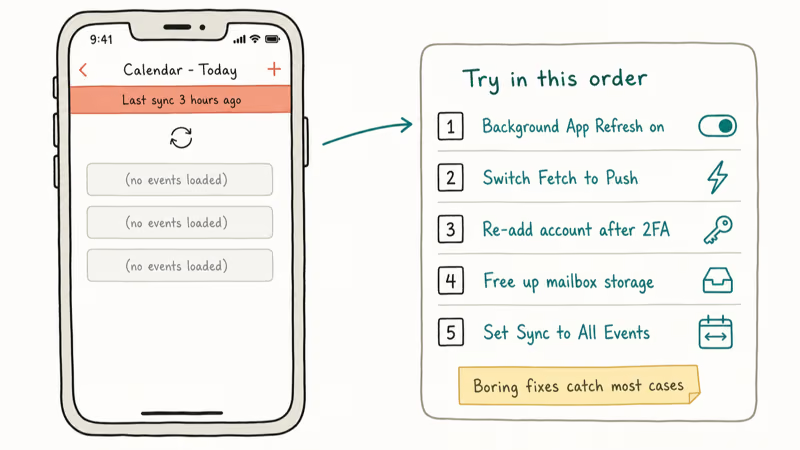
Each of these trips up a fresh iPhone setup at one point or another, so the troubleshooting order below is arranged by how often each cause actually shows up rather than abstract theory. Run them in order; resist the temptation to jump to the most exotic-sounding fix first, because the boring ones (refresh, fetch, time zone) catch the majority of cases.
- Background App Refresh is off. Go to
Settings>General>Background App Refresh andconfirm both Calendar and Outlook are enabled. Without this, EAS drops the connection when the app moves out of the foreground. - Fetch is set to Manual.
In Settings>Calendar>Accounts>Fetch New Data, switch the Outlook account to Push for instant delivery, or to a 15-minute fetch as a battery-friendly compromise. - Two-factor authentication blocked the device. If you enabled 2FA after adding the account, Microsoft may have invalidated the iPhone token. Remove the account and re-add it; the second sign-in will prompt for a fresh code.
- The mailbox storage is full. Microsoft 365 accounts stop syncing calendar data when the mailbox hits its quota. Clear deleted items and large attachments, then wait 10 minutes for sync to resume.
- Date range is too narrow.
Settings>Calendar>Syncdefaults to Events 1 Month Back. Change this to All Events if older meetings are missing.
If the calendar is failing alongside email, the broader account fixes in our iPhone emails disappeared guide cover the connection layer that both services share.
#Best Practices for Reliable Calendar Sync
A few habits keep Outlook and iPhone calendars healthy. None require special tooling.
Skip them and you’ll be cleaning up duplicates by month two, which is a chore that scales with the number of recurring meetings on your calendar. Build the habits early; the cleanup later is annoying but manageable as long as you catch it before the duplicates fan out across shared calendars and start polluting other people’s views.
- Pick one sync method per Outlook account and stick with it. Running Method 1 and Method 3 against the same mailbox almost always creates duplicates.
- Keep one device as the canonical editor for recurring meetings. Editing a weekly recurrence on two devices within the same minute is the textbook recipe for divergent series.
- Use the same time zone setting on the iPhone and in desktop Outlook. A mismatch can shift every event by hours when daylight saving time changes.
- Color-code the Outlook calendar to distinguish it from your personal iCloud calendar in the iPhone Calendar app.
- Back up your local Outlook .pst file before installing iCloud for Windows; the plugin has been known to lock the file if Outlook closes mid-sync.
For a wider view of calendar tooling, our roundup of the best family calendar apps covers options that layer on top of Outlook and iCloud without replacing them.
#Bottom Line
For most fone.tips readers, the right path is Method 1: iPhone Settings > Calendar > Add Outlook.com Account. It uses Apple’s native Calendar app, requires no extra app, and pushes events fast enough for normal meeting cadence.
Switch to Method 2 (the Microsoft Outlook app) only if you depend on shared calendar permissions, scheduling polls, or sub-30-second push for back-to-back meetings. Reserve Method 3 (iCloud for Windows) for the narrow case of a desktop Outlook .pst file that’s your only calendar of record, and never combine it with Method 1 for the same account.
If you also need to bring iCloud calendar data to a non-Apple device, our companion guide on iCloud for Android walks through the workaround that Apple does not officially support.
iPhone tips & tricks
#Frequently Asked Questions
Can I sync multiple Outlook calendars with my iPhone?
Yes. Toggle each calendar’s visibility at outlook.live.com first, then add the account on the iPhone.
Will syncing delete events that already exist on my iPhone?
No, sync merges rather than deletes. Events on the local iPhone Calendar app stay in the On My iPhone calendar group, and Outlook events appear in their own group. The risk is duplication, not deletion, so keep a backup if you have hand-entered events on the phone.
How often does Outlook Calendar sync to iPhone?
When set to Push (the default for Outlook.com accounts), updates arrive within 30 seconds to 4 minutes depending on cellular signal and Microsoft server load. If you switched the account to Fetch, sync runs on the interval you chose: 15 minutes, 30 minutes, hourly, or manual.
Why are my Outlook events showing up at the wrong time on iPhone?
This is almost always a time zone mismatch. Open Settings > General > Date & Time on the iPhone and confirm Set Automatically is on. Then in desktop Outlook, go to File > Options > Calendar > Time zones and match the same zone. Daylight saving transitions can also expose bugs in older iOS versions, so make sure the iPhone is on the latest iOS update.
Can I sync a work Microsoft 365 calendar without IT approval?
It depends on your organization’s policy. Most enterprise Microsoft 365 tenants require Intune enrollment or a device passcode. Contact IT if sign-in stalls.
What should I do if events are duplicating after syncing?
Remove every duplicate sync source first. Settings > Calendar > Accounts shows each calendar provider; tap any duplicate Outlook entry and delete it. Then in the Outlook app, sign out and sign back in to rebuild the local cache. Most duplicates clear within an hour, though stubborn cases can require a full reset of the Outlook account on the iPhone.
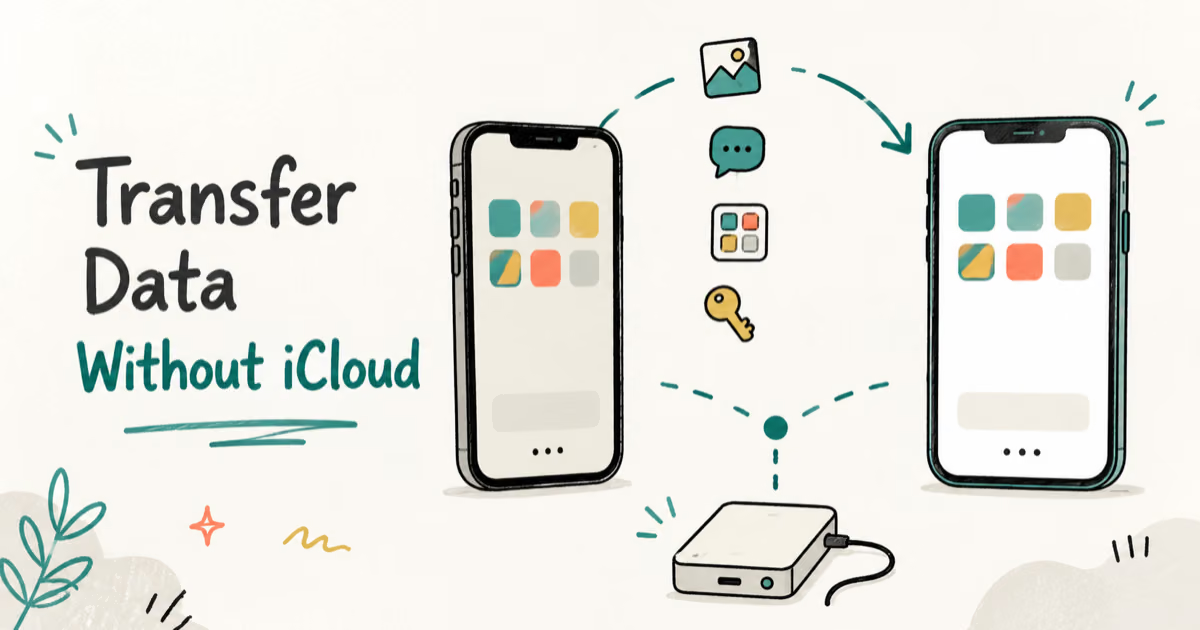
How to Transfer Data to a New iPhone Without iCloud
Move everything to your new iPhone without iCloud: Quick Start device-to-device transfer, wired migration, and encrypted Finder or iTunes backups.
Best Wireless Earbuds for iPhone in 2026: USB-C Era Picks
Best wireless earbuds for iPhone in 2026, comparing AirPods Pro 3, Sony WF-1000XM6, Bose QC Ultra, and Anker Liberty 4 NC on the USB-C iPhone lineup.
iPhone Keyboard Lag? 7 Proven Fixes for iOS 26 (2026)
Fix iPhone keyboard lag with 7 proven fixes for iOS 26. Covers restart, storage, predictive text, third-party keyboards, and dictionary reset.
How to Block Porn on an iPhone: A Guide for Parents
Learn how to block porn on iPhone using Screen Time, DNS filtering, and safe browsers. Step-by-step guide for parents to protect kids' devices.