MP4Fix Review: Repair Corrupted MP4 Videos on Android
MP4Fix is an Android app that repairs MP4 videos broken by dead batteries, app crashes, or stopped transfers. Free preview, $6 to save the repaired file.
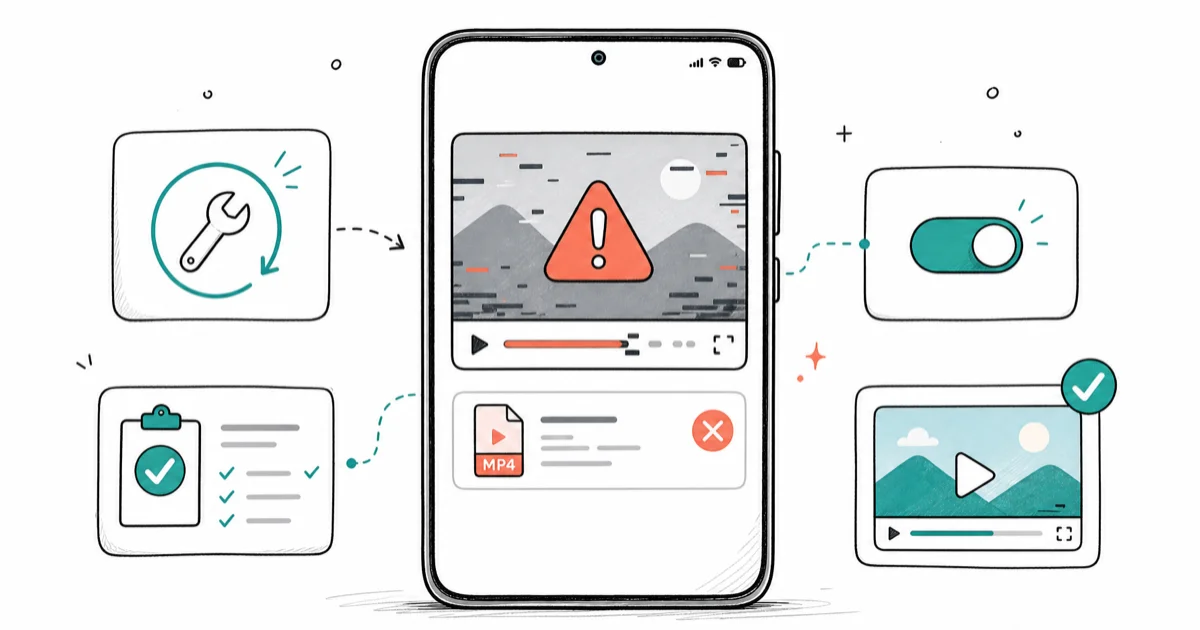
Quick AnswerMP4Fix is a free Android app that repairs corrupted MP4 videos using a healthy reference clip recorded on the same phone. Install it from the Play Store, preview the fix at no cost, and pay a one-time $6 in-app purchase to save the repaired file.
MP4Fix is an Android app for rescuing MP4 videos that died mid-recording. It targets broken camera clips that still have recoverable media data but need a matching reference clip from the same phone. The catch: saving the repaired file unlocks behind a one-time $6 fee.
- MP4Fix is a free Android app from developer Smamolot that repairs MP4 files corrupted by dead batteries, mid-recording crashes, or stopped transfers.
- The repair engine needs a reference video recorded on the same phone with the same camera mode, so it can rebuild the missing moov atom from a working sample.
- The preview is free, but saving the repaired file costs a one-time $6 in-app purchase, not a recurring subscription.
- MP4Fix does not repair videos downloaded from the internet, third-party apps, or files where the codec data was lost along with the index.
- For MOV clips, drone footage, or files without a reference, desktop tools like Stellar Video Repair or Wondershare Repairit cover formats MP4Fix can’t.
#MP4Fix at a Glance: Who Should Use It
MP4Fix is an Android-only app from independent developer Smamolot that targets one specific failure mode: an MP4 file that stops playing because its container index was never finished. According to Smamolot’s Google Play Store listing, the app keeps all repair processing on the phone itself and never uploads the source video to an external server. That privacy posture matters when the broken clip captures a private event you wouldn’t hand to a web service.
The audience is narrow but huge. If you record video on an Android phone and a clip ever stopped working after a battery cutoff, an app crash, or a yanked SD card, MP4Fix is the first tool to try. It’s not a general-purpose repair suite. It does one thing well.
What you get for free:
- Install from the Play Store
- Add a corrupted MP4 and a working reference clip
- Run the repair engine
- Preview the result with no watermark and no time limit
What you pay for:
- A one-time $6 in-app purchase to save (export) the repaired file
- Future repairs reuse the same purchase. There is no per-file fee.
#What Causes the MP4 Corruption MP4Fix Repairs?
MP4 files break for a handful of recurring reasons. Recognising the cause helps you decide whether MP4Fix is the right tool.
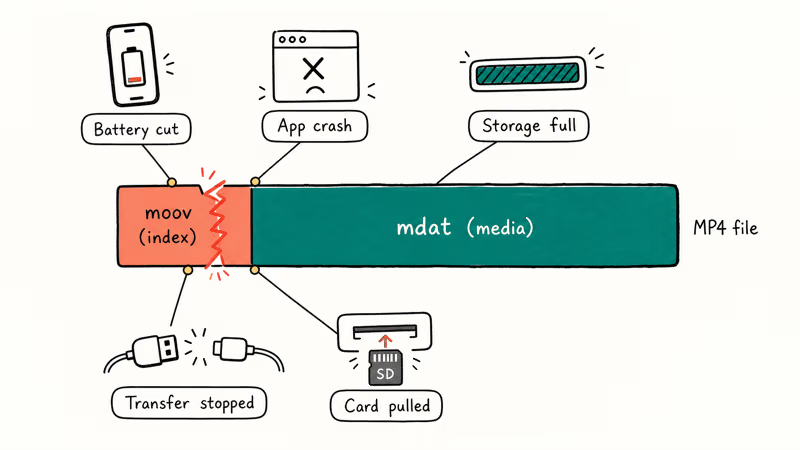
According to Wikipedia’s MPEG-4 Part 14 entry, MP4 follows ISO/IEC 14496-14, which defines a container split into atoms. The most important one is the moov atom, which holds the offset table for every frame and audio sample. Lose that atom and players can’t find anything inside the file, even when the underlying codec data is fine.
The five corruption events MP4Fix is built for:
- Dead battery during recording. The phone shuts off before the camera app can write the moov atom. The mdat (media data) section is intact; the index is just missing.
- Camera or system crash. A force-close mid-record produces the same outcome as a battery cut, just faster.
- Storage runs out mid-clip. Recording stops with the file open. Some Android builds leave a half-flushed header behind.
- Stopped USB or cloud transfers. A cable disconnect or a sync app failure can truncate the file at the destination.
- SD card eject without unmount. Pulling the card while the camera buffer is still flushing leaves the index in a partial state.
Damage outside this pattern (corrupted codec frames, scrambled bytes inside mdat, files that never had a valid header) sits beyond what reference-based repair can do. For those cases, our MP4 video repair guide covers FFmpeg -c copy and untrunc workflows that approach the same problem from a different angle.
#How Do You Repair an MP4 With MP4Fix Step by Step?
The workflow is short. Bring two files to the phone before you start: the broken clip you want to fix, and a working clip recorded on the same phone in the same resolution and frame rate. Same camera mode matters. A reference clip from a different camera, a different phone, or a different mode (4K vs 1080p, 30fps vs 60fps) won’t work.
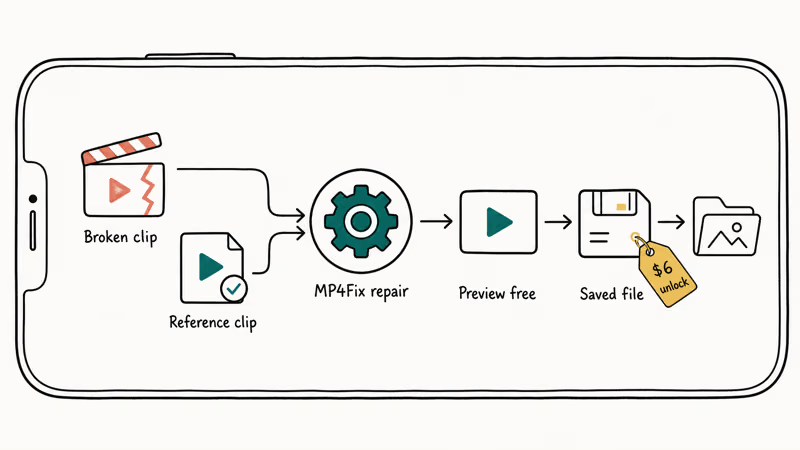
Repair steps:
- Install MP4Fix from the Google Play Store and grant storage access on first launch.
- Tap Repair on the home screen, then pick the corrupted MP4 from your gallery or Downloads folder.
- When the app prompts for a reference video, choose a healthy clip recorded on the same phone in the same camera mode.
- Confirm the repair settings (the app auto-detects resolution and codec from the reference) and tap Start.
- Wait for the engine to finish. Most consumer clips finish in 1 to 3 minutes on modern hardware.
- Tap Preview to play the result with no watermark and no time cap.
- If the preview looks correct, tap Save and complete the one-time $6 purchase to export the file to your gallery.
If the recording stopped before frame data was written, no repair app can recreate that missing span. Treat the preview as the proof step before paying to save the output.
For files where the workflow stalls at the reference-matching step, the developer recommends recording a fresh 5-10 second clip in the exact same mode and trying again.
#Where MP4Fix Falls Short
The reference-clip requirement is the biggest constraint. You need an intact MP4 from the same phone in the same camera mode. If you switched phones, lost every working clip, or recorded the broken file on someone else’s device, MP4Fix has nothing to anchor against and the repair will fail.
A short list of cases the app can’t handle:
- Videos downloaded from WhatsApp, Telegram, YouTube, Instagram, or any source other than the phone’s own camera
- Files transferred from another device when no original reference exists locally
- Recordings where the codec data itself is missing or zero-padded (storage write failures, not just truncation)
- DRM-protected media or app-encrypted files
- Non-MP4 containers like MOV, FLV, AVI, or MKV
For QuickTime clips, see MOV repair on Mac. For Flash files, the FLV walkthrough takes the FFmpeg approach.
The wider video repair tools roundup lists desktop options that cover MP4, MOV, AVI, and MKV in a single workflow.
MP4Fix isn’t built for WhatsApp clips downloaded from another phone because no same-device reference is available, exactly as the developer documents. The same limitation applies to YouTube Shorts downloads and other reposted videos that don’t match the phone’s own camera parameters.
That is by design. Files that originated outside the phone’s own camera app fail the match step regardless of how intact the rest looks.
#MP4Fix vs Desktop Repair Tools
MP4Fix wins on convenience: the broken clip and reference clip both live on the phone, and you never plug into a computer. Desktop tools win on coverage and severity. They handle more containers (MOV, AVI, MKV, plus a dozen more), more reference modes (Stellar’s advanced preset accepts repair without a reference), and stream-level codec damage that no current mobile app handles.
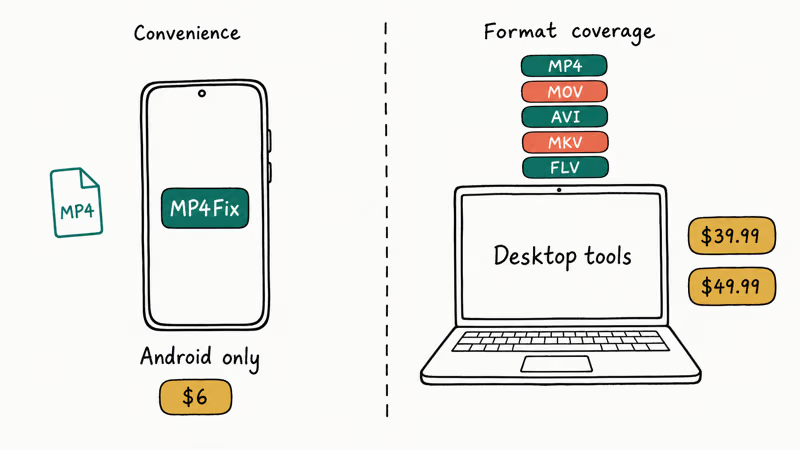
| Tool | Platform | Formats | Reference clip | One-time price |
|---|---|---|---|---|
| MP4Fix | Android | MP4 | Required | $6 |
| Stellar Video Repair | Windows, macOS | MP4, MOV, AVI, MKV, plus 12 more | Optional (advanced mode) | from $49.99 |
| Wondershare Repairit | Windows, macOS, web | MP4, MOV, AVI, FLV, MKV, MTS, M4V | Optional (advanced mode) | from $39.99 |
FFmpeg -c copy | Windows, macOS, Linux | MP4, MOV, MKV, plus most containers | Not used | Free |
Some links on this page are affiliate links, which means fone.tips may earn a commission at no extra cost to you.
Practical guidance:
- Try MP4Fix first if the broken clip is already on the phone and you have a same-mode reference.
- Move to FFmpeg
-c copyon a desktop when the file is on a computer and the damage is container-only. The FFmpeg documentation confirms that-c copyrebuilds the container without re-encoding video, so quality stays byte-identical. - Reach for Stellar Video Repair or Wondershare Repairit when neither MP4Fix nor FFmpeg can demux the file, when you need MOV/AVI/MKV support, or when you have a working reference clip from the same camera but no matching mobile workflow.
For one or two clip rescues a year, $6 wins.
For freelance video work, drone footage, or any job where an unrecoverable file means real money lost, a desktop tool with broader format support is the safer first investment.
#How to Prevent MP4 Corruption Going Forward
Prevention is cheaper than repair, and the corruption events MP4Fix targets are mostly the result of a few avoidable habits. Tightening those habits eliminates the need to ever open the app and saves time on every recording you take after the change. The list below covers the patterns that pay off across a year of phone shooting.
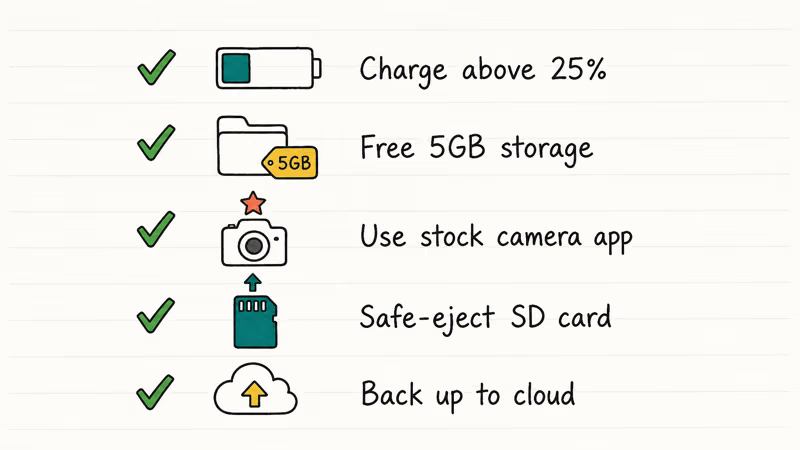
- Charge the phone before recording anything irreplaceable. A battery cutoff during recording is a common way to leave an MP4 container unfinished.
- Free storage before long shoots. Aim for at least 5GB free for 4K work, 2GB for 1080p. A clip that runs out of room at minute 8 of 10 leaves a broken header.
- Use the stock camera app for important recordings. Third-party camera apps are more likely to crash on edge-case modes (HDR, slow-mo, log profiles) than the OEM software.
- Eject SD cards through the system unmount option, not by pulling them. Android’s
Settings>Storagemenu has a Safe Eject control on most builds. - Back up to cloud or a desktop before deleting from the phone. A second copy in Google Drive, OneDrive, or a Mac Photos library means a future corruption event costs you nothing.
According to Samsung’s memory card support guide, unsafe ejection causes most write errors. After a successful repair, our convert video to MP4 walkthrough covers cross-format conversion.
#Bottom Line: When MP4Fix Earns Its $6
Install MP4Fix and try the free preview the first time you hit a battery-cut or app-crash recording on Android. If the preview shows footage restored, the $6 unlock is the cheapest way to save it without a desktop license. The purchase covers every future repair from the same Play account. Even when MP4Fix can’t deliver a fix, you find out for free, which lets you stop wasting time on other tools that would also fail.
Skip MP4Fix and go straight to a desktop tool when the broken file is not on a phone, when you have no matching reference clip, when the format is anything other than MP4, or when the damage extends past the container into the codec data. For those cases, Wondershare Repairit and Stellar Video Repair cover wider format ranges and severity than any mobile app can.
If neither path works, the broken file is likely beyond recovery. That is the honest answer. Hardware-level data loss leaves zeros where frames used to be, and no software can invent the missing pixels.
#Frequently Asked Questions
Does MP4Fix work without a reference video?
No. The repair engine reads the codec parameters, frame timing, and container structure from the reference clip and rewrites the broken file’s missing moov atom using that information.
Without a reference, the app has no template for the index, so the repair button stays disabled. The reference must come from the same phone in the same camera mode (resolution, frame rate, codec, HDR setting). A mismatch produces a file the engine can’t finalise. If you no longer have a working clip on the phone, record a fresh 5 to 10 second sample in the same mode and use that.
How long does an MP4Fix repair take?
Repair time scales with file size, resolution, bitrate, and phone speed. Longer clips, higher bitrates, or older phones can make a single repair take noticeably longer than a short camera clip.
Can MP4Fix repair WhatsApp or downloaded videos?
No. MP4Fix only repairs videos recorded by the phone’s own camera, because the reference-matching step relies on a same-device source clip. WhatsApp downloads, social media reposts, and files transferred from another phone all lack the matching codec parameters the engine needs.
Is the $6 in-app purchase recurring?
No. The unlock is a one-time purchase tied to the Google Play account that paid. After the first $6, every future repair on the same account saves without an additional fee.
If you reset the phone or switch devices, restoring the purchase from Play takes one tap. Smamolot’s listing doesn’t advertise any subscription or feature gating beyond the save unlock.
Does MP4Fix upload my video to a server?
No. According to the app’s privacy disclosure on its Play Store page, the entire repair workflow runs on the device. That makes MP4Fix safe for sensitive recordings like medical footage, interviews, or any clip covered by a confidentiality agreement, where uploading to a web repair service would be a problem.
Can MP4Fix fix audio-only corruption?
It depends on which side of the file is broken. If the audio track is missing because the muxer never closed the container, MP4Fix often restores both streams using the reference clip’s audio configuration.
If the audio codec data itself is corrupted, the engine can’t reconstruct the missing samples. Use FFmpeg with a fresh audio track from a backup recording instead.
Are there iPhone alternatives to MP4Fix?
Yes, but the options are narrower. iOS sandboxing blocks low-level file access that mobile repair apps need, so the most reliable iOS workflow is to AirDrop the broken clip to a Mac and run FFmpeg -c copy or open it in Stellar Video Repair.
A few iOS apps in the App Store advertise in-app repair, but iOS limits the low-level file access that reference-based repair workflows need. For damaged iPhone QuickTime captures specifically, our video repair on Mac guide is the closest match to the MP4Fix workflow on the desktop.
Will the repaired file play in every video player?
Usually yes. MP4Fix outputs a standards-compliant MP4 container that VLC, QuickTime, and web players open without complaint.

Best Laptop for Running LLMs in 2026: Memory Comes First
The best laptop for running LLMs is a memory purchase first. Compare MacBook unified memory against NVIDIA laptop VRAM, and see what each tier really runs.

How to Run a Local LLM on Windows: A 2026 Setup Guide
Run a local LLM on Windows with LM Studio or Ollama. Pick a model that fits your GPU memory, keep every prompt offline, and skip the monthly bill.
Bluetooth Not Working on Snapdragon X? Fixes for 2026
Bluetooth not working on your Snapdragon X Copilot+ PC? Generic audio, mice, and keyboards work, but vendor apps often lack an ARM build. Fixes inside.
Docker Desktop and WSL2 Not Working on Snapdragon X? Fix It
WSL2 runs fine on Snapdragon X, but Docker Desktop ARM is Early Access and throws WSL errors. Use WSL2 plus native ARM64 Ubuntu and Docker Engine.