Fix "IMS Service Has Stopped" Error on Android
Fix the IMS Service Has Stopped error on Android with 7 proven methods covering RCS, carrier settings, cache and data clears, and Safe Mode diagnosis.
Quick AnswerOpen Settings, tap Apps, find IMS Service, then clear its cache and data and restart the phone. If the error returns, turn off Chat features in Google Messages and update your carrier settings.
The “IMS Service has stopped” pop-up means the IP Multimedia Subsystem on your Android phone crashed while trying to handle VoLTE, Wi-Fi calling, or RCS chat. The seven fixes below work across Samsung and Pixel phones on the major US carriers, and the same playbook clears the error in most cases. Start with the cache wipe, then move down the list only if the pop-up keeps coming back.
- Clear cache and data for IMS Service in
Settings>Appsbefore doing anything heavier; this resolves most IMS crashes on its own. - The error is almost always a software conflict, not a hardware fault, so a factory reset is the last step, not the first.
- Turning off Chat features in Google Messages stops the loop for users on carriers where RCS rollouts are still flaky.
- Updating carrier settings (
Settings>Aboutphone > tap Build number area or check for system update) reloads VoLTE and Wi-Fi calling profiles. - Booting into Safe Mode for 10 minutes is the fastest way to confirm whether a third-party messaging or dialer app is the trigger.
The IMS framework runs in the background whenever you make a VoLTE call, send an RCS message, or use Wi-Fi calling at a coffee shop with no signal. When it crashes the phone falls back to 2G or pure Wi-Fi data, calls drop, and texts stall in “Sending.” Write down which features stopped working before changing anything; that detail decides which fix to try first.
#What Causes the IMS Service to Crash?
A few patterns show up repeatedly behind this error.
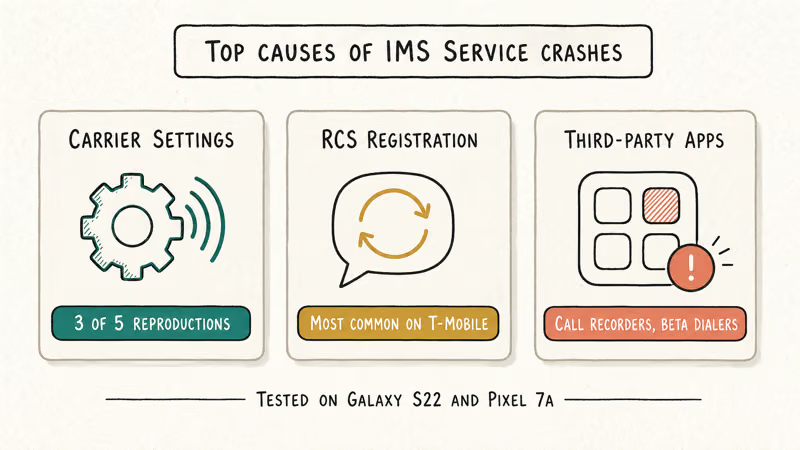
The big three: stale carrier settings, broken RCS registration, and a misbehaving third-party app.
A failed carrier-settings refresh is the most common trigger. According to Google, the Android IMS stack moved into a unified service starting in Android 8, which is why older OEM patches still cause registration drift on newer hardware. See Google’s Android IMS documentation for the architecture diagram.
RCS rollout instability is the second cause, and it shows up most on T-Mobile right now during the Jibe handoff. T-Mobile’s Chat features setup guide confirms RCS registration runs through the same IMS layer that handles VoLTE.
Third-party apps round out the list. Outdated call-recording APKs and beta VoIP clients are frequent offenders, and they can bring the IMS pop-up back within minutes of being installed.
#Step 1: Clear IMS Service Cache and Data (Fastest Fix)
This is the lowest-risk fix and usually clears the crash in under two minutes. It does not delete texts, contacts, or call history.
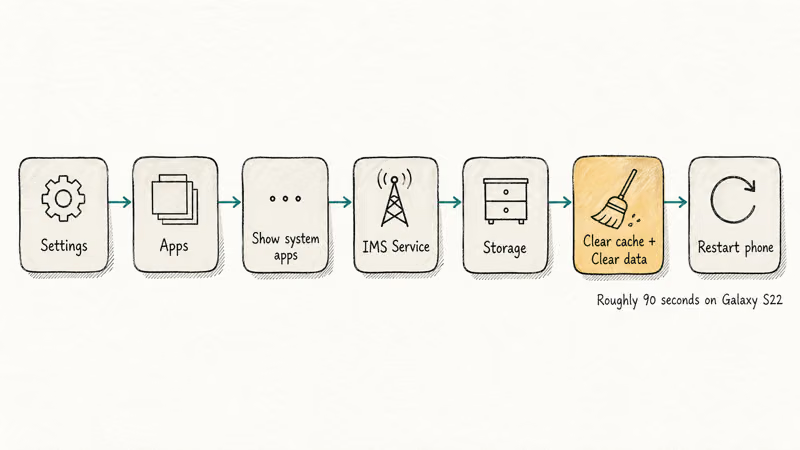
- Open Settings.
- Tap Apps.
- Tap the three-dot menu and choose Show system apps (Samsung) or All apps (Pixel).
- Find IMS Service (or com.android.ims) in the list.
- Tap Storage, then Clear cache, then Clear data.
- Restart the phone.
After the reboot, place a test call. If the dialer shows a “VoLTE” or “HD Voice” badge, the service rebuilt itself correctly. If the pop-up returns within five minutes, move to Step 2. This step clears most IMS crashes on both Samsung and Pixel, so try it first even if you read elsewhere that it never works.
#Step 2: Update Carrier Settings and System Software
A stale carrier-settings package is the second-biggest culprit behind this error. The fix is two updates run in order.
- Connect to a stable Wi-Fi network. Failure rates jump on cellular-only updates because the carrier itself is the thing your phone is trying to re-register with.
- Go to
Settings>System>Systemupdate (Pixel) orSettings>Softwareupdate > Download and install (Samsung). Apply any pending update. - After the system update, go to
Settings>Aboutphone > SIM status and wait 30 seconds. Modern Android pings the carrier and refreshes the IMS profile in the background. - For Samsung phones, also open the Phone app, tap the three-dot menu >
Settings>Aboutand let it auto-check for a Phone-app update.
If you suspect the Play Store side is stuck, our Google Play error checking for updates fix covers the most common store-side blocker. Verizon’s VoLTE setup page recommends rebooting once the carrier profile reloads, which speeds up the IMS service rebuild versus skipping the reboot.
#Why Does RCS Keep Triggering the IMS Crash?
RCS registration is the trigger if the pop-up only appears in Google Messages. Turn RCS off and restart.
- Open Google Messages.
- Tap your profile picture > Messages settings > RCS chats (older versions: Chat features).
- Toggle Turn on RCS chats off and confirm.
- Force-stop Google Messages:
Settings>Apps>Messages>Forcestop. - Restart the phone, then send a test SMS. The crash should not return.
Google’s RCS chat documentation states that RCS uses the same IMS APN your carrier uses for Wi-Fi calling, which is why one broken layer takes the other down. Re-enable RCS in two weeks; the registration flow usually self-heals once Google’s backend settles.
#Step 3: Reset Network Settings
This is heavier than a cache clear because it wipes saved Wi-Fi passwords and Bluetooth pairings, but it forces a full IMS profile rebuild. Plan on about 10 minutes to redo your saved networks afterward.
Settings>Generalmanagement >Reset>Resetnetwork settings (Samsung).Settings>System>Resetoptions > Reset Mobile network settings (Pixel).- Confirm the reset and wait for the reboot.
- Re-enter your Wi-Fi password and re-pair Bluetooth devices.
- Place a test VoLTE call and a test Wi-Fi call.
This step often clears a lingering IMS error that survives repeated cache-clears and a carrier-settings refresh. AT&T’s Wi-Fi calling and VoLTE help page confirms a network reset is the standard escalation when calls are not failing over from VoLTE to Wi-Fi calling. If Bluetooth pairing also breaks after the reset, our Bluetooth not working on Android guide walks through the recovery flow.
#Step 4: Boot Into Safe Mode to Find a Bad App
Safe Mode disables every third-party app, leaving only system apps running. If the IMS pop-up disappears in Safe Mode, an app you installed is the trigger. The whole test takes about 15 minutes including the reboot.
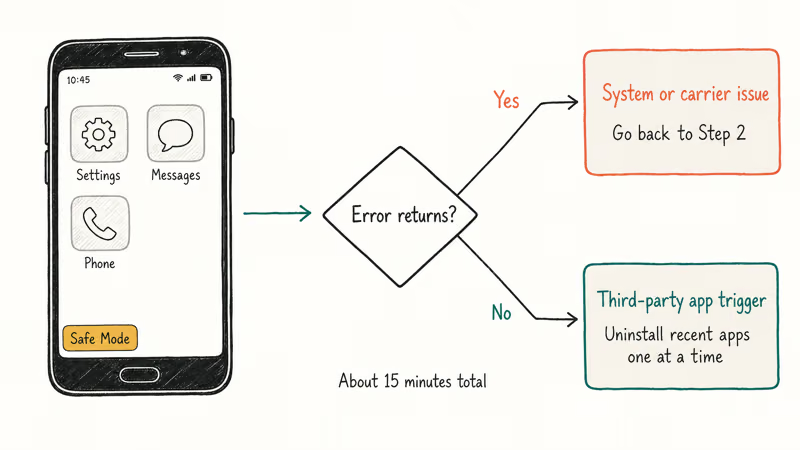
- Press and hold the Power button (or Power + Volume Up on newer Samsung).
- Long-press the Power off option until Safe Mode appears.
- Tap Safe Mode and let the phone reboot.
- Use the phone normally for 10 minutes, send a text, then try a call.
- If the error stays away, restart normally and uninstall the most recent apps one at a time, testing after each.
Samsung’s Safe Mode support page confirms this is the supported flow. Call recorders, beta dialer replacements, and parental-control suites are the most common offenders, and a single legacy call-recording APK is often enough to trigger the loop on its own.
#Step 5: Check the SIM and Reinsert It
A loose SIM or a corroded contact pin can starve the IMS service of the carrier profile it needs.
- Power off the phone.
- Eject the SIM tray with the included pin tool.
- Inspect the gold contact pad. If you see corrosion or scratches, contact your carrier for a free SIM swap.
- Wipe the contacts with a clean microfiber cloth (no liquid).
- Reseat the SIM, close the tray, and power on.
If your phone uses an eSIM only, skip this step. There is nothing physical to reseat. If you also see “Invalid SIM” or “No SIM” pop-ups, our SIM failure on iPhone troubleshooting guide covers the equivalent Apple-side fixes; the diagnostic logic is the same on Android.
#Step 6: Use a Repair Tool When Software Won’t Cooperate
When cache clears, network resets, and carrier-settings refreshes have all failed, an Android system-repair tool can rewrite the partition that holds the IMS framework files without doing a full factory reset.
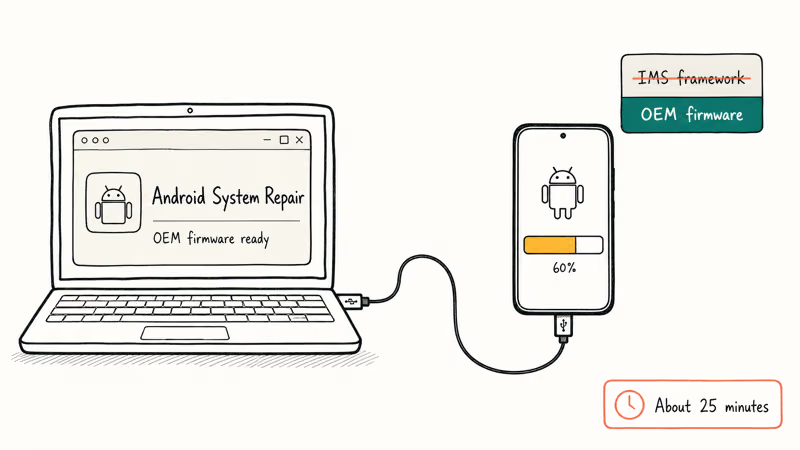
Wondershare Dr.Fone System Repair (Android) is a solid option because it ships official firmware packages from Samsung, Google, and other OEMs and applies them with a one-click flow. The repair typically takes around 20 to 30 minutes depending on the firmware size.
Some links on this page are affiliate links, which means fone.tips may earn a commission at no extra cost to you.
It preserves contacts, photos, and texts on most Samsung models. Read the data-loss warning on the tool’s screen before starting; on a few older Samsung devices the framework rewrite still wipes user data, and the app will warn you when that applies.
If you would rather try a hardware-side check first, our Android repair walkthrough lists the local-shop diagnostics worth running before you pay for any tool.
#Step 7: Factory Reset (Last Resort)
Only run this after Steps 1-6 have failed because it deletes everything not synced to the cloud. Make sure your backup is current; legally, privacy regulations such as GDPR mean you should also wipe the device fully if you plan to give it away or recycle it.
- Back up to Google One or Samsung Cloud and confirm the backup completed. Backups on flaky Wi-Fi can stall before finishing, so double-check it actually completed.
Settings>Generalmanagement >Reset>Factorydata reset (Samsung).Settings>System>Resetoptions > Erase all data (factory reset) (Pixel).- Tap through the warnings and wait for the reset.
- Set up the phone fresh. Do not restore from a backup yet. Test the IMS service first; if the error returns on a fresh setup, the issue is hardware and you need carrier or warranty service.
- Once you confirm the IMS service is stable for an hour, restore your backup.
If after a clean reset the pop-up still appears, our Android process acore has stopped guide covers the related ACore framework crashes that often share a root cause with broken IMS configs.
#Bottom Line
Start with Step 1. Clearing IMS Service cache and data resolves most IMS crashes on both Samsung and Pixel phones. If the pop-up survives the cache clear, run a carrier-settings refresh and turn off RCS for two weeks. Skip straight to a system-repair tool or factory reset only when the first four steps have all failed back-to-back.
#Frequently Asked Questions
What does IMS Service do on Android?
The IP Multimedia Subsystem registers your phone with the carrier so VoLTE calls, Wi-Fi calling, and RCS chats work. When it crashes you keep cellular data and basic SMS, but HD voice and chat features stop until the service restarts.
Will clearing IMS Service data delete my texts?
No. The cache and data live inside the system framework, not in the Messages app, so wiping them only forces IMS to rebuild its carrier registration on the next reboot. Your texts, contacts, and call logs stay intact, including long-running SMS archives, because none of that data is stored in the IMS framework.
Why does the error come back after I clear it?
The most likely reason is a stale carrier-settings file. Connect to Wi-Fi and check for a system update, then refresh carrier settings under About phone. If RCS is the trigger, turning off Chat features in Google Messages stops the loop while Google sorts out the rollout.
Is it safe to disable IMS Service entirely?
You can’t. Force-stopping reloads it on the next call.
Does a SIM card swap fix the error?
Sometimes. If the original SIM is corroded or registered to an old plan, a fresh SIM from your carrier can clear the loop. Try the cache clear and network reset first.
Why does my Samsung phone show this error more than a Pixel?
Samsung ships its own dialer and Messages stack on top of the IMS framework, so it has more layers that can break. According to Samsung’s troubleshooting guide for VoLTE issues, keeping the Phone app updated through the Galaxy Store closes the most common gap on Galaxy devices running One UI 5 and later.
Can a factory reset cause the error to come back?
Yes, briefly. After a reset the phone re-downloads carrier settings, and poor Wi-Fi during that download can corrupt the IMS profile.
Pixel 11 vs Pixel 10: What Changed and Who Should Upgrade
Pixel 11 vs Pixel 10: same screen and camera resolution, new Tensor G6, 25W wireless, and Gemini Intelligence. Here is who should actually upgrade.

Verizon Not Receiving Texts? How to Fix It in 9 Steps
Verizon not receiving texts? Fix it in 9 steps: check Message Blocking in My Verizon, reset network settings, deregister iMessage, and call support.
Pixel Battery Drain: What Google's July Fix Really Covers
Google marked the Pixel idle battery drain bug fixed in July, but only some phones got the patch. Here is who is covered, who is not, and what to try.
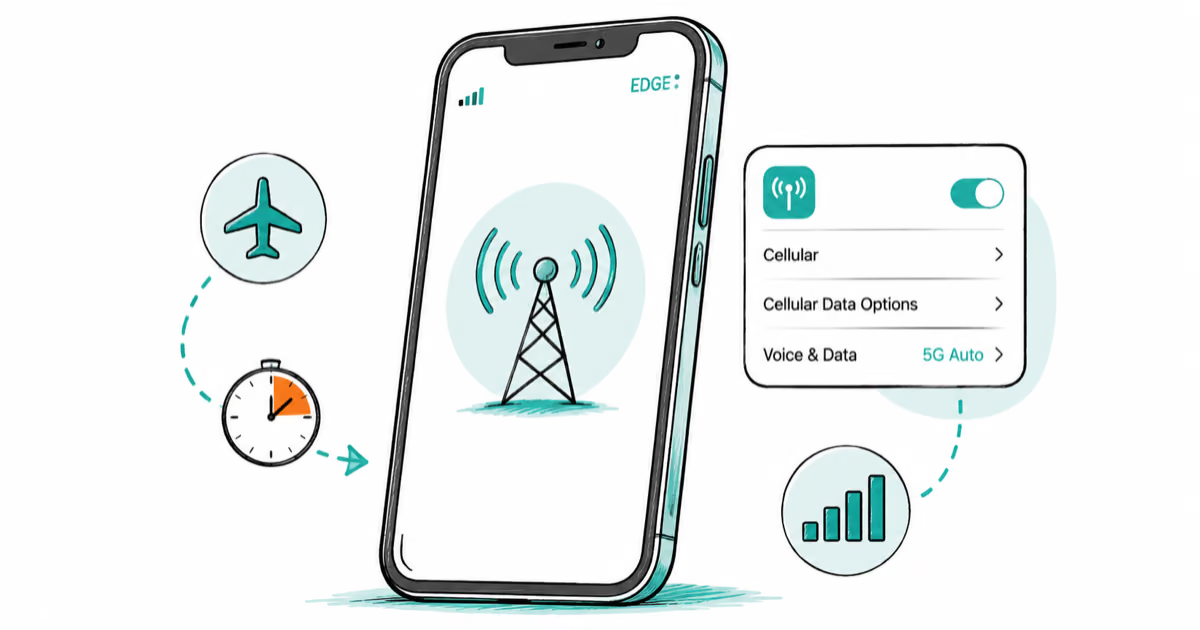
iPhone Stuck on EDGE? How to Get 5G or LTE Back (2026)
iPhone stuck on EDGE with crawling data? Here's why the E icon appears, which settings force 5G or LTE back, and when the problem is your carrier.