How to Trace a Text App Number for Free: Realistic Options
How to trace a text app number for free: what reverse lookups, 7726 spam reporting, FTC complaints, and carrier tools can and cannot reveal.
Quick AnswerYou can't fully trace a text app number on your own. Free options are limited to reverse-lookup tools that flag known spam, reporting the message to 7726 and the FTC, and asking your carrier. Anything beyond that requires law enforcement to subpoena the app provider.
You got a strange text from a number that doesn’t match anyone you know, and now you want to know how to trace a text app number for free. The honest answer: as a regular user, you can’t pin a real identity to it. Apps like TextFree, Pinger, TextNow, and Google Voice assign disposable VoIP numbers on purpose. This guide walks through the free tools that actually exist and when to escalate.
- Free reverse-lookup sites (Whitepages, Spokeo free tier, BeenVerified preview) usually return “VoIP” or “unknown carrier” for text app numbers, not a real name.
- Forwarding the message to 7726 (SPAM) reports it to your carrier’s spam-filtering system at no cost.
- The FTC’s reportfraud.ftc.gov accepts scam-text reports in under 3 minutes and feeds law enforcement databases.
- Only law enforcement with a subpoena can get the registered email, IP address, or payment details behind a text app number.
- Blocking the number on your phone plus enabling Filter Unknown Senders stops the messages without needing to identify the sender at all.
This guide assumes the texts are coming to a phone you legally own.
#What Is a Text App Number, Really?
A “text app number” is a VoIP (Voice over IP) phone number assigned by an internet-based messaging app instead of by a wireless carrier. Common ones are TextFree (Pinger), TextNow, Google Voice, Burner, Hushed, and TextPlus.
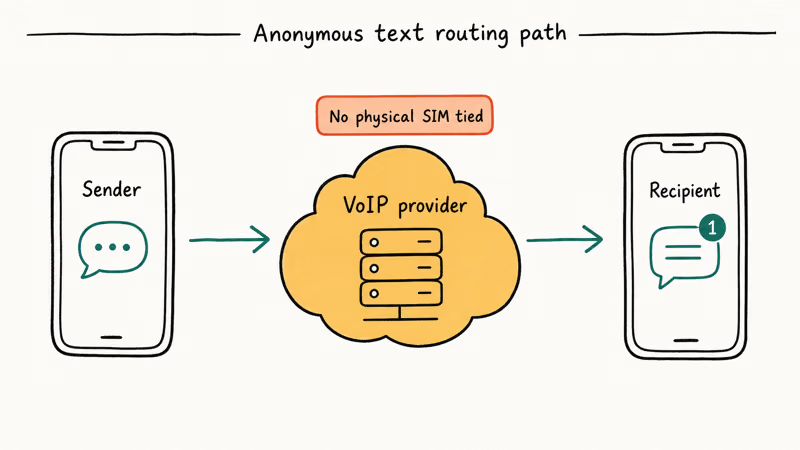
The app rents a real phone number from a carrier partner, then routes inbound and outbound messages through the internet. The person using it can pick almost any area code and never reveals their own SIM-card number. That’s the design.
Anyone who wants a separate number for online classifieds, business listings, or just privacy can grab one in 30 seconds. It also means catfishers, scammers, and spammers love these apps for the same reason. According to the FTC’s consumer alert on text scams, text-message fraud reports more than doubled between 2019 and 2022, with much of the volume routed through VoIP and messaging apps that hide the sender’s identity.
So when you’re asking how to trace a text app number for free, you’re really asking: can a normal person reverse-engineer a number that the app was designed to make anonymous? Mostly no. But you can usually figure out which app it came from, get the message stopped, and put the report on record.
#Common Text Apps That Send Anonymous Messages
Knowing which app a number probably came from helps target your next steps.
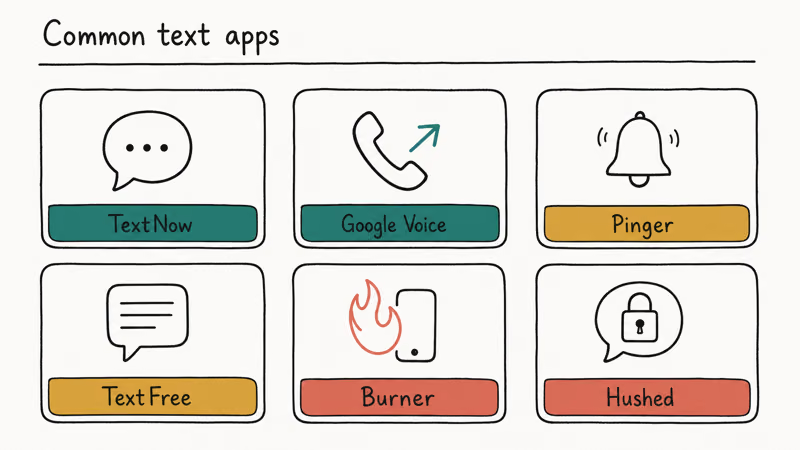
The biggest US-facing text apps as of May 2026 are TextFree (run by Pinger), TextNow, Google Voice, Burner, Hushed, and TextPlus. Each rents real phone numbers from VoIP wholesalers (Bandwidth, Inteliquent, Level 3) and assigns them to whoever signs up.
Quick fingerprinting cheat sheet:
- TextNow numbers usually route through Bandwidth.com on reverse-lookup. Sign-up requires only an email plus optional ad-supported tier.
- TextFree (Pinger) numbers tend to show Inteliquent or Onvoy on lookup. Free tier shows ads; paid removes them.
- Google Voice numbers route through Level 3 / Lumen and require a real US phone number for sign-up (small accountability layer).
- Burner and Hushed are paid-only and aimed at single-use disposable numbers, so they’re more common in classified-ad scenarios than ongoing harassment.
None of these apps will reveal the sender’s identity to you. The fingerprint is useful only to know what kind of provider holds the account data.
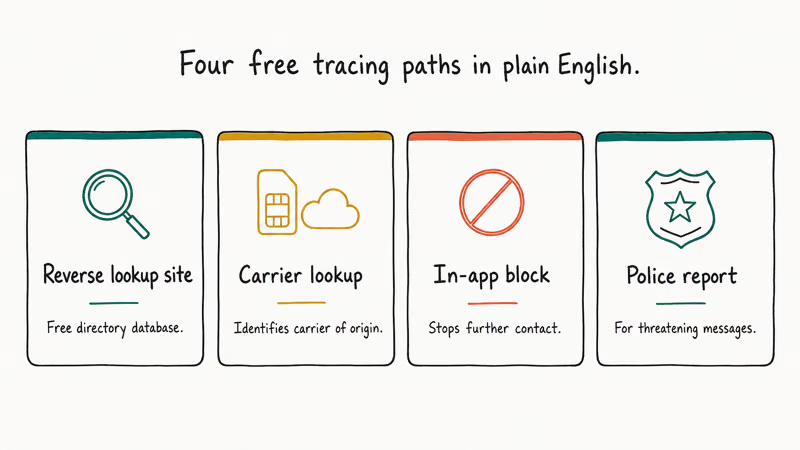
#How to Trace a Text App Number for Free: 4 Methods That Exist
#1. Run the Number Through Free Reverse-Lookup Sites
Start here. It costs nothing.
Sites like Whitepages, Spokeo (free tier), and TruePeopleSearch tell you the carrier or VoIP provider behind a number. Text app numbers from TextNow and Google Voice typically come back labeled “VoIP - Bandwidth.com” or “VoIP - Inteliquent” rather than a regular wireless carrier. That label is the dead giveaway you’re dealing with an app number, not a personal SIM.
Free tiers won’t usually return a name. According to Whitepages’ help center, full owner identification is paywalled for most numbers, and VoIP numbers in particular often have no traceable owner record because the app provider, not the end user, owns the line.
What this method actually delivers:
- Carrier or VoIP provider name (lets you guess the app, since TextNow uses Bandwidth, TextFree uses Inteliquent, Google Voice uses Level 3)
- General location (often just “United States” for VoIP numbers)
- Whether the number is flagged in community spam databases
What it doesn’t deliver: the sender’s real name, address, or identity. If a lookup site claims to give you all that for $0, it’s almost always a bait-and-switch into a paid subscription.
#2. Forward the Text to 7726 (SPAM)
If the message is unwanted, 7726 is the free, carrier-run spam-reporting shortcode that works on AT&T, T-Mobile, Verizon, and most US prepaid carriers. The CTIA (the trade group for US wireless carriers) confirms that 7726 forwarding is supported industry-wide and that reports feed directly into the carriers’ anti-spam filters.
Here’s how it works on iPhone:
- Open the message thread.
- Long-press the offending message and tap More.
- Tap the forward arrow at the bottom right.
- In the “To” field, type 7726 and send.
On Android (Samsung, Pixel, OnePlus):
- Open the conversation.
- Long-press the message and tap Forward.
- Send it to 7726.
Your carrier will reply asking for the sender’s number. Text that back, and the report is logged. The confirmation reply usually arrives quickly. This won’t identify the sender for you, but it does add weight to a class of reports that triggers carrier-level blocking and feeds investigations the FTC and FCC actually run.
#3. File a Complaint with the FTC and FCC
For scam, fraud, or harassment texts, the FTC and FCC both accept free public complaints. These reports go into databases law enforcement queries.
Start with the FTC. Their official guidance recommends consumers report fraudulent text messages to reportfraud.ftc.gov, where a guided form takes about 5 minutes to complete and asks for the sender’s number, the message content, and any financial loss.
A different agency, the FCC, handles unwanted commercial robotexts and texts that violate the Telephone Consumer Protection Act. Their consumer complaint center at consumercomplaints.fcc.gov accepts text-message complaints under the “phone” category. According to the FCC’s robocall and robotext consumer guide, these reports help the agency identify repeat offenders and issue cease-and-desist orders.
Neither agency personally traces the number for you. They build cases across thousands of reports. If you’ve also lost money, file with the IC3 (Internet Crime Complaint Center) at ic3.gov.
#4. Use Built-in Phone Tools to Block and Filter
Sometimes you don’t need to know who. You just need it to stop.
iPhone has Filter Unknown Senders under Settings > Messages, which moves texts from any number not in your contacts into a separate inbox. Android offers similar controls through the Messages app > Settings > Spam protection menu. For Samsung users specifically, our guide on blocking text messages on Samsung walks through both the native Samsung Messages block list and the Google Messages spam controls, which behave differently.
iPhone’s standard block (Settings > Messages > Blocked Contacts) prevents calls and texts from a specific number. Blocking won’t reveal who the sender is, but it ends the problem faster than chasing identification, and most spam text app numbers get rotated and recycled within weeks anyway.
#Mistakes to Avoid While Trying to Trace
Before paying for anything or contacting law enforcement, skip these common dead ends. Each one wastes time without getting you closer to a real identity.
Replying to the message just to “test” the number is the first one. A reply confirms the line is active and feeds the scammer’s contact list, while texting from a different number to “draw them out” rarely works because operators ignore inbound calls unless you’re a known mark. Paying $19.99 for a “premium” reverse-lookup is the most expensive dead end, since paid services for VoIP numbers typically return only the carrier name and a “no record” result for owner data.
Skip these steps and go straight to 7726 plus the FTC complaint form. Both are free, and both go on record in databases that matter.
#Why Can’t Free Tools Reveal the Real Person?
The structural reason this question is so hard comes down to how VoIP messaging apps store data. The app provider (Pinger, TextNow, Google, and similar) holds the registration email, IP addresses, device fingerprints, and any payment details internally. They don’t publish any of it. They don’t share it with reverse-lookup sites. They release it only when compelled by a subpoena, court order, or law enforcement request.
Every major US text-app provider publishes the same gating policy: subscriber identity is released only via formal legal process.
- Pinger’s law enforcement compliance page requires a US-court-issued subpoena, search warrant, or court order for subscriber identification.
- Google Voice follows the same model under Google’s Law Enforcement Request System.
- TextNow’s transparency report confirms the same approach: no information without legal process.
In practice this means a free-and-public path to a sender’s real identity doesn’t exist by design. The reverse-lookup sites that advertise “find any text app owner instantly” either deliver carrier-level VoIP metadata you can already get from Whitepages, or they’re upsells masquerading as services. These sites typically gate any “results” behind a $19.95+ “first-month” subscription and still return no identifiable name for a VoIP app number.
If the texts cross into actual stalking, harassment, threats, or financial fraud, that’s the threshold to involve police. They can submit the legal request the app provider needs, and Pinger, Google, and TextNow’s published policies all confirm they respond to valid subpoenas.
#When to Escalate to Police or a Lawyer
If any of the following apply, stop trying to trace the number yourself and go to law enforcement:
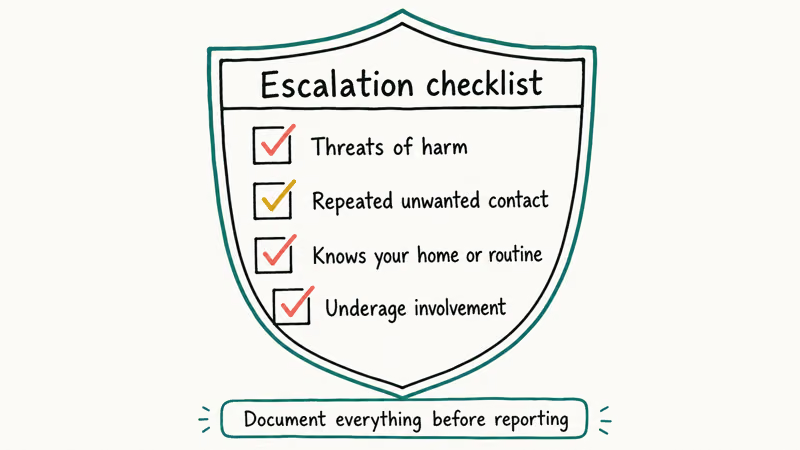
- The messages contain credible threats of violence or extortion.
- The sender knows personal details (your address, family members, workplace) you didn’t share publicly.
- You’ve sent money or shared bank or login information based on the texts.
- The same person is contacting you across multiple platforms (text + email + social media).
- The messages are sexual in nature and targeting a minor.
Local police can take a complaint, but for serious cases they coordinate with the FBI through IC3 or with the state attorney general’s consumer protection division. A civil attorney can also subpoena the app provider in some harassment or stalking cases. That’s a paid route, but it’s the legitimate one. For broader context on what kinds of contact-finding tools are misused this way, our review of CocoFinder breaks down what paid people-search services actually deliver versus their marketing.
#Bottom Line
Free identification of a text app number isn’t really a thing. What you can do for free: identify the app, report to 7726 and the FTC, and block. For threats or money loss, skip the free tools and file a police report.
#Frequently Asked Questions
Can a TextFree or TextNow number be traced by a regular user?
No. The only data a regular user can pull is the VoIP carrier (Inteliquent for TextFree, Bandwidth for TextNow), which doesn’t identify the actual person. The sender’s account email, IP address, and registration details sit inside the app provider’s database and are released only to law enforcement under subpoena. For a deeper breakdown specific to TextFree, see can a TextFree number be traced.
Is it legal to try to trace a text app number?
Looking up a number that texted you is legal in the US.
What crosses into legal gray area is buying detailed personal records on someone who hasn’t contacted you, or using deceptive social engineering to extract data from the app provider. If you’re unsure, consult a lawyer before paying for any “people search” service. The reverse-lookup tools and spam-reporting channels mentioned in this guide are all free and within consumer-facing legal use. Court-process actions like subpoenas have to go through proper legal counsel or law enforcement.
Why do free reverse-lookup sites say “no results found” for text app numbers?
Because the number belongs to the app provider, not an individual subscriber. Public records databases match phone numbers to address-and-name records pulled from carrier directories, court filings, and credit headers. VoIP numbers assigned by messaging apps don’t appear in those sources, so the lookup returns blank or just the VoIP provider name.
Will replying to the number tell me anything?
Probably not. Replying often makes the spam worse.
Replying confirms to a scammer that your number is active, which usually increases the volume of incoming spam. If you’re worried that just replying could expose you to malware or phishing, our explainer on getting hacked by replying to a text covers what actually happens versus what’s overblown.
How long does it take the FTC to act on a text complaint?
The FTC doesn’t act on individual complaints with personal follow-up. They aggregate reports and use them to support enforcement actions against repeat offenders, which can take months or years. Your report still has value. It’s the data that drives investigations like the FCC’s recent multi-million-dollar penalties against robotext operators, even if you never hear back personally.
Can my phone carrier tell me who owns the text app number?
No. Your carrier sees the routing path but not the app provider’s user list.
When you call AT&T, Verizon, or T-Mobile and ask them to identify a specific text app number, they’ll redirect you to 7726 or law enforcement. Their visibility ends at the upstream VoIP provider (Bandwidth, Inteliquent, Level 3), which only knows the wholesale customer, not the end user. The full identity chain crosses three or four entities, and only a subpoena unlocks each link.
What about apps that claim to “unmask” anonymous texts?
Be very skeptical. Most return the same VoIP carrier metadata Whitepages shows for free, or they’re outright scams. No consumer-facing product can legally deliver a verified real identity for a text app number without a subpoena pipeline.
Should I just block the number instead?
For most casual spam and unknown-sender annoyance, yes. Blocking takes 5 seconds and ends the contact. The downside is that scammers usually rotate numbers, so you may block the same operation 10 times under 10 different VoIP numbers. Combining blocking with 7726 reporting at least feeds the carrier’s filter so future numbers from the same operator are flagged automatically.
Is This Bank App Real? Spot a Fake App on Your Home Screen
A bank app can land on your home screen from a web page with no install warning. Learn the checks that tell a real banking app from a phishing web app.
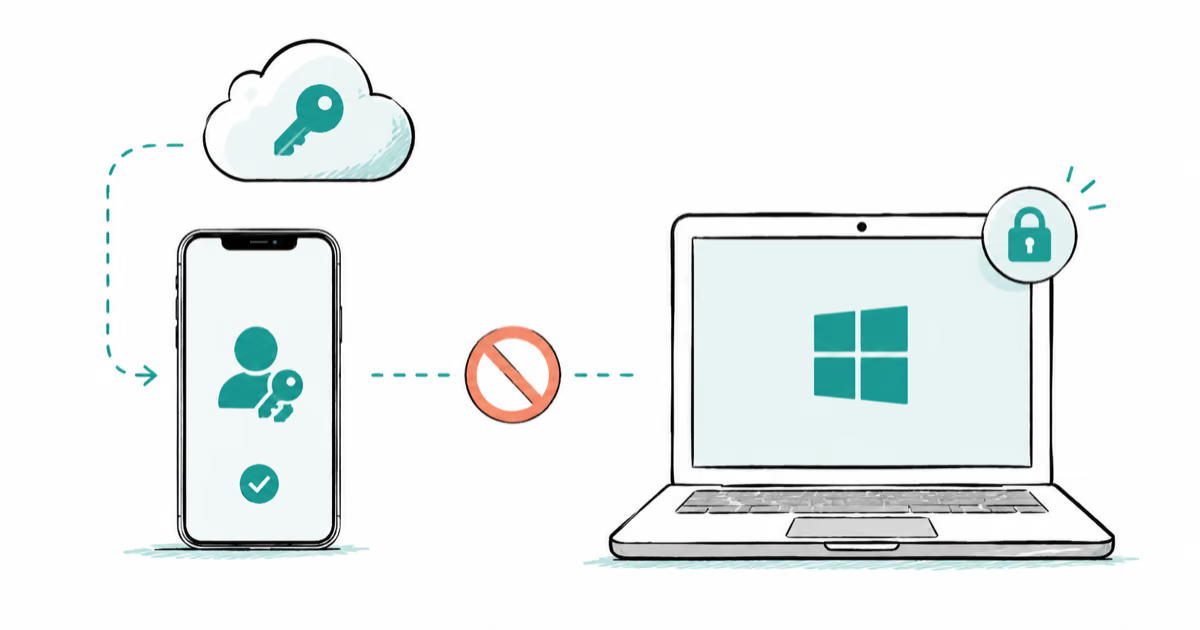
Passkeys Not Syncing Between iPhone and Windows? Read This
Passkeys not syncing between iPhone and Windows is by design, not a bug. Here is why iCloud passkeys skip Windows Hello and the three ways to fix it.
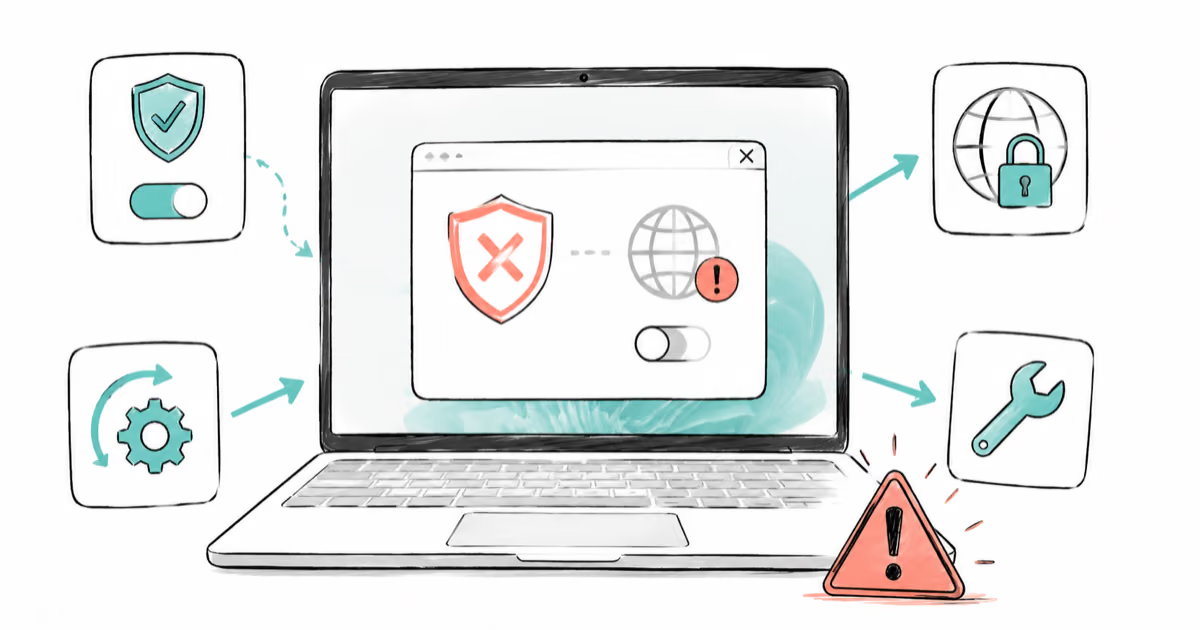
VPN Not Working on Snapdragon X? Why It Fails, How to Fix
Your VPN won't install or connect on a Snapdragon X Copilot Plus PC because Windows on ARM can't emulate the network driver. Here are the fixes that work.
How to Check If a Link Is Safe Before You Click It
Learn how to check if a link is safe with official-first steps: read the real domain, use the app instead, and treat scanners as a second opinion only.