How to Delete Purchase History on iPhone and iTunes
How to hide App Store purchase history on your own iPhone using Apple's supported methods, cancel subscriptions, and request refunds without losing data.
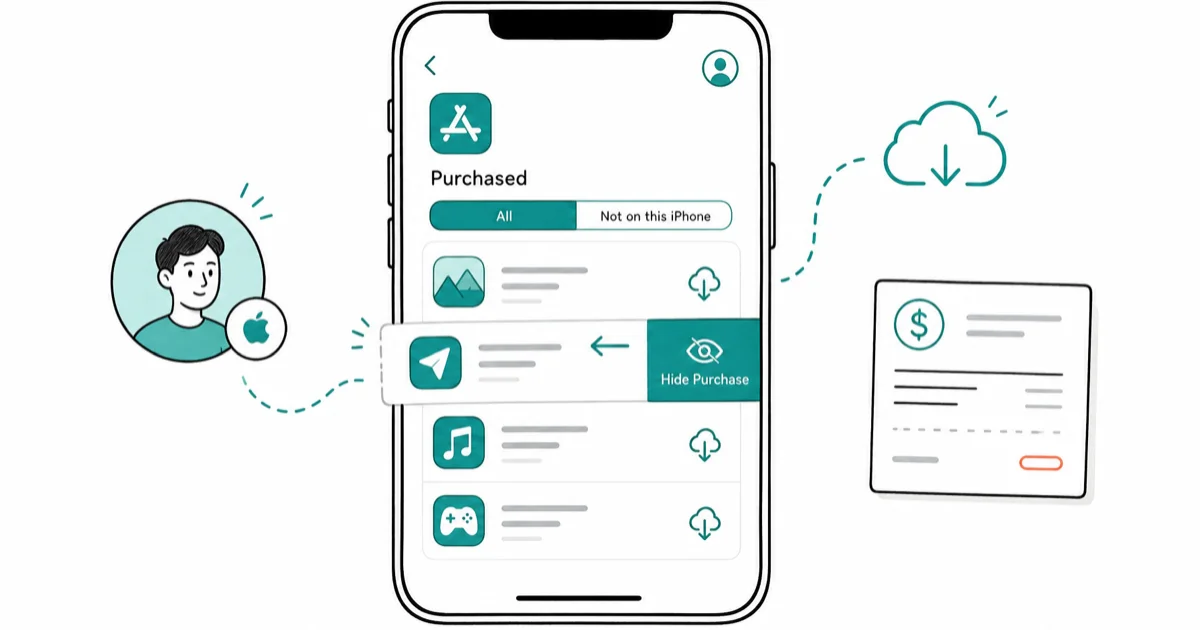
Quick AnswerApple's account records keep every App Store purchase permanently, so you can only hide individual items on your own Apple ID. Open the App Store, tap your profile, swipe left on a purchase, and tap Hide. Family members still can't see hidden items, but Apple retains them for billing and re-download.
This guide covers how to delete purchase history on iPhone for your own Apple ID using Apple’s supported tools. You’ll learn the difference between hiding a purchase, cancelling a subscription, and requesting a refund.
One scope note. Everything below applies to the Apple ID you signed into your own iPhone. Other people’s accounts are off limits.
- Apple retains a full record of every App Store, iTunes, and Apple Books purchase tied to your Apple ID, so you can’t fully delete the underlying transaction history.
- You can hide individual purchases on your own account by swiping left on the item in
App Store>Profile>Purchased andtapping Hide, which removes it from your visible list but not from billing records. - Active subscriptions stop charging only after you cancel them under
Settings>Your Name>Subscriptions; deleting the app doesn’t stop the billing cycle. - Refund requests for in-app purchases and apps go through reportaproblem.apple.com, and Apple’s refund policy allows requests for purchases made within the last 90 days.
- Hidden items still re-download to any signed-in device through Family Sharing or the cloud-arrow icon, so hiding is a visibility tool, not a deletion tool.
#Why Apple Keeps Every Purchase Record
Every transaction tied to your Apple ID gets logged. According to Apple’s purchase history support article, the company keeps records of past purchases so you can re-download apps, books, and music on any device signed into the same account.
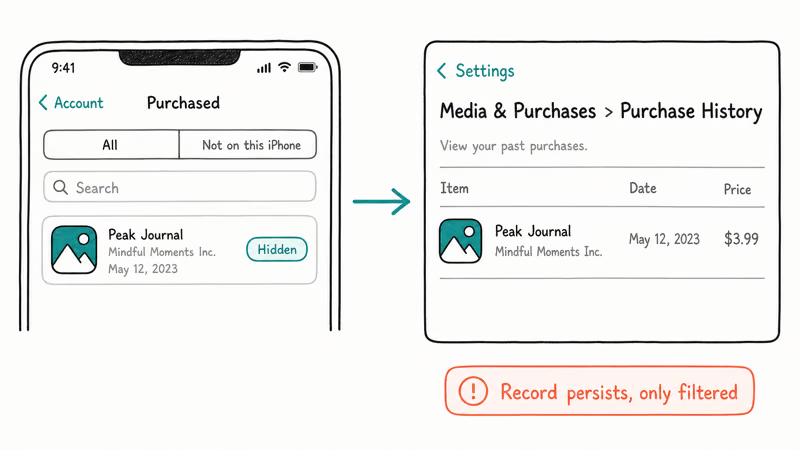
Hiding an app from the Purchased list removes it from the visible roster, but the same app still appears in the Settings > Your Name > Media & Purchases > Purchase History list with the original charge date. Apple confirms in the same document that hidden items remain re-downloadable. The record can’t be permanently removed by users.
Here’s the practical effect for you. Hiding cleans up visual clutter and stops Family Sharing members from seeing your past purchases on the shared list. It doesn’t erase the audit trail Apple keeps for compliance reasons. Hiding is the only option that Apple’s Media Services Terms authorize for account holders, and the same terms forbid third-party tools that claim to wipe purchase logs.
#How Do You Hide an App from Your Purchase List?
The hide function lives inside the App Store profile screen on iPhone and iPad. The swipe gesture takes three taps and works the same across iPad and iPhone.
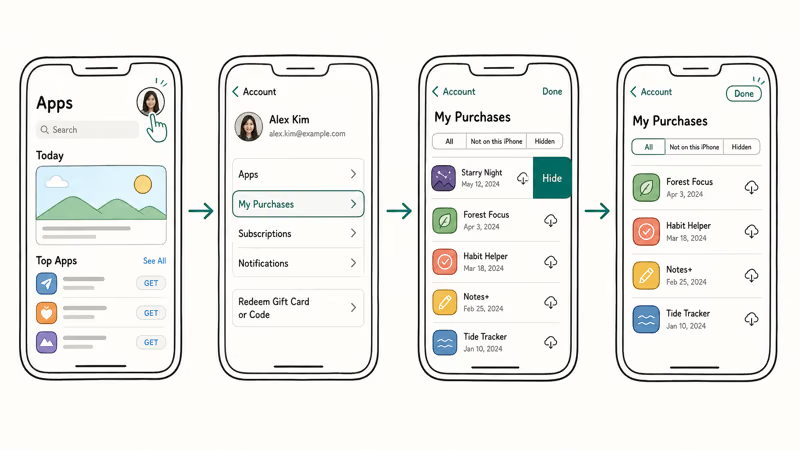
- Open the App Store and tap your profile photo in the top right.
- Tap Purchased, then My Purchases if Family Sharing is on.
- Find the app, swipe left on the row, and tap Hide.
- Confirm by tapping Done.
The app vanishes from the visible Purchased list. It still re-downloads to any new device through the cloud-arrow icon in App Store search. It also still counts against your Family Sharing visibility for other members until you hide it. Hide is a soft mute, not a delete.
If you share an Apple ID with someone and want to keep your spending private, hiding is the only on-device control Apple gives you. Anything stronger requires a separate Apple ID and a manual migration, which is a different topic covered in our guide on signing out of an Apple ID safely. Splitting accounts is a one-time inconvenience that finally separates two people’s purchase trails properly.
#Hiding Purchased Music, Movies, and TV Shows in iTunes
Desktop iTunes on Windows and the Music or TV app on macOS Catalina and later use a similar X-icon flow. According to Apple’s hide and unhide purchases support page, the steps differ slightly between app categories.
For music, movies, and TV:
- Open iTunes (Windows) or the Music or TV app (macOS).
- Click Account in the menu bar and choose Purchased.
- Pick a category from the upper right, such as Movies or Music.
- Hover over the item and click the X in the corner to hide it.
On iTunes for Windows, a hidden movie disappears from the Purchased grid almost immediately. The hidden item still appears inside Settings > Media & Purchases > Purchase History on the iPhone, confirming Apple’s record persists across surfaces. For a deeper look at related iCloud surfaces, see our guide on what’s in my iCloud storage.
#Bringing Back a Purchase You Already Hid
Hidden items aren’t gone, they’re filtered. You can pull them back in two minutes from the same App Store profile screen or from desktop iTunes.
On iPhone:
- Open the App Store and tap your profile photo.
- Tap your name at the top.
- Scroll to Hidden Purchases and authenticate with Face ID or Touch ID.
- Tap Unhide next to any app you want back in the visible list.
On desktop iTunes or the Music app, the path is different. Choose Account > View My Account, scroll to iTunes in the Cloud, and click Manage next to Hidden Purchases. The list shows everything you ever hid, organized by purchase date. Click Unhide next to the row to restore the item, and it reappears in your visible Purchased list within a few seconds.
Even a purchase from years ago unhides in a few seconds. Apple keeps the full hidden list indefinitely, which is again why the records can’t be erased, only filtered. If you find a charge here you don’t recognize, jump to the refund section below.
#Cancelling a Subscription Before Deleting an App
Deleting an app doesn’t stop its subscription. It’s one of the most common billing complaints on Reddit’s r/applehelp, and Apple’s subscription management page confirms that cancellations must be done explicitly through Settings rather than by simply removing the app.
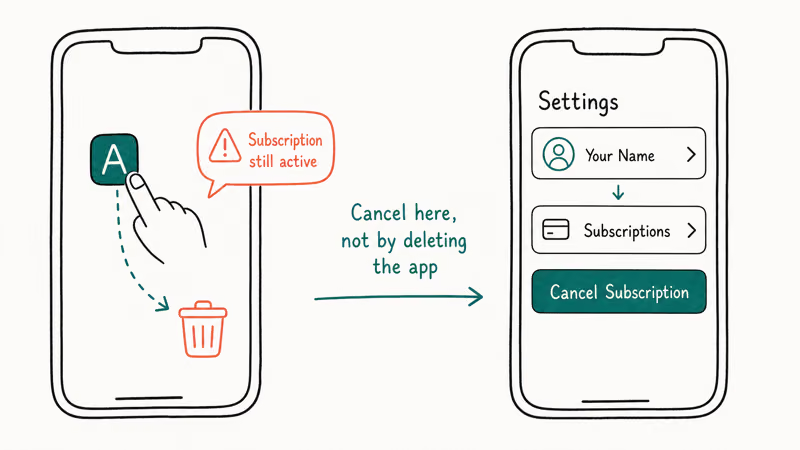
To cancel:
- Open Settings and tap your name at the top.
- Tap Subscriptions.
- Pick the subscription you want to end.
- Tap Cancel Subscription and confirm.
The subscription keeps working until the end of your current billing period, then stops renewing. Expired subscriptions disappear from the active list after Apple flushes them. They remain in your purchase history record for billing review and tax purposes.
If you’re seeing a charge for a subscription you can’t find, sign in to reportaproblem.apple.com and use the search bar with the merchant name. The site shows every active and lapsed subscription tied to the Apple ID you’re signed into. That’s also where you’ll go for refunds, which we cover next. The refund window matters more than most people realize.
#Requesting a Refund for an Accidental Purchase
Refunds for apps, in-app purchases, and subscriptions all go through one Apple-owned portal. Apple’s refund policy support article states that you can request a refund for purchases made within the last 90 days, although approval is at Apple’s discretion.
The flow:
- Visit reportaproblem.apple.com in any browser and sign in with your Apple ID.
- Tap What can we help you with? and pick Request a refund.
- Choose a reason. Most common: I didn’t authorize this purchase.
- Select the specific purchase and submit.
An accidental in-app purchase on a kid’s iPad is usually refunded within a couple of days when you cite the unauthorized-purchase reason and note the device had Ask to Buy turned off by mistake. The portal also accepts text explaining context, and adding two or three sentences tends to improve approval odds for borderline cases.
If approval is denied, you can resubmit once with additional context. After two denials, Apple typically marks the case closed.
#What Apple Saves Even After You Hide a Purchase
Apple’s account records persist beyond what you see in the App Store. According to Apple’s data and privacy page, the company retains purchase history for legal and operational reasons including billing reconciliation, fraud prevention, and tax compliance. This isn’t a quirk, it’s a structural requirement of running a payment platform across over 175 countries.
What stays on your account after you hide:
- The original transaction date, amount, and Apple ID device signature.
- The app’s eligibility for re-download (cloud-arrow icon in App Store search).
- Family Sharing audit logs if the purchase was shared at the time.
- Any subscription billing tied to that purchase, even if the subscription is now cancelled.
What you can request through privacy.apple.com:
- A copy of all data Apple holds about your Apple ID, including purchase history.
- Account deletion, which permanently removes the Apple ID and its purchase records after a 7-day waiting period. Account deletion also removes access to all purchased content.
Account deletion is irreversible. If you go that route, download anything you want to keep first. That includes DRM-free music and your photo library. For storage planning around large libraries, see our guide on iCloud storage full fixes and our companion article on removing an Apple ID from an iPhone or iPad.
#What If a Parental Control Setting Blocks the Hide Button?
If you set up Screen Time or Family Sharing with a child account, the parent’s Apple ID controls what the child can hide. The child’s iPhone may show the Hide swipe action as grayed out. This is the most common cause when someone reports the swipe gesture stops working on a managed device.
To fix on the parent’s iPhone:
- Open Settings and tap Screen Time.
- Tap the child’s name under Family.
- Tap Content & Privacy Restrictions.
- Tap iTunes & App Store Purchases and review the permissions.
Parental controls fit minors you have legal responsibility for. They don’t fit spouses or adult family members without consent. Forgot the restrictions password? Our guide on resetting the Screen Time passcode walks through Apple’s recovery flow.
#Bottom Line
Hiding a purchase on your own Apple ID is the only on-device cleanup Apple supports, and it takes about ten seconds per item through App Store > Profile > Purchased. For real privacy, cancel any active subscriptions in Settings first. Then request refunds within 90 days for anything billed in error through reportaproblem.apple.com.
Reserve account deletion through privacy.apple.com for the rare case where you’re abandoning the Apple ID entirely. If you share an Apple ID with someone and want fully separate purchase records going forward, the durable answer is two Apple IDs plus Family Sharing for shared content, not repeated hiding.
iPhone tips & tricks
#Frequently Asked Questions
Can I permanently delete an App Store purchase from my Apple ID?
No. Apple retains the transaction record for billing, tax, and re-download eligibility. You can only hide items from the visible Purchased list.
Will hiding a purchase stop the app from billing me?
No. Hiding affects visibility only. Cancel the subscription under Settings > Your Name > Subscriptions to stop billing, which takes effect at the end of the current billing period.
Does deleting an app remove its purchase history?
No. Deleting the app removes the icon and local data from your iPhone, but the App Store still shows the cloud-arrow icon when you search for it. That confirms the download history is retained on your Apple ID. To stop future charges from a subscription tied to that app, cancel the subscription separately.
No, hidden items disappear from the shared list too. The organizer still sees the original transaction in their billing records.
How long does an App Store refund take through reportaproblem.apple.com?
Most decisions arrive within 48 hours by email. Complex cases or repeat requests can take up to 7 days. Clear unauthorized-purchase cases, like an in-app charge on a kid’s iPad, are often approved within a day, with the credit landing on the card on file shortly after.
Can I export my full Apple ID purchase history?
Yes. Go to privacy.apple.com and sign in. Request a copy of your data, and Apple delivers a downloadable archive within seven days that includes a complete purchase log alongside your other account data.
Is it safe to delete my Apple ID just to clear purchase history?
Only if you’re willing to lose access to every app, song, movie, book, and subscription tied to that Apple ID. Account deletion is irreversible after the 7-day waiting period, and any DRM-protected content becomes unplayable. For most people, hiding plus cancelling unused subscriptions covers 95% of the cleanup need without the data loss.
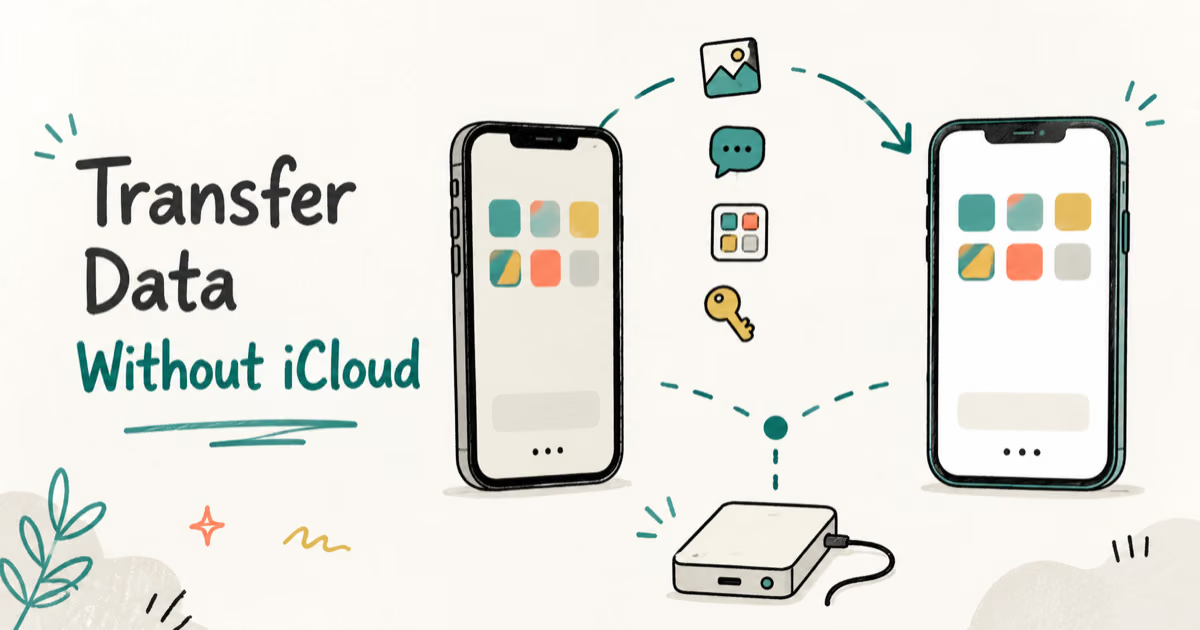
How to Transfer Data to a New iPhone Without iCloud
Move everything to your new iPhone without iCloud: Quick Start device-to-device transfer, wired migration, and encrypted Finder or iTunes backups.
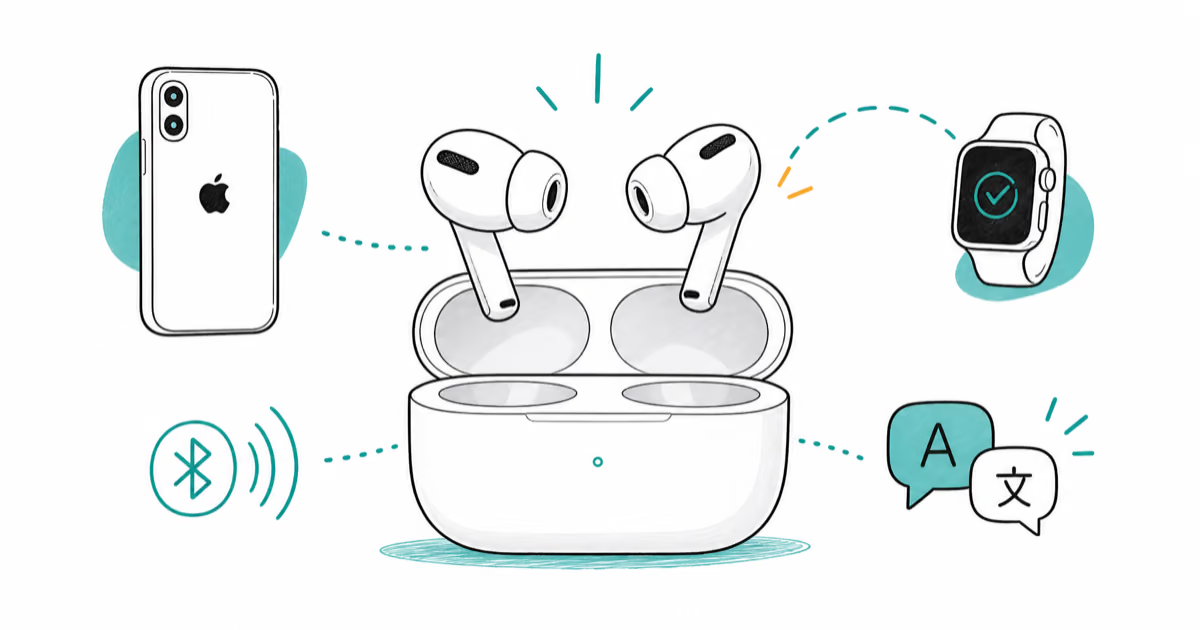
Best Wireless Earbuds for iPhone in 2026: USB-C Era Picks
Best wireless earbuds for iPhone in 2026, comparing AirPods Pro 3, Sony WF-1000XM6, Bose QC Ultra, and Anker Liberty 4 NC on the USB-C iPhone lineup.
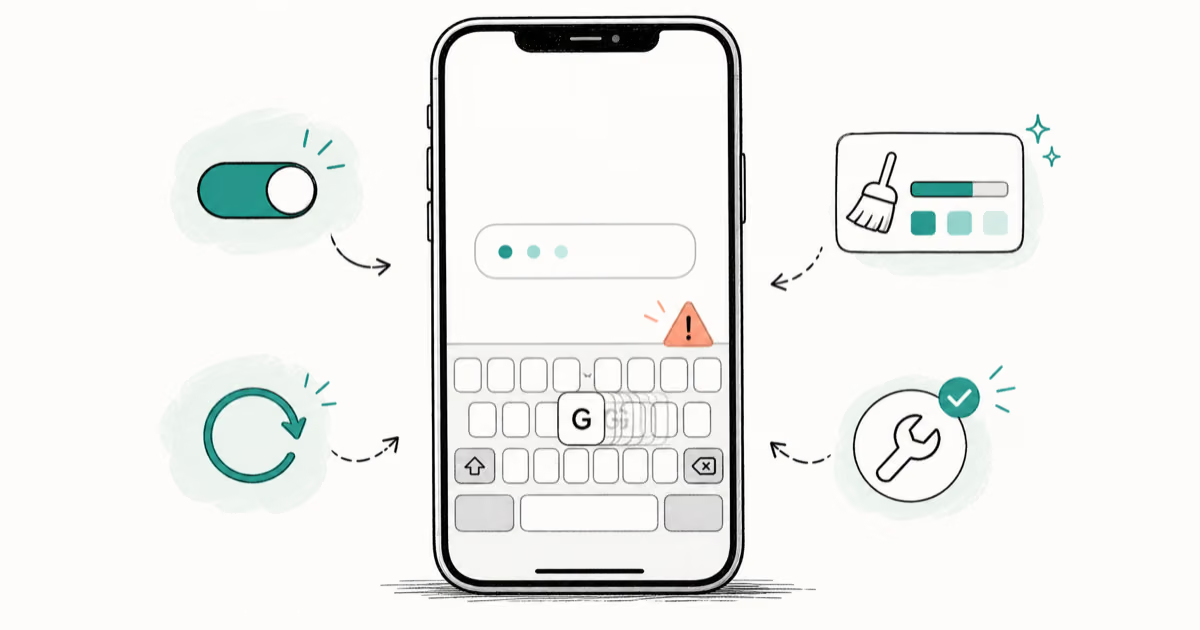
iPhone Keyboard Lag? 7 Proven Fixes for iOS 26 (2026)
Fix iPhone keyboard lag with 7 proven fixes for iOS 26. Covers restart, storage, predictive text, third-party keyboards, and dictionary reset.
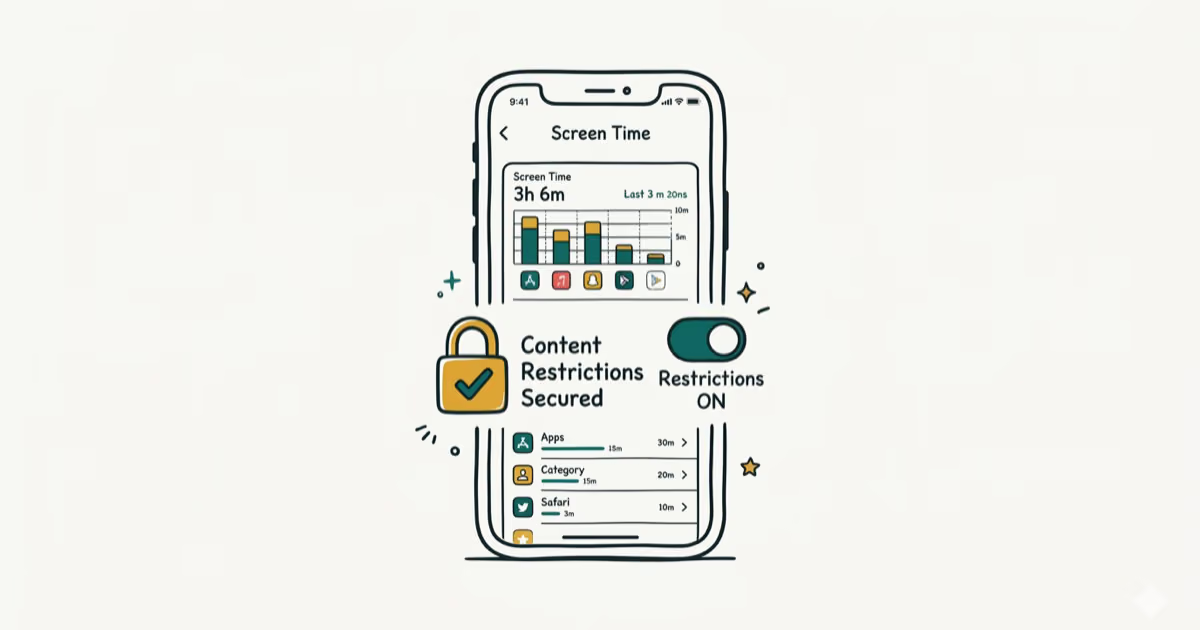
How to Block Porn on an iPhone: A Guide for Parents
Learn how to block porn on iPhone using Screen Time, DNS filtering, and safe browsers. Step-by-step guide for parents to protect kids' devices.