Free VPN Risks: Are Free VPNs Safe to Use in 2026?
Are free VPNs safe? Most standalone free VPN apps log traffic, push ads, or hide malware. Here is the risk broken down by tier, plus the safe exceptions.
Quick AnswerMost standalone free VPN apps carry real risks: traffic logging, ad tracking, even malware. The safe exceptions are free tiers from reputable paid providers like Proton VPN.
The biggest free VPN risks are not obvious from an App Store listing. Many free apps quietly log your traffic, inject ads, or bundle trackers, and some have leaked or sold user data. Running a VPN costs money, so a free-only app recoups that cost somewhere.
- Most “100% free” VPN apps with no paid product behind them make money another way, usually by logging traffic, injecting ads, or selling your data.
- The safest free option is a free tier from a company that also sells a paid plan, such as Proton VPN Free, which has no data cap and publishes independent audits.
- Free VPNs have caused real harm: an unsecured SuperVPN database exposed over 360 million records in 2023, and Hola VPN resold users’ bandwidth in 2015.
- On Android, free VPN apps can request risky permissions and bundle trackers, while iOS sandboxing limits but does not remove the danger.
- A reputable paid VPN costs roughly $3 to $5 a month, which is worth it if you want protection running all the time.
#What Are the Real Risks of Free VPNs?
A VPN routes all your internet traffic through its servers, so the provider can see everything a snoop on the same network would want to see. That is acceptable when you trust the company and it has a reason to behave. With a free app that has no clear owner and no paid product, the incentives flip. The first question is whether you need a VPN at all, and the second is whether the free one you grabbed is trustworthy.
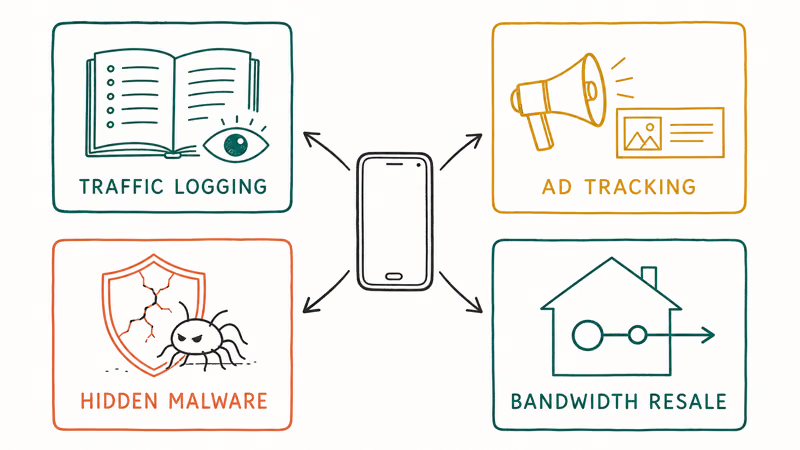
Logging and data resale top the list. A VPN can record the sites you visit, your real IP address, and connection timestamps, then bundle that into a profile and sell it to advertisers or brokers. That is the same data-broker economy people try to escape when they remove data from broker sites.
Then there is tracking and ad injection. A 2016 study of 283 Android VPN apps found that roughly 75% embedded at least one third-party tracking library and 38% showed signs of malware, and some apps slip their own ads into the pages you load.
Malware is the scariest risk, and that is why questions about whether iPhones need antivirus keep surfacing.
The fourth risk is the strangest. Some free VPNs sell your spare bandwidth, turning your device into an exit node that strangers route their traffic through. Someone else’s activity can then look like it came from your home connection.
#The Three Tiers of Free VPNs
Not all free VPNs are equally risky. It helps to sort them into three tiers, from the safe end to the one you should avoid.
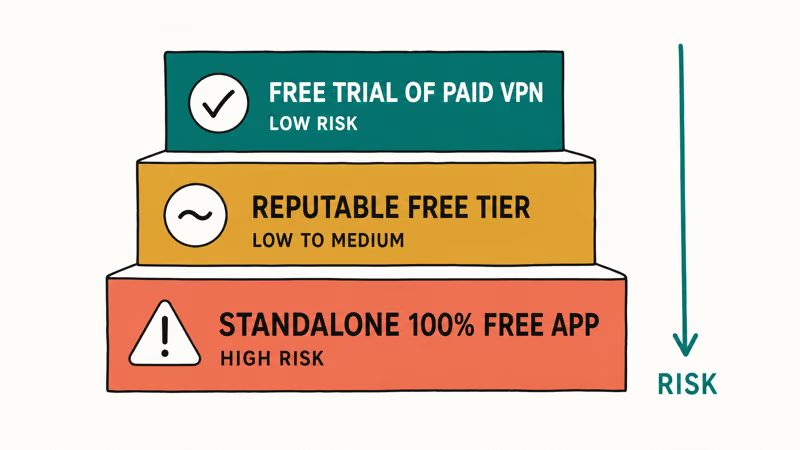
The first tier is the free trial of a paid VPN. NordVPN, ExpressVPN, and others let you use the full paid product for a week or a month, sometimes through a money-back guarantee. The company wants you to subscribe, so it has no reason to mistreat your data. This is the lowest-risk way to use a VPN for free.
The second tier is a limited free plan from a company that also sells paid subscriptions. Proton VPN Free and Windscribe Free fit here, capping speed or servers to nudge you toward upgrading.
Most dangerous is the third tier: the standalone “unlimited, 100% free” app with no paid product and often unclear ownership. This is where the documented harm lives. According to Mozilla’s privacy team, a free VPN without a legitimate business model is unlikely to invest in real privacy protection and may sell your data to stay afloat.
These “free forever” apps are the highest-risk category, especially when they load extra ad SDKs or ask for permissions a VPN has no business needing.
| VPN or tier | Type | How it makes money | Risk level |
|---|---|---|---|
| NordVPN or ExpressVPN trial | Free trial of paid plan | Subscription afterward | Low |
| Proton VPN Free | Reputable free tier | Sells paid plans | Low |
| Windscribe Free | Reputable free tier | Sells paid plans | Low to medium |
| Hotspot Shield (free) | Ad-supported | Ads and data sharing | Medium to high |
| SuperVPN and many "100% free" apps | Standalone free | Unclear or hidden | High |
| Hola VPN (free) | Peer-to-peer | Resells your bandwidth | High |
#Free VPNs That Have Actually Harmed Users
Take Hola VPN. Researchers in 2015 found that it was reselling users’ idle bandwidth through a sister company, turning millions of devices into a botnet that attacked other sites.
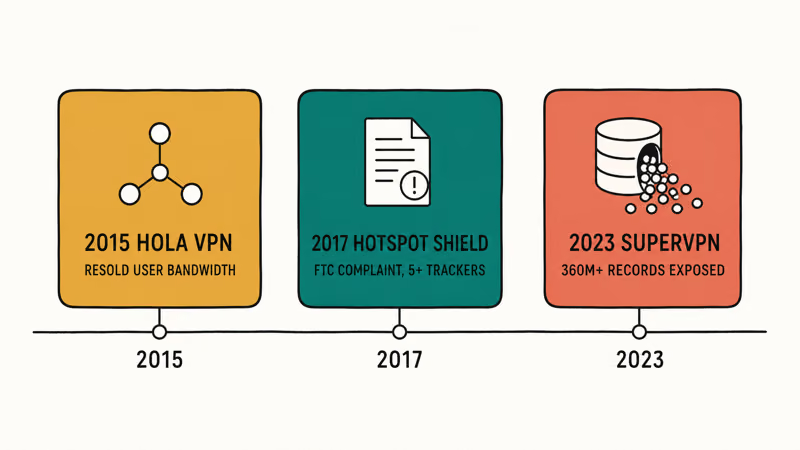
In 2017, a complaint filed with the FTC by the Center for Democracy and Technology alleged that Hotspot Shield shared data with advertisers, used more than five tracking libraries, and redirected some e-commerce traffic. The complaint was an allegation, not a court ruling, but it described exactly the pattern privacy researchers warn about.
The clearest case is more recent. In 2023, security researchers found an unsecured SuperVPN database sitting open online. CPO Magazine reported that the leak exposed more than 360 million records, around 133GB, including IP addresses and the sites users visited, which flatly contradicted the app’s no-logs claim.
#Is Proton VPN’s Free Tier Actually Safe?
Proton VPN Free is one of the safer free VPN choices. It comes from Proton, the Swiss company behind Proton Mail, and it has no data cap.
Free tiers from established paid providers like Proton and Windscribe are lower risk because the company has a paid business model behind them. Free apps with no paid tier deserve more scrutiny, especially if they ask for contacts or location access a VPN has no reason to need.
The tradeoffs are real. The free plan limits you to servers in a handful of countries and gives you slower speeds than paying customers get. For a fuller look at paid options, see our guide to the best VPNs for iPhone, and if your connection drops or refuses to start, our fix for a VPN not connecting on iPhone covers the usual causes.
#Free VPNs on iPhone vs Android
The platform matters. Most documented malware research, including that 283-app study, focused on Android, where sideloading and broad permissions give a bad app far more room to misbehave.
On the iPhone, the picture is better but not clean. According to Apple’s Network Extension framework documentation, iOS VPN apps run inside a sandbox and connect through a managed system profile, which limits how much a rogue app can touch. App Store review also screens out many of the worst offenders.
That does not make a sketchy free VPN safe on iOS. A logging or data-selling app behaves the same on either platform, because your data still flows through its servers regardless of the sandbox. If you are new to this, our explainer on what a VPN does on iPhone covers the basics.
#How to Choose a Safe Free VPN
So how do you actually pick one? Three quick checks separate a safe free VPN from a dangerous one.
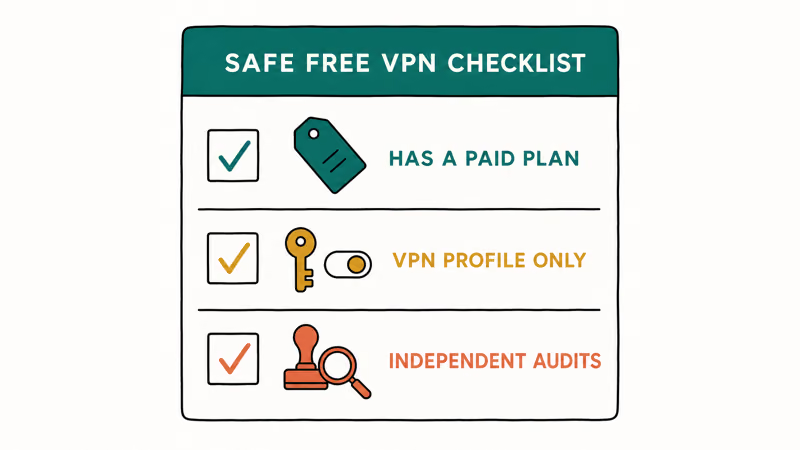
Start with the business model. A VPN that also sells a paid plan treats its free tier as a sample, so it has a reason to protect you rather than profit off your data. That is the single strongest signal.
Check the permissions next. A VPN needs the network profile and nothing else, so a free app begging for contacts or location access is waving a red flag.
Look for proof, not promises. A no-logs claim means little by itself, so favor providers that publish independent audits and have a paid business to protect. Proton and Windscribe both clear that bar; an anonymous app with no audit and no name behind it does not.
#Bottom Line
If you only need a VPN occasionally, lean on the free tier of a company that also sells a paid plan. Proton VPN Free is the safest pick, and Windscribe Free is a solid backup.
Stay away from any “unlimited, 100% free” app with vague ownership and no paid product, because it has to earn its money from you somehow. If you want a VPN running on all your devices around the clock, a reputable paid plan like NordVPN at roughly $3 to $5 a month removes the whole question of how the free one survives.
Some links on this page are affiliate links, which means fone.tips may earn a commission at no extra cost to you.
#Frequently Asked Questions
Are free VPNs safe to use?
Some are and most are not. A free tier from a reputable paid provider like Proton VPN is safe to use, while a standalone “free forever” app with no clear owner is the kind that tends to log or sell your data.
Why are free VPNs free if VPNs cost money to run?
Servers and bandwidth cost real money, so a free VPN recovers it somewhere. Honest ones use the free app to sell paid plans; risky ones monetize you directly instead.
Is Proton VPN’s free tier really unlimited and safe?
Proton VPN Free has no data cap, which is rare among free VPNs, and it does not show ads or sell your traffic. The limits are on speed and the number of server locations, not on how much data you use. It’s backed by a paid business and has passed independent security audits.
Can a free VPN give my phone a virus?
Yes. Researchers have repeatedly found malware buried inside free Android VPN apps, and a malicious one sits on all your traffic, perfectly placed to do harm.
Are free VPN apps safer on the iPhone App Store than on Android?
Generally yes. iOS sandboxes apps and App Store review filters out many of the worst offenders, so the platform does some of the work for you. But a data-logging VPN still sees what you do on an iPhone, because your traffic flows through its servers no matter how tight the sandbox is.
What is the safest free VPN in 2026?
Proton VPN Free is the safest pick for most people, thanks to its no-logs policy, independent audits, and lack of a data cap. Windscribe Free is a solid second choice.
Should I use a free VPN or just pay for one?
If you need a VPN only now and then, a reputable free tier is fine. If you want it running all the time across several devices, pay for one. A solid plan runs about $3 to $5 a month and removes the trust problem entirely, because the company earns from your subscription instead of your data.
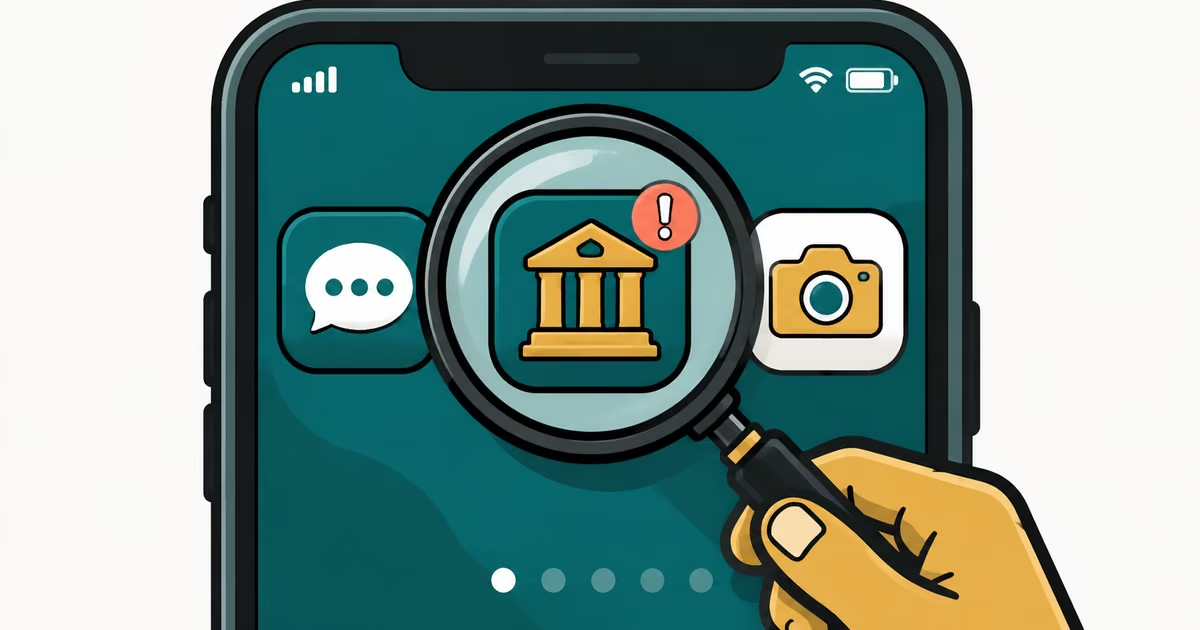
Is This Bank App Real? Spot a Fake App on Your Home Screen
A bank app can land on your home screen from a web page with no install warning. Learn the checks that tell a real banking app from a phishing web app.
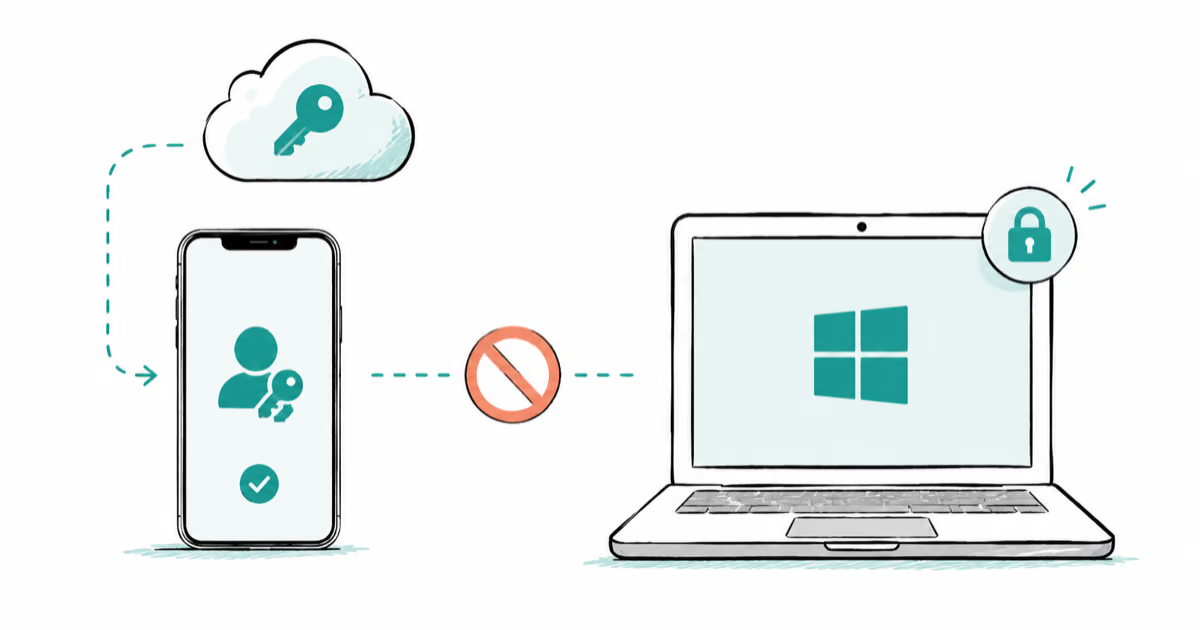
Passkeys Not Syncing Between iPhone and Windows? Read This
Passkeys not syncing between iPhone and Windows is by design, not a bug. Here is why iCloud passkeys skip Windows Hello and the three ways to fix it.
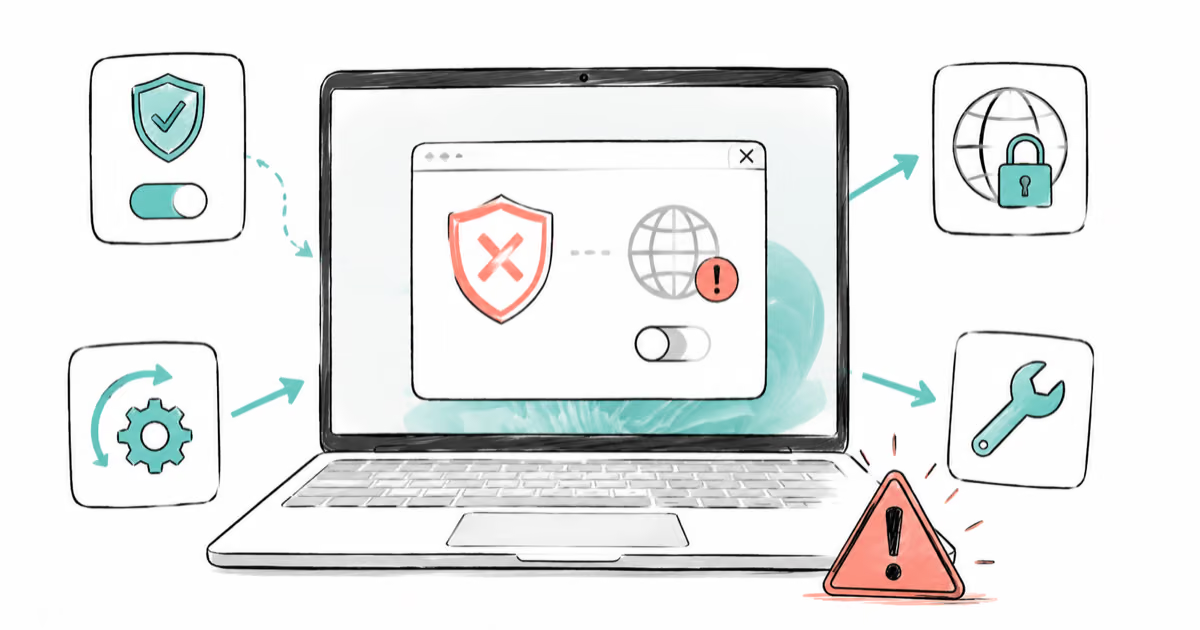
VPN Not Working on Snapdragon X? Why It Fails, How to Fix
Your VPN won't install or connect on a Snapdragon X Copilot Plus PC because Windows on ARM can't emulate the network driver. Here are the fixes that work.
How to Check If a Link Is Safe Before You Click It
Learn how to check if a link is safe with official-first steps: read the real domain, use the app instead, and treat scanners as a second opinion only.