How to Fake GPS on iOS (2026): Legal Methods for Your iPhone
Fake GPS on your own iPhone using Xcode developer mode, a VPN, or third-party tools. Covers legal risks, app bans, and step-by-step setup for 2026.
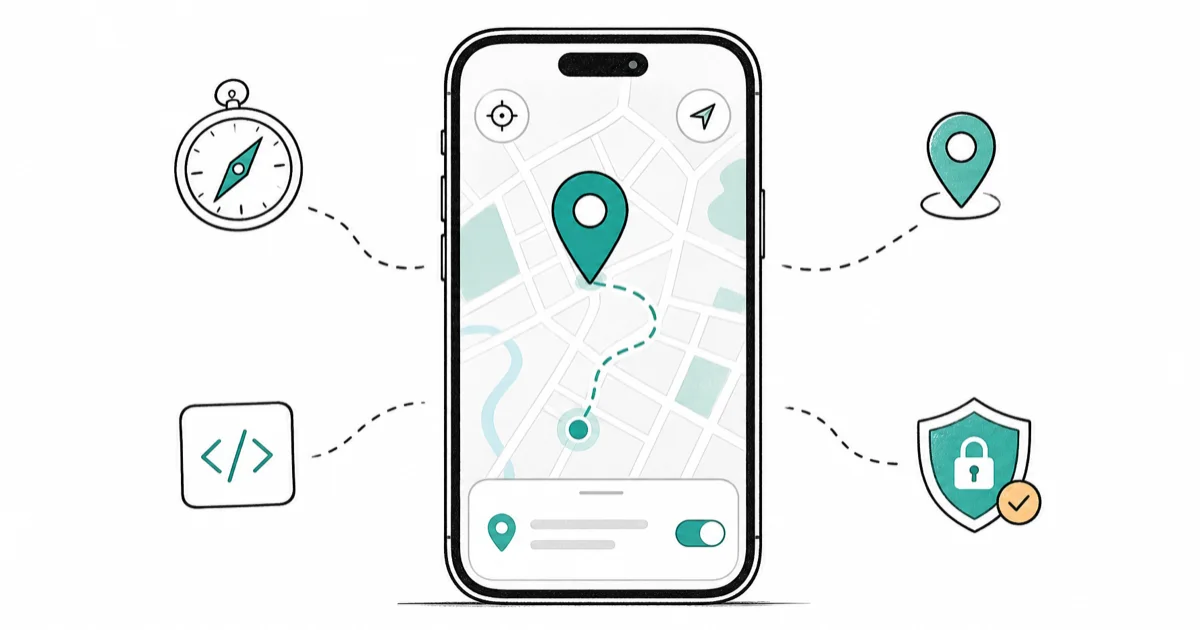
Quick AnswerUse Xcode with developer mode enabled to simulate any GPS location on your own iPhone, which is Apple's only official spoofing method. Third-party tools like iAnyGo work without jailbreak but violate most app terms of service and risk account bans.
Faking GPS on your own iPhone or iPad is doable, but iOS has no built-in switch the way Android does. The one official path is Xcode developer mode, which Apple provides for app testing. Everything else is a third-party workaround that can get your accounts banned on apps that detect spoofing. This guide covers three methods and where each one fits.
- Xcode Simulate Location is Apple’s only sanctioned way to fake GPS on iOS, and it resets to real GPS as soon as you unplug the cable.
- Tools like iAnyGo and Dr.Fone override coordinates system-wide without jailbreak, but Pokemon Go, Tinder, and Snapchat all ban accounts caught spoofing.
- A VPN changes your IP-based region for streaming and app-store access, and it does not touch GPS coordinates that location-aware apps read.
- Enabling Developer Mode on iOS 16 and later takes a full device restart and explicit opt-in under
Settings>Privacy & Security. - Using fake GPS to deceive other people, bypass restraining orders, or commit fraud is illegal in most jurisdictions regardless of the tool used.
#Why People Fake GPS on Their Own iPhone
Your reason decides your method. Developers need Xcode to simulate riding a bike through Paris for their fitness app. Travelers want a VPN so hotel Wi-Fi doesn’t leak their home region.
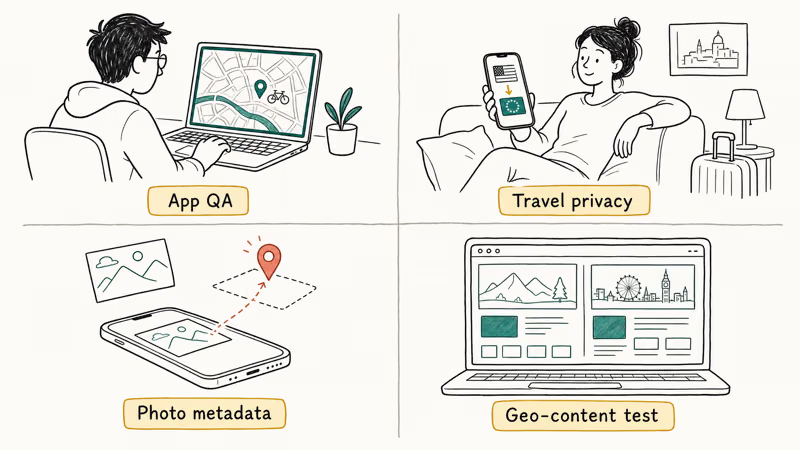
Legitimate reasons for spoofing on your own device include:
- App development and QA: testing how your app behaves in Tokyo, London, or offline regions
- Privacy on travel apps: stopping apps from logging exact movements during a trip
- Photo metadata privacy: stripping location before sharing to Instagram or Snapchat
- Geo-content testing: checking what a website serves to users in a different region
Using spoofed GPS to deceive a partner, stalk someone else, or fake alibis is a different category entirely. That’s evidence tampering territory. The methods below assume you’re working on your own device, your own account, for legal reasons.
#Is It Legal to Fake GPS on an iPhone?
Short version first. Spoofing your own iPhone’s GPS for personal use is legal in the US, UK, Canada, and most EU countries, but the context matters. According to the US Federal Communications Commission’s jamming prohibition guide, GPS jamming hardware that disrupts signals carries fines up to $112,500 per violation, and while pure software spoofing doesn’t count as jamming, using it to commit fraud does.
Almost every location-aware app prohibits spoofing in its own terms of service. Niantic’s Pokemon Go player guidelines confirm that using software to alter GPS location is grounds for a 3-strike ban system ending in permanent removal from Pokemon Go, Pikmin Bloom, and Monster Hunter Now.
Dating apps treat it the same way. Match Group, owner of Tinder and Hinge, explicitly bans location manipulation. Snap’s community guidelines ban spoofing too, though Snapchat enforcement is looser than Pokemon Go.
Put another way: usually legal, usually against app rules.
In practice, the ban risk splits into three tiers:
- Low risk: developer simulators like Xcode, weather apps, news apps
- Medium risk: dating apps; accounts get shadow-banned, not fully deleted
- High risk: Pokemon Go, Wizards Unite, Ingress; accounts are often permanently banned within days
#Method 1: Xcode Simulate Location (Apple’s Official Way)
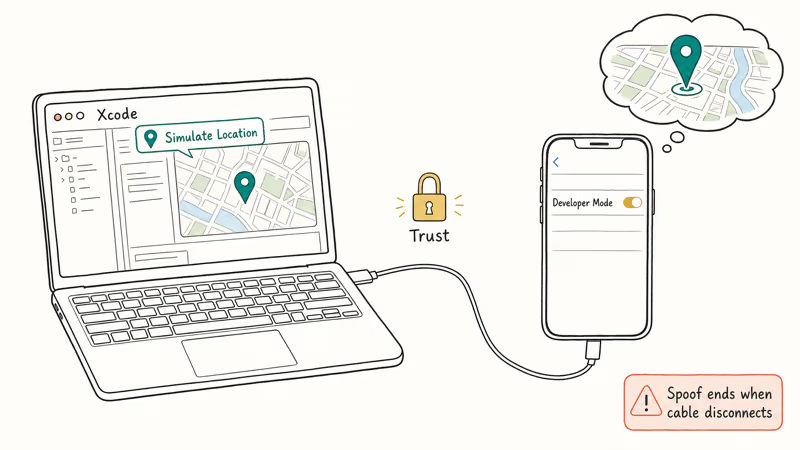
Xcode is Apple’s free development environment, and it’s the only Apple-blessed tool for changing iPhone GPS. It needs a Mac and a USB cable. The spoof only lasts while the cable is connected. Apple engineers themselves test location-aware apps this way, according to Apple’s Simulate Location documentation.
#Steps to fake GPS with Xcode
- Install Xcode from the Mac App Store (free, around 7 GB disk space).
- On your iPhone, go to
Settings>Privacy & Security>Developer Mode, toggle it on, and restart when prompted. - Connect your iPhone to your Mac with a USB-C or Lightning cable and trust the computer.
- Open Xcode, go to
Window>Devices and Simulators, select your iPhone, and click “Connect via network” if you want to go wireless afterward. - Create a new empty iOS project, run it on your device, then use
Debug>Simulate Locationin the running app. - Pick a preset (San Francisco, London, Rio de Janeiro) or add a custom GPX file with your target coordinates.
The Xcode override lasts until you stop the debug session. The change is immediate across Apple Maps, Weather, and Safari geolocation prompts, but third-party apps that use additional checks like cell tower triangulation or Wi-Fi BSSID lookup show mixed results. A fitness app may log a “spoofed” run but refuse to count it toward weekly goals, because it cross-checks GPS against the accelerometer.
#When Xcode is the Right Choice
- You’re a developer and need to test your own app.
- You want a temporary spoof for privacy testing.
- You want zero risk of app bans because the override only lives inside your debug session.
Downside: the cable and the 7 GB install. Not practical for AR games.
#Method 2: Third-Party Desktop Tools (iAnyGo, Dr.Fone)
Third-party GPS spoofers connect your iPhone to a computer over USB and override location at a system level without jailbreak. They use the same developer-mode tunnel Xcode uses, but wrap it in a map-based interface. Popular options include Tenorshare iAnyGo and Dr.Fone Virtual Location.
Some links on this page are affiliate links, which means fone.tips may earn a commission at no extra cost to you.
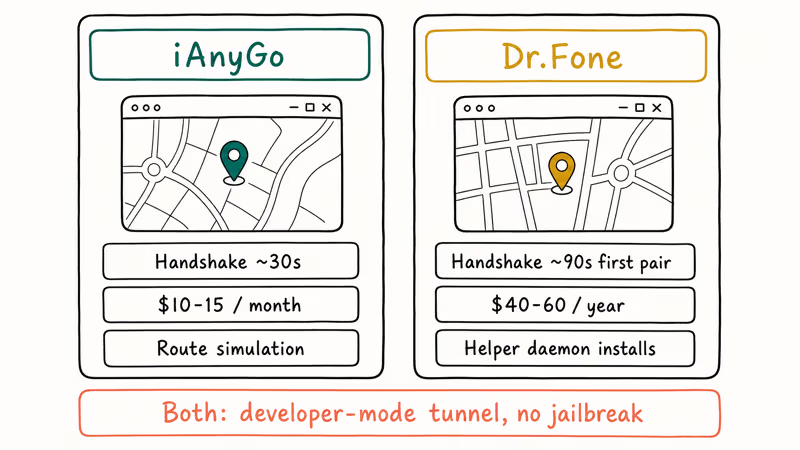
iAnyGo generally completes its initial handshake quickly once Developer Mode is enabled. Dr.Fone takes noticeably longer on first pair because it installs its own helper daemon. Both reconnect almost instantly on subsequent launches.
#How these tools work
- Install the desktop client on Mac or Windows.
- Connect your iPhone with a cable and trust the computer.
- Enable Developer Mode on iOS 16 and later (
Settings>Privacy & Security>Developer Mode). - Launch the tool, pick a destination on the map, and hit Start.
- The tool keeps a persistent connection; if the cable disconnects, your real GPS returns after a few minutes.
Both apps have a route simulation feature that walks you along a path at a configurable speed. With a slow walking-speed route, Apple Maps and Google Maps follow along, but anti-spoof apps don’t: Pokemon Go typically freezes, and Strava refuses to save the run.
#Risks specific to these tools
- Account bans are the biggest risk. Pokemon Go accounts using spoofers get soft-banned within hours and permanently banned within a week.
- Subscription cost is around $10 to $15 a month for iAnyGo, and $40 to $60 a year for Dr.Fone.
- Reliability drops after iOS updates because the developer-mode tunnel changes. On a beta iOS build, both tools failed to connect until the vendor pushed an update.
#Method 3: VPN for IP-Based Location (Not True GPS)
A VPN changes your public IP, nothing else. Streaming catalogs, news sites, and App Store regions use IP. GPS-aware apps ignore VPNs entirely, so they’ll still see your real position. Before you pay for a VPN hoping to fool Pokemon Go, know this up front: it won’t work.
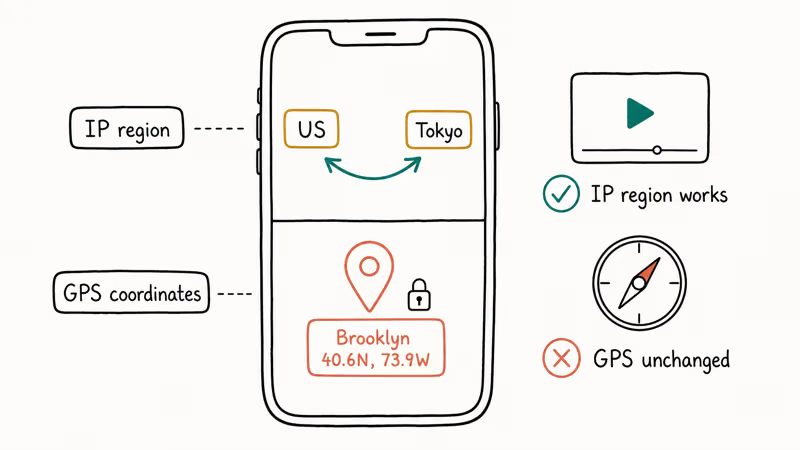
VPNs are legitimate for what they’re designed to do. NordVPN’s server network page confirms 7,000+ servers across 118 countries. That swaps your apparent IP region but not GPS. Connect to a Tokyo server and Netflix switches to the Japanese catalog within seconds, while the App Store stays on its own region (Apple ID region changes separately) and every GPS-aware app still reads your real physical coordinates.
#What a VPN Does (and Doesn’t Do) on iOS
| Task | VPN works? | Why |
|---|---|---|
| Unblock Netflix regional catalog | Yes | Netflix checks IP, not GPS |
| Access US-only banking during travel | Yes | Banks use IP + session fingerprints |
| Change Tinder location | No | Tinder reads GPS directly |
| Catch Pokemon Go regional Pokemon | No | Niantic reads GPS with anti-spoof logic |
| Spoof Snapchat Map location | No | Snap reads GPS directly |
| Hide your city from Wi-Fi geolocation | Partial | Depends on whether app uses GPS or IP |
If your goal is pure privacy, a VPN combined with Location Services disabled per app is often enough. See our change iPhone location without jailbreak guide for the full privacy-focused setup.
#Which Method Should I Pick for My Situation?
Match method to use case. Here’s how the decision breaks down once you account for how each method holds up against apps like Pokemon Go, Tinder, Snapchat, and Netflix.
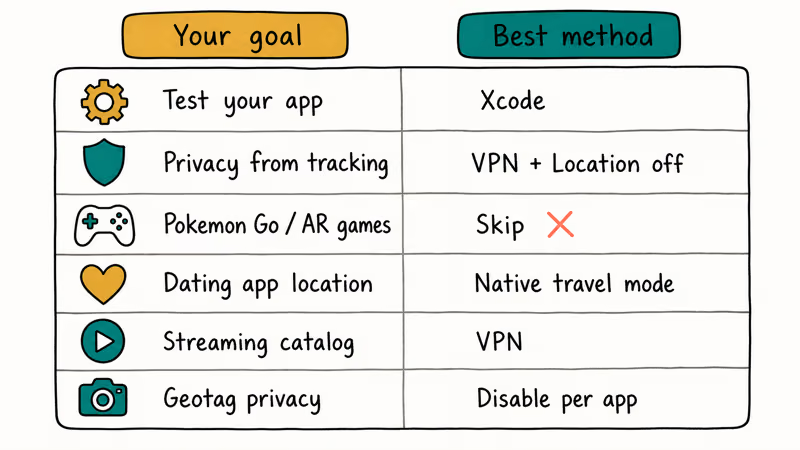
| Your Goal | Best Method | Reasoning |
|---|---|---|
| Testing your own app | Xcode | Free, sanctioned, zero ban risk |
| Privacy from tracking scripts | VPN + Location Off | No GPS manipulation needed |
| Pokemon Go / AR games | Not recommended | High ban risk regardless of tool |
| Dating app location (your own account) | Native travel mode | Bumble Travel Mode is legit |
| Streaming catalog access | VPN | IP-based, no GPS involvement |
| Snapchat / Instagram geotag privacy | Disable location per app | No spoofing needed |
Most apps offer legitimate travel features built in. Bumble’s official travel mode and Tinder Passport are paid features that don’t violate terms. For Pokemon Go specifically, the community consensus on the r/PokemonGoSpoofing wiki is that spoofing isn’t worth the ban, especially with Niantic’s detection improving. If you need the Bumble-specific workflow, see our how to change location on Bumble walkthrough.
#What Apps Do When They Catch You Spoofing
Detection isn’t an “all or nothing” system. Most apps use a staged response that starts with a warning and escalates.
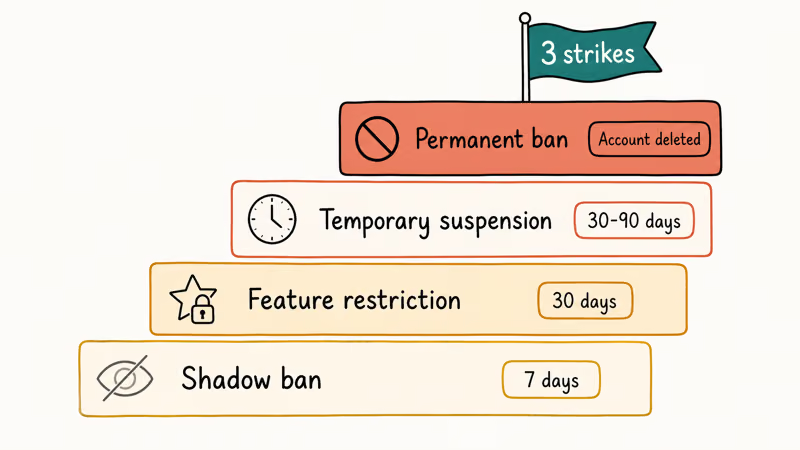
- Shadow ban: you can log in but can’t see matches (Tinder, Bumble) or catch anything (Pokemon Go). Duration is usually 7 days.
- Feature restriction: you lose access to specific features like Raids or Swipes for 30 days.
- Temporary suspension: account locked for 30 to 90 days with a warning email.
- Permanent ban: account deleted, device ID flagged, which can block re-registration on the same hardware.
Short rule of thumb: strike one is a warning, strike three is goodbye.
According to the Niantic Player Guidelines page, the company states that repeat violations result in permanent removal from all Niantic games after 3 strikes, which covers Pokemon Go and Monster Hunter Now sharing the same flag list. The first offense commonly triggers a 7-day soft ban, with later strikes escalating quickly to a permanent one.
Apps detect spoofing through several signals at once: GPS jumping faster than physical travel would allow, cell tower IDs that don’t match the claimed coordinates, Wi-Fi BSSID hashes that disagree with the reported city, and motion sensor data showing you haven’t moved. This is why Pokemon Go’s “failed to detect location” error often flags spoofers before they’re fully banned.
#Bottom Line
If you’re faking GPS on your own iPhone for legitimate app testing, use Xcode with Simulate Location and nothing else. It’s free, sanctioned by Apple, and can’t get you banned. For privacy rather than spoofing, pair a VPN like NordVPN with per-app location permissions under Settings > Privacy & Security > Location Services. For Pokemon Go, skip third-party spoofers; Niantic’s 3-strike ban system makes the ban-per-play math terrible. For dating apps, use Bumble Travel Mode or Tinder Passport instead.
iPhone tips & tricks
#Frequently Asked Questions
Does iOS have a built-in fake GPS option?
No. Apple provides Xcode Simulate Location for developers, but iOS itself has no toggle for regular users to change GPS the way Android’s Developer Options mock location does.
Will faking GPS get my iPhone banned by Apple?
Apple doesn’t ban iPhones for GPS spoofing because the device itself is yours. Individual apps can ban your account on their service, but Apple has no policy that flags the hardware. The one case where Apple gets involved is if you jailbreak to install a spoofing tweak, which voids the warranty but doesn’t lock the device.
Can I fake GPS on iPhone without a computer?
You can try app-store spoofers like iAnyGo’s iOS-only app, which claims to work without a Mac, but reliability is poor on iOS 16 and later because Developer Mode requires a tether to enable. App-only solutions tend to fail at holding a spoof for long on recent iOS versions. A Mac with Xcode or a paid desktop tool is much more reliable, and it’s the only way to keep the spoof stable during an extended session.
Why does my spoofed location keep snapping back to real GPS?
Three common causes: Developer Mode got disabled after a restart, the USB cable lost connection, or the app you’re using runs a periodic re-check that overrides the spoof. Pokemon Go re-reads GPS every 10 to 15 seconds and compares it against cell tower data.
Is Dr.Fone or iAnyGo safe to install on my Mac?
Yes. Both are Gatekeeper-signed apps from Wondershare and Tenorshare. The real risk is account bans, not malware. Download from the vendor’s official site only.
Can my employer detect if I fake GPS on my work iPhone?
Almost always yes. MDM-managed iPhones report location to the management server, and spoofing tools that rely on Developer Mode usually can’t even install on MDM-locked devices because Developer Mode is disabled by policy. If your employer enrolled your iPhone in a management profile, don’t try.
Does a VPN change my GPS location?
No. A VPN only changes your public IP address, which affects what region-restricted websites and IP-geolocated apps see, but has zero effect on the GPS chip in your iPhone. Apps that read GPS directly (Tinder, Pokemon Go, Snapchat, Bumble) ignore VPN routing entirely. This is the single biggest misconception about location on iOS: a VPN is for catalogs and content regions, not for spoofing where you physically are, and paying more for a VPN will never change that.
How to Transfer Data to a New iPhone Without iCloud
Move everything to your new iPhone without iCloud: Quick Start device-to-device transfer, wired migration, and encrypted Finder or iTunes backups.
Best Wireless Earbuds for iPhone in 2026: USB-C Era Picks
Best wireless earbuds for iPhone in 2026, comparing AirPods Pro 3, Sony WF-1000XM6, Bose QC Ultra, and Anker Liberty 4 NC on the USB-C iPhone lineup.
iPhone Keyboard Lag? 7 Proven Fixes for iOS 26 (2026)
Fix iPhone keyboard lag with 7 proven fixes for iOS 26. Covers restart, storage, predictive text, third-party keyboards, and dictionary reset.
How to Block Porn on an iPhone: A Guide for Parents
Learn how to block porn on iPhone using Screen Time, DNS filtering, and safe browsers. Step-by-step guide for parents to protect kids' devices.