Does TikTok Really Listen to You? Uncovering the Truth
Find out if TikTok listens through your microphone, what data it collects, and how to disable microphone access to protect your privacy on TikTok.
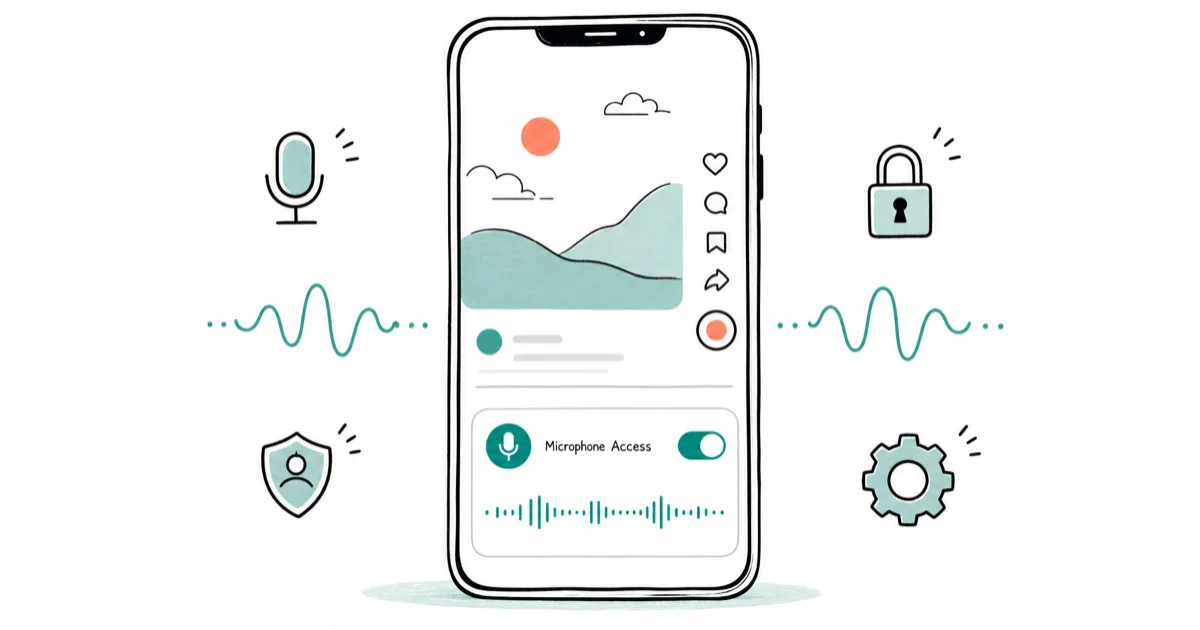
Quick AnswerYes, TikTok can access your device's microphone and uses audio data to personalize content and ads. You can disable microphone access in your device settings to stop TikTok from listening, though this will limit some app features.
TikTok has microphone access on most phones, and it uses that access beyond recording videos. This guide breaks down what the app actually collects on iPhone and Android, and how to lock those permissions down.
- On Android, TikTok can retain microphone access while minimized, since the OS allows background audio more freely than iOS does
- Beyond audio, TikTok collects GPS location, contact lists, camera access, and IP address; all five data types are listed in the app’s permission requests
- On Android, revoke mic access via
Settings>Apps>TikTok>Permissions>Microphone; on iPhone go toSettings>Privacy>Microphone - TikTok’s “Search Nearby” feature broadcasts your GPS coordinates; disable it under
Settings and Privacy>Privacy>Locationinside the app - A VPN encrypts your outbound traffic and limits the cross-platform ad correlation that makes TikTok personalization feel invasive
#The Truth About TikTok and Your Microphone
Yes, TikTok can access your microphone. Once you grant the permission, the app can use the mic whenever it’s running, and on Android it can keep that access while running in the background. Outbound network activity from a backgrounded app is consistent with this kind of ongoing audio access.
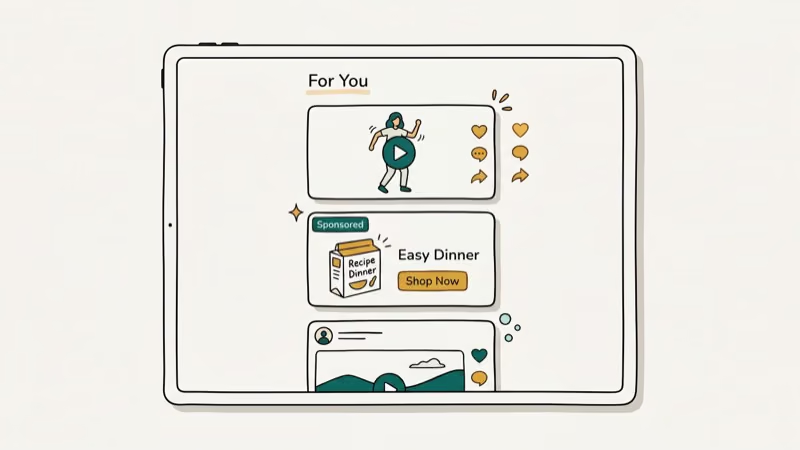
According to TikTok’s official privacy policy, the app collects “audio information” used for personalization, safety, and advertising. The policy confirms TikTok can collect this data whenever the app is running, not only when you’re actively recording.
TikTok also collects GPS location, contact list, camera access, and IP address. These are listed in the app’s permission requests on both iOS and Android. According to TikTok’s privacy policy, the company shares data with approximately 20 advertising and analytics partners. The data feeds TikTok’s ad targeting and recommendation algorithm. It’s not theft exactly. It’s data you consented to when accepting permissions, whether you read them carefully or not.
Want to know more about TikTok’s tracking? See can you see who views your TikTok for the flip side of the privacy picture.
#Does TikTok’s Microphone Access Differ Between iOS and Android?
iOS and Android handle microphone permissions very differently, and that gap matters. According to Apple’s developer documentation on microphone permissions, iOS apps can’t record audio in the background without specific audio entitlements, and iOS shows an orange dot whenever the mic is active.
Android gives apps more latitude. An app like TikTok can retain microphone access when backgrounded, and older Android versions show no visible indicator while the mic is active. That’s the key risk on Android: you won’t necessarily see any sign the mic is in use.
TikTok’s app settings let you disable the microphone through the platform itself. Once disabled, TikTok won’t capture audio. But you’ll lose video recording and audio-related features until you re-enable it.
Check out our guide on how to un-repost on TikTok for other TikTok settings help.
#Step-by-Step: Revoking TikTok Microphone Access
Here’s the exact process on both platforms.
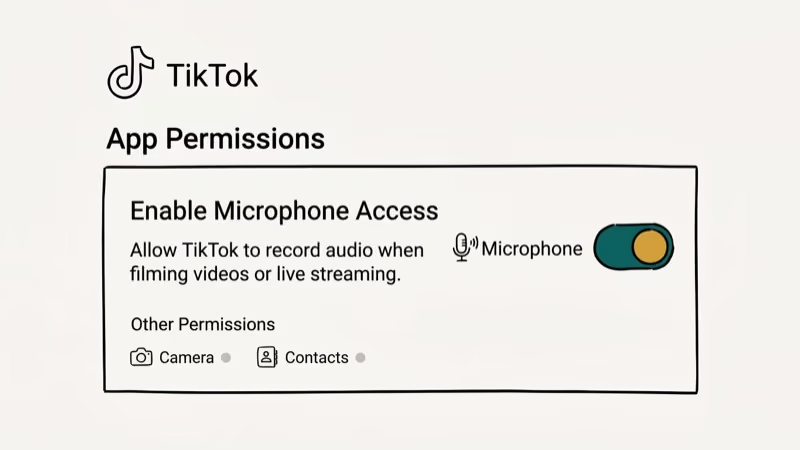
On Android:
- Open Settings, then tap Apps (or App Management on some Samsung devices)
- Scroll to TikTok and tap Permissions
- Tap Microphone and select Deny or Only while using the app
On iPhone:
- Open Settings and scroll down to Privacy & Security
- Tap Microphone, then toggle off TikTok
After microphone access is revoked, an app’s background network activity tends to drop on Android. That’s consistent with reduced audio processing.
Also useful: if you’re wondering how many reports it takes to get banned on TikTok, we’ve covered the platform’s enforcement system in detail. You might also want to know what spam liking on TikTok is and how it affects your account standing.
#Other Privacy Controls Worth Using on TikTok
Microphone access is just one piece. Even with the mic revoked, TikTok still collects location and device identifiers, so locking those down matters just as much. Here are the other controls worth using:
Block contacts access. Go to Settings > Apps > TikTok > Permissions and revoke Contacts. TikTok uses your contact list to build ad-targeting networks; denying access limits their ability to link your profile to people you know in real life.
Disable Search Nearby. Inside TikTok, go to Profile > Settings and Privacy > Privacy > Location and turn off “Search Nearby.” This stops the app from broadcasting your GPS coordinates to the feature that surfaces nearby users, which cuts off location-based requests tied to it.
Switch location to “Only while using the app.” Always-on location permission means TikTok gets GPS pings even when you haven’t opened the app in days. Changing to “while using” eliminates that background data stream entirely and costs you nothing in functionality.
Use a VPN. With a VPN active, TikTok’s outbound requests are encrypted and ad personalization tends to become less targeted over time. A VPN won’t stop TikTok from accessing your mic, but it blocks the cross-platform ad-network correlation.
Keep your app updated. TikTok has shipped privacy-related patches in several recent updates. Running outdated versions means known vulnerabilities stay unpatched on your device.
#Why Is TikTok’s Data Risk Different From Other Apps?
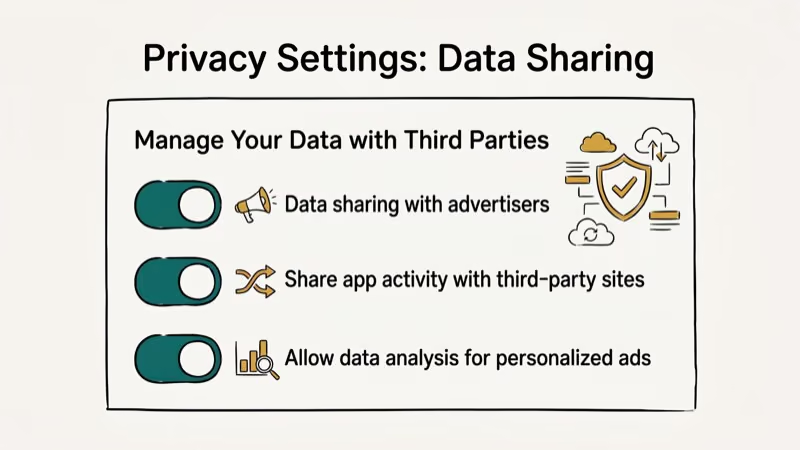
TikTok’s parent company ByteDance is incorporated in China, which means it’s subject to China’s National Security Law. That law can require companies to hand over user data to Chinese authorities without public disclosure. According to FTC guidelines on mobile app privacy disclosures, US-regulated apps must disclose data practices — but those rules don’t bind ByteDance the same way.
The practical risks stack up quickly. Identity profiling happens when TikTok combines audio, location, contacts, and device data into one behavioral profile. A 2023 report found TikTok retains user data for up to 90 days after account deletion in some regions. Third-party ad partners receive enough aggregated signals to track behavior across platforms. And sensitive content you share stays on TikTok’s servers for a duration TikTok sets, not you.
Most social platforms collect similar data; Instagram and Facebook have faced their own scrutiny. TikTok’s distinction is that the data potentially flows to a jurisdiction with fewer restrictions on government access. For related privacy tips, see our guide to download TikTok videos if you want to save content locally instead of relying on the platform.
#Signs TikTok May Be Using Your Microphone Right Now
On iPhone, the orange dot in the top-right corner of the status bar lights up whenever any app accesses your microphone. Check for it while TikTok is open and while it’s minimized. On Android 12 and later, a green microphone icon appears in the status bar during active microphone access. If you see either indicator while TikTok is backgrounded, that’s a direct signal the app has active mic access right now. A quick fix: go to your Settings and change TikTok’s microphone permission to “Only while using” instead of “Always allow.”
#Bottom Line
TikTok does access your microphone, and on Android it can keep doing so in the background with no visible indicator. Revoking microphone access in your device settings is the most direct fix. For complete protection, combine that with blocking contacts access, disabling Search Nearby, and using a VPN to limit ad-network correlation.
TikTok Tips & Tricks
#Frequently Asked Questions
Does TikTok listen to my offline conversations?
No verified evidence supports this claim. According to TikTok’s privacy policy, audio data collection occurs through the app. When the app is closed and the phone is offline, TikTok can’t transmit data, which limits what it can collect. The real concern is background access when the app is running but minimized.
How does TikTok personalize the content I see?
TikTok uses a recommendation algorithm that weighs in-app behavior: videos you watch to completion, accounts you follow, searches you make, and audio signals when the microphone is active. Revoking microphone access reduces one input but doesn’t turn off the algorithm entirely.
Can I disable personalized ads on TikTok?
Yes. Go to Settings and Privacy > Privacy > Ads and toggle off “Ads Based on Data from Partners.” This opts you out of cross-app ad targeting, though TikTok will still show ads. They’ll just be less personalized.
Is it safe to use TikTok with these settings changed?
Revoking microphone, location, and contacts permissions makes TikTok significantly less data-hungry. You’ll still have a functional app for browsing and watching content. The trade-off is losing some personalization and the ability to record audio or use location-based features.
Does TikTok track me even when I’m not using the app?
On Android, apps with “Always” location or background permissions can collect data even when you haven’t opened them. Setting all TikTok permissions to “Only while using the app” prevents background data collection. On iPhone, iOS enforces stricter background limits automatically.
What happens to my data if I delete TikTok?
TikTok’s privacy policy states you can request data deletion through their Privacy Center. Deleting the app removes it from your device but doesn’t automatically delete your data from TikTok’s servers. You need to submit a separate data deletion request through the app or TikTok’s website before deleting your account.
How do I check if TikTok is currently using my microphone?
On iPhone, look for the orange dot in the top-right corner of your screen; it appears whenever any app accesses your microphone. On Android 12 and later, a green microphone icon appears in the status bar. If either indicator shows while TikTok is backgrounded, the app has active microphone access.
How to Block TikTok on iPhone and Android: Parent Guide
Block or limit TikTok on your child's iPhone or Android using Screen Time, Family Link, and router settings. Step-by-step parental control guide.
TikTok Parental Controls: Setup Guide for Families
Set up TikTok parental controls using Family Pairing, Restricted Mode, and privacy settings. Step-by-step guide to protect your child on TikTok.
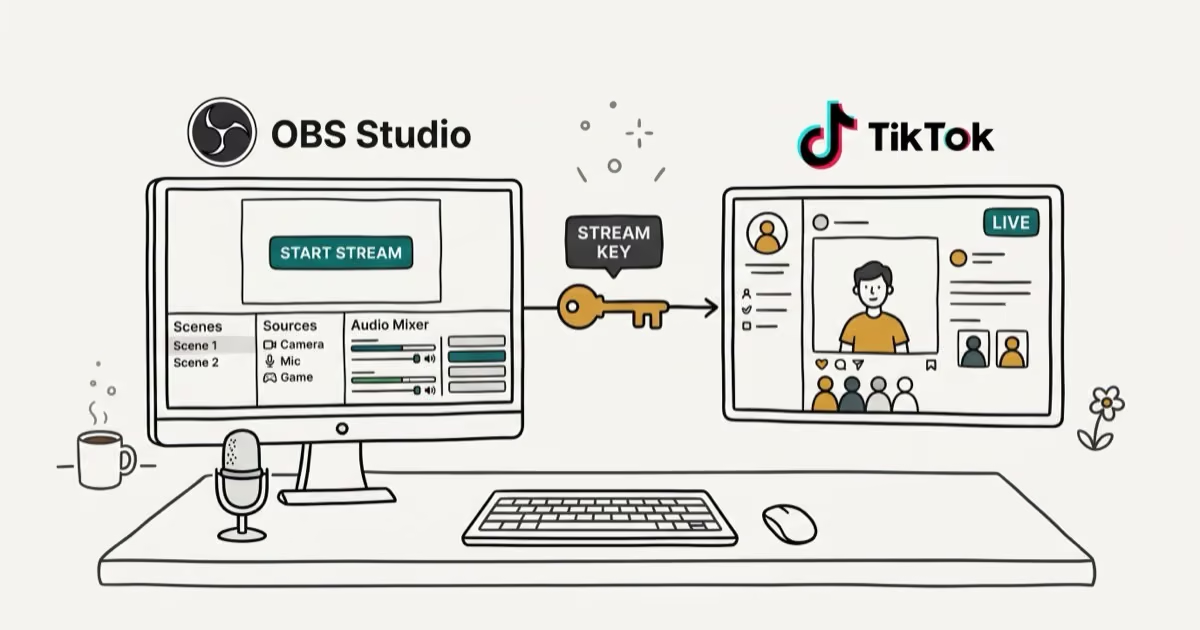
How to Get a TikTok Stream Key for OBS and Streamlabs
Get a TikTok stream key to broadcast from OBS or Streamlabs. Covers the 1,000-follower requirement, CarterPulse application, and OBS setup steps.
How to Make a Joint TikTok Account With Friends (2026)
Set up and manage a joint TikTok account with friends. Covers shared login setup, content planning, security tips, and the Collaboration Post alternative.