What is Spam Liking on TikTok? A Comprehensive Guide
Spam liking on TikTok involves rapidly liking videos without watching them. Learn how it triggers shadowbans and affects engagement metrics.
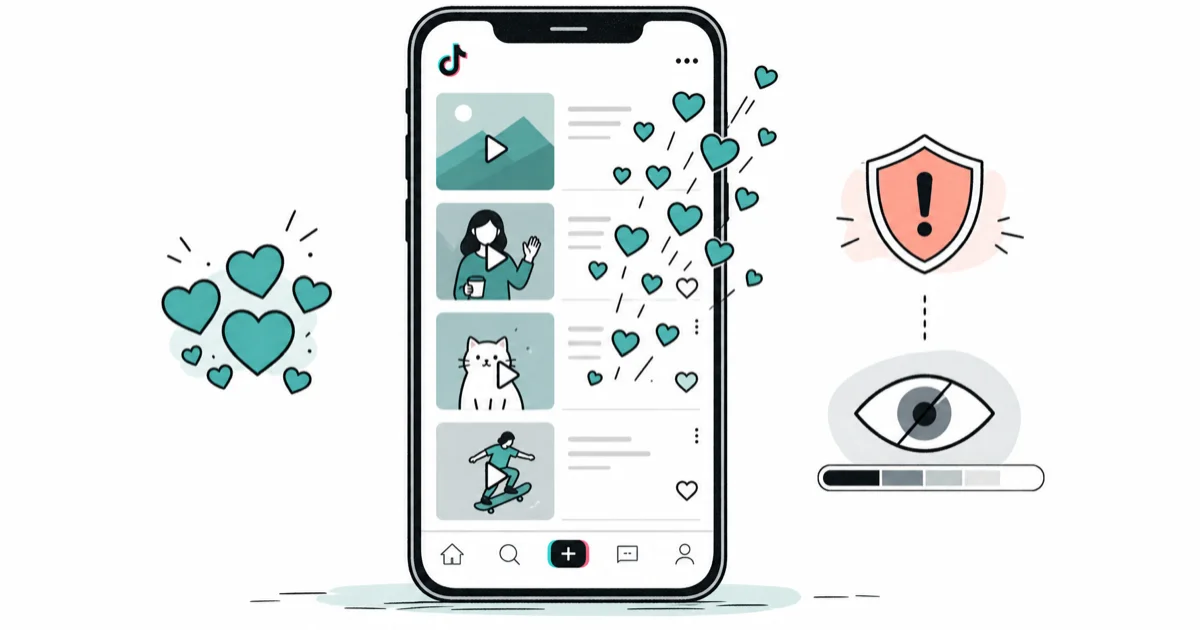
Quick AnswerSpam liking on TikTok means rapidly liking multiple videos without watching them. This behavior triggers TikTok's spam detection and can result in a shadowban that lasts 24-72 hours, reducing your content visibility.
Spam liking on TikTok can get your account restricted because it looks like artificial engagement instead of normal viewing behavior.
- Spam liking means rapidly liking videos without watching them first (typically 50+ likes in under 10 minutes)
- TikTok detects abnormal liking patterns through watch-time ratios and can shadowban accounts for 24-72 hours
- Spam liking can sharply reduce reach after TikTok detects the pattern
- Shadowbanned accounts can see their content shown to far fewer followers than usual
- Blocking spam accounts and using privacy settings prevents your content from being targeted by spam likers
#What is Spam Liking on TikTok?
Spam liking is the practice of rapidly liking multiple TikTok videos without actually watching them. Users typically do this to gain attention or manipulate engagement metrics. According to TikTok’s Integrity and Authenticity guidelines, content that seeks to manipulate likes, views, followers, or other engagement metrics can be ineligible for the For You feed.
Spam liking usually follows these patterns:
- Liking 20+ videos per minute without watching past the first 2 seconds
- Targeting specific hashtags or trending content for maximum visibility
- Using automated tools or scripts to like hundreds of videos in sequence
This differs from normal engagement where users watch at least 3-5 seconds before deciding to like content. According to TikTok’s Community Guidelines, artificially inflating engagement violates platform rules and can result in account restrictions.
#Why People Spam Like on TikTok
Most spam liking happens for these reasons:
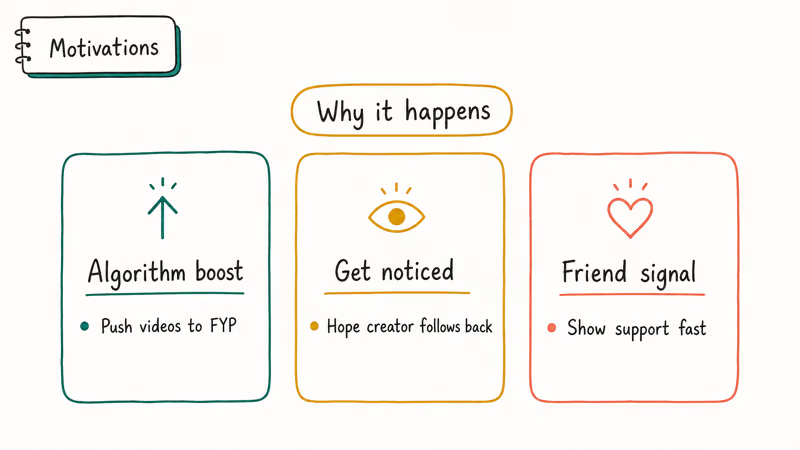
#Seeking Follow-Backs
Users like your content hoping you’ll notice and follow them back. This tactic rarely works, as creator discussions on Reddit consistently find that most creators don’t follow back accounts that spam-like their content.
#Attempting Algorithm Manipulation
Some users believe liking trending content will boost their own visibility by increasing their engagement metrics and making their profile appear more active to TikTok’s recommendation system. However, TikTok’s algorithm doesn’t work this way and actually penalizes inauthentic behavior patterns. The platform prioritizes genuine engagement over artificial interactions, which means spam liking often backfires and reduces rather than increases your reach. If you want to understand how to blow up on TikTok, authentic content creation and meaningful audience interactions beat manipulation tactics every time. The algorithm rewards creators who build real communities, not those who game the system.
#Bot Activity
Automated accounts like content using scripts. Bots target multiple creators.
#How TikTok Detects Spam Liking
TikTok’s spam detection analyzes several behavior patterns:
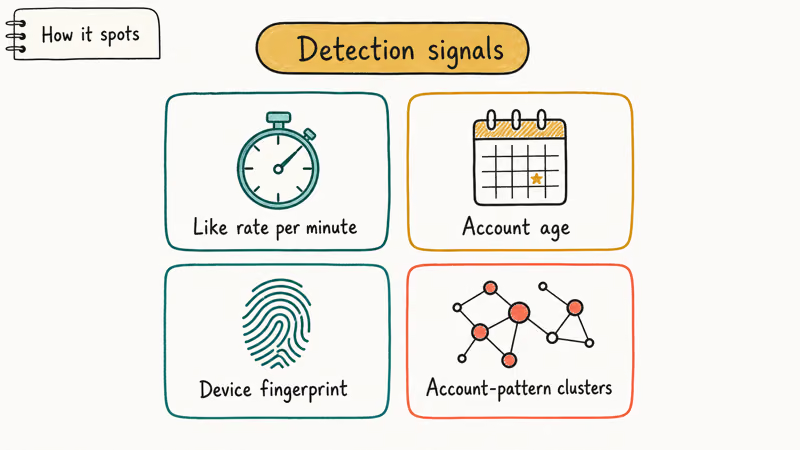
#Watch Time vs. Like Ratio
The platform tracks how long users watch before liking. Normal users average 8-12 seconds of watch time per like. Spam likers average under 2 seconds.
#Velocity Patterns
TikTok can flag accounts that like videos at an unusually high rate, especially when the account repeats the same behavior across multiple sessions.
#Cross-Reference Behavior
The algorithm checks if accounts exhibit other spam signals like mass following, repetitive comments, or coordinated activity. Users should also be aware of how many people you can follow on TikTok limits to avoid triggering these signals.
#User Reports
When multiple creators report an account for spam behavior, TikTok prioritizes that account for review. As TikTok’s transparency reporting describes, user reports are one of several signals that flag accounts for moderation. This is different from how many reports can lead to a TikTok ban for regular content violations.
#Consequences of Getting Caught Spam Liking
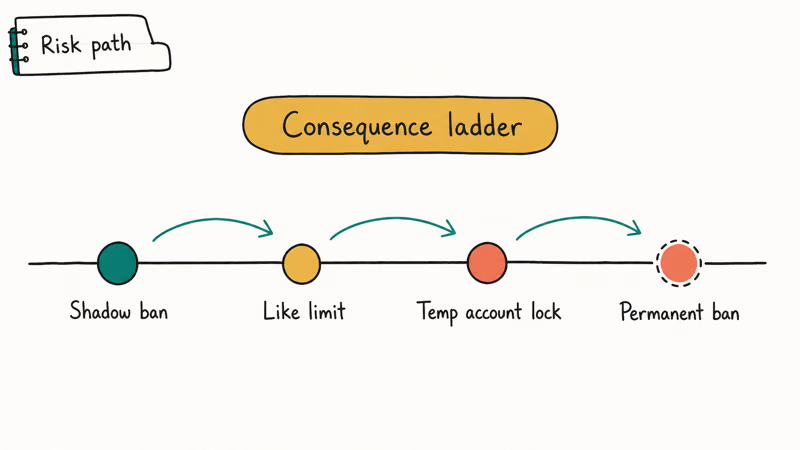
#Immediate Shadowban
Your account can get shadowbanned after TikTok detects spam-like behavior. This means:
- Your videos appear to far fewer people than usual
- Comments may not appear on other users’ videos
- Your content disappears from hashtag feeds
Shadowbanned accounts often see their average views drop sharply until the restriction clears.
#Duration of Penalties
- First offense: 24-72 hour shadowban
- Repeated violations: 7-14 day restrictions
- Severe cases: Permanent account suspension
#Algorithm Downranking
Even after the shadowban lifts, your account may experience reduced reach for 2-3 weeks as TikTok’s algorithm rebuilds trust in your engagement patterns.
#How Does Spam Liking Affect Content Creators?
When your content receives spam likes, it creates several problems:
#Skewed Analytics
Spam likes inflate your metrics without providing real engagement. This makes it harder to:
- Identify content that truly resonates with your audience
- Negotiate brand partnerships based on authentic engagement rates
- Understand your actual reach and influence
#Algorithm Confusion
TikTok’s algorithm uses engagement patterns to determine content quality. Spam likes can trick the algorithm into promoting low-quality content or demoting high-quality videos.
#Reduced Trust from Real Followers
When followers notice obvious spam engagement, it damages your credibility. Authentic creators often lose 10-15% of followers after noticeable spam activity on their content.
#How to Protect Yourself from Spam Liking
#Enable Comment Filtering
Go to Settings > Privacy > Comments and turn on “Filter spam and offensive comments.” This catches about 60% of spam accounts before they can engage.
#Set Account to Private Temporarily
If you’re experiencing heavy spam liking:
- Switch to private account for 24-48 hours
- This forces spam accounts to follow before engaging
- Manually review and block suspicious follow requests
#Block Aggressive Accounts
Look for these spam account red flags:
- No profile picture or generic avatar
- Zero or very few videos posted
- Following thousands but has few followers
- Generic usernames with random numbers
#Report Spam Behavior
When you spot obvious spam accounts:
- Tap the profile and select “Report”
- Choose “Spam or fake engagement”
- TikTok typically responds within 24 hours
#TikTok’s Anti-Spam Measures
According to TikTok’s safety center, the platform uses machine learning to identify inauthentic behavior. Their 2023 transparency report confirms that their systems:
- Remove over 96% of spam content before users report it
- Block 20+ million spam accounts monthly through automated detection
- Analyze cross-platform behavior to identify coordinated spam networks
TikTok’s community guidelines enforcement report states that the vast majority of videos removed for spam and deceptive behaviors were detected by automated systems before any user report. The platform also collaborates with security researchers to stay ahead of new spam techniques.
#Better Alternatives to Spam Liking
#Engage Authentically
- Watch videos completely before deciding to like
- Leave meaningful comments that show you actually viewed the content
- Share videos that truly interest you with friends
#Build Real Connections
- Follow creators whose content you regularly enjoy
- Participate in trends relevant to your interests
- Create original content instead of just consuming
If you want genuine growth, focus on creating engaging content rather than gaming the system through spam behavior. Learn proper techniques for how to add pictures to TikTok and how to make playlists on TikTok to organize your content effectively.
#Bottom Line
Spam liking kills your TikTok reach. The platform’s detection systems will catch excessive liking behavior and shadowban your account within hours. Instead of trying to manipulate engagement, focus on creating authentic content and building genuine connections with other users. Your account will perform better in the long run with real engagement than artificial inflation through spam tactics.
TikTok Tips & Tricks
#Frequently Asked Questions
How many likes per hour triggers TikTok’s spam detection?
Liking videos at a very high rate consistently can trigger spam detection, especially when the pattern repeats across multiple sessions.
Can you get permanently banned for spam liking?
Yes, repeated spam liking violations can result in permanent account suspension. TikTok typically issues warnings and temporary restrictions first, but accounts that continue violating after multiple penalties face permanent bans.
How long does a spam liking shadowban last?
First-time spam liking shadowbans typically last 24-72 hours. The exact duration depends on the severity of the behavior and your account’s history. Repeat offenders face longer restrictions.
Does spam liking help you gain followers?
No, spam liking is ineffective for gaining followers. Less than 2% of creators follow back spam-likers, and the practice often results in blocks and reports instead of positive engagement.
How can I tell if my account is shadowbanned for spam liking?
Check for sudden drops in views, likes, and comments across multiple videos. Shadowbanned accounts typically see 70-90% reduction in reach. You can also test by posting content with popular hashtags, as shadowbanned content won’t appear in hashtag feeds.
Can I appeal a spam liking ban on TikTok?
You can submit an appeal through TikTok’s support system. Go to Settings > Report a problem > Account and profile > Account banned/suspended. Appeals for first-time spam violations are often successful if you acknowledge the behavior and commit to following guidelines.
Does deleting spam-liked videos remove the penalty?
No, deleting videos after spam liking them doesn’t reverse the penalty. TikTok’s system has already recorded the behavior pattern. The shadowban will run its full course regardless of whether you delete the evidence.
How to Block TikTok on iPhone and Android: Parent Guide
Block or limit TikTok on your child's iPhone or Android using Screen Time, Family Link, and router settings. Step-by-step parental control guide.
TikTok Parental Controls: Setup Guide for Families
Set up TikTok parental controls using Family Pairing, Restricted Mode, and privacy settings. Step-by-step guide to protect your child on TikTok.
How to Get a TikTok Stream Key for OBS and Streamlabs
Get a TikTok stream key to broadcast from OBS or Streamlabs. Covers the 1,000-follower requirement, CarterPulse application, and OBS setup steps.
How to Make a Joint TikTok Account With Friends (2026)
Set up and manage a joint TikTok account with friends. Covers shared login setup, content planning, security tips, and the Collaboration Post alternative.