How to Convert VCE to PDF: Three Free Methods in 2026
Convert VCE exam files to PDF using VCE Designer, free PDF printers, and online tools. Step-by-step guide for IT certification study materials.
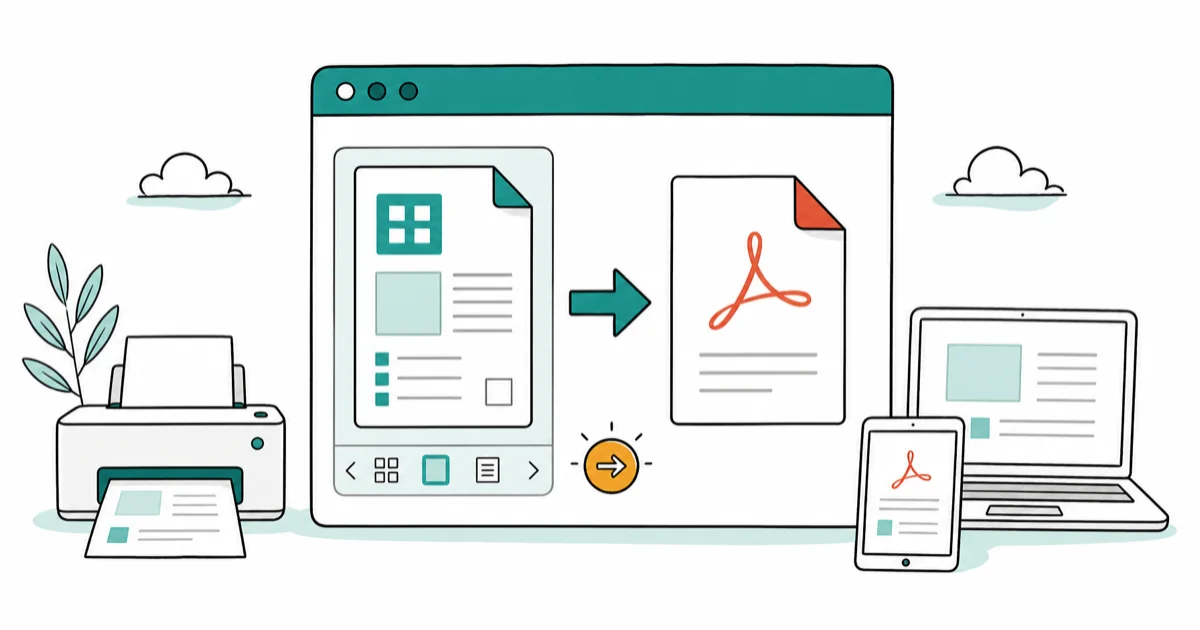
Quick AnswerOpen your VCE file in VCE Designer, go to File > Print, select Microsoft Print to PDF as the printer, and click Print. This converts the VCE content to a PDF file you can read on any device without VCE software.
VCE files only open in Avanset’s proprietary software, which means you can’t share them with study partners using different platforms or read them offline on a tablet. Converting to PDF solves that. There are three reliable methods on Windows, and one of them requires zero additional software.
- The fastest method is printing from VCE Designer to Microsoft Print to PDF, which is built into Windows 10 and 11
- Free virtual PDF printers like CutePDF work on Windows 7 and earlier that lack the built-in PDF printer
- Online converters handle the job without any software installation, but check file size limits before uploading
- PDF conversion removes interactive exam features like scoring and answer checking, leaving only question text
- VCE files from unofficial sources may violate exam provider terms of service, so use legally obtained materials only
#What VCE Files Are and Why Conversion Helps
VCE (Visual CertExam) is a proprietary file format created by Avanset for IT certification exam simulation. According to Wikipedia’s overview of the PDF format, PDF supports over 1,000 pages of content with embedded fonts and images, and over 2 billion documents in PDF format are created each year worldwide. VCE files contain exam questions, answer choices, explanations, and simulation settings designed to replicate real certification test conditions.
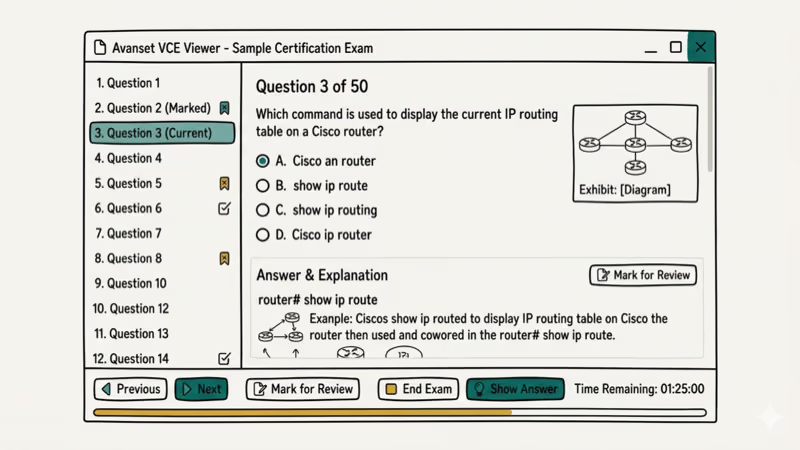
The problem: VCE files only open in Visual CertExam Suite, which costs $49.95 for a single license. If you want to share study materials with someone who doesn’t have the software, or study on an iPad, Kindle, or Android tablet, you’re stuck. PDF solves this because it opens on every platform for free. A 200-question VCE practice exam typically converts to a 15-25 MB PDF that you can annotate, search, and print.
The trade-off is that PDF loses the interactive simulation. Answer scoring, timer functions, and randomized question order don’t transfer. You get a flat document with questions and explanations, useful for reading and reviewing but not for timed practice tests.
#How to Convert VCE to PDF Using Windows Print to PDF
This method works on any Windows 10 or 11 machine without downloading anything extra, using VCE Designer’s built-in print dialog.
- Install VCE Designer from avanset.com. The free trial lets you open and print VCE files.
- Open your VCE file in VCE Designer.
- Go to
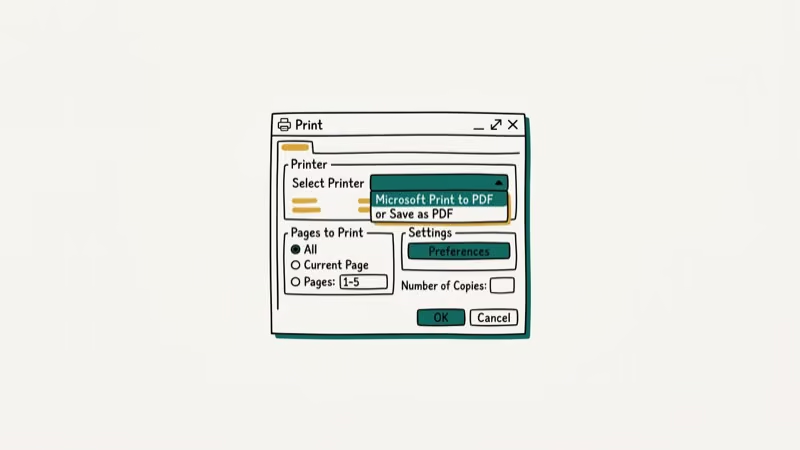
File>Print. - Select Microsoft Print to PDF from the printer dropdown.
- Set Pages to All.
- Click Print.
- Choose a save location and filename.
Even with a large multi-question VCE file, this method produces a clean PDF that preserves all question text and images. Microsoft’s documentation confirms that Print to PDF in Windows 10 and 11 supports output resolutions up to 2400 DPI, which is more than enough for text-heavy exam documents.
On Windows 7 or earlier: Microsoft Print to PDF doesn’t exist. Download and install CutePDF Writer (free, from cutepdf.com) or doPDF (free, from dopdf.com). Both appear as printers in Windows after installation; use them the same way as described above.
On Mac: VCE Designer is Windows-only. Use the online converter method described below, or run VCE Designer through a Windows virtual machine.
#VCE Exam Simulator and PDF Export Options
No, not as a direct export option. VCE Exam Simulator (the companion product to VCE Designer) focuses on test simulation and doesn’t include a PDF export button. The print-to-PDF method still works through VCE Exam Simulator’s print dialog if you need to export from that application. Avanset’s product page states that VCE Exam Simulator supports over 100,000 exam questions across 1,000 IT certification vendors in its current catalog.
Avanset’s suite includes two applications: VCE Designer for creating and editing VCE files, and VCE Exam Simulator for taking practice tests. Both support printing via Windows print dialog, so either one works for the PDF conversion.
#Which Online Tools Convert VCE to PDF for Free?
Online converters handle VCE to PDF without any software installation. This is the best option for Mac users or anyone who needs a quick conversion without setting up desktop software.
Three options that work with VCE files:
pdfFiller is the most straightforward option for VCE conversion. It supports VCE files up to 25 MB, processes the upload in under 30 seconds, and produces clean PDF output with all question text intact. The free tier allows 5 conversions per day without requiring a credit card.
DocHub handles VCE files. 1 GB upload limit.
Smallpdf handles VCE through its File Converter tool. Free users get 2 conversions per hour with no registration needed.
Privacy note: These services upload your file to external servers. VCE files from certification exams may contain licensed content. For proprietary exam materials, use the local Windows print method instead.
#What Information Is Lost During VCE to PDF Conversion?
The PDF preserves all static content but loses interactive features. Between a VCE file and its converted PDF, the question text, all answer choices, embedded images, and explanations carry over intact.
What doesn’t survive: correct answer indicators (unless you enable Study Mode), interactive scoring and pass/fail calculation, randomization settings, timers, and section navigation. The PDF is a flat reading document.
If you need to share study materials with correct answers visible, open the VCE file in VCE Designer and switch to Study Mode before printing to PDF. Study Mode marks correct answers, so they appear in the converted document. This is the single most useful setting to enable before conversion if you’re creating a review guide rather than a practice test.
#VCE to PDF Conversion on Mac and Linux
VCE Designer is Windows-only. Mac and Linux users have two paths: use an online converter, or run Windows inside a virtual machine.
Online converter (easiest): Any of the three online tools listed above work in a Mac or Linux browser without any Windows software. Upload the VCE file, download the PDF.
Virtual machine (most control): Install VirtualBox (free) or VMware Fusion on your Mac, then run Windows inside it. Install VCE Designer in the Windows VM and use the Print to PDF method for the cleanest output. This takes more setup time but gives you the same result as a native Windows installation. The print-to-PDF workflow works identically inside a VM.
#Bottom Line
The Windows Print to PDF method is the fastest and most reliable option. It requires VCE Designer (free trial is enough for printing) and works in under 30 seconds for most files. Online converters work well for Mac users or one-off conversions. Skip premium PDF conversion tools; there’s no benefit over the free print method for this task.
For other PDF-related conversions, see our guides on converting ODT to PDF and converting TIFF to PDF.
If you need to work with the PDF after conversion, our guide on removing signatures from PDF files covers editing options. You can also insert the converted PDF into a Word document to combine exam materials with study notes.
For ebook-format study guides, see how to convert ACSM files to PDF for a workflow that handles DRM-protected reading material.
#Frequently Asked Questions
Can I convert VCE to PDF without VCE software?
Yes, using online converters like pdfFiller or DocHub. These services accept VCE file uploads and return a PDF download without requiring any installed software. For Mac users who can’t run VCE Designer, online converters are the only option aside from running Windows in a virtual machine.
Does converting VCE to PDF show the correct answers?
Only if you set VCE Designer to Study Mode before printing. In normal mode, the PDF shows questions and all answer choices but doesn’t highlight which answers are correct. In Study Mode, correct answers are marked, so the PDF includes that information when you print.
Is it legal to convert VCE files to PDF?
It depends on the source of your VCE files and your intended use. VCE files you created yourself or obtained from legitimate sources can be converted for personal use. Converting and distributing official exam content from test providers like CompTIA, Cisco, or Microsoft typically violates their terms of service and may infringe copyright. Use converted PDFs for personal study only.
What’s the best free PDF printer for Windows?
Microsoft Print to PDF, built into Windows 10 and 11, is the best free option because it requires no installation and produces clean output. For older Windows versions, CutePDF Writer and doPDF are both reliable free alternatives that work the same way through the Windows print dialog.
Why does my converted PDF look different from the VCE file?
Page margins and layout settings affect the output. In VCE Designer’s print dialog, adjust the page size to match your screen orientation and set margins to minimum before printing. Landscape orientation often produces better results for wide exam question layouts. If text is cut off, reduce the scale setting in the print dialog to 90% or lower.
Can I convert VCE to PDF on Android or iPhone?
Not directly. VCE Exam Simulator has mobile apps, but they don’t include a print or export function. The only mobile-compatible option is using an online converter through your phone’s browser. Upload the VCE file from cloud storage, convert online, and download the PDF to your device.
How large is a typical VCE to PDF conversion?
Size varies by content. A 100-question VCE file with text-only questions typically converts to a 3-6 MB PDF. VCE files with embedded images for network diagrams or screenshots convert to 10-30 MB PDFs. The original VCE file is always smaller than the resulting PDF because VCE uses compressed internal storage.