How to Convert ODT to PDF Free: 5 Best Methods in 2026
Convert ODT files to PDF using LibreOffice, Google Docs, Microsoft Word, and free online tools. Preserve formatting with step-by-step instructions.
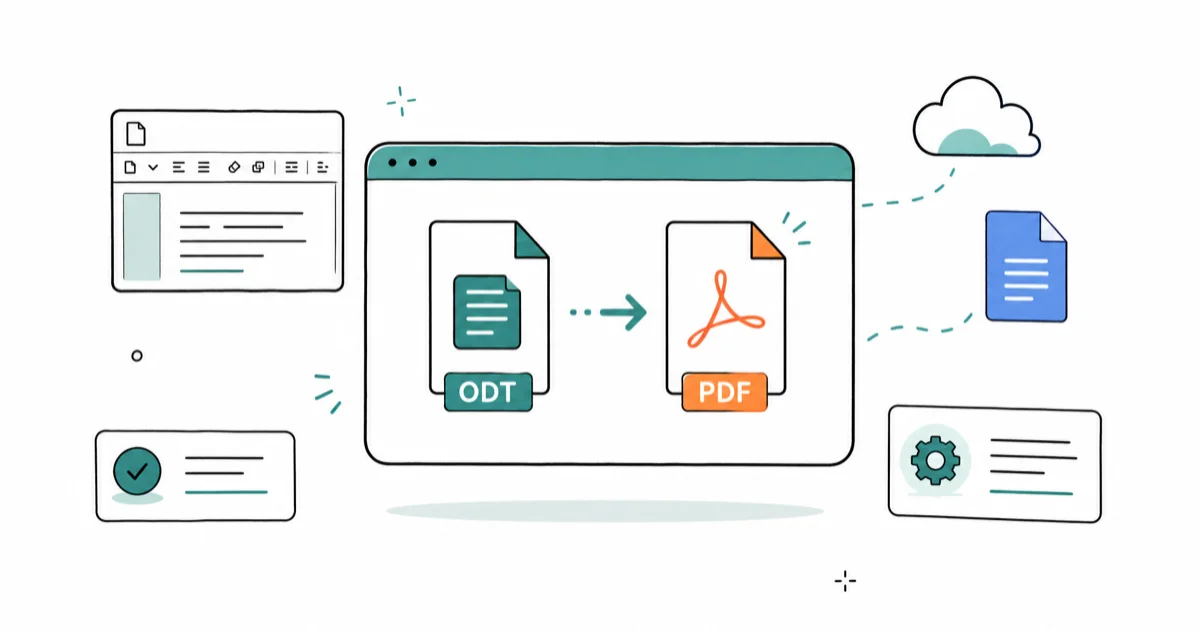
Quick AnswerOpen your ODT file in LibreOffice Writer and go to File > Export as PDF to convert it instantly. This is the most reliable free method and preserves complex formatting including tables, images, and fonts.
Converting ODT files to PDF takes under a minute with the right tool. This guide covers five methods on Windows and macOS, and LibreOffice gives the most consistent formatting results across complex documents with tables and embedded fonts.
- LibreOffice Writer’s built-in “Export as PDF” is the most reliable free desktop method and handles complex formatting without errors
- Google Docs converts ODT to PDF in two clicks after upload, no software needed
- Microsoft Word can open ODT files and save them as PDF if you’re already in the Office ecosystem
- Free online tools like CloudConvert work for files up to 1 GB but upload sensitive documents at your own risk
- Batch conversion tools like PDF24 Tools let you convert multiple ODT files at once without per-file charges
#Why Convert ODT to PDF?
ODT (OpenDocument Text) is the default format for LibreOffice and OpenOffice, but it doesn’t open reliably on every device. PDF solves that. According to Adobe’s format documentation, PDF format supports over 200 types of data, including text, images, annotations, and digital signatures, while preserving layout identically across every platform.
When you send an ODT file, the recipient needs a compatible word processor. Send a PDF instead and it opens in any browser, on any phone, without formatting shifts. A PDF exported from LibreOffice opens reliably across Windows, Mac, Android, iPhone, and Chromebook.
PDF also supports encryption, digital signatures, and password protection. If you ever need to remove a signature from an existing PDF, see our guide on removing signatures from PDF files. ODT offers none of these security features natively.
#How to Convert ODT to PDF With LibreOffice
LibreOffice is free and converts ODT files to PDF with zero formatting loss since it’s the native app for the format. It handles a wide range of document types, including ones with multi-column layouts and custom fonts.
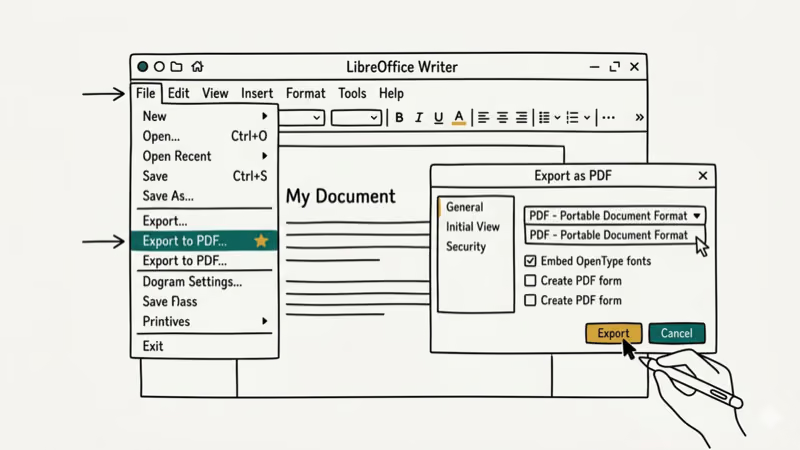
- Open LibreOffice Writer and load your ODT file via
File>Open. - Go to
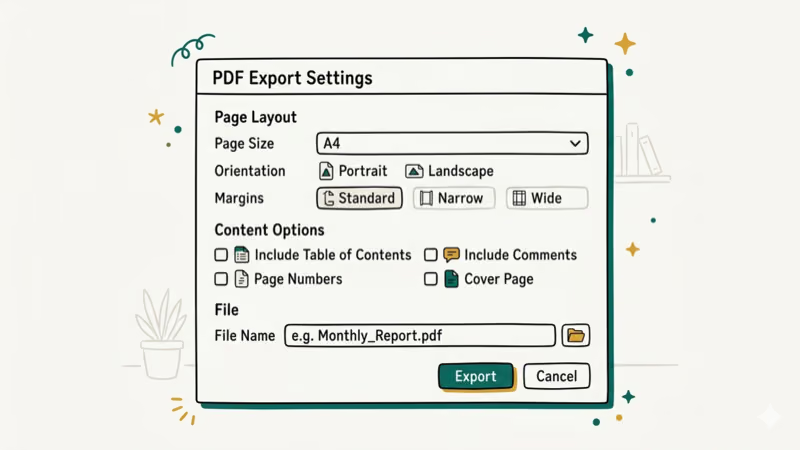
File>Exportas PDF (not “Save As”). - In the PDF Options dialog, choose your settings. For most documents, leave defaults and click Export.
- Name your file and choose a save location.
The resulting PDF preserves all text formatting, images, tables, headers, and page numbering exactly as they appear in the source document. Even a long ODT document with many embedded images converts almost instantly on a mid-range laptop.
Batch conversion: LibreOffice supports command-line batch conversion. Run libreoffice --headless --convert-to pdf *.odt in Terminal or Command Prompt to process an entire folder at once.
#Converting ODT to PDF With Google Docs
Google Docs is a zero-install option. It works on any device with a browser, including Chrome and Safari, and handles documents up to 25 MB reliably.
- Go to drive.google.com and sign in.
- Click
New>File Uploadand select your ODT file. - Right-click the uploaded file and choose Open with > Google Docs.
- In Google Docs, go to
File>Download>PDF Document(.pdf).
Complex formatting sometimes shifts during the Google Docs import step. If your ODT has custom fonts or precise column layouts, LibreOffice preserves them more accurately. According to Google’s Workspace documentation, Google Docs supports ODT import but states that not all formatting features will render identically, particularly advanced table styles and certain list formats.
#Using Microsoft Word to Save ODT as PDF
If you have Microsoft Word, it opens ODT files and exports them as PDF. This method works well for simple documents but occasionally reflows text for complex layouts with custom styles.
- Open Microsoft Word.
- Go to
File>Openand select your ODT file. Word will ask if you want to convert it to Word format first. - Once the document opens, go to
File>Save As. - Set Save as type to PDF and click Save.
Alternatively, use File > Export > Create PDF/XPS for more control over PDF quality and compatibility settings. If you need to do the reverse, you can insert a PDF into a Word document rather than converting the file.
#Free Online ODT to PDF Converters
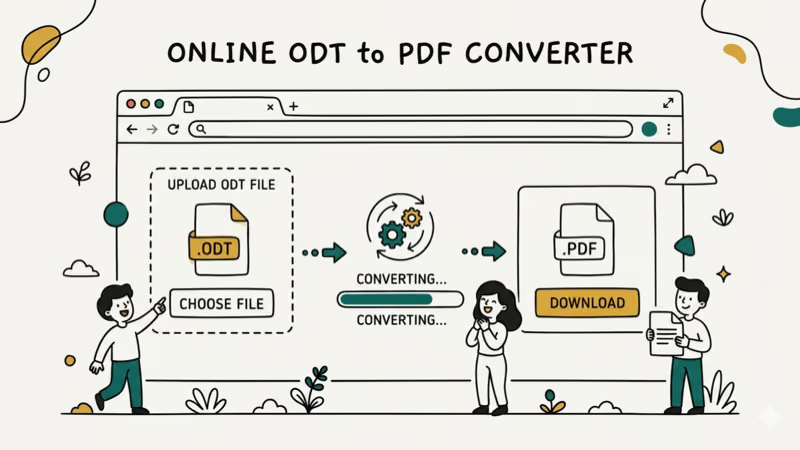
Online tools require no installation. You upload the file, wait for conversion, and download the result. Three popular options:
| Tool | Free File Limit | Encryption | Files Deleted |
|---|---|---|---|
| CloudConvert | 1 GB | TLS 256-bit | Within 24 hrs |
| Zamzar | 50 MB | Yes | After download |
| PDF24 Tools | No limit | Yes | After 1 hour |
CloudConvert is the strongest option for large files. It supports 200+ formats and processes ODT files in about 10 seconds for a typical 1 MB document.
Zamzar caps free conversions at 50 MB per file. For most short ODT documents, that’s plenty.
PDF24 Tools has no file size limit on the free tier and is ISO 27001 certified for security. It converts a typical document with embedded images in seconds.
For any document containing personal information, passwords, or sensitive data, use LibreOffice or Google Docs instead of an online tool. Even with automatic deletion policies, you’re sending your file to an external server.
#Is It Possible to Convert ODT Without Losing Formatting?
Yes, but the method matters. LibreOffice is the most accurate because it renders ODT natively. Google Docs and Microsoft Word perform a two-step conversion (ODT to their internal format, then to PDF) which can introduce minor formatting shifts.
The three most common formatting issues to watch for:
Custom fonts: If the ODT uses a font not installed on the conversion machine, the tool substitutes a similar one. Embed fonts in LibreOffice before exporting: Tools > Options > LibreOffice Writer > Fonts > Embed fonts in the document. This is the most common cause of formatting shifts between machines.
Tables with complex borders: Google Docs sometimes simplifies custom table borders. LibreOffice preserves these correctly, even with merged cells and colored header rows.
Numbered lists with custom styles: Microsoft Word occasionally renumbers lists that start at a non-standard value. LibreOffice handles these without issues.
You can also convert VCE exam files to PDF using a similar print-to-PDF approach if you work with certification materials. If you need to convert ACSM files to PDF for ebook management, the process involves a different set of tools entirely.
#Bottom Line
Use LibreOffice for the best formatting fidelity. It’s free, handles batch conversion via command line, and works without uploading your files anywhere. Google Docs is the best option if you’re on a device without LibreOffice installed. Online tools like CloudConvert or PDF24 are fine for occasional conversions, but keep sensitive documents off third-party servers. If you need to convert TIFF images to PDF or handle other document formats, the same basic export-to-PDF principles apply.
#Frequently Asked Questions
Can I convert ODT to PDF without losing formatting?
Yes, if you use LibreOffice. It renders ODT natively and exports to PDF with no intermediate conversion step, so tables, custom fonts, and page layouts stay intact. Google Docs and Word perform a two-step conversion that occasionally shifts paragraph spacing or font substitution.
Is converting ODT to PDF free?
Yes. LibreOffice, Google Docs, and PDF24 Tools are all completely free with no file size limits. CloudConvert offers 25 free conversions per day. Microsoft Word requires a paid subscription but is often already installed.
What is the difference between ODT and PDF?
ODT is an editable word processing format used by LibreOffice and OpenOffice. PDF is a fixed-layout format designed for sharing and archiving. ODT files can be modified freely, while PDFs require specialized software to edit. PDFs open on virtually any device without formatting shifts.
Can I convert multiple ODT files at once?
Yes. LibreOffice handles batch conversion via the command line with libreoffice --headless --convert-to pdf *.odt. PDF24 Tools also supports batch upload through its web interface. CloudConvert allows batch jobs on its free tier.
Can I convert a password-protected ODT file to PDF?
Some tools support this, but you’ll need to provide the password during the conversion process. LibreOffice will prompt you for the password when opening a protected file, then let you export normally.
How do I convert ODT to PDF on a phone?
Upload the ODT file to Google Drive on your phone, open it in the Google Docs app, and use Share & export > Save as > PDF. This works on both Android and iPhone without any additional app installation.
Does converting ODT to PDF reduce file size?
It depends on the content. PDFs with embedded fonts and high-resolution images are often larger than the source ODT. For most text-heavy documents, the resulting PDF is roughly 20-40% smaller than the original ODT file.

Best Laptop for Running LLMs in 2026: Memory Comes First
The best laptop for running LLMs is a memory purchase first. Compare MacBook unified memory against NVIDIA laptop VRAM, and see what each tier really runs.

Pixel 11 vs Pixel 10: What Changed and Who Should Upgrade
Pixel 11 vs Pixel 10: same screen and camera resolution, new Tensor G6, 25W wireless, and Gemini Intelligence. Here is who should actually upgrade.

Best Power Bank for iPad in 2026: Pro, Air, and Mini
Best power bank for iPad in 2026. Compare mAh tiers and USB-C PD wattage for iPad Pro, Air, and mini, plus airline Wh math, cables, and travel tips.
Best Power Bank With Built-In Cable: Top 2026 Picks
Best power bank with built-in cable picks for 2026. Compare single USB-C, multi-connector, and retractable laptop banks, plus airline Wh math.