Bypass FRP Without a Computer: 6 Methods (2026 Guide)
Recover FRP on your own Android without a PC using official Google Account Recovery, Samsung Find My Mobile, OEM support, and authorized reset paths.
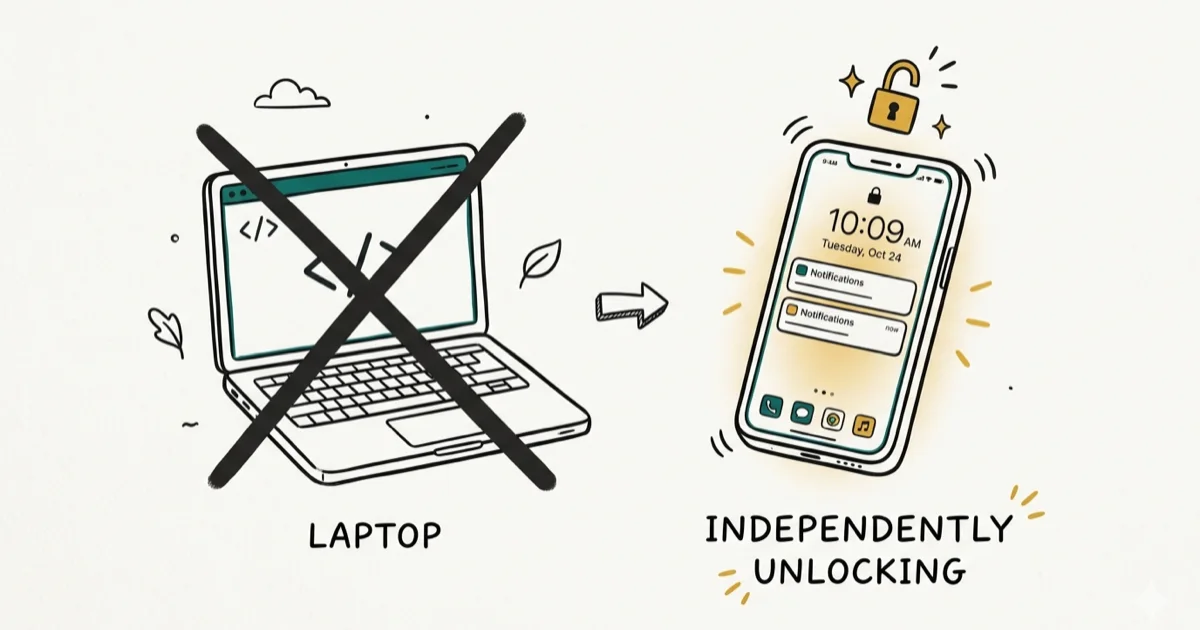
Quick AnswerFor your own Android, start with Google Account Recovery, then Samsung Find My Mobile for Galaxy. If both fail, your manufacturer or carrier can verify ownership and unlock.
Factory Reset Protection (FRP) ties your Android to your Google account after a factory reset. If you own the device and triggered the lock yourself, six no-PC paths can restore access without exploits, sideloaded APKs, or unauthorized tools.
This guide covers only legitimate self-recovery for phones you own. Each path requires proof of ownership: a verified Google or Samsung account, a recovery email, a backup phone number, or a purchase receipt with matching IMEI. Removing FRP from a device you don’t own is unlawful in most jurisdictions and violates Google’s Terms of Service.
- Google Account Recovery is the official path and works on every Android version when you can verify identity through email, a backup phone, or a trusted device already signed in.
- Samsung has withdrawn remote unlock through SmartThings Find; Find My Mobile may still offer an Unlock action, but only if a remote unlock method was switched on before the lock triggered.
- Removing your Google account before a factory reset prevents FRP from activating at all, which is the safest pre-emptive option for any phone you plan to sell, repair, or hand off.
- Manufacturer and carrier support teams can restore access on devices linked to a verified account when you supply a dated purchase receipt, the IMEI, and a government-issued ID.
- No legitimate method works on a phone you don’t own; attempting unauthorized bypass can violate computer-misuse laws, void warranty coverage, and expose you to malware-laden tools.
#Why Does Factory Reset Protection Activate?
FRP arms itself the instant you sign a Google account into a new Android setup.
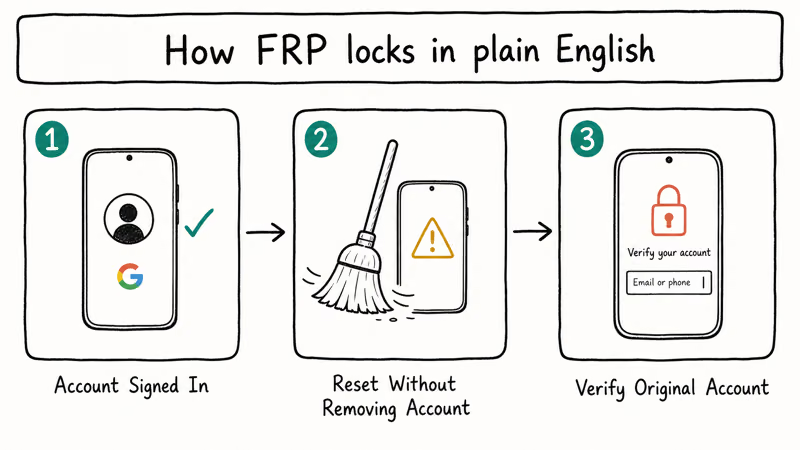
The lock then triggers whenever a phone is wiped through Settings, recovery mode, or a remote command without first signing that Google account out. On Galaxy devices the Samsung account adds a second verification layer that activates the same way, which is why some Galaxy owners face two prompts after a reset rather than one.
According to Google’s documentation, FRP shipped in Android 5.1 to deter stolen-device resale.
You are the rightful owner if you reset your own phone and simply forgot to sign out beforehand. Any of the six no-PC methods below should restore access: in minutes for the simple identity-verification cases, or within a few business days for the ones that need a manufacturer or carrier to confirm your purchase record and unlock the device through their service tier.
#Method 1: Google Account Recovery (Best Starting Point)
This is the official path. It costs nothing, voids no warranty, and works on every Android version when you can verify identity.
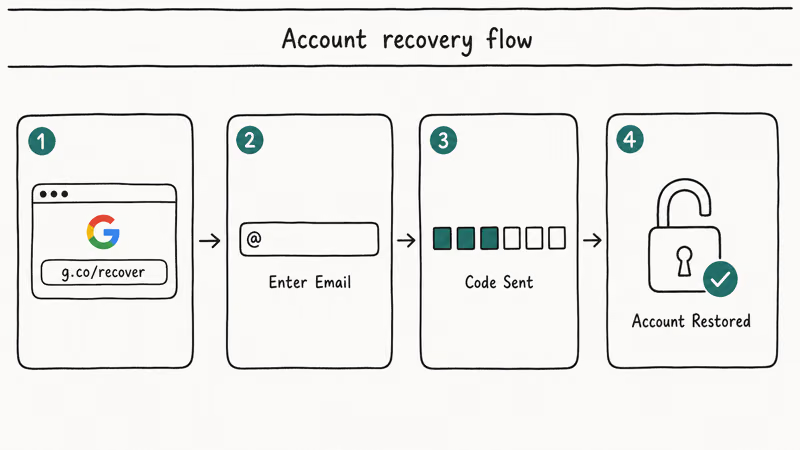
- On the FRP lock screen, enter the Google account email that was signed in before the reset.
- When asked for the password, tap Forgot password.
- Pick one of the recovery options: a verification code sent to your recovery phone, a prompt sent to a trusted device, or your previous password.
- Complete the prompt you actually control.
- Set a new password, then sign in to clear the FRP check.
Most users finish in five to ten minutes. If the account has been dormant for over a year, Google’s help center recommends submitting an identity-verification form and waiting up to five business days for review.
Works on: All Android versions, all brands, when you can verify your identity.
#Method 2: Samsung Find My Mobile for Galaxy Owners
Galaxy owners have a recovery channel Pixel and OnePlus devices don’t.
Samsung’s page on not being able to unlock a Galaxy device recommends setting up a remote unlock method such as Find My Mobile or Smart Lock before you ever need it. The same page carries a warning worth reading first: “It is no longer possible to remotely unlock your phone using SmartThings Find.” Older guides pointing you at SmartThings Find, including earlier versions of this one, describe a route Samsung has withdrawn.
Where the Unlock action is still offered for your device and region, it clears the lock requirement without running a wipe. Samsung publishes no blanket guarantee about which models and regions still show it, so treat the button appearing as the confirmation and don’t count on it in advance.
- On a second device, open a browser and go to findmymobile.samsung.com.
- Sign in with the Samsung account that was registered on the locked phone.
- Pick the locked device from the list shown.
- Tap Unlock, not Erase. The Erase action wipes the phone; Unlock removes the lock without deleting data on supported models.
- Confirm, then follow the on-screen prompts.
This only works when a remote unlock method was switched on before the lock triggered. If the option isn’t there, Samsung’s guidance is blunt: without a remote unlock method set up, you’ll need to perform a factory reset. If you bought the phone secondhand, ask the prior owner to sign in and run the unlock for you. Our Samsung FRP bypass guide has model-specific notes for older Galaxy lines.
#Method 3: Remove Your Google Account Before You Reset
The cleanest fix is to keep FRP from arming in the first place.
If you still have access to the phone and plan to reset it for sale, repair, or a refresh, sign every Google and Samsung account out before the wipe runs. This single step is the difference between handing the next owner a clean phone and handing them an unusable one tied to your forgotten credentials, and it adds about a minute to the reset process.
- Open Settings and go to Passwords & accounts (or Accounts on older Android versions).
- Tap your Google account, then Remove account.
- Repeat for any Samsung account if applicable.
- Go to
System>Resetoptions > Erase all data (factory reset) and confirm.
After the reset, the phone starts up without an FRP prompt because no account is bound to it. Our disable FRP lock walkthrough has device-specific steps for Samsung, Pixel, OPPO, and Motorola, plus pre-sale checklists you can run in under five minutes.
#Method 4: OEM Account Recovery on Pixel, Motorola, and OPPO
Each major Android manufacturer runs its own account-recovery service alongside Google’s. Pixel routes through Google directly, Motorola through the Lenovo ID portal, OPPO through the OPPO ID portal, and Xiaomi through Mi Account.
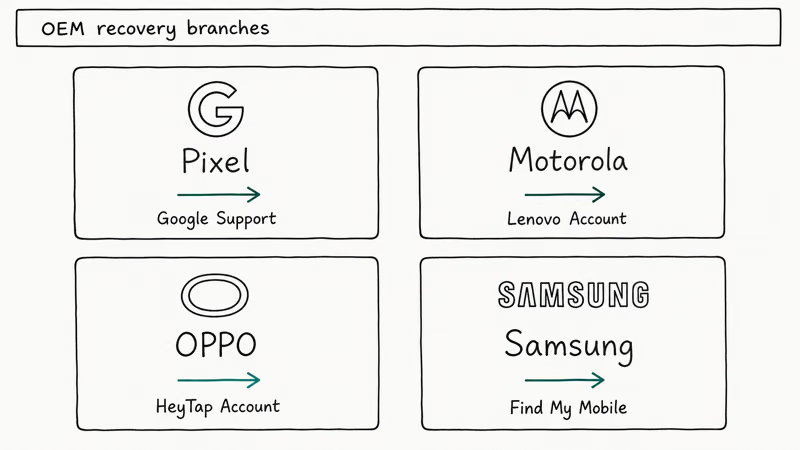
Google’s Pixel help center confirms that pairing a screen-lock credential with a verified recovery email before any reset prevents most FRP lockouts on Android 14 and newer hardware.
Open your brand’s official support site on a working device, sign in with the same account you used during the locked phone’s initial setup, and request an unlock workflow. Most OEM portals respond within one to three business days when the account is verified, faster if you complete the identity-check step during sign-in.
Mailing in the phone is usually not required at this stage; the portal handles the unlock remotely once verification clears.
#Method 5: Carrier Account Recovery for Subsidized Phones
If you bought the phone through a carrier installment or financing plan, the carrier account on file is a second proof of ownership. Verizon, AT&T, T-Mobile, and Rogers all run account-verified unlock services for devices on their monthly bill.
Call the carrier’s support line or open a chat in the carrier’s app.
Have your account PIN, billing ZIP code, and the device IMEI ready before you start. Once verified, the carrier can confirm ownership directly to the manufacturer or perform a remote reset that clears the FRP binding on its own infrastructure, and they can usually do it in the same call so you don’t end up with a back-and-forth ticket between the carrier and the OEM.
This works even while you are still paying off the device, since the carrier is verifying the account relationship, not a paid-in-full balance. For phones bought outright, SIM-unlocked, or no longer on the carrier’s account, this method does not apply.
#Method 6: Manufacturer Service Request With Proof of Ownership
When no account-recovery path works, every legitimate owner still has one fallback: a service request with the manufacturer. According to Samsung’s published repair-and-support documentation, an authorized service center can clear FRP on a Galaxy device once you present a dated purchase receipt, the original retail box with matching IMEI, and government-issued photo ID.
Pixel, Motorola, OPPO, and Xiaomi service centers run an equivalent ownership-verification process.
Expect to mail the device in or visit in person, fill out an ownership form, and wait three to ten business days for the unlock to land. The service is usually free under warranty and carries a modest fee outside warranty, depending on region. This is the only path that works when you have no account access at all but can still prove the phone is legitimately yours.
#Why Do the YouTube “No-PC” Tricks Fail Now?
Search results overflow with “FRP bypass without PC 2026” videos demonstrating dialer codes, TalkBack accessibility shortcuts, and custom-keyboard sideloads, and OTG-cable tricks that open a hidden browser. The comment sections under them are full of “doesn’t work on my device.” Both are honestly accurate: the video was recorded on a 2020 phone with 2020 firmware, and a current phone carries years of patches on top.
Google has hardened FRP on a yearly cadence. TalkBack, dialer codes, keyboard sideloads, OTG exploits: all closed across Android 8 through 14.
Managed devices go further. Google’s Android Enterprise factory reset protection documentation confirms that fully managed and Work Profile phones enforce FRP through the management policy itself, so even reset paths that skirt the device UI hit the same account-verification gate. The practical takeaway: if a tutorial claims a universal Android 14+ bypass that needs none of your own credentials, treat it as outdated or fraudulent.
#What Should You Do If None of These Methods Work?
If account recovery, Find My Mobile, OEM portals, carrier verification, and service-center requests all fail, the realistic options narrow to two. First, escalate the manufacturer service request in writing with notarized proof of purchase. Many regional support teams operate a slower second-tier process that handles edge cases the first-tier scripts can’t.
Don’t turn to unauthorized “FRP bypass” services that ask for remote access, payment in cryptocurrency, or downloadable APKs from unverified sources. They commonly install spyware that survives a factory reset, and they rarely deliver a real unlock.
For Android 14 and later devices, the bypass FRP with PC guide covers the small set of vendor-sanctioned PC tools that require manufacturer authorization. Commercial desktop software like Dr.Fone Screen Unlock (Android) also fits this category: it runs from a computer and is built for removing FRP from a device you own and can prove ownership of.
As an Amazon Associate, fone.tips earns from qualifying purchases. Some links on this page are affiliate links.
#Legal and Privacy Boundaries
A short reminder that matters more than every technique above.
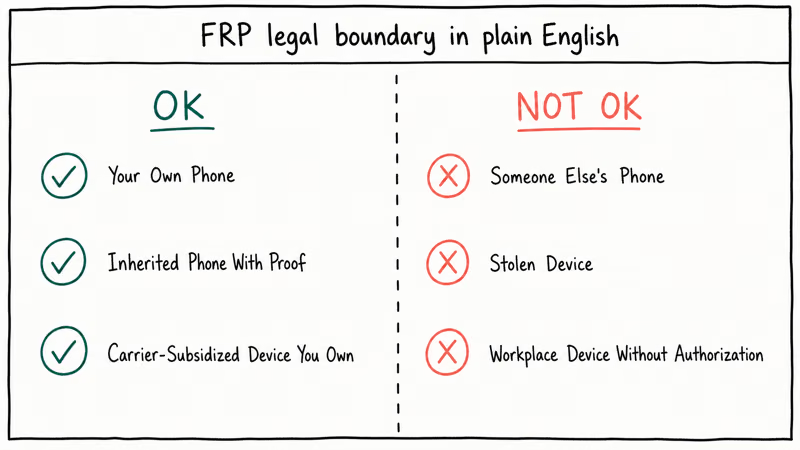
Legal: Bypassing FRP is lawful only on devices you own outright or have explicit, documented permission to access. According to Google’s published Android security documentation, FRP exists specifically as an anti-theft measure. Removing it from a phone reported lost or stolen can carry criminal penalties under the U.S. Computer Fraud and Abuse Act and equivalent laws in the EU, U.K., Canada, and Australia.
Privacy: Even with the phone physically in front of you, signing into someone else’s Google account without their informed consent violates the U.S. Stored Communications Act and similar privacy statutes elsewhere.
Warranty: The six methods above preserve warranty. Sideloading APKs, enabling OEM Unlocking, or using third-party “FRP bypass” tools generally voids it.
If the phone might be stolen: If your phone shows the FRP screen and you suspect it was lost or stolen before you acquired it, the right move is to contact local police and the original owner through the manufacturer’s recovery channel rather than remove the lock.
#Bottom Line
Start with Method 1 if you remember any piece of the original Google account.
It works on every Android version, takes well under ten minutes, and carries no risk. Galaxy owners with Find My Mobile active should try Method 2 next because it preserves data, and Galaxy owners who don’t yet have Find My Mobile set up should switch it on before the next reset so the option is available later when they actually need it.
If account recovery is impossible, escalate through your manufacturer or carrier with proof of purchase. Service-center verification is slower but legitimate, and it leaves your warranty intact. Skip any tool, APK, or paid service that asks you to circumvent the verification rather than satisfy it.
If your problem is actually a screen-lock password rather than FRP, our unlock Android phone without factory reset guide covers that path separately. For a deeper look at vendor-approved unlock tools, the best FRP bypass programs overview compares the few options that work with manufacturer authorization.
FRP bypass
#Frequently Asked Questions
Does Google Account Recovery work if I never set a recovery phone?
It still works if you can answer one of the alternate prompts: a previously used password, the date you created the account, or a verification through a trusted device that is already signed in. Google’s recovery form takes longer in this case, often three to five business days, because the team manually reviews account-history signals. Add a recovery phone and email to every Google account you use today to avoid this wait next time.
Can I unlock FRP without the original Google account at all?
Not through legitimate self-recovery alone. Without account access, your only authorized path is a manufacturer or carrier service request backed by proof of purchase, processed through an authorized service center that verifies ownership through dated receipts, IMEI matches, and government ID before clearing the FRP lock at the firmware level.
Will using Samsung Find My Mobile erase my data?
The Unlock action doesn’t wipe anything, but it isn’t guaranteed to be there. Samsung has withdrawn remote unlock through SmartThings Find, and if no remote unlock method was set up beforehand its own guidance is that you’ll need a factory reset. Read the confirmation prompt carefully before tapping, and never tap Erase by mistake.
How long does the manufacturer service-center process take?
Service-center timelines vary by brand, region, and paperwork completeness. Bring the original retail box, the dated receipt, and a government photo ID to shorten the process.
Is it safe to use free FRP bypass APKs?
No. Most so-called FRP bypass APKs carry malware that survives a factory reset.
What happens if my phone is on Android 14 or 15?
Android 14 and 15 closed nearly every accessibility and keyboard route that older guides relied on. The official paths still work: Google Account Recovery, Samsung Find My Mobile, OEM portals, and service-center requests. If those fail, contact the manufacturer for a vendor-approved repair tool instead of searching for a workaround.
Can a carrier remove FRP if I am still paying off the phone?
Yes. Carriers that financed the device can verify the account on the loan and either clear the FRP themselves or relay verification to the manufacturer. Make sure your carrier account is current and have the device IMEI ready before you call support.
What if I bought the phone secondhand and the seller is unreachable?
Without the prior owner you can’t legitimately remove FRP on your own. Open a case with the manufacturer that includes the bill of sale, your documented attempts to reach the seller, and proof of payment. Some manufacturers run a stolen-device check and, if the device is clear, release the lock through their service center after a review window that typically runs one to three weeks while ownership history is confirmed.
Google Pixel FRP Bypass: Official Recovery in 2026
FRP locks your Pixel after a factory reset. Start with Google Account Recovery for your own device. Here is what works on Pixel 4a and later in 2026.
Motorola FRP Bypass: Official Recovery First (2026)
Locked out of your own Motorola? Use Google Account Recovery and Motorola Support before any FRP bypass tool. Legal limits explained for 2026.
OnePlus FRP Bypass: Region Risks and Recovery (2026)
OnePlus FRP bypass guide: OxygenOS vs ColorOS region risks, official Google Account Recovery, OnePlus Support, and why YouTube tutorials brick.
Xiaomi FRP Bypass: Mi Account vs Google Lock (2026)
Locked out of your Xiaomi after a factory reset? Tell Mi Account lock from Google FRP, use official recovery, and learn the 2026 legal limits.