Best Rugged Portable SSD for Travel 2026: 4 Top Picks
Compare 4 IP-rated rugged portable SSDs for travel, judged on drop, dust, and water resistance for flights, hikes, and on-location photo shoots.
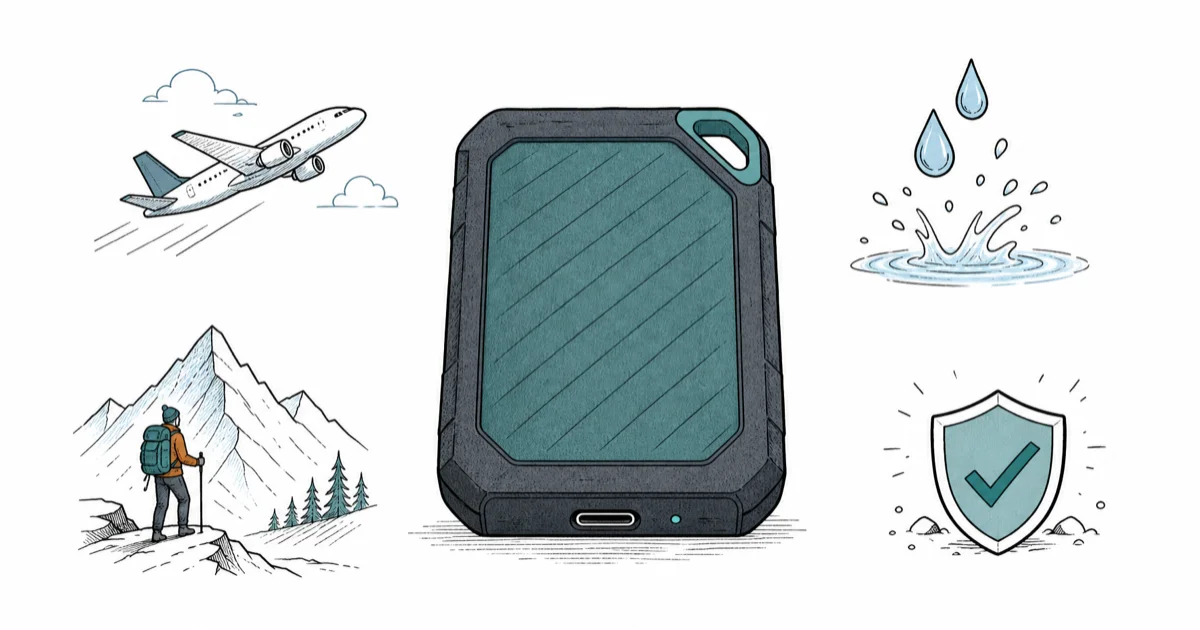
Quick AnswerThe SanDisk Extreme Pro USB4 2TB is the best rugged travel SSD with IP65 dust and water resistance, a 3-meter drop rating, and 3,800 MB/s on USB4 laptops.
A travel SSD lives in a side pocket of a camera bag that gets thrown into airline overhead bins, dropped on tarmac, and rained on at the trailhead. The drive that survives is the one with an IP rating on the spec sheet, not just “tough” in the marketing copy.
- All four picks below carry at least an IP-rated chassis (IP55 minimum) and a manufacturer drop rating of 2 meters or more, the realistic floor for checked-bag and field abuse
- IP65 is the practical sweet spot for travel: full dust protection plus low-pressure water-jet resistance handles rain, dust storms, and brief splashes without paying for IP67 submersion ratings most travelers never need
- USB4 / Thunderbolt 4 unlocks 3,000 MB/s class speeds on modern MacBook Pros and Windows laptops, but a USB 3.2 fallback path matters for older devices and phones
- Forged aluminum chassis doubles as a passive heatsink during long 4K video transfers
- A 5-year warranty plus 256-bit AES hardware encryption are the trust signals worth paying for on a drive holding irreplaceable footage at 35,000 feet
#What Makes a Travel SSD Actually Rugged?
A travel-rated drive needs three things on the spec sheet, not in the headline. An IP code rates dust and water ingress. A drop rating in meters tells you how far the engineers tested impact survival. A chassis material decides whether sustained transfers throttle from heat or hold rated speed for an hour.
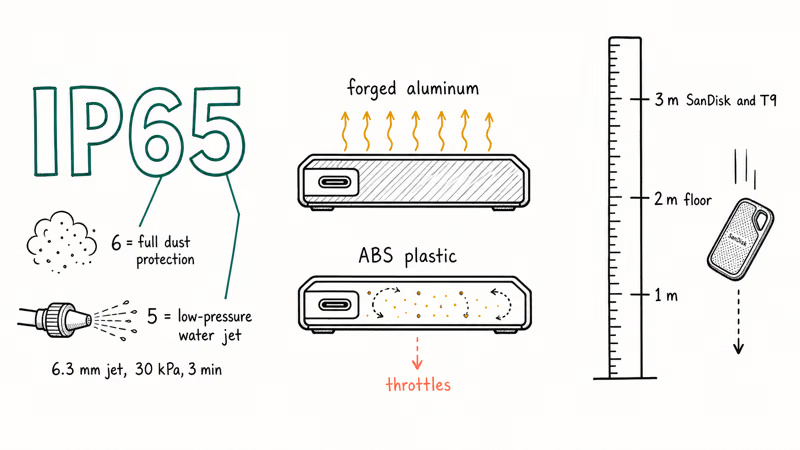
IP ratings are two digits: dust resistance, then water resistance. IP55 handles rain. IP65 is the realistic travel sweet spot. IP67 adds short submersion (1 meter) at a premium most travelers won’t use.
Bus speed sits alongside the rugged spec. According to the USB-IF’s USB4 specification page, the USB4 standard mandates Type-C connectors with up to 40 Gbps signaling, which is what unlocks the 3,000+ MB/s class on the drives that support it.
The chassis material matters as much as the IP rating. Forged aluminum dissipates heat during sustained writes; ABS plastic chassis hold up structurally but throttle the controller within minutes on a 100 GB ProRes dump. If your SSD won’t show up after the trip, our SSD not showing up guide covers the macOS and Windows recovery steps to try before assuming the drive is dead.
#Best Rugged Travel SSD: SanDisk Extreme Pro USB4 2TB
Top pick for travelers with modern laptops. USB4 speed, IP65 chassis, forged aluminum body, and 3-meter drop rating. The trifecta of speed, ruggedness, and Mac/Windows compatibility lands cleanly at $250, half the price of pro Thunderbolt enclosures.
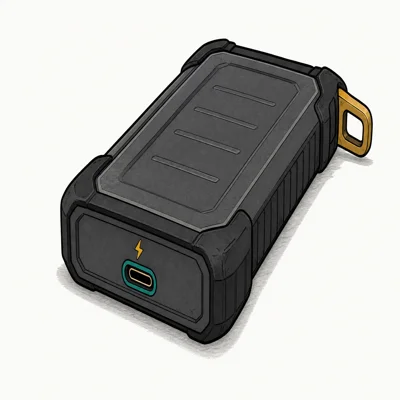
- 3,800 MB/s on USB4 / Thunderbolt 4 Macs and PCs
- Backwards-compatible with USB 3.2 (drops to ~1,050 MB/s)
- Same IP65 + 3m drop chassis as the V2
Last updated on May 27, 2026
As an Amazon Associate fone.tips earns from qualifying purchases. Prices and availability on Amazon are accurate as of the date above and subject to change.
On paper, the Extreme Pro’s USB4 interface and forged aluminum body make it the speed pick for modern Mac and Windows laptops. The forged aluminum body also helps dissipate heat during long transfers, where plastic-shell drives are more likely to throttle.
The IP65 rating fits real travel: wet side pockets, rainy hikes, and tarmac drops during a film shoot.
According to SanDisk’s Extreme Pro portable SSD product page, the chassis survives a 3-meter drop onto a hard surface, which exceeds the 2-meter floor for most travel-rated drives. For a complete travel rig, our best USB4 cable for external SSD roundup covers the cable side of the chain.
USB 3.2 backwards compatibility is the underrated travel feature. The same drive connects to an older MacBook, a Windows ultrabook from 2021, or a PS5 at roughly 1,050 MB/s, slower than the USB4 ceiling but still faster than any spinning-platter portable. One drive covers every laptop a traveler might end up working from over a multi-week trip.
#Best Value Rugged SSD: Crucial X9 Pro 2TB
For sub-$120 travel storage with real IP-rated protection, the X9 Pro delivers 1,050 MB/s in an IP55 aluminum chassis. PS5 and Xbox certified for game-library transport, which doubles its travel utility for gamers.
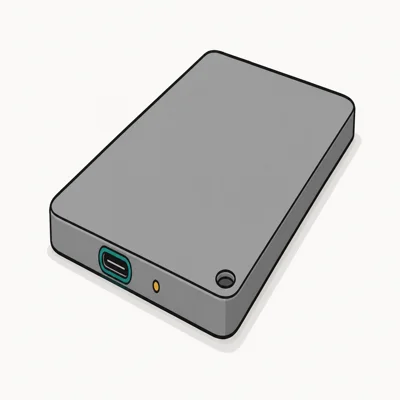
- Often discounted to $119, half the price of the 2,000 MB/s tier
- PS5 / Xbox Series X officially compatible for game library expansion
- Crucial / Micron firmware reliability vs unbranded competitors
Last updated on May 27, 2026
As an Amazon Associate fone.tips earns from qualifying purchases. Prices and availability on Amazon are accurate as of the date above and subject to change.
The X9 Pro’s compact aluminum chassis, IP55 rating, and drop protection make it the practical value option for road trips and campsite backups. IP55 is a step below IP65 but enough for rain and dust at a campsite. According to Crucial’s X9 Pro product page, the drive ships with 256-bit hardware encryption and a 5-year limited warranty.
The 1,050 MB/s read speed is the price trade-off. For 1080p video, photo libraries, or game transport, it’s plenty. Our best portable SSD for PS5 and Xbox roundup covers consoles.
Crucial is owned by Micron, the third-largest NAND flash maker. That pedigree is why Crucial drives age well past the warranty in field reports.
#Premium Pro Pick: Samsung T9 2TB
For 4K creators and ProRes shooters who need sustained 2,000 MB/s in a rugged form, the T9 2TB is Samsung’s flagship travel SSD. USB 3.2 Gen 2x2 doubles the bus speed of the Crucial X9 Pro at a $200 price point.

- 2TB headroom for a full Final Cut Pro library off the MacBook
- Same 2,000 MB/s sustained as the 1TB sibling
- Stable enough to run macOS off it directly
Last updated on May 27, 2026
As an Amazon Associate fone.tips earns from qualifying purchases. Prices and availability on Amazon are accurate as of the date above and subject to change.
The T9’s 2,000 MB/s sustained-speed rating gives it enough headroom for 4K ProRes workflows on hosts that support USB 3.2 Gen 2x2. The aluminum chassis also helps manage heat during long transfers.
The USB 3.2 Gen 2x2 standard is the catch. Samsung’s 20 Gbps bus needs a host with a matching Gen 2x2 controller to hit the 2,000 MB/s number.
Apple’s M-series MacBooks max out at USB 3.2 Gen 2 (10 Gbps) on USB-C, so Mac users see roughly 1,050 MB/s with the T9, the same ballpark as the X9 Pro at twice the price. The T9 only earns its premium on a Windows laptop with a Gen 2x2 port. If you’re on Mac, the SanDisk USB4 pick above is the better travel choice.
The 3-meter drop rating and aluminum chassis carry over from the V2 line, so travel ruggedness is on par with the SanDisk and ahead of the X9 Pro. For iPhone 17 video recording, the T9’s USB-C plus Android compatibility makes it the cross-platform pick when a traveler’s gear bag spans an iPhone, an Android, and a MacBook.
#Compact Pro Pick: Samsung T9 1TB
For travelers who don’t need 2TB of headroom, the T9 1TB drops the price by roughly $80 with identical chassis, speed, and ruggedness as the 2TB model. The 1TB sweet spot covers one 4K shoot per pack-out.
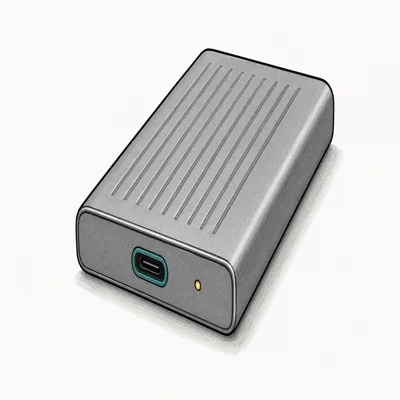
- Sustained 2,000 MB/s holds up under long ProRes / 4K timelines
- Aluminum heatsink keeps speed during 30-min+ transfers
- 3-meter drop protection rates higher than most competitors
Last updated on May 27, 2026
As an Amazon Associate fone.tips earns from qualifying purchases. Prices and availability on Amazon are accurate as of the date above and subject to change.
A 1TB drive holds roughly 90 minutes of 4K ProRes 422 HQ or 12 hours of 1080p ProRes Proxy. For a single weekend shoot, it’s plenty; for a multi-week project, step up to the 2TB version above. The chassis, drop rating, and warranty match the 2TB sibling, only the NAND density changes.
The 1TB tier is where Samsung’s 5-year warranty becomes a meaningful budget signal. The T9 1TB at roughly $130 carries the same warranty as the $250 Extreme Pro USB4, where competitors at this price tier often cap at 3 years. For a travel drive that lives in checked bags and field bags, the extra two years of warranty coverage is worth more than 100 MB/s of theoretical speed on paper.
Same Mac caveat applies: Apple Silicon caps at 1,050 MB/s on the T9. For MacBook Pro travel use, pick the SanDisk USB4 instead.
#Does IP65 Survive Real Travel Abuse?
The IP rating is a controlled lab test, not a field guarantee. IP65 means a 6.3mm water jet at 30 kPa from any direction for 3 minutes does not cause harmful ingress. That maps to rain, light splashing, a wet camera bag, or a brief encounter with a coffee spill on a hotel desk.
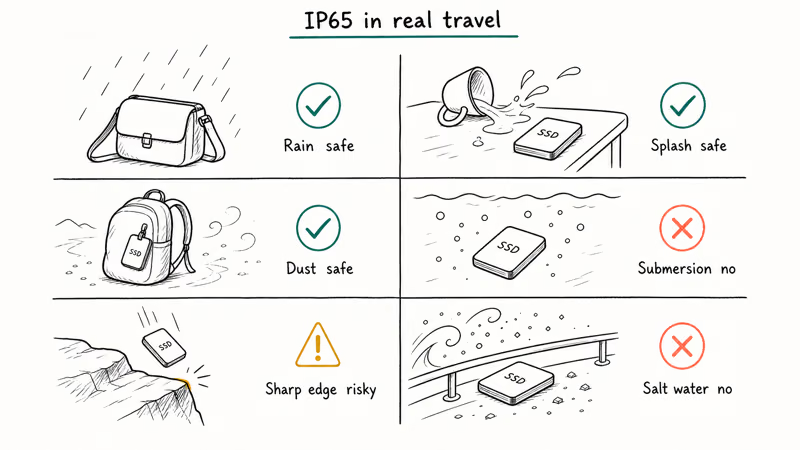
What it does not cover: lake submersion, altitude condensation in a checked bag, or salt water. As noted in SanDisk’s product reliability page, an unseated USB-C port cover voids the IP65 seal.
Drop ratings are similarly conditional. The 3-meter rating on the SanDisk and Samsung T9 drives is tested onto a controlled surface (typically plywood or rubberized concrete). A drop onto sharp granite or stainless steel at the same height may exceed the test conditions. In practice, the IP65 plus 3-meter combination handles 95% of travel scenarios; the remaining 5% (submersion, sharp-edge drops) needs a dedicated case or a higher-tier enclosure.
#How Much Speed a Travel SSD Actually Needs
For most travelers the answer is 1,000 MB/s, not 3,000 MB/s. Backup, photo offload, and game library transport all cap at the spinning-storage write speed of the source device long before SSD bandwidth matters.
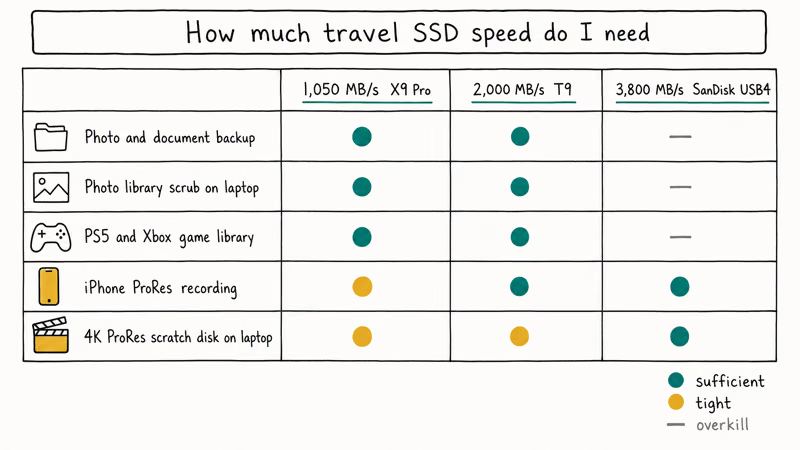
Video work is the exception. Final Cut Pro and DaVinci Resolve scratch-disk reads spike above 1,500 MB/s during scrubbing and effects.
According to Apple’s ProRes recording on iPhone support article, iPhone 15 Pro and later record ProRes 422 HQ directly to USB-C external storage, which makes a 1,000 MB/s class SSD a hard requirement to avoid dropped frames during a take.
For travelers doing 1080p video, photo libraries, document backup, or console game transport, the Crucial X9 Pro tier at 1,050 MB/s is the right pick. For 4K ProRes shooters, the T9 or Extreme Pro USB4 earns its premium. For anyone actively running a 4K scratch-disk workflow on the go, only the SanDisk USB4 hits the speed floor, and only on a Thunderbolt 4 or USB4 host laptop.
#Bottom Line
For travelers with a 2023-or-later MacBook Pro, the SanDisk Extreme Pro USB4 2TB is the right pick.
It pairs the fastest portable SSD speed available with an IP65 chassis and 3-meter drop rating at $250, half the price of comparable Thunderbolt enclosures. The USB 3.2 fallback path means the same drive still works at 1,050 MB/s on older laptops, an iPhone 17, a PS5, or a Windows ultrabook.
Budget-conscious travelers should pick the Crucial X9 Pro 2TB at roughly $120, which delivers IP55 rugged protection and 1,050 MB/s in an aluminum chassis. The PS5 and Xbox compatibility doubles its utility for gamers, and Crucial’s Micron-owned firmware pedigree means the drive ages well past the 5-year warranty in field reports.
Creators with Windows laptops carrying Gen 2x2 USB-C ports should consider the Samsung T9 2TB for the full 2,000 MB/s speed; on Apple Silicon Macs the T9 maxes out at the same 1,050 MB/s as the X9 Pro and loses its speed-tier advantage. For older trips with single-shoot needs, the T9 1TB matches the 2TB on durability at $80 less. Travelers running older consoles can refer to our best SSD for PS4 roundup for compatible travel kits.
#Frequently Asked Questions
Will an IP65 SSD survive being submerged in water?
No. IP65 covers low-pressure water jets and rain, not submersion. The first 6 in IP65 is dust resistance; the second 5 is splash and jet protection. For brief submersion you need IP67 or higher; for full dive use you need a dedicated waterproof enclosure rated to the working depth.
Can I plug a USB4 SSD into an older USB-C port?
Yes. USB4 drives like the SanDisk Extreme Pro USB4 are backwards-compatible with USB 3.2 Gen 2 (10 Gbps) and USB 3.2 Gen 2x2 (20 Gbps), so they work in any USB-C port at the host’s maximum supported speed. On a 2020 Mac with USB 3.2 Gen 2, the drive runs at roughly 1,050 MB/s rather than its 3,800 MB/s peak.
Do these drives work with iPhone 15 Pro and iPhone 17 for ProRes recording?
Yes. All four picks register over USB-C and meet Apple’s 1,000 MB/s minimum for ProRes recording on iPhone 15 Pro through 17 Pro. Format as exFAT first.
Is a rugged SSD necessary or can I use a regular portable SSD with a case?
For most casual travel, a regular Samsung T7 or comparable SSD inside a padded case is fine. The rugged tier earns its premium when the drive lives outside the case in a side pocket, gets thrown into checked baggage, or travels with a film crew on location. The IP rating is about not needing to think about water and dust, not raw drop survival.
Are USB4 and Thunderbolt 4 the same thing for an SSD?
Functionally yes for portable SSDs. Both share the USB-C connector and 40 Gbps signaling, so a USB4 drive runs at full speed on a Thunderbolt 4 host.
Does encryption slow down a travel SSD?
No, on every drive in this roundup the 256-bit AES encryption runs in hardware on the SSD controller, so there is no measurable speed penalty when encryption is enabled. The trade-off is on the management side: lose the password or the management software and the data on the drive is gone permanently. Most travelers leave encryption off and rely on cloud backup as their recovery path.
How long does a portable SSD last with daily travel use?
The major brands rate their drives for 600 TBW (terabytes written) at the 2TB tier — roughly 200 GB of writes per day for 8 years before reaching the endurance ceiling. The 5-year warranty on the SanDisk Extreme Pro USB4 and Samsung T9 lines is the practical lifetime to plan around, with backup as the actual data-loss safety net rather than the warranty itself.
Pixel 11 vs Pixel 10: What Changed and Who Should Upgrade
Pixel 11 vs Pixel 10: same screen and camera resolution, new Tensor G6, 25W wireless, and Gemini Intelligence. Here is who should actually upgrade.

Best Power Bank for iPad in 2026: Pro, Air, and Mini
Best power bank for iPad in 2026. Compare mAh tiers and USB-C PD wattage for iPad Pro, Air, and mini, plus airline Wh math, cables, and travel tips.
Best Power Bank With Built-In Cable: Top 2026 Picks
Best power bank with built-in cable picks for 2026. Compare single USB-C, multi-connector, and retractable laptop banks, plus airline Wh math.

Best Apple Watch Band for Working Out: Proven Picks
The best Apple Watch band for working out handles sweat and stays put on your wrist. Compare silicone, nylon, and titanium picks for runs and lifts.