Best AI Earbuds 2026: What the AI Hype Really Means
Best AI earbuds for 2026 and what AI really means in earbuds. AirPods Pro 3, Sony, Bose, and Pixel Buds compared on translation, ANC, and assistants.
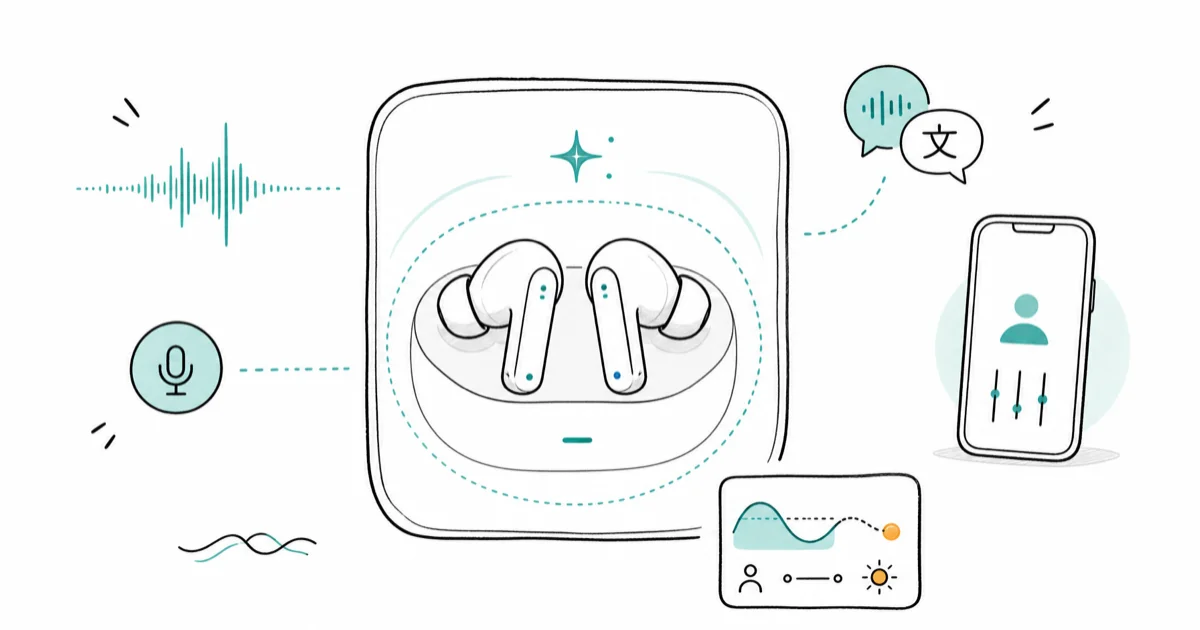
Quick AnswerThe AirPods Pro 3 are the best AI earbuds for iPhone owners, with on-device Live Translation and adaptive audio. For Android, Pixel Buds add hands-free Gemini, while the Sony WF-1000XM6 lead on AI-driven noise cancellation.
Best AI earbuds in 2026 is a phrase doing a lot of heavy lifting, because “AI” in earbuds covers three very different things: live translation, a hands-free voice assistant, and smarter noise cancellation. We sorted the marketing from the real features and ranked the picks by the AI capability you actually want.
- “AI earbuds” splits into three real features: live translation, hands-free assistant, and AI-driven noise cancellation
- The AirPods Pro 3 add on-device Live Translation via Apple Intelligence, triggered by Siri or a stem press
- The Sony WF-1000XM6 use a new noise-cancelling processor Sony positions as a major upgrade over the previous chip, with eight microphones
- Pixel Buds Pro 2 run hands-free Gemini Live; Pixel Buds A-Series tap Google Assistant for less money
- Most “AI” in everyday earbuds is adaptive noise cancellation, not a chatbot living in your ear
#What Does AI Actually Mean in Earbuds?
Strip away the marketing and “AI earbuds” means one of three concrete things. Knowing which one you want saves you from overpaying for a feature you’ll never touch.
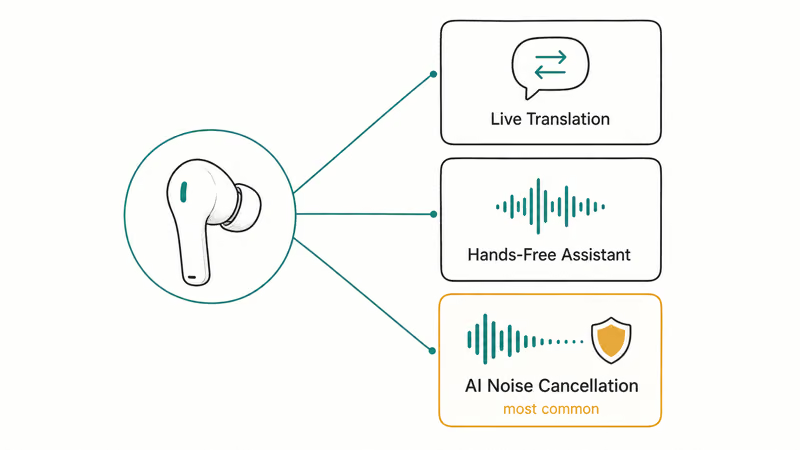
The first is real-time translation. The earbud, paired with your phone, turns a foreign language into your own as someone speaks. The second is a hands-free assistant, where you talk to Gemini or Siri without pulling out your phone. The third, and most common, is AI-driven noise cancellation, where the earbud’s chip analyzes ambient sound and adjusts the cancellation profile on the fly.
That third one is where most “AI” claims live. No chatbot is running inside the earbud itself. Instead, a dedicated processor does signal analysis your old earbuds couldn’t. We treated each feature separately when ranking, because a great translator can be a mediocre music earbud, and vice versa.
If you want to understand the assistants these earbuds connect to, our comparison of ChatGPT vs Claude vs Gemini breaks down what each one does well.
#Best AI Earbuds for iPhone: AirPods Pro 3
For iPhone owners, the AirPods Pro 3 are the obvious AI pick because the features are baked into iOS. You don’t install anything extra.
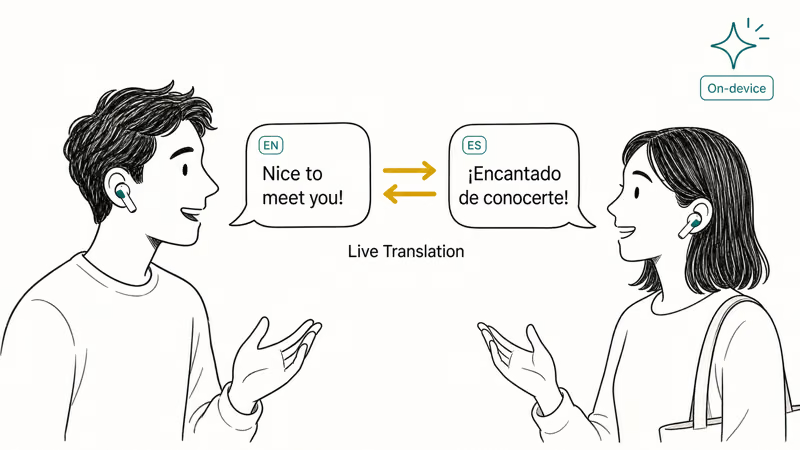
The headline AI feature is Live Translation. According to Apple’s AirPods Pro 3 announcement, it runs on-device through Apple Intelligence, so conversations stay private. You start it by pressing both stems or saying “Siri, start Live Translation.” When two people both wear AirPods Pro 3, each speaks their own language and hears the translation.

- Tightest iPhone / Apple Watch / Mac handoff of any earbuds
- Heart rate sensor doubles as a workout tracker
- Live Translation runs on-device — no Pro subscription required
Last updated on Jul 3, 2026
As an Amazon Associate fone.tips earns from qualifying purchases. Prices and availability on Amazon are accurate as of the date above and subject to change.
The adaptive audio is the quieter AI win. The H2 chip blends noise cancellation with transparency and adapts to your surroundings, lowering your music when it detects you talking to someone nearby. Adaptive Audio lowers playback when it detects conversation, then restores it automatically without a tap. The noise cancellation rates among the strongest in true wireless.
Live Translation is still beta, with a short language list and limited regional availability. Dedicated translators go wider; see our AI translation earbuds guide.
#Best AI Earbuds for Noise Cancellation: Sony WF-1000XM6
If the AI you care about is silence, the Sony WF-1000XM6 are the pick. Sony’s pitch here is that better chips make better noise cancellation, and the spec sheet backs it.
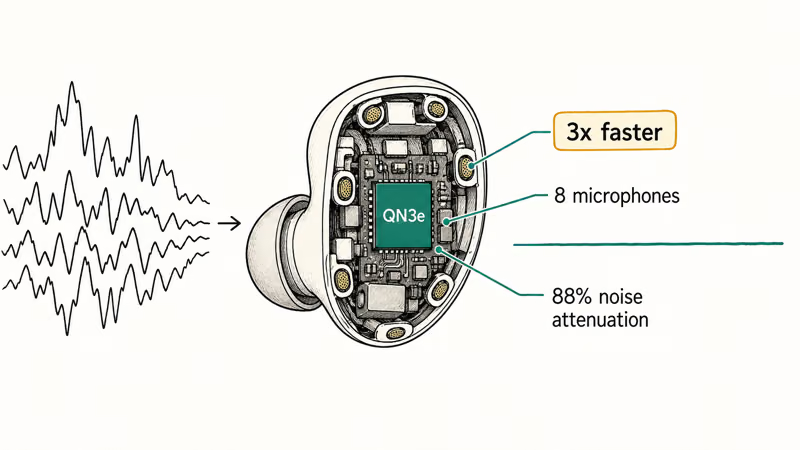
Sony positions the new HD Noise Cancelling Processor QN3e as a major step up from the previous QN2e, paired with an expanded array of eight microphones that feed the cancellation algorithm more data. The Adaptive NC Optimizer adjusts the profile in real time based on your environment and fit. SoundGuys found that the WF-1000XM6 reach 88% average noise attenuation, just behind the AirPods Pro 3.

- Best-in-class ANC for flights and open-plan offices
- 12-hour bud life is unusually long at the flagship tier
- Multipoint pairs to phone + laptop simultaneously
Last updated on Jul 3, 2026
As an Amazon Associate fone.tips earns from qualifying purchases. Prices and availability on Amazon are accurate as of the date above and subject to change.
Call quality leans on AI too. Sony uses dual beamforming microphones, a bone conduction sensor, and AI noise reduction to isolate your voice on calls, which reviewers confirmed holds up on a busy street. These earbuds focus their intelligence on audio, not translation or a chatbot, so pick them when sound and silence are the point.
#Best Hands-Free Assistant: Pixel Buds Pro 2 and A-Series
For talking to an assistant without touching your phone, Google’s Pixel Buds line leads. This is the closest thing to “an AI in your ear.”
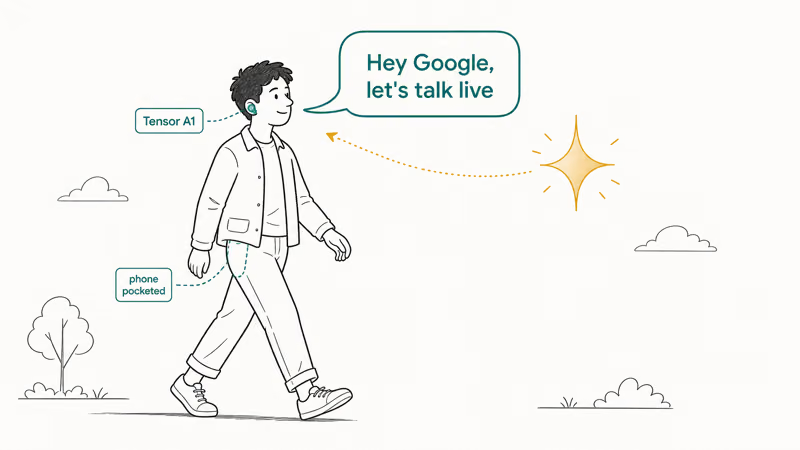
The Pixel Buds Pro 2 are built around Gemini Live. Google states that you say “Hey Google, let’s talk live,” then put the phone away and have an extended back-and-forth with Gemini. A custom Tensor A1 chip handles audio processing on the earbud, which Google also uses to roughly double the noise cancellation over the first-gen Pixel Buds Pro. That hands-free Gemini flow is the main reason to pick the Pro 2 over the cheaper A-Series.
The Pixel Buds A-Series is the budget door into Google’s ecosystem. It taps Google Assistant and the same Google Translate conversation mode, just without the on-device Gemini Live processing. For most people who want hands-free voice search, directions, and the occasional translation, the A-Series does the job for much less.

- Fast Pair works the moment you open the case near a Pixel
- Adaptive Sound matches volume to ambient noise without ANC
- Often discounted under $80 on Amazon
Last updated on Jul 3, 2026
As an Amazon Associate fone.tips earns from qualifying purchases. Prices and availability on Amazon are accurate as of the date above and subject to change.
Worth noting: Sony integrated Google’s Gemini foundation models into the XM6’s processing too, so the line between “Google AI” and “everyone else” is blurring. If you code or research on the side, our guide to the best AI for coding and our walkthrough of ChatGPT Projects cover the assistants doing the real work behind these voice features.
#Best Adaptive-Audio AI: Bose QuietComfort Ultra Earbuds
Bose takes a different AI angle: making the listening experience adapt to you rather than translating or chatting.
The Bose QuietComfort Ultra Earbuds (2nd Gen) use ActiveSense, an adaptive Aware mode that listens for loud environmental sounds and applies just enough cancellation to keep you aware without your music getting drowned out. Their SpeechClarity is an AI-based microphone technology that filters surroundings and wind on calls. Immersive Audio adds spatial sound with head tracking.

- ANC matches Sony XM6 in cabin / subway use
- Immersive Audio mode beats Apple's spatial implementation
- Stability bands ship in the box — secure fit for running
Last updated on Jul 3, 2026
As an Amazon Associate fone.tips earns from qualifying purchases. Prices and availability on Amazon are accurate as of the date above and subject to change.
We rate the ANC and sound among the best, but be clear-eyed about the trade-offs. Reviewers consistently flag the roughly 6-hour battery as short next to rivals, and there is no translation or voice-assistant AI here. Buy these for adaptive sound and class-leading noise cancellation, not for talking to a chatbot. If your budget is tighter, our best Bluetooth headphones under $100 roundup covers solid non-AI options.
#How Do You Pick the Right AI Earbud?
Start with the AI feature you’ll use weekly, not the longest spec list.
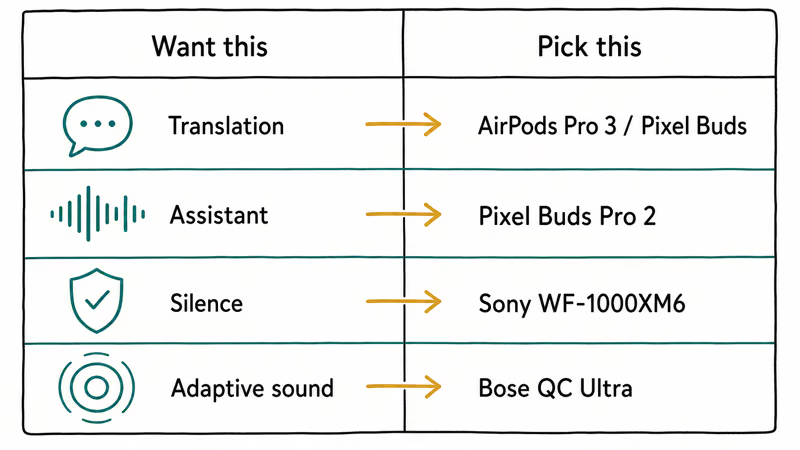
The best AI earbud for a frequent traveler is a bad match for someone who just wants quiet on a commute, and the right pair only makes sense once you know which of the three AI jobs you’ll actually lean on day to day.
Want live translation built in? The AirPods Pro 3 on iPhone or Pixel Buds on Android handle it, while the Sony WF-1000XM6 lead if the deepest silence is your goal.
The Pixel Buds Pro 2 win for a hands-free assistant. The Bose QuietComfort Ultra win for adaptive, immersive sound.
#Bottom Line
Skip the hype and buy for your daily reality. Most people use one AI feature heavily and ignore the rest, so the right pick is the one that nails your single use case.
For iPhone owners who travel, the AirPods Pro 3 are the safe call: translation, top-tier ANC, and zero setup. For Android users who want an assistant in their ear, the Pixel Buds A-Series is the value entry, with the Pixel Buds Pro 2 as the Gemini Live upgrade. And if pure noise cancellation is the goal regardless of phone, the Sony WF-1000XM6 earn the nod.
One last thing: ignore language counts and assistant names in the ads. Pick the AI feature you’ll touch every week, then choose the earbud that does that one thing best.
As an Amazon Associate, fone.tips earns from qualifying purchases. Prices and availability are accurate as of the date above and subject to change.
#Frequently Asked Questions
Do AI earbuds actually run AI on the earbud?
Mostly no, and this is the single biggest misconception. The translation and assistant features run on your paired phone, while the earbud handles signal processing for noise cancellation through a dedicated chip like Sony’s QN3e or Google’s Tensor A1. So when an ad says “AI earbuds,” it almost always means AI-assisted audio plus phone-powered software, not a chatbot living in the bud.
Which AI earbuds are best for an iPhone?
The AirPods Pro 3, because Live Translation and adaptive audio are built into iOS with no extra app to install. You trigger translation with Siri or a stem press, and Apple processes it on-device for privacy, which matters when the conversation is personal. Other earbuds pair with an iPhone and play music fine, but they can’t tap Apple Intelligence the way AirPods do, so the translation and adaptive-audio tricks stay Apple-only.
Can AI earbuds replace a phone call assistant?
Pixel Buds Pro 2 come closest. With Gemini Live you hold a spoken conversation hands-free while your phone stays pocketed, and you’ll reach for your screen less for voice search and quick questions.
Is the noise cancellation on AI earbuds really better?
In the top models, yes. Sony says the XM6’s processor is 3x faster than the previous generation and uses eight microphones, which translates to measurably stronger cancellation. The “AI” part is the chip adapting the cancellation profile to your environment in real time rather than applying one fixed setting.
Do I need the most expensive AI earbuds?
No. The Pixel Buds A-Series gives you Google Assistant and conversation translation for far less than flagship pairs, and for casual use the cheaper option covers it.
Which AI earbuds translate the most languages?
Among mainstream earbuds, Pixel Buds reach about 40 languages through Google Translate’s conversation mode, wider than the AirPods Pro 3’s launch set. But dedicated translators like Timekettle go further, with 40 languages online and offline packs. We compare them directly in our translation earbuds guide.
Are Bose QuietComfort Ultra Earbuds AI earbuds?
Partly. They use AI for adaptive noise cancellation through ActiveSense and for call clarity through SpeechClarity. What they don’t have is a voice assistant or live translation. So they’re “AI” in the adaptive-audio sense, which is great if you want quiet and immersive sound but not if you want a chatbot or translator.
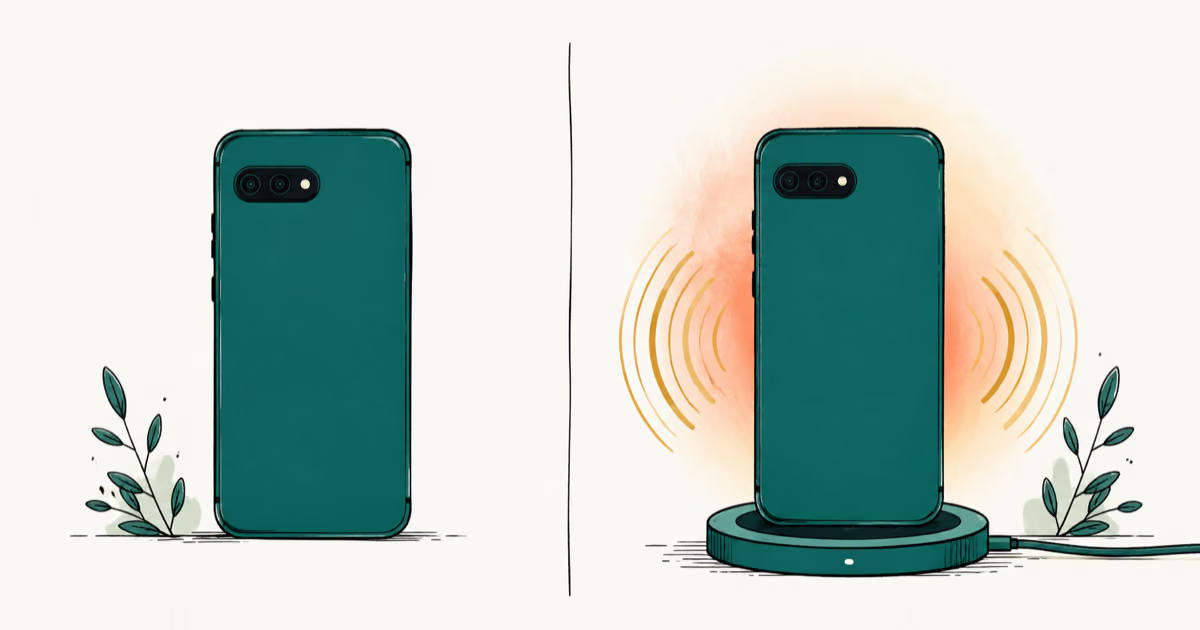
Pixel 11 vs Pixel 10: What Changed and Who Should Upgrade
Pixel 11 vs Pixel 10: same screen and camera resolution, new Tensor G6, 25W wireless, and Gemini Intelligence. Here is who should actually upgrade.
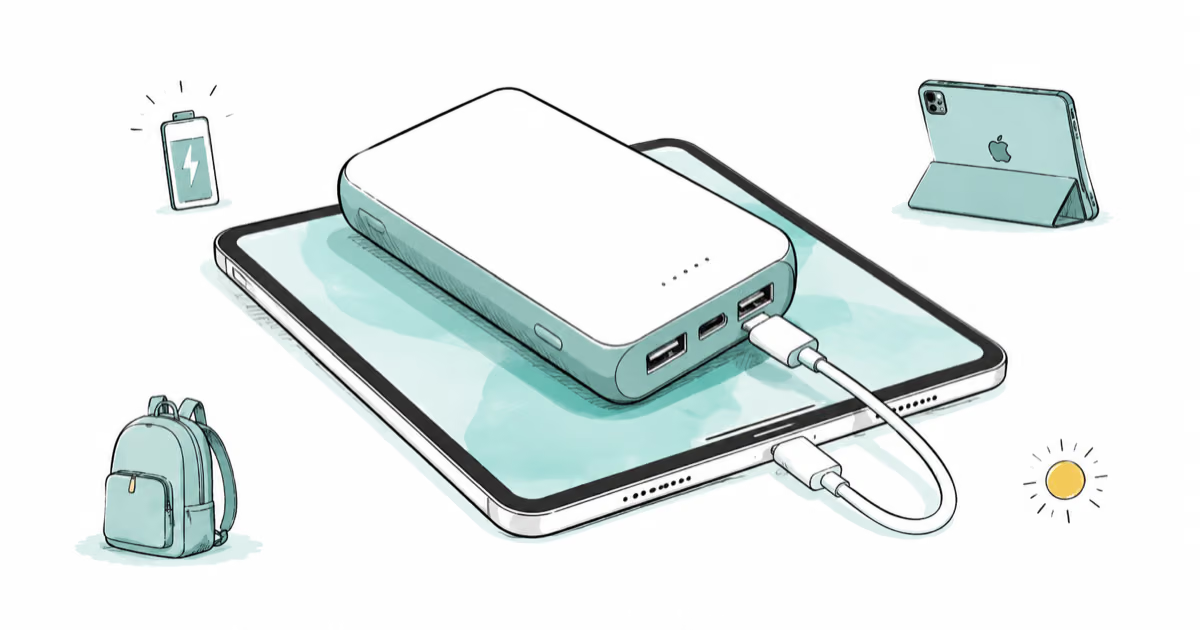
Best Power Bank for iPad in 2026: Pro, Air, and Mini
Best power bank for iPad in 2026. Compare mAh tiers and USB-C PD wattage for iPad Pro, Air, and mini, plus airline Wh math, cables, and travel tips.
Best Power Bank With Built-In Cable: Top 2026 Picks
Best power bank with built-in cable picks for 2026. Compare single USB-C, multi-connector, and retractable laptop banks, plus airline Wh math.
Best Apple Watch Band for Working Out: Proven Picks
The best Apple Watch band for working out handles sweat and stays put on your wrist. Compare silicone, nylon, and titanium picks for runs and lifts.