Anker vs Ugreen Charger: Which GaN Brand Wins in 2026?
Anker vs Ugreen charger comparison for 2026. We cover warranty, port mix, reliability, and which GaN brick wins for MacBook, travel, or a busy desk setup.
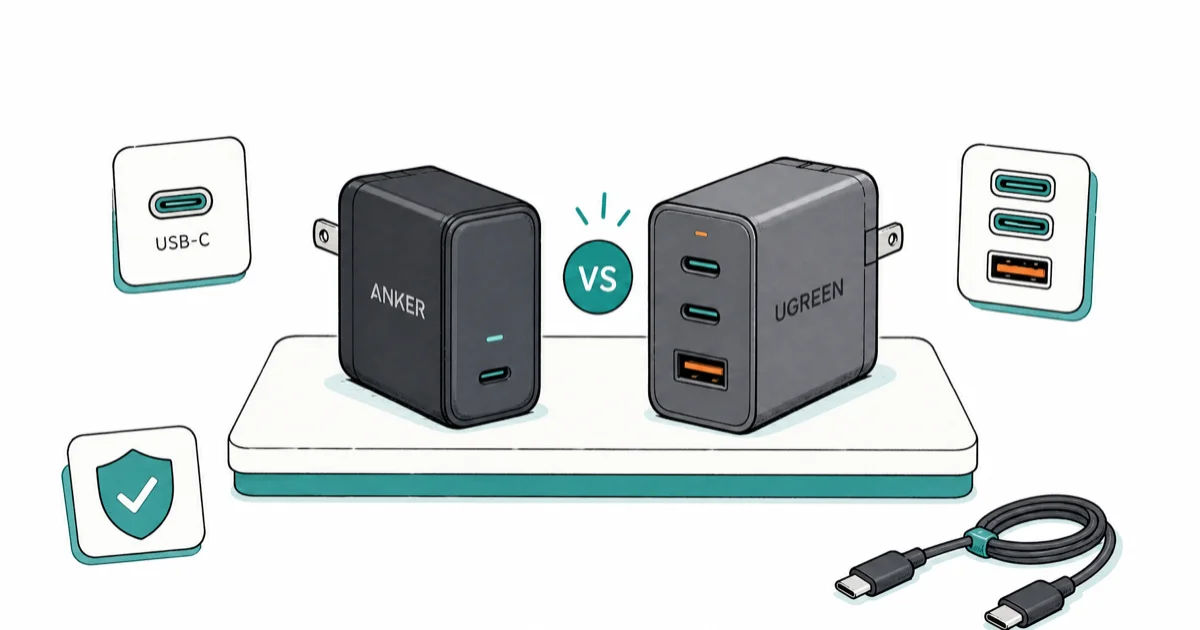
Quick AnswerAnker wins on warranty and single-device reliability. Ugreen gives more ports per dollar and a better desk look.
Anker vs Ugreen charger choices come down to one question most reviews skip: are you charging one device on the road or four devices at a desk? This comparison focuses on the Anker Prime 100W and Ugreen Nexode Pro 100W, two 100W GaN chargers aimed at different setups.
- Anker wins on warranty length and US service speed
- Ugreen Nexode Pro chargers pack more USB-C ports per dollar than the Anker Prime equivalents, especially on the 100W five-port brick that competes head-to-head with Anker’s three-port A2343
- Both brands ship 100W USB-PD flagship chargers, but port count changes how that wattage gets shared
- Anker dominates the foldable-plug travel category
- Ugreen Nexode Pro adds a small LED display showing live per-port wattage that Anker Prime lacks
#Anker vs Ugreen Charger: The Quick Verdict
Pick Anker if a long warranty and one-laptop reliability matter most. Pick Ugreen if you want more ports per dollar at a desk.
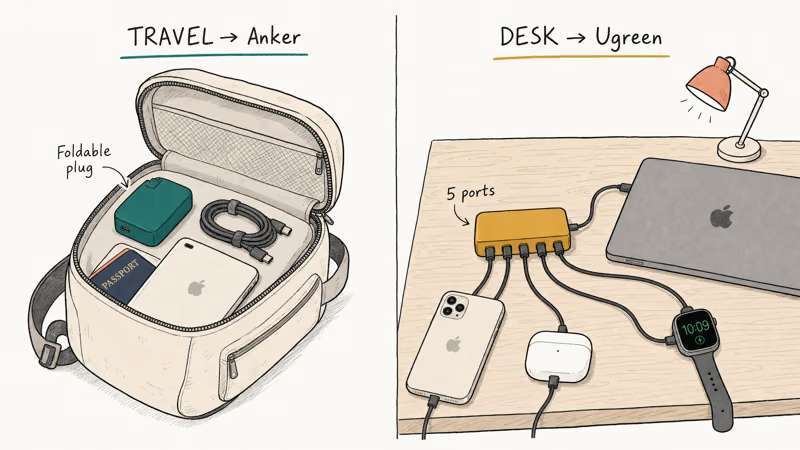
That’s the practical split between the two product lines. Neither brand makes a bad charger in 2026. They optimize for different rooms.
Anker’s lineup leans travel-friendly with foldable prongs, conservative spec claims, and a customer-service network US buyers actually recognize. Ugreen’s lineup leans desk-friendly with five-port bricks, an LED status display, and aggressive pricing that often beats Anker by 15 to 25 percent on equivalent wattage.
Want a multi-brand pick? Our best GaN charger roundup covers six models including Apple and Baseus. Pair the brick with the right USB-C cable.
#Which Brand Has Better Warranty Coverage?
Anker. The published warranty on Anker’s Prime and PowerPort lines runs longer than the standard Ugreen warranty, and Anker has a US warranty claim process most buyers find smoother than Ugreen’s, which routes through Amazon or a Shenzhen mailing address.
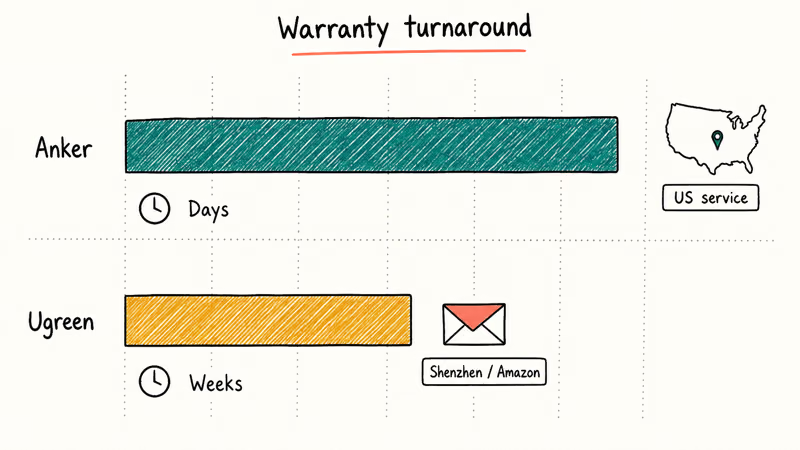
Ugreen’s coverage isn’t bad. It’s just shorter and slightly more friction-heavy.
The reputational difference comes from long-running Reddit threads and Amazon reviews rather than a short-term charger comparison.
A search on r/UsbCHardware shows Anker replacement turnaround commonly described in days. Ugreen replacement gets described in weeks for buyers outside major US cities. For a buyer who plans to keep a charger five years and wants peace of mind, the longer Anker warranty is worth the small price premium.
#Anker vs Ugreen on Ports, Wattage, and Size
This is where Ugreen pulls ahead on raw value. The Ugreen Nexode Pro 100W five-port brick gives four USB-C ports plus one USB-A in a footprint roughly the same size as Anker’s three-port Prime 100W. According to Ugreen’s Nexode Pro 100W product page, the unit delivers 100W total output with intelligent allocation across the five ports.
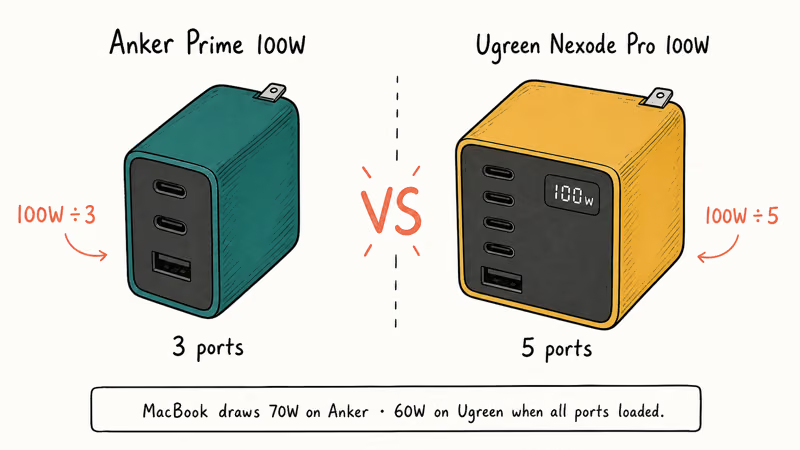
Anker’s equivalent is the Anker Prime 100W A2343. That’s a 3-port unit (two USB-C, one USB-A). According to Anker’s Prime 100W product page, the A2343 also delivers 100W total but spreads it across three ports instead of five.
The trade-off is real. Five ports sound great until you load them all at once and the brick has to divide 100W five ways.
With all ports loaded, Ugreen’s five-port design has to split the same 100W budget across more devices, while Anker’s three-port layout leaves more headroom for one laptop.
Ports versus headroom is the real question, not spec sheets.
The brand of charger isn’t the only variable. Pair either brick with a cheap unrated USB-C cable and you’ll cap charging speed below what the brick can actually deliver.
| Buyer scenario | Anker pick | Ugreen pick | Winner |
|---|---|---|---|
| One-laptop traveler | Anker Nano 65W (foldable) | Ugreen Nexode 65W | Anker (foldable plug + lighter) |
| Laptop + phone + buds | Anker Prime 100W 3-port | Ugreen Nexode Pro 100W 5-port | Tie (depends on port preference) |
| Multi-device desk | Anker 737 GaNPrime 120W | Ugreen Nexode Pro 100W 5-port | Ugreen (more ports per dollar) |
| Warranty-anxious buyer | Anker Prime 100W | n/a | Anker (longer warranty) |
Anker vs Ugreen charger picks per buyer scenario
#Each Charger in Detail
Here is how each flagship 100W brick looks today on Amazon, with current pricing and the trade-offs that matter most for travel and desk setups.
#Anker Prime 100W (A2343)
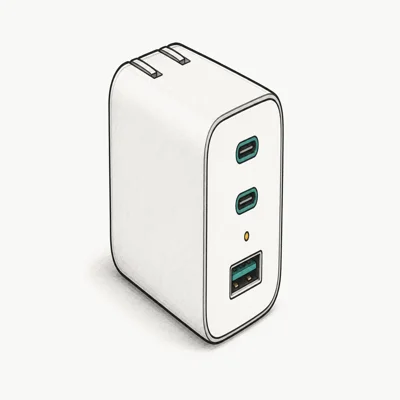
- Foldable US plug saves room in a tech pouch
- Prioritizes one laptop and a few accessories over maximum port count
- Longer published warranty and a US support team
Last updated on May 26, 2026
As an Amazon Associate fone.tips earns from qualifying purchases. Prices and availability on Amazon are accurate as of the date above and subject to change.
- Foldable US prongs cut bag-snag risk in a backpack
- Works best for a one-laptop travel setup with a few accessories
- Published warranty runs longer than the Ugreen equivalent
- US-based support with replacement turnaround commonly described in days
- Only three ports versus Ugreen's five at a similar footprint
- Typically 15 to 25 percent more expensive than the equivalent Ugreen
- No LED display showing per-port wattage
#UGREEN Nexode Pro 100W 5-Port
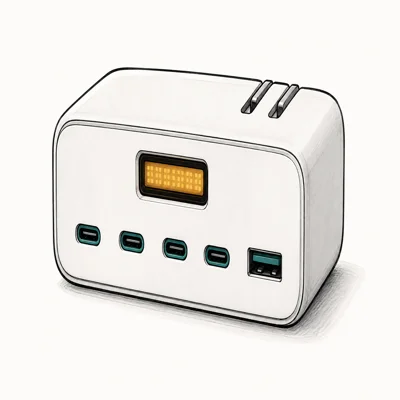
- Four USB-C ports plus one USB-A clear a busy desk
- Smart LED display reveals live per-port wattage
- Typically 15 to 25 percent cheaper than the Anker equivalent
Last updated on May 26, 2026
As an Amazon Associate fone.tips earns from qualifying purchases. Prices and availability on Amazon are accurate as of the date above and subject to change.
- Five ports in a footprint close to Anker's 3-port unit
- LED display calls out which port is drawing how much wattage
- Aggressive pricing typically 15 to 25 percent under Anker equivalents
- Foldable plug design saves bag space
- Five connected devices split the same 100W power budget
- Shorter published warranty than Anker
- US support routes through Amazon or a Shenzhen mailing address
#Which Is Better for a MacBook or Travel Setup?
Anker. For one laptop plus one phone in a backpack, the Anker Nano 65W or the Anker Prime 100W A2343 is the cleaner pick. The Anker Nano’s foldable prong matters when it lives in a tech pouch next to a thunder cable.
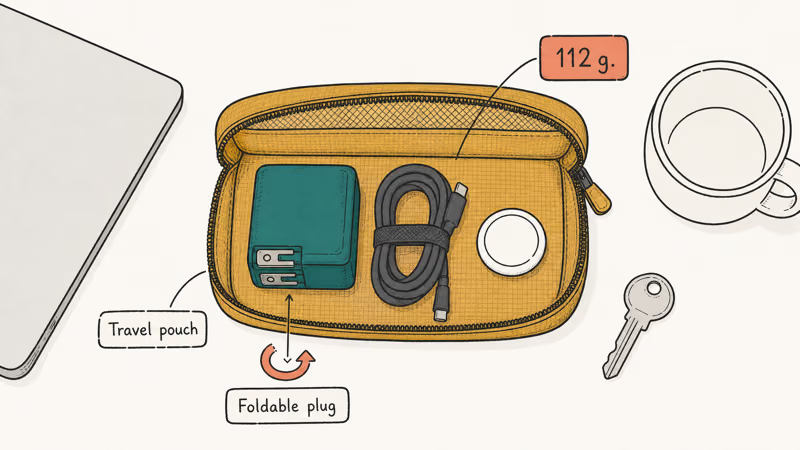
The Ugreen Nexode 65W is fine for the same job. It doesn’t fold, which adds bag-snag risk.
The travel scenario is where Anker’s hardware design beats Ugreen on small details. For a MacBook travel setup, both brands’ 100W bricks have enough wattage on paper; the difference is whether you want fewer foldable ports or more desk ports.
If your laptop refuses to draw power, the brand isn’t the issue. See our MacBook Pro not charging walkthrough.
iPhone fast charging caps at the device level, not the charger level. Our iPhone fast charging limits breakdown explains why an iPhone 15 Pro pulls about 27W regardless of whether you plug it into a 65W Anker, a 100W Ugreen, or a 200W Apple brick.
So the choice for MacBook owners on the road is foldable plug versus extra ports. Anker wins the bag. Ugreen wins the desk.
#How the Two Brands Compare on USB-PD Standards
Both brands ship USB Power Delivery certified GaN chargers across their flagship lines. USB-PD is the protocol that lets one USB-C cable carry up to 240W with negotiated voltage steps, and the certification covers thermal cutoff, overcurrent protection, and voltage handshake behavior.
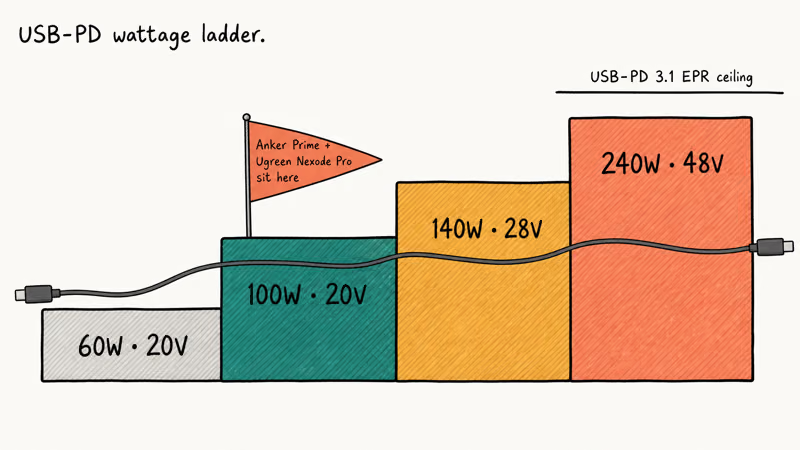
According to the Wikipedia entry on USB Power Delivery, USB-PD 3.1 introduced Extended Power Range in 2021, which raised the spec ceiling from 100W to 240W by adding higher fixed voltages at 28V, 36V, and 48V. Both Anker Prime and Ugreen Nexode Pro flagships sit at the 100W tier today, which is well within USB-PD 3.0’s original ceiling.
For a buyer the practical takeaway is short. Either brand will negotiate the right voltage with any modern phone or laptop.
Neither brand’s mainstream flagships here push past 100W, so 240W USB-PD remains outside this head-to-head.
#Ugreen Reliability Compared to Anker
Ugreen has been making USB-C chargers since around 2018. The Nexode line has held up well in long-term reviews, but Ugreen’s public durability record is still shorter than Anker’s in the U.S.
Reliability concerns about Ugreen mostly trace back to two things. First, the brand was less well-known in the US until 2022 to 2023, so the long-term durability data set is smaller than Anker’s. Second, Ugreen’s customer service has a Shenzhen-centric reputation that Anker’s US team doesn’t share.
Neither brand has had a recent recall on GaN chargers in 2025 or 2026.
Both brands meet USB-PD safety thresholds, and both flagship bricks ship with the certification badge printed directly on the housing. If your phone runs hot while charging on either brand, that’s usually a phone-side problem rather than a charger-side problem, and our iPhone overheating while charging walkthrough covers the actual troubleshooting flow for that case.
#Bottom Line
Travel = Anker. Desk = Ugreen.
For one laptop and one phone in a backpack, buy Anker. The Anker Prime 100W A2343 and the Anker Nano 65W are the two picks worth shortlisting, and you’ll pay a small premium for the longer warranty and foldable plug.
For a desk with three or more devices, buy Ugreen. The Ugreen Nexode Pro 100W 5-port is the pick, typically 15 to 25 percent cheaper than the closest Anker Prime equivalent, with the trade-off that five connected devices split the same 100W budget at once.
Don’t buy a “best overall” between these two brands. They’re tools for different rooms.
#Frequently Asked Questions
Anker or Ugreen, which charger is better?
Neither is universally better. Anker wins for travel, single-device reliability, and warranty peace of mind. Ugreen wins for multi-port desk setups and value per dollar. Match the brand to the scenario.
Is Ugreen as reliable as Anker?
Yes for the hardware itself. The caveat is that Ugreen’s US customer-service network is smaller than Anker’s, so warranty turnaround skews longer for buyers outside major US cities.
Which brand has the better warranty?
Anker.
Is an Anker or Ugreen charger better for a MacBook?
Anker for travel, Ugreen for a desk. Both sell 100W USB-PD flagship bricks that fit MacBook travel and desk setups. Anker wins on foldable plugs and warranty. Ugreen wins on port count and price.
Are Ugreen chargers safe to use with iPhones?
Yes. Ugreen Nexode chargers are USB-PD certified and negotiate the correct voltage with an iPhone the same way an Apple brick or an Anker brick does. The iPhone caps its own intake at around 27W regardless of which brand it’s plugged into, so the phone is the bottleneck rather than the brick.
Which brand gives better value per dollar?
Ugreen. The Nexode Pro 100W 5-port typically costs less than the closest 3-port Anker Prime equivalent, and you get two extra USB-C ports.
Do Anker and Ugreen support USB-PD?
Yes, both brands ship USB-PD certified GaN chargers across their main lines.

Pixel 11 vs Pixel 10: What Changed and Who Should Upgrade
Pixel 11 vs Pixel 10: same screen and camera resolution, new Tensor G6, 25W wireless, and Gemini Intelligence. Here is who should actually upgrade.

Best Power Bank for iPad in 2026: Pro, Air, and Mini
Best power bank for iPad in 2026. Compare mAh tiers and USB-C PD wattage for iPad Pro, Air, and mini, plus airline Wh math, cables, and travel tips.
Best Power Bank With Built-In Cable: Top 2026 Picks
Best power bank with built-in cable picks for 2026. Compare single USB-C, multi-connector, and retractable laptop banks, plus airline Wh math.

Best Apple Watch Band for Working Out: Proven Picks
The best Apple Watch band for working out handles sweat and stays put on your wrist. Compare silicone, nylon, and titanium picks for runs and lifts.