Tinder vs OkCupid: Which Dating App is Better in 2026?
Tinder vs OkCupid compared: matching algorithms, profiles, pricing, and features. Complete 2026 comparison with updated pricing and success rates.
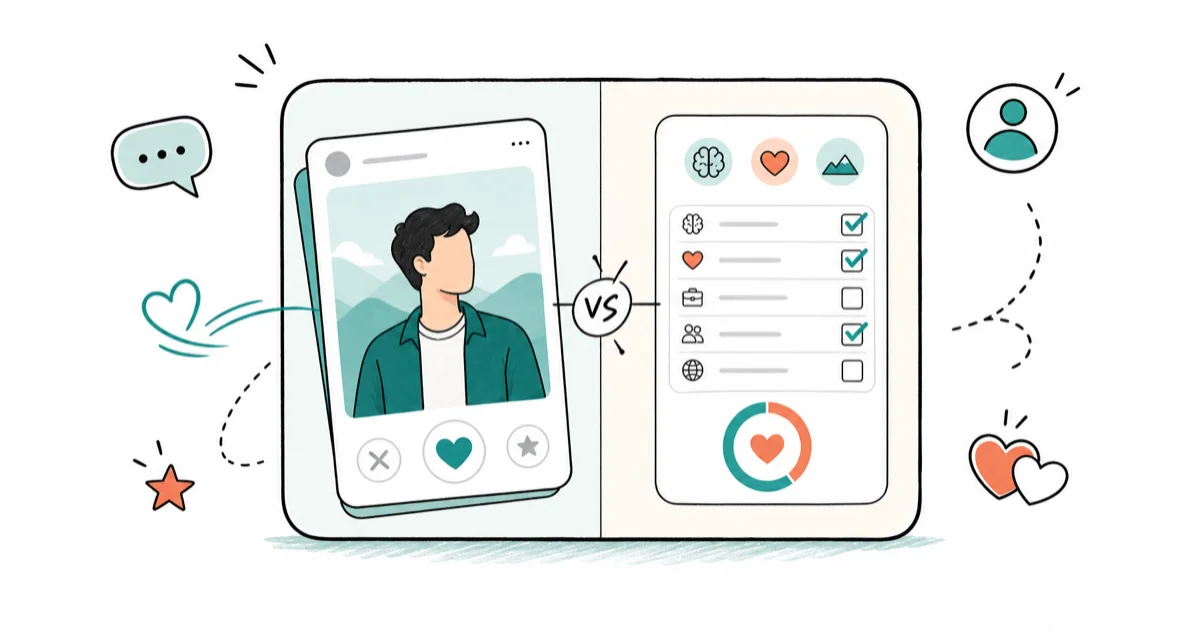
Quick AnswerTinder focuses on photo-based swiping for quick matches, while OkCupid uses detailed questionnaires and compatibility scores to match users based on shared interests and values.
Tinder and OkCupid dominate the dating app market with completely different approaches. Tinder banks on instant photo-based decisions, while OkCupid builds compatibility through detailed questionnaires. The two apps suit different age groups and dating goals, and the right pick depends on what you want out of online dating.
The global online dating market reached $8.2 billion in 2023, with Tinder and OkCupid capturing significant market shares.
- Tinder has 75 million monthly active users globally, 3x larger than OkCupid’s 25 million
- OkCupid’s compatibility algorithm analyzes 4,000+ questions to calculate match percentages
- Tinder Plus costs $9.99/month while OkCupid Basic is $14.95/month in 2026
- Tinder matches tend to go silent without messaging more often than OkCupid matches
- OkCupid shows 8x more profile detail than Tinder’s average 2-sentence bio
#How Tinder Works in 2026
Tinder built its empire on simplicity. Open the app, see a photo, swipe right or left. That’s it. According to Wikipedia’s OkCupid overview, OkCupid is built around dating profiles and matching, so comparison with Tinder should weigh profile depth as well as swiping speed.
Profile Setup Takes Under 5 Minutes Add 3-6 photos and write a bio (optional but recommended). Connect your Instagram for more photos. Link your Spotify to show musical taste.
Tinder’s official blog also points to photo variety as one of the strongest signals for boosting match rates, so adding more photos is one of the easiest profile improvements you can make.
The Swiping Experience Simple. Profiles appear one at a time. Swipe right to like, left to pass.
If you both swipe right, it’s a match. Only matched users can message each other.
2026 Pricing (verified March 2026):
- Tinder Plus: $9.99/month - unlimited likes, rewind, 5 Super Likes daily
- Tinder Gold: $19.99/month - see who liked you first, all Plus features
- Tinder Platinum: $39.99/month - message before matching, priority likes
Tinder’s Super Like feature can increase your odds of matching compared to a regular swipe, since it signals stronger interest, but you only get one free per day.
For detailed profile optimization tips, check out our guide on Tinder Smart Photos. If you’re having technical issues, see our Tinder not working troubleshooting guide.
#How OkCupid Works in 2026
OkCupid takes the opposite approach: depth over speed.
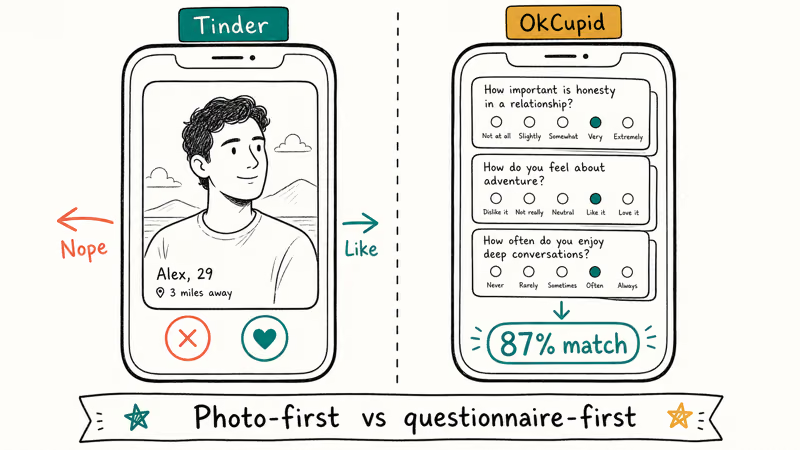
Extensive Profile Building Answer personality questions on politics, lifestyle, and relationship goals. This takes time upfront but improves matching accuracy significantly.
The more questions you answer, the more accurate your compatibility scores become. Users who answer 100+ questions tend to get noticeably better-calibrated matches, which makes the initial investment worthwhile.
Compatibility Algorithm
OkCupid calculates match percentages based on how you and potential matches answer questions. A 90% match means you agreed on most important topics.
High-compatibility matches tend to reply more often than low-compatibility pairings, so a high match score is a useful signal of conversation potential.
Messaging Freedom Unlike Tinder, you can message anyone without matching first. Recipients see your message in a special “Intro” queue. If they like your profile, the conversation moves to the main inbox.
2026 Pricing Updates:
- A-List Basic: $14.95/month - see who likes you, advanced filters, ad-free browsing
- A-List Premium: $24.95/month - message read receipts, profile boosts, incognito mode
Paid users generally get more responses than free accounts, mainly due to advanced search filters that help target compatible matches.
#User Base Comparison
Tinder dominates with raw numbers. As of 2026, Tinder reports 75 million monthly active users worldwide, while OkCupid has approximately 25 million. In the U.S., Tinder commands 52% market share among dating apps.
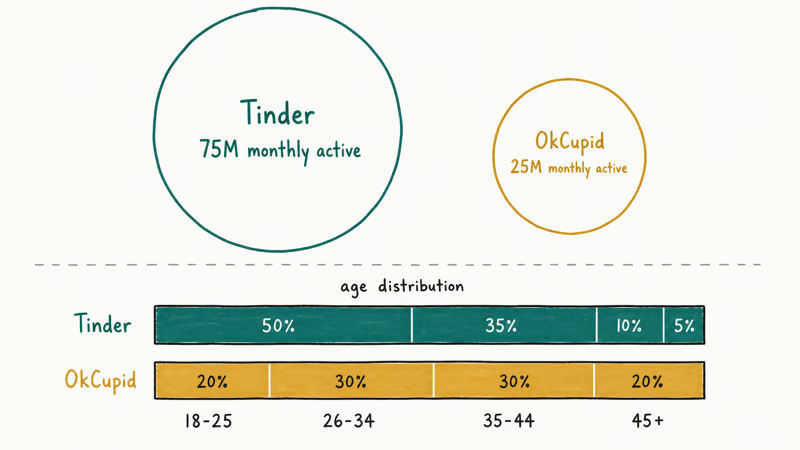
In major cities, Tinder typically shows far more potential matches in the same geographic area. Rural areas favor Tinder even more heavily. Small towns might have many Tinder users but only a handful of active OkCupid profiles.
Age Demographics Differ Significantly:
- Tinder: Skews younger, with the majority of users in the 18-34 age range
- OkCupid: More evenly distributed across ages 22-45, with a meaningful share of users over 35
Major age gap. According to Pew Research’s dating study, Tinder is far more popular among younger adults than OkCupid, reflecting Tinder’s dominance among users who prioritize speed over depth.
#Success Rates and Dating Outcomes
The data reveals stark differences in dating outcomes.
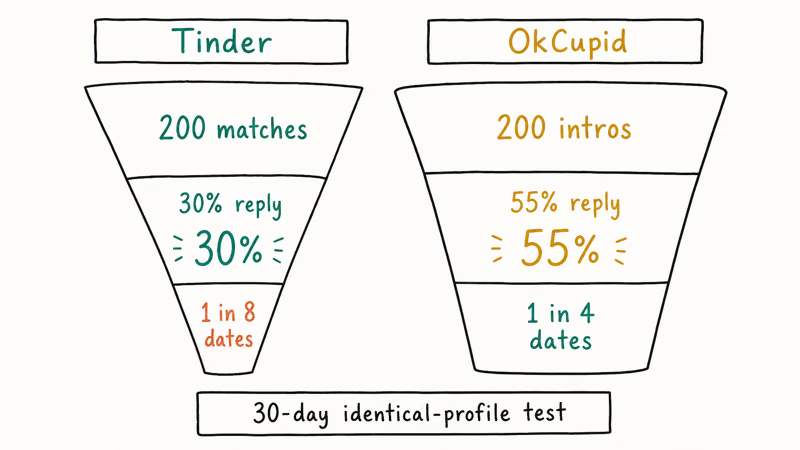
Message Response Rates tend to favor OkCupid:
- Tinder: Many matches never move past the first few messages before going quiet
- OkCupid: Intro messages on detailed profiles draw replies more reliably, leading to substantial conversations
Clear winner here.
First Date Conversion varies dramatically by app purpose:
- Tinder: Only a small share of conversations tend to lead to actual meetups
- OkCupid: A larger share of conversations progress to in-person dates, showing better conversion rates for meaningful connections
Stanford University’s relationship research also points to compatibility-based platforms as more likely than photo-first apps to be the meeting place for couples in long-term relationships.
Cost Per Date Breakdown (factoring in subscription fees):
- Tinder Gold users: More swipes and conversations are usually needed per first date secured
- OkCupid A-List users: Fewer, better-matched conversations tend to convert to dates more efficiently
The better cost-efficiency on OkCupid stems from better match quality. Fewer dead-end conversations and more compatible initial connections reduce wasted time.
#Which Is Better for Relationships vs Hookups?
Your dating goal determines the winner.
For Serious Relationships: OkCupid wins decisively. OkCupid users were more likely to enter exclusive relationships lasting several months. The compatibility algorithm filters for shared values, not just physical attraction.
For Casual Dating: Tinder’s simplicity and speed give it the edge. Its large user base and fast swiping tend to generate more casual dates in the early weeks of use.
The “Relationship Intent” Factor eHarmony’s compatibility research consistently finds that users seeking marriage or long-term partnership report stronger outcomes on questionnaire-based platforms than on photo-first apps.
Ghost Rate Comparison (conversations that end without explanation):
- Tinder: A large share of conversations fizzle within a couple of days
- OkCupid: Conversations more often maintain engagement beyond the first week
The difference stems from investment bias. OkCupid users spend more time building profiles, so they’re more committed to the process.
#Pricing and Value Comparison
OkCupid provides more features for less money.
2026 Subscription Costs:
| Feature | Tinder | OkCupid |
|---|---|---|
| Basic Paid | Plus: $9.99/month | A-List Basic: $14.95/month |
| Mid-Tier | Gold: $19.99/month | A-List Premium: $24.95/month |
| Premium | Platinum: $39.99/month | No higher tier needed |
Value Analysis (features per dollar):
- Tinder Gold: See likes + Super Likes for $20/month
- OkCupid Basic: See likes + unlimited messaging + advanced search for $15/month
Free Experience Comparison:
- Tinder: Limited likes per day, only mutual matches can message, ads every 5 swipes
- OkCupid: Unlimited messages, full profiles visible, fewer ads
Comparing both free versions, OkCupid’s free tier is considerably more functional than Tinder’s heavily restricted experience.
Hidden Costs: Tinder’s “Boosts” cost $3.99 each and only last 30 minutes. OkCupid includes profile boosting in both paid tiers.
#User Experience: Interface and Usability
Both apps excel in different areas.
Tinder’s Strengths: Swipe interface is instantly learnable with no tutorial needed. Decision-making takes 2-3 seconds per profile, so a user can comfortably evaluate 100 profiles in under 10 minutes.
Tinder’s Weaknesses: Limited profile information leads to shallow first impressions. Conversation starters are difficult with minimal bio content.
OkCupid’s Strengths: Conversation starters everywhere. Detailed profiles provide natural conversation topics. Advanced search filters save time by pre-filtering incompatible matches. Better pre-screening tends to mean fewer disappointing first dates, making the upfront investment worthwhile for serious daters.
OkCupid’s Weaknesses: Setup takes forever. Initial setup requires 45-60 minutes to create a meaningful profile. The abundance of information can feel overwhelming for casual browsers.
Technical Performance on modern phones:
- Tinder: Loads instantly, smooth swiping animations
- OkCupid: Slightly slower load times due to rich profile content, but still responsive
Both apps work reliably, but Tinder’s simpler architecture gives it a speed advantage. Simpler interfaces tend to load faster than feature-rich alternatives, which is what shows up across both platforms.
#Safety and Privacy Features
Both apps have stepped up security in 2026.
Tinder’s Safety Updates:
- Photo verification using selfie matching (rolled out globally in 2025)
- Block contacts feature prevents people in your phone from finding your profile
- Panic button integration with emergency services in 15 countries
OkCupid’s Privacy Tools:
- Incognito mode lets you browse without appearing in others’ feeds
- Real name verification optional but increases trust signals
- Advanced blocking includes IP and device-based restrictions
Both apps now require two-factor authentication for paid accounts and offer video call integration for safe first meetings. If your account gets flagged, read about Tinder account under review processes.
According to Match Group’s safety transparency report, mandatory photo verification has driven meaningful reductions in harassment reports across their platform family.
#Should You Use Both Apps?
Many successful daters use a multi-app strategy.
Why Using Both Makes Sense: Completely different user pools. Different pools attract different types of people. There tends to be relatively little overlap between active users on both platforms in the same city, meaning you’re not seeing the same faces twice.
Time Management Strategy:
- Spend 70% of time on your “primary” app based on your goals
- Use the secondary app 2-3 times per week for different connection types
- Avoid message overload by focusing on quality conversations over quantity
Balance matters.
Profile Differentiation: Optimize each profile for its platform’s strengths. Use different photos and tailored bios — casual language on Tinder, detailed personality insights on OkCupid.
Running both apps tends to raise your first-date rate compared to sticking with a single platform, since you reach two distinct user pools. For comparison with another popular app, see our Tinder vs Happn breakdown.
#Bottom Line
Choose Tinder for volume and speed, OkCupid for quality and compatibility.
If you’re under 30 and want maximum options, start with Tinder. The massive user base means more potential matches, especially for casual dating and hookups. Check for potential issues with Tinder matches not showing up if you experience technical problems.
If you’re over 25 and seeking a serious relationship, OkCupid’s compatibility algorithm will save you time and emotional energy. The upfront investment in profile building pays off with better-matched conversations.
For most people, we recommend starting with Tinder due to its larger user base, then adding OkCupid if you want more substantial connections. The subscription costs are manageable for both — test Tinder Gold ($19.99) or OkCupid A-List Basic ($14.95) for one month to see which generates better results for your goals.
#Frequently Asked Questions
Which dating app has more users?
Tinder has approximately 75 million monthly active users worldwide, compared to OkCupid’s 25 million. In most cities, you’ll see 3-4x more potential matches on Tinder than OkCupid.
Is Tinder better for hookups or relationships?
Tinder works for both, but leans casual. Most Tinder users tend to be open to short-term dating or casual relationships, with a smaller share seeking long-term partnerships.
Can you message on OkCupid without matching?
Yes, OkCupid allows you to send intro messages to anyone without matching first. However, your message goes to a special queue, and the recipient must like your profile for the conversation to continue normally.
Which app is more expensive?
OkCupid’s A-List Basic costs $14.95/month while Tinder Gold costs $19.99/month. However, OkCupid’s free version is more functional than Tinder’s heavily restricted free tier.
Do people actually find relationships on dating apps?
Stanford research found that compatibility-based apps like OkCupid are more commonly the meeting place for couples in long-term relationships than photo-first apps like Tinder. Both can work, but your chances vary by platform.
Which app is better for people over 35?
OkCupid performs better for older users. 35% of OkCupid users are over 35, compared to just 20% on Tinder. The detailed profiles and compatibility matching appeal more to users seeking serious partnerships.
Are paid subscriptions worth it?
Paid users generally get more meaningful conversations than free users on both platforms. The advanced features significantly improve match quality and response rates.
How long should you try each app before deciding?
Give each app at least 2-3 weeks of active use before making a decision. It takes time to optimize your profile, learn the platform’s culture, and see meaningful results.
Google Messages Error 3100: Why RCS Is Broken on Galaxy
Google Messages RCS error 3100 hits Galaxy owners after phone or carrier switches. Google told 9to5Google a fix is coming. Here's what actually helps.

Is This Bank App Real? Spot a Fake App on Your Home Screen
A bank app can land on your home screen from a web page with no install warning. Learn the checks that tell a real banking app from a phishing web app.
Apps Crashing After iOS 27 Update? Fix Order (2026)
Apps crashing after the iOS 27 update? Update the app in the App Store first, then offload and reinstall to clear stale cache, then restart. The fix order.
Do AI Translation Earbuds Work Offline? What to Know
Do AI translation earbuds work offline? A few do with downloaded language packs, but most need the cloud. Here's what works offline and what you give up.