How to Fix the "SIM Card Is Not From Verizon Wireless" Error
Fix the SIM Card Is Not From Verizon Wireless error by checking Verizon lock policy, iPhone Carrier Lock status, SIM activation, and network settings.
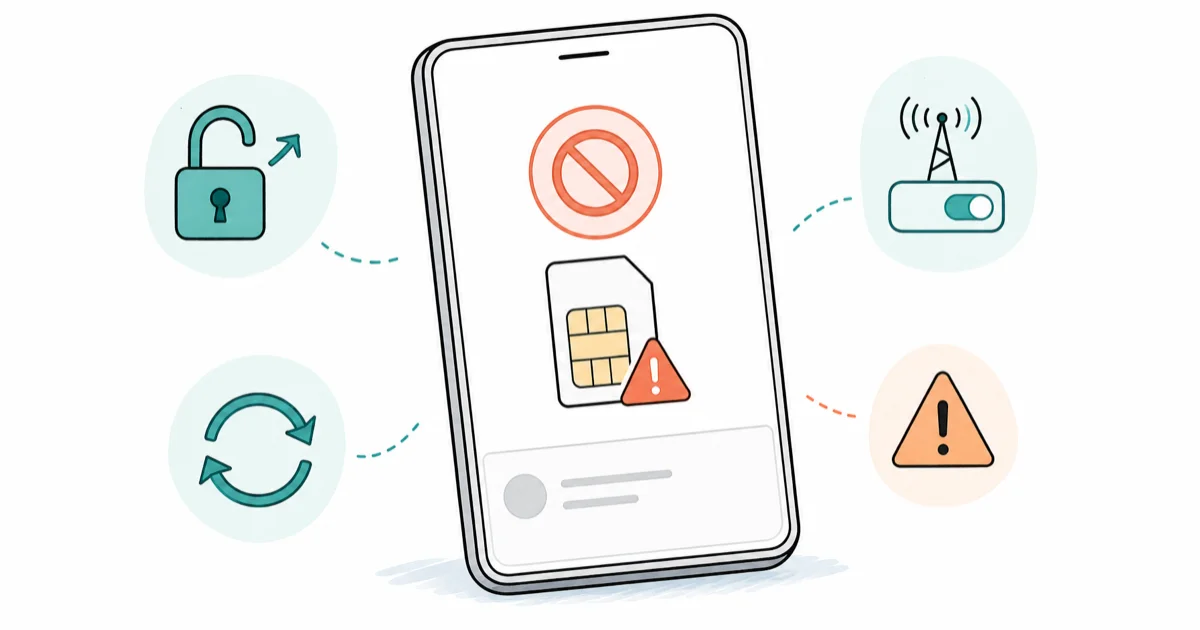
Quick AnswerSeparate a carrier lock from SIM activation or data problems; on iPhone, check Settings > General > About > Carrier Lock. Only Verizon can remove its lock; an APN reset cannot unlock the phone.
The “SIM Card Is Not From Verizon Wireless” message often appears after a non-Verizon SIM enters a Verizon phone, but it doesn’t prove the cause. A lock, inactive SIM, account restriction, incompatibility, or bad data settings need different fixes.
This guide is for a phone and wireless account you own or are authorized to manage. Trying to alter or unlock someone else’s phone without authorization may be illegal and can violate privacy or account terms. Start with the lock check below before changing network settings or paying anyone for an unlock.
- A carrier lock and an APN problem aren’t the same: a lock blocks another carrier, while an APN controls how an already accepted SIM reaches mobile data services.
- Verizon changed its locking rules on January 27, 2026. Don’t apply the old 60-day rule to every Verizon phone.
- On iPhone,
Settings>General>About>Carrier Lockis the useful on-device check; “No SIM restrictions” means the iPhone is unlocked. - Only the carrier can remove a carrier lock. A reset, restore, SIM swap, or APN edit can’t override it.
- If the phone is unlocked, verify the new SIM and plan with the new carrier before resetting network settings.
#What Does the Message Mean?
The message tells you that the phone is not accepting the current carrier setup. It does not establish a single root cause.
If the device is still locked to Verizon, a non-Verizon SIM can’t register until Verizon’s eligibility rules are met and Verizon removes the lock. According to Apple’s carrier-unlock instructions, Apple can’t unlock an iPhone; the current carrier must do it.
If the device is already unlocked, look instead at the new carrier’s activation, the SIM or eSIM, device compatibility, and mobile-data settings. An APN identifies the gateway used for cellular data. Google’s mobile-network settings guide explains that role, which is why an APN repair can restore data but can’t remove a Verizon carrier lock.
#Check Whether the Phone Is Actually Locked
#On iPhone
Open Settings > General > About and find Carrier Lock. Apple says No SIM restrictions means the iPhone is unlocked. Any other status should be discussed with Verizon before you troubleshoot APNs or erase the phone.
While you are on the About screen, install a carrier-settings update if iOS offers one. Apple’s carrier-settings guide says a new SIM or eSIM may require settings for the new carrier.
Don’t treat a borrowed-SIM test as definitive. A second SIM can fail because it’s inactive, damaged, incorrectly provisioned, or unsupported by the device even when the phone is unlocked. If you need more context before a swap, compare the Settings check in our unlocked-iPhone guide.
#On Android
Android menu names and lock indicators vary by manufacturer and carrier. Some phones expose a SIM or network-lock status; others don’t. The reliable route is to give Verizon the device IMEI and ask it to check the lock and account status. Our IMEI check guide explains where to find that identifier without treating it as proof of unlock eligibility.
If the phone accepts the SIM but mobile data does not work, use the new carrier’s activation and APN instructions. Google’s current mobile-connectivity troubleshooting starts with the carrier, plan, SIM, and network settings rather than treating every data failure as a device lock.
#Which Verizon Locking Rule Applies?
The activation date controls this branch.
Verizon’s present rules depend on when the device was activated and how it was purchased. According to its device-locking FAQ, devices activated before January 27, 2026 and devices activated on or after that date follow different policies.
- Standard monthly devices activated on or after January 27, 2026: Verizon says the device remains locked until it’s paid in full and becomes eligible for automatic unlocking.
- Prepaid devices activated on or after January 27, 2026: Verizon says they remain locked until the stated paid-and-active service requirement is met. Its current unlocking policy gives that requirement as 365 days.
- Devices activated before January 27, 2026: Verizon’s FAQ preserves the earlier automatic 60-day policy for those devices.
Lost, stolen, or fraud-flagged devices may remain ineligible. A phone bought secondhand can also have an account or payment issue that only the original account holder and Verizon can resolve.
Confirm that distinction before any reset.
Because these policies are date-dependent, the old advice to “wait 60 days” is wrong for a newly activated Verizon phone in 2026. Check the activation date and purchase type with Verizon.
#Ask Verizon to Confirm Eligibility
Have the IMEI, the Verizon account information, and proof of purchase available. Verizon’s current FAQ lists 800-922-0204 for support and also provides account support channels online.
Ask the representative to confirm four separate facts:
- Whether Verizon currently shows the IMEI as locked.
- Which policy period applies to its activation date.
- Whether the device is paid in full or has a lost, stolen, or fraud restriction.
- Whether Verizon’s system shows it as eligible for automatic unlocking.
Don’t rely on a promised universal processing time. Verizon’s current policy describes eligibility and automatic unlocking but doesn’t support a single guaranteed minute-or-hour window for every device. Apple likewise notes that a carrier unlock request can take time to complete.
After Verizon confirms the unlock, follow the carrier’s instructions, restart the phone if asked, and check the lock status again. On iPhone, return to Settings > General > About > Carrier Lock.
#If the Phone Is Unlocked but the New SIM Still Fails
An unlocked status narrows the problem, but it does not prove the new SIM and service are ready.
#Verify the SIM, eSIM, and plan
Confirm with the new carrier that the line is active, the SIM or eSIM is assigned to the correct IMEI, and the phone supports that carrier’s network. Apple’s Invalid SIM or No SIM guide recommends checking for an active plan, restarting, installing carrier-settings updates, reseating a physical SIM, and asking the carrier to test or replace it when necessary.
If a physical SIM appears damaged or doesn’t fit the tray correctly, don’t trim it or force the tray. Ask the carrier for the correct replacement. For an eSIM, have the carrier verify the activation rather than repeatedly deleting profiles. The hardware checks in our invalid SIM guide help distinguish a damaged card from a carrier-specific message.
#Repair mobile-data settings on Android
Diagnose calls and data separately.
If calls and texts work but mobile data or MMS does not, reset the mobile-network settings using the path supplied by the phone manufacturer. On current Pixel software, Google’s troubleshooting guide provides Settings > System > Reset options > Reset mobile network settings.
For an APN, use only the exact values provided by the new carrier. Don’t copy old T-Mobile, AT&T, or MVNO values from an unrelated article: APN fields can differ by carrier, plan, and reseller, and stale hard-coded values can create a second problem.
Use only settings your new carrier supplies.
#Repair network settings on iPhone
First open Settings > General > About and wait for any carrier-settings prompt. If the carrier confirms activation and the phone remains unable to connect, Apple’s network-settings reset instructions provide the current path: Settings > General > Transfer or Reset iPhone > Reset > Reset Network Settings.
This reset removes saved network settings, including previously used Wi-Fi networks and some VPN or APN settings. Record anything you need before confirming. It doesn’t unlock the iPhone, and it shouldn’t be used as a substitute for Verizon’s lock check. If iOS instead reports no card at all, use the separate iPhone No SIM checklist.
Keep the lock check separate.
#What Not to Do
- Don’t factory-reset or DFU-restore just to remove a carrier lock. Those actions erase or reinstall local software; they don’t change Verizon’s server-side eligibility record.
- Don’t pay an unlock vendor before Verizon confirms the status. A third party can’t legitimately erase an unpaid balance, a lost-or-stolen report, or a carrier eligibility rule.
- Don’t assume an APN edit unlocks the phone. APNs affect cellular data after the SIM has been accepted.
- Don’t hard-code another carrier’s APN from memory. Obtain current values from that carrier.
- Don’t use a fixed deadline as proof of failure. Ask Verizon whether the unlock is complete and recheck the device status.
#Bottom Line
Check the lock status first. On iPhone, use Settings > General > About > Carrier Lock; on Android, ask Verizon to verify the IMEI if the device does not expose a trustworthy status. Then apply the policy that matches the activation date: Verizon’s current post-January 27, 2026 rules are not the old universal 60-day rule.
If Verizon says the phone is unlocked, move to the new carrier’s activation, SIM, compatibility, carrier settings, and APN guidance. Network resets can repair connectivity, but only Verizon can remove a Verizon carrier lock. A shorter Galaxy- and Pixel-focused walkthrough is available in our Verizon SIM notification guide.
#Frequently Asked Questions
Can an APN reset unlock a Verizon phone?
No. An APN tells an accepted SIM how to reach mobile-data services. It doesn’t change the carrier-lock record. Confirm the lock with Verizon first.
Does every Verizon phone still unlock after 60 days?
No. Verizon changed its policy for devices activated on or after January 27, 2026. The older 60-day rule remains relevant to devices activated before that date, while current monthly and prepaid rules use different eligibility conditions.
Why does Carrier Lock say “No SIM restrictions” but service still fails?
That status means the iPhone is unlocked, not that the new line is active. Ask the new carrier to verify the SIM or eSIM, plan, IMEI compatibility, and carrier settings.
Will Reset Network Settings delete photos or apps?
No, but it removes saved network settings such as known Wi-Fi networks and may remove VPN or APN settings. It doesn’t remove a carrier lock.
Can a factory reset remove the Verizon message?
A reset may clear a local settings problem, but it can’t override a Verizon lock or account restriction. Verify the lock status before erasing anything.
What is the difference between a carrier lock and a lost-or-stolen block?
A carrier lock restricts the device to a carrier until its unlocking conditions are met. A lost, stolen, or fraud record is a separate restriction and can keep a device ineligible. Verizon must investigate either status.
Pixel 11 vs Pixel 10: What Changed and Who Should Upgrade
Pixel 11 vs Pixel 10: same screen and camera resolution, new Tensor G6, 25W wireless, and Gemini Intelligence. Here is who should actually upgrade.

Verizon Not Receiving Texts? How to Fix It in 9 Steps
Verizon not receiving texts? Fix it in 9 steps: check Message Blocking in My Verizon, reset network settings, deregister iMessage, and call support.
Pixel Battery Drain: What Google's July Fix Really Covers
Google marked the Pixel idle battery drain bug fixed in July, but only some phones got the patch. Here is who is covered, who is not, and what to try.
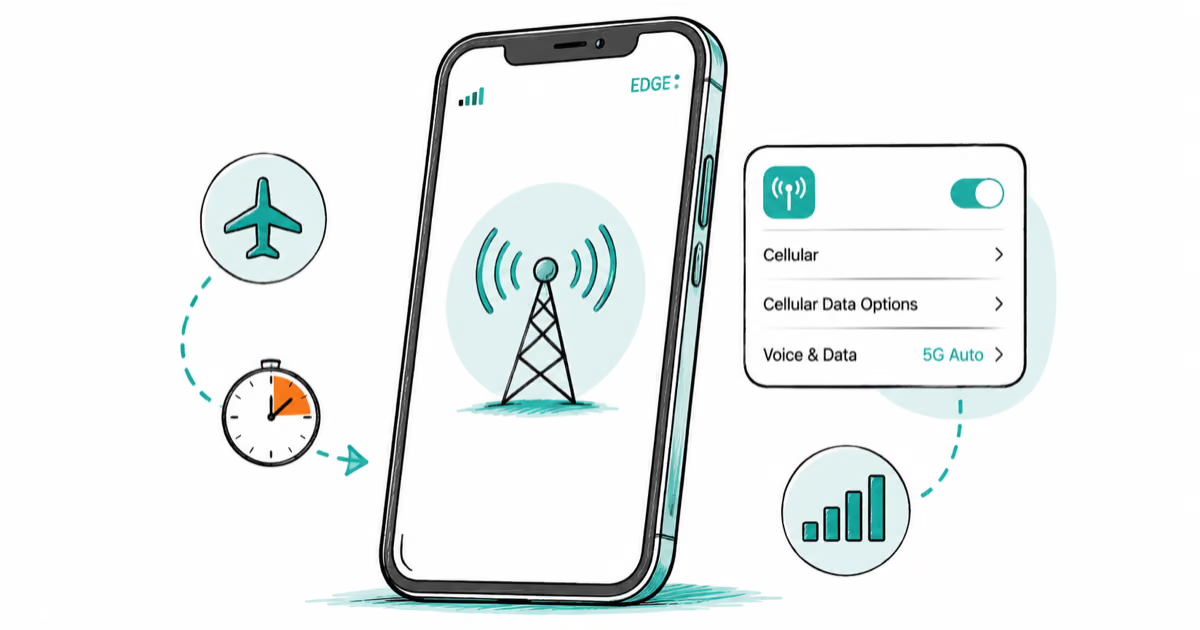
iPhone Stuck on EDGE? How to Get 5G or LTE Back (2026)
iPhone stuck on EDGE with crawling data? Here's why the E icon appears, which settings force 5G or LTE back, and when the problem is your carrier.