How to Recover Deleted Bookmarks in Chrome (2026 Guide)
Recover your own deleted Chrome bookmarks using Bookmarks.bak, Google Sync, Time Machine, File History, and reputable recovery software in 2026.
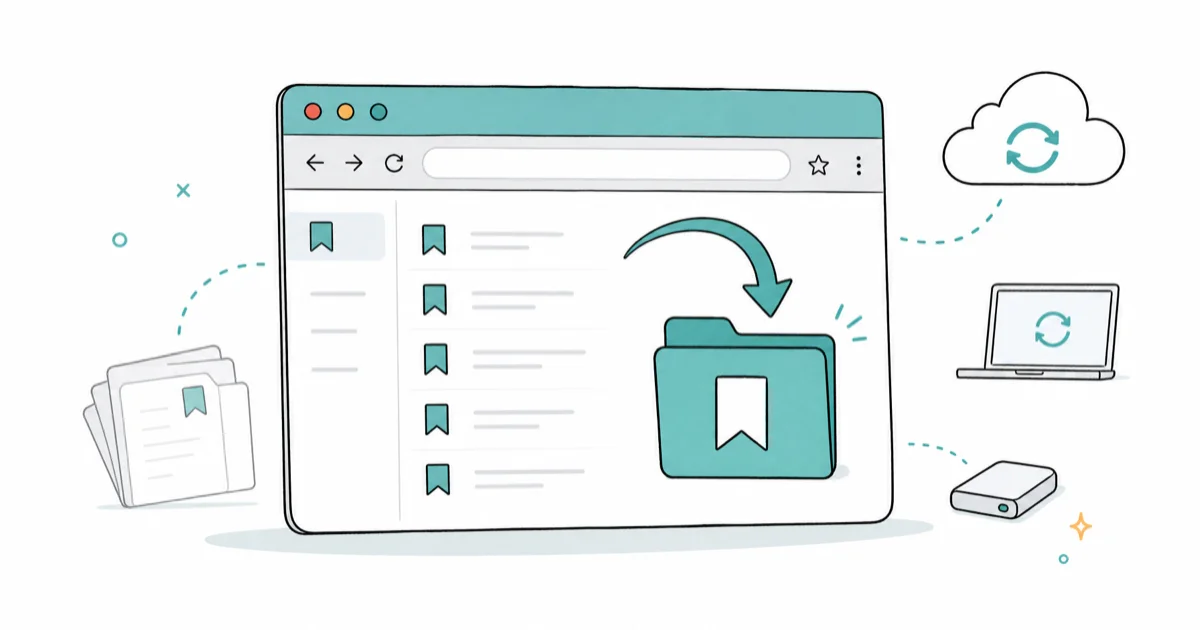
Quick AnswerClose Chrome, open the profile folder (%LocalAppData%\Google\Chrome\User Data\Default on Windows or ~/Library/Application Support/Google/Chrome/Default on macOS), rename Bookmarks to Bookmarks.old, then rename Bookmarks.bak to Bookmarks and reopen Chrome. If that fails, sign back into Chrome Sync on another device or restore an older Bookmarks file from Time Machine or File History.
This guide is for recovering bookmarks you saved on your own Chrome profile and your own Google account. Accidental drag, a sync hiccup after a Chrome update, a wiped user data folder after reinstalling the browser. The legitimate recovery paths work on Windows, Mac, and Android when signed into the same Google account, and this guide walks through them in the order you should try them.
- Chrome keeps a single backup at
Bookmarks.bakin your profile folder, refreshed once when Chrome starts a new session, so close the browser before you touch the file. - If Chrome Sync was on, your bookmarks live on every device still signed in and can be re-pulled by signing in fresh; pause sync first to stop the empty list from overwriting good copies.
- Google Takeout exports Chrome bookmarks as an HTML file you can re-import; older Takeout archives often hold the bookmarks you lost.
- Time Machine on macOS and File History on Windows keep older copies of the
BookmarksJSON file you can roll back to without any third-party tool. - If
Bookmarks.bakis also gone, paid recovery software like EaseUS Data Recovery or Recuva can scan your own drive for the deleted JSON file before it gets overwritten.
#What Counts as Recoverable in Chrome?
Chrome stores bookmarks for each profile in a plain JSON file called Bookmarks, with a one-version-old backup called Bookmarks.bak sitting next to it. Both files are inside the user data directory documented in the Chromium user data dir reference. When you open Chrome, the browser reads Bookmarks, then on the next clean shutdown it copies the current state over Bookmarks.bak. Knowing this shapes every recovery method below.
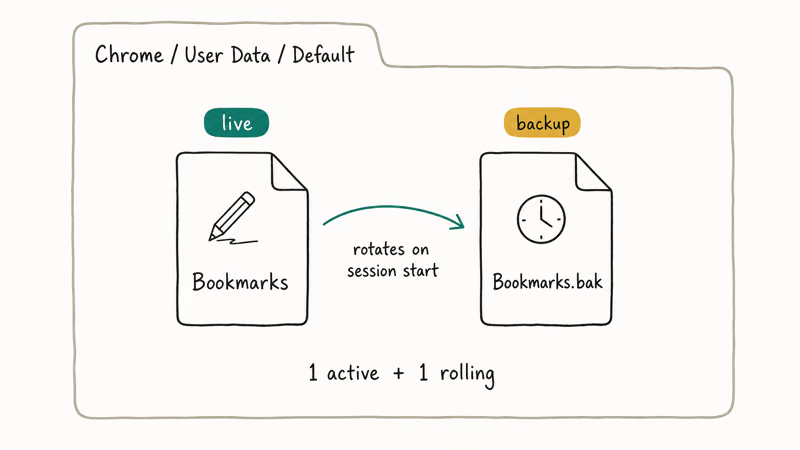
The Chromium docs confirm that the user data directory holds exactly 1 active Bookmarks file plus 1 rolling Bookmarks.bak, not a multi-version archive. That single backup is the rolling lifeline.
What you can usually get back:
- Bookmarks deleted in the current browsing session, before Chrome restarts.
- Bookmarks deleted in the previous session, if
Bookmarks.bakwasn’t yet overwritten. - Anything that synced to your Google account before the deletion, recoverable from another signed-in device or a Takeout archive.
- Older
Bookmarksfiles captured by Time Machine, File History, or a regular drive backup.
What is harder or impossible:
- Bookmarks deleted before you ever turned on sync, when the only copy was on a single machine that’s since been reinstalled or wiped.
- Bookmarks that were deleted, then Chrome was opened and closed several times so
Bookmarks.bakwas overwritten with the new, empty list. - Bookmarks tied to a Google account you no longer have access to. In that case, start with Gmail account recovery before touching the bookmarks side.
This is your profile, your Google account, your machine. None of the steps below ask you to bypass another user’s Chrome lock or sign-in. If the bookmarks aren’t yours, stop here.
#Method 1: Press Ctrl+Z in Bookmark Manager First
The fastest fix is the one most people miss. Chrome’s Bookmark Manager has a real undo stack for the current session.
- Open Chrome and go to
chrome://bookmarks(or Menu → Bookmarks → Bookmark Manager). - Press Ctrl+Z on Windows or Linux, or Cmd+Z on macOS.
- Repeat until the deleted bookmark, folder, or batch reappears in the tree.
A few notes: Ctrl+Z (or Cmd+Z on Mac) works for moves, renames, and deletions, but only inside the Bookmark Manager tab and only for the current Chrome session. Close Chrome and the undo history is gone. Pressing Cmd+Z several times in a row can recover a batch of folders dragged into the trash. If Chrome already restarted between the deletion and now, jump to Method 2 instead of clicking Undo on a stale stack.
#Method 2: Restore the Bookmarks.bak File
This is the canonical recovery path when Ctrl+Z is no longer available. The trick: don’t open Chrome before you swap files, or Chrome will overwrite Bookmarks.bak with the empty version.
Find the profile folder for your operating system:
- Windows 10/11: Press Win+R, paste
%LocalAppData%\Google\Chrome\User Data\Default, hit Enter. - macOS: In Finder, press Cmd+Shift+G and paste
~/Library/Application Support/Google/Chrome/Default. - Linux: Open
~/.config/google-chrome/Defaultin your file manager. - Multiple Chrome profiles: replace
DefaultwithProfile 1,Profile 2, etc. Match the profile name shown inchrome://versionunder “Profile Path”.
Restore the backup:
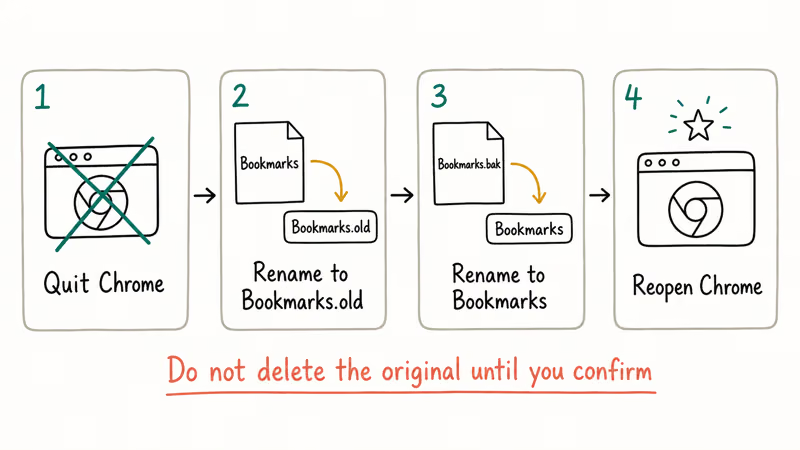
- Quit Chrome completely. On macOS, use Cmd+Q, not just close the window. On Windows, end any lingering
chrome.exeandGoogle Chrome Helperprocesses in Task Manager. Background helpers are normal. See our note on Google Chrome Helper if Activity Monitor still shows several instances. - In the profile folder, rename
BookmarkstoBookmarks.old. - Rename
Bookmarks.baktoBookmarks(no extension). - Reopen Chrome. The bookmark bar and Bookmark Manager should now show the previous session’s set.
Swapping the files is quick, and Chrome reopens with the prior session’s bookmark tree intact, including any folder hierarchy that was deleted by mistake. If the swap returns the wrong snapshot or only some bookmarks, undo the rename (Bookmarks back to Bookmarks.bak, Bookmarks.old back to Bookmarks) and move to Method 3 or Method 4 instead. Never delete the original Bookmarks file until you confirm recovery worked.
#Why does Bookmarks.bak only have yesterday’s data?
Because Chrome rotates that file on session start, not after every change. According to Chromium’s user data documentation, the live Bookmarks file is rewritten every time you change anything, while Bookmarks.bak is the previous good state captured at the start of the current session. Open and close Chrome twice with no bookmarks in it and the backup will match the empty state. That’s the most common reason recovery fails.
#Method 3: Pull Bookmarks Back From Chrome Sync
If you ever turned on Chrome Sync, your bookmarks were copied to your Google account and pushed to every device signed in. The recovery move is to find a device where sync hasn’t yet caught up to the deletion.
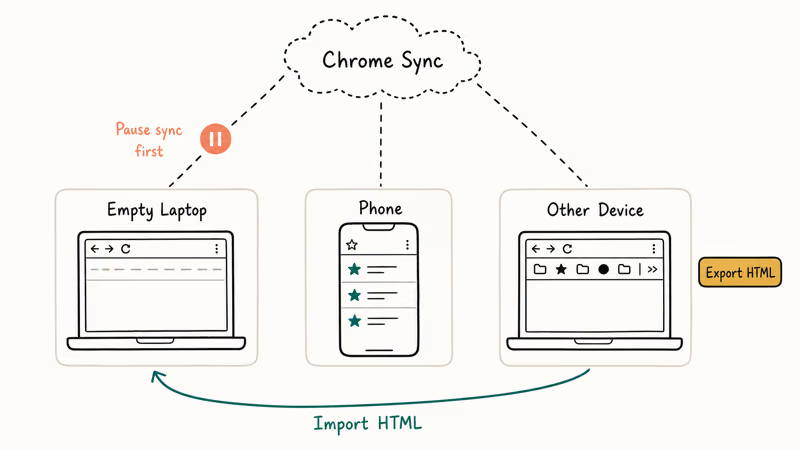
Before doing anything, pause sync on the device with the empty bookmarks:
- In Chrome, click your profile icon, Sync is on, Turn off. Or open
chrome://settings/syncSetupand toggle sync off. - This stops the empty list from propagating further.
Then check other signed-in devices:
- A second laptop, a work PC, or your Android or iPhone Chrome app. If sync hadn’t yet pulled the deletion on that device, your bookmarks are still in the bookmark bar.
- Open the Bookmark Manager there, select all, right-click, Export bookmarks to a
.htmlfile. You now have a clean snapshot.
Import the snapshot back into the broken profile:
- On the device with the empty list, open
chrome://bookmarks. - Three-dot menu, Import bookmarks, pick the
.htmlfile. - The imported set lands in a folder called “Imported”. Drag entries back to where they belong.
- Once the bookmarks are restored locally, turn Sync back on so the rest of your devices match.
According to Google’s Chrome page, Chrome Sync mirrors your data across all 5+ device types where you sign in (Windows, macOS, Linux, Android, iOS), so importing the HTML and then re-enabling sync rebuilds the master list from the device that still had the data. If sync looks stuck on every device, our guide on Chrome bookmarks disappeared covers the related sync glitches that look like deletions but aren’t.
#Method 4: Check Google Takeout for an Older Snapshot
Google Takeout exports Chrome data (bookmarks, history, autofill) as a zipped archive. If you’ve ever requested a Takeout export, even months ago, your old bookmarks are inside it.
- Go to takeout.google.com, sign in with the Google account whose Chrome you use.
- Under Your data & privacy, look for Download your data.
- If you already have an archive in Manage your exports, download it. Otherwise create a new one. Pick Chrome only to keep the file small, choose HTML, and Send download link via email.
- Inside the archive, open
Takeout/Chrome/Bookmarks.htmlin a browser to confirm it has what you expected. - Back in Chrome, open
chrome://bookmarks, three-dot menu, Import bookmarks, select that HTML file.
Takeout snapshots are point-in-time, so an older archive might be missing bookmarks you saved after that date. It might also have copies of bookmarks you intentionally deleted. Treat it as a recovery source, not a sync replacement. The Google Takeout Wikipedia entry confirms that Takeout has supported Chrome data exports since 2016, so even ancient archives may help.
#Method 5: Roll Back the Bookmarks File With Time Machine or File History
This is the method that quietly saves you when Bookmarks.bak is also empty. If you have an OS-level backup running, the Bookmarks JSON file has older versions sitting in it.
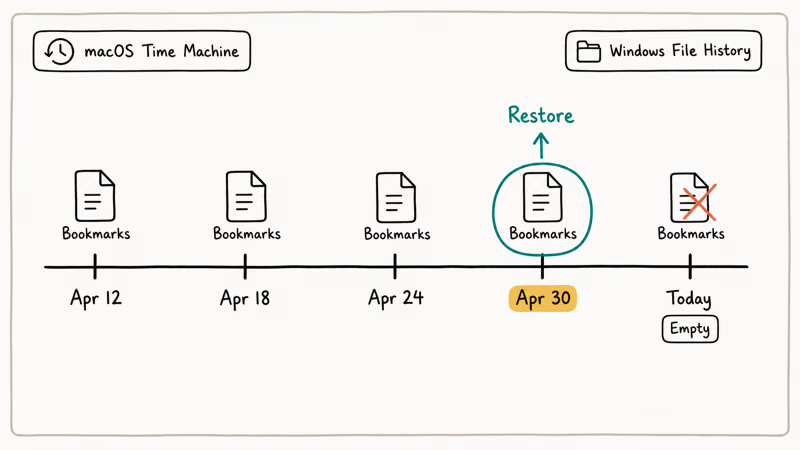
On macOS with Time Machine:
- Open Finder, go to
~/Library/Application Support/Google/Chrome/Default/. - Quit Chrome.
- Click the Time Machine icon, Enter Time Machine.
- Use the timeline on the right to step back to a date before the deletion.
- Select the
Bookmarksfile, Restore. Confirm replace. - Reopen Chrome.
On Windows with File History or Previous Versions:
- Quit Chrome.
- Open File Explorer to
%LocalAppData%\Google\Chrome\User Data\Default\. - Right-click the
Bookmarksfile, Restore previous versions. Or use Properties → Previous Versions depending on Windows build. - Pick the most recent version from before the deletion and Restore.
- Reopen Chrome.
If you never set up Time Machine or File History, this method does nothing. There’s no hidden Apple or Microsoft archive of the file outside the backups you configured. That’s also a good reason to enable one of them now, even if today’s recovery comes from somewhere else.
#Method 6: When Built-in Methods Fail, Reputable Recovery Software
When Bookmarks.bak is gone, sync is empty on every device, and you have no Takeout or backup, the last legitimate move is filesystem-level recovery on your own drive. The Bookmarks JSON is a small text file, so as long as the disk sectors that held it haven’t been overwritten, recovery software can often pull it back.
Tools that run on Windows or macOS:
- EaseUS Data Recovery Wizard, broad coverage, free tier scans the drive and previews recoverable files before you pay to extract.
- Tenorshare 4DDiG, similar approach, decent at finding recently deleted files in the Chrome profile path.
- Recuva, free and donationware on Windows, fine for this small a file. Aim it at the Chrome profile folder, not the whole drive.
Some links on this page are affiliate links, which means fone.tips may earn a commission at no extra cost to you.
A few rules worth following:
- Stop using the drive immediately after the deletion. Every new file write risks overwriting the sectors that held
Bookmarks. Install the recovery tool to a different drive or a USB stick. - Scan the Chrome profile folder, not C: or the entire Mac volume. Smaller scope, faster scan, less false-positive noise.
- Recover to a different drive. Saving the recovered file back to the same disk you’re scanning can overwrite other deleted data you might still want.
- After recovery, validate the file: open the JSON in a text editor, search for a few of your bookmark URLs. If they’re there, copy the file into the Chrome profile folder while Chrome is closed.
Be skeptical of unknown free tools advertised as “Chrome bookmark recovery”. The folder structure and file format are documented, so any reputable general-purpose recovery tool works. Specialty Chrome-only tools rarely add value and sometimes ship adware.
#How Do You Stop This From Happening Again?
Recovery is the part you only need once if you fix the prevention side after.
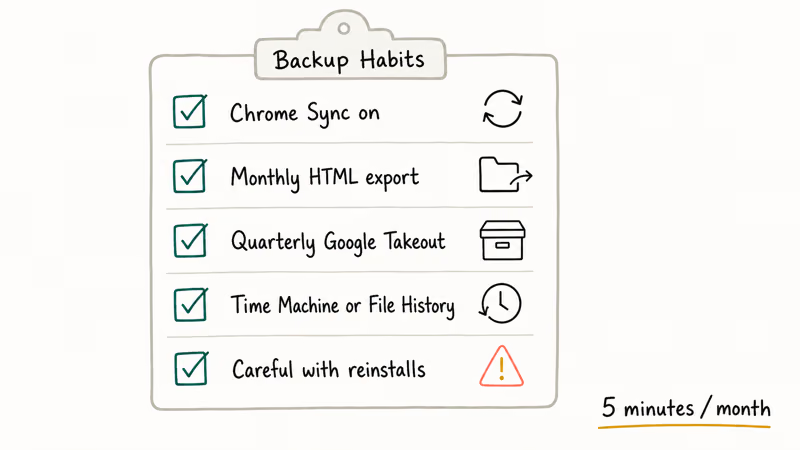
- Turn on Chrome Sync, signed into a Google account you control. This alone covers most accidental deletions, because the deletion has to propagate before all your other devices are also empty.
- Export an HTML backup monthly. Open
chrome://bookmarks, three-dot menu, Export bookmarks. Drop the file in your cloud drive. Five seconds, saves you a future panic. - Schedule a Google Takeout for Chrome quarterly. Takeout supports recurring exports up to a year. Set it and forget it.
- Enable Time Machine on macOS or File History on Windows. Even an external USB drive once a week beats nothing.
- Be careful with Chrome reinstalls. Uninstalling Chrome on most setups keeps the user data folder, but a “remove user data” toggle on uninstall, or wiping
~/Library/Application Support/Google/Chrome/, takes the bookmarks with it. Export first.
If Chrome itself is the problem (crashes, slowdowns, profile corruption) fix that side before relying on it for bookmark storage. Our guides on Google Chrome keeps crashing and Chrome being slow cover the underlying issues that often lead to bookmark loss in the first place.
#Recovering Bookmarks on Chrome Mobile
The bookmark file recovery methods (Bookmarks.bak, Time Machine, File History, recovery software) are desktop-only. The mobile path is sync-only.
- Android: Open Chrome, tap your profile picture, confirm Sync is on. If your bookmarks are missing here too, sync has already pulled the deletion. Use Method 3 or 4 from desktop.
- iPhone or iPad: Same path. Chrome, profile, Sync settings. iOS Chrome shares the same Google account sync, not iCloud. If you want to clean up bookmarks on iOS specifically, our guide on delete bookmarks on iPhone or iPad covers the bookmark management UI.
- Recovering history alongside bookmarks: if you also lost browsing history, our guide on delete download history on your computers explains how Chrome’s history file works and where copies live.
The mobile takeaway: phones don’t store independent copies. Recover on desktop, then let sync push the result to mobile.
#Bottom Line
Try the methods in order. Ctrl+Z first, then Bookmarks.bak, then Chrome Sync from another signed-in device, then Google Takeout, then Time Machine or File History, then reputable recovery software. The first three cover the vast majority of accidental deletions and cost nothing.
If you reach paid recovery software, the bookmarks are recoverable in only one window, before the disk sectors get overwritten. Move quickly and scan to a different drive. Once the bookmarks are back, turn on Chrome Sync, export an HTML backup monthly, and enable Time Machine or File History so you don’t need this guide again.
#Frequently Asked Questions
Can I recover bookmarks I deleted from Chrome a year ago?
Probably yes, if Chrome Sync was on at the time. Sign in to Chrome on another device that was also signed into the same Google account a year ago and check the bookmark bar there.
What is the difference between the Bookmarks file and Bookmarks.bak?
Both are JSON files. Bookmarks is the live file Chrome reads and writes during a session, while Bookmarks.bak is a one-version-old copy refreshed at the start of each session. So .bak reflects whatever your bookmarks looked like the previous time Chrome opened, never real-time changes. That’s why closing Chrome before the swap is essential, and also why the trick fails if you’ve already restarted Chrome a few times since the deletion.
Will turning Chrome Sync off and back on delete my bookmarks?
It shouldn’t. Toggling Sync off keeps your local bookmarks intact, and toggling it back on uploads the local set and merges with the account. The risk window is when local is empty and you re-enable Sync, since Sync may overwrite the account copy with the empty list.
Why are my bookmarks gone after a Chrome update?
A Chrome update by itself doesn’t delete bookmarks. Profile folder corruption is more common, especially after a forced reboot during the update. Try Method 2 first.
Are paid recovery tools safe to install?
Reputable general-purpose tools (EaseUS, Tenorshare, Recuva) are safe on your own machine. Two precautions matter: download from the vendor’s official site (search the brand name, don’t click ads), and run them only on drives you own. Avoid niche “Chrome bookmark recovery” freeware advertised on forums.
Can I recover bookmarks if I am locked out of my Google account?
No, not through sync. Sync requires the Google account that owns the bookmarks. If you’ve lost access, the recovery flow runs through Google’s account recovery first, and our Gmail account recovery guide walks through that process. Once you’re back in the account, sync, Takeout, and the rest of this guide become available again.
Does the Bookmarks.bak trick work on Chrome on Linux?
Yes. The profile folder is ~/.config/google-chrome/Default/ on Ubuntu, Fedora, and other mainstream distros, and the file swap is identical to Windows and macOS. Linux package managers don’t touch the user data directory on update.
Pixel 11 vs Pixel 10: What Changed and Who Should Upgrade
Pixel 11 vs Pixel 10: same screen and camera resolution, new Tensor G6, 25W wireless, and Gemini Intelligence. Here is who should actually upgrade.

Verizon Not Receiving Texts? How to Fix It in 9 Steps
Verizon not receiving texts? Fix it in 9 steps: check Message Blocking in My Verizon, reset network settings, deregister iMessage, and call support.
Pixel Battery Drain: What Google's July Fix Really Covers
Google marked the Pixel idle battery drain bug fixed in July, but only some phones got the patch. Here is who is covered, who is not, and what to try.
iPhone Stuck on EDGE? How to Get 5G or LTE Back (2026)
iPhone stuck on EDGE with crawling data? Here's why the E icon appears, which settings force 5G or LTE back, and when the problem is your carrier.