Resolving Razer Synapse Not Opening: A Comprehensive Guide
Fix Razer Synapse not opening on Windows 10 and 11. Restart Razer Central, reinstall Synapse 4, and clear conflicts that block launch in 2026.
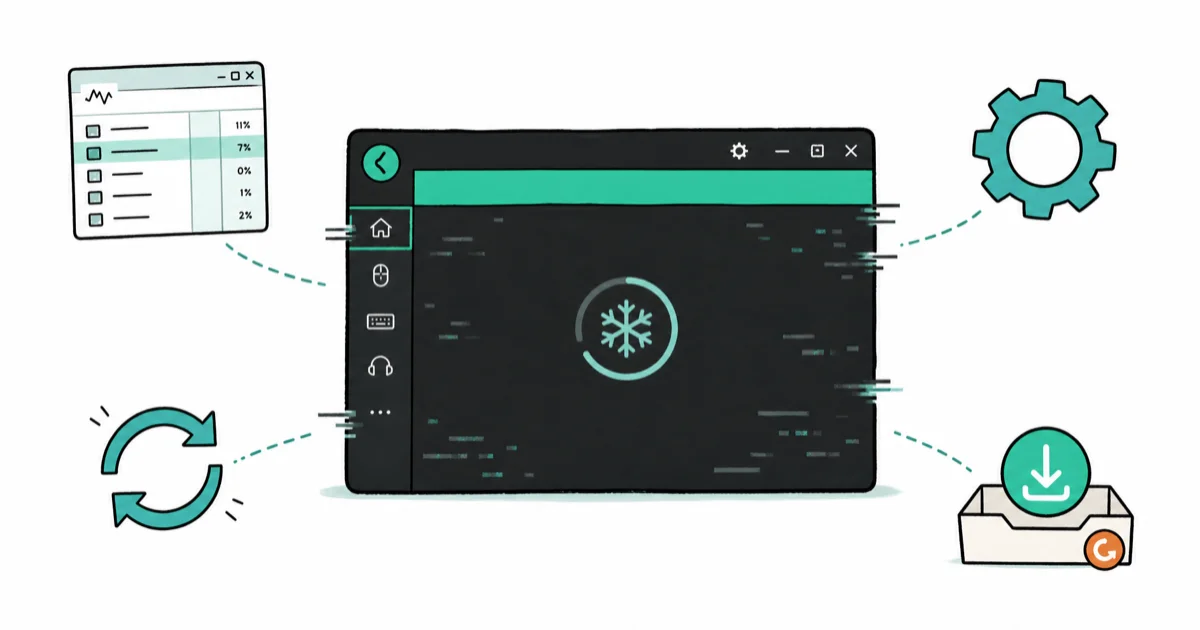
Quick AnswerEnd every Razer process in Task Manager, then restart the Razer Central service from services.msc and relaunch Razer Synapse. If the window still won't appear, uninstall Synapse with the official Razer Software Uninstaller, reinstall the latest Synapse 4 build, and reboot.
Razer Synapse won’t open. The tray icon spins, double-clicking does nothing, or the window flashes and disappears. This guide walks seven fixes in the order that clears launch failures fastest on Windows 10 and Windows 11, starting with the 30-second steps and ending with a full clean reinstall.
- End every Razer process (RazerAppEngine, RzSDKService, Razer Central) in Task Manager before relaunching Synapse.
- Restart the Razer Central Service in services.msc; it stalls after Windows updates and blocks Synapse from spawning a UI.
- Use the official Razer Software Uninstaller, not Add/Remove Programs, before reinstalling Synapse 4.
- Synapse 4 needs .NET 6 Desktop Runtime and Visual C++ 2015-2022 redistributables. A missing dependency is the most common silent crash cause.
- Synapse 3 is being retired in favor of Synapse 4 (Razer announced the rollout in 2024), so check device support before downgrading.
#What Causes Razer Synapse to Not Open?
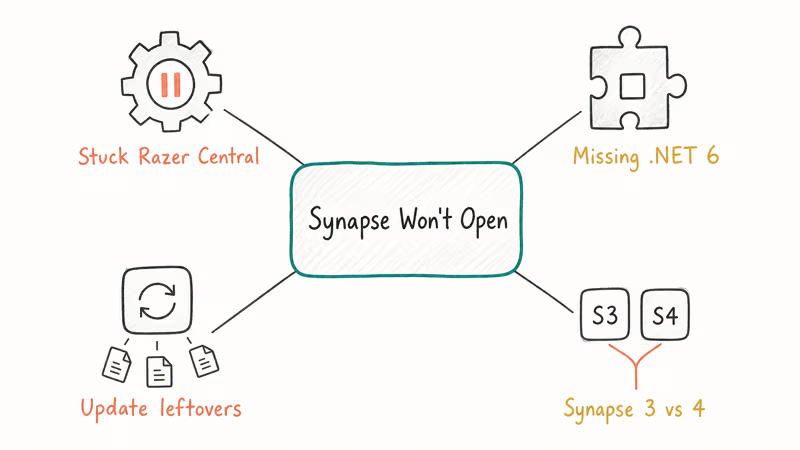
Razer Synapse is the configuration app for Razer mice, keyboards, headsets, and Chroma RGB lighting, and when it refuses to open, the cause is almost always a stuck background service, a missing runtime, or leftovers from a botched update. According to Razer’s official Synapse support page, most launch failures resolve after restarting the Razer Central Service or doing a clean reinstall.
Forum reports tell the same story.
A Reddit thread on r/razer titled “Synapse won’t open” has hundreds of replies, and the same three culprits dominate the answers: a stuck Razer Central process, a corrupted profile cache in %LocalAppData%\Razer, and missing .NET or Visual C++ redistributables after a Windows feature update.
The Synapse 3 versus Synapse 4 split matters too. Razer announced in 2024 that Synapse 4 is the long-term successor, and devices released after late 2023 only support Synapse 4, so installing Synapse 3 for an older mouse and then plugging in a new keyboard can leave the app stuck on the splash screen with no obvious error.
#First, End Every Razer Process and Relaunch
This is the 30-second fix. It clears the most common launch stalls on its own, and it should be your first move every time Synapse misbehaves.
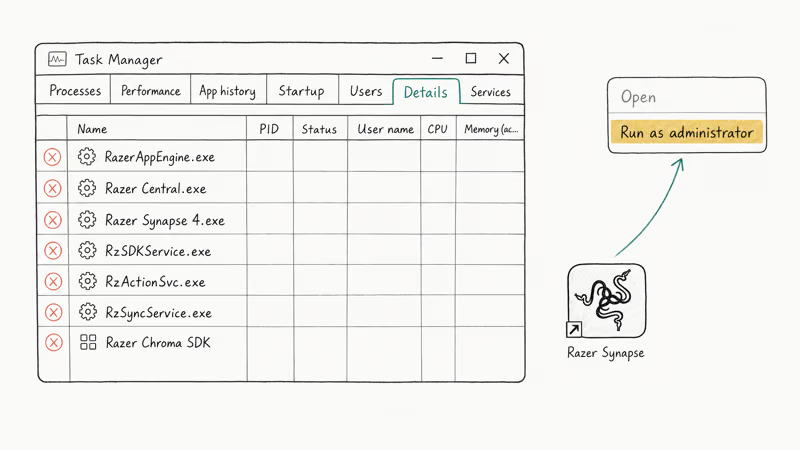
- Press
Ctrl + Shift + Escto open Task Manager. - Switch to the Details tab.
- End every process whose name starts with
Razer. The usual list:RazerAppEngine.exe,Razer Central.exe,Razer Synapse 3.exeorRazer Synapse 4.exe,RzSDKService.exe,RzActionSvc.exe,RzSyncService.exe. - End any
Razer Chroma SDKentries you spot. - Right-click the Razer Synapse shortcut and pick Run as administrator.
If the window opens, you’re done.
#Restart the Razer Central Service in services.msc
The Razer Central Service brokers between the desktop app and your peripherals. When it stalls, Synapse spawns but never gets a handshake, so the UI never paints.
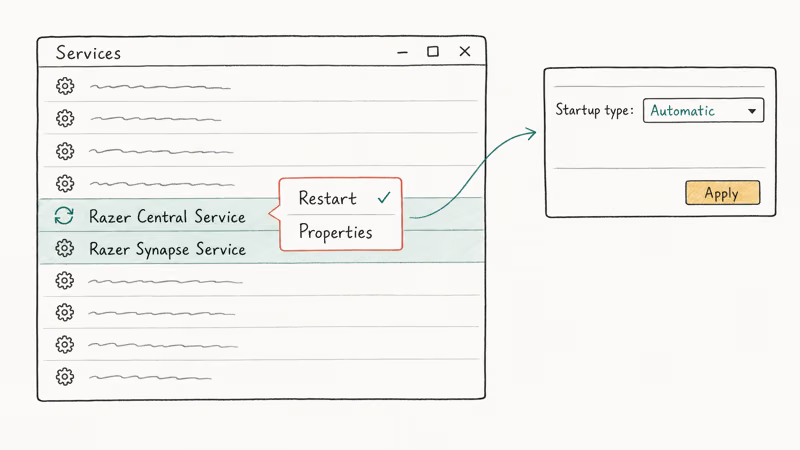
- Press
Win + R, typeservices.msc, press Enter. - Scroll to Razer Central Service.
- Right-click and select Restart. If Restart is greyed out, click Start.
- Right-click again, choose Properties, set Startup type to Automatic, click Apply.
- Repeat for Razer Synapse Service (only present on Synapse 3 installs).
- Launch Razer Synapse from the Start menu.
This step often resolves a “Synapse never launches after Windows Update” failure within seconds. A Windows update can silently flip the service to Manual, leaving it waiting for a trigger that never comes.
#Reinstall Razer Synapse the Official Way
The install itself is broken. Add/Remove Programs leaves drivers behind.
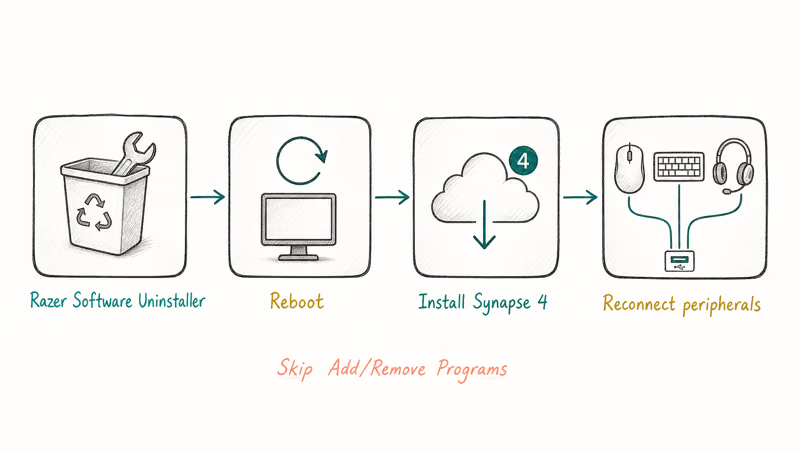
#Use the Razer Software Uninstaller
- Download the Razer Software Uninstaller from Razer’s support site (Razer publishes this as the recommended path).
- Close every Razer process in Task Manager first.
- Run the uninstaller as administrator. It removes Synapse, Razer Central, Chroma SDK, and the leftover registry keys in one pass.
- Reboot. Skipping this leaves driver hooks loaded.
- Manually delete
%LocalAppData%\Razerand%ProgramData%\Razerif either folder still exists after the reboot.
#Install Synapse 4 (or Synapse 3 if Required)
Razer is migrating users to Synapse 4, the version that ships with all 2024-and-newer peripherals. Older devices like the original DeathAdder Elite or BlackWidow Chroma still need Synapse 3, and Razer’s device compatibility page lists which version each product supports.
- Download the installer that matches your hardware.
- Disconnect every Razer device before running the installer.
- Install with default options. Don’t deselect modules unless you’re sure you don’t need them.
- Reconnect peripherals one at a time after the installer finishes.
- Sign in with your Razer ID and let Synapse pull your cloud profiles.
After a clean reinstall, Synapse usually opens on the first launch. The whole sequence takes several minutes including the reboot.
#Why Does Razer Synapse Still Crash After Reinstalling?
A clean reinstall fails when something else on the system is interfering. Three culprits cover most of these cases.
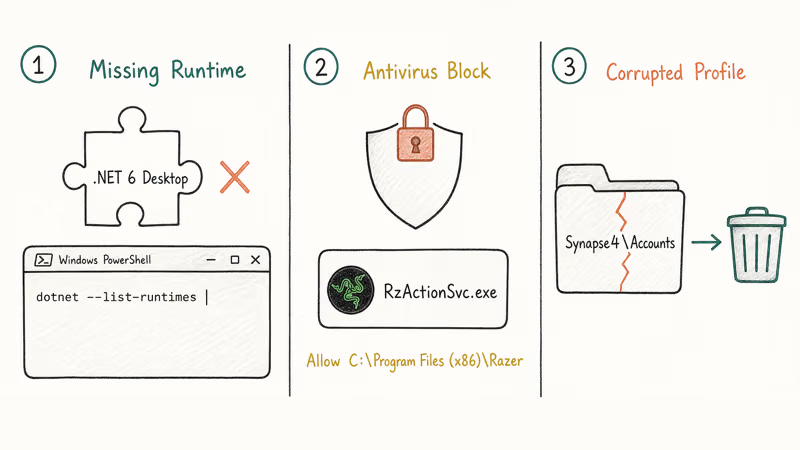
#Missing .NET 6 Runtime or Visual C++ Redistributable
Synapse 4 is built on .NET 6 and needs the Desktop Runtime, not just the ASP.NET runtime. According to Microsoft’s .NET download page, the Desktop Runtime is a separate installer that many users miss after a clean Windows install.
- Open PowerShell and run
dotnet --list-runtimes. Look for aMicrosoft.WindowsDesktop.App 6.0.xentry. - If it’s missing, install the latest .NET Desktop Runtime 6 x64 from Microsoft’s site.
- Install the latest Visual C++ 2015-2022 Redistributable x64 from Microsoft.
- Reboot, then relaunch Synapse.
A missing runtime is the silent killer.
#Antivirus or Firewall Blocking Razer Central
Some third-party antivirus suites flag RzActionSvc.exe because it loads as a system service. Bitdefender, for example, has been known to quarantine it during a Synapse 4 install on a fresh Windows image. On a brand-new or managed install, checking antivirus exclusions first often saves a lot of time.
- Add
C:\Program Files (x86)\RazerandC:\ProgramData\Razerto your antivirus exclusion list. - In Windows Defender Firewall, allow
Razer Central.exeandRazerAppEngine.exefor both private and public networks. - Temporarily disable third-party AV, relaunch Synapse, and re-enable it. If Synapse opens with AV off, the AV needs an exception added permanently.
#Corrupted Profile or Cloud Cache
A bad profile in your Razer ID account can crash Synapse before the UI loads, and the fix is to log out, clear the cache, and let Synapse rebuild from the cloud (or local defaults). This is especially common after switching between Synapse 3 and Synapse 4 to run an older device alongside a newer one, so anyone who has hopped versions should suspect this path early.
- Close every Razer process.
- Delete
%LocalAppData%\Razer\Synapse3\Accountsand%LocalAppData%\Razer\Synapse4\Accounts(whichever exists). - Launch Synapse and sign in fresh.
If the cloud profiles themselves are corrupted, Razer Support can reset them on the server side, which is the fix to fall back on when local clearing doesn’t help.
#Run System File Checker if Synapse Still Won’t Launch
If Synapse ran fine last week and broke today, suspect Windows itself. Microsoft’s SFC and DISM documentation recommends running both tools in sequence.
- Open Command Prompt as administrator.
- Run
sfc /scannowand let it complete (about 5 minutes on an SSD). - Run
DISM /Online /Cleanup-Image /RestoreHealth. This one takes longer, sometimes 15 minutes. - Reboot.
- Reinstall Synapse if SFC or DISM reported repaired files.
If SFC throws a System Thread Exception Not Handled error mid-scan, that points to a driver problem upstream of Synapse and needs its own fix first. A persistent 0x0000007b boot error on the same machine signals deeper Windows damage, in which case repairing Windows is the right next step before touching Synapse again.
#Update Razer Device Drivers Through Device Manager
Synapse leans on the HID drivers Windows assigns to your Razer hardware, and outdated drivers can stall the handshake even when the app launches normally. The same kind of driver-service stall causes the GeForce Experience 0x0003 error, so if both apps misbehave on the same machine you should suspect driver service problems before chasing app-specific fixes.
- Press
Win + X, choose Device Manager. - Expand Human Interface Devices, Mice and other pointing devices, and Keyboards.
- Right-click each Razer device, choose Update driver, then Search automatically for drivers.
- If Windows says the driver is current but Synapse still can’t see the device, choose Uninstall device, unplug the peripheral, reboot, and plug it back in.
If you mainly use a Razer mouse for shooters, our best mouse for Fortnite roundup covers backup options that work without Synapse running, which is useful while you’re waiting for a driver update to arrive.
#Bottom Line
Start with the Task Manager kill, then restart the Razer Central Service. Those two steps clear the failure in under a minute in most cases. If the window still won’t show, run the official Razer Software Uninstaller, reboot, and install Synapse 4 fresh; skip community “registry cleaner” tutorials, because Razer’s own uninstaller handles registry cleanup correctly and third-party cleaners tend to cause more problems than they solve.
If you depend on a Razer mouse for daily work, our best mouse for programming guide covers backup options that work without Synapse running.
#Frequently Asked Questions
Why does Razer Synapse keep crashing on startup?
Usually a missing .NET 6 Desktop Runtime. Run dotnet --list-runtimes in PowerShell to confirm.
Should I install Synapse 3 or Synapse 4?
Use Synapse 4 if your hardware supports it. Razer announced in 2024 that Synapse 4 is the long-term version, and every peripheral released since late 2023 requires it. Older devices like the BlackWidow Chroma or original DeathAdder Elite still need Synapse 3, and Razer’s compatibility page confirms which version each product supports.
Will reinstalling Razer Synapse erase my profiles?
Your profiles are safe if you signed in with a Razer ID. Synapse stores them in the cloud and pulls them back after reinstall. Local-only profiles created without a Razer ID will be lost, so export them to a .csv from the Profiles tab before uninstalling if you can still open the app at all.
Can a Windows update break Razer Synapse?
Yes, often. Restart the Razer Central Service in services.msc after any major Windows update and confirm its startup type is Automatic.
Is it safe to use a third-party driver updater for Razer devices?
No, skip them.
Why does Razer Synapse show a blank white window?
A corrupted local cache. Close Synapse, delete %LocalAppData%\Razer\Synapse3 (or Synapse4), and relaunch. Synapse rebuilds the cache from the cloud on the next sign-in, and if the blank window returns after the rebuild, missing Visual C++ 2015-2022 redistributables is the next thing to check.
How long does a clean Razer Synapse reinstall take?
About 10-15 minutes start to finish. The Razer Software Uninstaller takes 2-3 minutes, the reboot takes 30-60 seconds on an SSD, and the Synapse 4 installer plus first-run cloud sync takes the rest.
What if Razer Synapse still won’t open after every fix?
Open a ticket with Razer Support and attach the install log from %LocalAppData%\Razer\RazerAppEngine\User Data\Logs. Razer can identify a corrupt cloud profile and reset it server-side, which is the one fix you can’t do locally; mention every step you’ve already tried so support doesn’t loop you back to Method 1.

Best Laptop for Running LLMs in 2026: Memory Comes First
The best laptop for running LLMs is a memory purchase first. Compare MacBook unified memory against NVIDIA laptop VRAM, and see what each tier really runs.
How to Run a Local LLM on Windows: A 2026 Setup Guide
Run a local LLM on Windows with LM Studio or Ollama. Pick a model that fits your GPU memory, keep every prompt offline, and skip the monthly bill.
Bluetooth Not Working on Snapdragon X? Fixes for 2026
Bluetooth not working on your Snapdragon X Copilot+ PC? Generic audio, mice, and keyboards work, but vendor apps often lack an ARM build. Fixes inside.
Docker Desktop and WSL2 Not Working on Snapdragon X? Fix It
WSL2 runs fine on Snapdragon X, but Docker Desktop ARM is Early Access and throws WSL errors. Use WSL2 plus native ARM64 Ubuntu and Docker Engine.