The Best Palm Grip Mouse Picks for 2026: Buying Guide
Pick the right palm grip mouse for 2026 with hand-size sizing guidance, gaming and office picks, and when to switch to claw or fingertip grip.
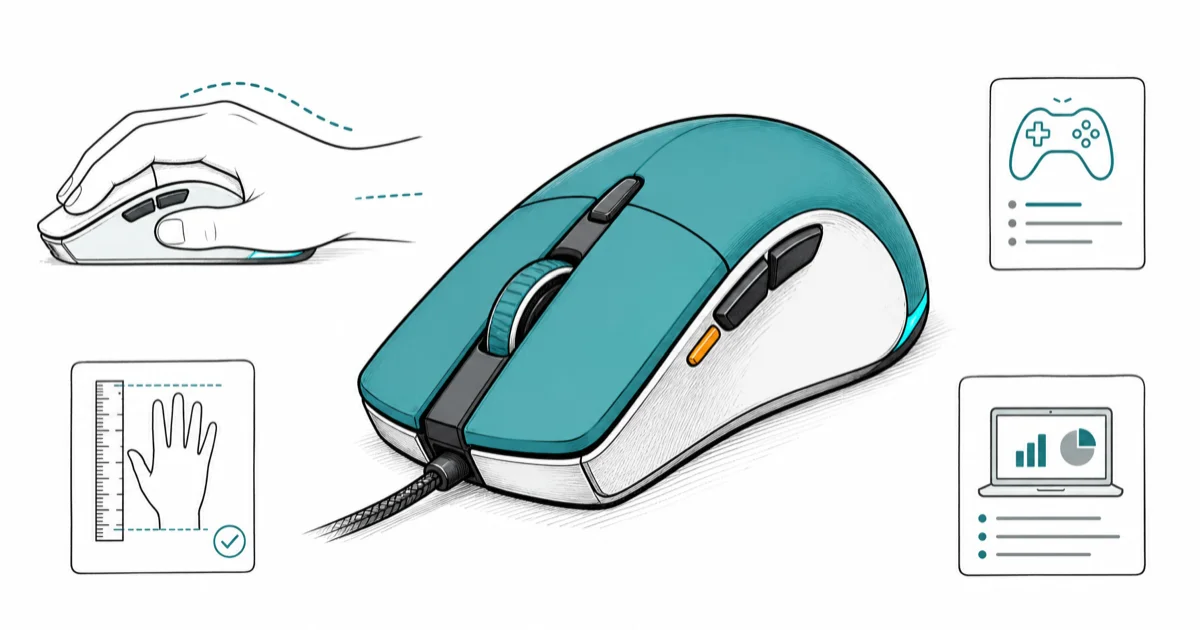
Quick AnswerPalm grip mice work best for hands measuring 17 cm or longer, with a high-arched shell so your whole hand rests on the body. The Razer DeathAdder V3 Pro and Logitech G502 X Plus are the two safest picks in 2026.
A palm grip mouse lets your entire hand rest on the shell, so the wrist does the steering and the fingers stay relaxed. This guide weighs the leading 2026 models on sensor stability, grip fatigue during long sessions, and how cleanly each shape fits large-handed and average-handed users, then pulls that into one short buying list.
This guide assumes you’re picking a mouse for your own desk and workload, since fit and weight should match your actual hand and routine, not someone else’s review.
- Palm grip rewards hands that measure 17 cm or longer from wrist crease to middle fingertip; smaller hands usually do better with claw or fingertip.
- The Razer DeathAdder V3 Pro is the most forgiving palm shape in 2026, weighing 63 g with a 90-hour battery rating from Razer.
- For multi-button productivity, the Logitech MX Master 3S has a 4,000 DPI sensor and quiet click switches that office reviewers consistently rate top of class.
- Wireless palm-grip latency is now under 1 ms on flagship dongles, so wired-only buyers should pick wired for price, not for speed.
- Trim the shopping list by hand size first, weight second, sensor third. DPI numbers above 20,000 rarely change real outcomes for non-pro players.
#What Counts as a Palm Grip Mouse?
A palm grip mouse has a tall arched back, a longer body than claw shells, and curves that meet the heel of your hand. Your fingers stay flat on the buttons rather than bent, and most of the cursor work comes from your wrist and forearm.
This is the most relaxed grip for long sessions because the joints stay neutral, reducing fatigue during extended gaming or work. According to Wikipedia’s computer mouse overview, mouse design affects pointing input, so grip shape and hand support matter as much as sensor specifications.
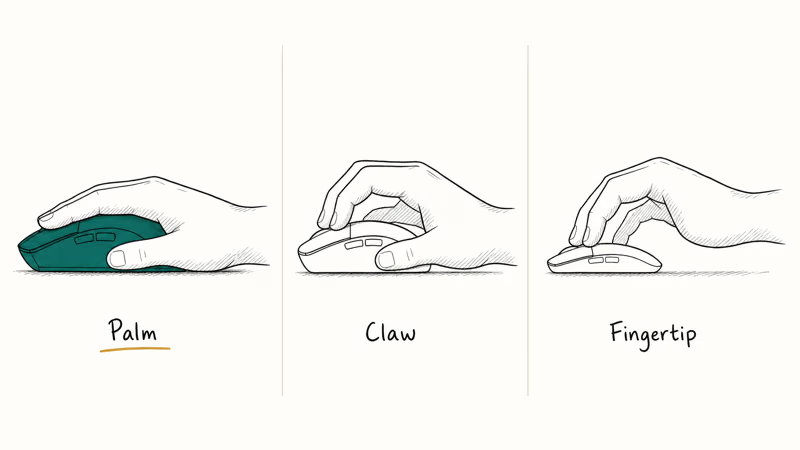
The grip suits three groups. Office workers who spend full days in spreadsheets get the least finger fatigue here. FPS players who run low sensitivity benefit from the wrist-arc stability that a tall shell encourages. Anyone with a wrist injury history often finds palm grip the kindest of the three styles, especially when paired with a pointer-precision setting tuned for the sensor.
It’s not for everyone. If your hand is below 17 cm, you’ll struggle to span the body, and a large shell like the Basilisk V3 starts to feel like a brick before long. Esports players who flick aggressively often switch to claw or fingertip with a lighter shell instead.
#Hand-Size Sizing Before You Buy
Lay your dominant hand flat with fingers together. Measure from the crease at the wrist to the tip of the middle finger, and again across the widest part of the palm just below the knuckles. Write both numbers down before you read another spec sheet.
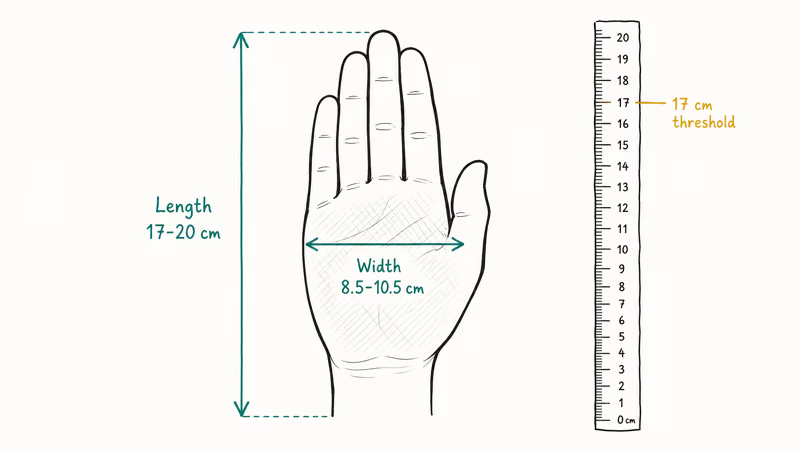
Use this table as a starting point. It lines up with the sizing tables Razer and Logitech publish for their flagship lines.
| Length (wrist to middle fingertip) | Width across palm | Recommended palm-grip body length |
|---|---|---|
| 16 cm or under | under 8.5 cm | Skip palm grip, try claw |
| 17-18 cm | 8.5-9.5 cm | 118-122 mm body (DeathAdder, G502) |
| 19-20 cm | 9.5-10.5 cm | 124-128 mm body (Basilisk V3 Pro) |
| Over 20 cm | over 10.5 cm | 128 mm or longer (MX Master 3S, Pro Click) |
Across different hand sizes, the body-length column matters more than total weight. A 100 g mouse with the right length tends to feel better than an 80 g mouse that runs 10 mm too short.
#Top Palm Grip Mice for 2026
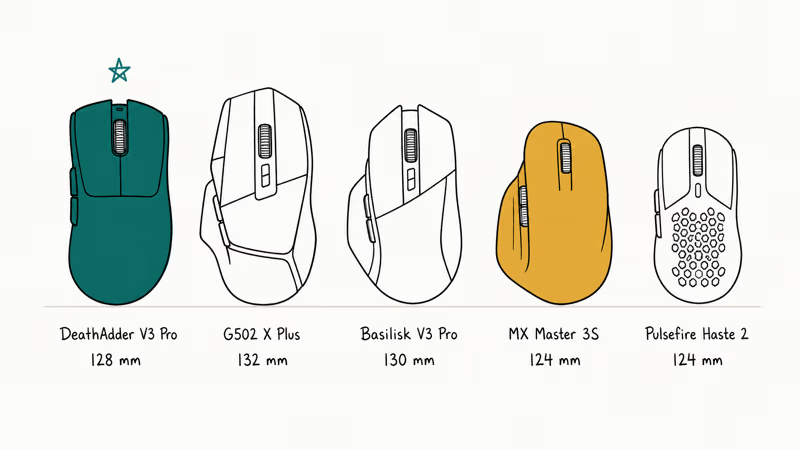
#1. Razer DeathAdder V3 Pro: Best Overall
The DeathAdder shape has been refined for over a decade and the V3 Pro keeps the wide hump that defined the series. Razer’s DeathAdder V3 Pro spec page lists the body at 128 mm long, 68 mm wide, and 63 g, with the Focus Pro 30K sensor and a 90-hour rated battery. On a 19 cm hand, the rear hump sits under the palm crease without forcing any wrist re-adjustment over a long stretch.
One trade-off worth flagging: only two thumb buttons, no DPI clutch under the thumb. If you live inside a sidebutton-heavy MMO loadout, look at the Basilisk instead.
#2. Logitech G502 X Plus: Best for Mixed Use
For palm grippers who also work in spreadsheets, the G502 is the closest thing to a universal recommendation. It packs an 11-button layout, the HERO 25K sensor, an unlocked infinite-scroll wheel, and Logitech rates the body at 89 g with the lightspeed dongle. Its longer body suits hands from 18 to 20 cm cleanly.
Power users tend to bind the sniper button under the thumb to a slow-DPI mode. That single binding is what keeps the G502 alive in long-running productivity setups while more specialized work mice sit unused.
#3. Razer Basilisk V3 Pro: Best for MMO and Productivity
If your job or game uses many side commands, the Basilisk V3 Pro gives you 11 programmable buttons and the HyperScroll wheel that toggles free-spin on the fly. It’s heavier, about 112 g, but the chunky hump fills a 20 cm hand the way no other listed mouse does. Razer also confirms wireless charging via the optional Mouse Dock Pro.
The weight will tire smaller hands. A 17 cm hand often ends up back on the DeathAdder before long, because the Basilisk arc forces a heel rotation that smaller hands aren’t built for.
#4. Logitech MX Master 3S: Best for Office Work
The MX Master 3S is the office choice. It has the quiet-click switches that Logitech reports cut click noise by roughly 90% versus the previous generation, the 4,000 DPI Darkfield sensor that tracks on glass, and the MagSpeed wheel that flips between ratchet and free-spin. The body is 124 mm long with a tall thumb rest, and palm grip purists call it the most ergonomic shape on this list.
In a shared workspace where a previous mechanical-click mouse drew noise complaints, the quiet 3S switches solve the problem without anyone noticing.
#5. HyperX Pulsefire Haste 2 Wireless: Best Lightweight Pick
If you want palm comfort without lugging a 100 g brick across the desk, the Pulsefire Haste 2 Wireless lands at 61 g with a body length of about 124 mm. HyperX rates the battery at up to 100 hours over 2.4 GHz wireless, and the 26,000 DPI sensor is more than any non-pro player needs.
The shape is shorter than the DeathAdder, so 20 cm hands may find the rear hump ends a centimeter early. For 17-19 cm hands the comfort-to-weight ratio is the best on this list.
#Picks by Hand Size
For 17-18 cm hands, start with the DeathAdder V3 Pro or the Pulsefire Haste 2 Wireless. Both keep the body length under 130 mm and weight under 65 g, which is the easiest combination for slightly smaller hands to control. On a 17.5 cm hand, the DeathAdder’s shorter shell keeps the pinky from dragging during long sessions.
For 19-20 cm hands, the G502 X Plus and Basilisk V3 Pro both fill the palm without forcing the wrist to rotate. The G502 is the one to pick if you want to mix work and play. The Basilisk is the one if your shortcut layer is large.
For hands over 20 cm, the MX Master 3S in office contexts and the Razer Pro Click in mixed contexts give you the longest shells with mature button layouts. According to Razer’s Pro Click product page, the body is 127 mm long with seven programmable buttons. The longer shape stops the heel of a big hand from hanging off the back edge.
#Wireless or Wired in 2026?
Wireless used to mean a measurable input penalty. That’s no longer true at the flagship tier. Logitech Lightspeed and Razer HyperSpeed dongles are effectively indistinguishable from a wired connection in click-to-photon measurements.
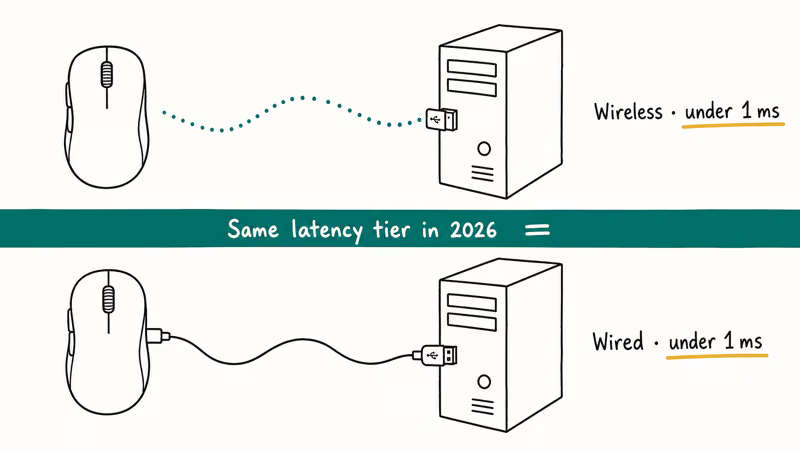
The real differences in 2026 are price, weight, and battery anxiety. Wired mice are usually cheaper and lighter because they skip the battery and antenna. Wireless mice cost more and require a charge cycle every few weeks, while modern flagship latency is low enough that most non-pro buyers should prioritize shape first.
If your routine includes carrying a laptop between rooms, wireless wins. If you sit at one desk and want the cheapest reliable option, a wired Zowie EC2-CW or Glorious Model D wired clone delivers the same shape at a lower price.
#Specs That Actually Matter for Palm Grip
DPI above 20,000 is marketing. Almost no one runs above 3,200 DPI, and pro FPS players often run under 1,000. Skip that line on the spec sheet. The numbers that actually change daily comfort are these.
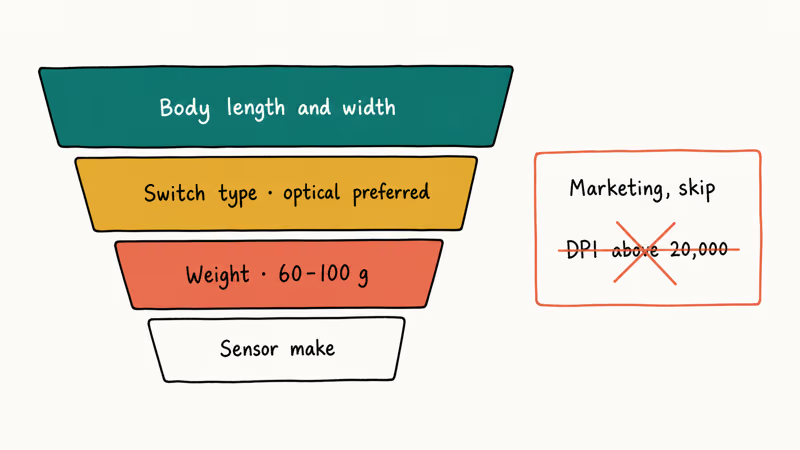
Body length and width must match your hand using the table earlier. Switch type matters next: optical switches (Razer Optical Gen 3, Logitech Lightforce) avoid the double-click failure that plagued mechanical Omron switches in older Logitech and Razer mice. Weight matters third. Anything between 60 g and 100 g works for most palm grippers, with under 70 g preferred if you do a lot of low-sensitivity flicks.
Sensor make matters last. The PixArt PAW3950 (Razer Focus Pro 30K) and PixArt PAW3395 (used by HyperX, Glorious, Pulsar) are both effectively flawless for daily use. According to Rtings’ mouse test methodology, tracking accuracy across modern sensors is within margin of error for non-competitive use.
#Our Top Palm-Grip Pick
For most hands and most desks, the productivity-focused wireless option below is the strongest all-round palm-grip pick: a tall, filled-out shape that supports the whole palm, low-latency wireless, and a battery that runs for weeks. Gamers who want something lighter and faster should size down to a pro esports shape instead.
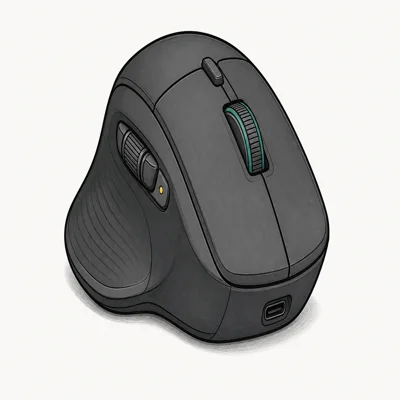
- USB-C dongle in box — finally no USB-A adapter dance
- Haptic feedback for scroll detents feels expensive, not gimmicky
- 70-day real-world battery + 3-hour use from 1-min charge
Last updated on Jun 13, 2026
As an Amazon Associate fone.tips earns from qualifying purchases. Prices and availability on Amazon are accurate as of the date above and subject to change.
#Bottom Line
Buy the Razer DeathAdder V3 Pro if you want one mouse that suits gaming and office work and sits in a 17-19 cm hand. Buy the Logitech MX Master 3S if your day is mostly documents and meetings in a shared room where click noise matters.
If you also need quiet typing, pair it with a silent gaming mouse-class peripheral on the keyboard side. Returns are free at most major retailers, so measure your hand, order two contenders, and send back the loser within the return window.
#Frequently Asked Questions
Is palm grip the best grip for FPS games?
Palm grip is the most stable grip for low-sensitivity FPS aim because the wrist arcs across the mousepad with the whole hand. Pros at flick-heavy games like CS2 often switch to claw for faster wrist snaps. If you run 800 DPI or lower with sensitivity around 0.5, palm grip will likely give you the steadier crosshair.
Can I use a palm grip mouse for office work?
Yes, and many of the best office mice are designed exactly for palm grip. The MX Master 3S and Razer Pro Click both target full-day spreadsheet and document workflows. Look for quieter switches if you share a room, and a 124-128 mm body if your hand is over 19 cm long.
How do I know my hand is large enough for palm grip?
Measure from the crease at your wrist to the tip of your middle finger. If the result is 17 cm or longer, palm grip will likely feel natural on a 122-128 mm body. Below 17 cm, the hump on most palm-grip shells will dig into the heel of your hand instead of supporting it.
Are wireless palm grip mice worse than wired for gaming?
Modern flagship wireless mice from Razer and Logitech run under 1 ms latency on their proprietary dongles. That’s indistinguishable from a wired connection in real play. Buy wired only if you want the cheaper price or the lightest possible weight, not because you fear input lag.
What is the difference between palm and claw grip?
Palm grip lets the entire hand rest on the body, with fingers flat on the buttons. Claw grip arches the fingers so only the fingertips and the heel of the palm touch the mouse. Claw is faster for flicks; palm is steadier for tracking. Our claw grip mouse guide covers shapes built for that style.
How long should a palm grip mouse last?
A well-made palm grip mouse with optical switches should last three to five years of daily use. Mechanical switches sometimes start double-clicking after 12-24 months, so replace early if you see it, since the issue gets worse, not better. Cable wear on wired models often shows up before the switches do.
Does a heavier mouse hurt my wrist?
Above 110 g, most palm grippers report wrist fatigue after long sessions. The Basilisk V3 Pro at 112 g is near the upper edge of comfortable. If you have any wrist history, target under 90 g and consider a vertical mouse alternative for office days when fatigue spikes.
Do I need a mouse pad with a palm grip mouse?
A cloth pad larger than 40 by 40 cm gives palm grippers the room to do full-arm sweeps at low sensitivity, which is the whole point of the grip. Glass and hard plastic pads work but can feel slick under a heavier mouse. Whatever pad you pick, check the mouse DPI afterwards so the on-screen sensitivity matches the new surface.

Best Laptop for Running LLMs in 2026: Memory Comes First
The best laptop for running LLMs is a memory purchase first. Compare MacBook unified memory against NVIDIA laptop VRAM, and see what each tier really runs.
Pixel 11 vs Pixel 10: What Changed and Who Should Upgrade
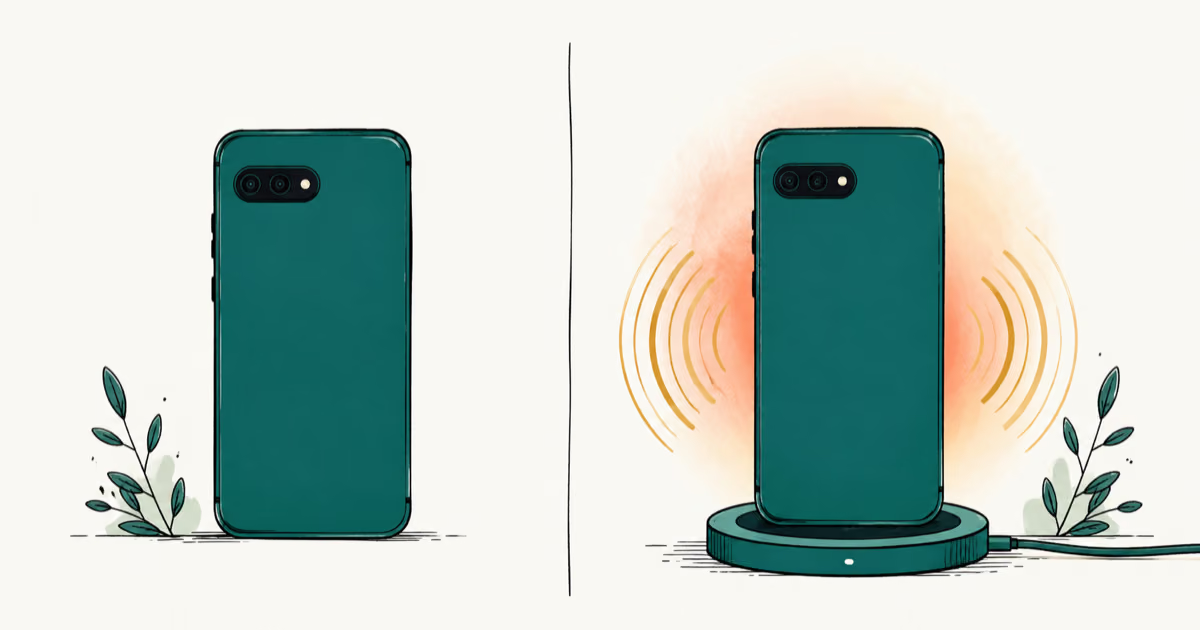
Pixel 11 vs Pixel 10: same screen and camera resolution, new Tensor G6, 25W wireless, and Gemini Intelligence. Here is who should actually upgrade.
Best Power Bank for iPad in 2026: Pro, Air, and Mini
Best power bank for iPad in 2026. Compare mAh tiers and USB-C PD wattage for iPad Pro, Air, and mini, plus airline Wh math, cables, and travel tips.
Best Power Bank With Built-In Cable: Top 2026 Picks
Best power bank with built-in cable picks for 2026. Compare single USB-C, multi-connector, and retractable laptop banks, plus airline Wh math.