How to Remove SIM Lock on iPhone: Ultimate Guide 2026
Remove the SIM lock on your iPhone by contacting your carrier, using IMEI-based services, or an R-SIM adapter. Complete step-by-step guide for 2026.
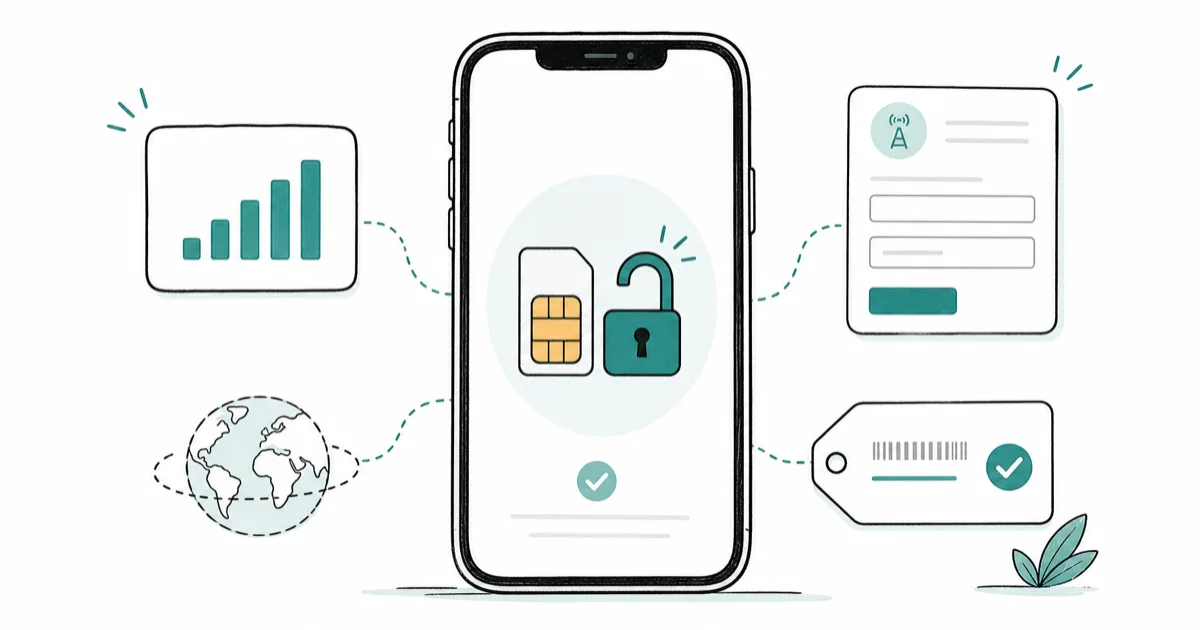
Quick AnswerContact your carrier and request an official unlock after your device is fully paid off. AT&T, Verizon, and T-Mobile all have online unlock request forms that process in 24 to 72 hours. If your carrier will not unlock it, use an IMEI-based third-party service as an alternative.
A SIM lock ties your iPhone to one carrier’s network. Removing it lets you use any carrier’s SIM card, which is useful when switching networks or using local SIMs while traveling. Carrier unlocking is the official route. Third-party IMEI services and R-SIM adapters are alternatives when the carrier route isn’t available.
This guide applies only to a device or account you own.
- Contacting your carrier is the safest and most permanent method, usually completed within 24 to 72 hours with no fee.
- Your iPhone must be fully paid off and your account in good standing before your carrier will approve an unlock request.
- You can confirm lock status in under 30 seconds by checking
Settings>General>About for“No SIM restrictions.” - Third-party IMEI-based unlock services work for phones ineligible for carrier unlocking, but carry scam and warranty risks.
- R-SIM adapters let you use a foreign SIM without fully unlocking the device, though they’re a temporary workaround, not a permanent fix.
AT&T, T-Mobile, and Verizon all process unlock requests within their stated windows when the device is paid off and the account is in good standing. The unlock applies automatically once you restart the iPhone.
#How to Check Your iPhone’s SIM Lock Status
Before requesting an unlock, confirm the current lock status in Settings.
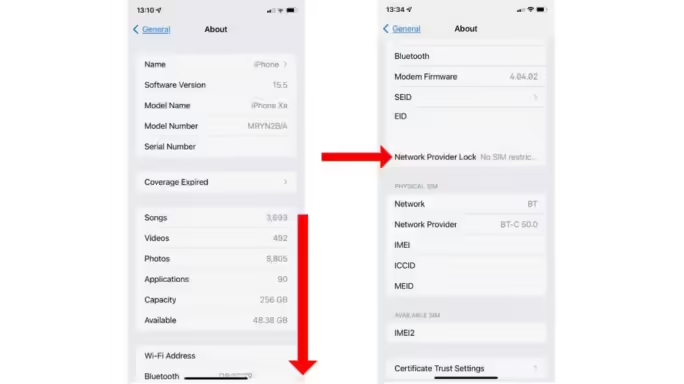
- Open Settings on your iPhone.
- Tap General > About.
- Scroll to Carrier Lock or Network Provider Lock.
- “No SIM restrictions” means the iPhone is already unlocked.
If no Carrier Lock field appears, the iPhone is likely unlocked. You can also test by inserting a SIM card from a different carrier — if it activates normally, the phone is unlocked. For a full walkthrough, see how to check if your iPhone is unlocked without a SIM.
You can also check your iPhone’s IMEI number using an IMEI checker tool, which shows lock status and carrier assignment. According to Apple’s device support page, iPhones purchased directly from Apple.com are sold unlocked and compatible with all carriers. Apple states that carrier-purchased devices are locked for the duration of the financing term — typically 24 to 36 months depending on the installment plan.
#How to Request a Carrier Unlock?
Carrier unlocking is the official route and doesn’t affect your warranty.
Eligibility requirements:
- iPhone fully paid off (or contract fulfilled)
- Account in good standing with no outstanding balance
- Device not reported lost or stolen
- In most cases, you must have been a customer for a minimum period (varies by carrier)
To request the unlock:
- Contact your carrier by phone, chat, or their online unlock request form.
- Provide your iPhone’s IMEI number (found in
Settings>General>About>IMEI). - Wait 24 to 72 hours for processing.
- Restart your iPhone. When a new SIM activates normally, the unlock is complete.
Verizon’s online unlock form typically approves eligible requests quickly with a confirmation email, after which the iPhone accepts another carrier’s SIM following a restart. T-Mobile confirms unlocks through its own request form once the device is paid off. AT&T’s process is often the slowest of the three but generally completes without follow-up calls. See how to unlock a Verizon phone for carrier-specific steps.
#Removing a SIM PIN vs. Removing a SIM Lock
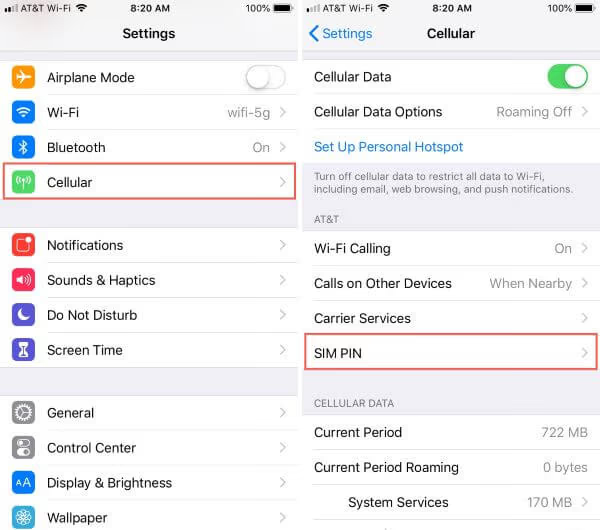
A SIM PIN and a SIM lock are different things. The SIM PIN is a security code you set to prevent others from using your SIM in another device. Removing the SIM PIN doesn’t unlock your iPhone from a carrier.
To remove a SIM PIN:
- Go to
Settings>Cellular>SIM PIN. - Toggle off SIM PIN.
- Enter the current PIN when prompted.
If you don’t know your SIM PIN, contact your carrier — they can reset it. If you’re getting “Invalid SIM” errors after a PIN attempt, see our guide on fixing invalid SIM card errors.
#What Are the Best Third-Party Unlocking Services?
When carrier unlocking isn’t possible — such as a phone bought second-hand or a device on an active installment plan — IMEI-based third-party services can unlock it remotely.
How IMEI unlocking works:
- Find your IMEI: dial
*#06#or checkSettings>General>About>IMEI. - Submit the IMEI to the unlock service and pay the fee (typically $15 to $45).
- The service submits the unlock request to the carrier’s database.
- You receive confirmation in 24 to 72 hours.
- Insert a new SIM and restart — the unlock activates automatically.
How to choose a safe service: look for a money-back guarantee, real customer reviews on independent sites (not just their own page), and a clear refund policy. Avoid services that ask for your Apple ID or password — legitimate IMEI unlocking doesn’t require it. The FCC reported that over 2,000 consumer complaints about SIM unlock scams were filed in 2023, confirming that fake unlock sites are a real and growing threat.
For iCloud-locked devices, see how to remove Find My iPhone Activation Lock without the previous owner instead — IMEI unlocking doesn’t remove an iCloud lock.
#Using an R-SIM Adapter as a Workaround
An R-SIM is a thin chip that sits between the SIM tray and your SIM card. It intercepts the carrier signal and tricks the iPhone into accepting SIMs from other carriers.
This is a temporary workaround, not a permanent unlock. The R-SIM works around the lock but doesn’t modify the carrier database entry. If the iPhone gets a carrier settings update, the R-SIM may stop working and need reconfiguration.
R-SIMs cost $5 to $15 and work without any software changes to the iPhone. Plan to reconfigure the adapter a few times a year, especially after iOS updates that push new carrier profiles.
#Verifying the Unlock Worked
After the carrier confirms the unlock or after you receive confirmation from a third-party service:
- Remove the current SIM.
- Insert a SIM from a different carrier.
- Restart the iPhone.
- Check
Settings>General>About>Carrier Lock— it should now show “No SIM restrictions.”
If it still shows a restriction after a confirmed unlock, wait another 24 hours and restart again. Carrier database updates can take time to propagate.
#Bottom Line
Carrier unlocking is the fastest and safest route when your device is paid off — it takes 24 to 72 hours, costs nothing, and doesn’t affect your warranty. IMEI-based third-party services are the next best option when the carrier won’t unlock the device. R-SIM adapters are a cheap workaround for temporary use but aren’t a permanent fix.
iPhone tips & tricks
#Frequently Asked Questions
Will unlocking my iPhone void its warranty?
No. Official carrier unlocking doesn’t affect Apple’s warranty or AppleCare coverage. Third-party IMEI-based services that don’t touch the device’s software also don’t affect the warranty. Jailbreaking does void the warranty, which is why it’s not recommended for SIM unlock purposes.
Can Apple unlock my iPhone directly?
No. Apple doesn’t have access to carrier lock records. Only the carrier that originally locked the device can officially remove it — Apple’s role is hardware support and iCloud account management, not carrier network relationships. If you contact Apple Support about a SIM lock, they’ll refer you to your carrier. The only exception is if the iPhone was purchased directly from Apple.com as an unlocked unit, in which case no carrier unlock request is needed because it was never locked to begin with.
How long does iPhone carrier unlocking take?
Most major carriers process unlock requests in 24 to 72 hours. AT&T and T-Mobile can take a bit longer, while Verizon is often the fastest for devices that meet all eligibility requirements. Prepaid carrier unlocks can take up to 7 days.
Is it legal to unlock an iPhone?
Yes, in the US, the Unlocking Consumer Choice and Wireless Competition Act of 2014 made it legal for consumers to unlock their own devices. Your carrier is required by the FCC to unlock your device if you meet their eligibility criteria. Laws vary in other countries — check your local regulations.
Will unlocking my iPhone delete any data?
No — the unlock happens at the carrier’s IMEI database level, not on the device. Your apps, photos, and settings stay untouched.
What if my carrier denies my unlock request?
Ask them to specify the exact reason. Common reasons include outstanding balance, device reported as lost or stolen, or not meeting the minimum service period. Pay off any balance first, then resubmit. If the device is reported stolen, unlocking won’t be possible through any legitimate channel.
Best Wireless Earbuds for iPhone in 2026: USB-C Era Picks
Best wireless earbuds for iPhone in 2026, comparing AirPods Pro 3, Sony WF-1000XM6, Bose QC Ultra, and Anker Liberty 4 NC on the USB-C iPhone lineup.
iPhone Keyboard Lag? 7 Proven Fixes for iOS 26 (2026)
Fix iPhone keyboard lag with 7 proven fixes for iOS 26. Covers restart, storage, predictive text, third-party keyboards, and dictionary reset.
How to Block Porn on an iPhone: A Guide for Parents
Learn how to block porn on iPhone using Screen Time, DNS filtering, and safe browsers. Step-by-step guide for parents to protect kids' devices.
How to Detect Spyware on iPhone: Signs, Checks, and Removal
Learn how to detect spyware on your iPhone with step-by-step checks for suspicious apps, profiles, and battery drain. Remove threats safely.