How to Make iPhone Keyboard Bigger: 9 Easy Methods
Discover 9 easy methods to make your iPhone keyboard bigger, including Display Zoom, third-party keyboards, and accessibility settings for iOS.
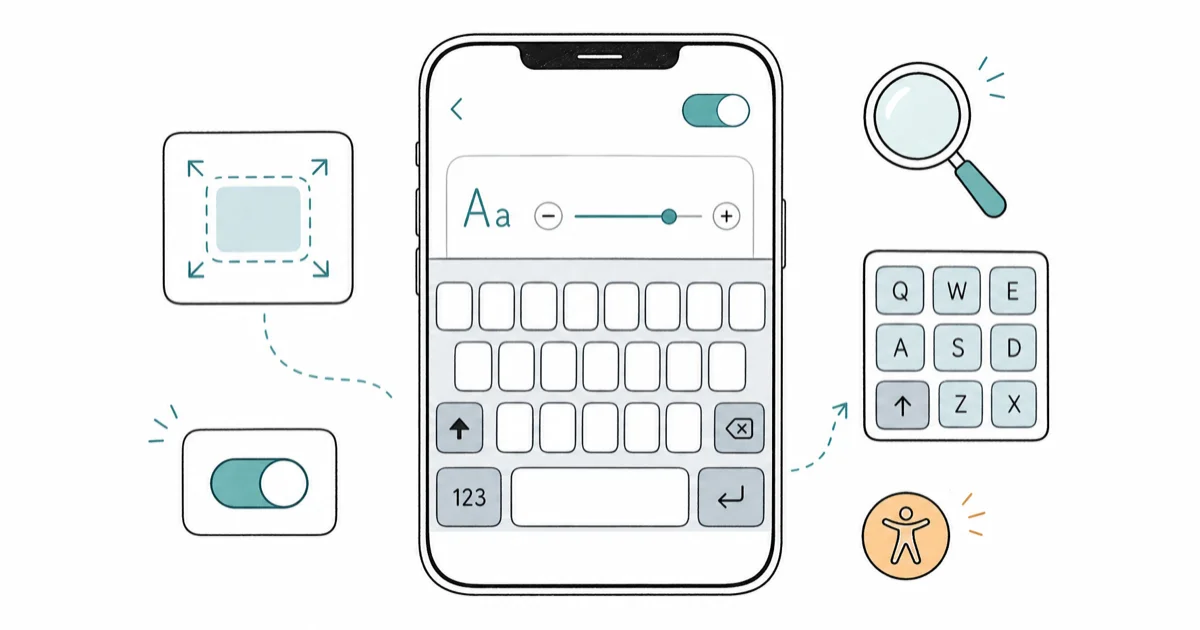
Quick AnswerGo to Settings > Display & Brightness > Display Zoom, select 'Zoomed,' and tap 'Set.' This enlarges the entire interface including the keyboard. For even more options, try third-party keyboards like Gboard that offer adjustable sizing.
The iPhone keyboard is fixed-size by default, but iOS gives you several built-in and third-party ways to make it bigger or easier to use without paid apps.
- Display Zoom in
Settings>Display & Brightnessenlarges the entire interface including the keyboard - Landscape mode gives a wider keyboard in most apps without any settings changes
- Bold Text makes keyboard letters easier to read without changing key dimensions
- Third-party keyboards like Gboard let you resize and reposition the keyboard to your preference
- Accessibility Zoom toggles enlarged view on and off with a triple-tap on the side button
#How Do You Make the iPhone Keyboard Larger Using Display Zoom?
Display Zoom is the fastest built-in method.
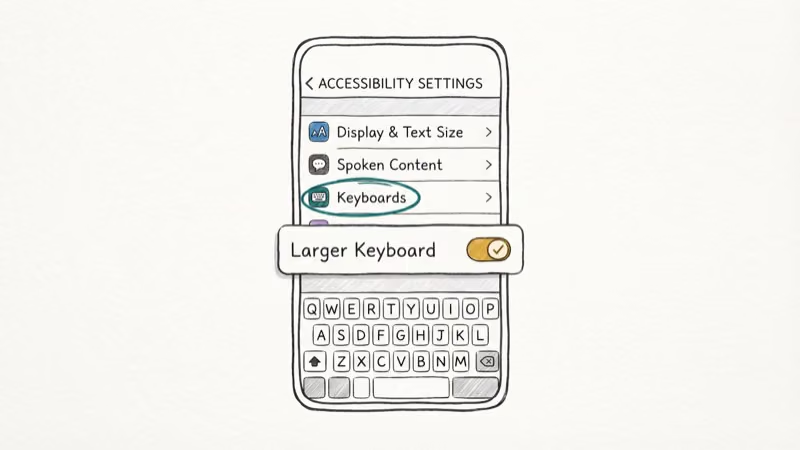 It enlarges every on-screen element system-wide, including the keyboard, status bar, and app icons.
Go to Settings > Display & Brightness > Display Zoom. Select Zoomed, tap Set, and confirm with Use Zoomed. Your iPhone restarts.
Everything scales up about 15-20%.
In Zoomed mode, iOS enlarges the keyboard along with the rest of the interface. Apple’s Display Zoom support article confirms that gesture-based features, including Face ID, remain fully functional in Zoomed mode. Check the full Apple Display Zoom documentation for a model-specific table.
Less screen content per page is the only tradeoff.
#Adjusting Text Size and Bold Text
These two settings don’t resize keys directly, but they make the keyboard letters visibly larger and easier to read.
To increase text size: go to Settings > Display & Brightness > Text Size and drag the slider right. For the largest sizes, go to Settings > Accessibility > Display & Text Size, tap Larger Text, and enable Larger Accessibility Sizes. This gives you font sizes up to 310pt compared to the default 17pt body text.
Bold Text works differently. Go to Settings > Display & Brightness and toggle on Bold Text. Your iPhone may restart, and after the restart every character on the keyboard appears in a heavier weight that’s easier to distinguish at small sizes. That’s especially useful on smaller iPhones like the iPhone SE 2022, where keys are physically smaller than on larger models.
#Using Landscape Mode for a Wider Keyboard
Rotating your iPhone sideways gives you a significantly wider keyboard
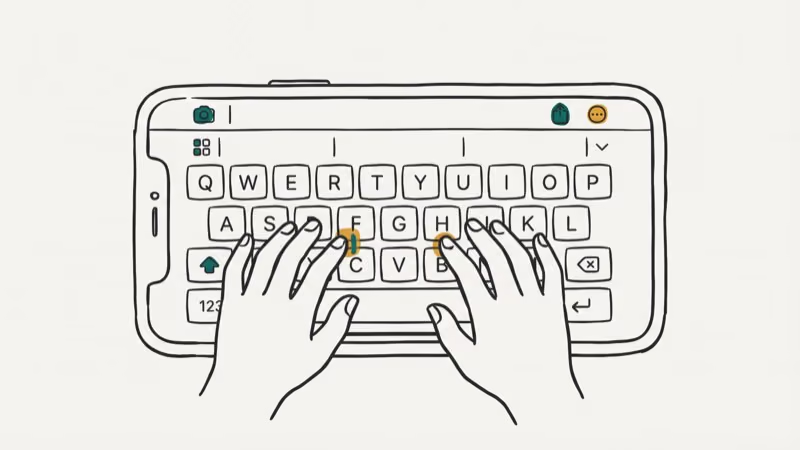 in most apps.
Turn off Portrait Orientation Lock first. Swipe down from the top-right corner to open Control Center and tap the lock icon if it’s highlighted. Then open a supported app and rotate your phone sideways to landscape. The keyboard switches to landscape layout without an app restart.
Landscape mode doesn’t work in every app. Some third-party apps lock portrait orientation. But for email, messages, and most text editors, the landscape keyboard is roughly 30% wider than portrait, which makes a real difference for longer typing sessions.
#How Do You Install a Bigger Third-Party Keyboard?
Third-party keyboards give you the most control.
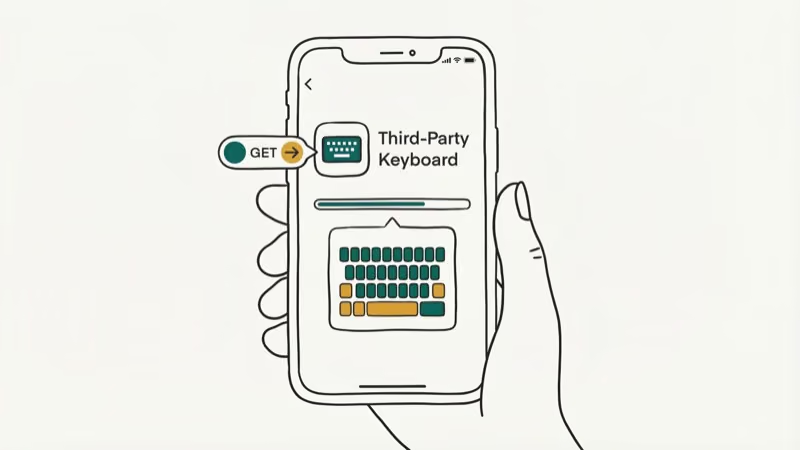 Gboard, SwiftKey, and Big Keys Keyboard all let you adjust key sizes.
Download the keyboard from the App Store. Then go to Settings > General > Keyboard > Keyboards and tap Add New Keyboard.
Select your installed keyboard from the list. Open any app with a text field, tap the globe icon at the bottom-left of the keyboard to switch to your new keyboard, and configure sizing in the app’s own settings.
Gboard’s Resize control is the setting that actually enlarges the keys: open the keyboard, tap the toolbar, choose Resize, and drag the tabs to make the typing area taller. According to 9to5Google, Gboard replaced its old fixed keyboard-height menu with this drag-to-resize control. One-handed mode is separate, shifting the keys left or right for single-thumb reach rather than enlarging them.
#Accessibility Zoom for Extra-Large Keyboard
Accessibility Zoom magnifies any part of the screen, including the keyboard, without changing system settings permanently.
Go to Settings > Accessibility > Zoom and toggle it on. Once enabled, triple-tap anywhere to toggle zoom on and off. The default magnification is 1.5x, but you can increase it up to 15x in the Zoom settings panel.
This is the most flexible method because you can zoom into just the keyboard area without affecting the rest of the screen. Set Zoom Region to Window Zoom to keep the magnified view in a floating window instead of going full-screen.
#Show Uppercase Keys
This accessibility setting makes each key letter look slightly larger by removing the visual complexity of lowercase letterforms.
Go to Settings > Accessibility > Keyboards and toggle off Show Lowercase Keys. All keys now display as capitals regardless of shift state. The change is subtle but helps users who find the lowercase letter forms harder to read at small sizes.
#Split Keyboard in Landscape Mode
In landscape mode, you can split the keyboard into two halves positioned at the edges of the screen. This shortens the reach for each thumb.
Hold the keyboard icon in the bottom-right corner of the keyboard until the option appears, then select Split. Each half of the keyboard stays at the edge of the screen. Tap and hold the keyboard icon again and select Merge to undo.
#Using Voice Dictation Instead of Typing
If the keyboard is too small regardless of adjustments, Siri dictation bypasses it entirely.
Tap the microphone icon on the keyboard and speak. Dictation accuracy on iOS 17 is high enough for most messages and emails. According to Apple’s iOS documentation, iOS dictation works offline on iPhone 11 and later models, which means there’s no delay even without Wi-Fi.
#Pairing a Bluetooth Keyboard
For extended typing, a Bluetooth keyboard eliminates the on-screen keyboard entirely.
Go to Settings > Bluetooth, turn on Bluetooth, and put your Bluetooth keyboard in pairing mode. Your iPhone detects it automatically. The on-screen keyboard disappears while a physical keyboard is connected, giving you full-size keys without any software workarounds.
For keyboard malfunctions, see the iPhone keyboard not working guide. Touch screen issues that affect typing are covered in fix iPhone touch screen not working.
#Troubleshooting Common Issues
Display Zoom not available. Some older iPhone models don’t support Display Zoom at all. Check Apple’s specifications page for your model. If it’s missing from Settings > Display & Brightness, your device doesn’t support it.
Third-party keyboard missing. If a keyboard you installed doesn’t appear in the switcher, go to Settings > General > Keyboard > Keyboards and confirm it’s listed there. If it’s listed but not appearing, delete the app and reinstall it.
Landscape keyboard not appearing. Disable Portrait Orientation Lock in Control Center and confirm the app supports landscape mode.
For autocorrect issues that make keyboard use frustrating, the guide on how to turn off autocorrect on iPhone gives you full control. If your screen is registering phantom taps that interfere with typing, the iPhone ghost touch troubleshooting guide covers hardware and software fixes.
#Bottom Line
Display Zoom is the fastest fix for most users: one setting, system-wide improvement, no extra apps required. If you need more precision, Gboard’s one-handed mode or Accessibility Zoom give you fine-grained control. For the largest possible keyboard, combine landscape mode with Display Zoom. If you’re also dealing with a black spot on your iPhone screen that’s obscuring keys, address that hardware issue first before adjusting keyboard settings.
iPhone tips & tricks
#Frequently Asked Questions
Will Display Zoom make other apps harder to use?
Yes, it reduces visible content per page. You’ll see fewer emails in your inbox, fewer messages on screen, and slightly more scrolling overall. Most users with typing difficulties find it a worthwhile exchange.
Do third-party keyboards pose security risks?
Reputable keyboards like Gboard and SwiftKey are generally safe, but review their privacy policies before granting Full Access. That permission allows the app to transmit keystrokes to the developer’s servers for features like personalized autocorrect. You can deny Full Access and still use basic typing. For passwords and financial data, switch back to the default iOS keyboard.
Can I make the keyboard bigger on older iPhones?
Most methods work on iOS 14 or later. Landscape mode, Bold Text, and Text Size work on every model.
Does increasing text size make the keyboard bigger in all apps?
Text size changes affect most native iOS apps. Key dimensions don’t change, just the letter sizes within each key.
What’s the best third-party keyboard for large keys specifically?
Big Keys Keyboard on the App Store is designed for this exact use case, with keys approximately 2x the standard iOS size and optional high-contrast color schemes. Gboard is a better all-around option that includes size adjustment as one of many features.
Can I use a physical keyboard with iPhone?
Yes. Any Bluetooth keyboard pairs through Settings > Bluetooth. Apple’s Magic Keyboard connects in seconds and works wirelessly within about 30 feet. The on-screen keyboard hides automatically when a physical keyboard is active.
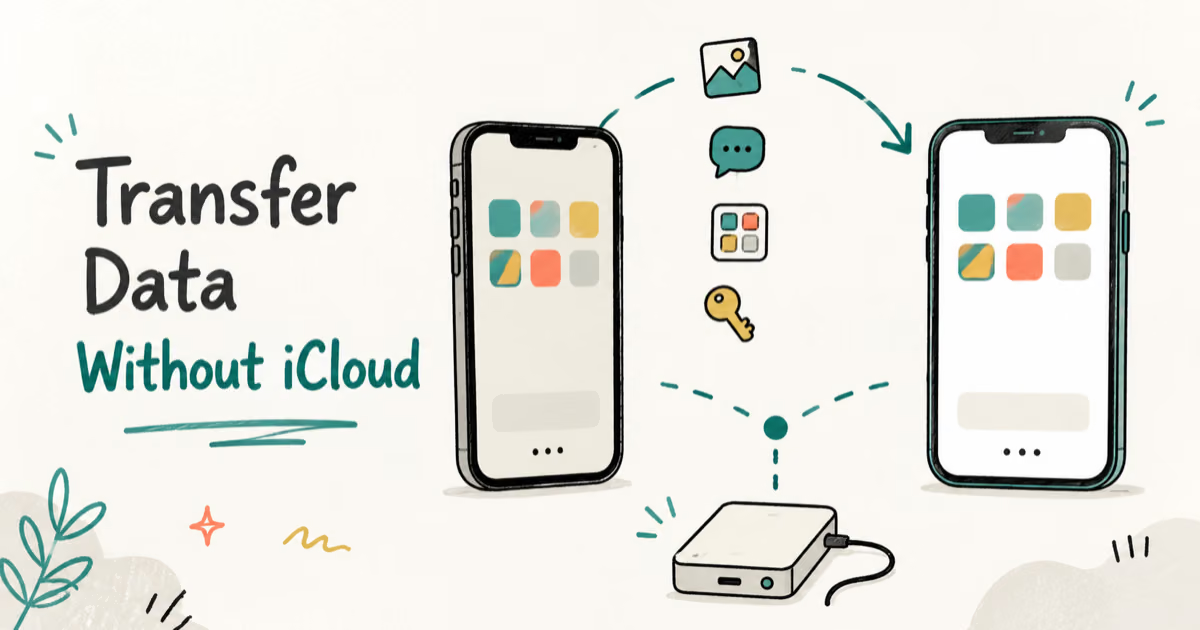
How to Transfer Data to a New iPhone Without iCloud
Move everything to your new iPhone without iCloud: Quick Start device-to-device transfer, wired migration, and encrypted Finder or iTunes backups.
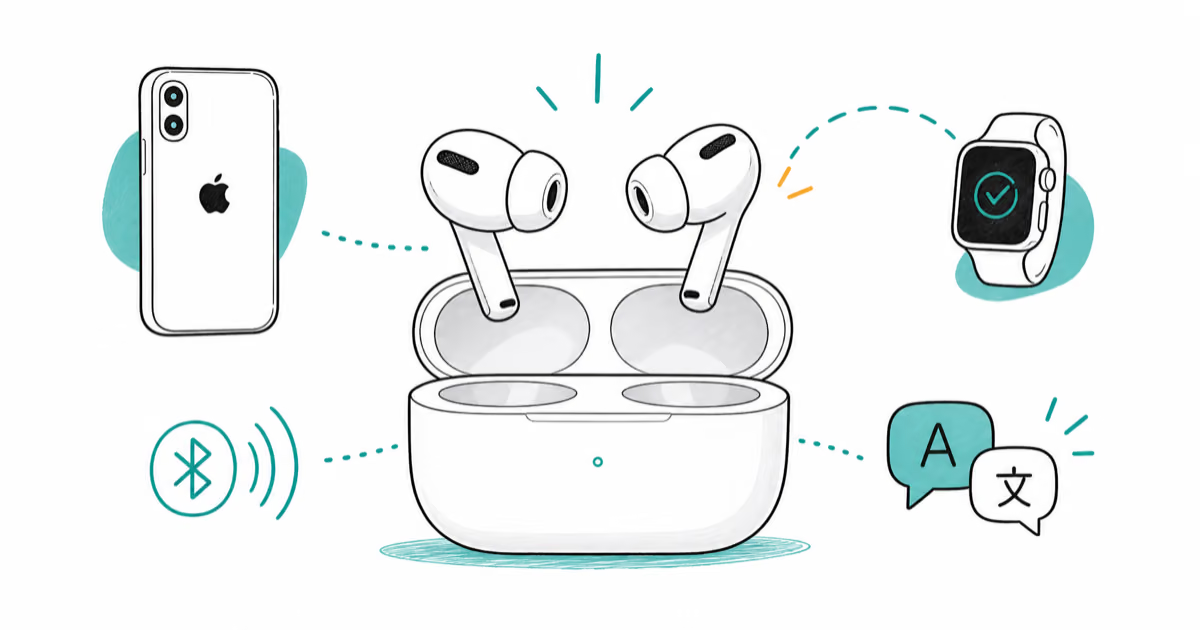
Best Wireless Earbuds for iPhone in 2026: USB-C Era Picks
Best wireless earbuds for iPhone in 2026, comparing AirPods Pro 3, Sony WF-1000XM6, Bose QC Ultra, and Anker Liberty 4 NC on the USB-C iPhone lineup.
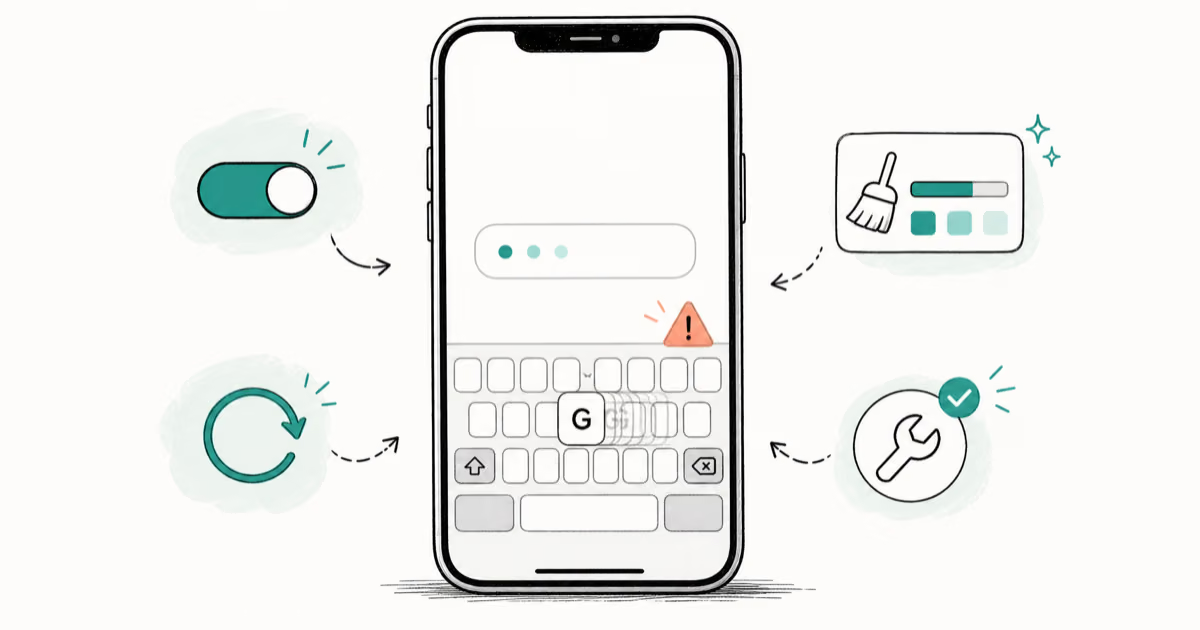
iPhone Keyboard Lag? 7 Proven Fixes for iOS 26 (2026)
Fix iPhone keyboard lag with 7 proven fixes for iOS 26. Covers restart, storage, predictive text, third-party keyboards, and dictionary reset.
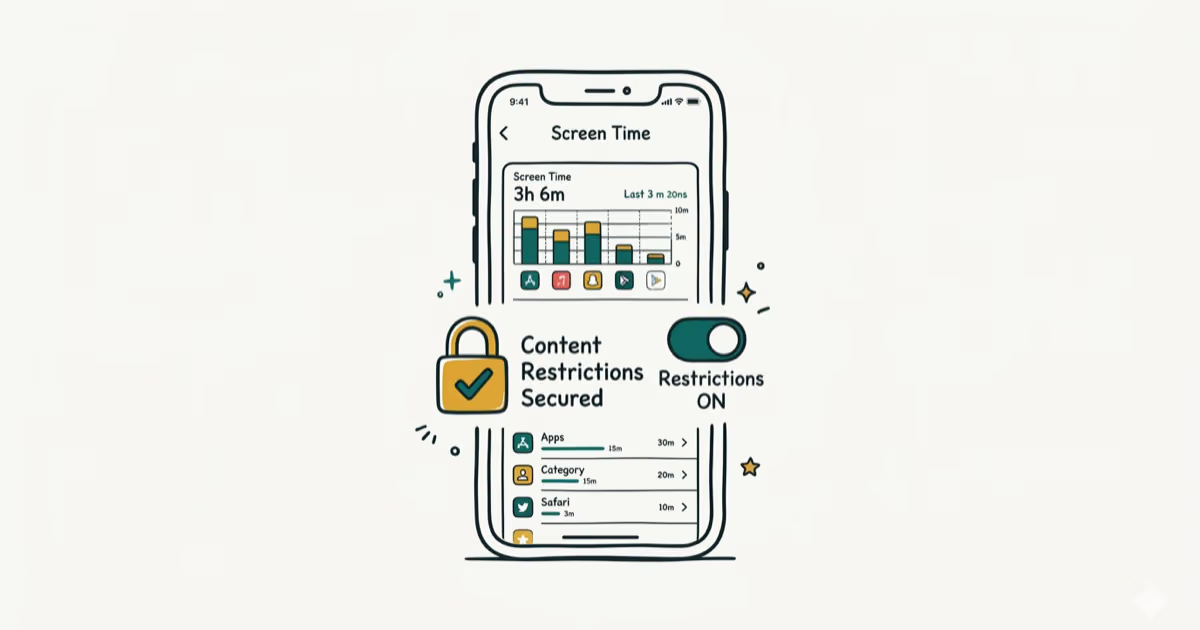
How to Block Porn on an iPhone: A Guide for Parents
Learn how to block porn on iPhone using Screen Time, DNS filtering, and safe browsers. Step-by-step guide for parents to protect kids' devices.