Best Android Phone 2026: Top Picks by Budget and Use
Best Android phone picks for 2026 by budget: Samsung Galaxy S25 versus Google Pixel 10 versus OnePlus and Motorola on updates, camera, and battery.
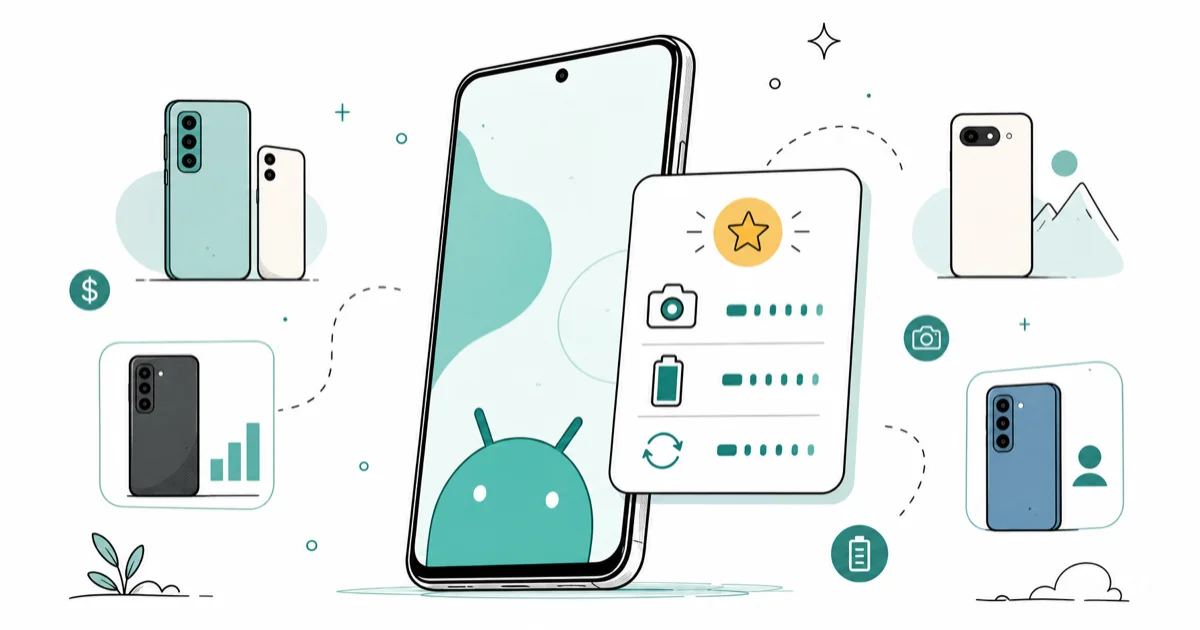
Quick AnswerThe Samsung Galaxy S25 is the best Android phone for most people in 2026, with a bright display, strong cameras, and seven years of updates. The Google Pixel 10 wins on photos and AI, while the Pixel 9a is the best value pick.
The best Android phone in 2026 depends on your budget and what you value most, whether that’s camera quality, battery life, or years of software support. Samsung, Google, OnePlus, and Motorola all ship excellent handsets this year. We sorted the field by price so you can match a phone to your spending.
- The Samsung Galaxy S25 is the best all-around Android phone, pairing a bright display and strong cameras with seven years of OS and security updates.
- The Google Pixel 10 leads on computational photography and on-device AI, and adds a telephoto lens to the base model for the first time.
- The Pixel 9a is the best mid-range value at around $499, carrying the same seven-year update promise as the flagships.
- Update policy is the easiest spec to get wrong: Samsung and Google offer seven years, while OnePlus offers four OS upgrades and six years of security patches.
- The OnePlus 13 is the battery and charging champion, with a large 6,000mAh cell that outlasts most rivals.
#Which Android Phone Should You Buy in 2026?
Start with your budget. Then weigh the three things that separate flagships from the rest: camera, battery, and how long the phone keeps getting updates. Raw speed matters less than it used to, because every flagship chip this year handles apps, games, and multitasking without strain, so the real decisions are about photos, endurance, and support life rather than benchmark scores.
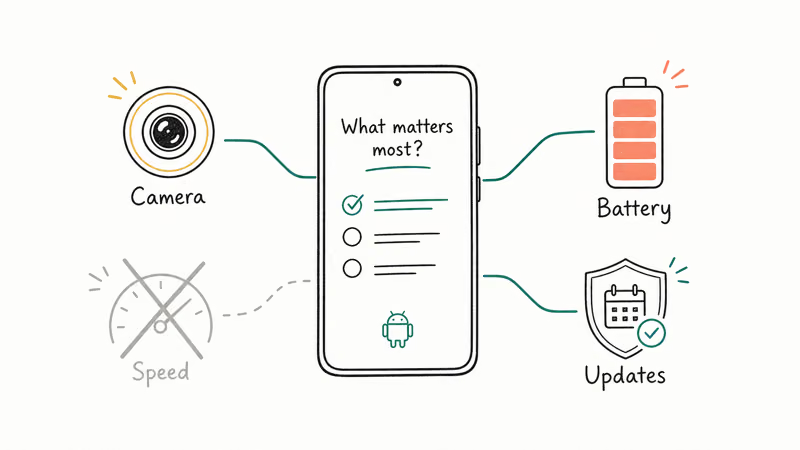
For most people, the Samsung Galaxy S25 is the safe default. It does everything well, and the screen is excellent in sunlight.
Check the Samsung Galaxy S25 price
As an Amazon Associate fone.tips earns from qualifying purchases.
The Galaxy S25 and the Pixel 10 both comfortably last a full day on a charge under mixed use, so the choice between them comes down to which photos you prefer and which software you like living in, not endurance.
#Best Flagship Android Phone
Flagships compete on the screen, the cameras, and the little software touches. Two phones lead the pack, and they win for different reasons.
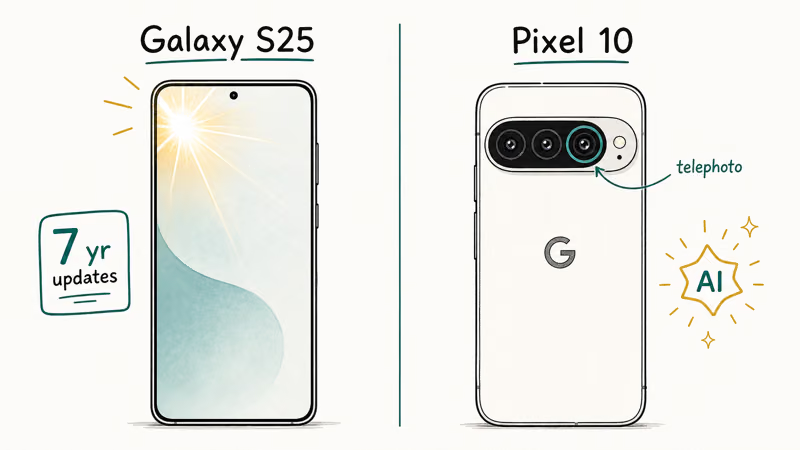
The Samsung Galaxy S25 is the most complete flagship. It has a sharp, very bright AMOLED panel, a flexible camera system, and the broadest accessory and carrier support of any Android phone. Its biggest long-term strength is support life. Samsung’s Galaxy S25 announcement states that the Galaxy S25 line gets seven years of OS upgrades, which keeps it modern for the better part of a decade.
The Google Pixel 10 wins on photography and AI. Google moved its chip manufacturing to TSMC for the Tensor G5 and, more importantly for buyers, added a dedicated telephoto camera to the standard model for the first time. The trade-off is the chip: the Tensor G5 trails Qualcomm and Apple silicon in raw benchmarks, so heavy gamers may prefer a Snapdragon phone.
Reviewers at GSMArena’s launch coverage confirm the triple rear camera and the Tensor G5 chip. Pixels also receive new Android versions first and share the same seven-year support window.
The Pixel 11 has since landed on Tensor G6. Our Pixel 11 vs Pixel 10 breakdown covers what actually changed, and a discounted Pixel 10 still holds up well against it.
Compare the Google Pixel 10 price
Choose simply: Galaxy S25 for polish, Pixel 10 for cameras.
#Best Mid-Range Android Phone
Mid-range phones are where the value lives. You give up a little camera versatility and charging speed, but you keep the things that matter day to day.
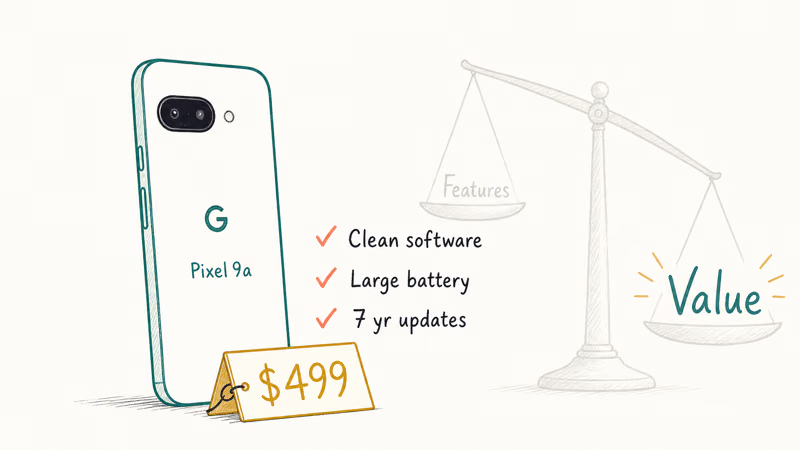
The Pixel 9a is the standout pick at around $499. According to Tech Advisor’s mid-range guide, it leads the category thanks to clean software, a large battery, and the same class-leading seven years of updates as the flagships. The compromises are slow wired charging and a plainer design, but for the price the camera and support life are hard to beat.
Motorola has a different angle. Its mid-range Moto G Stylus 5G adds a built-in pen and a bright display at a similar price, which suits note-takers. The wider Motorola strength is near-stock Android, long battery life, and rugged build quality, so if you want a phone that simply gets out of the way, that’s a fair trade.
#How Long Do Android Phones Get Updates?
Update policy is the single most misquoted Android spec. Samsung and Google lead with seven years of OS upgrades and seven years of security patches on their flagships and the Pixel A-series, the longest support in the market.
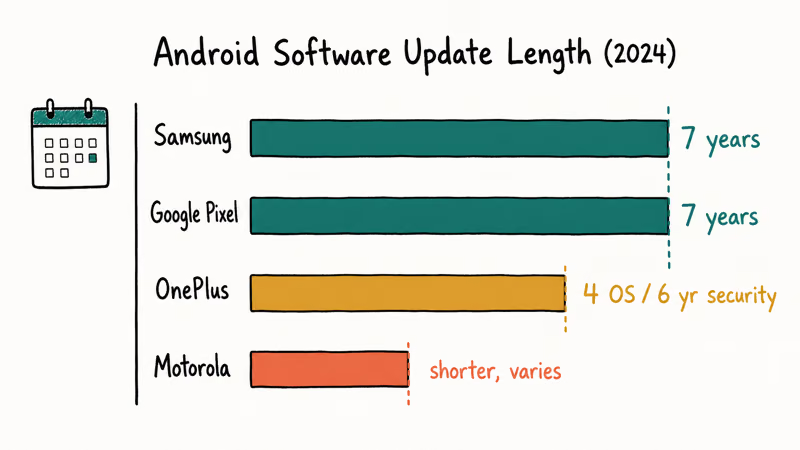
Other brands trail. The OnePlus 13 update policy is four OS upgrades and six years of security patches, not seven, which is a common point of confusion. Motorola’s support varies by model and is typically shorter. The rule of thumb is simple: if you keep phones for a long time, buy a Pixel or a Galaxy.
A phone you keep for years deserves good accessories. Our best wireless earbuds for Android guide covers buds that support Fast Pair and high-quality codecs across these phones.
#Battery and Charging Champions
Battery and charging are where the flagship pecking order flips. Here Samsung and Google don’t lead.
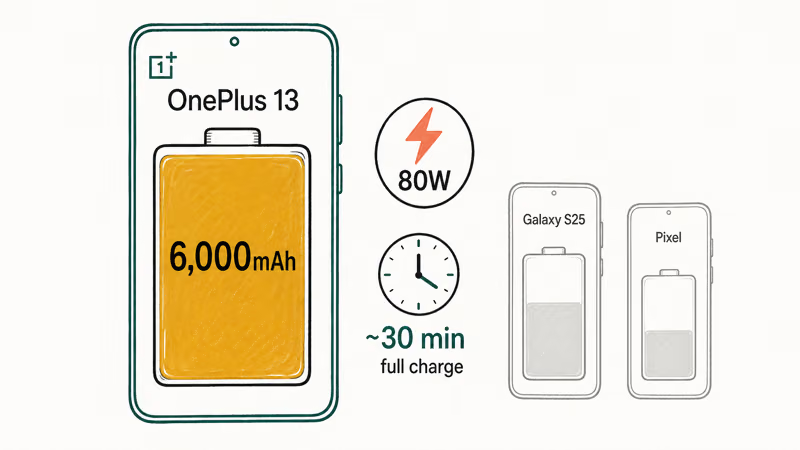
The OnePlus 13 is the endurance and charging champion. Its large 6,000mAh battery is bigger than the cells in the Galaxy S25 Ultra or the Pixel Pro line, yet the phone is no thicker. According to Android Authority’s OnePlus 13 review, the 6,000mAh cell is almost 1,000mAh larger than the Galaxy S24 Ultra or Pixel 9 Pro XL, paired with 80W wired charging that refills it in roughly half an hour. The catch is the shorter four-year update window.
Through a heavy day of navigation, video, and hotspot use, that larger cell is the kind that finishes with charge to spare where a smaller-battery flagship would need a top-up by evening.
#Best Android Ecosystem and Privacy Setup
Buying the phone is only half the decision. The apps and habits you layer on top shape the experience as much as the hardware does.
For privacy and a cleaner browsing experience, our best ad blocker for Android guide covers tools that cut ads and trackers system-wide. Lost something? Our best Bluetooth tracker for Android picks work with Google’s Find My Device network on these phones.
Switching phones is its own task. When you move to a new handset, our clone Android phone walkthrough copies your data across cleanly, and the format Android phone guide wipes the old device safely before you sell it.
#Bottom Line
For most people in 2026, the Samsung Galaxy S25 is the Android phone to buy: it’s excellent everywhere, the screen is superb in daylight, the cameras are flexible, and seven years of updates keep it current for the better part of a decade without feeling dated. Choose the Google Pixel 10 instead if you want the best computational photography and on-device AI features, and you accept a Tensor G5 chip that trails Qualcomm and Apple silicon on raw benchmarks.
On a tighter budget, drop to the Pixel 9a for flagship support life at a mid-range price. Pick the OnePlus 13 instead if battery life and charging speed matter more than the longest update window. Match the phone to your budget and your priorities, and the spec-sheet noise stops mattering.
#Frequently Asked Questions
Is Samsung or Google better for Android phones?
Both are excellent, and the right one depends on what you value. Samsung offers the brightest screens, the widest accessory and carrier support, and a polished all-around experience with strong zoom on its higher-end models. Google counters with the best computational photography, the cleanest software, and first access to new Android versions, plus useful on-device AI features. Both back their phones with seven years of updates, so the decision comes down to ecosystem and camera preference rather than support life.
How many years of updates does each phone get?
Samsung Galaxy S25 and Google Pixel 10 both get seven years of OS upgrades and seven years of security patches. The Pixel 9a shares that window. OnePlus offers four OS upgrades and six years of security patches, and Motorola’s support is usually shorter.
Which Android phone has the best camera?
Google’s Pixel 10 generally takes the best photos in its class thanks to computational photography, and it now adds a telephoto lens to the base model for the first time, which closes a real gap with pricier rivals. Samsung’s Galaxy S25 runs a close second and offers more flexible zoom on its higher-end models. For most people the difference shows up only in tricky lighting.
What is the best budget Android phone in 2026?
At around $499, the Pixel 9a is the standout budget pick. It pairs strong cameras and a large battery with seven years of updates, a combination no other phone near its price matches today, and Motorola’s Moto G Stylus 5G is a fair alternative if you specifically want a built-in pen and a brighter display.
Which Android phone has the best battery life?
OnePlus wins here. Its OnePlus 13 carries a large 6,000mAh cell that outlasts most rivals and charges far faster than a Pixel. The catch is a shorter four-year OS update window.
Do I need a flagship or is a mid-range phone enough?
A mid-range phone is enough for most people. Phones like the Pixel 9a handle everyday apps, calls, and photos well, and they get the same long support as flagships. Step up to a flagship only if you want the best cameras, the brightest screen, or top gaming performance.
Are OnePlus and Motorola phones worth buying?
Yes, for the right buyer. OnePlus shines on battery and charging speed, which suits heavy users who accept a shorter four-year update window in exchange for the largest cell and fastest wired charging in this group. Motorola, meanwhile, offers near-stock Android, long battery life, and rugged MIL-STD builds at lower prices, making it a solid value choice if you tend to upgrade every couple of years rather than holding a phone for the better part of a decade.
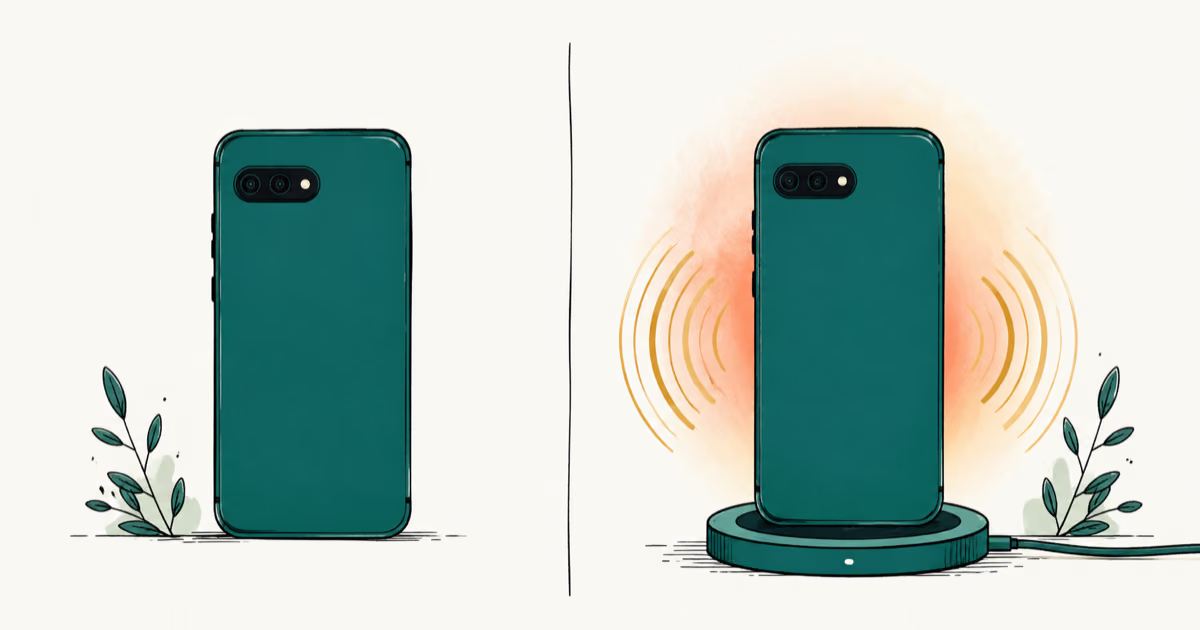
Pixel 11 vs Pixel 10: What Changed and Who Should Upgrade
Pixel 11 vs Pixel 10: same screen and camera resolution, new Tensor G6, 25W wireless, and Gemini Intelligence. Here is who should actually upgrade.

Verizon Not Receiving Texts? How to Fix It in 9 Steps
Verizon not receiving texts? Fix it in 9 steps: check Message Blocking in My Verizon, reset network settings, deregister iMessage, and call support.
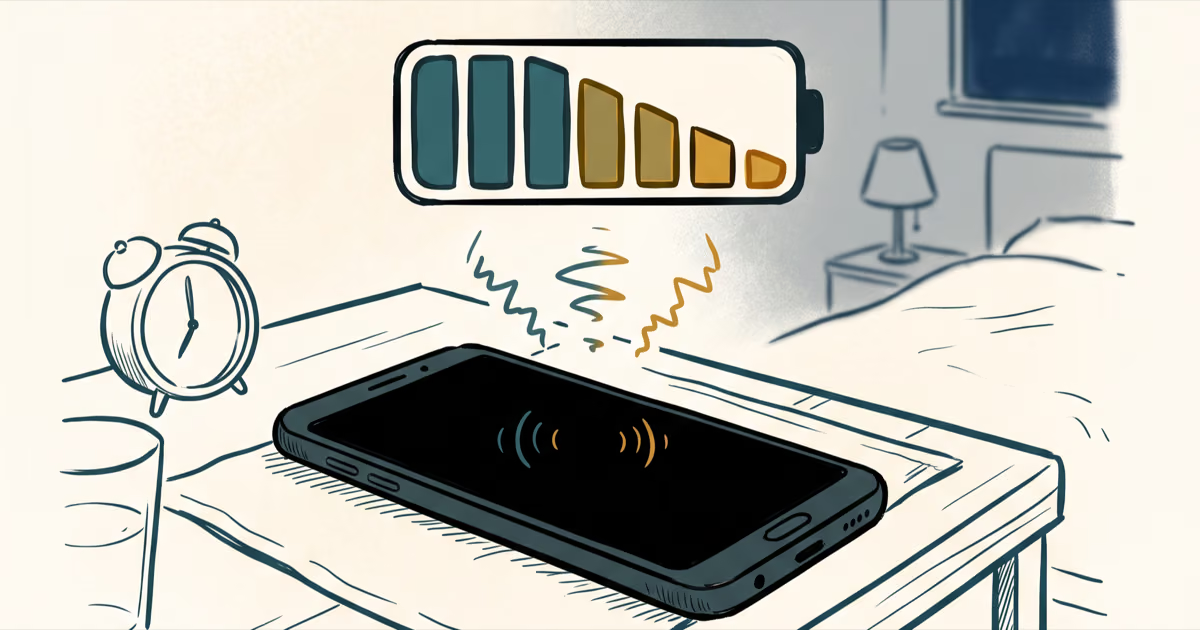
Pixel Battery Drain: What Google's July Fix Really Covers
Google marked the Pixel idle battery drain bug fixed in July, but only some phones got the patch. Here is who is covered, who is not, and what to try.
iPhone Stuck on EDGE? How to Get 5G or LTE Back (2026)
iPhone stuck on EDGE with crawling data? Here's why the E icon appears, which settings force 5G or LTE back, and when the problem is your carrier.