Arctis Nova Pro vs Audeze Maxwell: Wireless Flagship Winner
SteelSeries Arctis Nova Pro Wireless vs Audeze Maxwell 2 compared on battery, drivers, mic, latency, and platforms. Pick the right gaming flagship.
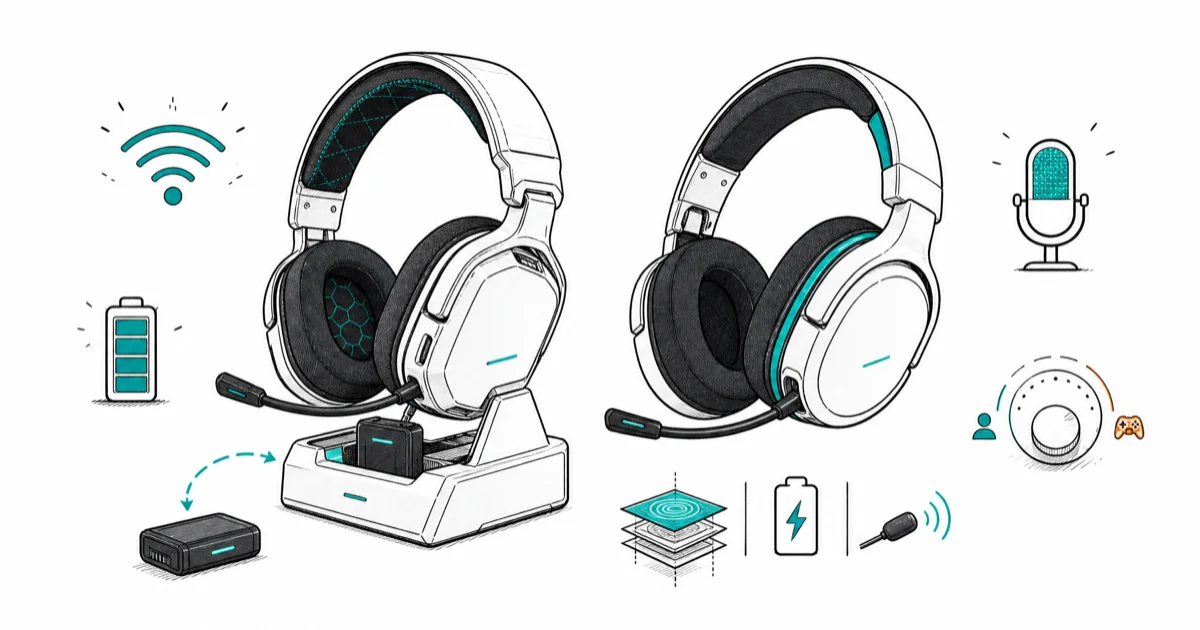
Quick AnswerNova Pro wins on workflow thanks to its swap-and-charge dock and ChatMix dial. Maxwell 2 wins on audio with planar-magnetic drivers and 80-hour battery.
SteelSeries Arctis Nova Pro vs Audeze Maxwell is the cleanest wireless flagship matchup of 2026. The choice comes down to ChatMix workflow versus long single-charge sessions.
- Arctis Nova Pro Wireless includes a GameDAC Gen 2 base station with a physical ChatMix dial that mixes 2.4GHz PC audio and a Bluetooth phone source simultaneously
- Audeze Maxwell 2 ships an 80-hour battery on a single charge, which is roughly four times what the Nova Pro headset unit delivers between swaps
- Maxwell uses 90mm planar-magnetic drivers, the same driver class as Audeze’s $1,000 audiophile open-backs, packaged in a closed wireless headset
- Nova Pro’s dual-battery system keeps one battery charging in the base while the other powers the headset, so the headset itself is never offline
- Both ship a detachable boom mic, with Maxwell leaning on AI noise reduction and Nova Pro using SteelSeries’ ClearCast Gen 2 design
#How the Battery Systems Differ in Practice
The battery story is where these two headsets diverge the most, and the difference shapes the whole user experience. SteelSeries built the Nova Pro around a swap-and-charge dock; Audeze built the Maxwell around just not charging often.
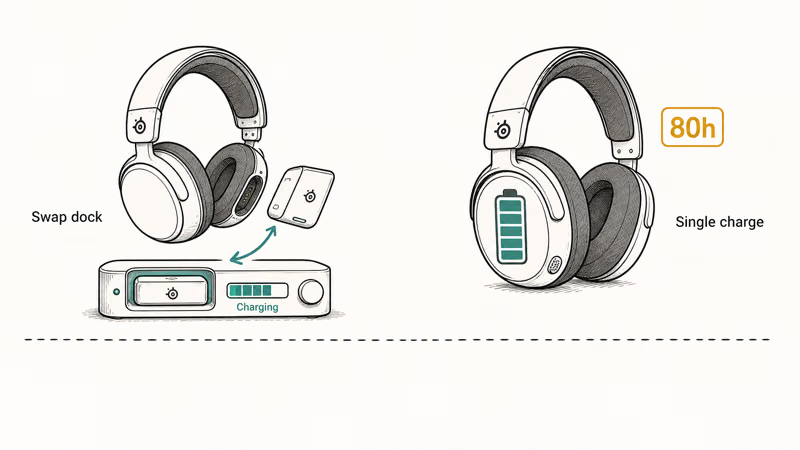
SteelSeries ships the Arctis Nova Pro Wireless with two identical batteries and a GameDAC Gen 2 base station that doubles as the second battery’s charger. Pop one into the side of the headset, slot the depleted one into the base, and you have a steady-state setup where the headset is never the limiting factor. Because the base is always topping off the spare, you never plan around a charging schedule.
Audeze’s Maxwell 2 takes the opposite approach. According to Audeze’s product page, its built-in battery is rated up to 80 hours on a single charge with the 2.4GHz dongle. There is no swap, no dock, no spare to keep ready, just a USB-C cable when the week-long session is finally up.
Which workflow is better depends entirely on how you use the headset. The dock model rewards a permanent desk setup. The single-charge model rewards travel, mobile use, and people who don’t want a base station sitting under the monitor.
#Spec Comparison at a Glance
Here is the side-by-side that captures the major differences before the per-product detail below. Each row links to first-party documentation where the spec is sourced.
| Spec | SteelSeries Arctis Nova Pro Wireless | Audeze Maxwell 2 |
|---|---|---|
| Drivers | 40mm Neodymium | 90mm planar magnetic |
| Battery (headset) | ~18-22 hr per battery, swap from base | Up to 80 hr single charge |
| Wireless | 2.4GHz + Bluetooth simultaneous | 2.4GHz + Bluetooth LE Audio |
| Base station | GameDAC Gen 2 with ChatMix dial | None (USB dongle only) |
| Active noise cancellation | Yes | No |
| Boom mic | Detachable ClearCast Gen 2 | Detachable AI-processed broadcast mic |
| Platforms | PC, PS4/PS5, Switch, mobile | PC, PlayStation or Xbox variant, Switch, Mac, mobile |
Comparison of core hardware specs between Arctis Nova Pro Wireless and Audeze Maxwell 2
The two interesting rows are drivers and base station. Planar-magnetic drivers in a closed gaming headset are rare, and the ChatMix-equipped base station is the feature that gets Nova Pro into corporate work-from-home rotations alongside PC gaming.
#SteelSeries Arctis Nova Pro Wireless
The Nova Pro is the all-rounder of the matchup, and it’s the only one of the two with a hardware base station that mixes audio sources without touching software. Its workflow is built for PC game audio over 2.4GHz, Discord on the same channel, and a phone call paired over Bluetooth, all at once.
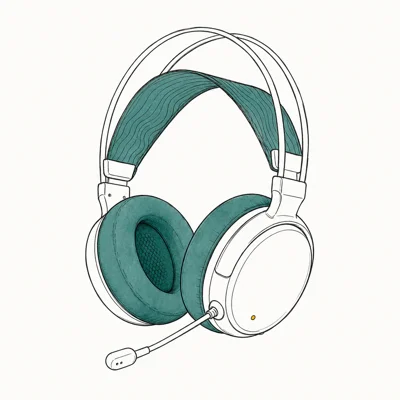
- Hot-swap battery is the killer feature — zero charge downtime
- Mix PC game audio + Discord on phone simultaneously
- ANC works on planes and the headset doubles as travel cans
Last updated on May 27, 2026
As an Amazon Associate fone.tips earns from qualifying purchases. Prices and availability on Amazon are accurate as of the date above and subject to change.
- Dock-and-swap dual-battery system keeps the headset itself never offline
- GameDAC Gen 2 base mixes 2.4GHz, Bluetooth, and chat sources simultaneously
- Physical ChatMix dial is faster than any in-game audio menu
- Active noise cancellation rivals dedicated travel headsets
- Cross-platform coverage from PC to PS5 to Switch to phone
- Per-battery runtime is short compared to Maxwell's 80-hour spec
- Base station takes desk space and a power outlet
- Driver fidelity is good but not audiophile-grade
#Audeze Maxwell 2 (2026, New Version)
Maxwell 2 is what an audiophile company shipping a gaming headset looks like. Audeze confirms that the 90mm planar-magnetic drivers match their LCD-series open-back class, a driver topology that historically lived only in $1,000+ headphones above the $1,200 mark.
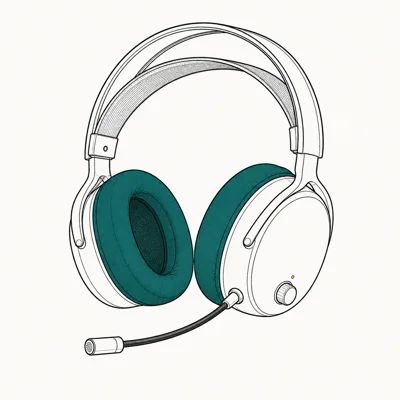
- Planar magnetic drivers — fidelity that exposes other headsets
- Footstep / reload positional cues clearer than any competitor
- Wired audiophile cans cost 2x for the same drivers
Last updated on May 27, 2026
As an Amazon Associate fone.tips earns from qualifying purchases. Prices and availability on Amazon are accurate as of the date above and subject to change.
- Planar-magnetic drivers deliver fidelity that crosses into audiophile-class territory
- AI-processed broadcast mic widely regarded as best at this tier
- 80-hour single-charge battery makes weekly charging optional
- Bluetooth LE Audio gives a low-latency mode for competitive play
- Closed-back design isolates without active noise cancellation hiss
- No base station means no physical ChatMix dial
- Heavier than Nova Pro due to large planar driver assemblies
- Buying the wrong variant locks you out of either PlayStation or Xbox support
#The Mic Comparison: Maxwell Edges Ahead
The mic question gets answered first when the headset is meant for streaming, recording, or daily Discord. Maxwell’s AI-processed boom mic is the clear winner in voice clarity, but Nova Pro’s ClearCast Gen 2 is by no means a slouch.
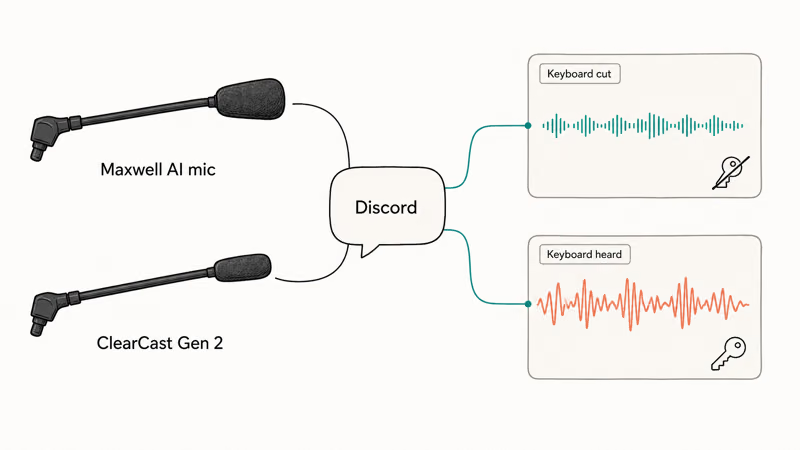
Maxwell’s mic package targets broadcast-style clarity; Nova Pro focuses on clear headset chat and competitive callouts.
If you stream regularly and want to keep mic chains simple, Maxwell is the call. If your stream chain already includes a standalone USB microphone like an SM7B or Shure MV7+, the headset mic difference is academic and the Nova Pro’s other strengths matter more.
#How Do They Handle Latency for Competitive Play?
Latency matters in shooters where audio cues lead the frame, and both headsets target the competitive end of the spectrum.
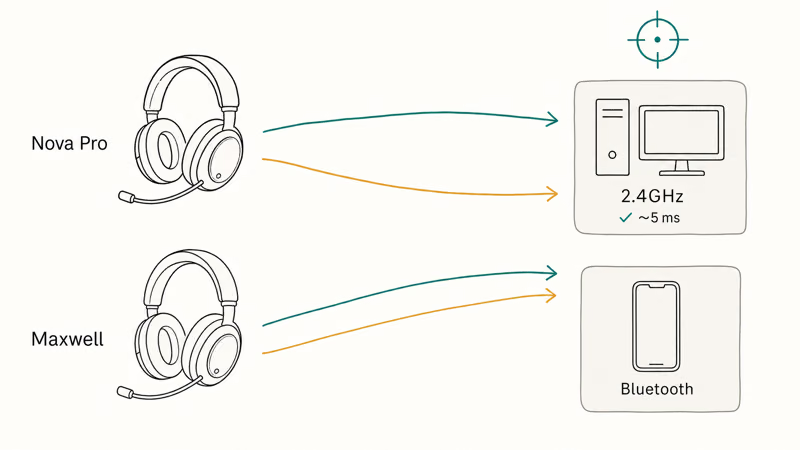
Audeze Maxwell offers a low-latency Bluetooth LE Audio mode, plus the standard 2.4GHz wireless dongle that all serious wireless gaming headsets ship with. The Nova Pro sticks with 2.4GHz for the gaming connection and uses Bluetooth as a separate phone channel via the base station, not as a competing gaming path.
For 2.4GHz gaming, both target low-latency performance. Audeze states that the Bluetooth LE Audio mode reduces latency compared to standard Bluetooth.
#Multi-Source Workflows Favor the Nova Pro Base
Multi-source means more than one audio device feeding the same headset, and this is where the Nova Pro pulls clearly ahead. The GameDAC Gen 2 base station accepts USB from PC, optical from console, line-in, and Bluetooth all at once.
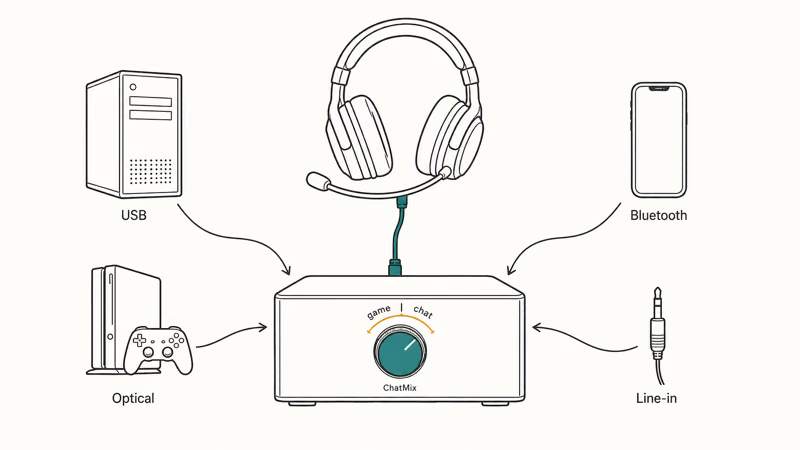
The ChatMix dial blends game and chat audio in hardware; Maxwell needs dongle swaps or PC software.
If your daily setup spans PC + console + phone, Nova Pro is built for that. If you stay on one platform and rarely add a second audio source, Maxwell’s simpler setup is fine.
#When Is Maxwell the Right Pick Despite the Trade-offs?
The right Maxwell user is a long-session listener who values driver fidelity above workflow ergonomics. Single-player narrative games, open-world RPGs on Switch, hardcore extraction shooters like Tarkov where positional cues decide rounds, and music listening between gaming sessions all reward the planar-magnetic upgrade.

Travel matters here too. Maxwell goes in a backpack, no dock to pack.
Music listeners will hear the planar-magnetic difference within minutes of plugging in, and the contrast against the SteelSeries Neodymium driver approach in the Nova Pro shows up immediately on acoustic guitar attack, orchestral string separation, and cinematic game scores with wide dynamic range, all of which the Maxwell renders with noticeably more air and decay than the Nova Pro can produce.
#Bottom Line
Buy the SteelSeries Arctis Nova Pro Wireless if your headset lives on a desk and you mix audio sources daily. The dock-and-swap battery system, ChatMix dial, ANC, and dual-source Bluetooth make it the workflow winner for anyone running PC gaming alongside Discord, work calls, or a console.
Buy the Audeze Maxwell 2 for fidelity-first listening, week-long battery life, or single-headset coverage of games and music.
Both are flagship-tier products at their price tier. There is no wrong answer here, only the wrong reason for the answer, and the two questions worth asking yourself first are how often you swap audio sources and how often the headset travels off the desk with you.
#Frequently Asked Questions
Can the Nova Pro Wireless and Maxwell both work on Xbox?
No. Nova Pro skips Xbox entirely; Maxwell ships separate PlayStation and Xbox SKUs with locked firmware.
Is the planar-magnetic difference actually audible in games?
Yes. Detailed-sound titles like Counter-Strike, Tarkov, Apex Legends, Hades, and Hi-Fi Rush reveal more spatial information through Maxwell. Music demos make the gap most obvious.
Does the Nova Pro’s hot-swap battery actually work as advertised?
Yes. The spare battery can charge in the base while the other battery powers the headset, so normal desk use requires almost no charge planning.
Which has better noise isolation?
Nova Pro uses active noise cancellation similar to over-ear travel headphones, which is more effective against constant low-frequency noise like airplane engines or HVAC hum. Maxwell relies on passive isolation through the closed-back design, which is excellent for keyboard clatter and office chatter but does not actively reduce engine drone. Travelers should lean Nova Pro; stationary users should consider passive isolation sufficient.
Can I use either headset wired to skip the wireless latency entirely?
Yes. Both ship with USB-C and continue charging while wired. Most players can’t tell wireless from wired in 2.4GHz mode.
Which one is better for long video editing or coding sessions?
Maxwell. The 80-hour battery lets it last a full work week without charging, the closed-back design isolates without ANC processing, and the driver class is comfortable for spoken-word podcasts and music alike. Nova Pro’s ANC can fatigue some users on multi-hour stretches because of the constant DSP load.
Is either worth it for casual gamers under $200 budget?
Neither. Both are flagship products targeting players who already know they want premium wireless. Casual gamers should look at the Arctis Nova 7 (similar form factor, simpler features) or budget Bluetooth options for non-gaming audio. The Nova Pro and Maxwell start to make sense above $300, where their differentiators become worth the spend.
What about replacement parts and longevity?
Both companies sell replacement ear cushions. Audeze pads run warmer; SteelSeries AirWeave breathes better. Nova Pro batteries are user-swappable.

Pixel 11 vs Pixel 10: What Changed and Who Should Upgrade
Pixel 11 vs Pixel 10: same screen and camera resolution, new Tensor G6, 25W wireless, and Gemini Intelligence. Here is who should actually upgrade.

Best Power Bank for iPad in 2026: Pro, Air, and Mini
Best power bank for iPad in 2026. Compare mAh tiers and USB-C PD wattage for iPad Pro, Air, and mini, plus airline Wh math, cables, and travel tips.
Best Power Bank With Built-In Cable: Top 2026 Picks
Best power bank with built-in cable picks for 2026. Compare single USB-C, multi-connector, and retractable laptop banks, plus airline Wh math.
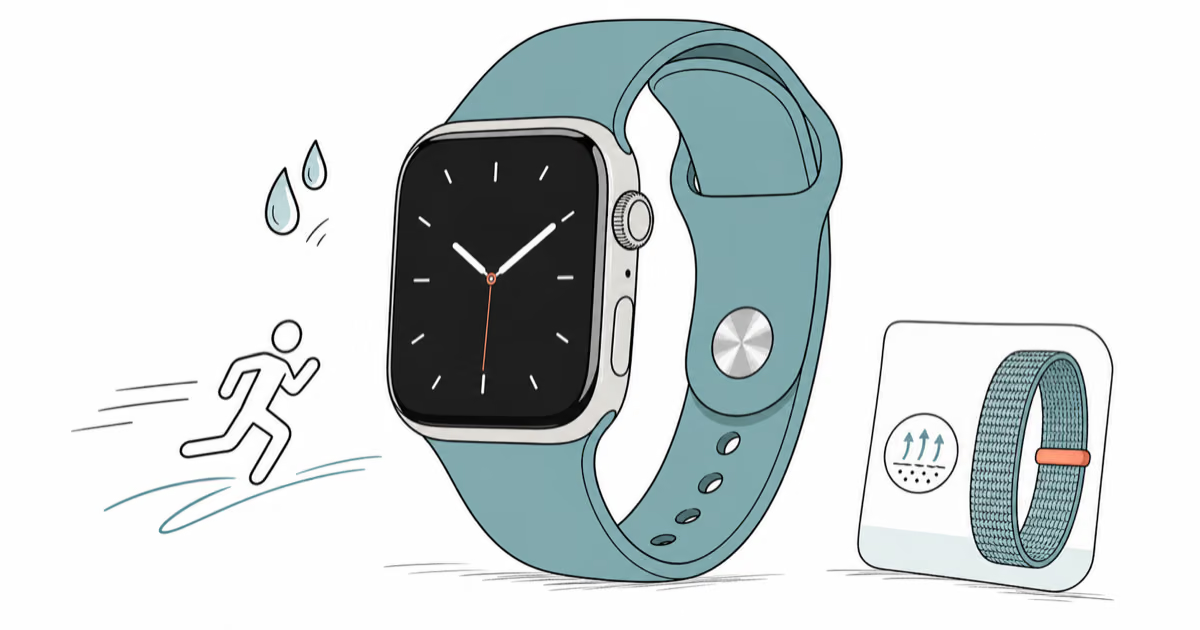
Best Apple Watch Band for Working Out: Proven Picks
The best Apple Watch band for working out handles sweat and stays put on your wrist. Compare silicone, nylon, and titanium picks for runs and lifts.