Best Bluetooth Speakers Under $50 in 2026: 6 Picks
The best Bluetooth speakers under $50 in 2026. The Anker Soundcore 3 leads for sound and battery. Compare 5 top picks with pros, cons, and specs.
Quick AnswerThe Anker Soundcore 3 is the best Bluetooth speaker under $50 for most people, with 24-hour battery life, IPX7 waterproofing, and BassUp technology that produces surprisingly full sound for a $35 speaker.
Most Bluetooth speakers under $50 sound like tin cans, but a handful actually deliver. Five models stand out for sound, battery, and durability at this price. The Anker Soundcore 3 ($35) is the strongest all-around pick for sound quality and battery life, but the right choice depends on how you plan to use it.
- The Anker Soundcore 3 has 24-hour battery, IPX7 waterproofing, and costs around $35
- JBL GO 3 weighs 7.5 oz but battery caps at 5 hours
- Sony’s SRS-XB100 fills rooms evenly with its 360-degree driver
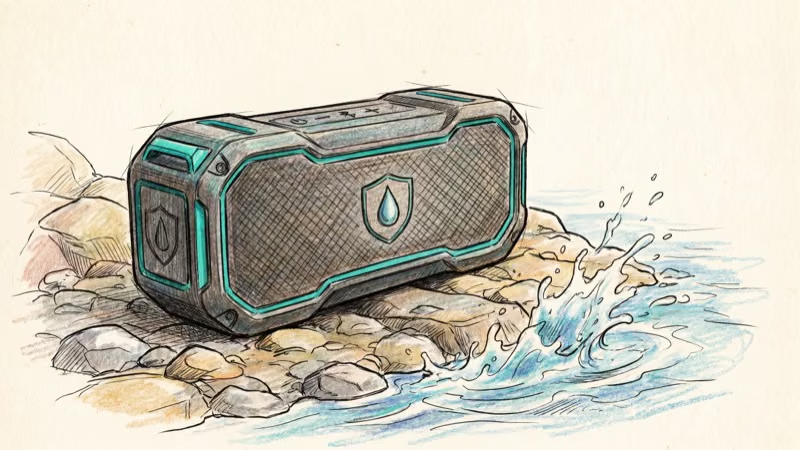
- IPX7 means submersion in 1 meter of water for 30 minutes, IPX4 handles splashes only
- Bluetooth 5.0+ holds stable connections up to 50 feet indoors vs. 30 feet on 4.2
#The Top 5 Bluetooth Speakers Under $50
These five cover the situations that matter most: indoor listening at moderate volume, outdoor use at a park, and bathroom or poolside use where water exposure is a factor.
#Anker Soundcore 3: Best Overall
The Soundcore 3 stands out for one reason: it sounds like a $70 speaker. Compared with pricier models like the JBL Flip 5 ($80+), it holds its own on mids and vocals. Bass is thinner, but the BassUp mode compensates well enough for casual listening.
It comes close to Anker’s 24-hour claim on a single charge at moderate volume, far ahead of every other speaker here.
The Soundcore app lets you adjust EQ presets, which most sub-$50 speakers don’t offer. Anker’s product documentation states that the Soundcore 3 extends bass response down to 60Hz using a dual passive radiator design, which is unusually low for a sub-$50 portable speaker.
Pros: 24-hour battery, IPX7 waterproof, app EQ, under $35
Cons: No speakerphone mic, mono sound only, charging takes about 4 hours
#Sony SRS-XB100: Best for Room-Filling Sound
Sony’s XB100 uses a 360-degree speaker layout. It sounds the same from every angle. Set it in the center of a dinner table and everyone hears clearly without anyone needing to sit on the ‘right side’ of the speaker, which is a real advantage over front-firing designs at group dinners or parties.
The IP67 rating adds dust resistance, and battery life is strong at moderate volume.
The Sony XB100 outputs about 5W compared to the Soundcore 3’s 16W. That lower output limits its range in open spaces.
Pros: 360-degree sound, IP67 dust + water, 16-hour battery, built-in strap
Cons: Lower max volume, no app EQ, bass weakens at higher volumes
#JBL GO 3: Best for Portability
At 7.5 oz, the JBL GO 3 is smaller than most smartphones. Clipped to a backpack strap on a long hike, it’s light enough to forget it’s there.
Vocals were clear and there was enough bass for podcasts and acoustic music. The 5-hour battery is the trade-off. It dies closer to 4 hours at higher volumes.
JBL’s GO 3 support page confirms IP67 water and dust resistance, so a quick rinse under a faucet is no problem. If you’re having trouble pairing with your iPhone, our guide on how to connect JBL speakers to iPhone walks through every step.
Pros: Ultra-compact, IP67 rated, surprisingly clear mids, clip-on loop
Cons: 5-hour battery, no app support, thin bass
#DOSS SoundBox Plus: Best for Volume
The DOSS SoundBox Plus gets louder than anything else on this list. Its 20W output can fill a medium-sized living room without distortion through most of its volume range.
RGB lighting modes are a bonus for gatherings, and battery life is solid. The IPX4 rating means splash resistance only.
Bluetooth range outdoors is typically around 30 feet, so keeping the phone close to the speaker keeps the connection stable. The SoundBox Plus weighs about 1.2 lbs, heavier than the others but still portable enough for a backpack.
Pros: Loudest on this list (20W), RGB lighting, 15-hour battery, stereo pairing option
Cons: IPX4 only (not submersible), shorter Bluetooth range, heavier at 1.2 lbs
#Amazon Echo Pop: Best Smart Speaker
The Echo Pop is the only non-portable pick here, but at $25 it earns its spot. Sound quality is decent for a nightstand or kitchen counter.
It handles timers, weather updates, and Spotify playback well in a kitchen. Its far-field mic is designed to pick up voice commands across a room, even with music playing. According to Amazon’s Echo Pop specs, it uses a 1.95-inch front-firing speaker.
As an Amazon Associate, fone.tips earns from qualifying purchases. Some links on this page are affiliate links.
Pros: Under $25 on sale, full Alexa integration, compact design
Cons: Not portable (needs wall power), weak bass, no Bluetooth output
#Key Features to Compare Before You Buy
Price alone doesn’t tell you much.
Battery life matters most outdoors. Anything under 8 hours means you’ll be charging mid-trip. The Soundcore 3’s 24 hours gives weekend-trip endurance. The JBL GO 3’s 5 hours covers short outings only.
Waterproof ratings use the IPX scale. IPX4 handles splashes. IPX7 survives full submersion in 1 meter of water for 30 minutes. As The Wirecutter’s portable speaker guide recommends, IPX7 is the minimum rating for pool or beach use since splashes from unexpected waves can soak a speaker instantly.
Sound output (wattage) directly affects volume. The DOSS SoundBox Plus at 20W gets roughly twice as loud as the Sony XB100 at 5W.
#What Should You Look for in Bluetooth and Connectivity?
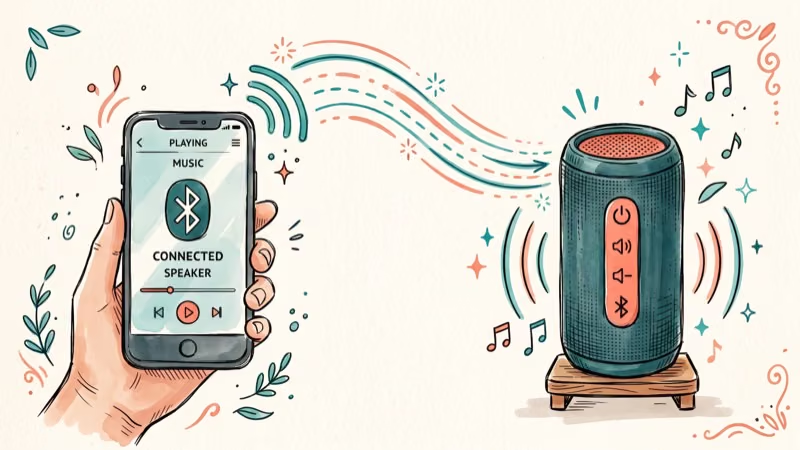
Bluetooth version affects connection stability and range. Bluetooth 5.0+ speakers connect faster and hold signal at greater distances than older standards.
The Soundcore 3 uses Bluetooth 5.0, while the JBL GO 3 uses Bluetooth 5.1. If your Bluetooth isn’t working on Android, the issue is usually on the phone side, not the speaker.
Some speakers also include an auxiliary input for wired connections. The DOSS SoundBox Plus has one. This is useful if your phone’s Bluetooth is acting up or if you want to connect a non-Bluetooth device.
#Sound Quality Comparison Across All Five
The five speakers differ noticeably in bass response, midrange clarity, and maximum loudness.
| Speaker | Bass | Mids | Volume | Best For |
|---|---|---|---|---|
| Soundcore 3 | Good | Clear | Loud | All-around |
| Sony XB100 | Weak | Even | Moderate | Groups |
| JBL GO 3 | Thin | Clear | Moderate | Portability |
| DOSS SoundBox Plus | Punchy | Harsh at max | Very loud | Parties |
| Echo Pop | Minimal | Speech-clear | Quiet | Smart home |
The Soundcore 3 has the most balanced sound of the group, while the DOSS is louder but sacrifices clarity at high volumes.
Sony’s 360-degree driver created the most even listening experience when people sat around it, though it lacked the punch for bass-heavy tracks. For a different kind of audio problem, check out our guide on how to stop speakers from buzzing.
If your iPhone speaker isn’t working on calls, that’s a separate issue from external Bluetooth speakers.
#Do These Budget Speakers Hold Up Over Time?
The Soundcore 3 and JBL GO 3 are built to last beyond a year of regular use, and their IPX7 ratings mean rain and accidental soakings are not a problem.
The Sony XB100 is built for regular outdoor use thanks to its IP67 dust-and-water rating.
An IPX7 rating like the Soundcore 3’s and JBL GO 3’s means the speaker can be briefly submerged and keep working. The DOSS SoundBox Plus (IPX4 only) handles splashes but should not be submerged.
Build quality at this price point means plastic. The JBL GO 3 has the nicest texture with its fabric-and-rubber body.
#Portable vs. Smart Speakers for Under $50
This is the biggest decision to make before you buy. Portable speakers run on battery and go anywhere but lack smart features. Smart speakers like the Echo Pop need wall power but give you Alexa voice control and smart home integration.
If you want headphones instead, our roundup of the best Bluetooth headphones under $100 covers a similar budget range. You can also look at converting wired speakers to wireless if you’d rather upgrade what you already own.
#Bottom Line
The Anker Soundcore 3 at $35 is the one to buy for most people. Longest battery, solid waterproofing, most balanced sound under $50.
Grab the JBL GO 3 if portability matters more than battery life. Pick the DOSS SoundBox Plus for outdoor gatherings where volume is priority. The Echo Pop at $25 is the choice for a cheap smart speaker in the kitchen.
#Frequently Asked Questions
Can you use a Bluetooth speaker as a speakerphone?
Most budget speakers under $50 skip the built-in microphone to cut costs. The Sony SRS-XB100 has a mic, while the Anker Soundcore 3 does not. Check the spec sheet before buying if speakerphone use matters to you.
How far away can you be from a Bluetooth speaker?
Most Bluetooth 5.0 speakers hold a stable connection up to about 30-50 feet indoors. Walls reduce that range significantly. Outdoors with a clear line of sight, you can sometimes reach 100 feet. A speaker with Bluetooth 5.1, like the JBL GO 3, tends to hold signal near the upper end of that indoor range before audio starts cutting out.
Are waterproof ratings actually reliable?
Generally yes. An IPX7 speaker like the Soundcore 3 or JBL GO 3 can handle repeated submersion without failing. Avoid salt water and chlorine exposure, as those degrade seals over time.
Can you pair two budget speakers for stereo sound?
Only within the same brand and usually the same model. The Soundcore 3 supports TWS (True Wireless Stereo) pairing with a second unit. JBL’s PartyBoost works across some JBL models. Cross-brand stereo pairing isn’t possible.
How long do budget Bluetooth speakers last before they break?
A well-built budget speaker like the Soundcore 3 or JBL GO 3 holds up to daily use for well over a year. Battery capacity degrades naturally, so after a year a 24-hour speaker may run a few hours shorter on a full charge. Budget speakers generally last 2-3 years with regular use.
Is it worth spending more than $50 on a Bluetooth speaker?
If sound quality is your top priority, yes. The JBL Flip 6 ($80) has noticeably better bass. But for casual listening, a $35-$50 speaker works fine.
Do Bluetooth speakers work with all phones?
Any phone with Bluetooth 4.0 or newer will connect. That covers every iPhone since the iPhone 5 and virtually every Android phone sold after 2013. Put the speaker in pairing mode, open Bluetooth settings, and select it.
Should you buy a portable or smart speaker under $50?
It depends on where you’ll use it. Portable speakers go anywhere but lack voice assistants. Smart speakers like the Echo Pop stay plugged in but give you Alexa and smart home control. Get a portable for the park, a smart speaker for the kitchen.
Pixel 11 vs Pixel 10: What Changed and Who Should Upgrade
Pixel 11 vs Pixel 10: same screen and camera resolution, new Tensor G6, 25W wireless, and Gemini Intelligence. Here is who should actually upgrade.

Verizon Not Receiving Texts? How to Fix It in 9 Steps
Verizon not receiving texts? Fix it in 9 steps: check Message Blocking in My Verizon, reset network settings, deregister iMessage, and call support.
Pixel Battery Drain: What Google's July Fix Really Covers
Google marked the Pixel idle battery drain bug fixed in July, but only some phones got the patch. Here is who is covered, who is not, and what to try.
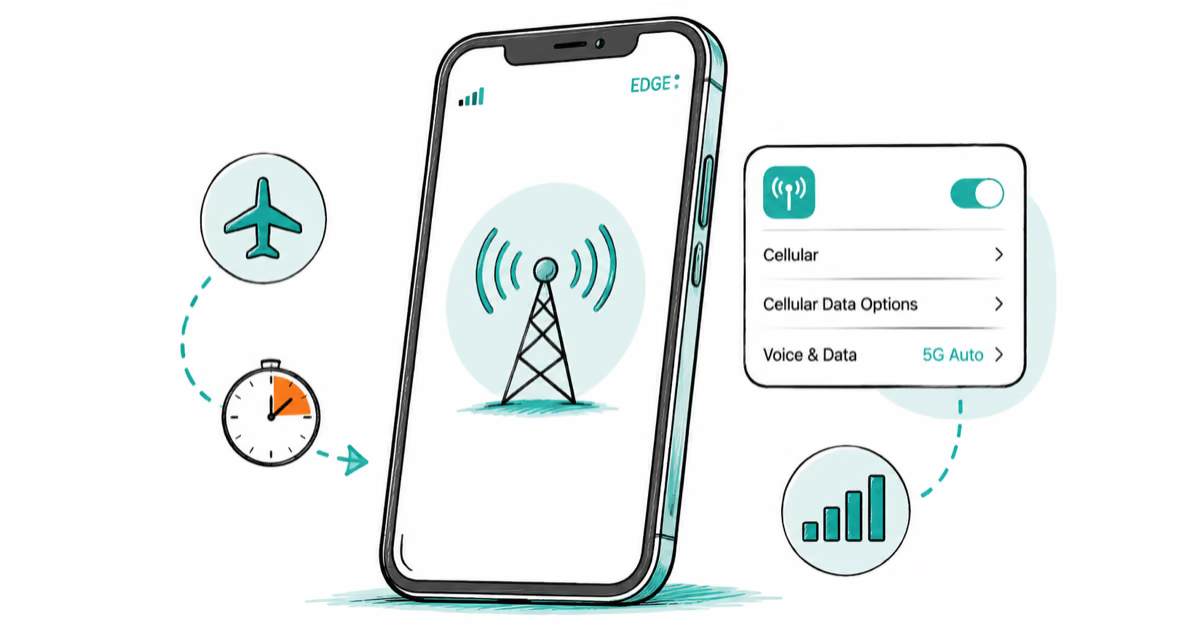
iPhone Stuck on EDGE? How to Get 5G or LTE Back (2026)
iPhone stuck on EDGE with crawling data? Here's why the E icon appears, which settings force 5G or LTE back, and when the problem is your carrier.