How to Install Kodi on Chromebook Safely and Legally
Install Kodi on Chromebook via the Play Store or Linux container, stick to legitimate add-ons, and understand the legal lines this guide will not cross.
Quick AnswerOn most modern Chromebooks that support Google Play, install Kodi by opening the Play Store and tapping Install on the XBMC Foundation listing. On older Chromebooks, enable the Linux development environment from Settings and install Kodi via the Flatpak package. Both methods are for managing your own media library and using official add-ons only.
If you want Kodi on Chromebook, the realistic install path on a modern device runs through the Google Play Store, and the older Chromebook fallback runs Kodi inside the Linux container that ships with Chrome OS. The rest of this guide covers those legitimate install paths without crossing legal lines.
Scope first. This article covers legitimate Kodi use on hardware you own: installing the official open-source build, organizing your own ripped DVDs and family video library, and using publisher-authorized add-ons. We don’t walk through piracy add-ons, don’t name scraper repositories that ship copyrighted streams, and don’t present a VPN as a way to hide infringement.
- Kodi itself is legitimate open-source media-center software maintained by the XBMC Foundation, and the Google Play Store listing on Chromebook installs the same official build documented at kodi.tv.
- The Play Store path works on Chromebooks released since roughly 2017 that support Android apps, and the Linux container path covers older devices where Play Store is unavailable.
- Third-party add-ons that stream copyrighted content without permission are copyright infringement under US law (17 USC 504), with statutory damages of $750 to $150,000 per infringed work, regardless of whether you use a VPN.
- Legitimate add-ons exist for free official content: BBC iPlayer with a UK TV licence, PBS Kids, NASA, Crackle, and Plex, plus paid services like Netflix and Apple Music through their first-party add-ons.
- External storage on Chromebook (USB-C SSD or SD card) is the cleanest way to host your own media library that Kodi can index, since Chromebook internal storage usually tops out at 64 to 128 GB.
#Is It Legal to Use Kodi on a Chromebook?
The short version: the Kodi software itself is fully legal, and the Chromebook install paths described below are sanctioned by Google and the Kodi project. Where users get into trouble is the add-on layer, which is where the legal lines actually sit.
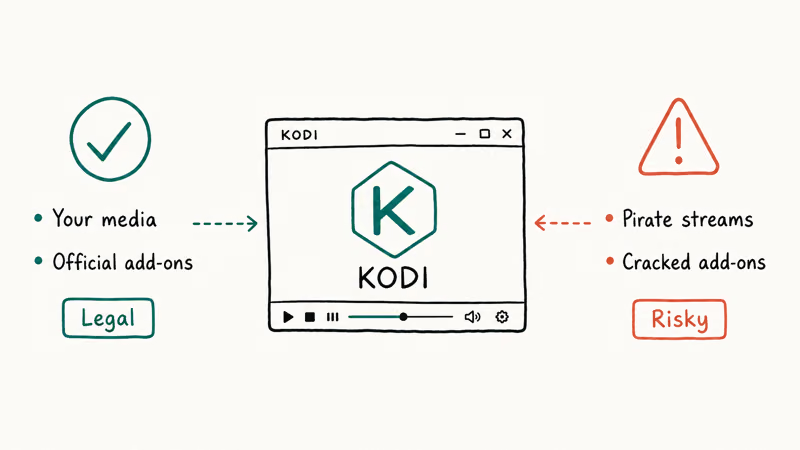
According to the Kodi Foundation’s official statement on piracy add-ons, the maintainers explicitly disavow the third-party add-ons that scrape copyrighted streams and have stated they won’t provide support for any device or build configured for piracy. The same statement confirms Kodi is open-source software that ships with no copyrighted content of its own.
The US copyright law that applies if you use a piracy scraper add-on is 17 USC 504 on remedies for infringement. The statute states that a rights holder can elect statutory damages of not less than $750 and not more than $30,000 per infringed work, and for willful infringement the maximum rises to $150,000 per work.
The Electronic Frontier Foundation’s guide to copyright trolls reports that mass settlement-letter campaigns targeting streaming and torrenting users remain active, with demands typically in the $1,000 to $4,000 range per case.
A VPN doesn’t change any of this. It hides traffic from your ISP. It doesn’t make the infringement legal, doesn’t stop a subpoena to the VPN provider in jurisdictions where logs are kept, and doesn’t prevent the rights holder from pursuing the case if your real identity surfaces. We mention this because the older version of this guide suggested otherwise, and that framing was wrong.
The same care applies to your own Chromebook only. Installing Kodi on a school-issued, work-issued, or family member’s Chromebook without permission can violate the acceptable-use policy. Stick to hardware you own. If you manage a fleet of Chromebooks at work or school, route the request through the IT admin instead.
#Install Kodi on a Chromebook With Google Play
This is the path that works on most Chromebooks made in the last several years. The Chrome OS help page on installing Android apps confirms that any Chromebook listed as Android-app-compatible runs Play Store installs natively, and the Kodi build on the Play Store is the same APK the XBMC Foundation publishes.
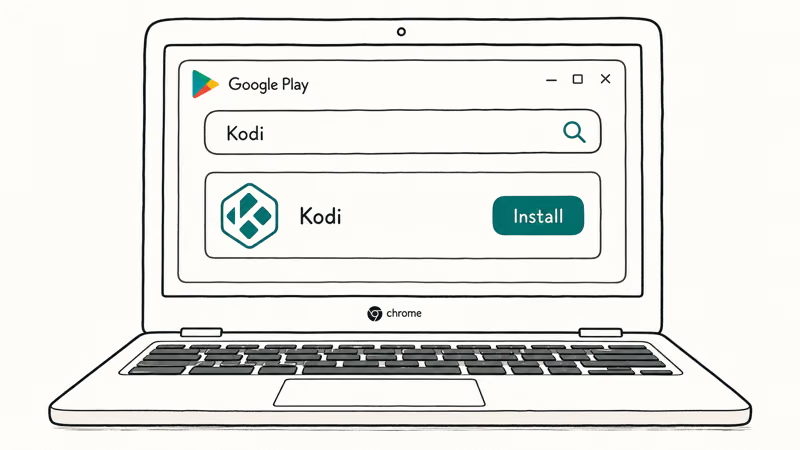
Open Settings → Apps → Google Play Store, toggle Turn on, accept the Google Play terms, and wait for the Play Store icon to appear in your app launcher.
Launch the Play Store, search Kodi, and confirm the publisher is XBMC Foundation before tapping Install. The official listing is around 130 MB and installs into the standard Android app area of Chrome OS, so it shows up in the launcher alongside your other apps. Open it once, accept the storage permission so Kodi can index files, and you’re ready to add your own media sources.
If your Chromebook doesn’t show the Play Store option in Settings, your model is on the small list that never received Android-app support. The list of Android-supported Chromebooks at chromium.org is the authoritative reference. If your device isn’t on that list, jump to the Linux method below.
#Install Kodi on a Chromebook Without Google Play
For older Chromebooks that don’t support Android apps, the Linux container that ships with Chrome OS gives you a clean install path that doesn’t require sideloading, root, or developer mode in the disruptive sense.
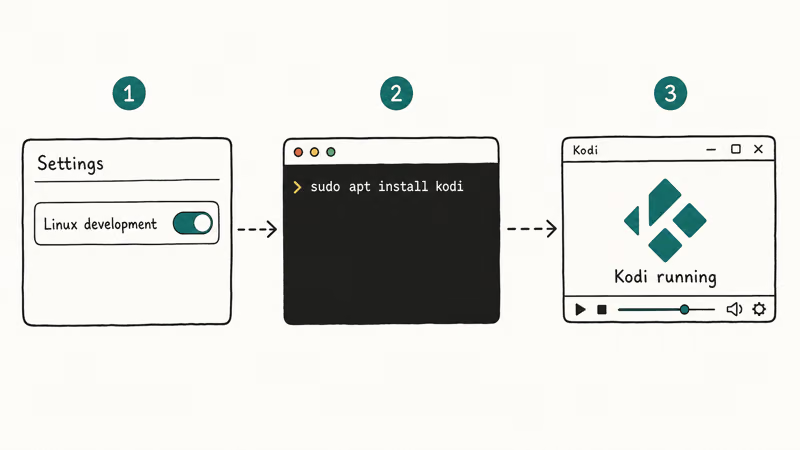
Open Settings → Advanced → Developers → Linux development environment and click Turn on. Chrome OS downloads the container files and provisions a Debian-based Linux environment.
Once the Terminal opens, install Flatpak first so you can pull the official Kodi build from Flathub:
sudo apt update
sudo apt install -y flatpak
flatpak remote-add --if-not-exists flathub https://flathub.org/repo/flathub.flatpakrepo
flatpak install -y flathub tv.kodi.Kodi
The Kodi project’s Linux installation documentation lists Flatpak as a supported install method, and on Chrome OS it puts a Kodi launcher into the Chrome OS launcher automatically after the install finishes. Launch it once to confirm it opens to the default home screen.
This path uses more battery than the Play Store version because the Linux container runs alongside Chrome OS, so treat it as the install of last resort for devices that simply can’t use the Play Store. The old Arc Welder and “load Kodi as a Chrome extension” workarounds that the previous version of this guide covered are obsolete. Google retired Arc Welder, and Chrome no longer supports loading APKs as unpacked extensions.
If you also use the Linux container for other purposes, our guide on going incognito on Chromebook and the troubleshooting walkthrough for Chromebook keyboard issues cover related setup tasks.
For special keys inside the Linux Terminal, enabling caps lock on Chromebook is worth bookmarking when you need to type uppercase commands or environment variables.
#Legitimate Kodi Add-Ons Worth Installing
The cleanest way to think about Kodi add-ons is as a directory of officially sanctioned plugins, not a pirate menu. The official Kodi add-on repository lists publisher-authorized add-ons for free official content and for accounts you already pay for.
Free and authorized choices that work well on a Chromebook install:
- BBC iPlayer WWW: legal in the UK with a valid TV licence, geo-restricted outside the UK.
- PBS Kids: free, no account required.
- Crackle: free ad-supported, US-only.
- Plex for Kodi: hooks into your existing Plex server to play your own media library.
- NASA: free public-domain space agency content.
- HDHomeRun: for over-the-air ATSC TV if you have an HDHomeRun tuner on your network.
For paid services you already subscribe to, the Netflix add-on documentation in the Kodi wiki confirms that the Netflix add-on uses Widevine DRM and your own Netflix credentials to play the same catalog you’d see in the Netflix web app. It’s a UI wrapper, not a workaround.
What this guide doesn’t cover, and what you should avoid: any third-party repository that bundles scraper add-ons named after popular movies and shows. Those are the add-ons that scrape copyrighted streams from grey hosts, and they’re exactly what the Kodi Foundation’s piracy statement warns about. Several of the most-named historical examples have been the subject of named civil lawsuits and DMCA action. If the marketing copy promises “everything on Netflix free,” that’s the signal to walk away.
#Managing Your Own Media Library on a Chromebook
This is the actually-fun use of Kodi: pointing it at the music, movies, and family videos you own and letting it build a browsable library with cover art, episode metadata, and resume-where-you-left-off playback.
The two practical storage paths on a Chromebook:
- External USB-C SSD or HDD. Plug into a USB-C port and Chrome OS exposes the drive under the Files app and to Kodi. A good USB-C to HDMI adapter on the same port lets you mirror Kodi to a TV while leaving Wi-Fi free for streaming the metadata. Portable storage is a clean fit for ripped DVDs, family video, and other media files you own.
- NAS over SMB. If you already run a Synology, QNAP, or other network-attached storage, Kodi has built-in SMB and NFS support. Point Kodi to the share, let it scan, and the library is portable across every device you install Kodi on.
As an Amazon Associate, fone.tips earns from qualifying purchases. Some links on this page are affiliate links.
When you stream your own library across an untrusted network like a coffee shop or hotel, a VPN like ExpressVPN is the standard tool for that specific privacy use.
It isn’t a license to stream copyrighted content you don’t own, and that line matters. Use a VPN for legitimate privacy needs, not to hide infringement.
For Kodi’s built-in metadata scrapers to work, your files need recognizable names. TV episodes work best as ShowName.S01E01.mkv, and movies as MovieName (Year).mkv. The Kodi naming conventions wiki page lists the patterns the scraper expects.
If you also want to play those files outside Kodi, the best video players for any platform covers strong cross-platform alternatives.
#Should You Use a VPN With Kodi on Chromebook?
A VPN has legitimate uses with Kodi on Chromebook. Hiding piracy is not one of them.
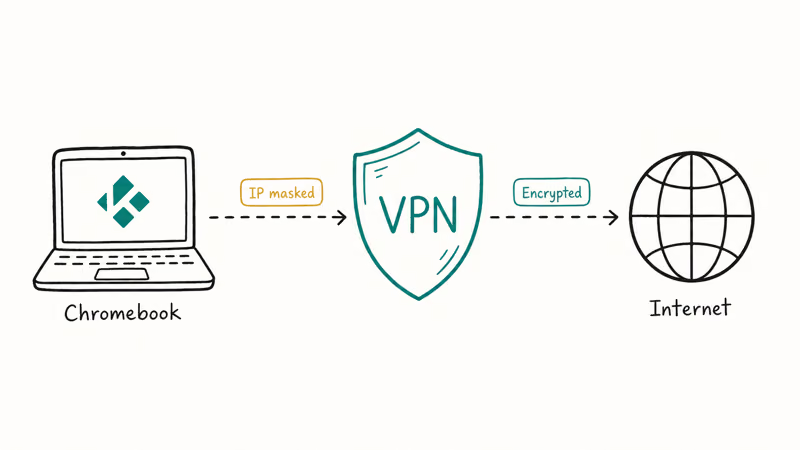
The legitimate uses are encrypting your Kodi traffic on hotel and café Wi-Fi so a network-level observer can’t see what you’re streaming from your own library, accessing your home Plex server from outside your home network in a setup where you don’t want to expose the server directly to the public internet, and using a VPN service that supports a static-IP exit so a self-hosted media server recognizes you as a trusted client.
The illegitimate use is masking copyright infringement, and per the Kodi Foundation’s piracy statement and the EFF copyright-troll guide linked above, a VPN doesn’t change the legal exposure. If you’d like a separate discussion of the legitimate iPhone-side framing, what a VPN does on iPhone covers the same concepts in plain language and explicitly doesn’t recommend a VPN for infringement either.
For Chromebook specifically, install the VPN provider’s Android app from the Play Store (same path as Kodi) rather than the Linux client. ExpressVPN ships an Android client that runs on the same Android subsystem as Kodi, which keeps everything inside one Chrome OS user space rather than splitting across the Linux container.
#Bottom Line
For most readers landing here in 2026, the right install is the Play Store path on a Chromebook released in the last several years. Use Kodi to manage a personal media library and a small set of publisher-authorized add-ons like BBC iPlayer or Plex.
Older Chromebooks should use the Flatpak install inside the Linux container, and Arc Welder shouldn’t enter the conversation anymore. Treat Kodi as the open-source media center the XBMC Foundation actually ships, not as a pirate front-end, and the legal and technical surface stays clean.
Pair it with external storage you control plus a Play Store-installed VPN for hotel Wi-Fi, and the setup is fast, durable, and defensible.
#Frequently Asked Questions
Can I install Kodi on any Chromebook?
Modern Chromebooks released since roughly 2017 support the Play Store install of Kodi natively. Older devices that don’t support Android apps can install Kodi through the Linux container under Settings → Developers. The chromium.org list of Android-supported Chromebooks is the definitive reference for which path applies to your model.
Is Kodi legal to use on a Chromebook?
Yes. Kodi is open-source media center software from the XBMC Foundation. The software itself is legal in every country we’re aware of. What can be illegal is the use of third-party add-ons that stream copyrighted material without permission, which is copyright infringement under US law and similar statutes elsewhere.
Will a VPN make Kodi safe for streaming pirated content?
No. A VPN hides traffic from your ISP but doesn’t change copyright law, doesn’t stop a subpoena to the VPN provider, and doesn’t prevent civil liability if your identity surfaces. Use a VPN for legitimate privacy purposes only, not as a piracy shield.
Can I use Kodi to watch Netflix or Disney+ on Chromebook?
You can use the official Netflix add-on with your own Netflix account because it’s a UI wrapper around the same Widevine DRM stream the web app uses. Disney+ doesn’t currently ship an authorized Kodi add-on, so the supported path is the regular Disney+ Android app on Chromebook.
What is the best storage for a Kodi library on Chromebook?
A USB-C portable SSD in the 500 GB to 2 TB range is the cleanest choice because Chromebook internal storage typically tops out at 64 to 128 GB. If you already run a NAS, point Kodi at it over SMB or NFS instead and you get the same library from every device.
Can I uninstall Kodi from my Chromebook later?
Yes. For the Play Store install, long-press the Kodi icon and select Uninstall. For the Linux install, run flatpak uninstall tv.kodi.Kodi in the Terminal.
Is there an official Kodi build specifically for Chrome OS?
No. The Kodi project doesn’t ship a native Chrome OS build, because the Play Store Android build and the Linux Flatpak build cover the same hardware. The XBMC Foundation’s install documentation lists Android and Linux as supported targets, and on a Chromebook both of those paths are already available without leaving Chrome OS.