Best GPU 2026: Top Graphics Cards by Resolution and Budget
Best graphics cards for 2026 by resolution and budget: RTX 50-series versus RX 9000, how much VRAM you need, and when a GPU upgrade is actually worth it.

Quick AnswerThe RX 9070 XT is the best all-around value for 1440p and 4K gaming in 2026, while the RTX 5070 Ti is the pick if you find one near MSRP and want top ray tracing and DLSS. For budget builds, the RX 9060 XT 16GB and RTX 5060 Ti 16GB lead.
The best GPU in 2026 is the one that matches your monitor, not the priciest card you can stretch to afford. A 1080p player wastes money on a 4K card, and a 4K player gets stutter from a budget chip. We sorted the lineup by resolution and budget.
- The RX 9070 XT is the best value for both 1440p and 4K, landing within a few percent of the RTX 5070 Ti for far less money.
- The RTX 5070 Ti wins on ray tracing, DLSS 4, and streaming, but only buy it at or near MSRP.
- 8GB of VRAM is fine for 1080p, while 16GB is the comfortable floor for 1440p and 4K in 2026.
- A memory shortage is keeping GPU prices high, and no new cards from AMD or NVIDIA are expected near term.
- For budget builds, the RX 9060 XT 16GB and the RTX 5060 Ti 16GB are the value leaders.
#Which Graphics Card Should You Buy in 2026?
Pick your target resolution first, then buy the cheapest card that holds a steady frame rate there. Overbuying for a resolution you don’t actually run is the most common and most expensive mistake new builders make.
The mid-range defines this year. The RX 9070 XT and the RTX 5070 Ti are the two cards that anchor 1440p, both with 16GB of VRAM and both a clear step up from last generation.
For 1440p, the RX 9070 XT is the value anchor because it targets high frame rates without RTX 5070 Ti pricing.
PCMag’s graphics card picks recommends the RX 9070 family as the overall value choice while giving NVIDIA the nod at the very bottom. That split captures 2026 well, and our best CPU for the RTX 5070 guide pairs the right processor with this class of card.
#How Much VRAM Do You Actually Need?
VRAM is the memory that holds textures and frame buffers. Run out of it and you get stutter that no amount of raw speed can fix.
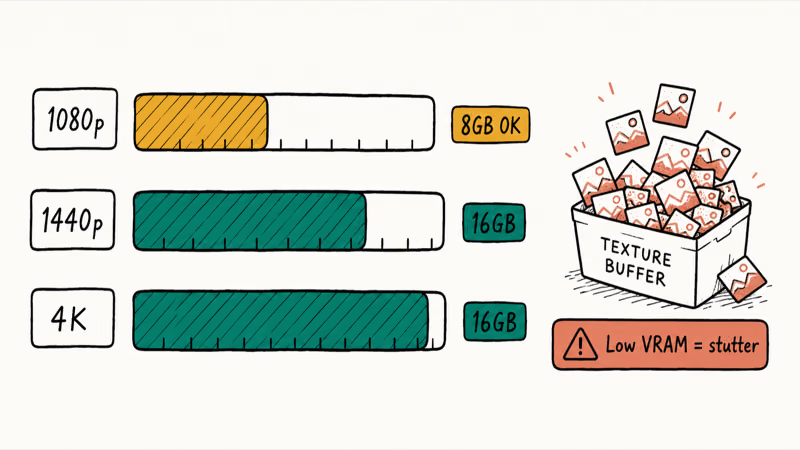
The right amount scales with your resolution. For 1080p, 8GB still works for most games at high settings, and the budget cards in this class are built for exactly that target. You’ll hit limits in a few heavy titles with maxed textures, but those stay the exception rather than the rule, so an 8GB card remains a reasonable buy for a dedicated 1080p machine.
For 1440p and 4K, 16GB is the comfortable floor in 2026. That is why both mid-range flagships ship with it, and why we steer 1440p buyers toward 16GB cards even on a tight budget where every dollar counts.
The trap is a fast chip with too little memory. A card that benchmarks well in short tests can choke once a game loads a full texture set, so don’t let a low VRAM number slide just because the core is quick.
#RTX 50-Series vs RX 9000: When to Pick Each
The choice comes down to your workload and the real shelf price, not the launch MSRP. The two architectures split by job.
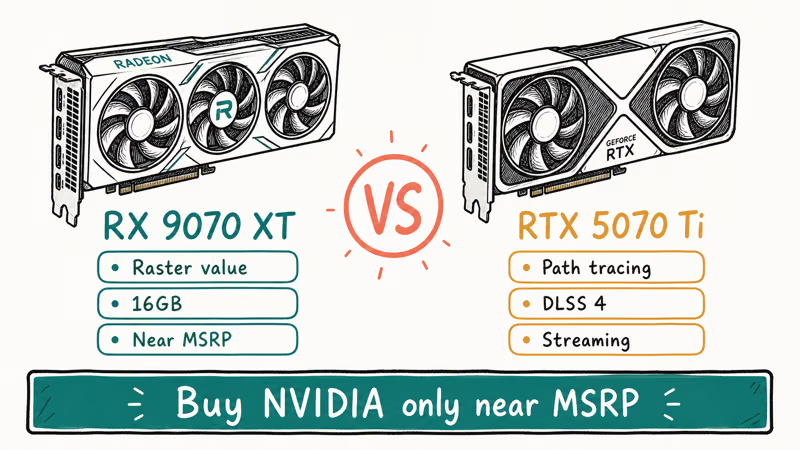
AMD’s RDNA 4 closed its old gaps.
NVIDIA wins on features. Path tracing, DLSS 4 frame generation, and content-creation workflows favor the RTX 50-series, so streamers and creators get more from a 5070 Ti or a 5080.
Pricing decides the rest. According to CNET’s computing coverage, real-world prices vary enough that the rule of thumb is simple: buy the RTX 5070 Ti only if you find it at or near MSRP. If the street gap over the RX 9070 XT grows past a couple hundred dollars, the AMD card is the smarter buy, and supply has been tighter on the NVIDIA side, so check live listings before you commit.
#Picking a Card for Your Resolution
Match the card to the pixels, and the rest of the decision gets easy.
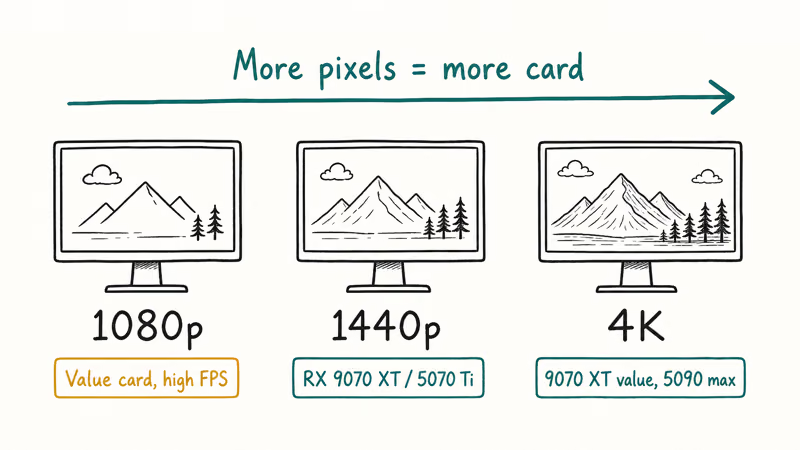
At 1080p, you want frames over fidelity. A value card that pushes triple-digit frame rates beats an overkill chip you can’t feed here. Our best GPU for 1080p 144Hz guide lists the cards.
At 1440p, the mid-range flagships earn their keep. This is the sweet spot where the RX 9070 XT and RTX 5070 Ti both shine, and where 16GB of VRAM stops being optional. The best GPU for 1440p gaming breakdown covers the right picks for that tier in detail.
At 4K, the RX 9070 XT is the standout value, able to average around 60 FPS in demanding titles, while the RTX 5090 is the no-compromise option for buyers who want maximum performance regardless of cost.
#Knowing When a GPU Upgrade Is Worth It
Upgrade when your current card can no longer hold your target frame rate at your resolution, not on a fixed calendar.
A capable older card paired with a strong CPU still has life left. If you game at 1080p and hold steady frame rates, you probably don’t need a new card yet, and the bigger gains often come from balancing the rest of the system. Our best GPU for the Ryzen 7 3700X guide shows that balance for older platforms.
A resolution jump is the real trigger. Moving to a 1440p or 4K monitor increases the pixel load enough to justify a card with more memory and muscle, which is where the RX 9070 XT and RTX 5070 Ti come in.
Timing matters this year too. A memory shortage is holding prices up, and no fresh launches are expected soon. If you need a card now at fair pricing, buying makes sense, because there is no imminent cheaper option to wait for and prices are unlikely to fall meaningfully in the near term regardless of how long you hold out.
#Building a Whole System Instead
If you are assembling a complete rig, spend in proportion. The GPU deserves the largest slice of a gaming budget, but starving the CPU or skimping on the PSU undoes that fast.
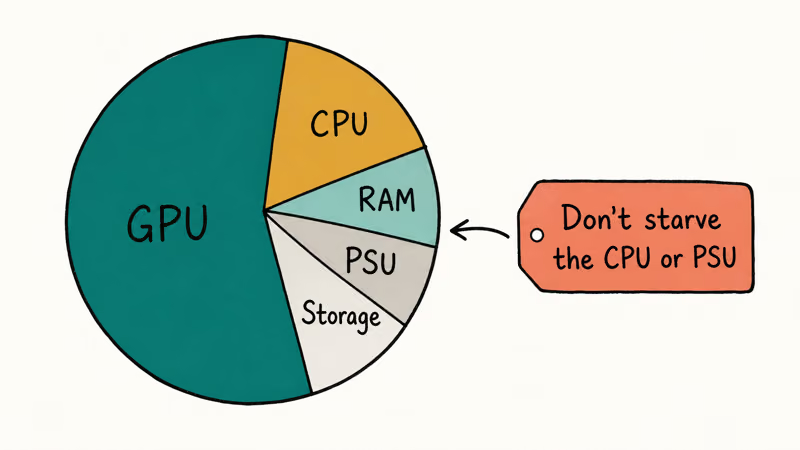
Our budget gaming PC build for 2026 lays out a full parts list that keeps the graphics card in proportion to everything around it.
#Bottom Line
For most gamers in 2026, the RX 9070 XT is the card to buy. It delivers 1440p and 4K performance within a few percent of the RTX 5070 Ti, ships with the 16GB of VRAM those resolutions need, and sells closer to its MSRP than NVIDIA’s tighter-supplied rival. It’s the best balance of price, performance, and availability right now.
Choose the RTX 5070 Ti only when you find one near MSRP and you specifically want path tracing, DLSS 4, or a streaming pipeline that leans on NVIDIA’s tools. On the budget end, the RX 9060 XT 16GB and RTX 5060 Ti 16GB give 1080p and entry 1440p players the right amount of card without paying for power they will never use.
#Frequently Asked Questions
What is the best value graphics card in 2026?
The RX 9070 XT is the best all-around value. It performs within a few percent of the pricier RTX 5070 Ti at 1440p and 4K, includes 16GB of VRAM, and sells closer to its MSRP.
How much VRAM do I need for 1440p gaming?
Aim for 16GB at 1440p in 2026. Both mid-range flagships ship with that much because modern games at this resolution can exceed 8GB with high textures, and a card with less memory may stutter badly under that load even when its core is plenty fast, since once VRAM fills the GPU has to fetch data over a far slower path and frame times spike.
Should I buy an RTX 5070 Ti or an RX 9070 XT?
Buy the RTX 5070 Ti if you find it at or near MSRP and want top ray tracing, DLSS 4, and streaming features. Otherwise the RX 9070 XT is the better value.
Are GPU prices going to drop soon?
Probably not in the near term. A memory shortage is keeping prices high, and no new cards are expected soon. If you find one at fair pricing and need it now, there’s no cheaper launch worth waiting for.
What graphics card is best for 4K gaming?
The RX 9070 XT is the standout 4K value, able to average around 60 FPS in demanding titles, which makes it the card most 4K players should start with before spending more. The RTX 5070 Ti matches it without upscaling and adds DLSS for extra headroom, while the RTX 5090 is the no-compromise pick for buyers who want maximum performance at any price and have a high-refresh 4K monitor to justify it.
Is 8GB of VRAM still enough in 2026?
For 1080p gaming, 8GB is still workable at high settings in most titles. You’ll run into limits in a handful of heavy games with maxed textures. For 1440p and 4K, step up to a 16GB card instead.
Does a better GPU need a better CPU too?
It can. A weak processor that can’t feed the card creates a bottleneck and costs you frames. Pair a strong GPU with a capable mid-range or better CPU.
When should I upgrade my graphics card?
Upgrade when your card can no longer hold your target frame rate at your resolution, or when you move to a higher-resolution monitor. If you game at 1080p with steady frames, you can usually wait and spend the money elsewhere.

Best Laptop for Running LLMs in 2026: Memory Comes First
The best laptop for running LLMs is a memory purchase first. Compare MacBook unified memory against NVIDIA laptop VRAM, and see what each tier really runs.

Pixel 11 vs Pixel 10: What Changed and Who Should Upgrade
Pixel 11 vs Pixel 10: same screen and camera resolution, new Tensor G6, 25W wireless, and Gemini Intelligence. Here is who should actually upgrade.

Best Power Bank for iPad in 2026: Pro, Air, and Mini
Best power bank for iPad in 2026. Compare mAh tiers and USB-C PD wattage for iPad Pro, Air, and mini, plus airline Wh math, cables, and travel tips.

Best Power Bank With Built-In Cable: Top 2026 Picks
Best power bank with built-in cable picks for 2026. Compare single USB-C, multi-connector, and retractable laptop banks, plus airline Wh math.