AirPods Pro 3 vs Sony WF-1000XM6: Which Should You Buy?
AirPods Pro 3 vs Sony WF-1000XM6 compared side by side on iPhone and Pixel for ANC, battery, codec support, and which flagship earbud is right for you.
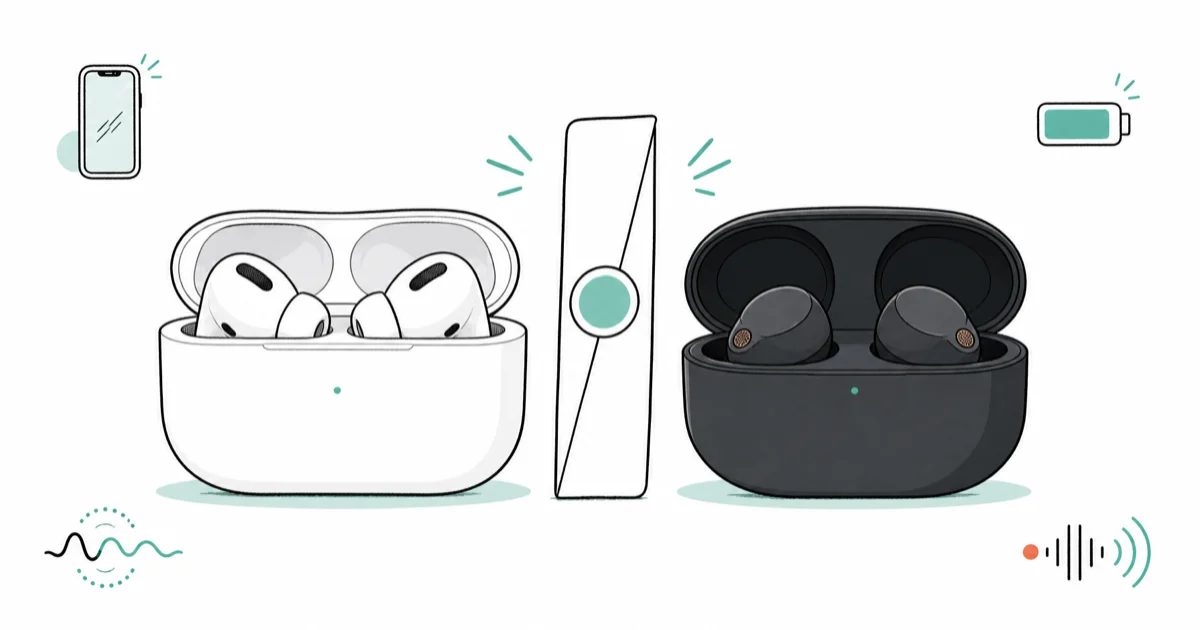
Quick AnswerChoose Apple AirPods Pro 3 if you own an iPhone, iPad, or Apple Watch. Sony WF-1000XM6 is the pick for Android users, audiophiles, and anyone who wants the longest bud life with noise cancelling off.
The shortest answer to AirPods Pro 3 vs Sony WF-1000XM6 is one question: which phone is in your pocket?
Both flagships target different ecosystems: AirPods Pro 3 fit iPhone-first users, while Sony WF-1000XM6 gives Android users LDAC, LE Audio, and broader multipoint. Each pair has a clear winning use case and a real weakness the marketing pages don’t advertise.
- AirPods Pro 3 win on iPhone integration with the H2 chip, Live Translation, and a heart rate sensor for workouts; translation requires an Apple Intelligence-enabled iPhone
- Sony WF-1000XM6 wins on Android with LDAC, LE Audio, and up to 12 hours bud battery with noise cancelling off (8 hours with it on)
- ANC is close overall; Sony has the stronger independent case for low-frequency rumble
- Apple’s IP57 rating beats Sony’s IPX4 for runners in heavy rain or near water
- Sony’s multipoint pairs phone and laptop together; AirPods Pro 3 auto-switches across Apple devices only
#Which Flagship Earbuds Should You Choose?
AirPods Pro 3 is the right answer for anyone whose phone, tablet, watch, or computer says Apple on the back.
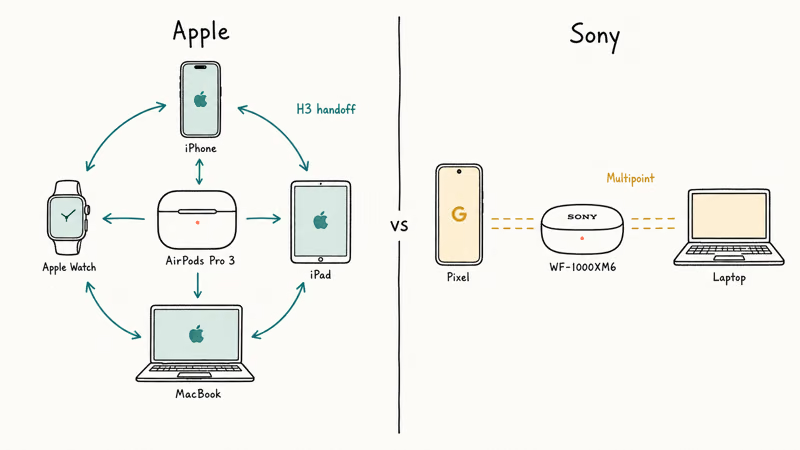
Sony WF-1000XM6 is the right answer for anyone on Android or anyone whose audio source matters more than the ecosystem around it.
The ecosystem gap is bigger than the audio gap. AirPods Pro 3 hands off between an iPhone, an iPad, a Mac, and an Apple Watch faster than anything else on the market. Sony can’t match that even with LE Audio because the receiving device has to be in the same Sony app world.
In return, Sony does three things AirPods can’t.
LDAC streams hi-res audio at up to 990 kbps on Android. LE Audio (Auracast) is a real concert-hall feature on supported venues. Multipoint pairs a phone and a laptop at the same time, so a call notification on the laptop interrupts whatever is playing from the phone without a manual switch.
#Apple AirPods Pro 3 (USB-C, 2025)
For iPhone owners, the upgrade reasons are concrete. Heart Rate sensing pairs with the Fitness app on iOS 26 for workout tracking. Adaptive Transparency can reduce sudden loud sounds, and automatic switching keeps playback inside Apple’s ecosystem.

- Tightest iPhone, Apple Watch, and Mac handoff of any earbuds
- Heart rate sensor doubles as a workout tracker
- Live Translation requires an Apple Intelligence-enabled iPhone with iOS 26 or later
Last updated on Aug 16, 2026
As an Amazon Associate fone.tips earns from qualifying purchases. Prices and availability on Amazon are accurate as of the date above and subject to change.
Pros
- H2 chip syncs between iPhone, Apple Watch, iPad, and Mac with no menu diving
- IP57 rating is dust resistant and survives brief water immersion
- Heart rate sensor logs workout heart rate alongside the Fitness app
- Live Translation requires the latest AirPods firmware and an Apple Intelligence-enabled iPhone running iOS 26 or later
- Adaptive Transparency reduces sudden loud spikes in transparency mode
Cons
- Hard tie to the Apple ecosystem — Android users lose half the value
- Only AAC codec on non-Apple devices, no LDAC or aptX support
- Multipoint is Apple-only, not phone-plus-laptop across brands
- Eight-hour bud life trails Sony’s 12-hour rating by a noticeable margin
Apple’s AirPods Pro 3 product page states that AirPods Pro 3 are the first AirPods to be IP57 certified, with a footnote to IEC 60529. Under that standard, the IPX7 water rating covers temporary immersion in up to one meter of water for 30 minutes. Sony’s WF-1000XM6 carries IPX4 only, which covers sweat and a rain shower but nothing more.
The case adds a useful trick: drop an AirPods Pro 3 case onto an Apple Watch wireless charging puck and it tops up without a separate cable. Sony’s case is USB-C and Qi only.
#Sony WF-1000XM6 (Platinum Silver, 2026)
Sony’s 2026 flagship is the audiophile and the long-haul traveler’s pick. The 12-hour bud rating is the longest in the flagship tier, and LDAC plus LE Audio give Android users codecs that Apple still refuses to support. The new V2 integrated processor pulls noticeably more bass detail out of electronic and rock tracks than the previous WF-1000XM5, and the Sony Headphones app exposes a 5-band EQ and adjustable ANC slider that go deeper than anything iOS offers on AirPods today.

- Best-in-class ANC for flights and open-plan offices
- 12-hour bud life is unusually long at the flagship tier
- Multipoint pairs to phone and laptop simultaneously
Last updated on Aug 16, 2026
As an Amazon Associate fone.tips earns from qualifying purchases. Prices and availability on Amazon are accurate as of the date above and subject to change.
Pros
- 12-hour bud battery is the longest in the flagship tier
- LDAC streams hi-res audio at up to 990 kbps on Android
- LE Audio support unlocks Auracast on supported public venues
- Multipoint pairs a phone and a laptop at the same time
- Sony Headphones app EQ has the deepest customization in the category
Cons
- IPX4 only, no dust protection or water immersion rating
- ANC controls require the Sony Headphones app on iOS for full customization
- Touch controls have a learning curve and misfire more than AirPods squeeze
- No Apple Watch wireless charging support on the case
LDAC is Sony’s main Android audio advantage, because it can stream higher-bitrate audio than the AAC path AirPods use over standard Bluetooth. On iPhone the codec advantage goes away because iOS does not negotiate LDAC.
Sony’s cross-brand multipoint can keep a phone and laptop connected; AirPods lean on Apple ecosystem switching instead.
#ANC and Sound Quality Compared
Sony has stronger independent support for low-frequency ANC. According to RTINGS’ Sony WF-1000XM6 review, Sony shows strong low-frequency ANC performance. AirPods Pro 3 still has the Adaptive Transparency advantage for sudden sound spikes.
For pure sit-and-listen music, Sony wins on the bottom end. Sony’s driver and V2 integrated processor pull more bass detail out of electronic and rock tracks than Apple’s H2 chip drivers do. AirPods Pro 3 still wins for spoken-word content like podcasts and audiobooks, where the Apple voice profile sounds more natural and less compressed.
| Feature | AirPods Pro 3 (USB-C) | Sony WF-1000XM6 |
|---|---|---|
| Bud battery | 8 hours | 8 hours (12 with ANC off) |
| Total with case | 24 hours | 24 hours |
| Charging case | USB-C + MagSafe + AW | USB-C + Qi |
| ANC depth (subway) | Strong | Slightly stronger |
| Audio codecs (Android) | AAC only | LDAC + LE Audio + AAC |
| IP rating | IP57 | IPX4 |
| Multipoint | Apple devices only | Any 2 BT devices |
| Heart rate sensor | Yes | No |
| Live Translation | Requires Apple Intelligence-enabled iPhone | Not supported |
AirPods Pro 3 vs Sony WF-1000XM6 spec comparison for 2026
RTINGS’ Sony WF-1000XM6 review measures strong low-frequency ANC on Sony. Independent ANC depth numbers for AirPods Pro 3 are still thinner across review sites.
#Battery and Charging in Real Use
Sony wins the bud-only column only with noise cancelling off. Up to 12 hours per charge with ANC off is enough for a transcontinental flight plus a connection layover with audio still on. With ANC on, both models land at 8 hours per bud, which is enough for almost any flight under six hours and back-to-back gym sessions on the same day.
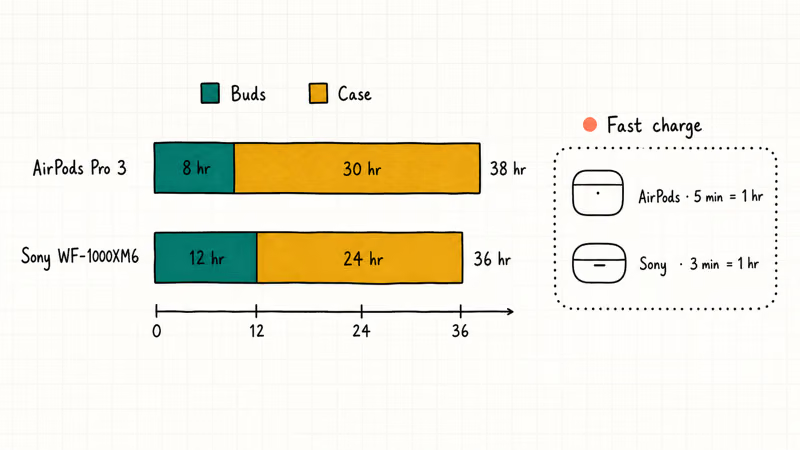
With the charging case, both models land level at up to 24 hours total listening time.
A five-minute case top-up gives AirPods Pro 3 about an hour of playback. Sony quotes 60 minutes from a three-minute top-up, which is faster on paper. Those are manufacturer fast-charge claims, so real runtime will vary with volume, ANC, and battery age.
For Apple Watch owners, the AirPods Pro 3 case sitting on the same wireless puck as the watch is a workflow win. Sony’s case requires a separate Qi puck or a USB-C cable. Apple’s official AirPods Pro 3 specs page states that the case supports MagSafe, Qi, Apple Watch wireless chargers, and USB-C wired top-up in one bundle.
#Which Wins on Android?
Sony wins on Android. It supports LDAC, LE Audio, and Google Fast Pair; AirPods fall back to AAC and manual pairing.
If you split time between an iPhone and a Pixel, our comparison of the best Bluetooth headphones under $100 covers the over-ear pairs that work well in both ecosystems for the budget tier. For finding misplaced AirPods specifically, see the Find My AirPods sound-pending fix before assuming the buds are gone for good.
#Fit and Comfort for Long Sessions
Both pairs use silicone tips with no ear hook or stability band. Apple ships five sizes from XXS through L; Sony also ships five sizes, including an extra-small option for narrower ear canals. Apple’s official specifications list the complete XXS, XS, S, M, and L set.
Sony’s larger shell can press against some ears. AirPods Pro 3 is the more comfortable pick for side sleeping.
For runners specifically, neither pair is the right answer because the silicone tip alone does not hold a sprint or burpee rep. Our best wireless earbuds for running roundup covers the picks that ship stability bands or fixed ear fins for workouts that involve real impact.
#EQ Tuning and Companion Apps
Sony’s Headphones Connect app is deeper, with EQ, ANC adjustment, presets, and DSEE Extreme in one place.
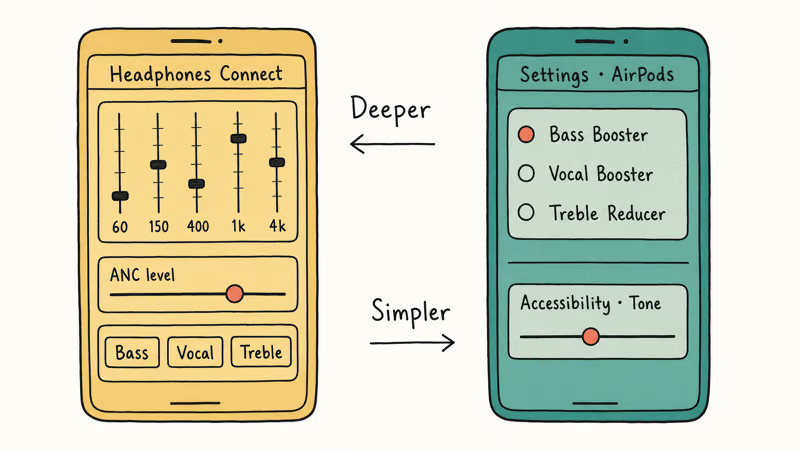
Apple’s panel is intentionally simpler. iOS Settings exposes a small set of EQ presets plus Live Listen and conversation boost, but the deep tweaks live in Accessibility rather than a single audio screen. Headphone Accommodations under Accessibility gives a tone-balance slider and a soft-sounds boost that some hearing-aid users prefer to a 5-band EQ, but Apple makes you go hunting for it.
For tuning either pair, our AirPods Pro equalizer guide walks through the iOS preset that fixes bass. For desktop listening, see best Bluetooth speaker under $50.
#Bottom Line
Buy AirPods Pro 3 if your daily driver is a compatible Apple Intelligence-enabled iPhone. The ecosystem handoff, IP57 rating, Heart Rate sensor, and Live Translation justify the price tag on their own, before the audio quality argument even starts. The case landing on the same Apple Watch wireless puck is a small daily win that adds up over a year.
Buy Sony WF-1000XM6 if your daily driver is a Pixel or Galaxy, or if you fly long-haul more than once a quarter. LDAC plus LE Audio plus the 12-hour bud rating are the combination that makes the difference on an actual cross-country flight or a 90-minute commute with no charging in between.
Both pairs are excellent and either choice is defensible at the price. The question is the phone, not the earbuds.
#Frequently Asked Questions
Do AirPods Pro 3 work with Android phones?
Yes, but only at the AAC codec level.
You lose H2 chip handoff, Heart Rate pairing, Live Translation, and Find My integration. Sony WF-1000XM6 is the better Android choice. The codec gap matters most on streaming services that offer hi-res, where Sony’s LDAC will play back at hi-res quality and AirPods will downsample to AAC, a meaningful difference on tracks mastered for FLAC or LDAC delivery.
Which has better ANC for flights?
Sony WF-1000XM6 has the stronger independent case for low-frequency rumble, which is the range that dominates cabin noise on a flight.
Can both earbuds connect to a phone and a laptop at the same time?
Sony, yes, via standard Bluetooth multipoint. AirPods Pro 3 multipoint is Apple-only, so it auto-switches between an iPhone and a Mac but not between an iPhone and a Windows laptop.
Is Live Translation worth the AirPods Pro 3 price by itself?
For frequent travelers with a compatible phone, often yes. Apple says Live Translation requires the latest AirPods firmware plus an Apple Intelligence-enabled iPhone running iOS 26 or later, and availability varies by language and region. Sony does not have an equivalent feature.
How long does each earbud last on a single charge?
AirPods Pro 3 last 8 hours per bud. Sony WF-1000XM6 last 8 hours per bud with noise cancelling on, or up to 12 hours with it off.
Do either earbuds support hi-res lossless audio?
Sony WF-1000XM6 supports LDAC for hi-res streaming on Android at up to 990 kbps. AirPods Pro 3 supports lossless only over the Vision Pro’s proprietary protocol on Apple silicon devices, not over standard Bluetooth.
Are AirPods Pro 3 better for workouts than Sony WF-1000XM6?
Yes, for two reasons. Apple’s IP57 rating handles sweat, rain, and brief submersion; Sony’s IPX4 only handles sweat and light rain. The Heart Rate sensor on AirPods Pro 3 also doubles as a workout tracker that Sony doesn’t match, logging beats per minute alongside the Fitness app on iOS 26 without a chest strap or watch sensor in the loop, which is the kind of free upgrade gym-goers used to pay $99 for in a separate device.
Which has the better companion app?
Sony Headphones Connect has the deeper EQ and ANC customization, with a 5-band EQ plus tone presets and adjustable ANC slider. Apple’s Settings panel is simpler and tied to iOS, which some users prefer for its minimalism but limits power-user tweaks.
Pixel 11 vs Pixel 10: What Changed and Who Should Upgrade
Pixel 11 vs Pixel 10: same screen and camera resolution, new Tensor G6, 25W wireless, and Gemini Intelligence. Here is who should actually upgrade.
Best Power Bank for iPad in 2026: Pro, Air, and Mini
Best power bank for iPad in 2026. Compare mAh tiers and USB-C PD wattage for iPad Pro, Air, and mini, plus airline Wh math, cables, and travel tips.
Best Power Bank With Built-In Cable: Top 2026 Picks
Best power bank with built-in cable picks for 2026. Compare single USB-C, multi-connector, and retractable laptop banks, plus airline Wh math.
Best Apple Watch Band for Working Out: Proven Picks
The best Apple Watch band for working out handles sweat and stays put on your wrist. Compare silicone, nylon, and titanium picks for runs and lifts.