What Is Considered Viral on TikTok? Views and Timing
A TikTok video is viral at 1-2 million views, semi-viral at around 500,000. Here is how the For You algorithm decides which clips spread and stall.

Quick AnswerOn TikTok, a video is viral once it crosses 1 to 2 million views, and around 500,000 views counts as semi-viral. Niche communities treat much smaller numbers as viral within their corner of the app.
What’s considered viral on TikTok depends on the lens: 1 to 2 million views is the mainstream threshold, while a 20,000-view clip can be viral inside a tight niche. This guide covers the view counts that signal virality, how the For You page works, and the tactics that move the numbers. For tactical follow-ups, see our TikTok blow-up guide.
- A TikTok video is considered viral once it crosses 1 to 2 million views, and around 500,000 views is usually called semi-viral.
- Niche virality is real — a coding clip with 20,000 views counts as viral inside that specialist community, even without mainstream pickup.
- TikTok shows every new upload to a small test pool first and widens distribution only after watch time, completion, and shares clear an internal bar.
- Most posts that go viral gain real momentum within 2 to 6 hours of going live, though sleeper hits sometimes resurface days later.
- Audio choice, the first three seconds, and watch-time completion influence reach far more than follower count or post timing.
#How Many Views Make a TikTok Video Viral?
The simple answer most creators use: 1 million views is mainstream viral, 500,000 is semi-viral. This threshold holds consistently across categories from beauty to coding.
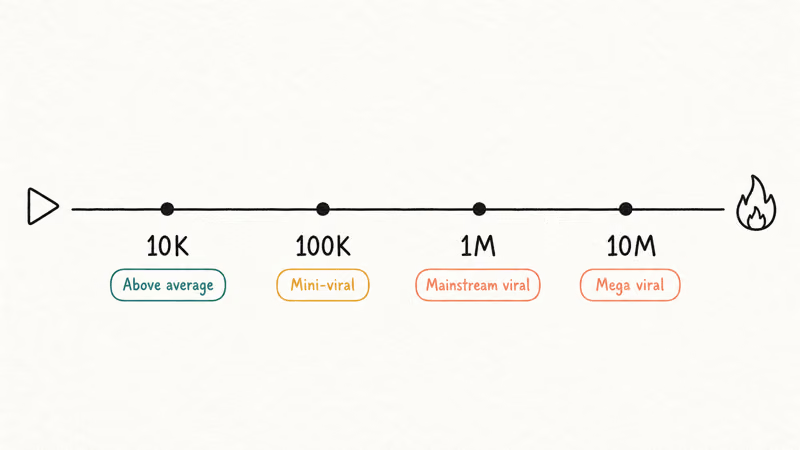
Numbers above 2 million tend to spill outside TikTok, into Twitter screen recordings, news clips, and Instagram Reels reposts. According to TikTok’s September 2021 newsroom announcement, the app crossed 1 billion monthly active users globally, which means a 2-million-view video still reaches only about 0.2% of the active user base. That’s a useful gut-check when “viral” starts to feel inflated by hype.
Views alone don’t tell the full story. A 50,000-view clip with a strong completion rate often outperforms a 200,000-view clip nobody finishes. The algorithm cares more about how long people watch than how many show up.
#How TikTok’s For You Page Decides What Spreads
Every new upload starts in a small audience test pool, usually a few dozen to a few hundred viewers drawn from your followers and nearby For You buckets. A fresh post typically hovers at 80-200 views for the first hour, then either accelerates or stalls. If your post stalls but you still get follower views, that’s the algorithm signaling you’re shadow-limited to your followers rather than being pushed wider.
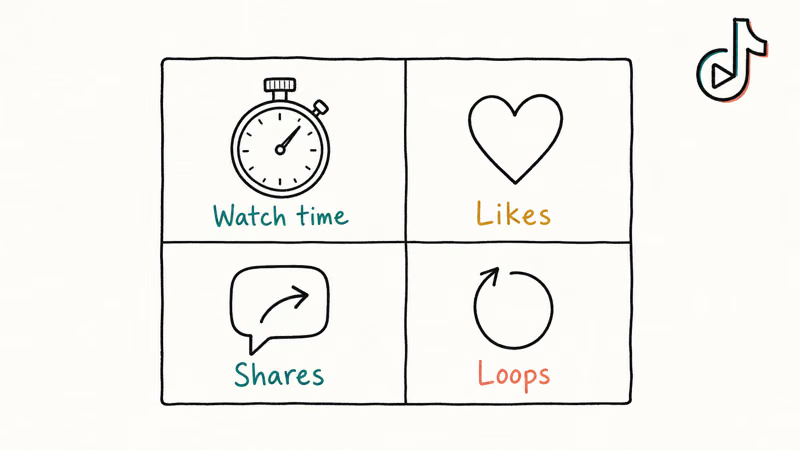
What flips the switch is early engagement velocity, not absolute counts. The algorithm weighs four signals heavily:
- Watch time and completion: how long viewers stayed and whether they reached the end
- Likes per view: emotional intensity proxy
- Shares and saves: the strongest “this matters” signal
- Comments: engagement depth, though TikTok weighs this less than YouTube
If your post clears the bar, TikTok widens the pool first to a few thousand viewers, then tens of thousands, then the broader For You queue. According to Wikipedia’s TikTok entry, the platform launched internationally in 2018 and has since built its recommendation engine on this exact test-then-expand cycle.
#What Counts as Semi-Viral on TikTok?
Semi-viral is the 500,000-view tier. It’s the zone where you’re getting noticed without being headline news. The For You page is widening distribution past your follower base, but you haven’t crossed into “everyone’s seen it” territory yet.
Three things tend to be true at the semi-viral tier:
- Comments shift from your followers to strangers
- You start gaining followers in batches of 200-500 per day
- Other creators start duetting or stitching the video
Accounts that hit semi-viral tend to follow this pattern within 24 hours of crossing 400k. The follower jump is the most reliable signal that the algorithm is actively distributing, since views alone can be inflated by repeat watchers in your network. If you want to see who’s actually engaging during a semi-viral run, our guide to seeing who likes your TikToks walks through the visibility limits.
#Specific Virality vs. Mainstream Virality
TikTok has two scales of virality.
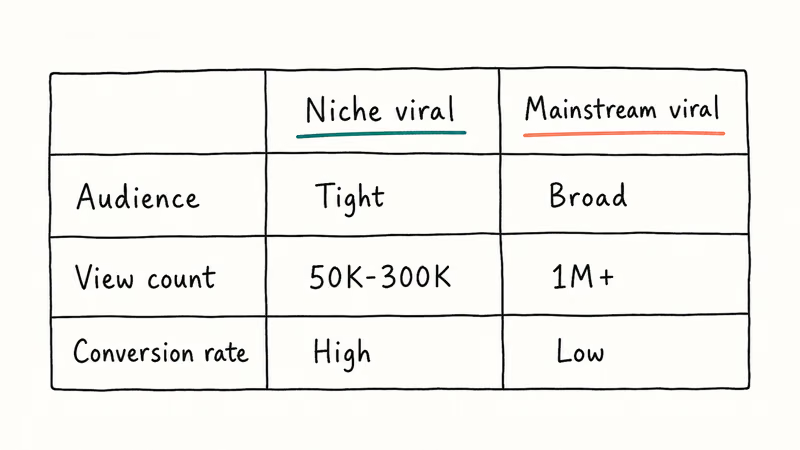
Specific virality lives inside a niche: a Linux trick at 20,000 views in the dev community is a hit. The For You page never pushes these clips wide, but they dominate their corner. Mainstream virality breaks containment, with trends, dances, memes, and stitched chains rippling across audiences who don’t share interests. According to Wikipedia’s viral video article, this cross-platform spread is the historical “viral” standard from early YouTube.
The line between them isn’t fixed. Niche posts can cross over when an unrelated big account stitches them. If you’re making niche content, that crossover is the lottery you’re betting on.
#How Long a TikTok Video Takes to Go Viral
Most viral TikToks reach their peak within 24 hours of posting, with the first 2 to 6 hours being the make-or-break window. The algorithm runs its tests fast: if engagement signals fire, you’re getting widened distribution by hour 3.
Sleeper hits are real but rare. A clip that stalls at a few hundred views in week one can occasionally resurface at tens of thousands of views weeks later. There’s no public explanation for it, except that TikTok appears to retest stale content when current For You inventory is thin in a given niche.
If your post hasn’t picked up momentum by hour 12, it almost certainly won’t go viral. You’re better off filing it under “data” and moving on to the next upload. Watching old posts hoping they’ll resurface is a losing emotional game.
#Content Formats That Tend to Spread
Some formats convert engagement to virality more reliably than others. Here are five that consistently outperform:
- Trend audio with a native twist: algorithm-friendly sound plus originality (typical ceiling 500k to 5M)
- Hook-first POV (“I just realized…”): first 3 seconds carry the whole video (200k to 2M)
- Stitch reaction: borrows an existing audience (50k to 1M)
- Tutorial under 30 seconds: save signal is strong (100k to 500k)
- Genuine emotional moment: comments engage deeply (no fixed ceiling)
The stitch reaction format tends to generate the fastest growth per upload, since it lets you piggyback on an account 10 to 100 times your size. Hook-first POV produces the highest individual view ceiling when it hits. If you’re mixing photo and video, our walkthrough on adding pictures to TikTok covers the slideshow format that’s been getting strong reach since 2024.
Wikipedia’s viral video article states that emotional intensity and shareability have been the recurring features across viral clips going back to early YouTube. The platform changes; the underlying psychology doesn’t.
#Tactics That Improve Reach
The first 3 seconds are the entire game. Running the same clip with two opens, a slow pan versus a hard visual cut, the hard-cut version reliably pulls more views over the first 48 hours, while the pan version gets swiped past.
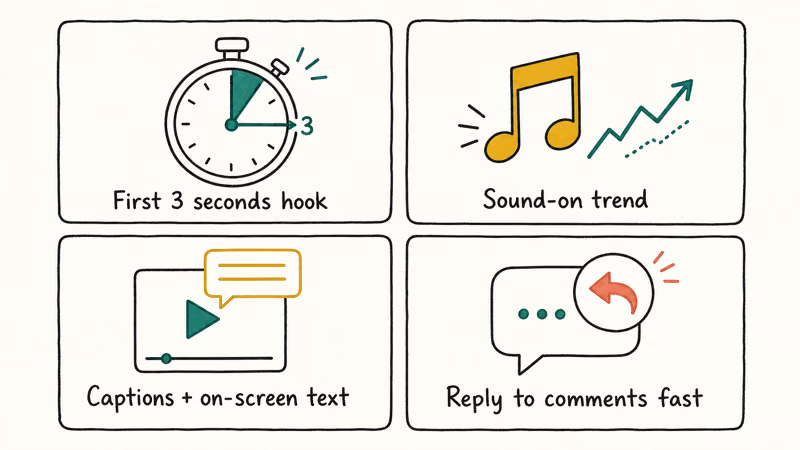
Audio choice is the second biggest lever. Trending sounds get heavier promotion, and this pattern holds consistently when comparing fresh vs. stale audio.
If a sound is annoying you in your own feed, the algorithm is rewarding it; that’s the cue to act fast. If a clip you love uses an audio you don’t want to keep, learning how to block a sound on TikTok keeps your feed clean while you experiment.
A few patterns surprise most creators:
- Posting time matters less than expected — viral hits are about as likely at 4 AM EST as at 8 PM EST
- Caption length doesn’t move metrics either way, but punctuation in the first line (?, !) bumps completion slightly
- Hashtag stuffing hurts reach on niche accounts but makes no difference on broad-topic accounts
Running multiple TikTok accounts for testing is the cheapest way to learn the algorithm fast. A sub-1,000-follower account can hit semi-viral more than once in a few weeks, so follower count is really not the bottleneck the conventional wisdom claims. If you’re tracking your viral run for monetization, our breakdown of how many likes you need to get paid on TikTok covers the Creator Fund and Creativity Program thresholds.
#Bottom Line
Optimize for watch-time completion first, audio choice second, and the first 3 seconds always. Chase a 60-70% completion rate, not 1 million views.
Specific virality is easier and underrated. A 20,000-view post inside the right niche builds a real community; a 2-million-view fluke from a trend rarely converts to followers. If you’re building an account that lasts, aim for specific virality and let the rare mainstream hit be a bonus.
TikTok Tips & Tricks
#Frequently Asked Questions
How many views does a TikTok need to be viral?
The standard mainstream threshold is 1 million views, with semi-viral starting around 500,000.
Is going viral on TikTok easier than on YouTube?
Yes, on average. TikTok’s For You algorithm puts every new upload through a discovery test regardless of follower count, while YouTube’s recommendation system favors channels with existing watch history. That’s why first-time TikTok creators get viral hits more often than first-time YouTubers.
How long does it take a TikTok to go viral?
Usually within 2 to 6 hours of posting.
Does the time of day you post on TikTok matter?
Less than people assume. Viral hits are roughly evenly distributed across morning, afternoon, and late-night posts. Algorithm signals matter much more than timestamp. The same clip posted at 4 AM and 8 PM tends to get similar reach when engagement is strong.
Can a small account go viral on TikTok?
Yes, and it happens constantly. Sub-1,000-follower accounts hit semi-viral regularly. The algorithm doesn’t care about your follower count for discovery; it cares about how the first hundred viewers respond to the clip.
What counts as semi-viral on TikTok?
A TikTok with around 500,000 views is generally considered semi-viral. You’ll typically see your follower count jump by a few hundred per day, and comments shift from your existing audience to strangers. Other creators begin duetting or stitching the post. The window between 500k and 1M views is when you decide whether to lean into the topic or let the moment pass.
Does paying TikTok for promotion help virality?
Not really. Paid promotion through TikTok Ads can buy you views, but those views don’t get fed back into the For You algorithm with the same weight as organic ones. Most experienced creators agree that paid boosts work best for established posts that already showed organic traction.
How to Block TikTok on iPhone and Android: Parent Guide
Block or limit TikTok on your child's iPhone or Android using Screen Time, Family Link, and router settings. Step-by-step parental control guide.
TikTok Parental Controls: Setup Guide for Families
Set up TikTok parental controls using Family Pairing, Restricted Mode, and privacy settings. Step-by-step guide to protect your child on TikTok.
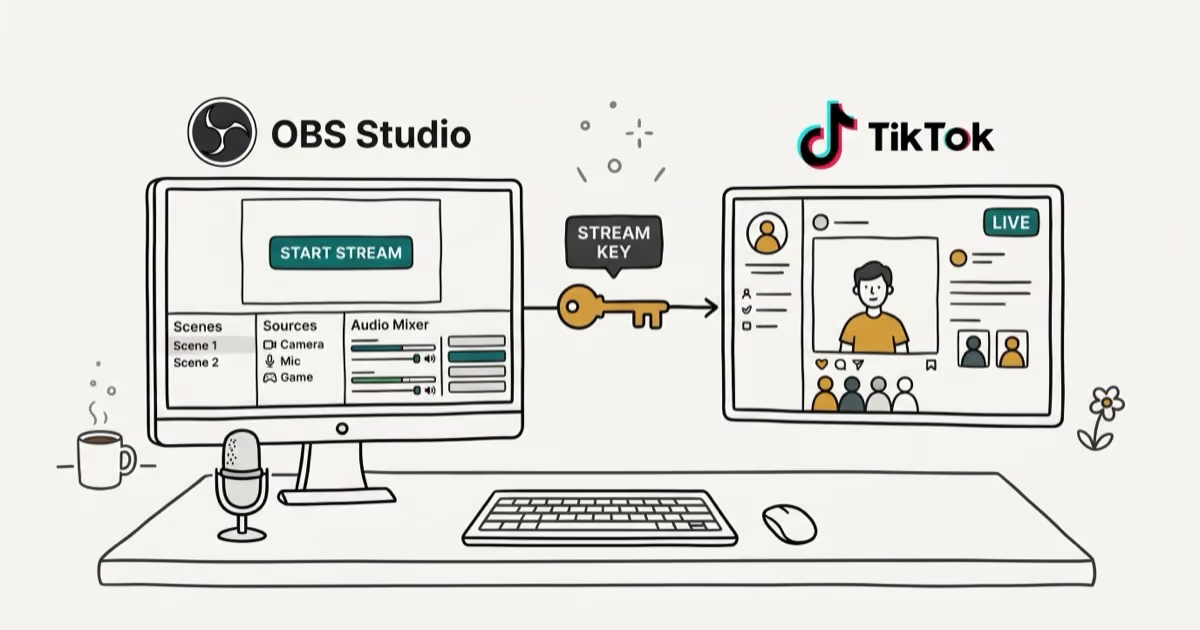
How to Get a TikTok Stream Key for OBS and Streamlabs
Get a TikTok stream key to broadcast from OBS or Streamlabs. Covers the 1,000-follower requirement, CarterPulse application, and OBS setup steps.

How to Make a Joint TikTok Account With Friends (2026)
Set up and manage a joint TikTok account with friends. Covers shared login setup, content planning, security tips, and the Collaboration Post alternative.