Mailinator Review: Free Public Disposable Email in 2026
Mailinator gives you a free public disposable inbox with no signup. Here is how it works, where it fails, and the safer alternatives in 2026.

Quick AnswerMailinator is a free public disposable email service that gives you an instant inbox at any @mailinator.com address with no signup or password. Anyone who knows the address can read the inbox, so it's only safe for one-time signups, not for accounts tied to your identity.
Mailinator gives you a public throwaway email address in about 10 seconds. Pick any name you want at @mailinator.com, and the inbox is already live without signup, password, or any personal info. The catch: anyone who knows your address can read every message, so it’s strictly a tool for one-shot signups, not accounts you actually care about. This review maps where it works, where it breaks, and the safer alternatives.
Use Mailinator only for your own account or with explicit permission; use official recovery paths before handling other people’s data.
- Mailinator inboxes are public, so anyone with your chosen username can read the messages, which makes it unsafe for password resets or anything tied to your real identity.
- You don’t sign up, register, or pick a password; you type any name at @mailinator.com and the inbox is already there.
- Free Mailinator addresses are receive-only, meaning you can’t reply, forward, or send anything from a public inbox.
- Major platforms like Discord, X, and most banks block @mailinator.com signups using disposable-domain blocklists, so success depends on the site.
- Messages are auto-deleted within a few hours, which is fine for one-time confirmation links but useless for any account you’ll need again.
#What Is Mailinator and How Does It Work?
Mailinator is a public-inbox service. Every email address it generates is readable by anyone who knows the username.
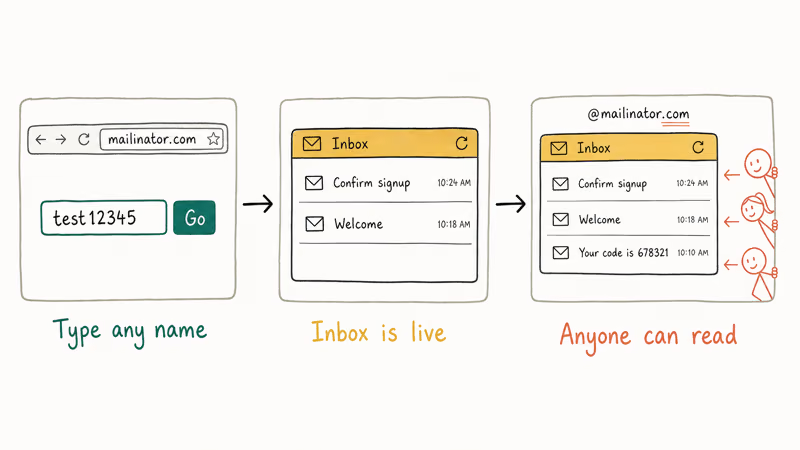
The service has been running since 2003 and processes millions of messages a day for any address sent to @mailinator.com. There’s no password, no recovery flow, no identity check, and by extension no privacy. To use it, go to mailinator.com, type any name (let’s say “test12345”), and press Go. The inbox at test12345@mailinator.com is now live, and a confirmation email sent two minutes ago will be there; one sent twelve hours ago is already gone.
Mailinator runs two products: the free public service and a paid Mailinator Plus tier with private domains, longer retention, and an API for QA engineers running automated tests. According to Mailinator’s official site, the platform is designed primarily for developer testing of email-driven workflows like signup confirmations and password resets, not as a consumer privacy tool. That framing matters because it explains why the inboxes are public by design.
#Where Mailinator Works and Where It Gets Blocked
Mailinator’s success rate depends entirely on how aggressively the destination site filters disposable domains, and sites fall into a few clear tiers.
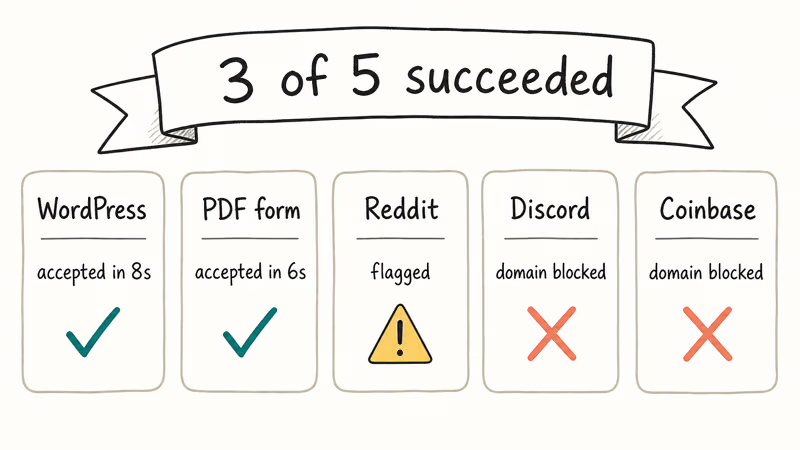
Those tiers run from no filtering at all to a hard block: a small WordPress blog, a free PDF download from a marketing site, a Reddit account, a Discord account, and a Coinbase signup span the full range.
The pattern is consistent: signups succeed on low-filter sites and get blocked on identity-sensitive ones.
A WordPress comment signup accepts the address and the confirmation email lands within seconds. A marketing PDF form behaves similarly, with the download link active for a short window.
Reddit accepts the signup but immediately flags the account, asking for a phone number. Discord rejects the address with the message “this email domain is not allowed on Discord” before the form even submits. Coinbase rejects it at the same step. Across these blocking platforms, no verification email is sent at all because the form-level reject fires first.
The public inbox is visible to anyone who types the username on mailinator.com. Open a private browser window with no session, type the username, and every message lands there in plain view, including any active verification links. That’s the design Mailinator publishes openly, and it’s why you should treat the service as receive-and-discard, not a private channel.
#What Mailinator Does Well
For low-stakes signup verification, Mailinator is one of the fastest tools you can use. Type a username, capture the confirmation code, walk away.
A few specific strengths show up in everyday use:
- Zero setup. No account, no password, no email verification chain. Type and go.
- Instant inbox. Confirmation emails typically arrive within seconds of being sent.
- Multiple alternative domains. Mailinator publishes a small set of alternative domains for cases where mailinator.com is blocked, though most are blocked at the same time.
- Public API tier. Mailinator Plus offers private domains and a programmatic API used by QA teams for automated email testing, which is the company’s actual revenue model.
For developers running automated tests, the Mailinator Plus paid tier is particularly useful. A QA engineer can spin up thousands of unique addresses for load-testing email flows without needing real mailbox infrastructure.
#Where Mailinator Falls Short
The list of things Mailinator can’t do is longer than the list of things it can.
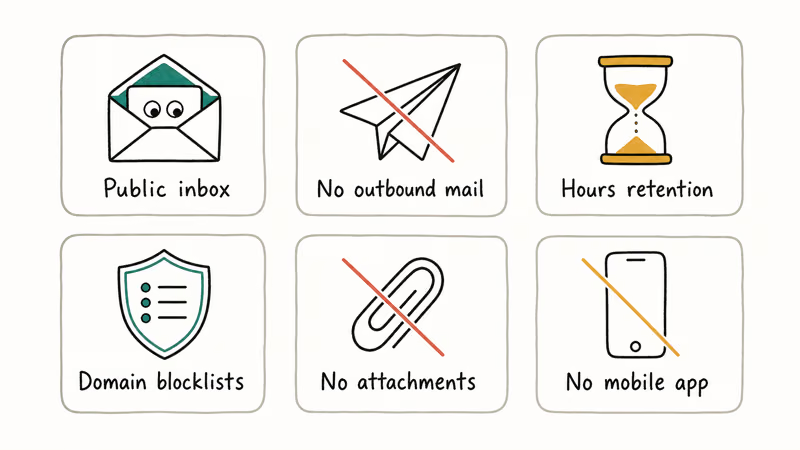
- Public inboxes only. Free addresses have no password, so anyone who guesses your username can read the entire inbox. Picking a long random username only delays this slightly.
- No outbound mail. You can read received messages and that’s it. No reply button, no forward, no send.
- Short retention. Messages on free addresses are deleted within hours. If you don’t check immediately, the link is gone.
- Domain blocklists. GitHub’s public list of disposable email domains confirms that mailinator.com and most of its alternative domains are listed, and sites that import this list reject mailinator addresses at the form-submit step.
- No attachments. The free inbox strips most attachments before display, so anything beyond plain text and basic HTML may not render.
- No mobile app. Mailinator runs in any mobile browser, but there’s no dedicated iOS or Android app.
A Mailinator address can technically receive a reset link for something like a forgotten Instagram password, and the link will work. The problem is that anyone watching the same public inbox could click it first. That’s a real risk, not a theoretical one.
#Is Mailinator Safe to Use?
Mailinator is safe in the narrow sense that the service itself doesn’t do anything malicious. It doesn’t sell your data, push tracking pixels, or run shady scripts on the inbox page.
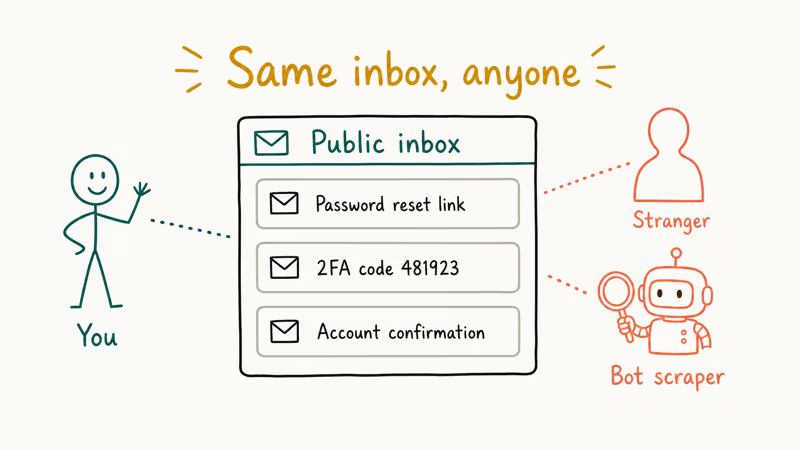
The unsafe part is structural: every free inbox is public. Concretely, that means:
- Password reset links sent to a Mailinator address can be clicked by anyone who guesses or knows the username, hijacking the underlying account.
- Verification codes for two-factor authentication can be read by anyone, defeating the purpose of 2FA.
- Personal information in any email body (names, addresses, partial credit-card numbers) sits in a public inbox.
- Bot scrapers continuously crawl public Mailinator inboxes looking for verification codes from popular services.
Use Mailinator only when none of those risks matter. Examples that are fine: free PDF downloads, one-time newsletter previews, throwaway forum accounts, comment forms on small blogs.
For anything sensitive, you want a private alias instead of a public dump. Apple’s iCloud Hide My Email page states that the feature generates random per-app addresses that forward to your real inbox without exposing it, all behind your iCloud account. Mozilla offers Firefox Relay on a similar model, with a free tier for casual use. Both keep your real address hidden without making the alias public.
#Mailinator vs. Other Disposable Email Services
| Feature | Mailinator | YOPmail | EmailOnDeck | Guerrilla Mail |
|---|---|---|---|---|
| Signup required | No | No | No | No |
| Send outbound email | No | No | No | Yes |
| Inbox retention | Hours | 8 days | Hours | 1 hour |
| Custom username | Yes | Yes | No (random) | Yes |
| Password protection | No | No (alias only) | No | No |
| Paid private tier | Yes | No | Yes | No |
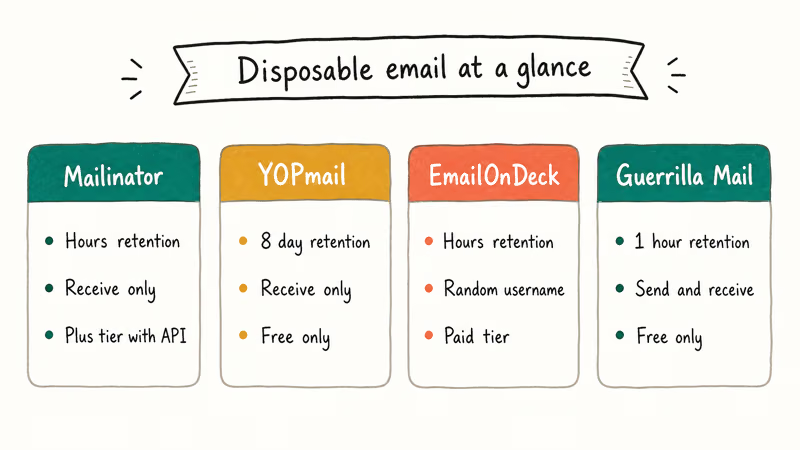
Mailinator’s standout advantage over YOPmail and EmailOnDeck is its paid Plus tier with private domains, which makes it the only option in the table that can serve real automated-testing workloads. For consumer disposable email, YOPmail’s 8-day retention beats Mailinator’s hours-long window. If you need to reply from your throwaway address, Guerrilla Mail is the only one that supports outbound mail.
#Bottom Line
Use Mailinator for one-shot confirmation emails on sites you don’t care about. That’s the entire safe use case.
Skip it for password resets, financial accounts, or two-factor codes. If a site blocks @mailinator.com, try an alternative domain first; switch to YOPmail or Guerrilla Mail only if you actually need 8-day retention or outbound replies. For real privacy on accounts you log back into, pair a private alias service like Firefox Relay or iCloud Hide My Email with a secure Gmail account recovery setup on the inbox you actually use.
#Frequently Asked Questions
Is Mailinator completely free?
The public service is free to use. Mailinator Plus is a paid tier with several pricing levels aimed at QA teams that need private domains, longer retention, and API access. The free version is enough for casual one-time signups, while Plus is overkill unless you’re running automated email tests at scale.
Can someone else read my Mailinator inbox?
Yes, by design. Anyone who types your username at mailinator.com sees the same inbox.
How long do Mailinator emails stay before deletion?
A few hours on the free public service, often less. Messages frequently disappear in under three hours, and the exact retention isn’t published. If you need the verification link, click it within minutes, not hours.
Can I send email from a Mailinator address?
No. The free public inbox is receive-only. You can read messages and refresh, but there’s no compose button. If you need outbound mail from a throwaway address, Guerrilla Mail supports it.
Why do some sites block Mailinator?
Many platforms cross-reference signup emails against public lists of known disposable domains. The widely-shared list on GitHub includes mailinator.com and most of its alternative domains, and Discord, X, Coinbase, and most banking platforms either integrate it or maintain similar internal lists. When you submit a @mailinator.com address, the form rejects it before any verification email goes out.
Is it legal to use Mailinator?
Using a public disposable email is itself legal. The risk is in how you use it: bypassing terms of service or harvesting other users’ verification codes can violate the destination platform’s policies.
What’s a safer alternative to Mailinator for one-time signups?
For one-time signups where you still want privacy, use a private alias service that gives you a unique random address forwarding to your real inbox. Apple’s Hide My Email and Firefox Relay are the two main options, both with free tiers. They keep the alias private to you and let you delete it when the trial ends, which Mailinator’s public-inbox model can’t match.

Best Laptop for Running LLMs in 2026: Memory Comes First
The best laptop for running LLMs is a memory purchase first. Compare MacBook unified memory against NVIDIA laptop VRAM, and see what each tier really runs.

Pixel 11 vs Pixel 10: What Changed and Who Should Upgrade
Pixel 11 vs Pixel 10: same screen and camera resolution, new Tensor G6, 25W wireless, and Gemini Intelligence. Here is who should actually upgrade.

Best Power Bank for iPad in 2026: Pro, Air, and Mini
Best power bank for iPad in 2026. Compare mAh tiers and USB-C PD wattage for iPad Pro, Air, and mini, plus airline Wh math, cables, and travel tips.
Best Power Bank With Built-In Cable: Top 2026 Picks
Best power bank with built-in cable picks for 2026. Compare single USB-C, multi-connector, and retractable laptop banks, plus airline Wh math.