How to Edit a PDF in InDesign: A Comprehensive Guide
Learn how to edit a PDF in InDesign using import, place, and third-party plugins like PDF2ID. Includes workarounds for text and image editing.
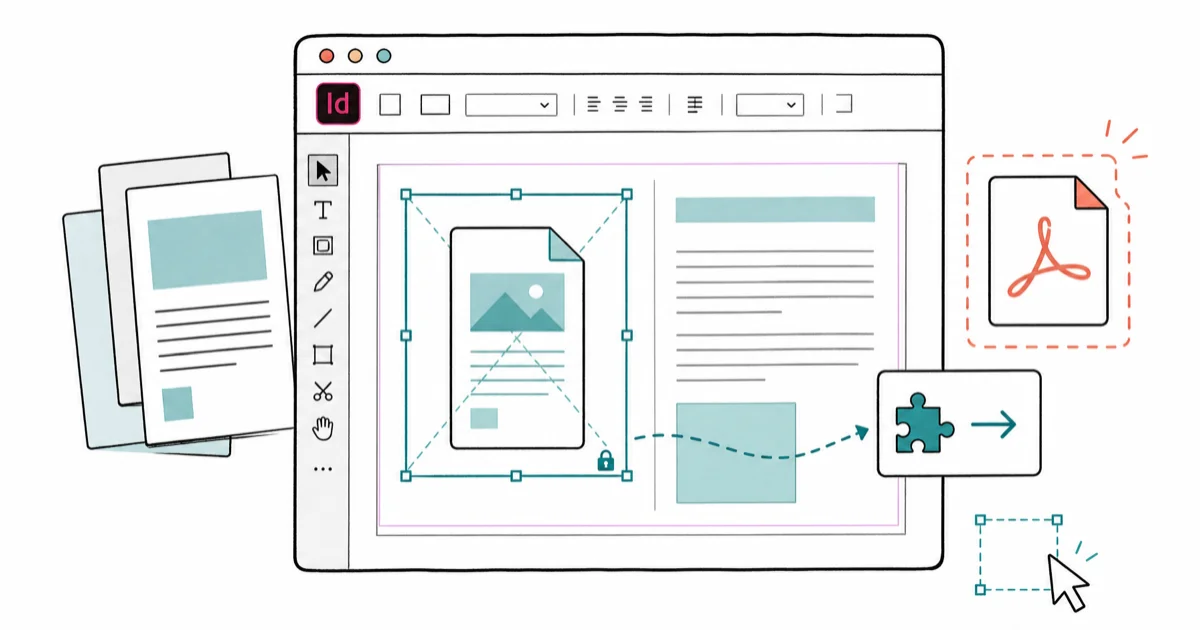
Quick AnswerInDesign cannot directly edit PDFs. You must place the PDF as a static image or use a plugin like PDF2ID to convert it into an editable InDesign file, then make your changes.
Adobe InDesign is built for creating layouts, not editing existing PDFs. Every method for PDF editing comes with a trade-off: placing a PDF is fast but produces a static image, while converting with PDF2ID preserves editability but introduces formatting errors in complex files. This guide covers each method honestly, including where they break down.
- InDesign can’t edit PDFs natively; a placed PDF is a static, non-editable image
- For minor text fixes, Adobe Acrobat Pro is faster and keeps the original file intact
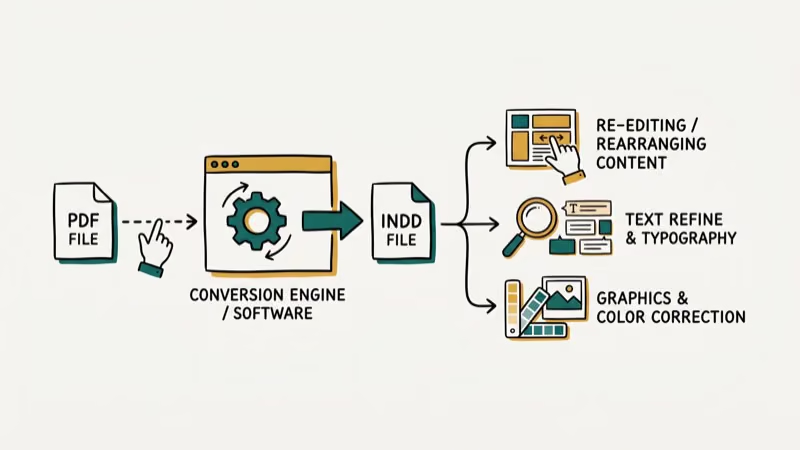
- PDF2ID converts a PDF into a fully editable InDesign INDD file, best for layout changes
- Complex PDFs with custom fonts often convert with formatting errors; review output carefully
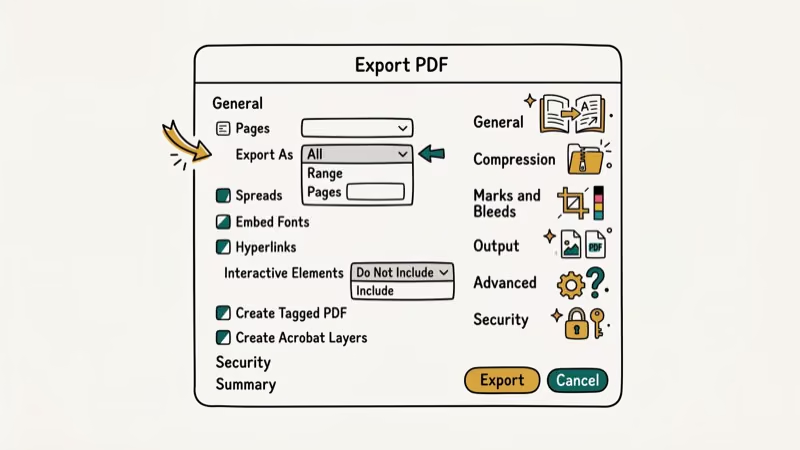
- Export back to PDF via
File>Exportto preserve fonts, colors, and bleed settings
InDesign’s relationship with PDFs is one-directional: it produces them, it doesn’t consume them. For full edits, you need a conversion tool. The best InDesign alternatives for Mac handle PDF editing differently.
#Why Can’t InDesign Edit PDFs Directly?
PDFs are designed to preserve layout across devices and platforms, not to expose editable objects. When InDesign places a PDF, it reads the file as a flattened image, not as a collection of editable text frames and image boxes.
Adobe confirmed this limitation in the InDesign documentation: placed PDFs are linked files that InDesign renders at display resolution, with no access to the underlying text or vector data. This applies even to a simple single-page PDF exported from InDesign itself, which still places back as a non-editable object.
This means your editing options fall into 3 categories: editing in another app (Acrobat), converting the PDF to an editable format (PDF2ID), or recreating the content from scratch. According to Adobe’s InDesign support page, the Place command supports placing PDF pages as static graphics only. Wikipedia’s PDF article confirms that PDFs were designed around a fixed-layout document standard since their 1993 introduction, which is why they resist editing by design.
#Method 1: Importing a PDF into InDesign (View Only)
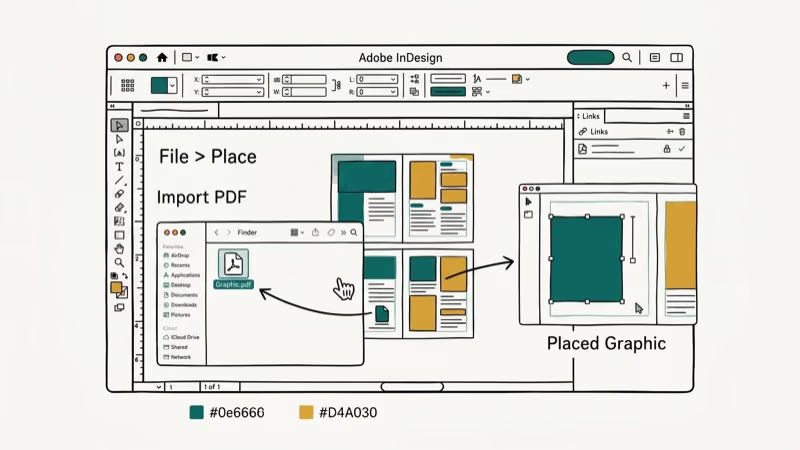
This method is useful when you need to position a PDF page within a larger layout (for reference, annotation, or combined documents) but don’t need to edit the PDF content itself.
Steps:
-
Open InDesign and create a document matching your PDF dimensions.
-
Go to
File>Place(Cmd/Ctrl + D). -
Select your PDF and check Show Import Options.
-
Choose which page to import and set cropping as needed.
-
Click OK and click on your document to place the PDF.
This approach is fast and reliable. Use it when the PDF is a background or reference layer. It’s not useful if you need to change any text or images within the PDF itself.
#Method 2: Minor Edits in Adobe Acrobat
For small text corrections or simple image swaps, Adobe Acrobat Pro is the right tool. You stay in the native PDF format and avoid conversion entirely.
Steps:
-
Open the PDF in Acrobat Pro.
-
Go to
Edit>Edit PDF(or click Edit PDF in the right panel). -
Click any text to edit it directly.
-
Save the file when done.
-
If the file is linked in InDesign, update the link in the Links panel.
For a multi-page InDesign-exported PDF, Acrobat handles text edits cleanly on most pages. Pages with embedded custom fonts can revert to fallback fonts, a common limitation. According to Adobe’s Acrobat documentation, editing works best on PDFs that were not flattened during export. Adobe’s Acrobat editing guide states that fonts must be embedded in the PDF for text editing to work correctly.
If you only need to edit text, images, or annotations on a Mac, iPhone, or iPad, PDF Expert is a paid editor to compare after Acrobat; it won’t rebuild the PDF as an InDesign layout.
Some links on this page are affiliate links, which means fone.tips may earn a commission at no extra cost to you.
#How Do You Fully Edit a PDF in InDesign?
If you need to change layout, reflow text across pages, or make extensive edits, you need a PDF-to-InDesign converter. PDF2ID by Recosoft is the most widely used tool. PDFMarkz is an alternative with a faster conversion engine.
PDF2ID workflow:
-
Install PDF2ID from recosoft.com.
-
Open InDesign and go to
Plug-Ins>PDF2ID>Convert PDF/XPS to InDesign. -
Select your PDF file.
-
Choose conversion settings (text recovery, image extraction).
-
Review the converted INDD file carefully before editing.
With a multi-page, text-heavy PDF, PDF2ID converts most text frames correctly. Tables with merged cells and text set in unusual fonts tend to fail conversion and need manual rebuilding. This is typical. PDF2ID works best on body-text-heavy documents, less so on complex multi-column designs.
For the best quality output when you’re going the other direction, learn how to convert INDD to PDF to preserve bleed and font settings.
#Best Practices for PDF Work in InDesign
Match document dimensions first. Always create your InDesign document to match the PDF’s dimensions before placing it. A mismatch causes scaling issues that look fine on screen but print incorrectly.
Use layers. Lock the placed PDF on its own layer and put recreated content on a layer above. This preserves the original as a reference without accidental edits, and lets you toggle visibility to compare your recreation against the source.
Handle fonts carefully. When converting with PDF2ID, fonts that aren’t installed on your system get substituted. Use the Type > Find Font feature to locate and replace any substituted fonts before making other edits. Check word count in InDesign after rebuilding text to verify nothing got cut.
Recreate when conversion fails. For complex layouts, recreating from scratch is often faster than fixing a broken conversion. This produces a cleaner file with no conversion artifacts and is fully editable from day one.
#Troubleshooting Common Problems
Formatting errors after PDF2ID conversion: Adjust paragraph and character styles in InDesign after conversion. PDF2ID maps PDF styles to InDesign styles, but the mapping is often imprecise on PDFs not originally exported from InDesign.
Missing fonts: Use Type > Find Font in InDesign to locate and replace missing fonts. Fonts in placed PDF images are inaccessible and must be reinstalled or substituted.
Pixelated images: Images may have been downsampled in the original PDF export. Extract the original high-resolution images from the source files and replace them. Acrobat can extract images at their embedded resolution if the originals aren’t available.
If you’re working with documents across multiple apps, Google Docs can also handle simple PDF conversions. Learn how to delete a header in Google Docs when working with converted PDFs that import extra formatting.
#Bottom Line
Use Acrobat for minor text fixes in any PDF. Use PDF2ID when you need full layout control and the PDF has mostly body text and standard fonts. Recreate from scratch when the layout is complex and conversion accuracy matters; it’s slower but produces a file with no conversion artifacts. For any PDF work that stays in InDesign, always export via File > Export rather than print-to-PDF to preserve bleed marks, color profiles, and font embedding.
#Frequently Asked Questions
Can InDesign directly edit PDFs?
No. InDesign places PDFs as static images. You can’t edit text, images, or layout elements within a placed PDF. To edit, you need to use Adobe Acrobat for minor changes or a conversion tool like PDF2ID for extensive edits.
What is PDF2ID and how does it work?
PDF2ID is a plugin for InDesign that converts PDF files into fully editable INDD files. It analyzes the PDF structure and reconstructs text frames, image boxes, and styles in InDesign. It handles most content in typical PDFs well; complex layouts with merged tables or unusual fonts need manual correction.
What video formats does InDesign support for placed media?
InDesign supports placing PDF, EPS, TIFF, JPEG, PNG, and AI files as static graphics. For interactive PDFs with video, you can embed MP4 files via the Object > Media menu. VOB and DVD formats aren’t supported.
How do I update a placed PDF if the original file changes?
Open the Links panel (Window > Links), find the placed PDF, and click the Update Link button (circular arrow icon). InDesign refreshes the placed image to reflect the current version of the file.
What’s the best approach for editing a multi-page PDF in InDesign?
Use PDF2ID to convert the entire PDF to INDD at once, then review each page for conversion errors. Alternatively, place each page individually and recreate just the sections you need to edit. For PDF files originally created in InDesign, locate the original INDD file instead; it’s far more reliable to edit the source file.
Are there free alternatives to PDF2ID for InDesign?
Free options are limited. Some online converters offer basic PDF-to-IDML conversion, but accuracy is inconsistent. For professional work, cancel Adobe trial tools and standalone converters like Markzware PDFMarkz are worth evaluating. PDF2ID’s accuracy justifies the cost for agencies doing this regularly.
Why does text look different after converting a PDF in InDesign?
Font substitution is the most common cause. If the fonts in your PDF aren’t installed on your system, InDesign substitutes them. The layout shifts because different fonts have different character widths. Install the original fonts and re-run the conversion for accurate results.
Google Messages Error 3100: Why RCS Is Broken on Galaxy
Google Messages RCS error 3100 hits Galaxy owners after phone or carrier switches. Google told 9to5Google a fix is coming. Here's what actually helps.

Is This Bank App Real? Spot a Fake App on Your Home Screen
A bank app can land on your home screen from a web page with no install warning. Learn the checks that tell a real banking app from a phishing web app.
Apps Crashing After iOS 27 Update? Fix Order (2026)
Apps crashing after the iOS 27 update? Update the app in the App Store first, then offload and reinstall to clear stale cache, then restart. The fix order.

Do AI Translation Earbuds Work Offline? What to Know
Do AI translation earbuds work offline? A few do with downloaded language packs, but most need the cloud. Here's what works offline and what you give up.