Best Bookshelf Speakers in 2026: Passive and Powered
We compared the best bookshelf speakers of 2026, passive and powered. KEF Q150 leads for imaging, Edifier R1280DB wins for simplicity. See the full picks.
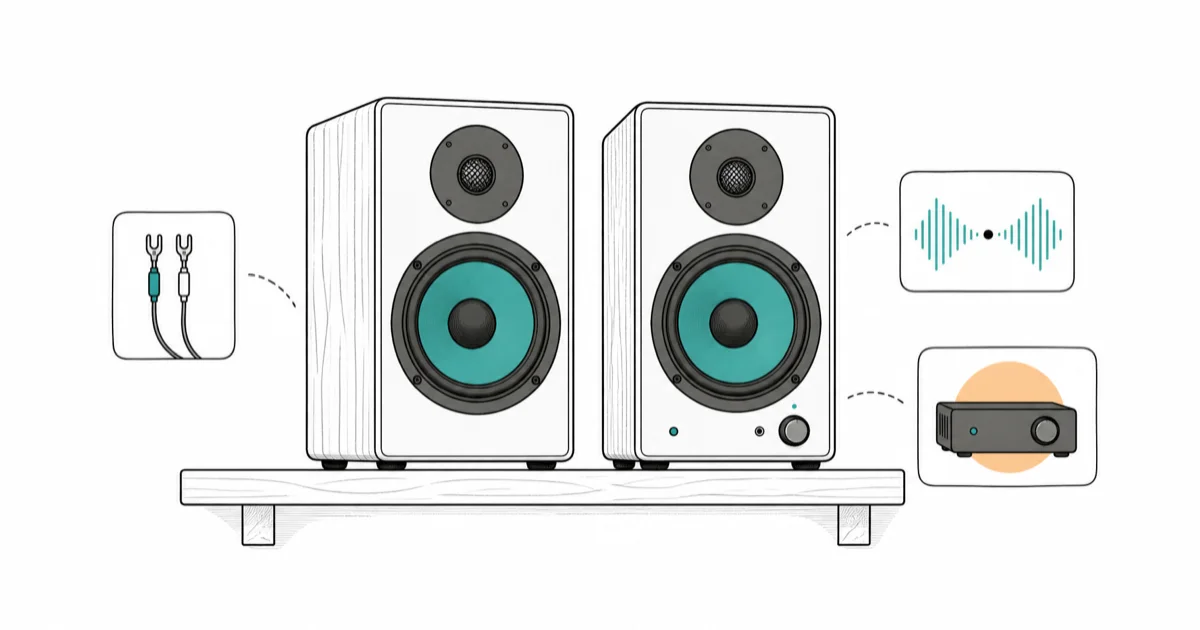
Quick AnswerThe KEF Q150 is the best bookshelf speaker for most people in 2026 thanks to its precise imaging, but it needs a separate amplifier. For a no-receiver setup, the powered Edifier R1280DB is the easiest pick.
The best bookshelf speakers split into two camps, and choosing the wrong one means buying gear you can’t use. Passive speakers like the KEF Q150 need a separate amplifier. Powered speakers like the Edifier R1280DB have an amp built in and just need a source. This guide sorts out which type suits which listener before you buy gear you can’t use.
- The KEF Q150 uses a Uni-Q point-source driver for precise imaging but needs 50+ watts to shine
- The Klipsch RP-600M II rates 96dB sensitivity, so it plays loud on amps as small as 15 to 20 watts
- The ELAC Debut DB53 extends bass to about 48Hz and works with modest 20 to 120W amps
- The powered Edifier R1280DB packs a built-in amp plus optical, coaxial, RCA, and Bluetooth inputs
- All passive bookshelf speakers need a separate amplifier or receiver to make any sound
#Passive vs Powered: Which Do You Need?
This is the first decision, and it changes everything else. Passive speakers contain only drivers and a crossover, so they need an external amplifier or receiver. Powered speakers build the amp into one cabinet.
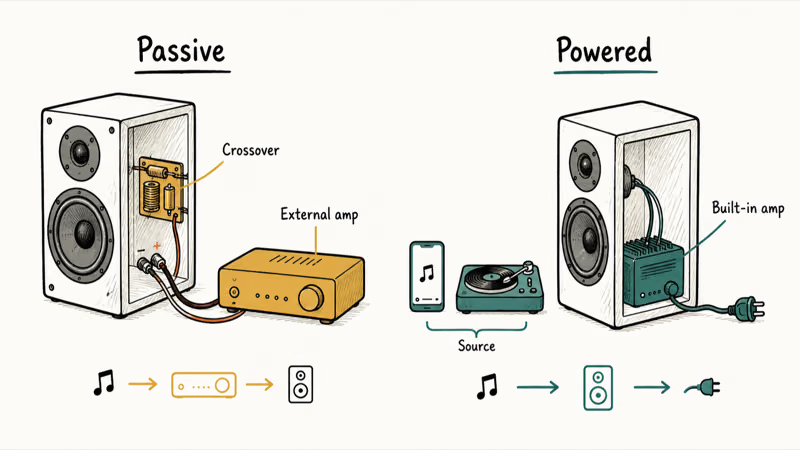
Powered speakers win on simplicity. Connect a turntable, TV, or phone and you have sound, with no receiver to buy or match. The catch is that you can’t upgrade the amplifier separately, the cabinet runs heavier, and it needs a nearby outlet, which makes powered speakers a slightly less flexible long-term home for a system you plan to keep improving piece by piece.
Passive speakers win on ceiling. You pick the amp, so you can spend more on speakers now and upgrade electronics later.
For a desk or a turntable on a budget, powered is the obvious answer. For a real hi-fi or a system you’ll grow over years, passive gives you room to improve, and most first-time buyers who just want music quickly end up happier with a powered pair that works the moment it’s out of the box.
#Best Bookshelf Speaker for Most People: KEF Q150
The KEF Q150 is our top passive pick because of how it images. It uses KEF’s Uni-Q driver array, with the tweeter sitting in the center of the mid-bass cone. That creates a point source.
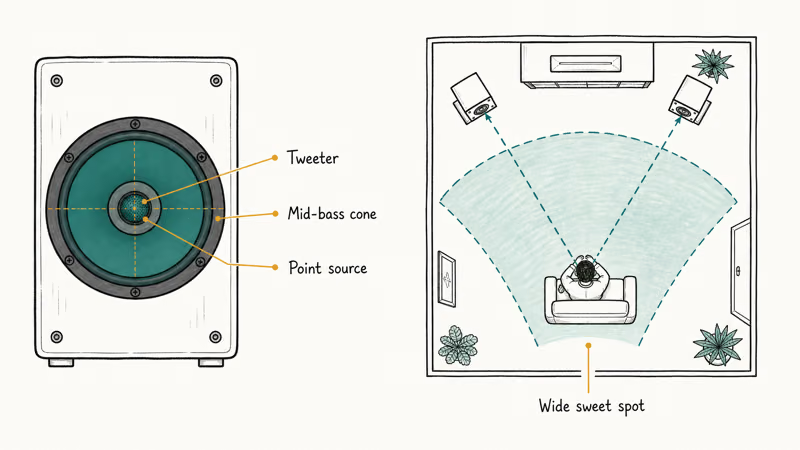
The result is precise placement and a wide sweet spot. That point-source layout helps instruments hold their position off-center, the opposite of how cheaper front-firing speakers can collapse to the nearer speaker. The Q150 also leans neutral rather than exciting, aiming for accuracy over punch.
Crutchfield’s Q150 comparison confirms that the Q150’s 86dB sensitivity demands more power than horn-loaded rivals, so plan on 50 watts or more. It rewards careful placement on stands away from walls.
Buy the KEF Q150 if accuracy and imaging top your list. As an Amazon Associate fone.tips earns from qualifying purchases.
#Best Bookshelf Speaker for Home Theater: Klipsch RP-600M II
The Klipsch RP-600M II is the pick for movies and energetic music. Its signature is a horn-loaded titanium tweeter mounted in a Tractrix horn, which acts like a megaphone for high frequencies and makes the speaker far more efficient.
That efficiency is the headline number. According to Crutchfield’s RP-600M overview, the RP-600M II rates an extraordinary 96dB sensitivity, so it plays loud on amplifiers as small as 15 to 20 watts. Bass hits harder than the KEF, and rock and action movies come alive with an energy the neutral Q150 deliberately avoids.
Buy the Klipsch RP-600M II for a livelier, room-filling sound. It scales better in larger spaces than the KEF too.
Want to go deeper on the brand’s lineup? Our guide to the best Klipsch speaker compares the rest of the Reference Premiere range.
#Best Budget Passive Speaker: ELAC Debut DB53
The ELAC Debut 3.0 DB53 is the value champion among passive speakers. Designed by engineer Andrew Jones, it pairs a new aluminum dome tweeter with a 5.25-inch aramid woofer that reaches surprisingly deep.
The bass extension is the standout. The DB53 digs down to about 48Hz, low for a sub-$400 speaker, so it needs less help from a subwoofer than most bookshelf pairs. At 6 ohms and 86.5dB sensitivity, it works happily with modest amplifiers rated anywhere from 20 to 120 watts.
Reviewers consistently note the DB53 delivers a large share of pricier speakers’ performance for a fraction of the cost. The ELAC Debut DB53 is the passive pair we recommend when budget matters but you still want a real hi-fi foundation you won’t outgrow in a year.
#Best Powered Bookshelf Speaker: Edifier R1280DB
The Edifier R1280DB is the easiest speaker here to live with. It builds a 42W amplifier into the cabinets, so it needs no receiver, and it stacks up inputs that pricier rivals skip.
Connectivity is the real selling point. Each speaker carries a 4-inch woofer and a 13mm silk-dome tweeter, and the pair accepts Bluetooth, optical, coaxial digital, and dual RCA inputs. The optical and coaxial connections are rare at this price and let you wire it straight to a TV or DAC.
According to Tom’s Guide’s R1280T review, the R1280 series leans warm, with full mids that flatter vocals and acoustic music. The main limit for audiophiles is the lack of aptX or LDAC, so stream lossless over the wired inputs instead of Bluetooth.
Buy the Edifier R1280DB when you want the no-fuss pick for a desk or a turntable without buying any extra gear.
#How Big a Room Can Bookshelf Speakers Fill?
Bookshelf speakers suit small to medium rooms best, but the answer depends on the speaker’s efficiency more than its size. A high-sensitivity pair like the Klipsch RP-600M II fills a larger space on less power, while the KEF Q150 prefers smaller rooms and near-field listening.
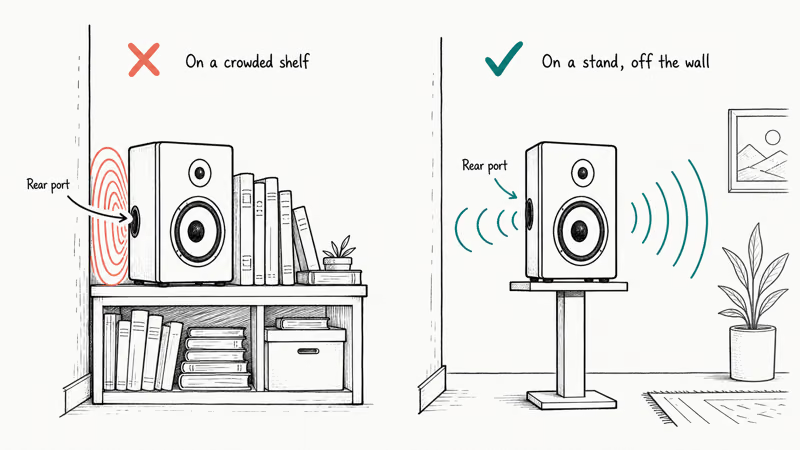
Placement changes the result as much as the room. Despite the name, bookshelf speakers sound best on dedicated stands, pulled away from walls so the bass doesn’t boom and so the rear port can breathe instead of getting trapped against a wall, which is the single most common setup mistake with an otherwise good pair.
A large open-plan room may want a subwoofer to take the low-frequency load off. If a desktop is your space instead, our guide to the best computer speakers covers compact powered options sized for near-field listening.
#When to Add a Subwoofer to Bookshelf Speakers
Most bookshelf speakers roll off in the deep bass. A subwoofer fills in the bottom octave where explosions and bass lines live. A pair with strong extension like the ELAC DB53 needs less help.
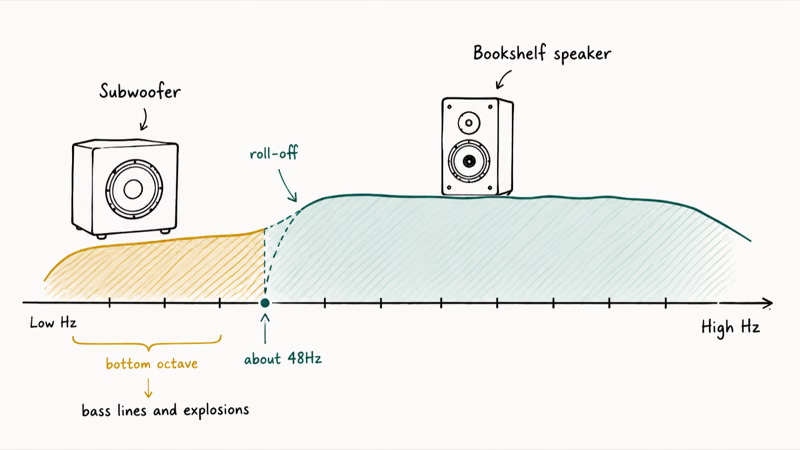
A sub also lets you run the speakers louder cleanly, since it handles the demanding low frequencies that otherwise strain the woofers. Building a system around a single sub? Our guide to the 10-inch subwoofer explains how to size and place it for an even response across the room rather than a one-spot bass hump.
For movie-first systems, a center channel matters as much as a sub. Bookshelf speakers can serve as your left and right fronts, but dialogue lives in the center. Our guide to the best center channel speaker for dialogue covers matching one to your fronts. If you’d rather skip separates entirely, a soundbar bundles the whole front stage into one bar.
#Bottom Line
Buy the KEF Q150 if you have a receiver and want the most accurate imaging in a small room, since its Uni-Q driver places instruments with a precision cheaper speakers can’t match. Choose the Klipsch RP-600M II for home theater and bigger rooms where its 96dB sensitivity and energetic sound earn their keep. Pick the ELAC Debut DB53 for the best budget passive value, and grab the powered Edifier R1280DB when you want sound without buying a receiver at all.
#Frequently Asked Questions
Do bookshelf speakers need an amplifier?
Passive ones do. Models like the KEF Q150, Klipsch RP-600M II, and ELAC Debut all need a separate amplifier or receiver. Powered speakers like the Edifier R1280DB have the amp built in.
Are powered or passive bookshelf speakers better?
Neither is universally better. Powered speakers are simpler and cheaper to get running. Passive speakers give you more headroom and a clearer upgrade path. For a first system you want working fast, powered usually wins.
How much power do bookshelf speakers need?
It depends on the speaker’s sensitivity. A high-sensitivity pair like the 96dB Klipsch RP-600M II plays loud on 15 to 20 watts. A lower-sensitivity pair like the 86dB KEF Q150 wants 50 watts or more to perform its best, so match the amp to the speaker rather than guessing.
Should bookshelf speakers go on a shelf?
Despite the name, no. They sound best on dedicated stands, pulled away from walls so the rear port can breathe and the bass stays tight. A crowded shelf traps the sound and adds boom, which is why stands are the cleaner setup than furniture once the cabinets are out in the open.
Can I use bookshelf speakers for a turntable?
Yes, and powered speakers make it especially easy. The Edifier R1280DB connects to a turntable directly if the turntable has a built-in phono preamp. Otherwise you add a separate phono stage between them, since the cartridge signal is too quiet to drive speakers on its own.
Do I need a subwoofer with bookshelf speakers?
Not always. A pair with deep extension like the ELAC DB53 reaches about 48Hz on its own, which covers most music. A subwoofer mainly helps for movies and bass-heavy genres, or when smaller cabinets roll off early. Add one if you feel the low end is missing.

Best Laptop for Running LLMs in 2026: Memory Comes First
The best laptop for running LLMs is a memory purchase first. Compare MacBook unified memory against NVIDIA laptop VRAM, and see what each tier really runs.
Pixel 11 vs Pixel 10: What Changed and Who Should Upgrade
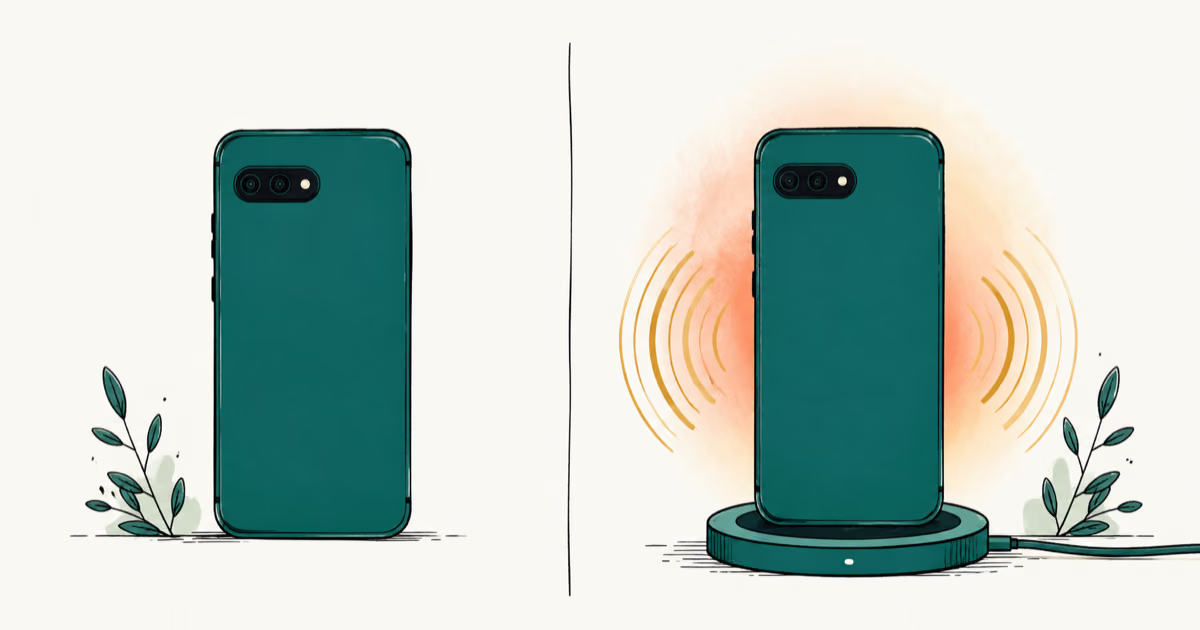
Pixel 11 vs Pixel 10: same screen and camera resolution, new Tensor G6, 25W wireless, and Gemini Intelligence. Here is who should actually upgrade.
Best Power Bank for iPad in 2026: Pro, Air, and Mini
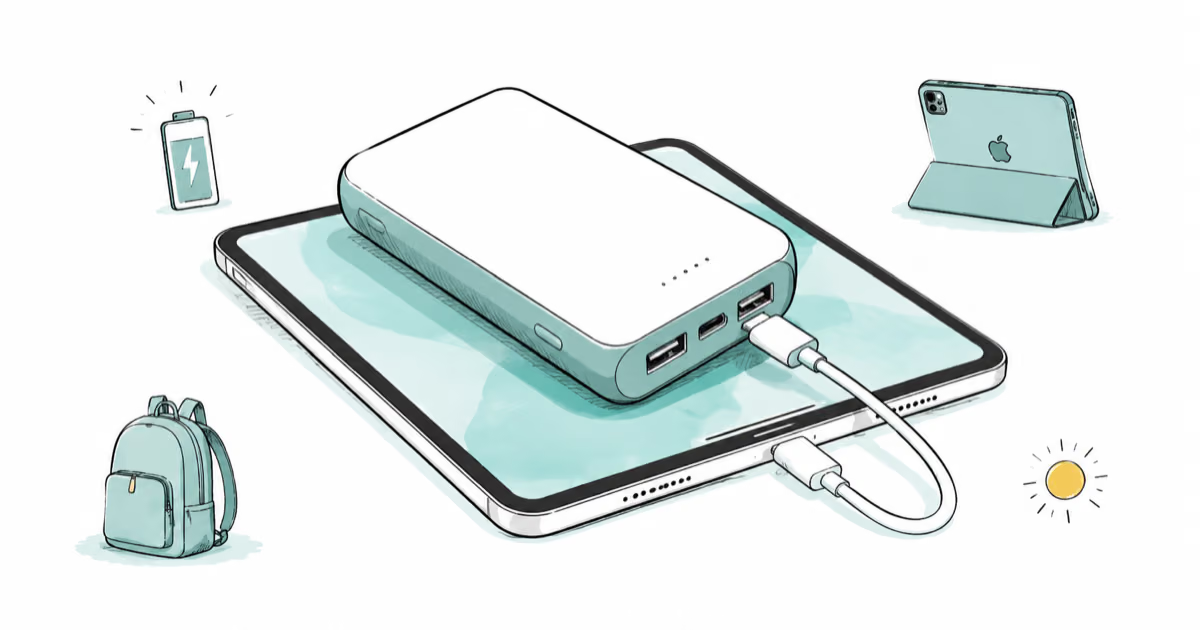
Best power bank for iPad in 2026. Compare mAh tiers and USB-C PD wattage for iPad Pro, Air, and mini, plus airline Wh math, cables, and travel tips.
Best Power Bank With Built-In Cable: Top 2026 Picks
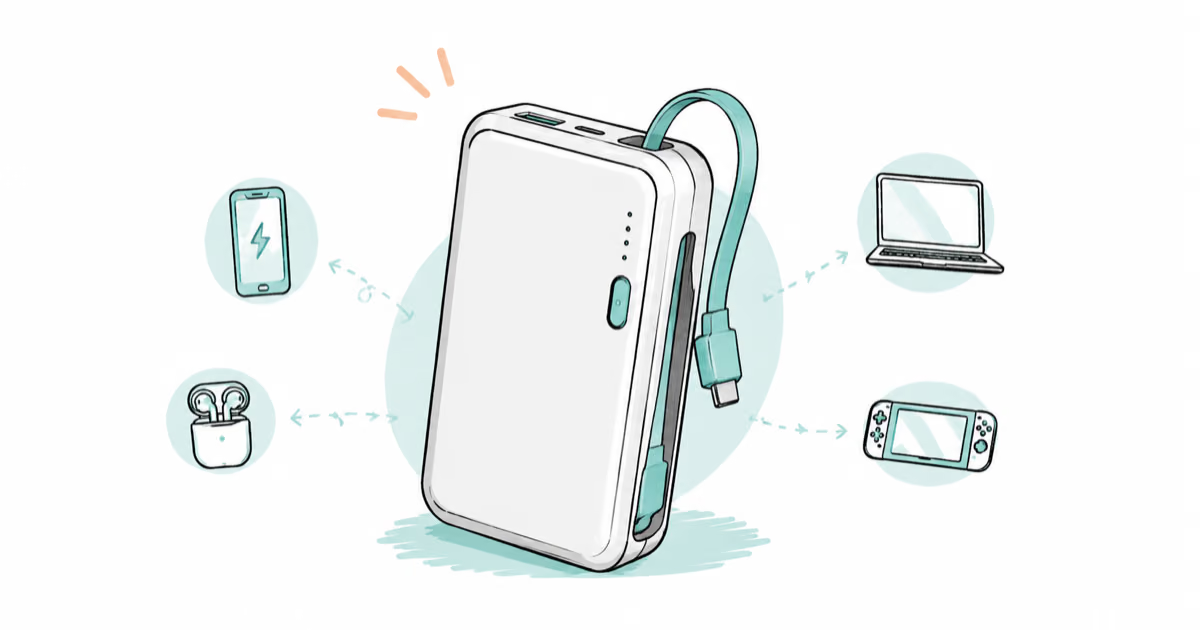
Best power bank with built-in cable picks for 2026. Compare single USB-C, multi-connector, and retractable laptop banks, plus airline Wh math.