Best Soundbar in 2026: Top Picks by TV Size and Budget
We compared the best soundbars of 2026 by TV size and budget. Sonos Arc Ultra leads single bars, Samsung Q990F wins surround. See Atmos and eARC picks.

Quick AnswerThe Sonos Arc Ultra is the best soundbar for most people in 2026, with the cleanest Dolby Atmos sound from a single bar. For full surround, the Samsung HW-Q990F adds a sub and rear speakers.
The best soundbar fixes the weakest part of any TV: its built-in speakers. This guide compares bars across price tiers and TV sizes, from compact single units to full Dolby Atmos systems with rear speakers. The Sonos Arc Ultra led for sound from one bar, but the right pick depends on your room, your budget, and your TV’s HDMI ports.
- The Sonos Arc Ultra produces about twice the bass of the original Arc but lacks DTS support
- Samsung HW-Q990F is an 11.1.4-channel system with 23 drivers across a bar, sub, and two surrounds
- HDMI eARC carries up to 37 Mbits, enough for lossless Dolby Atmos, versus ARC’s roughly 1 Mbit
- The Hisense AX5140Q delivers a full 5.1.4 system around $350, undercutting single premium bars
- Match the soundbar width to your TV for the cleanest look and sound staging
#What Should You Look for in a Soundbar?
Three things decide whether a soundbar transforms your TV audio: the channel layout, the connection to your TV, and how it handles dialogue. A $350 system can out-immerse a $900 bar if you pick the right configuration.
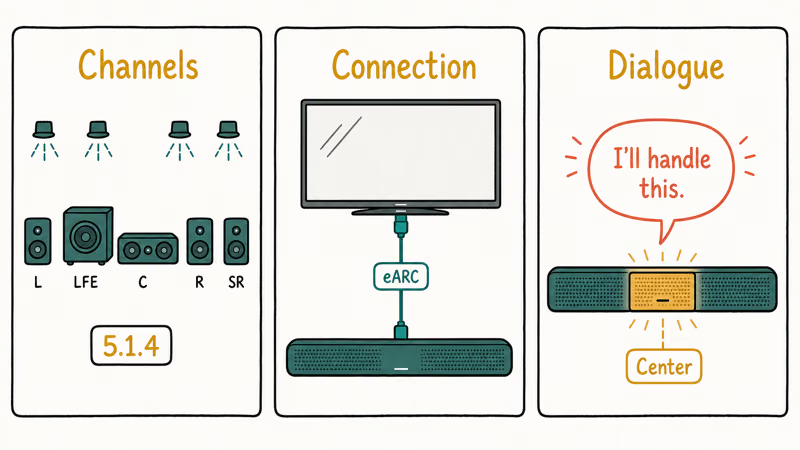
Channel counts read like math problems but describe real hardware. A “5.1.4” layout means five surround channels, one subwoofer, and four height channels for Dolby Atmos. More channels mean more discrete speakers placing sound around the room, which is exactly why a full system beats a single bar for movies even when it costs less, since the rear and height drivers do work that no front-firing bar can fake.
According to HDMI 2.1 background, the single most important spec is the HDMI connection. ARC and eARC both send TV audio over one cable, but eARC carries far more data. Confirm your TV has an eARC port before buying an Atmos bar, especially if you plan to use lossless Atmos sources, a game console, and a streaming box on the same setup.
Dialogue clarity is the complaint that drives most upgrades. TV speakers bury voices under effects. A bar with a dedicated center channel keeps speech intelligible, which is why systems with discrete center drivers score higher for dialogue than virtualized single bars.
#Best Soundbar for Most People: Sonos Arc Ultra
The Sonos Arc Ultra is the single-bar pick we recommend first. Sonos claims it produces about twice the bass of the original Arc, and the appeal is precise Atmos height from one bar with clean music playback.

Two limits keep it from perfection. It lacks DTS
support, which some Blu-rays use, and the Sonos app stays occasionally buggy. There’s also a connectivity catch.According to What Hi-Fi’s soundbar testing, the Arc Ultra has no HDMI 2.1 inputs, so its single eARC port is the only HDMI connection on the bar. If your TV has just two HDMI 2.1 ports and a game console needs one, the Arc Ultra ties up the other, which is the one scenario where we steer buyers elsewhere.
Buy the Sonos Arc Ultra for the best sound from one bar. As an Amazon Associate fone.tips earns from qualifying purchases. You can add a matching Sonos sub and rear speakers later to grow it into a full surround system.
#Best Full Surround System: Samsung HW-Q990F
Want true surround out of the box? The Samsung HW-Q990F is the package pick. It ships as an 11.1.4-channel system with a soundbar, a wireless subwoofer, and two rear speakers, for 23 drivers in total.
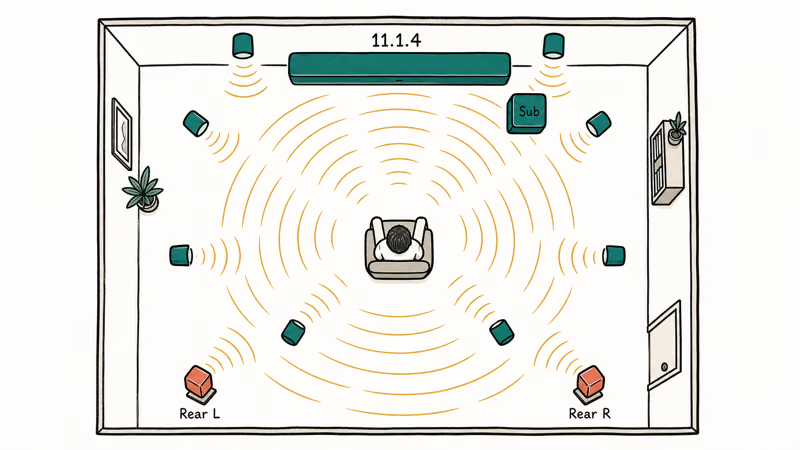
The payoff is a complete dome of sound. With Dolby Atmos and DTS
, effects move organically from front to back and overhead, something no single bar can fully replicate. Discrete rear speakers can place footsteps and rain behind the listener in a way a single bar only suggests. The compact rounded sub is also easier to place than the tall cabinet on Samsung’s previous flagship.The Samsung HW-Q990F costs more than a single bar but bundles the sub and surrounds you’d otherwise buy piecemeal. If you’d rather build surround into the walls, our guide to in-wall speakers covers a cleaner permanent install.
#Best Soundbar for Gamers: Sony Bravia Theatre Bar 9
Gamers should look at the Sony Bravia Theatre Bar 9. Its standout feature is a dedicated HDMI 2.1 input that passes 4K at 120Hz, VRR, and ALLM, so a console connects to the bar without stealing a TV port.
Sound quality lands close to the Sonos. The Bar 9 throws a spacious, immersive presentation from a single unit, with convincing height and DTS
support the Arc Ultra lacks. Its bass is slightly less punchy, which is the main reason it trails the Sonos for pure music, but few buyers will notice during a fast-paced game where the extra HDMI input and low-latency passthrough matter more than the last bit of low-end weight.The Sony Bravia Theatre Bar 9 is the bar to buy when gaming features outrank a few percent of music performance.
#Best Budget Soundbar: Hisense AX5140Q
Our value champion of 2026 is the Hisense AX5140Q. It bundles a soundbar, wireless subwoofer, and rear satellites into a 5.1.4 system for around $350, undercutting single premium bars while giving you far more hardware.
Its trade-offs are real but manageable. According to RTINGS’ budget soundbar testing, the sub has a timing quirk on dense music, and the system relies on Bluetooth rather than Wi-Fi. In a room under 150 square feet, the rear speakers can feel like too much.
It supports HDMI eARC, so it passes uncompressed Atmos. Dialogue stays crisp thanks to the dedicated center, and a built-in night mode tames the bass for apartments. The Hisense AX5140Q is the most system you can buy for the money this year, especially if you share walls and value that night mode.
#How Do You Match a Soundbar to Your TV Size?
A soundbar doesn’t have to match your TV exactly. Matching the width just looks best. As a reference, the Hisense AX5140Q bar runs about 41 inches wide, sitting between a 43-inch and a 48-inch TV.
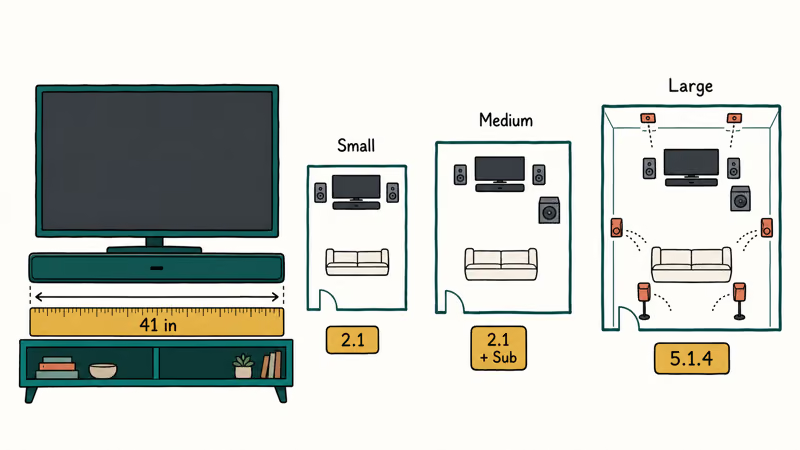
Room size matters more than screen size for the speaker count. Small rooms work with a compact 2.0 or 2.1 bar. Medium rooms benefit from a subwoofer for depth. Large rooms need a 5.1 or full Atmos system to push sound across the space, and cramming a big surround kit into a tiny room often sounds worse than a tidy single bar would, because the rear channels arrive too close together to create a convincing surround field.
If dialogue is your only goal, our guide to the best center channel speaker for dialogue explains why a discrete center beats virtualized speech every time.
#When to Add a Subwoofer and Rear Speakers
A subwoofer adds the low-end weight that makes explosions and bass lines feel physical. Single bars like the Arc Ultra include built-in woofers, but a dedicated sub digs deeper. If your bar supports a wireless add-on, our guide to the 10-inch subwoofer covers sizing one to your room.
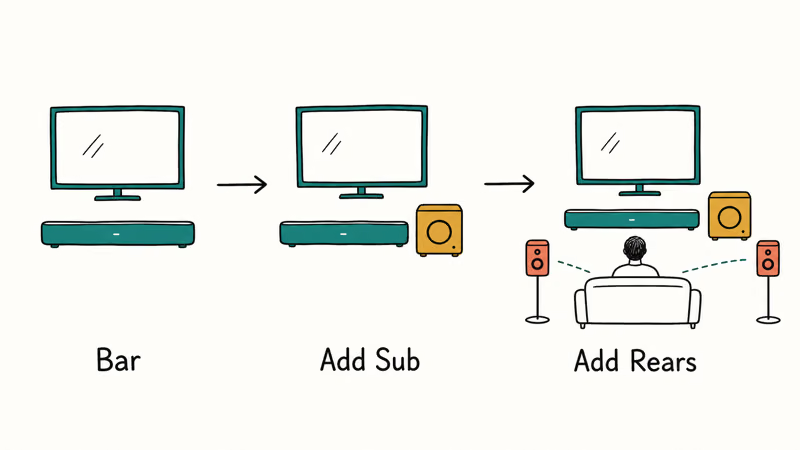
Rear speakers complete the surround effect by placing sound behind you. Up-firing Atmos drivers bounce height effects off the ceiling, but a ceiling speaker install delivers cleaner overhead audio in a permanent setup. For most people a sub adds more impact than rears, so add the sub first if you’re upgrading in stages and your budget is tight.
Prefer discrete speakers over a bar entirely? Bookshelf speakers can serve as surrounds in a receiver-based system. See our companion guide to the best bookshelf speakers for passive and powered options that skip the soundbar approach.
#Bottom Line
Buy the Sonos Arc Ultra for the cleanest sound from a single bar, as long as you don’t need a spare HDMI 2.1 input. Choose the Samsung HW-Q990F when you want true surround with a sub and rears in one box. Gamers should take the Sony Bravia Theatre Bar 9 for its dedicated HDMI 2.1 passthrough, and budget buyers get the most hardware from the Hisense AX5140Q at around $350.
#Frequently Asked Questions
Do I need an HDMI eARC port for a soundbar?
For lossless Dolby Atmos and DTS
, yes. eARC carries up to 37 Mbits, while plain ARC compresses the audio. Standard ARC still works for basic 5.1 sound, so an older TV isn’t useless.Is a single soundbar enough for movies?
A good single bar like the Sonos Arc Ultra dramatically improves TV audio and projects convincing height effects. But it can’t place discrete sound behind you the way rear speakers do. For a true cinema feel, a system with a sub and surrounds pulls clearly ahead.
How do I get clearer dialogue from a soundbar?
Pick a bar with a dedicated center channel, which keeps speech separate from effects. Many soundbars also include a dialogue-enhancement or clear-voice mode in their settings, and a night mode helps too, since it compresses loud effects so quiet speech stays audible at low volume without you reaching for the remote during every quiet scene.
Should the soundbar be as wide as my TV?
It helps but isn’t required. Matching the width gives the cleanest look. A bar narrower than your TV still works fine, while one much wider can overhang the stand, so measure first.
Can I add a subwoofer to any soundbar?
Only if the bar supports a wireless sub or has a sub output. Many mid-range and premium bars pair with a matching wireless subwoofer from the same brand. Mixing brands rarely works.
Wi-Fi or Bluetooth soundbar, which is better?
Wi-Fi bars like the Sonos lineup stream higher-quality audio, integrate with smart-home systems, and group with other speakers around the house. Bluetooth is simpler and works with any phone but compresses the signal. For TV use both rely on HDMI, so Wi-Fi mainly matters for music streaming.

Best Laptop for Running LLMs in 2026: Memory Comes First
The best laptop for running LLMs is a memory purchase first. Compare MacBook unified memory against NVIDIA laptop VRAM, and see what each tier really runs.

Pixel 11 vs Pixel 10: What Changed and Who Should Upgrade
Pixel 11 vs Pixel 10: same screen and camera resolution, new Tensor G6, 25W wireless, and Gemini Intelligence. Here is who should actually upgrade.

Best Power Bank for iPad in 2026: Pro, Air, and Mini
Best power bank for iPad in 2026. Compare mAh tiers and USB-C PD wattage for iPad Pro, Air, and mini, plus airline Wh math, cables, and travel tips.

Best Power Bank With Built-In Cable: Top 2026 Picks
Best power bank with built-in cable picks for 2026. Compare single USB-C, multi-connector, and retractable laptop banks, plus airline Wh math.