Best Power Bank 2026: Pick the Right mAh and Watts
Best power bank 2026 buyers guide. Match mAh to your phone or laptop, decode USB-C PD wattage and Qi2 MagSafe, plus the new 100Wh airline rule explained.
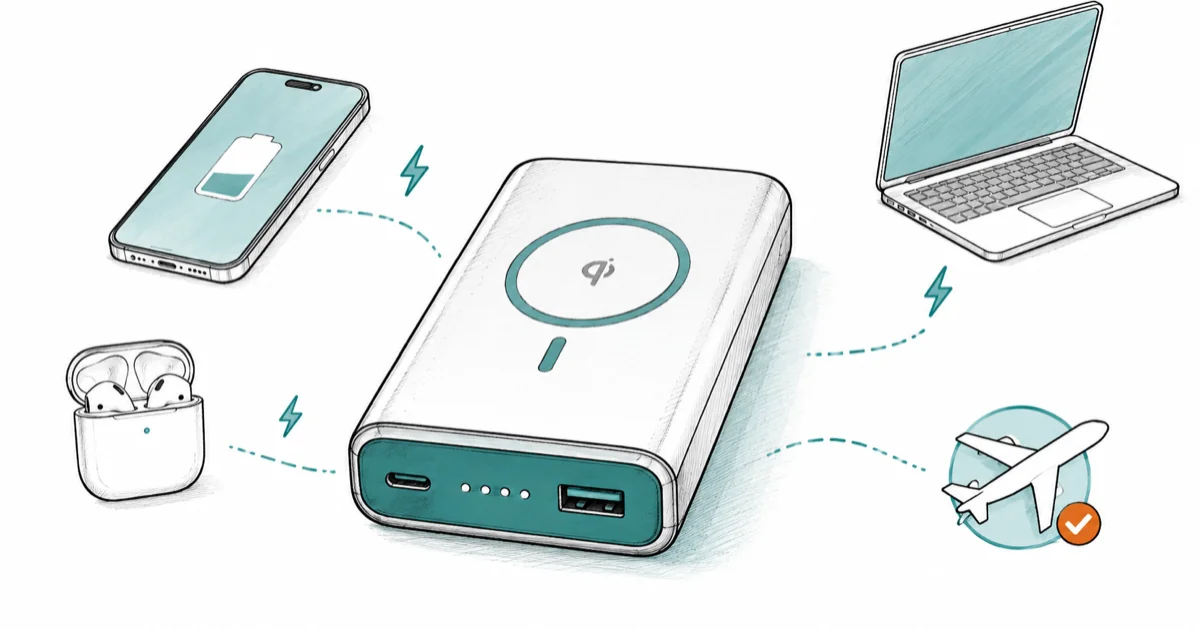
Quick AnswerA 10,000mAh Qi2 bank covers a full phone day for most people, while a 20,000mAh USB-C PD model with 65W or more output is the right size for laptops and travel.
The best power bank in 2026 is the one sized to the device you actually carry, not the one with the biggest number on the box. Match Qi2 magnetic banks and high-capacity USB-C bricks to phone, tablet, and laptop needs by capacity, wattage, and carry style. This guide is the hub for our device-specific picks below it.
- A 10,000mAh bank gives most phones close to two full recharges, while 20,000mAh suits a phone-plus-tablet day
- USB-C PD wattage, not capacity, decides whether a bank can charge a laptop at full speed
- Qi2 starts at 15W; Apple’s higher phone-side tiers are 20W for iPhone Air, 22.5W for iPhone 16/16 Pro, and 25W for eligible Plus, Pro Max, and iPhone 17 models
- The airline carry-on limit is 100Wh, which is roughly a 27,000mAh bank at 3.7V
- A new 2026 rule caps most passengers at two power banks in the cabin, with no in-flight charging on many carriers
#Best Power Banks: Our Top Picks and Where to Buy
Here is the short version on each pick and where to get it before the full guide.
#Anker MagGo Power Bank (Slim 10K)
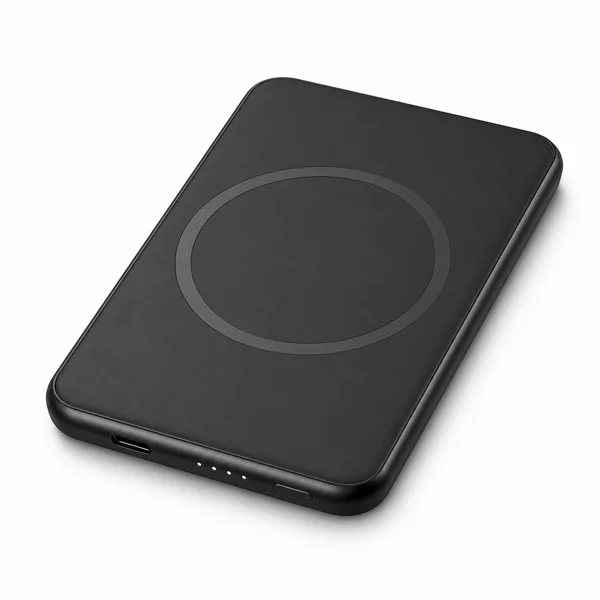
- Qi2 15W magnetic charging, no cable needed
- 10,000mAh covers a full phone day
- Slim enough to hold while you use the phone
Last updated on Jun 30, 2026
As an Amazon Associate fone.tips earns from qualifying purchases. Prices and availability on Amazon are accurate as of the date above and subject to change.
#Anker Prime Power Bank (27,650mAh)
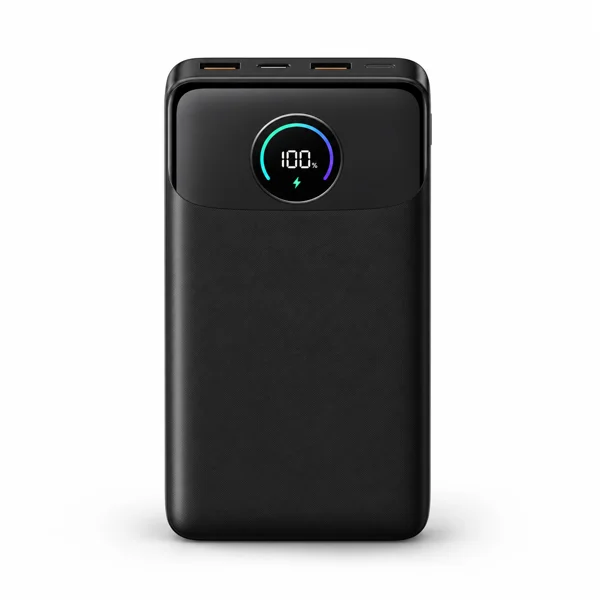
- Up to 140W single-port, enough for most laptops
- 27,650mAh and TSA-approved for flights
- Smart display shows wattage and remaining charge
Last updated on Jun 30, 2026
As an Amazon Associate fone.tips earns from qualifying purchases. Prices and availability on Amazon are accurate as of the date above and subject to change.
#Anker Power Bank 20K (Built-in USB-C Cable)
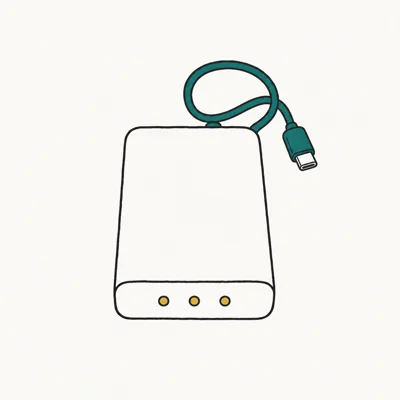
- Built-in USB-C cable means one less wire to lose
- 87W max output covers phones, Switch, and light MacBook Air top-ups
- 20,000mAh stays under airline 100Wh rules for carry-on
Last updated on Aug 8, 2026
As an Amazon Associate fone.tips earns from qualifying purchases. Prices and availability on Amazon are accurate as of the date above and subject to change.
#How Much mAh Do You Actually Need?
Capacity in milliamp-hours tells you how much charge a bank holds, but the usable amount is lower than the label because voltage conversion and heat waste some energy. As a rule of thumb, real-world output often lands around two-thirds of the rated capacity, so a 10,000mAh bank is phone-day territory rather than laptop territory.
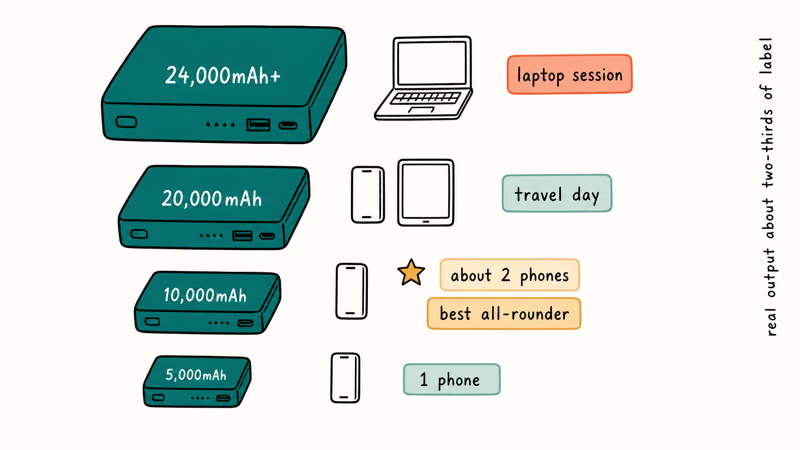
Match the number to your day, not to the biggest box on the shelf. A phone-only carry rarely needs more than 10,000mAh. Laptops live in the 20,000mAh-and-up tier.
Power bank capacity by device and usage pattern
| Use case | Capacity tier | Typical recharges | Why this size |
|---|---|---|---|
| Phone, daily top-up | 5,000mAh | About 1 phone | Pocketable, light |
| Phone, full day off-grid | 10,000mAh | About 2 phones | Best all-rounder |
| Phone plus tablet | 20,000mAh | Mixed device day | Travel and commuting |
| Laptop plus phone | 24,000mAh+ | Laptop session | Wattage matters most |
If your phone matters most, our best power bank for iPhone 17 breakdown sizes capacity to that specific model and its fast-charge ceiling.
Tablet-first kits belong on our best power bank for iPad page.
Handheld console players can start with our USB-C power banks that charge a Switch 2 during handheld play for wattage and mAh floors that fit that device.
#USB-C PD Wattage and Charging Speed Explained
USB Power Delivery is the protocol that negotiates how fast a bank pushes power into a device. According to the USB-IF’s USB Power Delivery overview, 1 USB-C cable can carry up to 240W across fixed voltage steps from 5V to 48V. The bank, the cable, and the device all have to agree on a wattage, so the slowest link sets the ceiling.
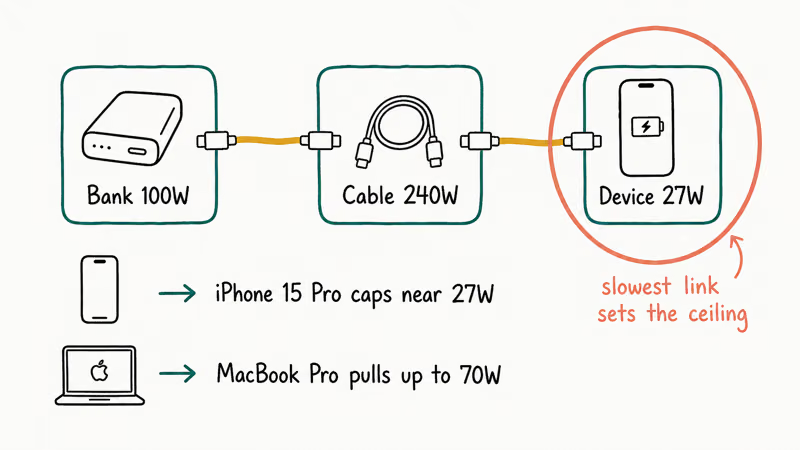
Phones cap low. Recent iPhones draw far less than laptop-class wattage on wired charging, so past the phone’s ceiling extra watts do nothing.
Laptops are the real reason to buy a high-wattage bank. A 14-inch MacBook Pro M3 can pull high wattage under load, and Apple’s power-adapter identification guide lists the 70W USB-C adapter among current Mac notebook chargers.
So a 65W bank charges most laptops, just slower when the processor spikes, while 100W keeps a larger MacBook full-speed.
For a deeper laptop-specific sizing walkthrough, see our best power bank for MacBook Pro guide. The same wattage logic applies to wall chargers, which our best GaN charger roundup covers in detail.
#Should You Buy a MagSafe or Qi2 Power Bank?
Qi2 is the open wireless standard built on Apple’s MagSafe magnets. In 2026 it’s the tier worth buying, because it guarantees a genuine 15W rather than the slower 7.5W of a basic pad.
One caveat trips up buyers. The newer Qi2.2 standard raises a bank’s rating to 25W, but the phone can negotiate less. Apple’s MagSafe support page lists 25W for iPhone 17, 17 Pro, 17 Pro Max, 16 Plus, and 16 Pro Max; 22.5W for iPhone 16 and 16 Pro; 20W for iPhone Air; and 15W for iPhone 17e plus iPhone 15 and earlier. On a 15W phone, a standard Qi2 bank delivers the same speed for less money.
Among current Qi2 picks, the Anker MagGo Slim 10K is the well-rounded brand-name choice, while the UGREEN MagFlow is the premium option with the strongest magnetic hold. As an Amazon Associate fone.tips earns from qualifying purchases. The Baseus PicoGo AM52 is the value Qi2.2 pick with a built-in cable.
For magnetic charging matched specifically to Apple phones, our best MagSafe power bank for iPhone guide goes deeper.
#The Top Power Bank Picks for 2026
These picks are grouped by job, not rank. A magnetic phone bank and a laptop brick serve different buyers.
For pocket wireless charging, the Anker MagGo Slim 10K is the safe all-rounder. It’s Qi2-certified at 15W, slim enough to vanish in a pocket, and Anker’s ActiveShield safety system manages heat well in daily use.
For a cable-free bag with real capacity, the Anker 20K with built-in USB-C is the everyday travel pick. You get 20,000mAh, up to 87W on the attached cable, and enough headroom for a phone plus a light laptop top-up without hunting for a spare wire. For the full cable-style comparison, see our best power bank with built-in cable guide.
For maximum power, the Anker Prime is the most capable bank you can buy. It packs 27,650mAh and pushes up to 250W total across three ports, with a 140W single-port output that charges even a 16-inch MacBook Pro at full tilt. Its 99.75Wh rating keeps it just under the airline limit. For a travel-tuned alternative, see our best power bank for international travel picks.
For laptop value, the UGREEN Nexode delivers high-wattage USB-C charging at a friendlier price than the Prime.
#How to Compare These Power Banks
Compare by job first: phone pocket carry, tablet travel, or laptop backup. Capacity, wattage, and heat decide the rest. None of these are paid placements.
#The 2026 Airline Rules for Power Banks
The carry-on math is simple once you convert units. Watt-hours equal milliamp-hours divided by 1,000, multiplied by voltage, which is usually 3.7V for lithium-ion. That makes a 10,000mAh bank roughly 37Wh and a 27,000mAh bank just under the 100Wh ceiling.
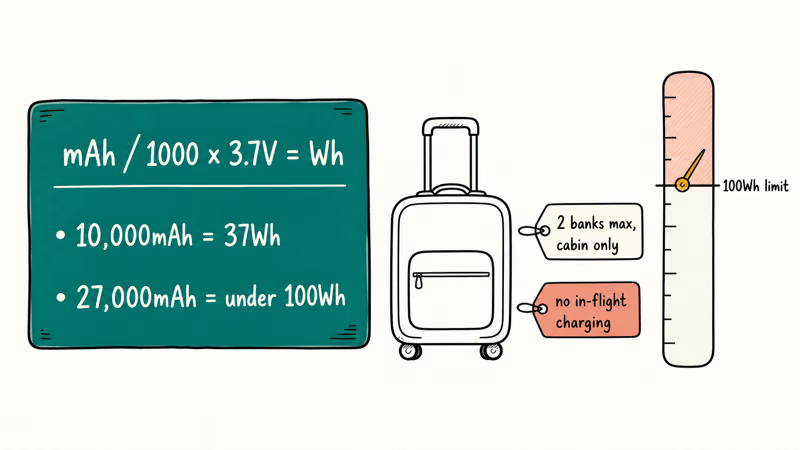
The rules tightened in 2026. According to the Lufthansa Group’s power bank policy update, banks must travel in the cabin, never in checked baggage. Each bank must stay at or under 100Wh without airline approval, banks between 100Wh and 160Wh need prior approval, and anything over 160Wh is banned.
Two newer limits catch travelers off guard. Most carriers now cap passengers at two power banks in the cabin, and many ban charging the bank or using it to charge devices during the flight. United now requires banks to stay on your person or in an under-seat bag rather than the overhead bin. Always confirm your specific airline’s policy before flying, since these rules are still changing through 2026.
#Bottom Line
For phone-only days, grab the Anker MagGo Slim 10K.
If you also top up a tablet, Switch, or light laptop on the same trip, step up to the Anker 20K built-in USB-C.
Carry a 14-inch or 16-inch MacBook Pro? Use the Anker Prime for its 140W single-port output. Buyers on older iPhones should skip pricier Qi2.2 banks, since an iPhone 12 through 15 can’t use the 25W wireless ceiling anyway. Whatever you choose, keep the pack under 100Wh so it clears airport security without paperwork.
#Frequently Asked Questions
How many mAh do I need to charge my phone fully?
Most modern phones hold a 4,000mAh to 5,000mAh battery, so a 10,000mAh bank gives close to two full recharges after conversion losses. If you only need a daily top-up, a 5,000mAh bank is enough and far lighter.
Does a higher-wattage power bank charge my phone faster?
Only up to your phone’s cap. An iPhone 15 Pro tops out near 27W, so a 100W bank charges it no faster than a 30W bank does.
What is the difference between Qi2 and Qi2.2 power banks?
Qi2 delivers a 15W magnetic tier, while Qi2.2 raises the bank’s possible output to 25W. Apple lists 25W only for iPhone 17, 17 Pro, 17 Pro Max, 16 Plus, and 16 Pro Max; other current models negotiate 22.5W, 20W, or 15W according to the phone.
What size power bank can I bring on a plane in 2026?
The carry-on limit is 100Wh, roughly a 27,000mAh bank at 3.7V. Most airlines now allow two per passenger, cabin only.
Can I charge my power bank during a flight?
On many major carriers in 2026, no. Several airlines now ban charging a power bank from seat USB ports and ban using one to charge devices in flight, so charge it before you board and confirm your airline’s current policy.
Is a 20,000mAh power bank too big to carry every day?
For most people, yes. A 20,000mAh bank is heavier than a daily phone needs, so it suits travel, tablets, or laptops instead.
Do power banks lose capacity over time?
Yes, like any lithium-ion battery, a power bank slowly loses usable capacity as it ages. Charge cycles and heat are the two biggest factors, and a bank that lives in a hot car fades faster than one kept at room temperature. You can slow the decline by avoiding repeated drains all the way to zero. Most quality banks still hold a useful charge several years in.

Best Laptop for Running LLMs in 2026: Memory Comes First
The best laptop for running LLMs is a memory purchase first. Compare MacBook unified memory against NVIDIA laptop VRAM, and see what each tier really runs.
Pixel 11 vs Pixel 10: What Changed and Who Should Upgrade
Pixel 11 vs Pixel 10: same screen and camera resolution, new Tensor G6, 25W wireless, and Gemini Intelligence. Here is who should actually upgrade.
Best Power Bank for iPad in 2026: Pro, Air, and Mini
Best power bank for iPad in 2026. Compare mAh tiers and USB-C PD wattage for iPad Pro, Air, and mini, plus airline Wh math, cables, and travel tips.
Best Power Bank With Built-In Cable: Top 2026 Picks
Best power bank with built-in cable picks for 2026. Compare single USB-C, multi-connector, and retractable laptop banks, plus airline Wh math.