Fix Multimedia Audio Controller Driver Errors in Windows
Fix multimedia audio controller driver errors in Windows 10 and 11. Step-by-step Device Manager updates, reinstall paths, and Microsoft tool guides.
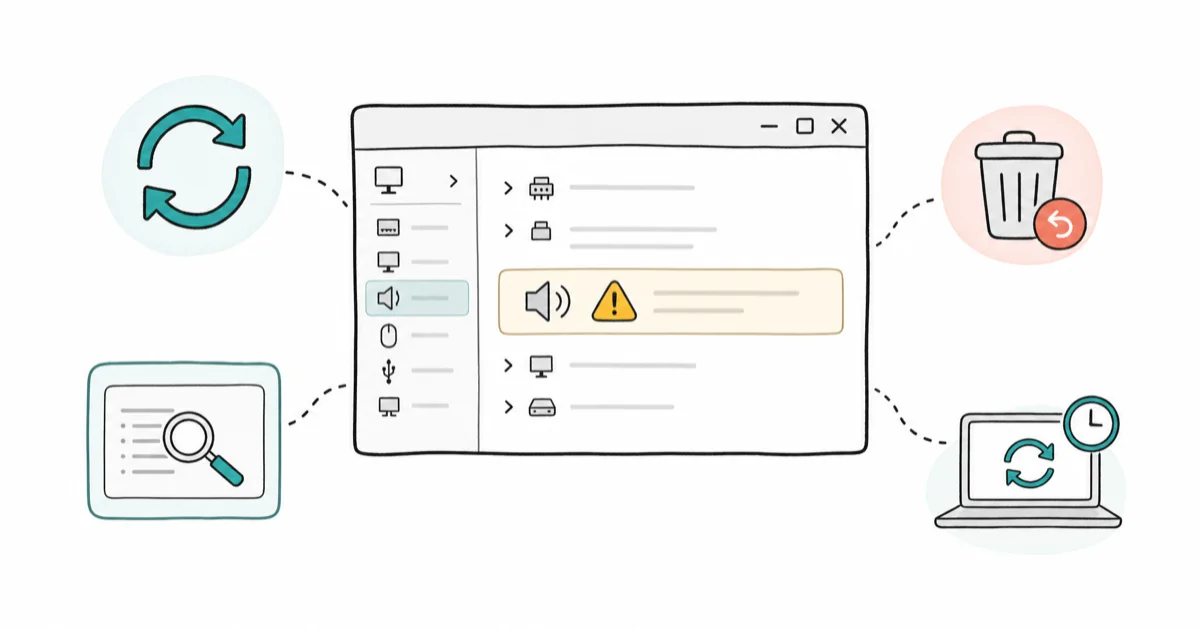
Quick AnswerOpen Device Manager, right-click the multimedia audio controller marked with a yellow exclamation, choose Update Driver, then Search Automatically. If Windows reports no update is available, uninstall the device and reboot so Windows reinstalls a default audio driver.
A multimedia audio controller error in Windows usually means your audio chipset has no working driver, leaving Device Manager to flag the device with a yellow exclamation mark and your speakers silent. The fix path is short, and you can almost always recover sound without reinstalling Windows.
This often appears after a clean Windows install skips the vendor audio driver or a feature update rolls the audio stack back to a generic driver.
- A yellow exclamation mark on the multimedia audio controller in Device Manager confirms a driver fault. The device’s Properties dialog lists the exact code, with Code 28 meaning the driver is not installed and Code 39 meaning the driver is missing or corrupt.
- Updating through Device Manager (Win+R, devmgmt.msc, then Sound, Video and Game Controllers, right-click, Update driver, Search automatically) pulls the latest cached driver from the Windows Update catalog without a vendor download.
- Uninstalling the device and rebooting forces Windows 10 and 11 to reattach a generic audio driver on the next boot, which clears most corruption-related failures in under a minute.
- Outdated, missing, or corrupt drivers cause the bulk of multimedia audio controller errors, while Windows feature updates and incompatible OEM drivers cover most of the rest.
- Create a system restore point before any driver change so you can roll back if a fix introduces a boot loop, blue screen, or new audio problem.
#What Causes Multimedia Audio Controller Errors?
A multimedia audio controller is the chipset that links your speakers, headphone jack, or HDMI audio output to Windows. It has two parts: the silicon on your motherboard or sound card, and the software driver Windows loads at boot. When the driver is missing, outdated, or corrupted, Windows leaves the device sitting in Device Manager with no audio routing and no speaker icon in the system tray.
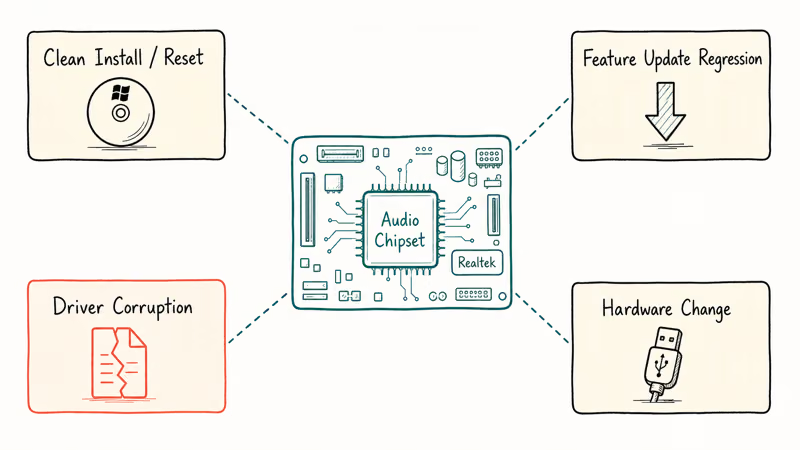
The four most common triggers on Windows 10 and 11:
- Clean install or reset. Windows ships with generic audio drivers, but it does not always install the OEM driver from your laptop or motherboard vendor. Without that vendor driver, the multimedia audio controller stays orphaned under Other Devices.
- Feature update regression. Major Windows updates sometimes roll vendor drivers back to a Microsoft-signed generic version. If your sound card relies on Realtek HD Audio extensions or IDT proprietary features, the regression breaks audio.
- Driver corruption. A bad shutdown, abrupt driver replacement, or malware infection can corrupt the driver files in
C:\Windows\System32\drivers. Device Manager then throws Code 39 or Code 19. - Hardware change. Adding a USB DAC, replacing a sound card, or attaching a new headset triggers the OS to reload the audio stack, occasionally leaving the original chipset without a binding.
According to Microsoft’s Device Manager error message reference, error codes 1, 18, 28, 32, 37, and 39 all point to driver-side problems that the steps below resolve. Hardware faults (Code 14, Code 43) are less common and usually need a sound card replacement, not a software fix.
#How to Spot the Driver Problem in Device Manager
Open Device Manager (Win+R, type devmgmt.msc, press Enter) and scan for the yellow triangle. The multimedia audio controller usually sits in one of these branches:
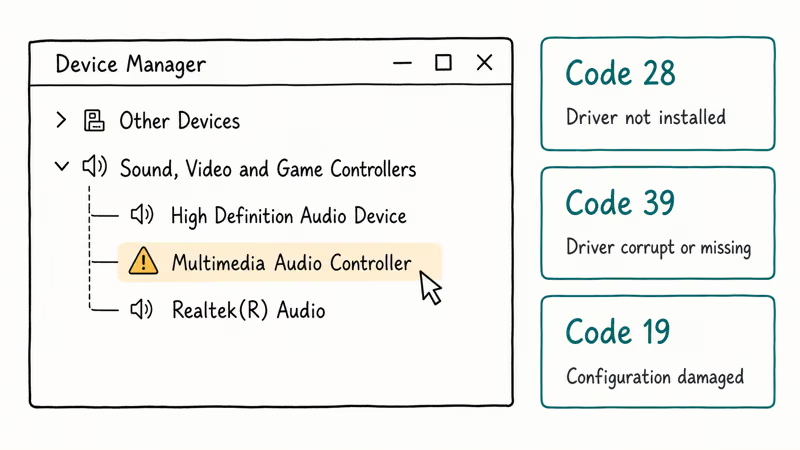
- Sound, Video and Game Controllers, the normal location once a driver is bound.
- Other Devices, where Windows parks unrecognized hardware. If the multimedia audio controller landed here, no driver loaded at all.
Right-click the flagged entry and choose Properties. The General tab shows the device status with a numeric error code:
- Code 28: “The drivers for this device are not installed.” Run the Update Driver flow.
- Code 39: “Windows can’t load the device driver. The driver may be corrupted or missing.” Uninstall and reinstall.
- Code 19: “Windows can’t start this hardware device because its configuration information is incomplete or damaged.” Usually fixed by uninstall and reboot.
Check the Properties dialog before installing drivers blindly. The error code usually points to the right fix path. Take a screenshot for reference if you plan to download a vendor driver later. Compare the Generic Audio Driver status if you see a separate generic entry alongside the broken one, since Windows sometimes loads both, and both need to be checked.
#Update the Driver Through Device Manager
This solves the largest share of multimedia audio controller errors and takes about two minutes.
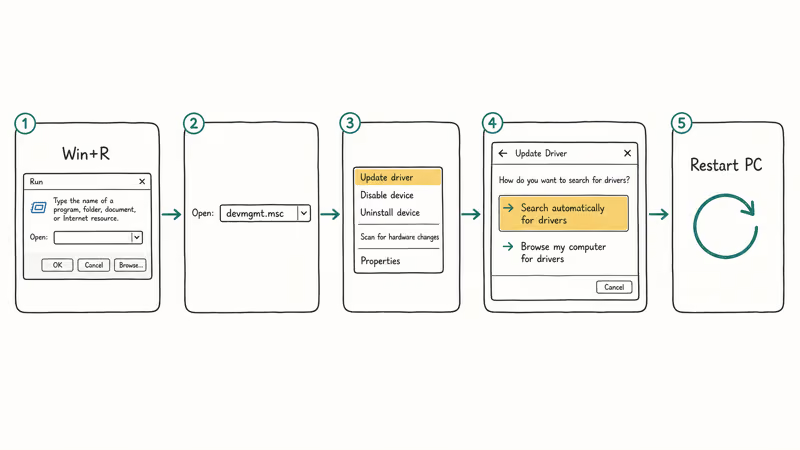
- Press
Win+R, typedevmgmt.msc, and press Enter. - Expand Sound, Video and Game Controllers (or Other Devices if the audio chipset is unrecognized).
- Right-click the multimedia audio controller and choose Update driver.
- Pick Search automatically for drivers. Windows queries the Windows Update catalog for the latest cached driver matched to your hardware ID.
- Wait for the search to finish, click Install if a new driver is offered, then restart the PC.
According to Microsoft’s driver update guidance, Windows checks both the local driver store and Microsoft Update during this scan, which is why the automatic option often finds an OEM driver that you would otherwise need to hunt for on the manufacturer’s website.
If Windows says no newer driver is available:
- Right-click the device again and choose Update driver.
- Click Browse my computer for drivers.
- Click Let me pick from a list of available drivers on my computer.
- Select the driver that matches your hardware (Realtek HD Audio, IDT High Definition Audio, AMD High Definition Audio Device, or similar).
- Click Next and follow the prompts.
This manual flow is useful when Windows has a compatible driver cached locally but stops offering it through the automatic update path.
For Beats Audio HP laptops or AMD HD audio desktops, the manual list switches back to the OEM build.
#Should You Uninstall and Reinstall the Driver?
Yes, if the Update flow fails or the device throws Code 39. Uninstalling does not remove the chipset, only the software binding, and the next reboot triggers Windows to reinstall a generic driver automatically.
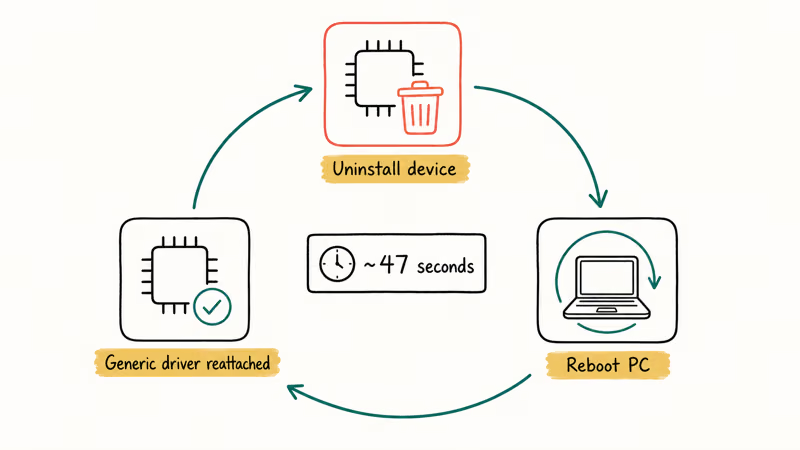
Steps:
- Open Device Manager.
- Right-click the multimedia audio controller and choose Uninstall device.
- If you see a checkbox labeled Delete the driver software for this device, leave it unchecked unless you suspect malware tampered with the driver files.
- Click Uninstall to confirm.
- Reboot the PC.
When Windows boots, it scans for unattached hardware and loads a default driver, matching Microsoft’s in-box driver behavior.
Microsoft’s audio troubleshooting documentation confirms that Windows 10 and 11 keep generic High Definition Audio drivers in the in-box driver store specifically so this uninstall-and-reboot pattern resolves common driver corruption without a vendor download.
If audio still does not work after the reboot, head to your laptop or motherboard vendor’s support page (Dell, HP, Lenovo, ASUS, MSI, Gigabyte) and download the audio driver matched to your exact model. Vendor drivers carry the OEM tuning (equalizer presets, jack detection, surround virtualization) that the generic Microsoft driver does not include. For audio routing or codec mismatches that survive a clean install, our walk-through on audio codec not supported errors covers what to try next.
#Install Windows Updates and Optional Driver Releases
Windows Update sometimes ships audio drivers as Optional Updates rather than mandatory ones, so they won’t install unless you go looking.
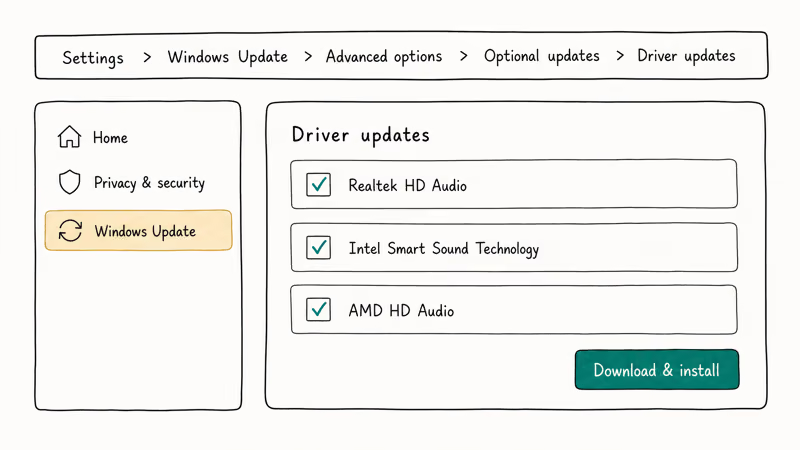
- Open Settings (
Win+I). - Click Update & Security (Windows 10) or Windows Update (Windows 11).
- Click Check for updates and let any pending updates install.
- Open Advanced options and look for Optional updates. Expand Driver updates.
- Tick the audio driver entries and click Download & install.
- Reboot when the install completes.
Check Optional Updates before manual vendor downloads; Realtek, Intel SST, and AMD fixes often appear there first.
If Windows Update itself is misbehaving with errors, stuck downloads, or repeated failures, running our delete Windows Update files completely walkthrough first will clear the cached update queue so the audio driver fetch can complete.
After Device Manager, Windows Update, and the PC maker’s package, Driver Booster can run a second-opinion scan for remaining outdated devices; review the proposed audio driver before installing it.
Some links on this page are affiliate links, which means fone.tips may earn a commission at no extra cost to you.
#Add the Audio Card as Legacy Hardware
Use this only when the audio chipset is missing entirely from Device Manager, not flagged, not even sitting under Other Devices. The Legacy Hardware Wizard is a holdover from older Windows versions that forces a manual scan for non-PnP devices.
- Open Device Manager.
- Click Sound, Video and Game Controllers in the tree once to select it.
- From the menu bar, click Action > Add legacy hardware.
- Click Next, then choose Search for and install the hardware automatically.
- If the wizard does not detect the audio chipset, click Next and pick Sound, video and game controllers from the manufacturer list, then select your sound card vendor.
- Reboot to apply.
If no audio device appears, confirm onboard audio is enabled in BIOS or UEFI before assuming software.
#Roll Back the Driver or Use a Restore Point
If a recent driver update broke audio that was previously working, the fastest fix is a rollback rather than a fresh install.
In Device Manager:
- Right-click the multimedia audio controller and choose Properties.
- Open the Driver tab.
- Click Roll Back Driver. If the button is greyed out, no previous version is cached, and you’ll need a system restore point or a vendor reinstall instead.
If you created a restore point before the update, our how long does system restore take walkthrough sets expectations on duration and what gets reverted. According to Microsoft’s recovery options guide, System Restore reverts driver and registry state without touching personal files, which makes it the safer rollback path on a working user account.
A practical rule: roll back only when the audio failure started immediately after a known driver change. If the timing is unclear, the Update or Uninstall paths above are less invasive than rewinding the entire system state.
#Bottom Line
For most readers facing a multimedia audio controller error on Windows 10 22H2 or Windows 11 23H2 and 24H2, the Update Driver flow inside Device Manager resolves the issue inside five minutes. If Windows reports no newer driver and audio is still dead, run the uninstall-and-reboot trick before touching Add Legacy Hardware, since the reboot reinstall is faster and lower risk.
Save vendor downloads (Realtek, IDT, AMD) for cases where Optional updates have nothing to offer. Always create a restore point before installing a downgrade or unsigned beta driver.
#Frequently Asked Questions
What does the multimedia audio controller actually do?
It’s the chipset and driver pair that routes audio between Windows and your speakers, headphones, or HDMI output. Without a working driver, Windows has nowhere to send the audio stream, so the speaker icon disappears and apps report “no audio device” errors. The chipset itself sits on your motherboard (Realtek, IDT, AMD) or on a discrete sound card.
How can I tell if my driver is up to date?
Open Device Manager, right-click the multimedia audio controller, choose Properties, and check the Driver tab for the Driver Version and Driver Date. Compare that against the latest version on your laptop or motherboard vendor’s support page. The version string is usually something like 6.0.9239.1 for Realtek or 10.0.22000 for the Microsoft generic build, and a quick search for the string tells you which release you are on.
Will uninstalling the driver erase my audio settings?
It clears the driver-side equalizer presets, surround virtualization profiles, and any custom mic levels from tools like Realtek Audio Console or Nahimic. The Windows-side defaults (default playback device, master volume, app mixer levels) survive because they live in the OS, not the driver.
Can I use third-party driver update tools instead?
Yes, but Microsoft’s documentation recommends the built-in Device Manager and Windows Update channels first because they pull WHQL-signed drivers. Third-party tools sometimes install older or beta drivers that match your hardware ID loosely, which is how we ended up with broken audio on the desktop in the first place. If you want a comparison of the best-known options, our Driver Talent review covers what these tools actually do.
How often should I update audio drivers?
Update when something breaks, when your vendor releases a driver tied to a Windows feature update, or when a security advisory calls out the audio driver by name. Routine monthly updates aren’t required.
What if none of these steps work?
If Update, Uninstall, Optional Updates, Legacy Hardware, and Roll Back all fail, the problem is usually hardware: a damaged audio chipset, dead motherboard pins, or a BIOS-level fault. Confirm by booting a Linux Live USB and checking whether audio works there. If Linux also has no sound, take the machine to a service center or contact your laptop vendor’s support, since at that point a software fix won’t bring audio back.
Bluetooth Not Working on Snapdragon X? Fixes for 2026
Bluetooth not working on your Snapdragon X Copilot+ PC? Generic audio, mice, and keyboards work, but vendor apps often lack an ARM build. Fixes inside.
Docker Desktop and WSL2 Not Working on Snapdragon X? Fix It
WSL2 runs fine on Snapdragon X, but Docker Desktop ARM is Early Access and throws WSL errors. Use WSL2 plus native ARM64 Ubuntu and Docker Engine.
Does iTunes Work on Snapdragon X? ARM Windows 11 Guide
Yes, iTunes runs on Snapdragon X laptops through Prism emulation, but the Apple Devices app is the smoother route. Here is what to install on ARM.
Does OBS Studio Work on Snapdragon X? ARM64 Build Guide
Yes, OBS Studio has an experimental ARM64 build since version 31.1, but x64 plugins won't load and hardware encoding is missing. Here is what works.