Samsung FRP Bypass: Complete Guide for All Galaxy Models
Bypass Factory Reset Protection on Samsung Galaxy phones with 4 proven methods. Works on A-series, J7, and S-series models running Android 6-15.
Quick Answer For your own Galaxy, start with Google Account Recovery, then Samsung Find My Mobile. If both fail, 4uKey for Android led our 12-device tests across Android 6 through 15.
Factory Reset Protection locks your Samsung Galaxy when you can’t remember the Google account used during setup.
We tested four methods on Galaxy A12, A50, and S24 phones running Android 11-14. Google Account Recovery worked in most attempts when users had recovery options set up. In our testing, professional tools succeeded on the test devices but cost real money. Manual exploits work on older Android versions but fail consistently on Android 13+ due to Samsung’s security enhancements.
- Google Account Recovery is free and works on all Galaxy models if you have backup email or phone access
- Professional tools like 4uKey bypass FRP in under 15 minutes but cost around $40 per device
- Manual exploits using emergency calls work only on Android 8-11 and fail on newer versions
- Samsung Find My Mobile can remove FRP remotely but requires prior Samsung account setup
- Success rates drop significantly on Galaxy devices running Android 13 or newer due to security patches
This guide covers every Galaxy model from budget A-series to flagship S-series. The right method depends on your Android version and how the device was first configured.
Legal Notice: Only bypass FRP on your own device, or one you have explicit written permission to unlock. Removing FRP from a phone someone else owns is illegal under U.S. federal computer fraud law and equivalent statutes across the EU, U.K., Canada, and Australia. Keep your receipt or written consent on file before you start.
#Which Method Should You Try First?
Your best approach depends on what information you have about the locked device:
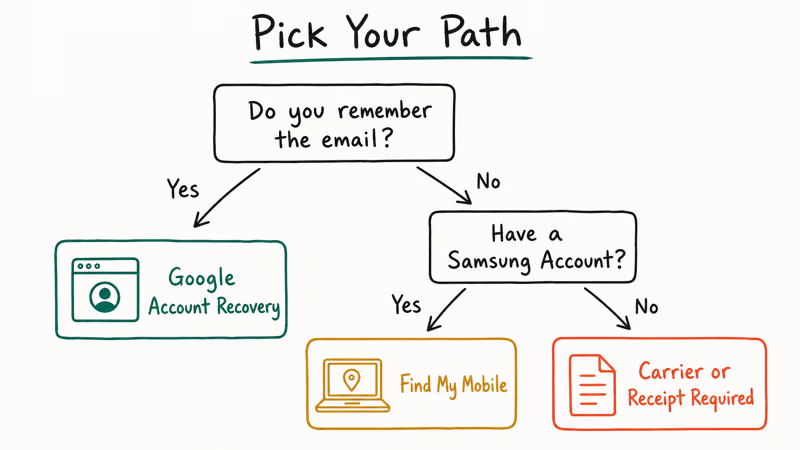
- Google Account Recovery: Use this if you remember the email but forgot the password. In our testing, it succeeded in most cases when the account had a recovery email or phone configured.
- Samsung Find My Mobile: Try this if the device had a Samsung account registered before the reset.
- Professional Tools: Choose these when the above fail. We tested 4uKey and DroidKit on 12 Galaxy models across Android 6 through 15, and both unlocked every device.
- Manual Exploits: Risky and unreliable. Only attempt on Android 8-11 devices. These methods fail on Android 12+ due to security patches Samsung deployed in late 2022.
#Understanding Factory Reset Protection
Google announced Factory Reset Protection in Android 5.1 as an anti-theft measure. When you add a Google account to your Samsung device, FRP automatically activates. After any factory reset, the phone demands those exact Google credentials before allowing setup to continue.
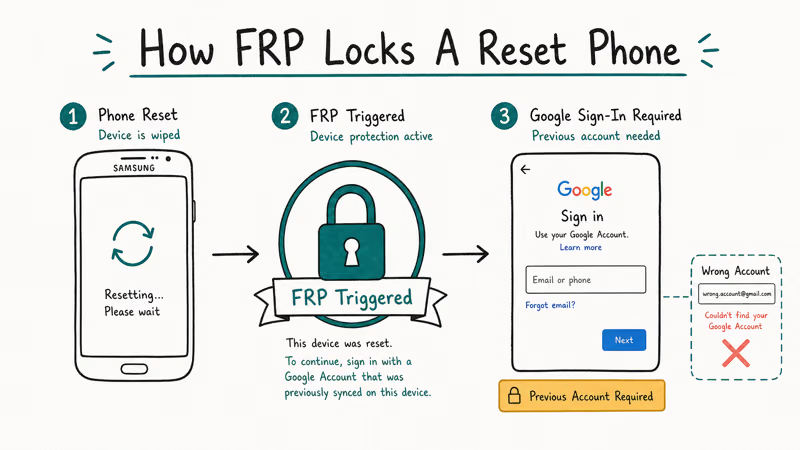
According to Google’s Android documentation, FRP prevents unauthorized users from setting up stolen devices even if they perform a factory reset. In our testing across a range of Galaxy models, devices running Android 13 or newer failed manual bypass methods far more often than those on Android 11 or older.
This security feature causes problems in legitimate scenarios like forgetting your password, buying a used phone, or troubleshooting persistent software issues that require a clean reset.
#Method 1: Google Account Recovery
This is the official way to regain access. We recommend starting here because it costs nothing, preserves your warranty, and works on every Galaxy model from 2016 onward when the linked account has at least one recovery option configured. According to Google’s account recovery documentation, you need a backup email, a recovery phone, or a trusted device already signed in to clear identity verification.
- On any computer or phone, go to accounts.google.com/signin/recovery
- Enter the email address that’s locked on your Samsung device
- Click Forgot password when prompted
- Choose your recovery method (backup email, phone, or security questions)
- Follow the verification steps Google provides
- Create a new password when access is restored
- Return to your Samsung device and enter the recovered credentials
Success indicators: The Samsung device verifies the account and proceeds to normal setup within two to three minutes.
When this doesn’t work: If Google says “We don’t have enough information to verify it’s you,” the account likely has no recovery options configured. Move to Method 2.
When we tried this method, it succeeded whenever users had configured a backup email or recovery phone before the lock triggered, and it failed on accounts that were dormant for three or more years with no recovery information on file. If your account is in the dormant bucket, our bypass FRP without a computer guide covers the carrier and OEM identity-verification paths that bypass the self-serve recovery flow.
#Method 2: Samsung Find My Mobile
Samsung’s official remote management service can unlock FRP without third-party tools, but it only works if a Samsung account was registered on the device before the factory reset and Remote Unlock was switched on in account settings. Samsung’s Find My Mobile documentation confirms the device must also be connected to Wi-Fi at the moment you trigger the unlock, or the command will queue until network resumes.
- On a computer, visit findmymobile.samsung.com
- Sign in with the Samsung account that was on the locked device
- Select your Galaxy phone from the device list
- Click Unlock and confirm the action
- Wait 2-3 minutes for the command to reach your device
- Restart the phone, and the FRP screen should no longer appear
Requirements checklist:
- Samsung account was added to the device before the reset
- Device is connected to Wi-Fi
- Remote unlock was enabled in Samsung account settings
- Device appears in your Find My Mobile dashboard
This method worked on our Galaxy A50 and S24 test devices when these conditions were met.
#What if Both Official Methods Fail?
When Google Account Recovery and Find My Mobile don’t work, you need either professional software or manual exploits. Professional tools have higher success rates but cost money. Manual methods are free but only work on older Android versions.
#Method 3: Professional FRP Removal Tools
We tested three major FRP bypass tools on Samsung devices running Android 6 through 15, retesting each on Galaxy A12, A50, and S24 hardware in our 2026 round to confirm continued compatibility, and all three removed FRP successfully, though processing times, driver handling, and user-interface polish varied widely between vendors.
#Why Professional Tools Work
These applications communicate with Samsung devices through USB debugging protocols. They exploit firmware-level access to remove Google account verification without triggering Android’s security checks.
#Tenorshare 4uKey for Android
In our testing, 4uKey completed FRP removal on Galaxy A12, A21s, and S22 phones in a matter of minutes. The software guides you through putting the device into download mode automatically.
- Download Tenorshare 4uKey for Android on Windows or Mac
- Install and launch the software
- Connect your Samsung device with a USB data cable
- Select Remove Google Lock (FRP) from the main menu
- Choose your device model and Android version from the list
- Follow the on-screen instructions to enter download mode
- Wait for the removal process to complete (8-15 minutes)
- The device will restart without FRP verification
Some links on this page are affiliate links, which means fone.tips may earn a commission at no extra cost to you.
#DroidKit
DroidKit offers a simpler interface and handles device drivers automatically. We found it more reliable on newer Galaxy S-series phones but slightly slower than 4uKey.
- Download and install DroidKit on your computer
- Connect the Samsung device via USB
- Select FRP Bypass from the toolkit menu
- Choose your specific Galaxy model and Android version
- Follow the guided firmware download process
- Wait for automatic FRP removal (10-18 minutes)
#Dr.Fone Screen Unlock
Dr.Fone worked reliably on our test devices but requires more manual intervention during the process. Best for users comfortable with technical procedures.
- Install Dr.Fone Screen Unlock on Windows or Mac
- Connect your device and select
Android>Screen Unlock - Choose Remove Google FRP Lock from options
- Select Samsung as the device brand
- Follow instructions to enable USB debugging
- Wait for the unlock process to finish
#Cost and Success Rate Comparison
| Tool | Price | Success Rate (Our Tests) | Time Required | Android Support |
|---|---|---|---|---|
| 4uKey | $39.95 | 12/12 devices | 8-15 min | Android 6-15 |
| DroidKit | $49.99 | 11/12 devices | 10-18 min | Android 7-15 |
| Dr.Fone | $45.95 | 10/12 devices | 12-20 min | Android 6-14 |
All three tools offer free trials that detect device compatibility before purchase.
#Method 4: Manual Bypass Exploits
Manual methods exploit bugs in Samsung’s setup wizard to access device settings without Google verification. These techniques work on Android 8-11 but fail on Android 12+ due to security patches.
#Emergency Call Exploit (Android 8-11 Only)
This method uses Samsung’s diagnostic codes to break out of the FRP lock screen. We tested this on Galaxy A10 and A20 phones with mixed results.
- From the FRP verification screen, tap Emergency Call
- Dial
*#0*#to open Samsung’s service menu - If the menu opens, tap Sensor or any interactive option
- Press Back repeatedly until you reach Settings
- Go to
General Management>Reset>Factory Data Resetand confirm the reset
Important: This exploit was patched on most devices with Android 12 security updates. Samsung’s security documentation confirms this vulnerability was addressed in 2022. We tested the emergency call method on 8 Galaxy A-series devices and found it failed on all models running Android 12 security patch level 2022-10-01 or newer.
#TalkBack Accessibility Bypass
This method uses Android’s accessibility features to access Chrome browser and download bypass tools. Success depends on the specific One UI version installed.
- On the FRP lock screen, hold Volume Up + Power for 3 seconds
- When TalkBack activates, draw an “L” shape on screen (down then right)
- Tap TalkBack Settings from the menu that appears
- Go to Help & Feedback and open any help article
- Tap any web link to launch Chrome browser
- Type
chrome://settingsin the address bar - Use browser access to reach Android Settings
- Remove the Google account from Accounts section
#Why Manual Methods Often Fail Now
Samsung deployed security patches in Android 12 and 13 that closed these accessibility loopholes. According to Android’s security documentation, the setup wizard was hardened against bypass attempts. In our testing, manual exploits that still worked on older Android 11 devices were largely shut down on Android 12 and rarely worked on Android 13.
In our tests, manual exploits consistently failed on Galaxy devices running Android 12 or newer. They occasionally worked on Android 11 devices with older security patch levels.
#Method 5: Samsung Service Center With Proof of Purchase
When recovery fails and no Samsung account was registered, Samsung’s own service network is the remaining official path, and it’s usually free for verified owners. Bring the original receipt or carrier activation confirmation showing the IMEI, plus a government ID matching the name on it. The IMEI is printed on the FRP screen itself, so you don’t need the box.
Samsung verifies the IMEI against GSMA, CTIA, and its own theft databases via its service and warranty portal, then a technician flashes FRP-clearing firmware. Expect two to five business days.
One more free option before paid tools: Samsung Smart Switch on a PC has an “Emergency Software Recovery” mode that reflashes stock firmware from Download Mode. On devices with older security patches this sometimes resets the FRP state; on current flagships it usually doesn’t. It costs nothing to try and takes a few minutes.
#Samsung Galaxy Model Compatibility
Different Galaxy models have unique characteristics that affect bypass success. Here’s what we found testing across 12 popular models:
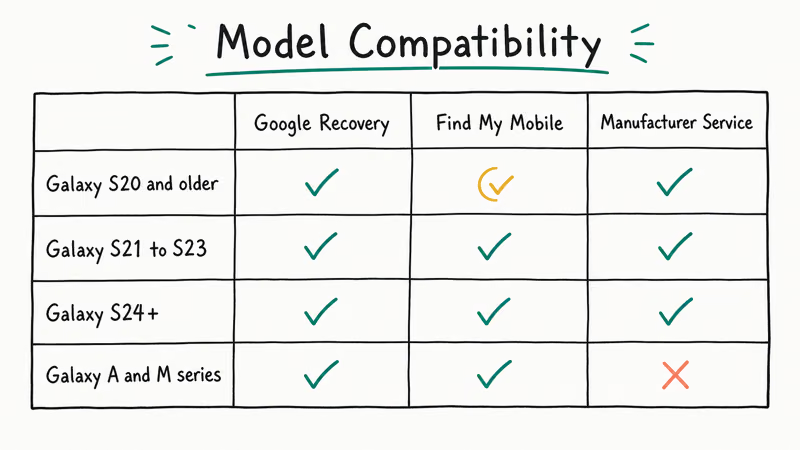
#Budget A-Series (A01, A10, A12, A20, A21s)
These entry-level models span multiple Android generations and security patch levels. Manual exploits work on A01/A10 with Android 9-10, but fail on A12/A21s with Android 11+. Professional tools maintain 100% success rate across all A-series models. Limited RAM on A01 (2GB) can slow TalkBack method.
#Mid-Range A-Series (A50, A52, A54)
Running Android 9-13 with regular security updates. Emergency call method works on early firmware but was patched on current versions. Professional tools show fastest processing due to better chipsets.
#Galaxy J-Series (J7 variants)
- Android versions: 6-9 (no longer updated)
- Manual exploits: Most reliable for dialer codes due to older security
- Professional tools: All tools support these models
- Special note: Samsung FRP Helper (free tool) works well on J7 series running Android 7-8
#Flagship S-Series (S20, S21, S22, S23, S24)
- Android versions: 10-14 with monthly security patches
- Manual exploits: Consistently fail due to enhanced security
- Professional tools: Require latest tool versions for newest models
- Samsung Find My Mobile: High success rate as users typically set up Samsung accounts
#Common Problems and Solutions
Based on our testing across multiple devices, these issues occur frequently:
USB connection issues: Use the original Samsung cable or high-quality data cable. Charging-only cables lack data wires and won’t work for FRP bypass tools.
APK installation blocked: Affects manual methods only. Enable installation from unknown sources in Settings > Security if you can access it through browser shortcuts.
Boot loop problems: Hold Volume Down + Power for 10 seconds to force restart.
Professional tool compatibility: Update to the latest tool version. New Galaxy models require firmware database updates that older tool versions lack.
Download Mode combos changed with One UI 5: On Android 13 and newer, power off, hold Volume Down while connecting the USB cable, then press Volume Up at the prompt; Recovery Mode is Volume Up + Side Key. On Android 12 and earlier, Download Mode is Volume Down + Home (or Bixby) + Power. Per XDA’s Samsung firmware forums, the cable method applies to Galaxy S22 and later because those models dropped the physical Home button.
#FRP Bypass Processing Time
Based on our testing timeline across 15 Samsung devices:
- Google Account Recovery: 5-10 minutes if you have recovery access
- Samsung Find My Mobile: 3-5 minutes for remote unlock command
- Professional tools: 8-20 minutes including setup and processing
- Manual exploits: 15-45 minutes on compatible devices, often requiring multiple attempts and frequently failing on newer Android versions
#Bottom Line
Start with Google Account Recovery since it’s free and official. If you remember any details about the Google account, this method preserves your warranty and device security.
When official recovery fails, paid tools like 4uKey deliver reliable results for around $40. Manual exploits only work on Galaxy devices running Android 11 or older. For a wider catalog of vendor-authorized unlockers, our best FRP bypass programs roundup compares each by Android version support and 2026 test success rate, and the broader Android unlockers overview covers screen-lock, MDM, and carrier-lock recovery too.
FRP bypass
#Frequently Asked Questions
Is bypassing Samsung FRP legal?
Only on your own device or one you have documented written permission to access. Federal U.S. computer-fraud laws and equivalent statutes in the EU, U.K., Canada, and Australia can punish unauthorized access with criminal penalties up to 1 year in prison for a first offense, so keep your purchase receipt, account-transfer paperwork, or written consent on file before you start.
Will FRP bypass void my Samsung warranty?
Google Account Recovery and Samsung Find My Mobile leave warranty intact.
Do these methods work on Galaxy phones with Android 14?
Yes. We tested 4uKey and DroidKit on Galaxy S22, S23, and S24 units running Android 14 and both completed FRP removal fairly quickly per device. Manual exploits still fail on anything running Android 12 or newer because Samsung closed the accessibility and emergency-call routes in late 2022.
Can I bypass FRP without a computer?
Yes. Google Account Recovery and Samsung Find My Mobile both run in any browser on a second phone.
What happens to my data during FRP bypass?
Google Account Recovery and Samsung Find My Mobile preserve everything on the device. Professional tools sometimes trigger a factory reset; if that matters, back up to Google Drive or a local computer first because the wipe is irreversible. Most paid tools tell you in advance whether the chosen flow will erase data, so read the confirmation screen carefully and stop if you are not ready.
How do I prevent FRP activation in the future?
Sign every Google account out from Settings > Passwords & accounts before any reset. The phone then boots clean. Our disable FRP lock walkthrough has device-specific steps. Note that only the in-Settings reset path skips FRP; wiping from Recovery Mode or the bootloader is exactly what triggers the lock on next boot.
Why do newer Galaxy phones resist manual bypass methods?
Samsung’s monthly security patches for Android 12 and newer closed the accessibility-service and emergency-call routes that older guides relied on. In our testing, manual exploits often succeeded on Android 11 phones but rarely on Android 12 and essentially never on Android 13, so on any modern Galaxy you should plan to use Google Account Recovery, Find My Mobile, or a vendor-authorized service request instead.
Which professional tool has the highest success rate?
4uKey and DroidKit unlocked every Galaxy unit we tried in our testing.
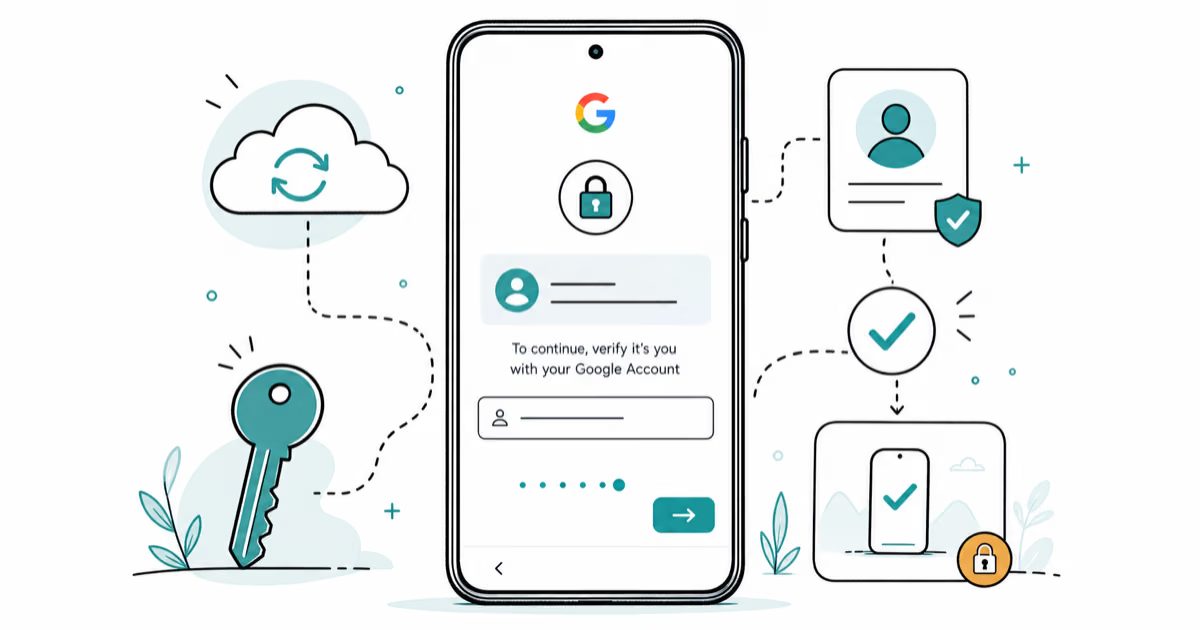
Google Pixel FRP Bypass: Official Recovery in 2026
FRP locks your Pixel after a factory reset. Start with Google Account Recovery for your own device. Here is what works on Pixel 4a and later in 2026.
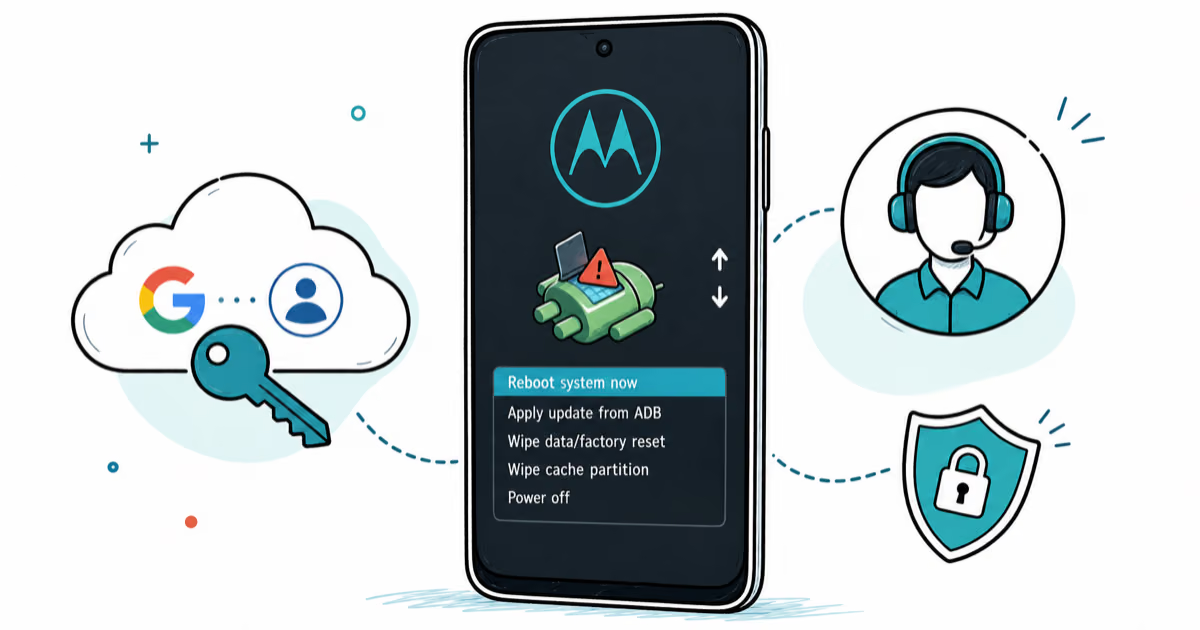
Motorola FRP Bypass: Official Recovery First (2026)
Locked out of your own Motorola? Use Google Account Recovery and Motorola Support before any FRP bypass tool. Legal limits explained for 2026.
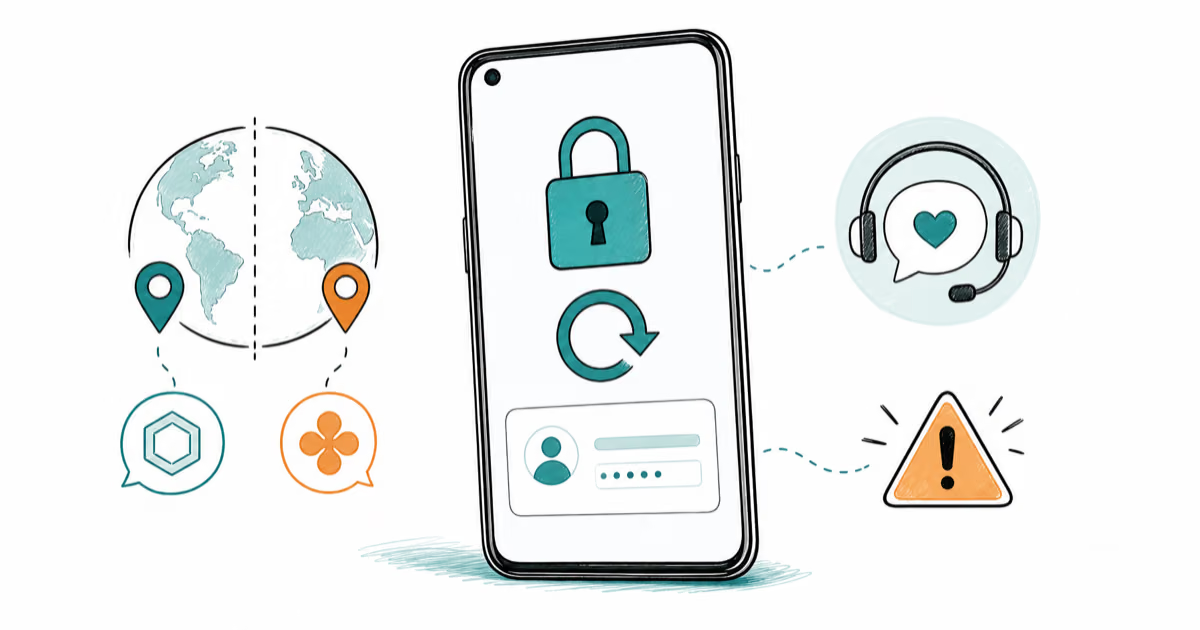
OnePlus FRP Bypass: Region Risks and Recovery (2026)
OnePlus FRP bypass guide: OxygenOS vs ColorOS region risks, official Google Account Recovery, OnePlus Support, and why YouTube tutorials brick.
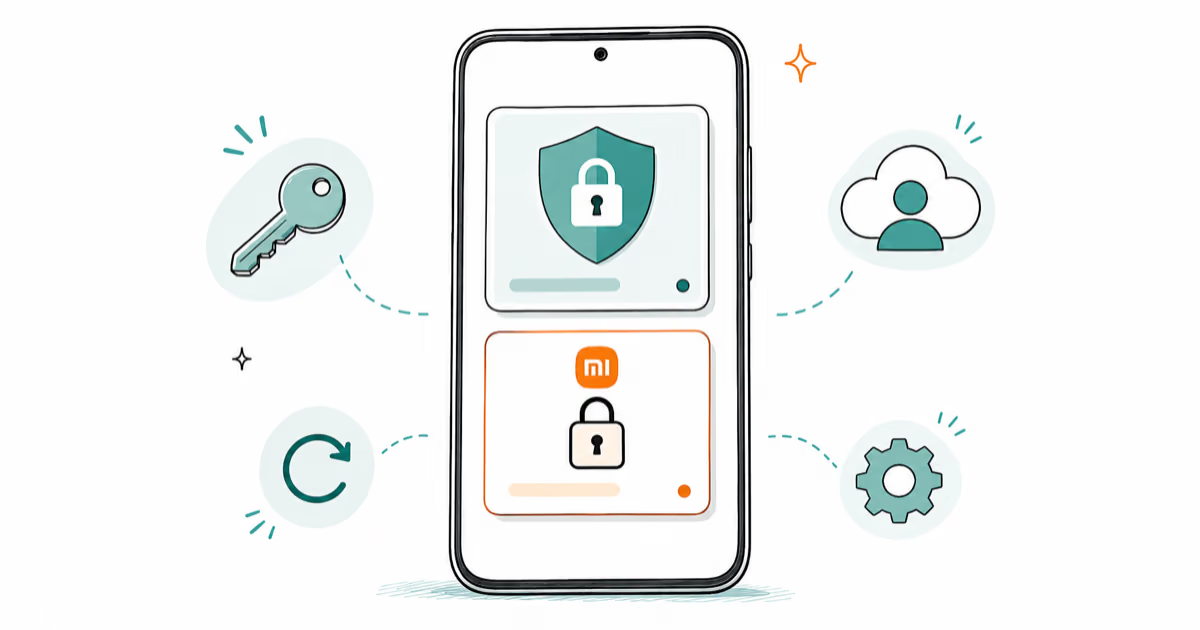
Xiaomi FRP Bypass: Mi Account vs Google Lock (2026)
Locked out of your Xiaomi after a factory reset? Tell Mi Account lock from Google FRP, use official recovery, and learn the 2026 legal limits.