iPogo for iOS in 2026: Is It Safe or Will You Get Banned?
iPogo spoofs GPS in Pokemon Go on iOS. Read Niantic ban risks, the three-strike system, install reality check, and safer alternatives for 2026.
Quick AnsweriPogo is a modified Pokemon Go client for iOS that adds GPS spoofing and automation. Using it on your own account violates Niantic Terms of Service and triggers a three-strike ban system that ends in permanent termination.
iPogo is a third-party modified Pokemon Go client for iOS that adds GPS spoofing, auto-catch, and teleportation features Niantic explicitly forbids. This guide covers what iPogo does, why your account is what you’re risking, and which official Niantic tools handle the same use cases.
- iPogo bundles GPS teleportation, virtual-joystick walking, auto-catching, auto-spinning, and IV overlays into one modified Pokemon Go client
- Niantic’s three-strike enforcement runs 7-day warning, 30-day suspension, then permanent ban with no refunds on PokeCoins or stored items
- iPogo installs by sideloading an unsigned IPA through enterprise certificates, and Apple revokes those certificates within hours of being flagged
- Logging in through any third-party Pokemon Go client hands your Niantic credentials to a developer team with no published privacy policy or company registration
- Remote Raid Passes, the Campfire app, and Pokemon HOME region trades are the only Niantic-approved ways to play beyond your physical location
Authorization scope: this article covers iPogo on accounts and devices you own. Spoofing on someone else’s account isn’t covered here. GPS spoofing inside Pokemon Go is not a criminal offense in most countries. It’s a Terms of Service violation, a civil contract issue between you and Niantic.
#What Pokemon Go Officially Lets You Do Remotely
Niantic gives you three approved tools for playing beyond your immediate area, and they cover most of what people install iPogo to do.
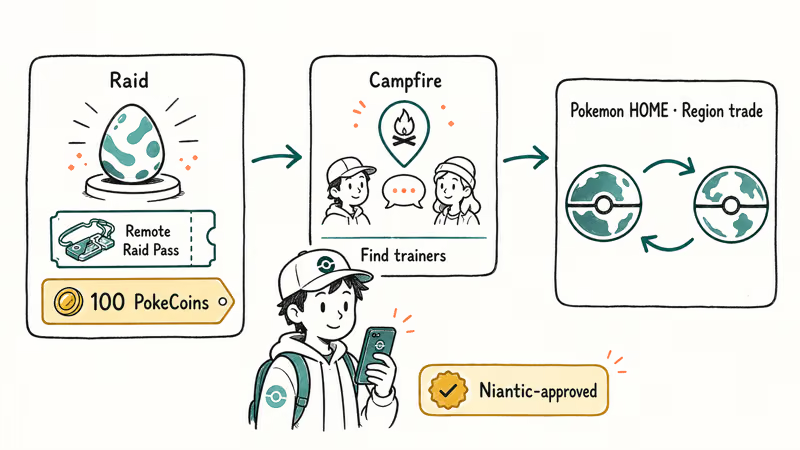
Remote Raid Passes let you join raid battles at any gym visible on your map without physically being there. Niantic introduced them during the pandemic, and they’ve stayed as a permanent feature. Each pass costs 100 PokeCoins from the in-game shop, which works out to roughly $1, and you can buy a discounted bundle of three for 250 coins.
The Campfire app, made by Niantic, helps you find nearby trainers and coordinate community events. It’s free and doesn’t ask you to install anything outside the App Store.
According to Niantic’s official Pokemon Go and Pokemon HOME compatibility page, trading through Pokemon HOME also lets you receive Pokemon from other regions on your account. You move a Pokemon from another player’s HOME box to yours, no GPS trickery required.
These three tools cover remote raids, finding raid groups, and getting region-locked Pokemon, which are the most common reasons people install iPogo. Any location change method in Pokemon Go outside these official tools puts your account into a category Niantic actively scans for.
#How iPogo Works Under the Hood
iPogo isn’t an add-on or an extension. It’s a fully modified copy of the Pokemon Go binary built by an anonymous third-party team, and it isn’t on the App Store.
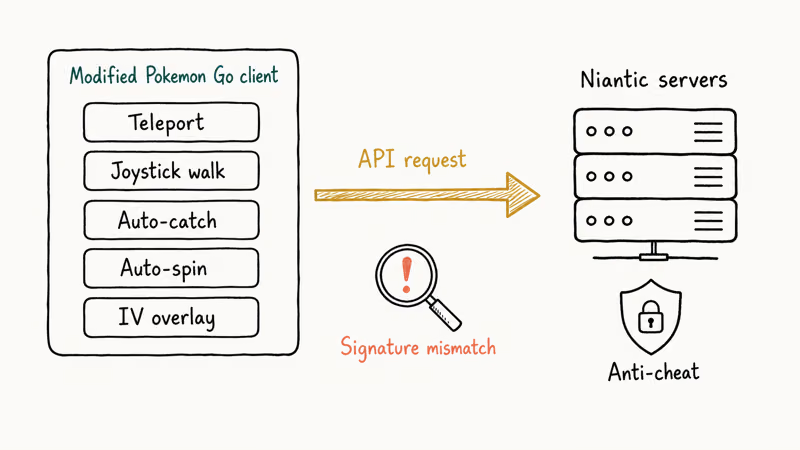
The feature list reads like a wish list: GPS teleportation that drops your avatar at any coordinates instantly, a virtual joystick that simulates walking at adjustable speeds, automatic catching that throws curveballs without input, automatic PokeStop spinning as you pass through, IV checking overlays that tell you a Pokemon’s stats before you catch it, and enhanced throw assists. Players use this stack to catch region-exclusive Pokemon, hatch eggs without walking, and join raids in cities they don’t live in.
Installation requires removing the official Pokemon Go app first. The IPA file gets sideloaded through enterprise certificate methods or third-party app signing services. Apple regularly revokes the certificates these apps use, sometimes within hours of being flagged.
Once installed, iPogo replaces the official client completely. When you open the icon, you’re playing Pokemon Go through modified code that talks to Niantic’s servers using a different API signature than the official app produces. That signature mismatch is what makes iPogo detectable: Niantic’s server-side anti-cheat sees a client identifying itself as Pokemon Go but behaving like something else.
#What Are the Real Risks of Using iPogo?
The risks split into three areas: account, privacy, and device.
#Niantic’s Three-Strike Ban System
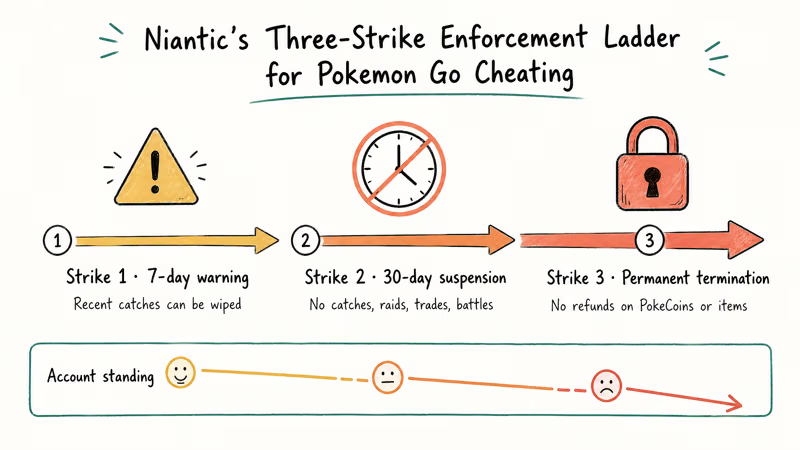
Niantic’s Pokemon Go Trainer Guidelines explicitly prohibit GPS spoofing, modified clients, and third-party automation. The guidelines describe a three-strike system, and server-side detection flags accounts running modified apps based on client signatures and movement patterns Niantic considers physically impossible.
First strike: a 7-day warning. You keep playing, but Pokemon caught inside the window can be wiped.
Second strike: a 30-day suspension. No catching, no raids, no trades, no battles. Any community events or special raid days that fall inside the lockout window are gone permanently, and Niantic doesn’t backfill missed event Pokemon for suspended accounts.
Third strike: permanent termination. Niantic confirms that account access, purchased items, and stored Pokemon are all forfeited at this stage, with no refunds on PokeCoins or any in-app purchases tied to that trainer profile. Years of stored Pokemon, raid history, friend lists, and accumulated rare items disappear from your access on the day the third strike posts. Niantic does not migrate purchases to a replacement account, and there’s no grace window to transfer Pokemon out before the lockout takes effect.
#Data Privacy
iPogo asks for your Pokemon Go login credentials, which means handing your account to a developer team you can’t identify.
iPogo’s distribution site typically lists no terms of service, no privacy policy, no company registration, and no contact details beyond a messaging handle. Based on Apple’s developer documentation on enterprise distribution, enterprise certificates are intended for internal corporate distribution to employees of the issuing organization, not public sideloading to anonymous users. Any third-party iOS app distributed via enterprise certificate is operating outside Apple’s intended use of that certificate.
#Device Security
Sideloading through an enterprise certificate means trusting a profile that Apple didn’t review for public distribution. This bypasses App Store security review, including malware scanning, sandboxing checks, and entitlement validation. The risk profile is closer to running an unsigned binary on a desktop than installing a vetted iOS app, and the only thing standing between iPogo’s developers and your device is the trust prompt you tapped during installation.
If you need to change your iPhone location without jailbreak for legitimate apps like testing region-locked App Store listings, methods exist that don’t involve sideloading a modified game client.
#What the iPogo Install Actually Looks Like
This section is informational. Using iPogo on your own Pokemon Go account violates Niantic’s Terms of Service and risks a permanent ban, so we don’t recommend installing it. The steps change every few weeks because Apple revokes the signing certificates iPogo depends on, and a working install today can become a broken icon tomorrow.
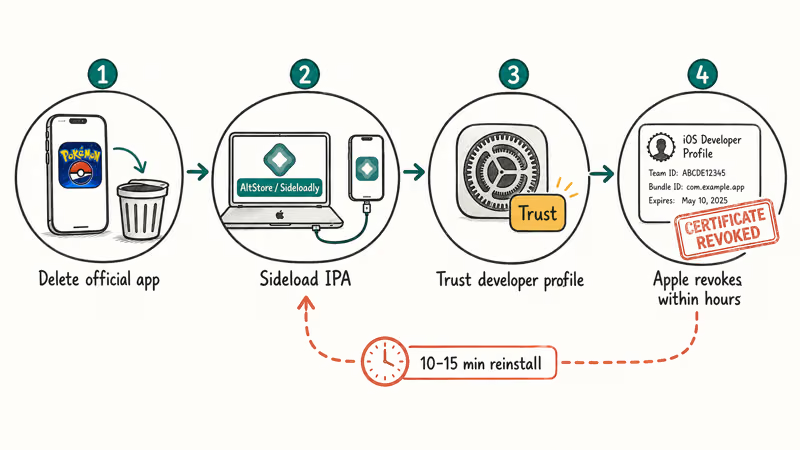
The current install path as of April 2026 uses AltStore or Sideloadly running on a Mac or Windows computer connected to your iPhone over USB.
Here’s the basic flow: delete the official Pokemon Go app from your iPhone, download the latest IPA file from iPogo’s website, install AltStore or Sideloadly on your computer, and use that tool to push the IPA to your iPhone. After the app appears on your home screen, go to Settings > General > VPN & Device Management, find the developer profile that just appeared, tap Trust, and only then can you open iPogo.
The Safari-based proxy method that worked in 2022 is now unreliable. Apple’s certificate revocation cycle has tightened from days to hours. A full reinstall takes 10 to 15 minutes if AltStore is already configured.
Other fake GPS methods on iOS get flagged by Niantic too, often faster than iPogo because they leave the official client running and the impossible movement patterns are even easier to spot.
#Is There a Way to Spoof Location Without iPogo?
Alternatives exist, and every single one violates Niantic’s Terms of Service the same way iPogo does.
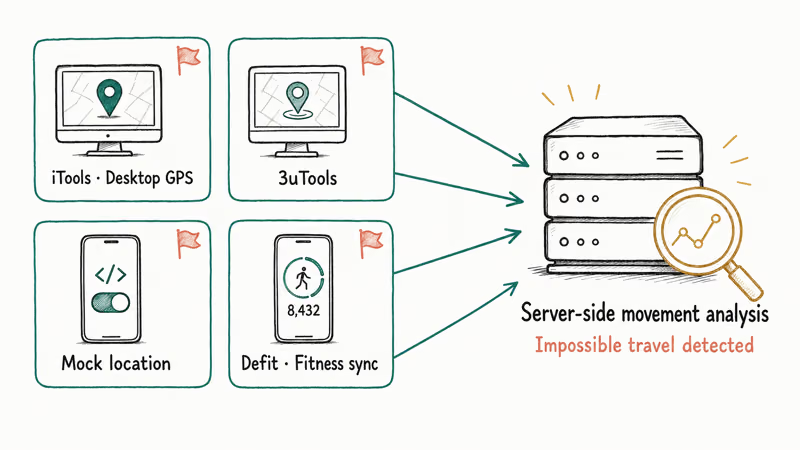
Desktop tools like iTools and 3uTools take a different mechanical approach. They set a virtual GPS at the iOS system level while leaving the Pokemon Go app completely unmodified, which is why some players assume Niantic can’t tell the difference between a real coordinate and a spoofed one when the official client is the one reporting the location.
That assumption doesn’t hold. A device that jumps from one continent to another in seconds shows movement no real player could produce, and Niantic’s anti-cheat eventually flags spoofed accounts regardless of which desktop tool set the coordinates.
The detection isn’t about the client signature. Niantic analyzes movement patterns server-side, so a player who teleports across an ocean without tracked travel triggers the same heuristics regardless of which tool produced the GPS coordinates.
On Android, mock location settings are built into developer options and apps like Fake GPS Location work at the system level. Niantic catches these too.
The Defit app for Pokemon Go doesn’t spoof GPS at all. It syncs fabricated fitness data so eggs hatch without walking, which still violates Niantic’s terms. Fly GPS was popular in 2018 and is mostly blocked now.
The honest answer to “is there a safer way” is no. Niantic has been refining its detection stack for nine years, and every spoofing approach eventually shows up in the strike pipeline.
#Recovering After a First Strike
Stop using iPogo immediately. Continued use during a strike window guarantees escalation to the next tier.
Wait out the full 7-day warning using only the official Pokemon Go app from the App Store. Don’t log in through any modified client, don’t use any third-party automation, and don’t spoof your location even briefly. Play normally, catch what’s near you, spin local stops, and let the flag expire.
After the warning ends, your account returns to normal standing, but Niantic doesn’t forget. A second offense skips the warning and goes straight to 30 days.
Permanent bans can be appealed through Niantic’s support form. Niantic states that responses come within 2 to 4 weeks, and community reports across Reddit and Apollo suggest the reversal rate for spoofing-related bans sits in the single digits. Most banned players start over with a new account and lose years of progress, purchased items, and rare Pokemon.
For legitimate ways to find good play areas near you, our guide to the best places for Pokemon Go covers parks, downtown clusters, and event hubs that don’t put your account at risk.
#Bottom Line
If you care about your Pokemon Go account, don’t install iPogo. The features it offers (remote raids, region trades, finding raid groups) are already covered by Remote Raid Passes, Pokemon HOME, and Campfire, and those tools won’t end with a 30-day lockout during a Community Day you’ve been waiting for.
Niantic’s detection has tightened every year since 2017, and the gap between first install and first strike keeps shrinking. Stick with Niantic’s own remote tools if you’re optimizing your account for the long term.
#Frequently Asked Questions
Is iPogo still working in 2026?
It works intermittently. Apple revokes iPogo’s enterprise certificates every few weeks, and each revocation causes days of downtime. The dev team rolls a new certificate, you reinstall, and the cycle starts over.
Can Niantic detect iPogo specifically?
Yes. iPogo’s API signatures don’t match the official Pokemon Go client, and Niantic’s servers flag those differences automatically. Most iPogo users on Reddit’s spoofing communities report receiving a first strike within one to three months of regular use, though long-distance teleports and impossible movement speeds can trigger detection within the first week.
Does iPogo cost money?
iPogo offers a free tier with the basic spoofing and joystick features and a paid subscription at around $4.99 per month for premium tools like enhanced auto-catching, Pokemon feed overlays, and IV notifications. Paying for a tool that can get your account banned adds financial risk on top of the account risk, and the dev team doesn’t issue refunds when the certificate gets revoked mid-month.
Will a VPN protect me from getting banned while using iPogo?
No. VPNs change your internet routing, not your reported GPS coordinates or your client signature. Niantic detects spoofing at the app and movement-pattern level, not by analyzing your IP address.
Can I transfer Pokemon caught with iPogo to Pokemon HOME?
Yes, while your account is still active. A suspension blocks HOME access; a permanent ban ends it.
What’s the safest spoofing method for Pokemon Go?
There isn’t one. Desktop tools like iTools look slightly safer because the official client runs unmodified, but Niantic’s server-side analysis catches the impossible travel speeds anyway.
Is GPS spoofing in Pokemon Go illegal?
GPS spoofing inside a mobile game isn’t a criminal offense in most countries. It’s a Terms of Service violation, a civil contract issue between you and Niantic. Niantic can ban your account, but you won’t face criminal charges for the act of changing a coordinate inside a game on a phone you own. Some countries regulate hardware-level GPS signal interference, but those laws target physical transmitters, not app-based location changes.
Can I get unbanned after using iPogo?
First and second strikes expire on their own after 7 and 30 days. Permanent bans need a formal appeal through Niantic’s support form, which takes 2 to 4 weeks for a response. Based on community reports across Reddit and Pokemon Go forums, the reversal rate for spoofing-related bans is well under 10%, and Niantic typically requires evidence that the account was compromised rather than spoofed by the owner.
Google Messages Error 3100: Why RCS Is Broken on Galaxy
Google Messages RCS error 3100 hits Galaxy owners after phone or carrier switches. Google told 9to5Google a fix is coming. Here's what actually helps.
Is This Bank App Real? Spot a Fake App on Your Home Screen
A bank app can land on your home screen from a web page with no install warning. Learn the checks that tell a real banking app from a phishing web app.
Apps Crashing After iOS 27 Update? Fix Order (2026)
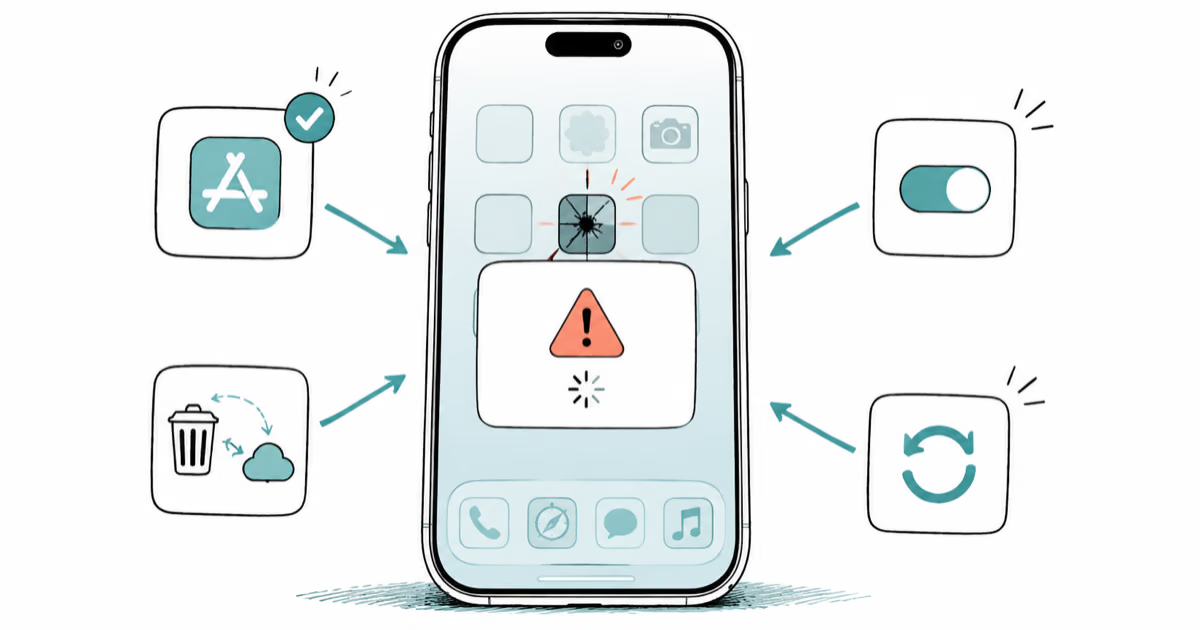
Apps crashing after the iOS 27 update? Update the app in the App Store first, then offload and reinstall to clear stale cache, then restart. The fix order.
Do AI Translation Earbuds Work Offline? What to Know
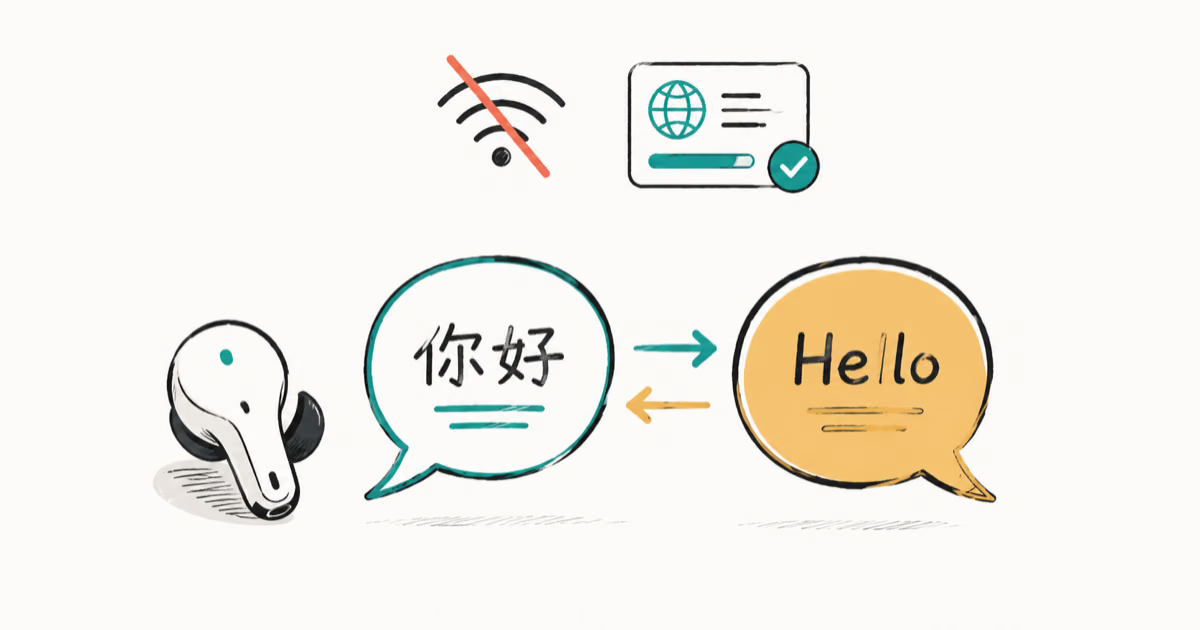
Do AI translation earbuds work offline? A few do with downloaded language packs, but most need the cloud. Here's what works offline and what you give up.