12 Best Games Like RuneScape for MMORPG Fans in 2026
12 games like RuneScape ranked by skill depth, grind feel, and world size. Skill-deep MMORPG picks for PC, browser, and mobile, compared for 2026.
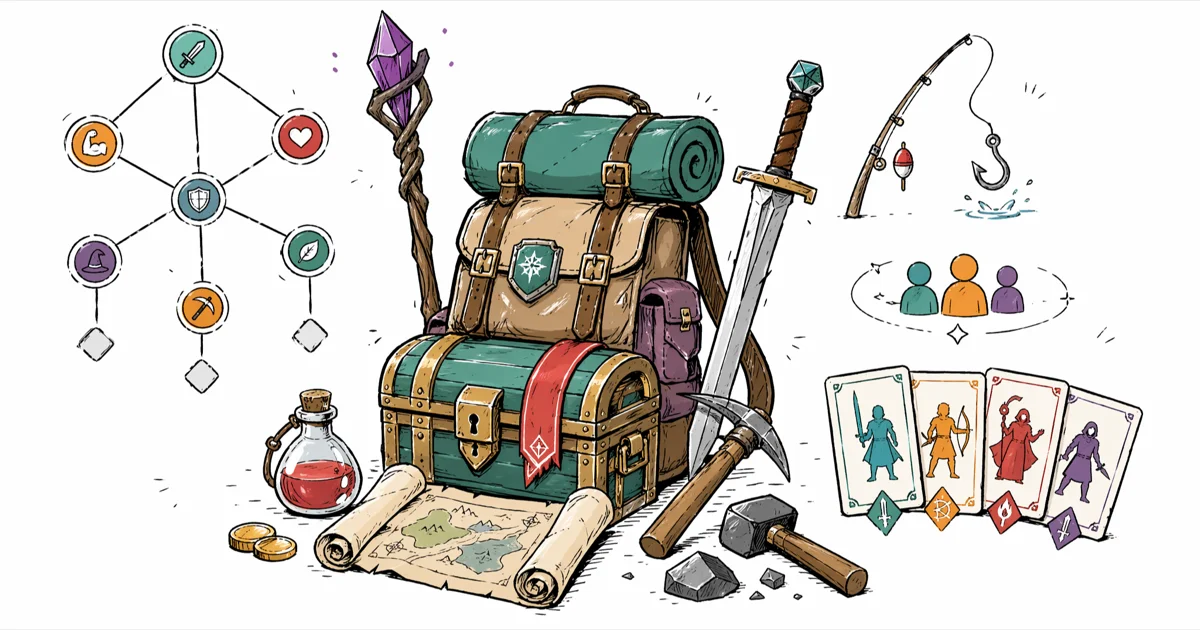
Quick AnswerOld School RuneScape, World of Warcraft Classic, Final Fantasy XIV, and Project Gorgon are the closest games like RuneScape, matching its deep skill trees, open-world grind, and community-driven MMORPG feel.
RuneScape fans usually want one of three things from a replacement. The skill grind that rewards 200 hours in one profession, the open sandbox where quests lead anywhere, or the player economy you can actually participate in. The games on this list are ranked by how well each one replaces those pillars across PC and mobile.
- Old School RuneScape (OSRS) is the same DNA as RuneScape, just the 2007 version
- Project Gorgon has 60+ independent skills and no class locks
- Final Fantasy XIV Free Trial gives you two full expansions at no cost
- Albion Online is the strongest full-loot PvP and player economy alternative
- WoW Classic replaces the social MMO feel but uses class-locked combat
#What Makes a Game Feel Like RuneScape?
RuneScape’s DNA is unusual for an MMORPG. Most big MMOs lock you into a class at level 1, then gate everything behind that class. RuneScape does the opposite.
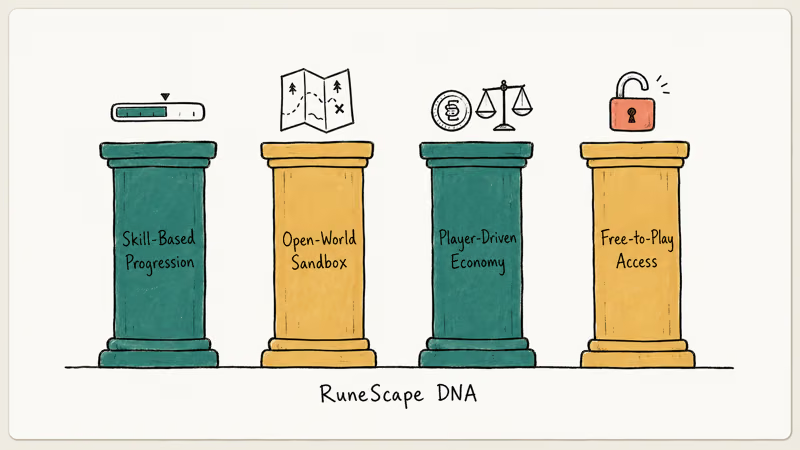
Every character can train every skill. Combat to cooking to construction, no respec cost, no class locks. The world is one giant sandbox.
Each game on this list is judged against four RuneScape pillars: skill-based progression, open-world sandbox, player-driven economy, and free-to-play access. According to Wikipedia’s RuneScape entry, the combined RuneScape and OSRS playerbase makes it the largest free-to-play MMORPG and the most updated MMORPG on record. That pull is why this list is built around those four pillars instead of generic “top MMO” criteria, and why titles that only share the “it’s an MMORPG” label didn’t make it.
If a game replaces two or more of those pillars, it made the list. The picks are ordered from closest-match to furthest-from-RuneScape.
#1. Old School RuneScape (OSRS)
Old School RuneScape is the 2007 version of RuneScape, run by Jagex as a separate live game. The graphics look identical to the 2007 client, but the content is active.
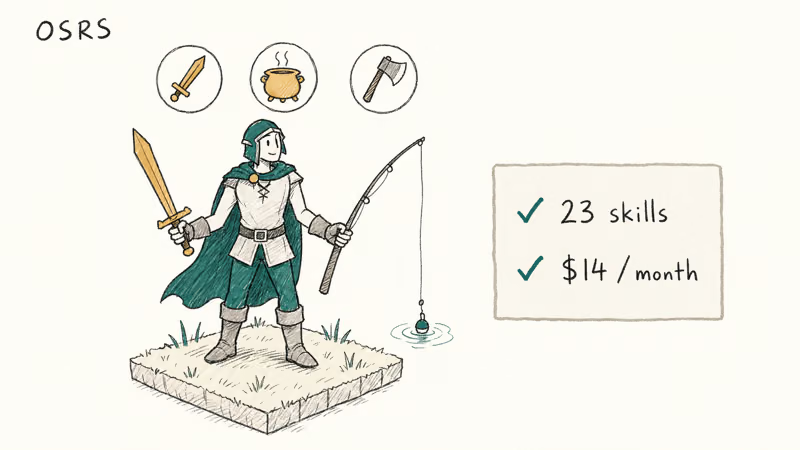
New quests, bosses, and skills ship every few weeks. According to Jagex’s OSRS wiki update log, the team shipped more than 40 game updates in 2024.
Membership costs $14 per month and unlocks most of the map. The free version has all 23 skills available up to level 99, though late-game content like Zulrah and the Theatre of Blood needs the paid tier. If you quit RuneScape 3 because the interface got too busy, OSRS is your fix.
#2. Project Gorgon
Project Gorgon has the closest skill system to RuneScape on this list. You level 60+ skills independently. Archery, fire magic, mycology, even animal handling that lets you turn into a cow and train cow-only skills.
Unlocking a new race of character takes a long stretch of solo grinding with no class restrictions. The progression feel is close to RuneScape’s 99-level skill curve.
The graphics are dated (think 2005 MMO) and the community is small. Its Steam store page confirms that 60+ skills are available to every character. The game costs $39.99 one-time with no subscription.
#3. World of Warcraft Classic
World of Warcraft Classic is Blizzard’s official re-release of vanilla WoW from 2004. Across the Classic Era and Season of Discovery servers, the grind feel is honest RuneScape territory.
Reaching level 60 takes 150+ hours of questing and dungeons.
The social MMO feel is the strongest on this list. If guild chat and raid nights are what you miss about the RuneScape community, this is it.
Classic locks you into one of nine classes at creation, so skill-based RuneScape fans will miss the sandbox. Blizzard’s WoW subscription page lists $14.99 per month covering both Classic and retail WoW. For a deeper comparison, our games like World of Warcraft roundup covers the broader MMO field.
#4. Final Fantasy XIV
Final Fantasy XIV is the MMO that won back players who left WoW. The Free Trial is the best deal in the genre right now. It includes the base game plus two full expansions, with no time limit.
On the free trial, the class-change-on-the-fly system (one character, all jobs) partially replaces RuneScape’s skill freedom, which is rare for a class-based MMO.
The subscription is $12.99 per month once you hit the level 70 cap on the free trial. Square Enix’s Free Trial page confirms you get 3 full products free: A Realm Reborn, Heavensward, and Stormblood. Our games like Final Fantasy guide covers the single-player side of the franchise.
#Free-to-Play Alternatives Worth Playing
Free MMOs are where RuneScape fans often land after subscription fatigue. The F2P picks here are ordered by how much actual content is gated behind optional payment, not by install-page promises. Some free MMOs are free trials in disguise, and sorting the honest free games from the paywalled ones is half the work on a list like this.
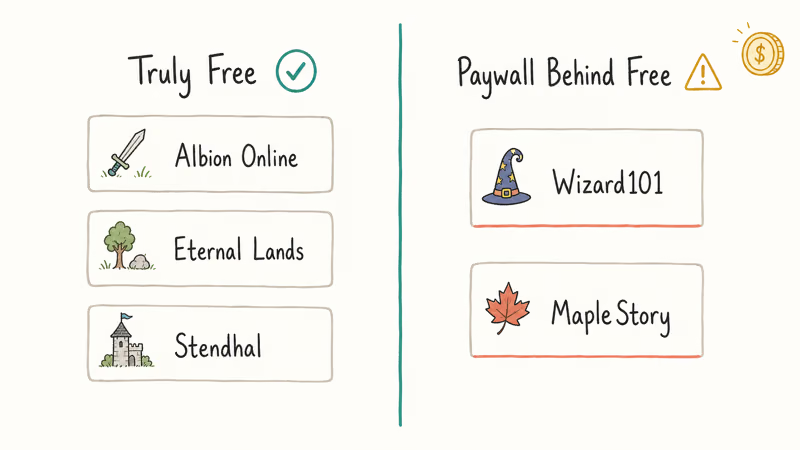
These three aren’t trials.
#5. Albion Online
Albion Online is the strongest full-loot PvP alternative to RuneScape, with a true player-driven economy. Every item in the game is crafted by another player, and when you die in the red or black PvP zones, your gear drops.
Between solo gathering and 5v5 Hellgates, the economy feels closer to RuneScape’s Grand Exchange than anything else on this list.
It runs on PC, Mac, Linux, iOS, and Android from the same server. One account, cross-platform. The base game is free. The optional Premium status is $9.95 per month and roughly doubles your learning-point and silver gain.
#6. Eternal Lands
Eternal Lands is a free 2003 MMORPG that still gets patches. The skill list is RuneScape-adjacent: summoning, potion, magic, manufacturing, harvesting.
The 3D graphics are rough and the player base is small (under 500 concurrent). It stays free-to-play with no subscription wall.
The game is open-source at the content level. Community-run servers are available for private play. There’s no premium currency pay-to-win loop.
#7. Stendhal
Stendhal is a free, open-source 2D MMORPG that deliberately models itself on old-school MUDs. The top-down view and pixel art look dated, but the quest design is charming, with plenty of solo-soluble quests in the early game.
The combat is turn-based and shallow compared to RuneScape 3, but the item economy and trade system are active. Stendhal runs on donated server capacity.
#8. Tibia
Tibia launched in 1997. It’s one of the oldest MMORPGs still running. It uses a 2D top-down view with blocky sprite graphics that have barely changed in a quarter century.
Tibia’s permadeath-lite mechanic (you lose experience and gear on death) creates the tension that RuneScape’s Wilderness used to have before the removal. CipSoft’s current player count page shows 4,000 to 8,000 concurrent players on average, which is small but active.
Tibia is free to play with optional $9.95 monthly Premium for extra maps and better loot access.
#9. Wizard101
Wizard101 is a family-friendly card-combat MMORPG from KingsIsle. The turn-based battles feel nothing like RuneScape’s tick-based combat, but the sprawling quest structure and explorable world capture the same “one more area” hook.
The first world, Wizard City, runs a few hours of quest-driven progression that is engaging, if younger-skewing. The game is free to play through the first world, then Crown Shop purchases or a $9.95 per month subscription unlock later zones.
See our games like Wizard101 roundup for more in the same family-friendly MMO category.
#Which Games Like RuneScape Run on Mobile?
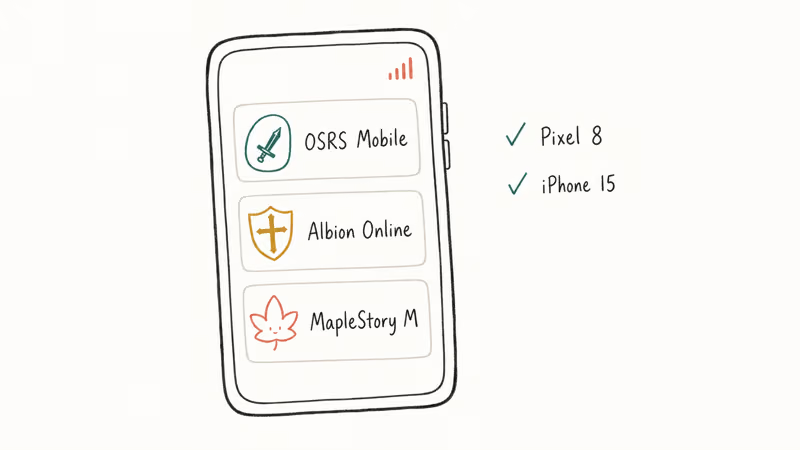
RuneScape mobile is real. Both RuneScape and Old School RuneScape have official mobile clients that share progress with your PC account. If you’re looking for non-Jagex options that play well on phones, these are the picks that hold up on Android and iPhone.
#10. MapleStory
MapleStory is a 2D side-scrolling MMORPG from Nexon with a dedicated mobile version (MapleStory M). The mobile build runs at 60fps and needs roughly 4GB of install space, with the first job advancement a few hours of grinding away.
The art style is the opposite of RuneScape (anime chibi vs. medieval fantasy), but the grind structure rhymes. MapleStory M supports cross-server play for global regions and is free with cosmetic microtransactions. See our games like MapleStory companion piece for deeper 2D-MMO alternatives.
#11. Summoners War: Chronicles
Summoners War: Chronicles is Com2uS’s open-world MMORPG for mobile, spun off from the turn-based gacha original.
Its combat is real-time action rather than RuneScape-style tick-based. The open map and side-quest volume feel MMO-appropriate. The monster-collection gacha elements are pay-to-progress, which RuneScape fans may find off-putting.
The game is free to download. Our games like Summoners War guide covers the broader mobile gacha ecosystem.
#12. Best Android MMORPGs Roundup
If you want a mobile-first MMORPG rather than a PC game with a phone client, our best Android MMORPGs roundup covers five top picks including Old School RuneScape Mobile, Black Desert Mobile, and Lineage 2: Revolution. OSRS Mobile is the top pick in that list. You play the exact same game as PC OSRS with your PC account, which is the fastest way to keep RuneScape progress across devices.
#Choosing Between These Games
Start with what you miss most about RuneScape. If it’s the skill freedom, Project Gorgon is the closest fit. If it’s the sandbox quests, Old School RuneScape is still the original.
If it’s the social MMO feel, WoW Classic or Final Fantasy XIV will give you raid groups and guild structure RuneScape never had. Free-to-play matters too. Albion Online and Eternal Lands give you the most content without paying, but Albion gates better PvE instances behind Premium.
Wizard101 and MapleStory are free for the starter areas and turn into paywalled grinds after that. Tibia is the cheapest way to get a permadeath-lite MMO experience.
For a completely different genre still in the same co-op MMO territory, our games like Warframe roundup covers sci-fi shooter alternatives. And if you want the dark-fantasy ARPG loop that RuneScape’s combat lacks, games like Path of Exile covers that niche.
#Bottom Line
Start with Old School RuneScape itself. It’s the same DNA as RuneScape, just stripped of 15 years of UI bloat. The free tier gives you 23 skills and half the map, which is plenty to decide whether the 2007 formula still works for you in 2026.
If you’ve played OSRS to death, Project Gorgon is the only other MMO with a skill system this wide, and Final Fantasy XIV’s Free Trial is the best free trial in gaming for replacing the raid-social side RuneScape never had.
#Frequently Asked Questions
Is Old School RuneScape the same as RuneScape?
Old School RuneScape (OSRS) is the 2007 version of RuneScape run as a separate live game by Jagex, with its own servers, patches, and subscription. RuneScape 3 is the current mainline version with updated graphics and newer skills. They share an account system and a $14 per month combined membership, but the two games don’t share character progress.
Are any of these games like RuneScape free to play forever?
Yes. Eternal Lands, Stendhal, and Tibia are free with no subscription wall. You can reach the level cap without paying. Old School RuneScape, RuneScape 3, Albion Online, and MapleStory have a free tier but gate significant content behind optional membership or Premium status.
Can I play RuneScape alternatives on mobile?
Yes, several. Old School RuneScape and RuneScape 3 both have official mobile clients that share your PC account. Off-platform, MapleStory M, Summoners War: Chronicles, and Black Desert Mobile are among the best mobile MMORPGs. Albion Online runs the same cross-platform client on iOS and Android with one shared server and character across devices.
Which game like RuneScape has the best player economy?
Albion Online has the deepest player-driven economy. Every item, including weapons, armor, food, mounts, even buildings, is crafted by players. The open-world gathering and crafting loop feeds a real market with price history and long-distance trade routes. Old School RuneScape’s Grand Exchange is the runner-up but has less player-to-player variability because of capped buy and sell limits.
Do any of these games have PvP like the old Wilderness?
Albion Online has the strongest open-world PvP with full-loot rules, similar to old RuneScape Wilderness where you drop everything on death. Tibia uses permadeath-lite. You lose experience and some gear on death in PvP zones. WoW Classic has PvP servers and battlegrounds but no full-loot, and Final Fantasy XIV PvP is opt-in through the Wolves’ Den arena.
Which is the best RuneScape alternative for solo players?
Project Gorgon is the most solo-friendly. The skill system and quest design let you reach endgame without ever grouping. Old School RuneScape is also largely solo-able for the first 80 levels.
Wizard101 is designed around solo questing with optional team-up, which works well for casual play. WoW Classic and Final Fantasy XIV are harder to solo at endgame because raids gate top gear behind groups.
How much do these games cost per month?
OSRS and RuneScape combined membership is $13.99 per month. WoW Classic and retail are $14.99 per month as one subscription.
Final Fantasy XIV is $12.99 per month, though the Free Trial has no time limit through two expansions. Albion Online Premium is $9.95 per month. Wizard101 and Tibia Premium are $9.95 per month each. Project Gorgon is a one-time $39.99 with no subscription.
Do any of these games support cross-platform progression?
Yes. RuneScape and OSRS sync between PC, iOS, and Android with one account. Albion Online runs one shared server across PC, Mac, Linux, iOS, and Android.
Final Fantasy XIV syncs PC, PS4, PS5, Xbox Series X|S, and Mac progress. MapleStory M and Summoners War: Chronicles are mobile-only. Project Gorgon and Tibia are PC-only with no phone client on any store.
Fortnite Stuck on the Loading Screen? Fix It in 2026
Fortnite stuck on the loading screen? Check server status, fix the Windows N Media Pack and DirectX 11 on PC, clear the console cache, and verify files.
Minecraft Keeps Crashing? Java and Bedrock Fixes (2026)
Minecraft keeps crashing on startup or mid-game? Update your GPU driver, remove mods on Java, and reinstall Gaming Services on Bedrock. Fixes for both.
Pokemon GO Not Loading? Fix the Loading Screen 2026
Pokemon GO not loading or stuck on the Pokeball? Check server status, fix automatic date and time, grant location permission, clear the cache, and update.
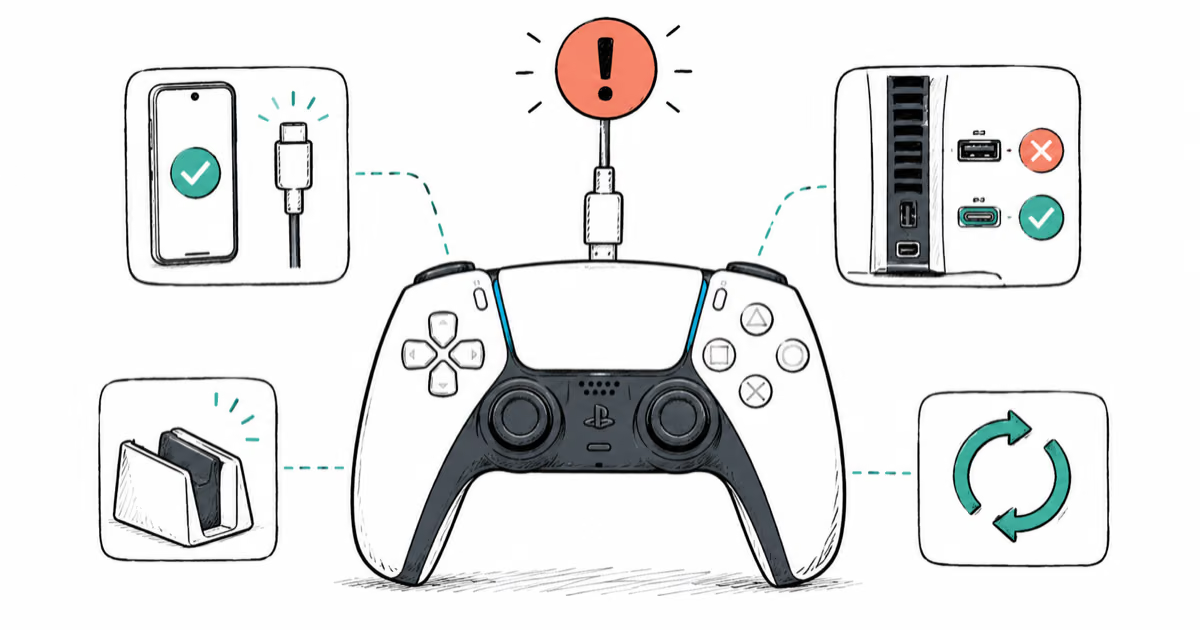
PS5 Controller Not Charging? 9 Fixes That Work (2026)
DualSense not charging? Swap the cable, use a rear port in Rest Mode, clean the USB-C port, and check power settings. 9 fixes for a dead PS5 controller.