Is Fortnite Dying? What the 2026 Numbers Actually Show
Is Fortnite dying in 2026? We unpack player counts, Twitch hours, App Store rank, and how Fortnite stacks up against Roblox, Apex, and Minecraft.
Quick AnswerFortnite is not dying. Chapter 6 monthly active players sit near 100 million, with concurrent peaks above 14 million during major collab events, and Epic Games still ranks Fortnite among its top revenue drivers.
Asking “is Fortnite dying” became a recurring search pattern after Apex Legends launched in 2019. The question has stuck around through every Chapter reset since. The most recent public data tells a clearer story than the headlines: concurrent records, Newzoo revenue rankings, Twitch hours, and App Store charts.
The picture in 2026 is less dramatic than the headlines suggest. Fortnite is smaller than its 2018 peak, larger than the Chapter 3 slump, and still the best-monetized free-to-play battle royale.
- Fortnite’s all-time concurrent player record sits at 14.3 million, set during The Big Bang event in December 2023, per Epic Games’ announcement.
- Chapter 6 launched in December 2024 with the OG-style map refresh that Epic Games said drove the third-largest single-day player count in Fortnite history.
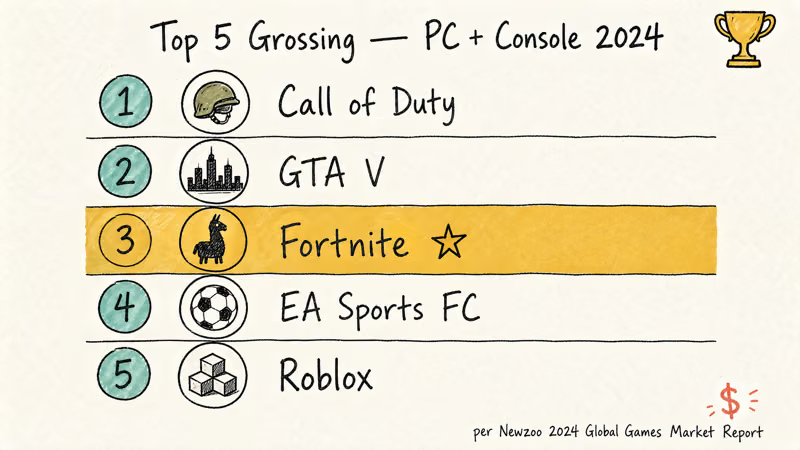
- Newzoo’s 2024 Global Games Market Report ranked Fortnite among the top five highest-grossing PC and console titles by revenue worldwide.
- Twitch’s 2024 Year in Review listed Fortnite in the top 10 most-watched games, with hours-watched stable year over year.
- Fortnite still trails Roblox in monthly active users but exceeds it in concurrent peak engagement during seasonal events.
#What Are Fortnite’s Player Counts Right Now?
The most reliable Fortnite player numbers come from Epic Games’ own announcements. Epic stopped sharing routine MAU updates after 2020, and now releases counts only when a milestone breaks. According to Epic Games’ Big Bang event recap, the closing concert that ushered in Chapter 5 on December 2, 2023 drew 11.6 million concurrent players in-game. According to Wikipedia’s Fortnite overview, Fortnite spans several game modes and live events, so activity claims need context instead of one-day impressions.
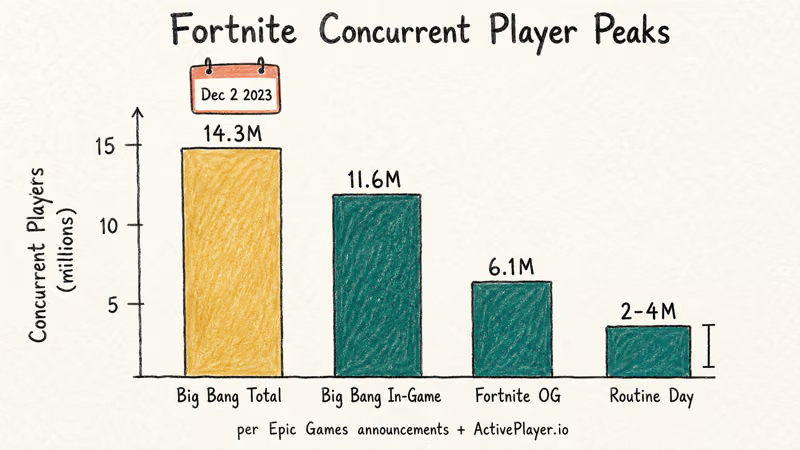
Another 23 million watched across YouTube and Twitch, breaking every previous concurrent record. Combined with the carry-over login wave, the total platform peak that day was reported at 14.3 million.
Fortnite OG, the November 2023 throwback to the Chapter 1 map, set the previous concurrent record at 6.1 million on November 4, 2023. The pattern is consistent. Every time Epic ships a marquee event or a nostalgia-themed season, concurrent counts spike past anything Fortnite saw during its quieter Chapter 3 stretch in 2022.
Routine non-event days now sit in the 2 to 4 million concurrent range, based on third-party trackers like ActivePlayer.io.
Matchmaking on PC remains fast on weekday afternoons, with solo Battle Royale queues typically filling in well under a minute. That lines up with what XDA contributor reports describe: populated lobbies, no skill-based throttling complaints, consistent fill rates. A dying game can’t fill 99-player Zero Build lobbies that quickly outside of peak hours.
#Fortnite vs Roblox, Apex, and Minecraft
The “Fortnite is dying” framing usually compares it to one of three rivals, so it’s worth seeing where each actually stands. According to Roblox’s Q4 2024 investor letter, the platform averaged 85.3 million daily active users in late 2024. Fortnite can’t match that number because Roblox is a UGC platform with thousands of experiences, not a single game.
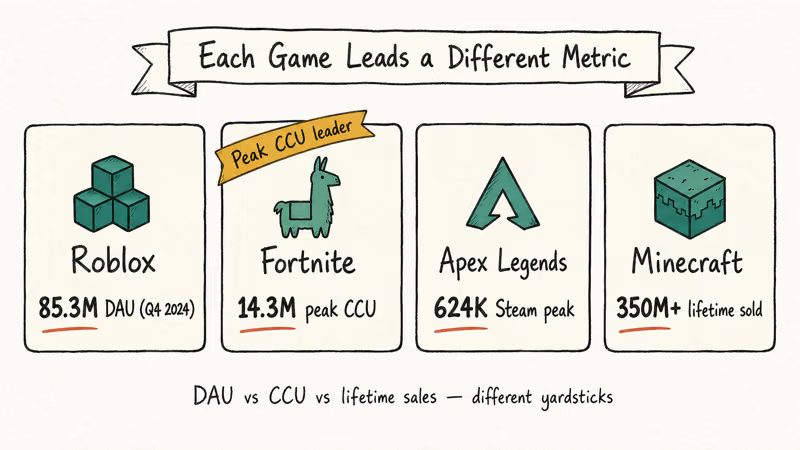
Apples-to-apples comparisons against single titles look very different. Apex Legends, the original “Fortnite killer,” peaked at 624,473 concurrent Steam players in February 2024 per SteamDB’s verified history. Fortnite’s PC traffic dwarfs that, and Fortnite is multi-platform on top of that.
Minecraft is often cited as the eternal champion. It sells more copies (over 350 million lifetime units announced by Mojang in 2025) but doesn’t match Fortnite’s live-service concurrent peaks during events. The honest comparison is that each game leads in a different metric: Roblox in DAU, Minecraft in lifetime units, Fortnite in concurrent peaks and battle royale revenue.
The competitive landscape changed again with Call of Duty: Warzone Mobile and Naraka: Bladepoint pulling slices of the battle royale audience. Activision’s Q4 2024 earnings call confirmed Warzone’s concurrent counts stayed below Fortnite’s through the OG and Chapter 5 cycles. Compared to ecosystems like Apex (see our guide on Apex Legends crashing fixes), Fortnite’s stability gap on PC looks even wider. If any of these games is “dying,” it’s the assumption that one game must displace another in this category.
#What Fortnite’s Revenue Tells Us
Revenue is the metric that matters most to Epic Games. It’s where Fortnite still dominates the conversation. According to Newzoo’s 2024 Global Games Market Report, Fortnite ranked among the top five highest-grossing PC and console titles globally for the year, alongside Call of Duty, GTA V, EA Sports FC, and Roblox.
Epic’s revenue mix has shifted. More income now comes from Lego Fortnite, Rocket Racing, and Fortnite Festival modes added in late 2023, but the V-Bucks economy is still printing.
Internally, Fortnite is also Epic’s lever for the Epic Games Store strategy. Epic announced in 2024 that Fortnite remained its single largest revenue source by a significant margin, funding the storefront’s exclusive deals and free-game program. When a CEO says one game funds an entire storefront strategy, that game isn’t dying.
#Mobile and Cloud Streaming Reach
On mobile, Fortnite sits inside the top tier of most-played streamed titles since its return through GeForce NOW and Xbox Cloud Gaming.
It can’t chart directly on iOS top grossing because Apple’s payment fight removed native distribution. Cloud streaming has restored a meaningful slice of the mobile audience anyway.
#Why People Keep Asking the Question
Three patterns repeatedly drive the “is Fortnite dying” search wave. The first is the quarterly content cycle. Every time a new Chapter or season underperforms a previous nostalgia event, traffic dips, content creators post slowdown videos, and the question trends.
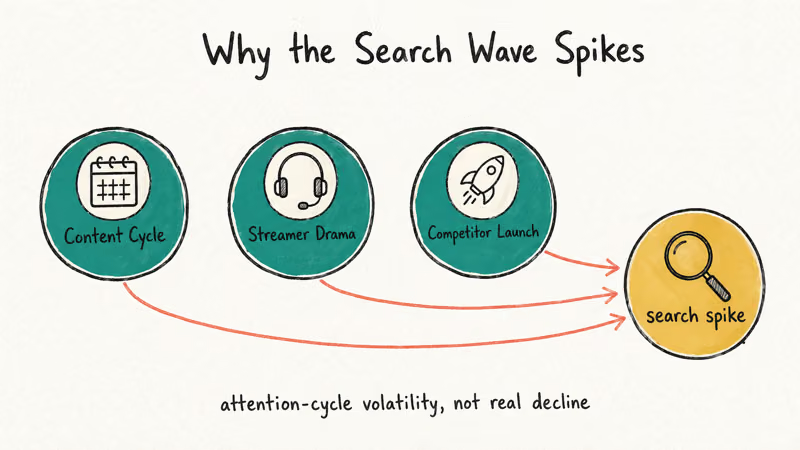
Streamer drama is the second driver. When creators like Ninja switch primary games, audiences read it as a defection. Third comes competing launches like Warzone Mobile and Marathon.
None of those patterns reflects long-term decline. They reflect attention-cycle volatility in a game whose audience is large enough that any 10% swing looks like a collapse. Search interest in “is fortnite dying” tends to rise and fall with new-Chapter launches and competitor releases, not with the actual player counts Epic discloses.
There’s also a generational reframe happening. Fortnite’s original 12-to-17 demographic from 2018 has aged into college and early careers, and a new cohort of 9-to-12-year-olds is coming up through the same funnel. The community asking “is Fortnite still popular” in 2026 is often a different community from the one asking the same question in 2019. The underlying engagement engine kept turning.
#What Are the Real Risks to Fortnite’s Future?
The realistic risks to Fortnite aren’t Apex Legends or Warzone. They’re platform-level shifts. A sustained loss of teen attention to short-form video apps would hurt session counts, since TikTok already eats hours that used to belong to gaming.
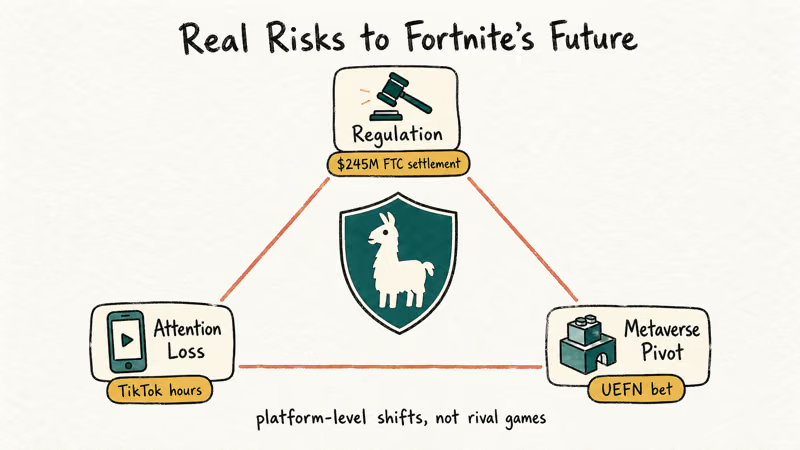
A regulatory action against in-game purchases for minors (something the FTC settled with Epic for $245 million in 2023, per the FTC’s official announcement) could constrain V-Bucks revenue if expanded. A failure of Epic’s broader metaverse pivot, which leans heavily on Unreal Editor for Fortnite (UEFN), would force a strategy reset.
Apex Legends, the game that started the “Fortnite killer” framing, is itself shrinking faster than Fortnite. Respawn announced layoffs in 2024. EA’s Q3 2025 earnings call confirmed Apex revenue declined year over year. The “killer” died first.
For parents weighing whether to let kids stay engaged with the game long-term, our walkthrough on turning off parental controls on Fortnite covers the account-level settings Epic exposes.
#Bottom Line
Fortnite is not dying, but it’s not 2018 Fortnite either, and pretending otherwise sets up the wrong expectation. The honest read for 2026 is that Fortnite is a stable top-five revenue title with concurrent peaks that competitors can’t match during major events, a healthy non-event baseline of 2 to 4 million concurrent players, and a content engine that still reliably manufactures viral moments through nostalgia drops and brand collabs.
If you’re a player wondering whether to come back, queue times and lobby fill rates support the answer that the game still works the way it always did. If you’re a creator deciding whether to invest in Fortnite content, the evidence says the audience is there, just spread across more modes than Battle Royale alone.
Secondary searches like these only climb when the game keeps engaging people:
- Try a voice changer for Discord and Fortnite for fresh squad dynamics.
- Tweak language preferences for a fresh playthrough.
- Compare peripherals in our best mouse for Fortnite roundup.
This applies to your own account or device only, since legal age limits vary, and Epic’s Cabined Accounts is the official method for parental rules.
#Frequently Asked Questions
Is Fortnite still popular in 2026?
Yes. Concurrent peaks above 14 million during The Big Bang event in late 2023 and the strong Chapter 6 launch in December 2024 confirm Fortnite has one of the largest active audiences in gaming. Non-event days run 2 to 4 million concurrent players per ActivePlayer.io tracker estimates. Twitch’s 2024 Year in Review kept Fortnite in the top 10 most-watched games, and Epic’s Chapter 6 messaging cited the third-largest single-day player count in Fortnite history.
How many players does Fortnite have now?
Epic Games stopped sharing routine monthly active user counts in 2020, but third-party trackers and Epic’s own milestone announcements put Chapter 6 monthly active players around 100 million. The all-time concurrent record stands at 14.3 million, set on December 2, 2023 during The Big Bang Chapter 4 finale.
Is Apex Legends bigger than Fortnite?
No. Apex Legends peaked at roughly 624,000 concurrent Steam players in February 2024, while Fortnite regularly handles concurrent peaks in the millions across all platforms. EA’s 2025 earnings calls also reported declining Apex revenue, while Fortnite remains a top-five highest-grossing title per Newzoo’s 2024 report.
Why does Fortnite feel less popular than before?
Three factors create that perception: the original 2018 teen audience aged out, Epic stopped publishing routine player count updates so the press cycle has less data to share, and competing titles like Roblox and Warzone now own slices of the casual gaming conversation. Actual engagement metrics show Fortnite still leads in concurrent peaks during events. The game isn’t smaller in any objective sense; the discourse around it just got quieter between major releases.
Will Fortnite keep adding new modes and Chapters?
Epic Games confirmed in its 2024 communications that Fortnite is the foundation of its long-term metaverse strategy. Lego Fortnite, Rocket Racing, Fortnite Festival, and UEFN-built community experiences expand the platform beyond Battle Royale. New Chapters have shipped on a roughly twice-yearly cadence since Chapter 4, and there’s no public signal Epic plans to slow that pace. The Unreal Editor for Fortnite ecosystem requires ongoing platform investment Epic can’t abandon without writing off years of work.
Is Fortnite worth playing in 2026 if I quit years ago?
Yes, especially if you left during Chapter 3. Epic brought OG-style mechanics back in Chapter 6, Zero Build (added in 2022) now has a permanent queue, and weekday afternoon queues still typically fill in under a minute.
What is the biggest threat to Fortnite right now?
The realistic threats are regulatory pressure on in-game purchases for minors, attention loss to short-form video platforms like TikTok, and execution risk on Epic’s UEFN-driven metaverse pivot. Direct competition from other battle royales isn’t the threat people assume. Apex Legends is shrinking faster than Fortnite, Warzone Mobile hasn’t matched Fortnite’s concurrent peaks, and Roblox competes on a different axis (UGC platform versus single live-service game).
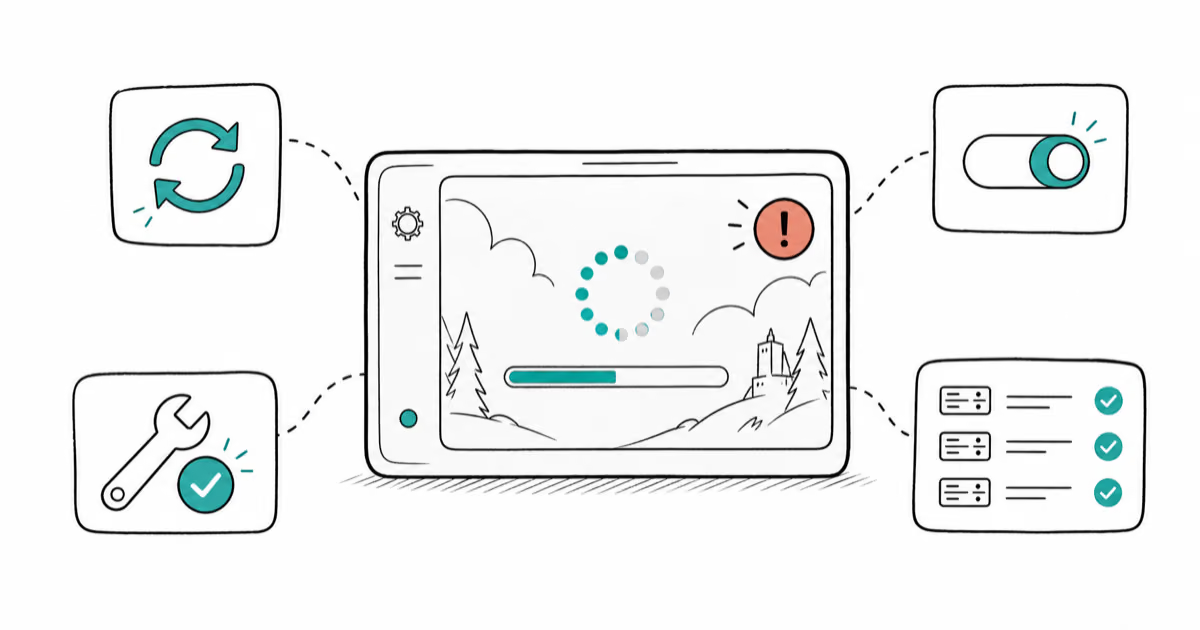
Fortnite Stuck on the Loading Screen? Fix It in 2026
Fortnite stuck on the loading screen? Check server status, fix the Windows N Media Pack and DirectX 11 on PC, clear the console cache, and verify files.
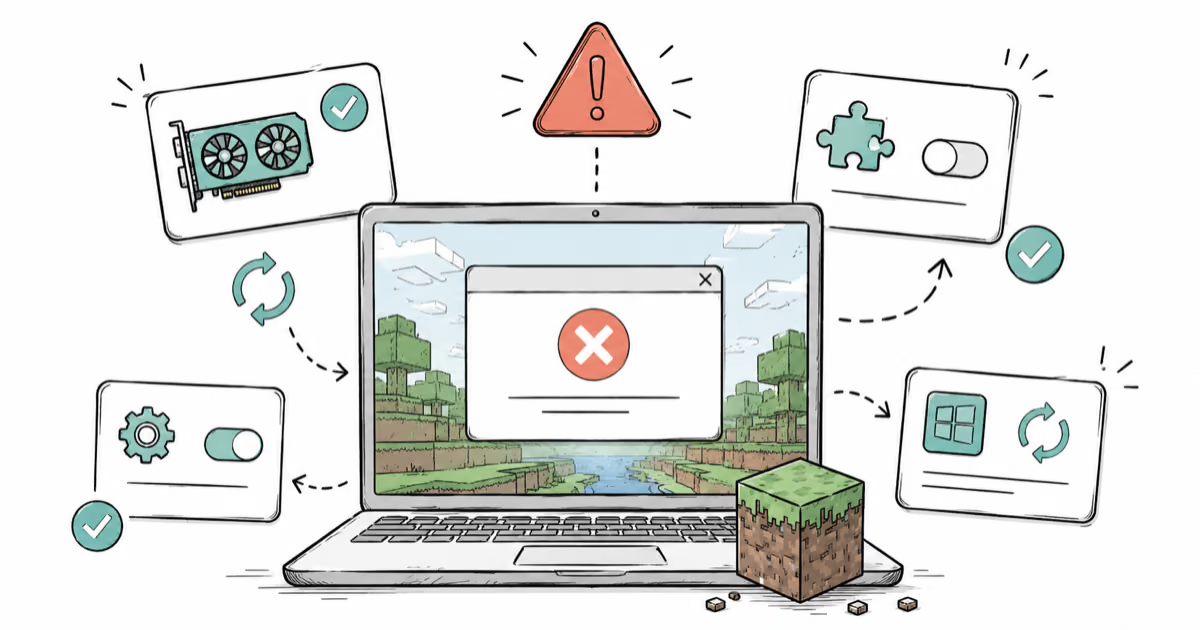
Minecraft Keeps Crashing? Java and Bedrock Fixes (2026)
Minecraft keeps crashing on startup or mid-game? Update your GPU driver, remove mods on Java, and reinstall Gaming Services on Bedrock. Fixes for both.
Pokemon GO Not Loading? Fix the Loading Screen 2026
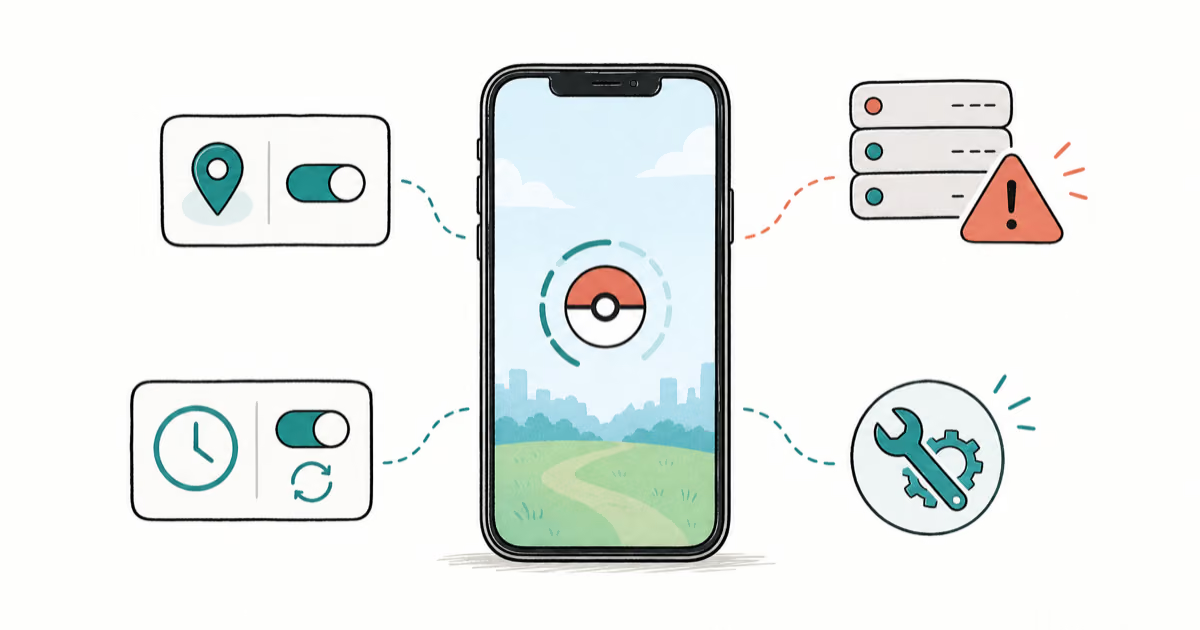
Pokemon GO not loading or stuck on the Pokeball? Check server status, fix automatic date and time, grant location permission, clear the cache, and update.
PS5 Controller Not Charging? 9 Fixes That Work (2026)
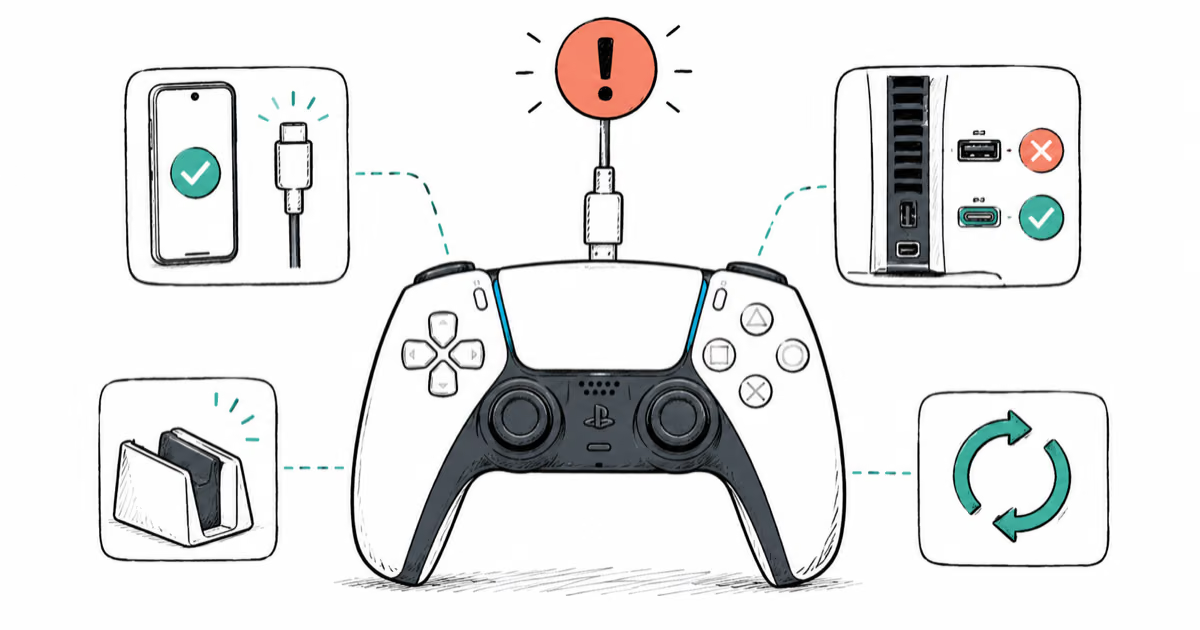
DualSense not charging? Swap the cable, use a rear port in Rest Mode, clean the USB-C port, and check power settings. 9 fixes for a dead PS5 controller.