FRP Lock Bypass on Android: Safely Recover Your Own Phone
Hit the FRP lock on your own Android phone? Use Google account recovery, Find Hub, Samsung Find My Mobile, and manufacturer support in this order.
Quick AnswerIf you're locked out of your own Android phone by Factory Reset Protection, start at Google account recovery at accounts.google.com/signin/recovery. FRP is anti-theft protection, so there's no legitimate bypass for a device you don't own.
Factory Reset Protection kicks in on an Android phone after a factory reset, asking for the last Google account that was signed in. If you forgot the password on a phone you own, the safe path is to recover the Google account itself, not to bypass the check. This guide walks through the official Google and Samsung recovery flows in the order that works, using Galaxy and Pixel devices as examples.
- FRP is Google’s anti-theft protection, active on every Android device running 5.1 or later the moment a Google account is added.
- Google account recovery at accounts.google.com/signin/recovery is the official first step because restoring the account clears FRP without any third-party tool.
- Google Find Hub at android.com/find lets you erase and re-sign your own phone once the account is recovered, avoiding a repeat FRP lockout.
- Samsung Galaxy owners get a second authenticated path through Find My Mobile, including a remote unlock action tied to an active Samsung account.
- Bypassing FRP on a device you don’t own is a federal offense in the US under the Computer Fraud and Abuse Act.
This guide assumes the phone is yours and you lost the Google account password after a reset. If the phone isn’t yours, stop reading and return it. Every method below is a Google-documented recovery flow, not a bypass.
#What Factory Reset Protection Actually Does on Android
FRP ships on every Android phone running 5.1 or later. The job is narrow. It blocks a stolen or lost phone from being wiped and set up by anyone other than the original account holder. After a factory reset, the setup wizard asks for the last Google account that was active on the device before the wipe.
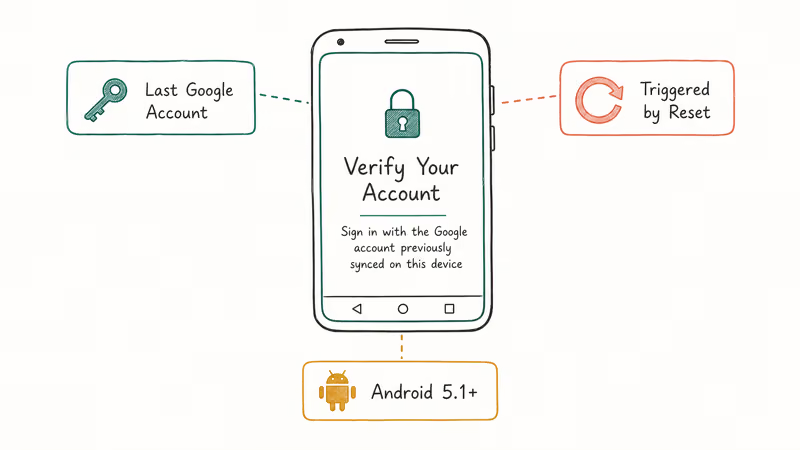
The lock is tied to that account. According to Google’s Factory Reset Protection help, FRP activates once both a Google account and a screen lock are set on the device. Removing the account in Settings before a reset also disables FRP cleanly, which is why the official sell-your-phone flow always starts with “remove your Google account first.”
Quick clarification. FRP isn’t your PIN or pattern. The screen lock protects day-to-day access, while FRP only appears after a factory reset done outside Settings. The two layers work together but trigger at different moments.
#Is It Legal to Bypass FRP on Android?
Only on a device you own, and only through the Google-documented recovery flows below. Anything else crosses a legal line.
The US Computer Fraud and Abuse Act criminalizes accessing a device or account without authorization, and the Department of Justice has prosecuted FRP-removal services as trafficking in stolen property. Running an FRP bypass on a stolen Galaxy or a found Pixel is a federal crime in the United States. EU and UK jurisdictions treat the same act as either computer misuse or handling stolen goods.
Enterprise-managed Android phones are a separate case. If your work phone sits on an FRP screen, your IT department owns the mobile device management profile and can clear the lock through Google Workspace or Samsung Knox. Contact IT first; don’t install third-party FRP tools on a corporate device, because those tools can trip Knox counters and void warranty coverage.
The shop advertising “FRP unlock for $30 cash” isn’t a gray area. It’s plainly illegal if you can’t prove you own the phone.
#How Do You Recover Your Own Google Account for FRP?
Start at Google account recovery before you touch the phone. If the account itself is recoverable, the FRP screen accepts the new password the moment you set it.
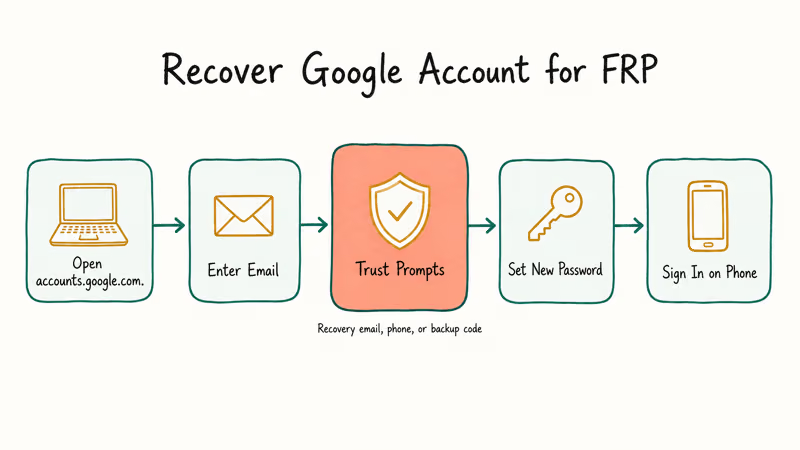
- Open accounts.google.com/signin/recovery on a laptop or another phone.
- Enter the exact email address that was on the Android phone before the reset.
- Answer the trust prompts Google shows: a previous password, a trusted device, a recovery email, or a recovery phone number.
- If Google approves the attempt, set a new password and sign in once on the recovery browser so the account is marked active.
- Go back to your Android phone’s FRP screen and sign in with the same email and the new password.
Google’s account recovery help page states that recovery can succeed even without a trusted phone, but the flow takes longer when easy trust factors are missing. Use a device and network you’ve signed in from before. Google’s risk engine flags new-location attempts hard, adds extra waiting periods on top of the base three-day window, and occasionally rejects an attempt outright if too many signals line up wrong at once. Patience beats speed here.
In practice, when Google approves a password reset after the waiting period, the FRP screen accepts the new password within a couple of minutes of the change propagating to Google’s servers.
The biggest reason recovery fails is rotating the password right before the reset. Google’s factory reset help page states that you should wait at least 72 hours after any password change before wiping, because FRP blocks recent credentials as a theft-prevention measure.
#Method 1: Google Account Recovery First
This is always the starting point if any trust factor still exists on the account. Every purchase, photo, and message stays intact because you’re not wiping anything yet.
Fastest path, another Android device already signed in. On any other Android or Chromebook logged into the same Google account, open Settings, tap your account name, then go to Manage your Google Account > Security > Password. Set a new password. The change propagates to Google’s servers immediately, and the FRP screen accepts the new password on the next attempt. The rest of setup runs like a normal first boot with no further verification.
Browser path, no other signed-in device. Open accounts.google.com/signin/recovery and walk through the prompts. Google’s help page on recovering a forgotten password lists every trust factor the flow can use.
For the companion steps on the lock screen itself once the account is back under your control, our guide to forgot Android password recovery picks up where this account flow leaves off, walking through the lock-screen prompts, the new-password handoff at first boot, and the smaller verification screens that some carriers add on top.
Two-step verification fallback. If you saved 2-Step Verification backup codes, any one code substitutes for the phone prompt during recovery. One code skips days of waiting.
#Method 2: Google Find Hub for a Clean Remote Reset
Once the Google account is back under your control, Find Hub breaks a stuck FRP cycle cleanly.
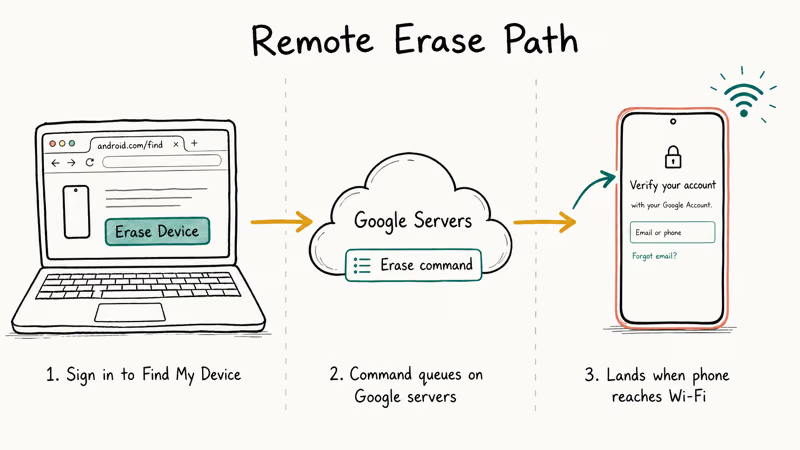
- Open android.com/find in a browser.
- Sign in with the recovered Google account.
- Pick your Android phone from the device list at the top.
- Choose Erase device, confirm, and wait for the command to reach the phone.
- Power the phone through setup, signing in with the same Google account when prompted.
According to Google’s Find Hub overview, the erase command queues on Google’s servers until the phone reaches the internet, so a phone stuck on the FRP screen still needs a Wi-Fi network it can auto-connect to. Most Android phones expose a Wi-Fi picker on the FRP screen, which is enough for the erase command to land. Once the phone reconnects to Wi-Fi, the remote erase typically completes within a few minutes.
See our disable FRP lock guide for the clean sign-out flow before you sell.
#Method 3: Samsung Find My Mobile for Galaxy Owners
Samsung Galaxy phones ship a second authenticated path through Find My Mobile.
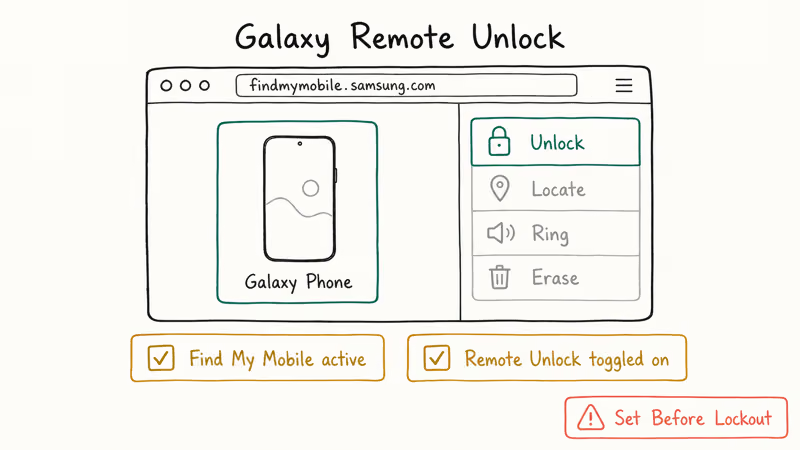
- Go to findmymobile.samsung.com on another device.
- Sign in with the Samsung account that was active on the locked Galaxy.
- Select the Galaxy phone from the registered device list.
- Click Unlock on the right-side action panel and re-enter your Samsung account password to confirm.
Samsung’s Find My Mobile support page confirms that Remote Unlock removes the PIN, pattern, or password without a factory reset. Two conditions apply. Find My Mobile must have been active on the Galaxy before the lockout, and Remote Unlock must have been toggled on during the first sign-in to Samsung’s account service. Neither toggle is on by default on every regional firmware build, so verify both on a working Galaxy today while you still can.
Remote Unlock only works on a Galaxy whose Samsung account completed sign-in and had the toggle enabled before the lockout. Our Samsung FRP tool overview covers the broader stack of Samsung-specific recovery paths.
This method does not help a Samsung phone that never had a Samsung account added. For that case, Method 4 is the only legitimate next step.
#Method 4: Manufacturer Support With Proof of Purchase
If Google account recovery fails and there is no Samsung account to fall back on, the remaining legal path is manufacturer support. Every major Android OEM has an internal process to remove FRP when the owner provides proof of purchase.
What you need:
- The original receipt, invoice, or activation confirmation with the IMEI printed on it.
- A government-issued ID that matches the name on the receipt.
- The phone’s IMEI, visible on the FRP screen itself (dial *#06# on some models) and printed on the box.
How the process works by brand:
- Samsung routes FRP removal through a Samsung service center. You submit paperwork, Samsung verifies the device wasn’t reported lost or stolen, and a technician flashes firmware that clears the lock. Samsung’s official repair and service support covers these cases.
- Google Pixel routes through Google Pixel Support. A support agent can issue a device-specific reset after confirming ownership. Google’s can’t unlock your Pixel phone guide documents the recovery and escalation path.
- Other OEMs (Motorola, OnePlus, Xiaomi, OPPO) follow a similar pattern: contact the regional service center with the receipt, wait for verification, then receive either a remote reset or an in-shop firmware flash.
Expect the process to take a few business days. The service center is checking you against device theft databases, which is the point of FRP in the first place. With a matching receipt and a government-issued ID, Google Pixel Support can usually open a case the same day and close it once verification clears, often within a couple of business days.
#Habits That Prevent a Future FRP Lockout
The easiest FRP problem is the one that never happens. A few habits close the loop on future lockouts for a phone you own.
Record the Google account password in a manager before you ever reset. A reputable password manager keeps the credential in an encrypted vault you can reach from any device. Paper in a safe works for people who prefer offline. The cost of skipping this step is the exact situation this guide is designed to rescue you from.
Attach a recovery email and phone before trouble hits. Open Google Account Security and confirm both fields are set. Either field alone shortens recovery dramatically.
Turn on Find Hub and Samsung Find My Mobile. Both services default to on after first sign-in, but some aftermarket ROMs and older Samsung setups leave them off. Verify in Settings > Security > Find Hub and, on Galaxy, Settings > Biometrics and security > Find My Mobile. Our Android face unlock guide and Android factory reset code reference both walk through the related security toggles.
Plan for second-hand purchases. A used Android phone landing on an FRP screen on first boot was not properly signed out. Refuse the sale or demand a refund. Our Android unlockers roundup shows how to verify ownership before money changes hands.
#Third-Party FRP Bypass Tools: Last Resort Rules
Third-party FRP tools are a last resort, and only on a phone you own outright with no warranty left. The history of these tools is messy, with bundled adware, bricked devices on the wrong firmware, Knox-trip warranty voids on Samsung phones, and installer sites that silently swap out the download link when the vendor changes hands. None of those outcomes are rare, and most are only discoverable after the install has already started running.
If you still want to look at that stack, our Samsung FRP bypass reference and FRP bypass tools roundup cover the historically popular tools honestly, including the ones that no longer work on current Android builds.
For general screen-lock fallbacks that aren’t FRP-specific, see our how to reset Android password guide.
One tool stands out because it goes through a vendor with a support line and documented Windows-only flow: Tenorshare 4uKey for Android. It removes Google lock on compatible Samsung models running Android 6 through 10, with a supported Android 11 flow that requires extra PC-side steps. Try Google account recovery first because it leaves your data intact; reach for a tool like this only if every official route has already failed.
iToolab UnlockGo (Android) is the other commercial option in the same category. It also runs from a Windows PC, publishes its supported-model list up front, and comes from a vendor with a real support channel. The same rules apply: your own phone, proof of ownership in hand, and only after the official routes above have failed.
Some links on this page are affiliate links, which means fone.tips may earn a commission at no extra cost to you.
#Bottom Line
Restore the Google account first, then remote-erase with Find Hub. Galaxy owners use Find My Mobile. Everything else goes to manufacturer support with a receipt. Skip the cash-only FRP bypass shops.
FRP bypass
#Frequently Asked Questions
Can I bypass FRP on Android without a Google account?
No. FRP is designed specifically to block that path. The check is tied to the account Google’s servers recorded before the reset, and a legitimate unlock needs either the original account credentials or a manufacturer-verified proof-of-ownership claim. Any tool that promises a true FRP bypass without one of those two things is marketing a theft-enabling service, and using it on a device you don’t own is a federal crime under the Computer Fraud and Abuse Act.
How long does Google account recovery usually take?
It depends on trust factors. With a recovery phone or email that you can still reach, recovery often finishes in minutes. Without any trust factor, Google imposes a waiting period of three business days or longer before approving the reset. The wait is intentional, because it makes account hijacking harder and gives Google time to flag risky attempts.
Will a factory reset through Recovery Mode remove FRP?
No. Resetting from the bootloader or recovery menu is exactly what triggers the FRP screen on next boot. The only path that skips FRP cleanly is Settings > System > Reset options run from a signed-in phone.
Does FRP block a Samsung Galaxy permanently if I lost the receipt?
No, but the road is harder. Samsung can help if you produce other ownership evidence, including the original order confirmation email, a carrier invoice, or a credit card statement that matches the purchase. Call Samsung Support first for your region and ask what proof they’ll accept. Expect a longer verification window when the paperwork isn’t a clean receipt.
What if the Google account for my phone belonged to a deceased family member?
Google has a separate inactive account and deceased user process for this situation. You submit a death certificate, proof of relationship, and proof of device ownership. It’s slower than normal recovery but it does work.
Is it safe to use third-party FRP bypass tools on my own Android phone?
Only as an absolute last resort, on a phone you own outright with no warranty protection left. Third-party FRP tools have a long history of bundled adware, bricked devices on the wrong firmware, and Knox-trip warranty voids on Samsung phones. Always try Google account recovery first because it preserves your data, and always download any tool from the vendor’s primary website to avoid malware-laced clones.
What happens if I enter the wrong Google account on the FRP screen too many times?
Android doesn’t brick the device. It slows down the screen with progressive delays and eventually rate-limits further attempts for several hours. Stop, recover the account from a browser, then return. Our bypass Android lock screen password pattern PIN guide covers the separate PIN and pattern recovery paths when both layers lock you out at once, which is the nastier scenario.
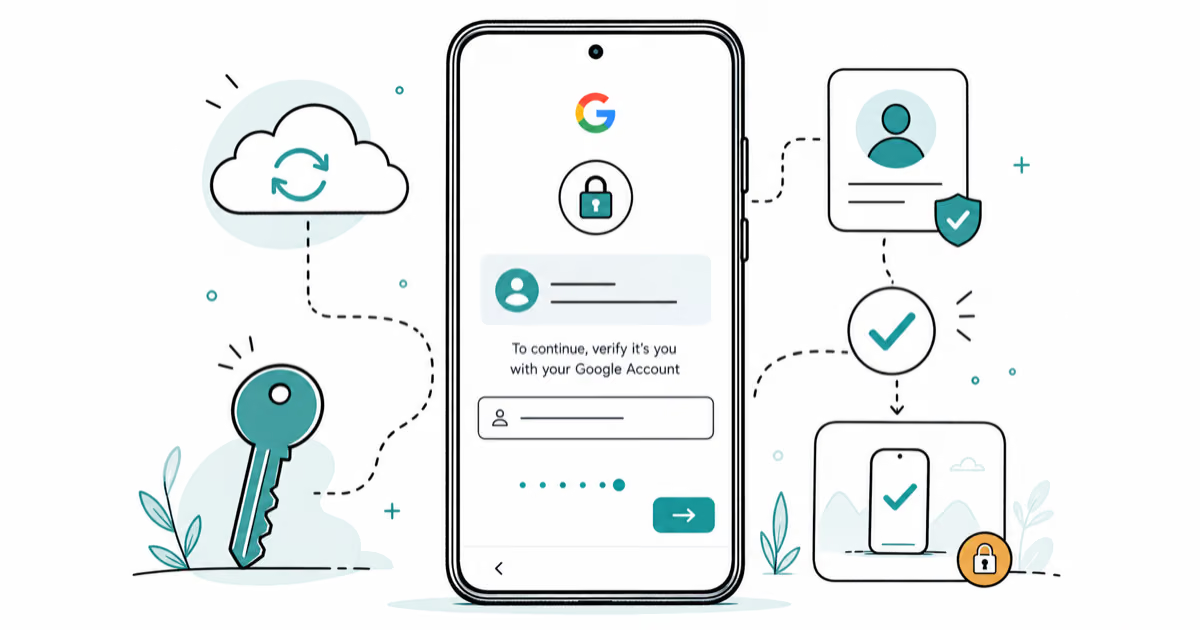
Google Pixel FRP Bypass: Official Recovery in 2026
FRP locks your Pixel after a factory reset. Start with Google Account Recovery for your own device. Here is what works on Pixel 4a and later in 2026.
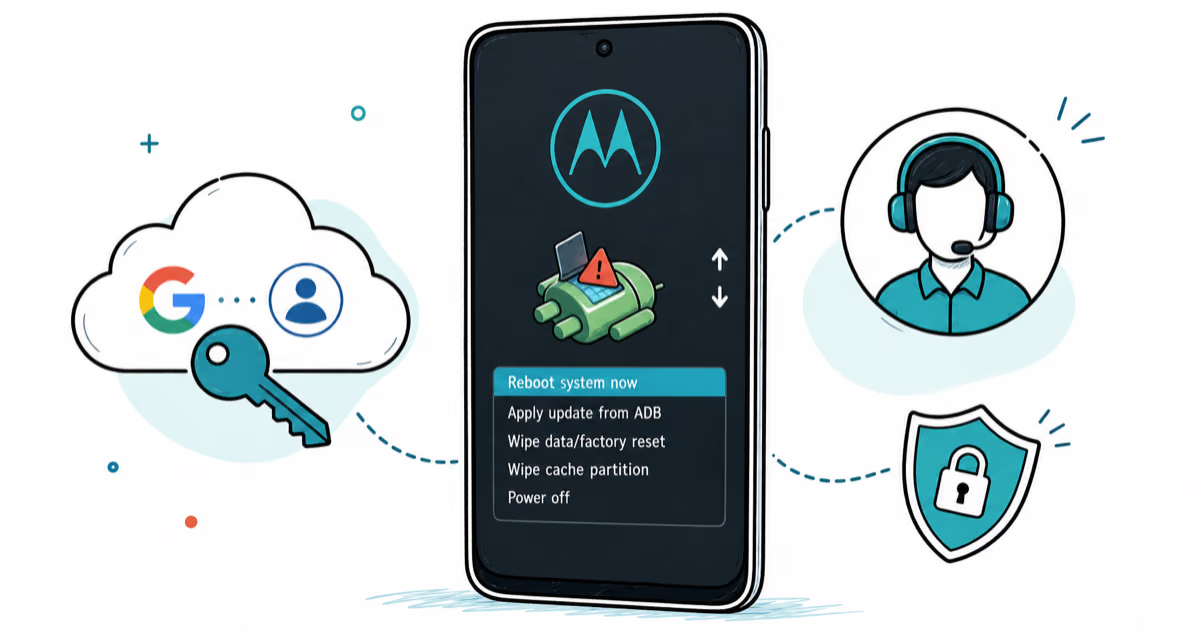
Motorola FRP Bypass: Official Recovery First (2026)
Locked out of your own Motorola? Use Google Account Recovery and Motorola Support before any FRP bypass tool. Legal limits explained for 2026.
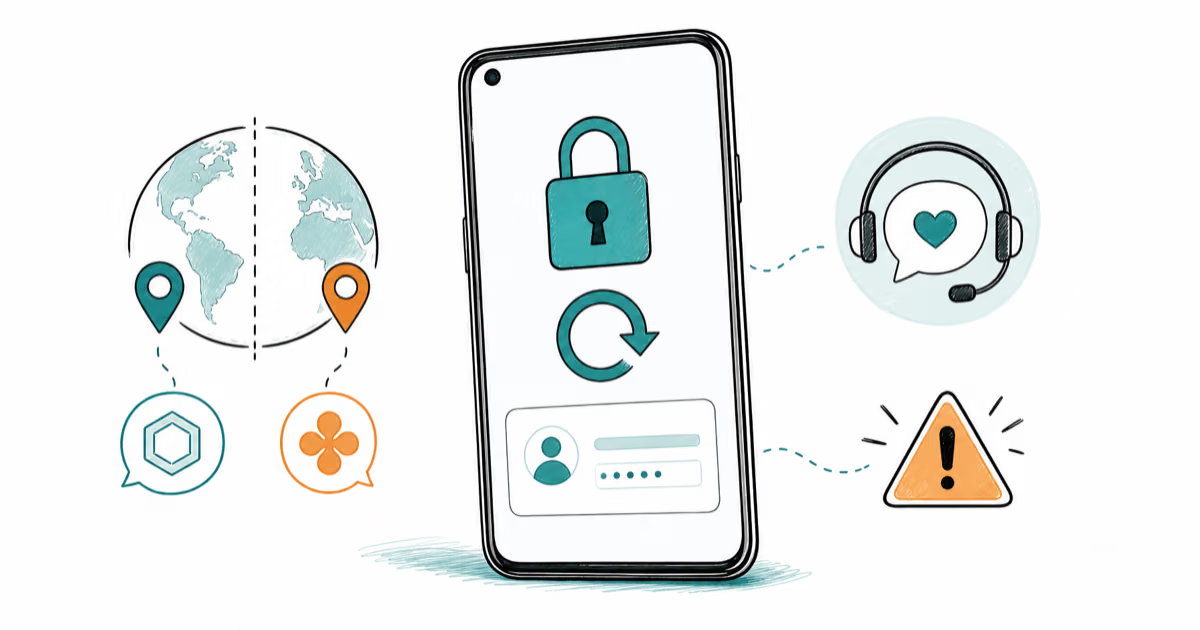
OnePlus FRP Bypass: Region Risks and Recovery (2026)
OnePlus FRP bypass guide: OxygenOS vs ColorOS region risks, official Google Account Recovery, OnePlus Support, and why YouTube tutorials brick.
Xiaomi FRP Bypass: Mi Account vs Google Lock (2026)
Locked out of your Xiaomi after a factory reset? Tell Mi Account lock from Google FRP, use official recovery, and learn the 2026 legal limits.