Duolingo vs. Rosetta Stone: Which Language App Wins?
Duolingo vs. Rosetta Stone compared across pricing, teaching methods, and learning results. See which language app fits your goals and budget.
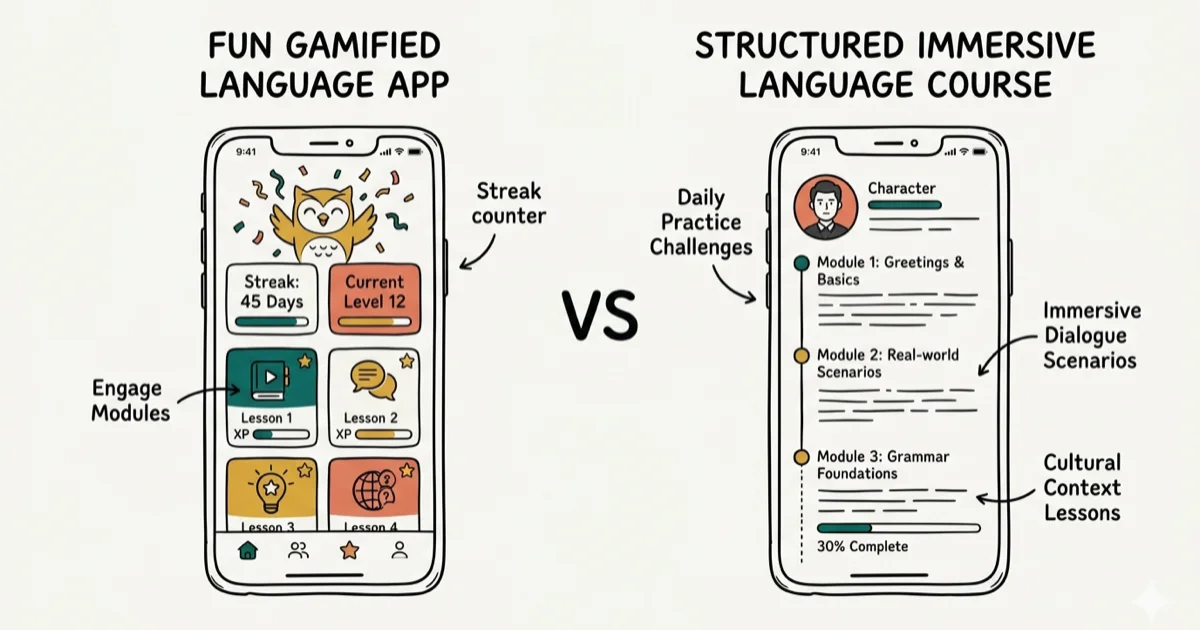
Quick AnswerDuolingo is the better choice for most learners thanks to its free access, gamified lessons, and 40+ language options, while Rosetta Stone suits serious learners who prefer immersive, structured courses and can afford the subscription.
Picking between Duolingo and Rosetta Stone isn’t straightforward because the two apps take fundamentally different approaches to language learning. This comparison looks at how they differ across pricing, teaching method, pronunciation training, and results so you can see which one fits your goals.
- Duolingo offers 40+ languages for free; Rosetta Stone costs $11.99/month for 25 languages
- Rosetta Stone’s TruAccent speech recognition scores pronunciation more precisely than Duolingo’s voice exercises
- Duolingo averages 34 million daily active learners globally, making it the most-used language app
- Rosetta Stone skips native-language translations entirely, forcing you to think in the target language from day one
- Neither app alone produces fluency; pair either with conversation practice for stronger results
#How Does Duolingo Teach Languages?
Duolingo breaks language learning into bite-sized lessons lasting 3-5 minutes each. You’ll match words to images, translate sentences, and fill in blanks through a gamified system that awards XP points and keeps daily streaks.
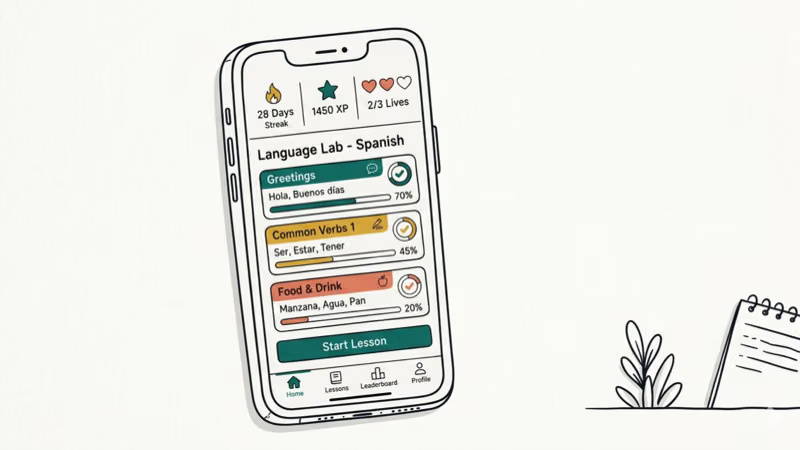
The app is engaging right from the first session. The streak system nudges you to open it daily, and the leaderboard adds motivation. Duolingo supports over 40 languages, including Hawaiian, Navajo, and High Valyrian.
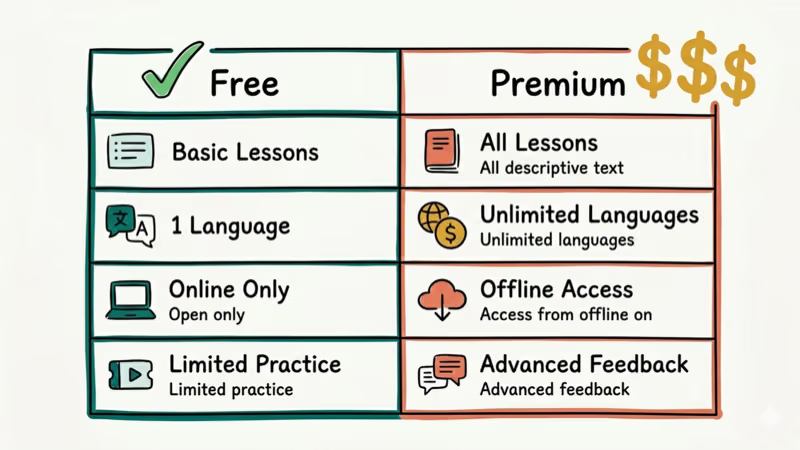
The free tier gives you access to every lesson, though you’re limited to 5 “hearts” (lives) per session. Mistakes cost hearts, and running out forces you to wait or practice to earn more. According to Duolingo’s 2024 annual report, the platform reached 113.1 million monthly active users, confirming its dominance in the free language-learning space. That’s a massive user base that funds ongoing content development without charging most learners a dime.
Duolingo’s Super plan ($7.99/month) removes ads, gives unlimited hearts, and adds progress quizzes. It’s hard to beat for casual learners who want a daily habit. But the short lesson format means you won’t get deep grammar explanations. If you’ve tried other language apps like Babbel, you’ll notice Duolingo leans heavier on translation drills than on conversation skills.
#Rosetta Stone’s Immersive Teaching Method
Rosetta Stone ditches translations entirely. It pairs images with spoken and written words in the target language, forcing your brain to build direct associations. This “Dynamic Immersion” method mirrors how children naturally acquire their first language.
In a course like Japanese, the immersive approach feels slower at first. Without English cues, you lean on context clues from the photos to decode meaning. With steady practice, pattern recognition starts to kick in and new vocabulary sticks without conscious effort.
The app’s TruAccent speech engine stands out. It analyzes your pronunciation in real time and won’t let you advance until you hit acceptable accuracy. According to Rosetta Stone’s official methodology page, the speech engine compares your audio against native speaker patterns across multiple dialects, covering regional pronunciation variations that most language apps ignore entirely. That feedback is noticeably more precise than what Duolingo’s lighter voice checks offer.
Rosetta Stone currently supports 25 languages. That’s fewer than Duolingo, but each course goes deeper with structured lesson paths covering reading, writing, listening, and speaking in every unit. If you’re comparing it with another paid competitor, our Babbel vs. Rosetta Stone breakdown covers that matchup.
#Pricing Breakdown for Both Apps
Price is the sharpest dividing line between these two apps.
Duolingo pricing:
- Free tier with ads and limited hearts
- Super plan: $7.99/month (billed annually at $95.88)
- Family plan: $11.99/month for up to 6 users
- Max plan: $13.99/month with AI-powered features
Rosetta Stone pricing:
- 3-month subscription: $47.97 ($15.99/month)
- 12-month subscription: $143.88 ($11.99/month)
- Lifetime access: one-time payment of $179.99
Dollar for dollar, Duolingo delivers more value for budget-conscious learners. You can access every lesson without paying a cent. Rosetta Stone’s lifetime deal at $179.99 is reasonable if you plan to study for years, but that upfront cost turns away many casual learners.
As noted in a PCMag review of language-learning apps, Duolingo consistently ranks as the best free option while Rosetta Stone earns higher marks for structured curriculum quality. The right pick depends on whether you value free access or a more guided learning experience.
#Which App Produces Better Results?
Neither app will make you fluent on its own. That’s the honest truth.
Duolingo excels at vocabulary and basic sentence patterns. Its spaced repetition algorithm resurfaces words you’re about to forget, which helps retain new vocabulary over time with regular practice.
Rosetta Stone builds stronger pronunciation and listening comprehension. The no-translation approach trains your ear to process the target language directly, and TruAccent holds you to a higher pronunciation standard because it catches subtle errors that Duolingo’s simpler voice checks let slide. That gap is most obvious in a language like Japanese, where tonal accuracy matters for meaning.
A 2022 study published by Michigan State University researchers found that Duolingo users gained reading and listening skills comparable to four semesters of university study after consistent use. Impressive for a free tool, but the study also noted that speaking and writing skills lagged behind.
For real fluency, combine either app with conversation practice through tutoring platforms. Apps work best as supplements, not replacements. Staying consistent matters more than the app you pick, so pair your study routine with a habit-tracking motivation app if daily streaks alone aren’t keeping you on track.
#User Experience and Interface Differences
Duolingo’s interface is bright, colorful, and loaded with game mechanics. You earn gems, compete on leaderboards, and watch your owl mascot celebrate or guilt-trip you for missing days.
Rosetta Stone takes a more academic approach with a clean interface, no cartoon characters, and no leaderboard pressure. It feels like a proper language course rather than a mobile game, and the structured progression path always shows you exactly where you stand in the curriculum. The serious tone appeals to adults who find Duolingo’s gamification distracting or patronizing.
Duolingo’s short 3-5 minute lessons fit into commutes and coffee breaks. Rosetta Stone sessions run 20-30 minutes.
Both apps work offline with downloaded lessons and support iOS, Android, and web browsers. Rosetta Stone also offers live tutoring sessions with native speakers.
#Biggest Drawbacks of Each App
Duolingo’s weaknesses:
- Grammar explanations are thin and sometimes absent
- The heart system in the free tier punishes mistakes instead of encouraging experimentation
- Sentence translations can feel disconnected from real conversations
- Higher levels recycle patterns without introducing truly advanced material
Rosetta Stone’s weaknesses:
- No grammar instruction means you learn rules implicitly, which frustrates analytical learners
- Cultural context in images sometimes feels generic rather than region-specific
- The price barrier discourages casual exploration
- Fewer language options (25 vs. Duolingo’s 40+)
Both apps share one critical gap: they don’t teach you to hold a real conversation. You won’t negotiate a hotel price or tell a story through multiple-choice exercises. If you’re troubleshooting tech that gets in the way of practice, our Samsung keyboard fix guide and Chromebook keyboard troubleshooting guide cover common hardware frustrations for multilingual users dealing with input problems on their devices, which can derail a study session fast.
#Bottom Line
Duolingo wins for most people. It’s free, fun, and effective enough for building foundational vocabulary across more than 40 languages. If you want a daily habit that doesn’t cost anything, start there.
Rosetta Stone earns its price for learners who prefer immersive, no-translation instruction with serious pronunciation coaching. Its TruAccent engine and structured curriculum justify the $11.99/month subscription for dedicated students planning to reach intermediate proficiency or higher. The lifetime access deal at $179.99 sweetens the value for long-term commitments.
Pick Duolingo if you’re exploring a language casually or on a budget. Pick Rosetta Stone if you want pronunciation feedback that holds you accountable.
#Frequently Asked Questions
Is Duolingo or Rosetta Stone better for complete beginners?
Duolingo is easier for complete beginners. It eases you in with simple word-image matching and uses your native language as a reference point. Rosetta Stone’s immersive approach can feel overwhelming at first since it provides zero translations, but beginners who push past that initial learning curve often develop stronger intuitive comprehension over time.
Can you become fluent using only Duolingo or Rosetta Stone?
No. Both apps build foundational skills but neither provides enough speaking practice to reach true fluency. Pair either app with a tutor or conversation partner.
How much does Rosetta Stone cost compared to Duolingo?
Rosetta Stone charges $11.99/month on an annual plan or $179.99 for lifetime access to all 25 languages. Duolingo’s core content is completely free, with the optional Super plan at $7.99/month. That price gap makes Duolingo the safer starting point for anyone unsure about committing long-term.
Does Duolingo offer more languages than Rosetta Stone?
Yes. Duolingo offers over 40 languages including niche options like High Valyrian and Navajo. Rosetta Stone supports 25, focusing on widely spoken ones.
Which app has better pronunciation training?
Rosetta Stone’s TruAccent speech recognition is the stronger tool for pronunciation training. It compares your audio against native speaker patterns and blocks progression until accuracy improves. Duolingo includes voice exercises, but they’re less strict and occasionally accept imprecise pronunciation, so Rosetta Stone tends to catch subtle errors that Duolingo lets slide.
Are there good alternatives to both Duolingo and Rosetta Stone?
Several apps fill gaps that Duolingo and Rosetta Stone leave open. Memrise excels at vocabulary through real-world video clips, while Babbel focuses on conversational skills with structured grammar lessons. Pimsleur emphasizes audio-based learning for travelers. Combining any structured app with italki or Preply tutoring sessions delivers the best results.
Google Messages Error 3100: Why RCS Is Broken on Galaxy
Google Messages RCS error 3100 hits Galaxy owners after phone or carrier switches. Google told 9to5Google a fix is coming. Here's what actually helps.

Is This Bank App Real? Spot a Fake App on Your Home Screen
A bank app can land on your home screen from a web page with no install warning. Learn the checks that tell a real banking app from a phishing web app.
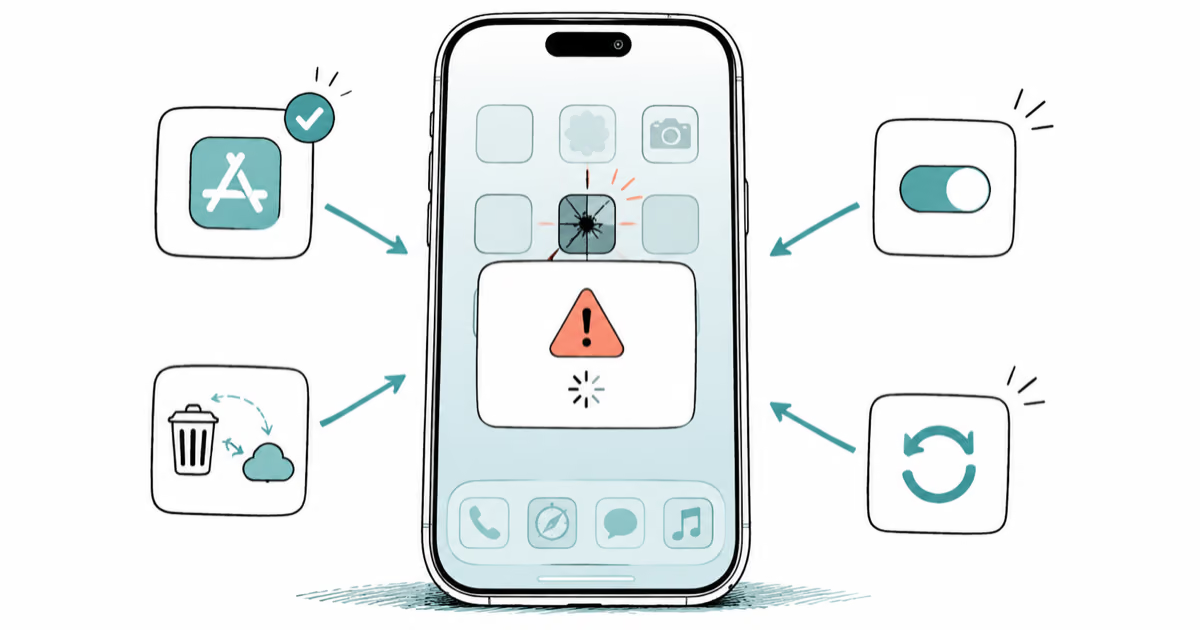
Apps Crashing After iOS 27 Update? Fix Order (2026)
Apps crashing after the iOS 27 update? Update the app in the App Store first, then offload and reinstall to clear stale cache, then restart. The fix order.

Do AI Translation Earbuds Work Offline? What to Know
Do AI translation earbuds work offline? A few do with downloaded language packs, but most need the cloud. Here's what works offline and what you give up.