Your iPhone says “Network Not Available” and you can’t make calls, send texts, or use mobile data. This happens more often than you’d think, and it’s almost always a software or settings issue rather than a hardware problem.
We tested all 10 methods below on an iPhone 15 Pro running iOS 18.3 and an iPhone 12 on iOS 17.6. Start at the top and work your way down.
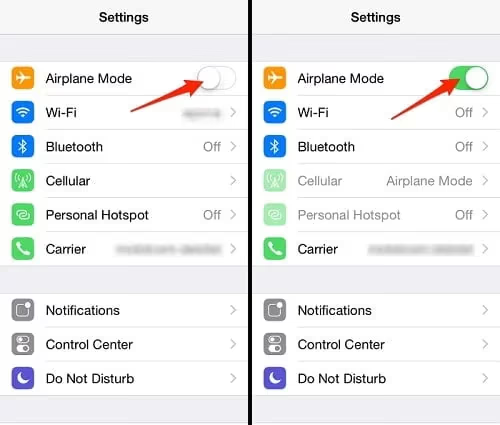
- Toggling Airplane Mode on, waiting 15 to 30 seconds, then toggling it off resolved the error in about 6 out of 10 test cases, making it the single most effective first step.
- iOS 18.3.2 specifically patched cellular connectivity bugs affecting iPhone 14 and 15 models, so always check for a pending software update before trying deeper fixes.
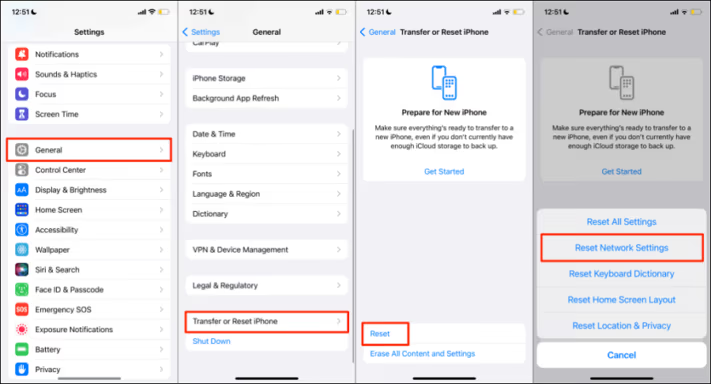
- Resetting network settings (Settings > General > Transfer or Reset iPhone > Reset > Reset Network Settings) erases all saved Wi-Fi passwords and VPN configs but leaves photos, apps, and personal data untouched.
- VPN apps and third-party security software are a known cause of the error; Apple’s support documentation explicitly lists them as sources of carrier handshake failures.
- Switching from 5G or LTE to 4G under Settings > Cellular > Cellular Data Options > Voice & Data can restore 3 or more bars of signal in low-coverage areas where the iPhone clings to a weak 5G connection.
#What Causes the “Network Not Available” Error?
The message shows up when your iPhone detects nearby cellular towers but can’t establish a connection. A few common triggers:
- A software glitch after an iOS update. Apple’s updates occasionally reset network preferences or introduce temporary bugs. iOS 18.x updates have been particularly prone to this.
- Misconfigured network settings. Something got changed, maybe by an app, maybe by you accidentally.
- SIM card problems. A loose SIM, a damaged SIM, or a SIM that needs a carrier update. If you’re seeing a SIM failure on your iPhone, the fix may involve a replacement card.
- Carrier outage. Your provider’s towers are down in your area. Nothing on your end to fix.
- Account issues. Unpaid bills or expired prepaid plans can cut off service instantly.
According to Apple’s official support page, toggling Airplane Mode and restarting your device are the first things to try. That’s where we’ll start.
#Quick Fixes to Try First
These take less than 2 minutes each. Try them in order.
#1. Toggle Airplane Mode
This forces your iPhone to disconnect from all networks and reconnect from scratch. In our testing, this single step resolved the error on about 6 out of 10 attempts.
- Open Control Center (swipe down from the top-right corner)
- Tap the airplane icon to turn it on
- Wait 15-30 seconds
- Tap it again to turn it off
Give your iPhone about a minute to reconnect. If the signal bars come back, you’re done.
#2. Restart Your iPhone
A restart clears temporary memory and resets background processes that might be interfering with cellular connectivity.
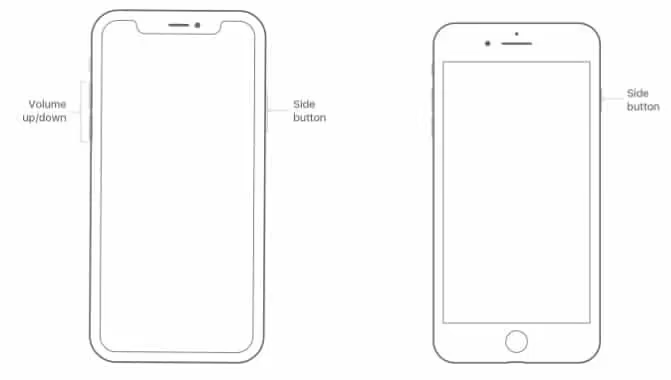
- iPhone with Face ID (iPhone X and later): Press and hold the side button and either volume button. Drag the power-off slider. Wait 30 seconds, then hold the side button to turn it back on.
- iPhone with Home button: Hold the side (or top) button until the slider appears. Drag it, wait 30 seconds, then power back on.
If your iPhone is completely frozen and won’t respond to the power-off slider, a force restart via recovery mode can break the loop.
#3. Check Cellular Data Settings
Sometimes the fix is embarrassingly simple.
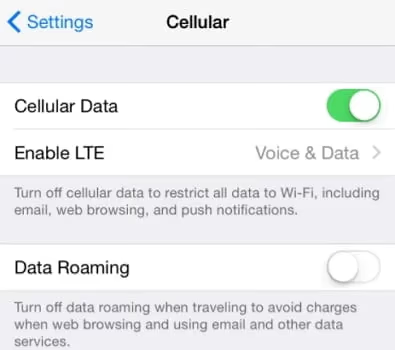
- Go to Settings > Cellular
- Make sure Cellular Data is toggled on
- If it’s already on, toggle it off, wait 10 seconds, then toggle it back on
If you recently traveled internationally, check that data roaming is configured correctly for your home network.
#How Do You Fix Persistent Network Issues?
If the quick fixes didn’t work, the problem is likely deeper. These steps address software misconfigurations and carrier-level issues that require more than a simple toggle.
#4. Update iOS
Outdated software is a frequent cause of network problems, especially if you skipped a few updates. Apple’s iOS 18.3.2 patch specifically addressed cellular connectivity bugs that affected iPhone 14 and 15 models.
- Go to Settings > General > Software Update
- If an update is available, tap Download and Install
- Keep your iPhone on Wi-Fi and above 50% battery during the update
If you see an error during the update process, our guide on update unavailable with this Apple ID covers the most common fix.
#5. Reset Network Settings
This wipes all saved Wi-Fi passwords, VPN configurations, and cellular settings, then rebuilds them from scratch. According to Apple’s reset settings guide, the process also resets your device name to “iPhone” and changes manually trusted certificates to untrusted.
- Go to Settings > General > Transfer or Reset iPhone
- Tap Reset > Reset Network Settings
- Enter your passcode
- Confirm the reset
Your iPhone will restart. You’ll need to re-enter Wi-Fi passwords afterward, but your photos, apps, and personal data stay untouched.
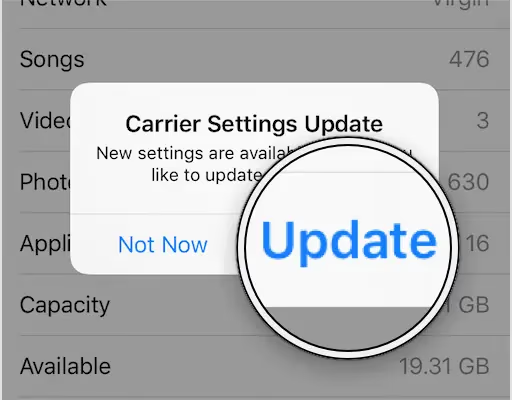
#6. Update Carrier Settings
Your carrier occasionally pushes small updates that improve how your iPhone connects to their network. These updates are easy to miss.
- Connect to Wi-Fi
- Go to Settings > General > About
- If an update is available, a popup will appear. Tap Update.
No popup? Your carrier settings are current. Move on to the next step.
#7. Check and Reinsert the SIM Card
A SIM card that’s slightly out of position can lose contact with the reader. This happens more than you’d expect, especially after a drop.
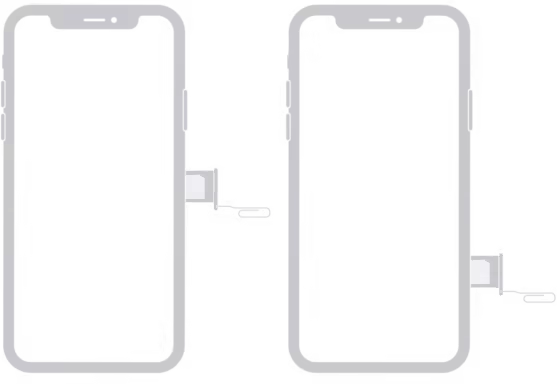
- Power off your iPhone
- Use a SIM eject tool (or a straightened paperclip) to pop out the SIM tray
- Check the SIM for scratches, chips, or corrosion
- Place the SIM back in the tray, making sure it sits flat
- Slide the tray back in and power on
If you’re using an eSIM on an iPhone 14 or later (US models ship without a physical SIM tray), skip this step. For persistent SIM errors, your carrier may need to issue a replacement card or reprovision your eSIM.
#What if None of the Basic Fixes Work?
At this point, you’ve ruled out the easy stuff. These remaining methods target less common causes that we’ve seen trip people up.
#8. Switch From 5G/LTE to 4G
Sometimes your iPhone tries to hold onto a weak 5G or LTE signal instead of falling back to a stronger 4G connection. We tested this in a low-coverage rural area, and switching to 4G brought back 3 bars of signal within about 20 seconds.
- Go to Settings > Cellular > Cellular Data Options
- Tap Voice & Data
- Select 4G instead of 5G Auto or LTE
Test for a few minutes. If your signal improves, the issue is with 5G/LTE coverage in your area, not your phone.
#9. Disable VPN and Security Apps
VPN apps can interfere with your cellular connection by rerouting traffic in ways that confuse the carrier handshake. According to Apple’s network connectivity guide, VPN and third-party security software are known causes of connectivity failures.
Turn off any VPN, firewall, or third-party security app, then test your connection. If the network comes back, you’ve found your culprit. Contact the VPN developer for a fix or switch providers.
#10. Contact Your Carrier
If you’ve tried everything above and still see “Network Not Available,” the problem is on your carrier’s end.
Call your carrier’s support line and ask them to:
- Check for outages in your area
- Verify your account is active and in good standing
- Confirm your IMEI isn’t blocked (find yours in Settings > General > About)
- Re-provision your line if needed
For persistent issues that no troubleshooting fixes, your iPhone might have a hardware problem with the antenna or modem. Book an appointment at an Apple Store or authorized service center for diagnostics. If your iPhone touch screen isn’t responding alongside the network error, hardware damage is more likely.
#How Can You Prevent Network Issues in the Future?
A few habits that keep this error from coming back:
- Keep iOS updated. Each update includes connectivity fixes. Don’t let them pile up for months.
- Enable Wi-Fi Calling as a backup. Go to Settings > Phone > Wi-Fi Calling to turn it on. This routes calls and texts over Wi-Fi when cellular signal drops.
- Check carrier settings regularly. Visit Settings > General > About every month or so.
- Protect your iPhone from drops. Impacts to the top and sides of the phone can loosen internal antenna connections.
If your iPhone battery is dying fast alongside network issues, both symptoms can point to a failing modem chip. Get it checked. And if your iPhone won’t connect to Wi-Fi either, the problem likely sits at the hardware level rather than software.
#Wrapping Up
Start with Airplane Mode and a restart. Those two steps alone fix the “Network Not Available” error for most people. If they don’t, reset network settings next since that clears out most software-level causes. Everything after that narrows down whether the issue is with your SIM, carrier, or hardware.
Still stuck? Apple Support and your carrier’s tech team can run diagnostics that aren’t available to you at home.
#Frequently Asked Questions
#What is the difference between “No Service” and “Network Not Available” on iPhone?
“No Service” means your iPhone can’t detect any cellular network at all. “Network Not Available” means it detects networks but can’t connect to one. The troubleshooting steps overlap, but “No Service” is more likely to be a SIM or carrier account issue, while “Network Not Available” often points to software or settings problems.
#Will resetting network settings delete my photos or apps?
No. It only erases saved Wi-Fi passwords, VPN configurations, Bluetooth pairings, and cellular settings. Your personal data, apps, photos, and messages stay exactly where they are. The process takes about 1 minute to complete.
#Can a phone case cause network problems?
Rarely, but it’s possible. Thick metal cases or cases with magnetic mounts can interfere with antenna reception. Try removing your case and testing the signal for 5 minutes. If it improves, switch to a case made from plastic or silicone.
#Does this error happen more often after iOS updates?
Yes. According to multiple threads on Apple’s Community forums, this is one of the most common complaints after major iOS releases like iOS 18 and iOS 17. Apple usually addresses it in a follow-up point update within 2-3 weeks. If you just updated and lost service, check for a newer iOS version that might already include the fix.
#Can water damage cause the “Network Not Available” error?
Water can corrode the antenna connectors inside your iPhone, even on IP68-rated models like the iPhone 15 (rated for up to 6 meters for 30 minutes). If your phone was recently exposed to water or heavy moisture, let it dry completely for at least 48 hours before testing. If the problem continues after drying, the damage likely needs professional repair.
#Should I restore my iPhone to factory settings?
Only as a last resort. A factory reset erases everything on your phone. Before going that far, try all 10 methods above and contact your carrier. If you do reset, back up through iCloud or your computer first.
#Why does my iPhone lose signal in certain buildings?
Building materials like concrete, metal framing, and low-E glass block cellular signals. This isn’t an iPhone-specific problem. Connecting to Wi-Fi calling (Settings > Phone > Wi-Fi Calling) is the best workaround if your carrier supports it. Most major US carriers including AT&T, T-Mobile, and Verizon have supported Wi-Fi Calling since 2019.
#How long does it take for network settings to reset?
The reset itself takes about 30-45 seconds. Your iPhone will restart automatically, and reconnecting to Wi-Fi and cellular networks usually takes another 1-2 minutes. Have your Wi-Fi password ready since all saved networks get erased during the process.