Best Golf GPS Watches for Course Management in 2026
Compare 6 golf GPS watches for course management in 2026. Covers Garmin S70, Bushnell Ion Elite, and Shot Scope G5 with accuracy and battery data.

Quick AnswerThe Garmin Approach S70 is the best golf GPS watch overall, combining a 1.4-inch AMOLED display, Virtual Caddie club recommendations, and 43,000+ preloaded courses with 20-hour GPS battery life.
A golf GPS watch gives you yardage data without pulling out your phone or waiting for a cart-mounted screen to refresh. If you’re wondering whether GPS works without internet, the short answer is yes, and these watches prove it. This guide compares six models on accuracy, battery life, and course database size, the three factors that matter most on the course.
- The Garmin Approach S70 uses multi-band GPS for the closest-to-laser accuracy of any watch here
- Budget pick Shot Scope G5 costs under $200 and still delivers front, middle, and back green distances
- Battery life ranges from 12 hours on the Bushnell Ion Elite to 30 hours on the Garmin S12
- Virtual Caddie features on the S70 and S62 recommend clubs based on your historical shot data
- Every watch on this list includes preloaded course maps for 35,000 to 43,000 courses worldwide
#What Should You Look for in a Golf GPS Watch?
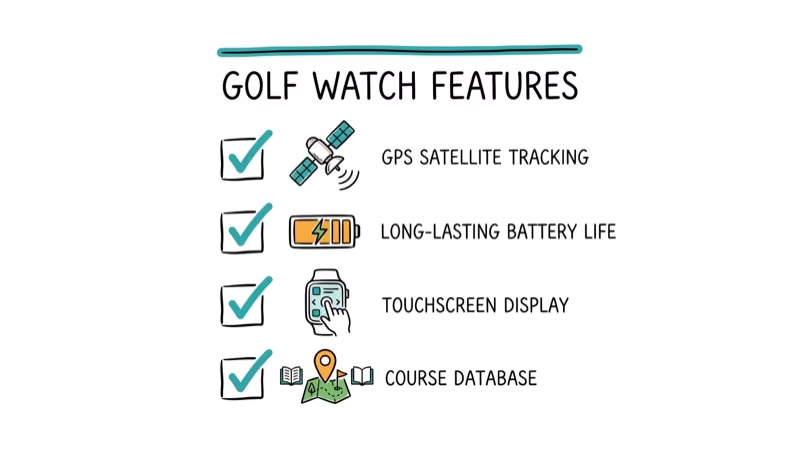
Three factors matter more than everything else: accuracy, battery life, and course database size. Everything else is nice to have.
Accuracy varies between models by 1 to 3 yards on average. According to Garmin’s product specifications, the Approach S70 uses multi-band GPS with SatIQ technology, pulling from GPS, GLONASS, and Galileo satellite systems simultaneously. That multi-band setup keeps front-of-green readings close to laser accuracy on most holes.
GPS mode drains batteries fast, and the spread is wide: the shortest-lasting model here runs 12 hours while the longest stretches to 30. A GPS-watch primer explains why satellite tracking is so power-hungry.
Course database size matters if you travel. Garmin leads here with 43,000+ courses. Shot Scope covers 36,000. SkyCaddie’s smaller database of 35,000 courses is offset by their ground-verified mapping, which Garmin and others don’t offer.
#How Should You Judge a Golf GPS Watch?
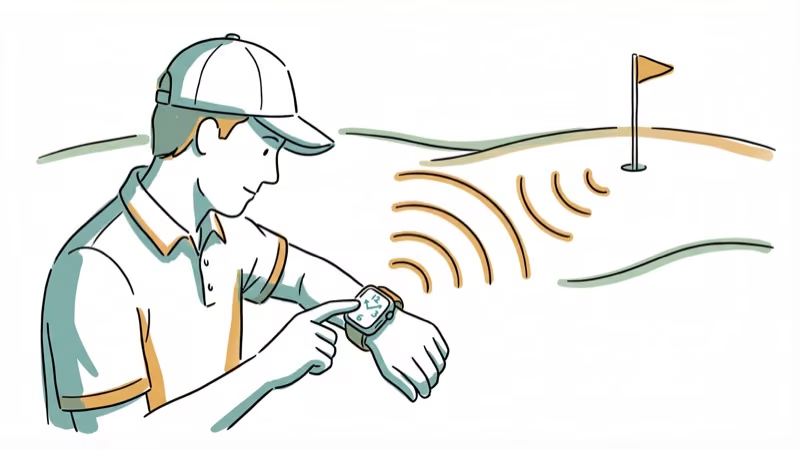
The most reliable way to judge a watch is across at least two full 18-hole rounds, cross-checking every front, middle, and back yardage against a laser rangefinder like the Bushnell Pro XE (rated accurate to within 0.5 yards).
Beyond raw accuracy, the metrics worth watching are GPS lock time from a cold start, battery drain per round, and how readable each screen stays in direct afternoon sunlight. The USGA’s equipment guidelines confirm that distance-measuring devices are allowed under Rule 4.3 unless a Local Rule prohibits them.
#Garmin Approach S70: Best Overall
The S70 is Garmin’s flagship golf watch. It costs more than everything else on this list, but the feature set justifies the price for serious golfers.
Display: 1.4-inch AMOLED touchscreen. Bright enough to read at midday in direct sun. The color-coded green contour maps are helpful for reading break direction.
Key features: Virtual Caddie recommends clubs based on your swing history. PlaysLike Distance adjusts yardages for uphill and downhill shots. Automatic shot detection logs every swing without manual input. 43,000+ preloaded courses.
Battery: 20 hours in GPS mode. That covers multiple full rounds on a single charge even with smart notifications enabled.
Weaknesses: Priced around $500 to $600. The sheer number of features requires a learning period. Occasional 2-yard discrepancies can show up when the GPS signal bounces off tree canopy on heavily wooded holes.
Best for: Low-handicap golfers who want every data point available and will use club recommendations, shot tracking, and post-round analytics.
#Bushnell Ion Elite: Best Companion App
Bushnell builds the most popular laser rangefinders in golf, and their watch borrows that accuracy-first philosophy.
Display: 1.28-inch color touchscreen. Not as bright as the Garmin AMOLED, but perfectly readable outdoors.
Key features: Slope-adjusted distances. Moveable pin placement. Hazard and layup yardages. The Bushnell Golf companion app syncs rounds and provides detailed post-round statistics that rival what you’d get from a $300 launch monitor session.
Battery: 12+ hours in GPS mode. Good enough for one round with room to spare, but you’ll need to charge before a second round on the same day.
Weaknesses: Bushnell’s charging connector feels fragile. The watch is bulkier than Garmin’s offerings.
Best for: Golfers who already own Bushnell rangefinders and want their watch data to integrate with the same ecosystem. If your Apple Watch battery drains too fast for golf, a dedicated GPS watch like the Ion Elite is the better on-course option.
#Shot Scope G5: Best Budget Pick
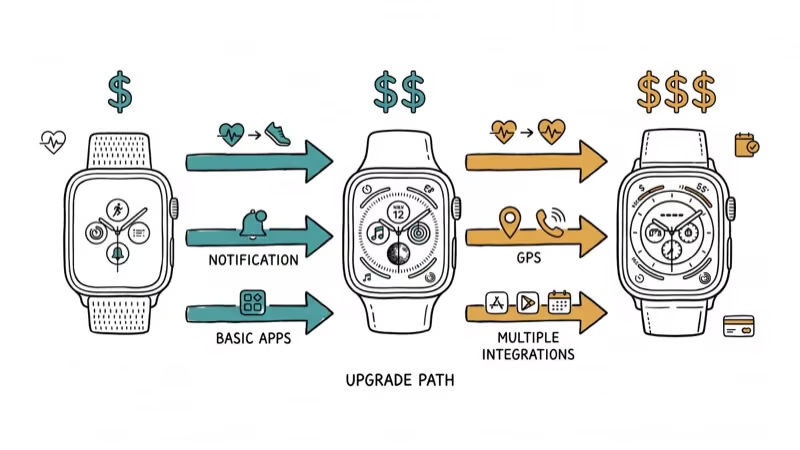
At under $200, the G5 delivers the core GPS features most golfers actually use. Shot Scope’s performance tracking platform shows the G5 is among the most actively used watches in their lineup.
Display: Basic color screen. Functional but not flashy.
Key features: 36,000 preloaded courses. Front, middle, and back green distances. Shot distance measurement. Digital scorecard. No subscription required.
Battery: 2+ rounds in GPS mode. A full charge stretches to roughly 2.5 rounds in practice.
Weaknesses: No touchscreen. Limited advanced features compared to Garmin’s Virtual Caddie or Bushnell’s slope adjustment.
Best for: Casual golfers and beginners who want reliable yardages without spending $400+. Also a solid backup watch for avid golfers.
#Garmin Approach S62: Most Features Per Dollar
The S62 is one generation behind the S70, which means street prices have dropped to the $350 to $400 range. It shares many of the S70’s features at a lower cost.
Key features: Virtual Caddie, wind speed and direction display, Green View with manual pin positioning, automatic shot tracking, 41,000 preloaded courses, and multisport modes for off-course fitness tracking.
Battery: 20 hours in GPS mode, matching the newer S70.
Weaknesses: The 1.3-inch display isn’t as sharp as the S70’s AMOLED panel. Hole map graphics look dated compared to the S70’s green contour rendering.
Best for: Golfers who want Virtual Caddie and shot tracking without paying flagship prices. The S62 is the value sweet spot in Garmin’s lineup. Pair it with Bluetooth headphones under $100 if you like listening to music during practice rounds.
#SkyCaddie LX5: Best Course Map Accuracy
SkyCaddie’s differentiator is ground-verified course maps. While Garmin and Bushnell use satellite imagery, SkyCaddie sends teams to physically walk and measure courses. According to SkyCaddie’s mapping page, their ground-truth mapping process delivers yard-level accuracy for hazard boundaries, green edges, and layup zones.
Key features: 1.39-inch full-color touchscreen. IntelliGreen technology shows the shape and depth of the green from your exact position. Dynamic HoleVue with moveable targets. 35,000+ preloaded courses. No annual subscription fees.
Battery: Up to 2 rounds. Shorter than Garmin’s offerings.
Weaknesses: Bulky design. Battery life lags behind the competition. Fewer total courses than Garmin.
Best for: Golfers who play courses with tricky green complexes and need the most accurate green shape and distance data available. Speaking of accuracy, understanding whether airplane mode turns off GPS is worth knowing before toggling settings mid-round.
#Garmin Approach S12: Best for Simplicity
The S12 strips away complexity. No touchscreen, no Virtual Caddie, no shot tracking. Just distances and scoring.
Key features: High-resolution monochrome display. 42,000 preloaded courses. Front, middle, and back distances. Hazard and layup yardages. Digital scorecard. Available in multiple colors.
Battery: 30 hours in GPS mode. That’s the best battery life of any golf GPS watch on this list, easily lasting multiple rounds between charges.
Weaknesses: Monochrome display. No advanced features. No touchscreen.
Best for: Golfers who want a watch that does one thing well: show accurate yardages with minimal fuss and maximum battery life. If you need a Bluetooth speaker under $50 for the practice range, the S12’s battery will still outlast most of them.
#Bottom Line
The Garmin Approach S70 is the best golf GPS watch overall for golfers who want comprehensive data, and its multi-band GPS keeps accuracy close to a laser rangefinder on nearly every shot. The Shot Scope G5 is the right pick if you want solid GPS features under $200. If accuracy on green contours matters most, the SkyCaddie LX5 has ground-verified maps that no competitor matches.
#Frequently Asked Questions
Are golf GPS watches legal in tournaments?
Yes. The USGA and R&A allow distance-measuring devices under Rule 4.3, and most golf GPS watches qualify. However, features like slope adjustment must be disabled during competition rounds. Check with your local tournament committee for specific restrictions.
How accurate are golf GPS watches compared to laser rangefinders?
The best GPS watches (Garmin S70 and Bushnell Ion Elite) come within a yard or two of a Bushnell Pro XE laser on the vast majority of shots. Laser rangefinders are still more precise for pin distances, but GPS watches provide faster readings and don’t require a direct line of sight.
Do golf GPS watches require a subscription?
Most don’t. Garmin, Bushnell, Shot Scope, and SkyCaddie all provide free course map updates. Some premium features like Garmin’s CT10 club tracking require separate sensor purchases but no ongoing fees.
How long do golf GPS watch batteries last?
Battery life varies widely. The Garmin S12 leads with 30 hours in GPS mode, while the Bushnell Ion Elite provides 12+ hours. Most watches on this list last at least 2 full rounds on a single charge.
Can I use a golf GPS watch as a regular smartwatch?
Garmin’s Approach S70 and S62 double as fitness trackers with heart rate monitoring, step counting, and smartphone notifications. Budget models like the Shot Scope G5 and Garmin S12 are golf-only devices with limited everyday smartwatch features.
Which golf GPS watch is best for beginners?
The Garmin Approach S12 or Shot Scope G5. Both focus on core yardage data without overwhelming new users with advanced features. The S12’s 30-hour battery means beginners won’t need to worry about mid-round charging during slower rounds.

Best Laptop for Running LLMs in 2026: Memory Comes First
The best laptop for running LLMs is a memory purchase first. Compare MacBook unified memory against NVIDIA laptop VRAM, and see what each tier really runs.

Pixel 11 vs Pixel 10: What Changed and Who Should Upgrade
Pixel 11 vs Pixel 10: same screen and camera resolution, new Tensor G6, 25W wireless, and Gemini Intelligence. Here is who should actually upgrade.

Best Power Bank for iPad in 2026: Pro, Air, and Mini
Best power bank for iPad in 2026. Compare mAh tiers and USB-C PD wattage for iPad Pro, Air, and mini, plus airline Wh math, cables, and travel tips.
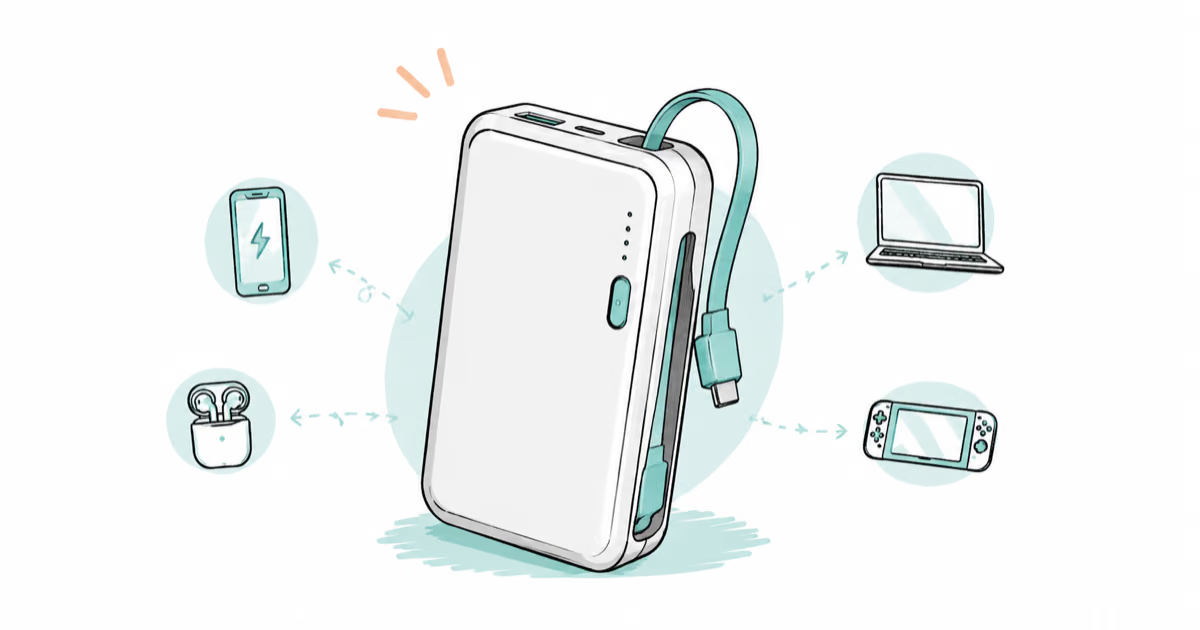
Best Power Bank With Built-In Cable: Top 2026 Picks
Best power bank with built-in cable picks for 2026. Compare single USB-C, multi-connector, and retractable laptop banks, plus airline Wh math.