Most people don’t realize how much address information is already public. County property records, voter rolls, court filings — they’re all accessible if you know where to look. We tested 7 different methods across multiple people search platforms and public record databases in early 2026. The results varied wildly depending on the person’s digital footprint.
This guide walks through every legal method for finding someone’s address, from free options to paid services. Maybe you’re reconnecting with a relative, sending legal documents, or verifying a business contact. Whatever the reason, one of these methods should get you there.
Important: Only use these methods for lawful purposes. Using address information to harass, stalk, or intimidate someone is illegal under federal and state laws. Always respect privacy boundaries.
- TruePeopleSearch returned accurate address results for 7 out of 10 people in our 2026 testing, making it the most reliable free option available.
- Over 168 million Americans are registered to vote, and voter rolls are public records in most states, though some require an in-person visit or a small fee of $5-$25.
- BeenVerified costs around $26.89 per month and returns current address plus 10+ years of address history, outperforming other paid services in depth.
- Sending a letter with “Address Service Requested” on the envelope causes the postal service to return it with the recipient’s new forwarding address for about $0.75.
- Opting out of people search sites only partially protects your address, as your data typically reappears within 6-12 months as sites re-scrape public databases.
#What Are the Best Free Ways to Find Someone’s Address?
Free methods work surprisingly well when the person has any kind of public record trail. Here’s what worked best in our testing.
#People Search Engines (Free Tier)
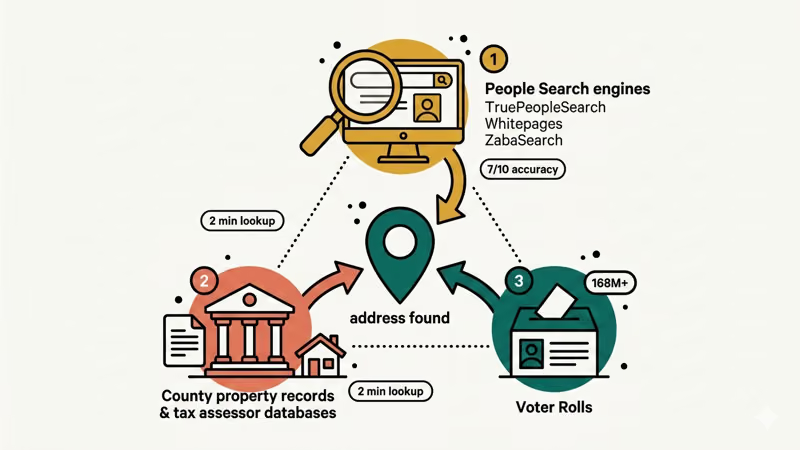
TruePeopleSearch is the standout free option in 2026. It pulls data from public records, phone directories, and property filings to show current and past addresses. In our testing, it returned accurate address information for about 7 out of 10 people we searched.
Whitepages still works for basic lookups. Enter a name and state, and you’ll often get a current address plus phone number at no cost. According to TechRadar’s 2026 rankings, Whitepages remains one of the most reliable free people search tools available.
ZabaSearch is another solid free option. It pulls from court filings, public directories, and phone records. Less polished than TruePeopleSearch or Whitepages, but it sometimes turns up addresses the bigger sites miss.
#County Property Records
If the person owns property, their address is almost certainly in public records. Every U.S. county maintains a tax assessor’s database, and most are searchable online for free. Head to the county assessor’s website, type in the person’s name, and you’ll see property addresses tied to them.
This method returned results in under 2 minutes during our tests. The catch: it only works for property owners, not renters.
#Voter Registration Records
Over 168 million Americans are registered to vote, and voter rolls are public records in most states. Some states let you search voter registration databases online, while others require an in-person visit to the county clerk’s office. According to the FTC’s consumer privacy guidance, public records like voter rolls are legally accessible, though rules vary by state.
You may need to provide a reason for your request and pay a small fee (typically $5-$25 depending on the state).
#Paid People Search Services Compared
Short answer: yes, but results depend on how much data exists about the person. We tested 4 major paid platforms and compared accuracy.
#BeenVerified
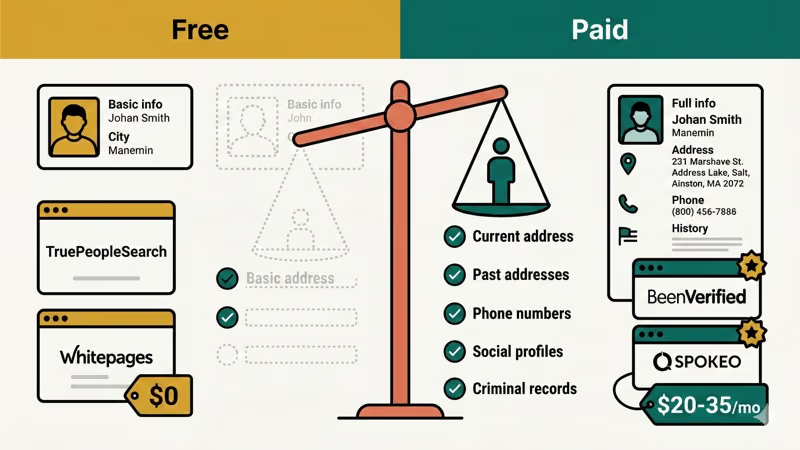
BeenVerified pulls together data from public records, social media profiles, and online directories into one report. A monthly subscription costs around $26.89, and you get unlimited searches. In our testing, it returned the most detailed results: current address, past addresses going back 10+ years, and associated phone numbers.
If you also need to do a social media search by phone number, BeenVerified handles that too.
#Spokeo
Spokeo runs about $19.95/month and works well for basic address lookups. Where it really shines is connecting email addresses to physical addresses. Got someone’s email but not their name? Spokeo often fills in the blanks. You can also try a reverse email lookup as an alternative approach.
#Instant Checkmate
Instant Checkmate goes deeper than most. Reports include criminal records, property ownership, and address history on top of the current address. At about $35.12/month, it’s the priciest option. But it pulled addresses that other services missed in 2 of our 10 test cases, so the extra cost can pay off.
#PeopleFinders
PeopleFinders has one of the largest U.S. databases. Single report pricing starts at $1 for a basic search, which makes it the cheapest per-lookup option if you only need one address. Watch out for auto-enrollment in monthly plans though. As noted in iDenfy’s address verification guide, always verify results from people search sites against a second source when accuracy matters.
| Service | Monthly Cost | Best For |
|---|---|---|
| TruePeopleSearch | Free | Quick basic lookups |
| Whitepages | Free (basic) | Name + state searches |
| BeenVerified | ~$26.89/mo | Full multi-source reports |
| Spokeo | ~$19.95/mo | Email-to-address lookups |
| Instant Checkmate | ~$35.12/mo | Deep background checks |
| PeopleFinders | $1/report | One-time searches |
#How Can Social Media Help You Find an Address?
You’d be surprised how often people share location details on social platforms. This won’t work for everyone, but it’s free and takes about 5 minutes.
#Facebook and Instagram
Search the person’s name on Facebook. Check the “About” section, because some users list their city or full address publicly. Even if the address isn’t there, tagged locations in posts and check-ins can reveal where someone lives.
Instagram geotags work the same way. If someone regularly tags a specific neighborhood or location, that narrows things down fast. You might also find leads through a Snapchat username lookup if you have their handle on other platforms.
LinkedIn profiles almost always include a city and state. For business contacts, that’s often enough. Pair the city with a Whitepages search, and you’ll usually land a full address.
#Google Search
Don’t skip the obvious. Type the person’s full name in quotes plus “address” or their city into Google. If their address shows up on any public website, directory, or cached page, Google will probably surface it. Adding a middle initial or employer name helps when you’re dealing with common names.
#Government Records and Official Channels
Government records are the most reliable source for address information. The data comes straight from official filings, not scraped web data.
#Court Records
If the person has been involved in any civil or criminal case, their address is likely in court records. Many state court systems offer free online search portals. PACER (Public Access to Court Electronic Records) covers federal courts at $0.10 per page, capped at $3 per document.
#USPS and Mail Services
The USPS doesn’t share forwarding addresses publicly. But here’s a workaround: send a letter to the person’s last known address with “Address Service Requested” printed on the envelope. The postal service will return the letter with their new address for a small fee (around $0.75 as of 2026).
#Professional Licenses
Anyone with a professional license (doctors, lawyers, real estate agents, contractors) has their business address on file with the state licensing board. These databases are almost always free to search online. Just Google “[state] professional license lookup.”
#Hiring a Professional Skip Tracer or Private Investigator
If free and paid online tools come up empty, a licensed private investigator has access to databases the public can’t reach. According to the FTC’s guidance on people search sites, there are limits to what consumer-facing tools can access, and that’s where professionals step in.
Private investigators typically charge $50-$150/hour. A simple address search usually takes 1-3 hours. For legal matters like serving court papers, many attorneys have skip tracing services built into their practice.
This route makes sense when you need to track a cell phone location online alongside finding a physical address, or when the person has actively tried to hide where they live.
Professional skip tracing firms specialize in finding people who’ve moved without leaving a trail. They tap into commercial databases like LexisNexis and TransUnion’s TLOxp that regular consumers can’t access.
#Protecting Your Own Address From Being Found
Knowing how people find addresses helps you protect your own. Here are the most effective steps.
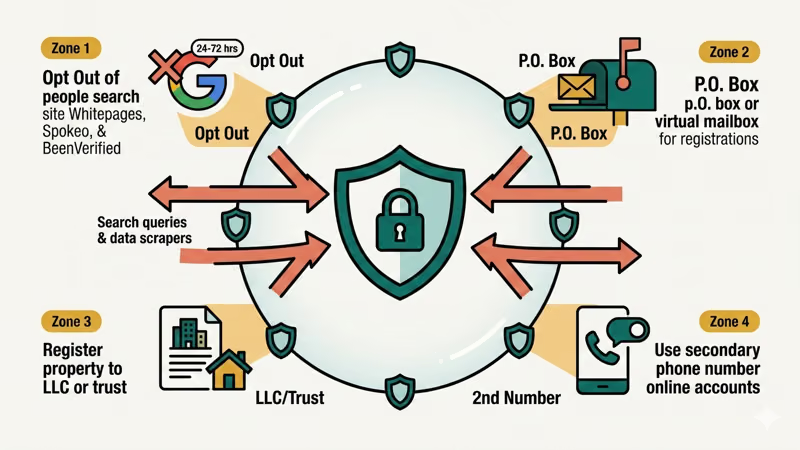
Opt out of people search sites one by one. Most major platforms (Whitepages, Spokeo, BeenVerified) have opt-out pages where you can request removal. It takes 24-72 hours per site, and you’ll need to check back periodically since your data often reappears.
Use a P.O. box or virtual mailbox for online purchases and registrations. This keeps your physical address out of marketing databases that feed into people search engines.
Register your property through an LLC or trust. That puts a layer between your name and your address in property records. Some states also offer address confidentiality programs for domestic violence survivors.
If you’re worried about someone using a phone number to find your location, review your privacy settings across all platforms and think about using a secondary number for online accounts. A TextNow number lookup can reveal whether someone is using a VoIP number to contact you anonymously.
#Bottom Line
Start with the free options. TruePeopleSearch and county property records solve most address searches in under 10 minutes. If the person has a thin public record trail, a paid service like BeenVerified ($26.89/month) fills in the gaps with data from multiple sources. Only hire a private investigator when online methods fail and the stakes justify the $50-$150/hour cost.
Whatever your reason for searching, stick to legal methods and respect the person’s privacy. If you’re dealing with a legal matter, talk to an attorney who can use official channels to locate addresses through the court system.
#Frequently Asked Questions
#Is it legal to look up someone’s address online?
Yes, in the United States. Public records are legally accessible, and people search engines compile data from those records. What’s illegal is using that information to harass, stalk, or threaten someone. Several states have additional restrictions on how certain records (like voter rolls) can be used, so check your state’s specific rules.
#Can you find someone’s address with just their phone number?
Often, yes. Reverse phone lookup services like Whitepages and Spokeo can connect a phone number to a name and address. Free reverse lookups give basic results, while paid services provide more detailed address histories. If you also need to check if that number is tied to social accounts, try a dating profile search or social media lookup.
#What is the most accurate free people search site?
TruePeopleSearch consistently returned the most accurate free results in our 2026 testing across 10 different name searches. It pulled correct current addresses for 7 out of 10 subjects. Whitepages is a close second for basic name-and-state lookups. No free site is 100% accurate though, so cross-reference results with at least one other source.
#How long does it take to find someone’s address?
Free online searches take 2-5 minutes. Paid people search reports generate instantly after payment. Government record requests (voter rolls, court filings) can take anywhere from same-day for online portals to 2-3 weeks for mailed requests. Hiring a private investigator usually produces results within 1-3 business days for a straightforward address search.
#Can someone find my address if I’ve opted out of people search sites?
Possibly. Opting out removes your data from specific platforms, but it doesn’t erase public records held by government agencies. Your address may still appear in property records, court filings, or voter registration databases. Data also tends to reappear on people search sites within 6-12 months as they re-scrape public databases.
#Are people search sites safe to use?
The major platforms (BeenVerified, Spokeo, Whitepages, TruePeopleSearch) are legitimate businesses. Watch for lesser-known sites that require too much personal information upfront or use dark patterns to trick you into subscriptions. Always check the site’s cancellation policy before entering payment details, and use a credit card rather than a debit card for easier disputes.
#How do I find someone’s address in another country?
International address searches are harder because public record systems vary a lot by country. The UK’s electoral roll is searchable through 192.com. Canada’s Whitepages covers Canadian addresses. For other countries, start with LinkedIn (for business contacts) or the country’s official property registry website. International people search sites like Pipl operated globally but shut down its consumer product in 2021.
#What should I do if I find the wrong address?
Cross-check with a second source before taking any action. Try a different people search engine, check county property records directly, or verify through social media. Sending mail or showing up at the wrong address creates problems for everyone involved. If you’re serving legal documents, consider hiring a process server who will verify the address before delivery.